Caribbean Ministers of Health met at the Third Global Conference on Health and Climate in St. Georges, Grenada on October 16th and 17th to approve a plan on health system resilience in the face of climate change.
The event convened health authorities and experts from the Pan American Health Organization (PAHO) and the World Health Organization (WHO) to develop an Action Plan for Small Island Developing States, who are on the front line of increasing health impacts of climate change.
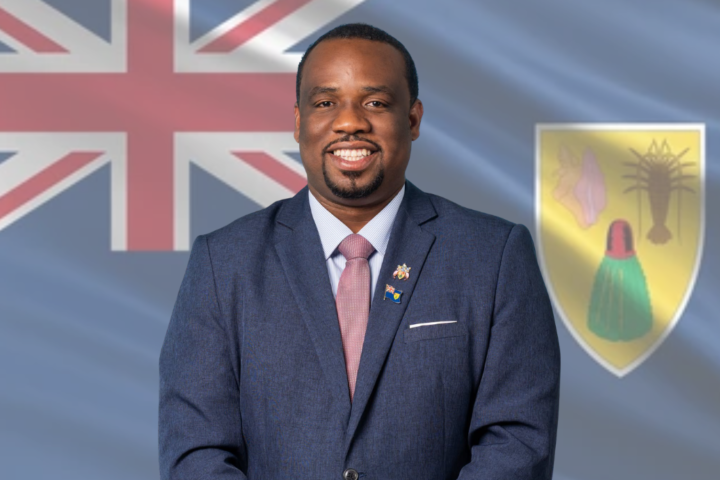
Hon. Edwin Astwood, Minister responsible for Health, Sports and Human Services represents the Turks and Caicos during the event as a featured panelists in the discussion on building climate resilient health systems.
Former Premier of the Turks and Caicos Islands, D.r Rufus Ewing, was also in attendance, representing the Pan American Health Organisation Health Systems and Services.
“We saw last year the devastating effects of hurricanes Irma, Maria and Harvey, and many other tropical storms that hit the Caribbean,” said Dr. Carissa Etienne, Director of the Pan American Health Organisation. “But we also face other challenges, such as floods; droughts; heatwaves; water and food security and safety; undernutrition; massive fisheries and marine biodiversity loss; vector borne diseases; and non-communicable diseases.”
“I don’t need to convince anyone in this room that the present situation is critical,” added Dr. Etienne. “Health is being impacted by climate change in many ways, and although small island developing states have made a small contribution to global emissions of Greenhouse Gases, our islands are at the forefront of climate change impacts.”
During the Conference, which was attended by 14 Caribbean Ministers of Health and Environment, four overarching issues will be discussed:
Supporting Caribbean health leadership to have their priorities and needs heard; strengthen national technical capacities to understand the impacts of climate change on health in small island developing states and to anticipate and prepare for those risks; developing the policies and implementing actions required to build climate-resilient health systems; and facilitating access to climate and health financing mechanisms.
The Conference is part of the WHO Initiative on Climate Change and Health in Small Island Developing States, which was launched in collaboration with the Secretariat of the United Nations Framework Convention on Climate Change (UNFCCC), and the Fijian Presidency of COP-23, at the UNFCCC Conference of the Parties in November 2017.
“The reason we are here today is because island nations have requested it,” said Dr.
Joy St. John, Assistant Director General for Climate and Other Determinants of
Health at WHO. “More extreme weather events are taking lives and having devastating impact
on livelihoods and economies, and even threatening to submerge some of the islands.
We need to ensure that people from these islands have the best possible level of health so
that no one gets left behind.”
The WHO initiative aims to provide national health authorities in SIDS with the
political, technical, and financial support to better understand and address the
effects of climate change on health.
It takes the form of three innovative, geographically dispersed meetings. The first
was held in Fiji, for Pacific SIDS, and the second in Mauritius, for SIDS of the
African and South-East Asian WHO Regions. The Conference in Grenada constitutes the
third meeting, and together with the regional plans developed during the other two meetings, will
contribute to a WHO global action plan for climate and health in Small Island Developing States.
Many small islands are already seeing an increase in climate-change related events,
including high burdens of climate-sensitive diseases such as vector-, food-, and
water-borne diseases; more frequent and severe extreme weather events; and rising sea levels.
“What we are seeing with respect to climate change and health is that how we define
ourselves as a Caribbean people is at stake,” said Hon. Nickolas Steele, Minister of
Health and Social Security of Grenada. “Sun, sea and sand is something we have been
proud of but it is also going to be our downfall. We need to make sure that we are ready and
that we are prepared and smart,” he concluded.
While countries have agreed to take action to limit global warming under the 2015
Paris Agreement, it is vital that health care facilities are reinforced,
early-warning surveillance systems implemented; and policy developed to ensure that those that are
most vulnerable to climate change events are not left behind.