
Innovative ideas sought for Caribbean energy needs
Awards of up to US$200,000 are offered for projects and enterprises which promote energy efficiency and access to renewable energy in the Caribbean region.
This incentive for inventors and entrepreneurs is being offered through the 2012 IDEAS Energy Innovation Contest for the Caribbean, which was launched this week in Barbados.
The contest, which is aimed at developing innovative ideas to improve energy efficiency and expand access to renewable energy in the Caribbean, is being funded by UKAid through the Department of International Development (DFID), GVEP International, South Korea and the Inter-American Development Bank (IDB).
Entries are open to applicants from Antigua and Barbada, Bahamas, Barbados, Belize, Dominica, Dominican Republic, Grenada, Guyana, Haiti, Jamaica, St Kitts and Nevis, St Lucia, St Vincent and the Grenadines, Suriname and Trinidad and Tobago.
The contest launched with a regional marketing campaign entitled “What’s your bright IDEA?” to encourage people to come forward with innovative solutions to energy problems that have local or regional benefits, provide jobs and reduce greenhouse gas emissions. Winners will not only receive cash prizes but technical and business development support to implement or scale up their ideas.
Individuals, enterprises and organizations based in the Caribbean have been invited to submit proposals focusing on adoption, innovation, assimilation, development and transfer of technologies in renewable energy, energy efficiency, climate change mitigation and fossil fuel substitution by April 30, 2012.
Grant winners will be announced July 15, 2012.
“The Caribbean has great potential for economically and environmentally sustainable enterprises in renewable energy and energy efficiency,” said Simone Banister, Climate Change Adviser at DFID Caribbean. “Simple innovations could have a dramatic effect on energies supplies, prices and the way businesses and markets operate in the region.”
Energy in the Caribbean is currently produced almost exclusively from imported fossil fuels, Banister explained. “As a result, consumers are paying high prices for electricity, transport fuels and other forms of energy. So far, the use of alternative sources of energy, particularly renewables, has been limited. We’re hoping to help change that.”
“Local innovation and the adaptation of existing technologies to local circumstances are key to boosting the competitive supply of renewable energy services and tackling environmental concerns,” said Arnaldo Vieira de Carvalho, Lead Energy Specialist at the IDB
Caribbean 360 News

US ambassador meets with Vincentian envoy, expresses regret at NYPD incident
Ambassador Susan Rice, the permanent representative of the United States of America to the United Nations, has expressed regret on behalf of herself and the US government at an incident in which St Vincent and the Grenadines Ambassador Camillo Gonsalves was subject to arrest and detention by the New York Police Department (NYPD) as he attempted to enter his office.
Rice, who is a member of cabinet of the US government, visited Gonsalves at his office in the Permanent Mission of St Vincent and the Grenadines to the United Nations on Tuesday. It marked the first time that a cabinet-level official of the US government has visited the Vincentian Mission.
Recognising that Rice is currently serving as president of the United Nations Security Council at a particularly busy period in the Council’s agenda, Gonsalves stressed his appreciation that Rice had taken a personal interest in the matter, and had taken the time to visit him at his office.
The half-hour conversation took place in a friendly and positive atmosphere, befitting the longstanding history of excellent relations between the United States of America and Saint Vincent and the Grenadines. The two ambassadors covered all of the issues surrounding the 28 March incident. They discussed the facts of the incident, as well as the larger issues related to the interactions between sovereign countries and their diplomatic representatives.
Rice informed Gonsalves that the New York Police Department would undertake a thorough internal examination of what took place on 28 March, 2012. The Vincentian envoy has previously detailed his assault, arrest and detention by the NYPD in the lobby of his workplace.
Under the Vienna Convention on Diplomatic Relations and the relevant resolutions and agreements governing the interactions between the United Nations and the United States of America, diplomatic agents have immunity from arrest or detention in the exercise of their functions.
Gonsalves thanked Rice for her personal concern, empathy, and sensitivity to all of the relevant issues at play in this incident. He also updated Rice on developments that took place since the 28 March incident. Rice reiterated the seriousness with which the US government views its obligations to ensure that the dignity and safety of United Nations’ diplomats is respected. Rice also indicated that she intended to discuss the incident with both the Caribbean Community (CARICOM) and the 33-member Group of Latin American and Caribbean countries (GRULAC), which sent formal letters of protest to the United States Mission in solidarity with Gonsalves.
Both ambassadors agreed to keep in touch to follow up on the matter.
The very helpful and fruitful discussion between Rice and Gonsalves was said to be indicative of both the seriousness with which the US government is treating the incident at the highest levels, and the successes of the Vincentian government’s sustained and principled diplomatic activity in defence of their sovereignty and international law.
The government of Saint Vincent and the Grenadines said it welcomes the visit by Rice and her sensitivity in this matter to be useful first steps towards ultimate resolution of this multifaceted issue.
Caribbean News Now
Dr.Rufus Ewing seeks leadership of the PNP
Dr.Rufus Ewing invited the media to share his interest for the leadership of the Progressive National Party (PNP).
This is a copy of Dr.Ewing's speech sent to RTC News:
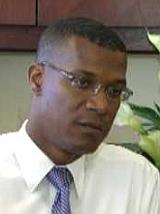 The representatives of the Media here present, party delegates, supporters and well wishers present and my people across the length and breadth of Turks and Caicos, I bid you good morning. I come before you this morning to declare my intention to contest the Leadership of the Progressive National Party at the next National Convention to be held in the month of May.
My decision to enter politics and to contest the Leadership did not come easily. Though this decision may have been expected by many, it was one that was given much thought and I stand before you today under the guidance of God Almighty and with the support of my family, as I have heeded the call service to my country and have placed this above self.
As one looks at the state of affairs in The Turks and Caicos today, it should be difficult for any Turks and Caicos Islander who is capable and able to ignore the call to duty, to offer their services selflessly to the benefit of our people. This beloved country of ours needs all good men and women to take up the reigns of Leadership and public service to deliver our people from the bondage and oppression of the British Agenda. We need good men and women on both sides of the political divide who will fight tirelessly for the rights and freedom of our people. We need good men and women who will unite in the House of Assembly and represent the interest of the masses of the People and not for selfish personal or political gain.
Yes we do need men and women of intellect and integrity to lead our people forward, but above all things we need individuals with a strong passion for the advancement and development of Turks and Caicos Islanders without fear or favour.
I stand before you here today to offer myself to you the people and to ask for your support if you deem me to be of such character and if you share in my vision of a better Turks and Caicos Islands. I also take this opportunity to invite any and all Turks and Caicos Islanders who believe that they have something offer this country, to stand up and be counted and to join the fight, regardless of your political affiliation. Whether you are PNP or PDM I am confident that we share a common goal for a better Turks and Caicos.
My Turks and Caicos Islanders , it is not my intention to belabor the past, but what I will do is to take you through what my goals are for this PNP Party and this my beloved Turks and Caicos if given the opportunity to serve you.
My Turks and Caicos Islanders we have indeed come a long way, from the days of non representative Government and British Grant and Aid. We have come a long way from the days when our families took to the salt pans and the fields and our men took to the sea for days fishing and trading as the sole means of feeding their families. We have come a long way from the days when the only means of travel between the islands and afar was by boat. We are here now at this point in our development as a result of the hard work, fight and determination of our former politicians and activists such as the Honorable JAGS McCartney. Yes! we have been fending for ourselves and surviving for quite sometime now, and we need to continue to fight to ensure the empowerment of our people and the attainment of an independent Turks and Caicos that is God fearing and enjoys economic, social and political stability.
It is my intention to ensure that we as Turks and Caicos Islanders are mentally, socially, economically and politically prepared for independence as this is my goal.
I would make it a priority to foster unity within this PNP Party, to organize this party into an effective institution of change for the betterment of our people and to ensure that this party is looked upon with credible eyes as an institution of good governance, integrity and progress and an institution of the people.
I would make it my priority to ensure that the economy of this country is revived and our people are put to work again, through the attraction of inward investment through extensive marketing, good incentives and sensible development policies.
I would make it my priority to ensure that our people attain their true potential in life and are well educated, by expanding the early Childhood Education Programme, maintaining our no child left behind policy, expanding and improving our High School vocational training Programme with its extension into the Community College. Thus ensuring that every Turks and Caicos Islander has access to higher education
I would make it my priority to ensure that our economy is diversified through the expansion of existing sectors such as tourism, agriculture and fishing and the introduction of new sectors such as light manufacturing, processing and international trade and commerce. That our bread baskets are expanded by ensuring that every island has enough development to drive its micro economy without an adverse impact on the environment.
I would make it my priority to ensure reduction in the cost of living through the introduction of an environmentally friendly energy policy, reduction in taxation and the production of more goods locally for consumption.
I would make it my priority to ensure that business is conducted efficienly through the introduction of E-Government and that the learning of our children is maximized through the development of a free wireless TCI.
I would make it my priority to ensure that we have a public service that is efficient and effective through the introduction of a School of Government and Management Studies at the Community College where the skills of our Civil Servants are retrained and upgraded to more effectively perform and serve the public and the efforts of our civil servants are appropriately remunerated.
I would make it my priority to ensure that Primary Health Care is expanded and improved to reduce the disease burden of our population and that cost-effective secondary health care is provided in a manner that is acceptable to the people and the health of our people, especially the young, elderly and impoverished are protected through a refined social health insurance programme.
I would make it my priority to ensure that our culture and heritage is magnified in the face of the cultural diversification of our population, to the extent where national pride takes root in our schools, work places and institutions as our people are mentally and socially prepared for an independent Turks and Caicos
I would make it a priority to ensure that our population growth is well controlled, through the introduction of a robust population policy that is tailored to our immigration and development policy.
I would make it a priority to ensure that as a government and a country, integrity, transparency and good governance provides the foundation upon which we serve you the people of Turks and Caicos.
My brothers and sisters these are but a few of my areas of priority. These initiatives will take men and women with vision, dedication, determination, passion and above all an undying love for our country The Turks and Caicos Islands. I present myself to you as one such individual.
To get to know more about Rufus Ewing and his plans for this PNP Party and the Turks and Caicos log on and continue to monitor the information available on www.rufusewing.com. I invite you to support my campaign for Leader of this great Party and by extension Premier of our beloved Turks and Caicos Islands.
CEO Patrick Boyle announces immediate resignation of PS.
RTC news received the following from the CEO's Office as it relates to PS Judith Campbell.
Mr. Boylse states:
"I regret to announce that for personal reasons Judith Campbell will not take up the position of Permanent Secretary of the Ministry of Health and Education, said Patrick Boyle, Chief Executive of the Turks and Caicos Islands Government. The Governor with advice from the Public Service Commission has today confirmed Ms Desiree Lewis as Acting Permanent Secretary while recruitment to the permanent position is undertaken". Patrick Boyle Chief Executive Turks and Caicos Islands Government
RTC News has not yet learnt the reason for the sudden resignation but our team has received speculative reports that are unconfirmed, after the release from Mr. Boyle's office.
24-Hour Crime Report
POLICE are investigating a break-in at the Escape Salon and Spa.
The culprits also smashed their way into a brown Toyota 4 Runner which was parked outside and stole a car battery.
The incident happened between 7pm on Monday and 6.30am on Tuesday.
DETECTIVES are searching for a man who tried to cash a stolen cheque at the First Caribbean Bank in Leeward Highway, yesterday.
A MAN was arrested on suspicion of causing malicious damage at the Conch Shack Restaurant, yesterday.
POLICE are questioning a man on suspicion of possessing a quantity of cannabis and unlawful entry.
OFFICERS are appealing for witnesses after an armed man allegedly made threats near Flamingo Park.
A resident was walking his dog when he was approached by a man who came out of the bushes and threatened to shoot the animal.
The culprit, who is described as dark skinned, was wearing a white T-shirt and blue jeans. He was thought to be holding a firearm.
The incident happened at around 7am this morning (Wednesday April 11). Anyone with information is asked to call the police on 911 or Crimestoppers on 1-800-8477.
Tips can also be left in English, French or Spanish at www.crimestoppers.tc or by becoming a friend of Crimestoppers TCI on Facebook.
Crime prevention tips are also available by visiting www.rtcipolice.tc
IN GRAND TURK
WITNESSES are being sought after a house was vandalised in Grand Turk. A window of a property in Good Street was smashed by a rock being thrown at about 5.30am today.
CAMPERS ENJOY POLICE VISIT
A GROUP of Provo youngsters have been learning the laws of the land.
The lesson came courtesy of the RTCI Police Community Policing Department during a visit to the Graceway Sports Centre Easter Camp.
Officers also passed on important safety and security tips as well as demonstrating some of their crime-busting equipment.
Graceway Sports Centre marketing and business manager, Adina Ciurar, said: “The Easter Camps are very popular and we try to cover a whole range of different activities.
“This year we looked at different professions and vocations across the islands and the police visit formed part of this.
“The children were really excited to meet the officers and were fascinated the demonstrations. It was a great session and the youngsters really got a lot out of it.
“I would like to say a big thank you to the RTCI Police, in particular, PC Melonda Robinson, PC Francisco Padua and PC Demetre Green.”
Head of Community Policing, Inspector Nigel Couch, said the visit was part of a continued drive to educate young people in TCI.
“We are delighted to support the Graceway Sports Centre Easter Camp and are pleased the children enjoyed the visit”, he added.
“Engaging with the community is part of everyday police work and educating youngsters is one of our major priorities.”
LIAT Axes Workers
More then 20 employees of LIAT’s cargo department have been made redundant, just over one year after the company launched the intra Caribbean service, affected employees have told OBSERVER Media.
Of the 28 employees who service the Cargo and Quick Pak Department, only three were spared the plight of redundancy, our source, who spoke on condition of anonymity, said.
Employees received their letters last week informing them that their services would no longer be required as of April 15, 2012. The Cargo and Quick Pak Department has been outsourced to the Barbados based Caribbean Airport Services.
The employees, some of whom have worked with the company for more than a decade, are expected to meet with their bargaining agent, the Antigua & Barbuda Workers Union, ABWU, today.
One of the employees, who spoke with the newspaper on condition that his name would not be revealed, took issue with the manner of the employees’ dismissal, describing it as “unfair.”
When contacted for a comment, LIAT’s Corporate Communication Manager Desmond Brown said, “I do not have a comment on this matter at this time.”
Antigua Observer
World stock markets slip on growth fears
Stocks have fallen on fears over the health of the global economy, after last week's weak US jobs data and persistent fears over the eurozone.
The US Dow Jones index fell 1.7%, its worst day so far this year.
Earlier, France's Cac 40 fell 3.1%, the UK's FTSE 100 and Germany's Dax lost about 2.5%.
Spanish bond yields hit a new high for this year as concerns have returned about Madrid's ability to repay its debts.
Banks were hit particularly hard, with Societe Generale down 6.2% and BNP Paribas 5.7% lower in French trading. In the UK, Barclays fell 5.9% while Lloyds lost 5%.
In Germany, Commerzbank ended the day down 5.9%.
Italian shares fell 5% on media reports the government was about to cut its growth forecast for this year.
And oil declined too. Brent crude fell $2.80 to just under $120 a barrel in London.
US growth
Figures released on Friday by the US Labor Department showed the smallest growth in employment in five months.
The US economy added 120,000 jobs during March, less than the 200,000 widely predicted by analysts.
Investors in Europe were given their first chance after the Easter break to react to Friday's disappointing US jobs data.
The figures raised fears about the strength of the recovery in the US economy.
"Opening losses for European stock markets this morning are suggestive of the heavy, negative overhang from last Friday's disappointing US payrolls report," said Jane Foley at Rabobank International.
Spanish bonds
Meanwhile, the interest rate on Spanish bonds traded in the secondary market continued to rise.
The yield on 10-year bonds hit 5.99%, up from 5.74% on Monday, indicating that investors are getting increasingly concerned about Spain's ability to repay its debts.
"They've managed to put a Band-Aid on the debt crisis, but there's really no solution," said investment portfolio manager Colleen Supran. "And Spain is a much bigger problem than Greece."
Spain makes up about 11% of the total output of the 17 countries that use the euro, while Greece accounts for 2%.
The Iberian nation has introduced a raft of tough austerity measures in recent weeks, partly in an attempt to calm investors' nerves and bring yields down.
Yields are now at their highest level since the beginning of this year, but are still below the 7% considered by markets to be unsustainable.
Also on Tuesday, the head of Spain's central bank, Miguel Angel Fernandez Ordonez, suggested the banking sector may need further support if the economy deteriorates.
"If the Spanish economy finally recovers, what has been done will be enough, but if the economy worsens more than expected, it will be necessary to continue increasing and improving capital as necessary in order to have solid entities," he said.
Investors in Europe also had an eye on Chinese data showing a rise in exports but a sharp fall in imports, while a report from the Organisation for Economic Co-operation and Development (OECD) also gave mixed messages.
It identified a "potential turning point in economic activity in the euro area and regained momentum in other major economies", particularly the US and Japan.
But the report also talked of "diverging" economies in Europe, with Germany and the UK showing a "positive change in momentum" but France and Italy displaying "continued sluggish activity".
Analysts noted general caution ahead of the first quarter reporting season in the US, beginning later on Tuesday with aluminium giant Alcoa
Market Data
Last Updated at 05:04 GMT
| Dow Jones | 12715.93 | Down | -213.66 | -1.65% |
| Nasdaq | 2991.22 | Down | -55.86 | -1.83% |
| FTSE 100 | 5595.55 | Down | -128.12 | -2.24% |
| Dax | 6606.43 | Down | -168.83 | -2.49% |
| Cac 40 | 3217.60 | Down | -102.21 | -3.08% |
| BBC Global 30 | 6016.55 | Down | -10.76 | -0.18% |
Japan stocks fall for seventh day amid global sell off
Japanese stocks have fallen for the seventh straight session as fresh fears over health of the global economy sparked a global sell-off.
The Nikkei 225 index fell 1% leading the drop in Asian stocks, while Hong Kong's Hang Seng index shed 1.3%.
Worries over the eurozone debt crisis and the US economic recovery losing its steam hit shares of exporters.
Electronics maker Sony fell 5%, a day after the company doubled its forecast of an annual loss to $6.4bn (£4bn).
"Japan's consumer electronics industry is facing defeat," said Fujio Ando, senior managing director of Chibagin Asset Management.
"I don't think there is any guarantee that we will see the company return to black this year." he said.
'Carbon copy'
One of the biggest fears among the global investors has been that the eurozone debt crisis, which has hurt growth countries such as Greece, may spread to the region's bigger economies.
Those fears were fanned further on Tuesday after the interest rate on Spanish bonds traded in the secondary market rose further.
The yield on 10-year bonds hit 5.99%, up from 5.74% on Monday, indicating that investors are getting increasingly concerned about Spain's ability to repay its debts.
The fear is that if the crisis in Spain, which makes up about 11% of the total output of the 17 countries that use the euro, is not managed properly, it will have a negative impact on the region's growth and also hurt the global economic recovery.
On Tuesday, France's Cac 40 fell 3.1%, the UK's FTSE 100 and Germany's Dax lost about 2.5%.
Analysts warned that markets may fall even further amid a dip in investor morale.
"2012 is at risk of being a carbon copy of 2011, where equity markets began the year with a spring in their step before sentiment turned very bearish as the European sovereign debt crisis spiralled out of control", said Angus Campbell of Capital Spreads.
At the same time, a weaker-than-expected jobs data from the US has raised concerns about the recovery in the world's biggest economy.
Philippe Gijsels, head of research at BNP Paribas Fortis Global Markets, said the combination of these factors was prompting investors to take a cautious approach.
"Investors are in a risk-off mode, with the US job numbers and the situation around Spain becoming an excuse for the sell-off."
'Wild card'
Adding to investors concerns have been fears about a slowdown in China, the world's second-largest economy, and one of the main drivers of global growth in recent years.
China's export sector is one of the biggest contributors to its economic expansion. However, a slowdown in its key markets such as the US and eurozone has raised fears that Beijing may not be able to maintain its high pace of growth.
Analysts said that investors were being cautious ahead of China's growth data, which is scheduled to be released later this week.
"How much is China going to slow down, that is the big wild card," Hans Goetti, chief investment officer of Finaport told the BBC. "The first quarter growth could be even less than 7.5%."
Chinese premier Wen Jiabao has set a growth target of 7.5%, the lowest since 2004.
Obama pushes 'Buffett rule' tax rise plan
US President Barack Obama has renewed calls for a new tax on wealthy Americans as he seeks to define his position for the upcoming election.
Mr Obama called for the rich to pay a "fair share", ahead of a vote in the US Senate on the so-called "Buffett Rule".
The rule is named after billionaire investor Warren Buffett, who has said he should pay a higher rate of tax than his secretary.
The Senate proposal puts a minimum 30% tax on earnings over $1m (£631,000).
While the US tax rate on top earners is 35%, many wealthy investors earn investment income, taxed at 15%, and pay an overall smaller percentage of their earnings in taxes.
Tax fairness?
At a speech at Florida Atlantic University in Boca Raton, Florida, Mr Obama framed the Buffett rule in terms of fairness.
"Right now, the share of our national income flowing to the top 1% has climbed to levels last seen in the 1920s," Mr Obama said. "And yet those same people are also paying taxes at one of the lowest rates in 50 years."
Mr Obama also pitched his larger economic policy as a long-term benefit for the economy, saying investments in areas like education and research were not "made as part of some scheme to redistribute wealth from one group to another".
"They've been made by Democrats and Republicans for generations because they benefit all of us, and lead to strong, durable economic growth," Mr Obama said.
Mr Obama's campaign also used the Buffett-rule proposal on Tuesday to attack Mitt Romney, now the presumptive Republican presidential nominee, effectively confirming that the president is now firmly in general election mode.
"[Mr Romney] thinks millionaires and billionaires should keep paying lower tax rates than middle-class families," the campaign said in a statement. "In fact, Romney himself isn't paying his fair share."
Mr Romney released his taxes in January, showing he paid about 14% of his income for the past two years.
Campaign first?
Campaign staff for the former Massachusetts governor themselves criticised Mr Obama's economic policies on Tuesday.
Romney spokeswoman Gail Gitcho said Mr Obama was the "first president in history to openly campaign for re-election on a platform of higher taxes". The proposal would increase taxes on small businesses, she argued.
Mr Romney's closest Republican rival Rick Santorum bowed out of his campaign on Tuesday, cementing the private equity tycoon's status as the man who will challenge Mr Obama in November.
A recent national poll suggests Mr Obama would win a general election against Mr Romney, by 51% to 44%, but Mr Romney was favoured slightly on economic issues.
Mr Obama's speech was part of a full-day trip to the crucial election state of Florida, which also included three fundraising events.
The Buffett-rule proposal is not expected to pass the House of Representatives and Congressional Republicans have dismissed it as a campaign stunt.
"It was designed for no other reason than politics — there is no economic rationale for it," Utah Republican Senator Orrin Hatch said in a statement. "I hope the president will stop the class warfare and start leading by putting out real proposals to bring down our debt."
A congressional committee on taxation estimates such a proposal would generate $46.7bn over 10 years. But Republicans counter that that is simply a tiny fraction of the US national deficit.