
Editorial Overview of Political Turmoil
The period spanning 1976 to 1986 marked a decade since the establishment of ministerial government in the Turks and Caicos Islands (TCI). During these years, the territory experienced significant upheaval, which would later impact its political landscape. The events that unfolded were characterized by instability, corruption, and controversy, making this a particularly tumultuous chapter in the history of TCI.
The Miami Affair and Its Aftermath
The Miami Affair of 1985 created a significant disruption in the political landscape of the Turks and Caicos Islands. As a direct result of this incident, three seats in the Legislative Assembly became vacant when the Chief Minister and two of his colleagues were incarcerated in Miami, Florida, on March 5th, 1985.
The vacancies necessitated a by-election, which was subsequently won by the ruling Peoples National Party (PNP), allowing them to maintain their 8–3 majority in the Legislative Assembly. Despite the PNP’s continued dominance, there was a widespread belief among the populace that the election outcome was influenced more by sympathy for the party than by true political allegiance. Following the by-election, a new Chief Minister was chosen. However, stability remained elusive, as one of the former ministers later resigned, which led to the appointment of one of the newly elected members to fill the vacant ministerial position.
Government Dissolution and Resignation of the Chief Minister
Sixteen months after the new leadership of the Peoples National Party (PNP) took office, a major crisis erupted. The newly elected Chief Minister, along with three of his ministerial colleagues, were compelled to resign. This drastic action followed the intervention of the British Parliament, which dissolved the government of the Turks and Caicos Islands (TCI) in response to allegations of corruption.
The allegations specifically targeted the Chief Minister, accusing him of corrupt practices and malpractice during his tenure as Minister in the Public Works Department, with incidents dating back to 1980. The Chief Minister did not resign quietly. He voiced his opposition and warned that any efforts to remove him from office would trigger a strong reaction from his supporters, as reported by the UPI Archives on July 25th, 1986.
He further expressed his frustration and sense of inevitability regarding his resignation and was also quoted by the British Daily Telegraph newspaper as saying “I have quit with much protest because I have no option. These charges are highly inaccurate and unfounded.’’ He further lashed out, ‘’Britain is just a damned second-rate puppet to the Americans who told them to do this to their little black colony.’’
Transition to Direct British Rule
Following the resignation of the Chief Minister and several members of his cabinet, Governor Christopher Turner addressed the residents of the Turks and Caicos Islands in a broadcast on Radio Turks and Caicos (RTC). He assured the population that he would assume full authority over the territory, with an explicit commitment to safeguarding their rights during this period of political uncertainty. This declaration signified the commencement of direct British rule over the islands.
Governor Turner explained further that, for an interim period, the administration of the government would proceed with the guidance and support of Turks and Caicos Islanders. These individuals were carefully selected based on their reputation within the community and their demonstrated ability to serve the country with honor, dignity, and impartiality. To ensure balanced governance, the Governor chose advisors from both within the government and from the broader society to assist in managing the affairs of the islands during this transitional phase.
British Parliamentary Statement on Turks and Caicos Islands
On July 25th, 1986, the British Parliament convened to address the ongoing situation in the Turks and Caicos Islands. During this session, Baroness Young requested permission from the House in order to reiterate a statement concerning the Turks and Caicos Islands that had previously been delivered in another venue by the Honourable Parliamentary Under Secretary of State, Mr. Tim Eggar. The contents of this statement were presented to the House, providing a formal update on the developments and actions taken in relation to the political and administrative crisis in the territory. The statement was as follows:
On 27th March, (1986) the House was informed that a Commission of Inquiry had been set up by the Governor of the TCI. The Commission was asked to investigate allegations of arson of government offices, corruption in the Public Works Department and related issues and to investigate serious allegations of misconduct in the TCI.
Commission of Inquiry: Appointment and Proceedings
Following the mounting allegations of corruption and arson within the Turks and Caicos Islands government, Mr. Louis Blom-Cooper, Queen’s Counsel, was appointed as Commissioner.
Mr. Blom-Cooper was born in London and pursued legal studies at several renowned institutions. He attended Kings College, London, Fitzwilliam College, Cambridge, and Municipal University of Amsterdam, ultimately earning his doctorate in 1964.
His appointment was formalized under a warrant signed and issued by Governor Christopher Turner on April 14th, 1986. Mr. Blom-Cooper was instructed to conduct an inquiry on Grand Turk, with the expectation to deliver his findings by July 1st, 1986.
Investigation into Arson at Bascomb House
The Commission was specifically tasked with examining allegations of arson targeting a public building, namely Bascomb House, located on the island of Grand Turk. In addition to Bascomb House, the inquiry extended to other government offices believed to have been affected by unknown individuals. Bascomb House held considerable significance for the community, as it not only accommodated government offices but also served as the headquarters of the Philatelic Bureau. The Bureau was responsible for selling commemorative Turks and Caicos Islands stamps, which represented a substantial source of revenue for the country. The loss of Bascomb House, therefore, had far-reaching implications, impacting both government operations and the local economy.
Clarification of Arson Incident and Government Response
The issue of arson in the Turks and Caicos Islands was brought again into focus when Baroness Gardiner of Parkes requested information from Her Majesty’s Government regarding the events following the destruction of a government office building on December 31, 1985.
In response, the Minister of State for Defense Support, Lord Trefgarne, explained that several government offices in the Turks and Caicos Islands, a United Kingdom Dependent Territory, had been severely damaged by fire on New Year’s Eve.
Preliminary investigations conducted by the Royal Turks and Caicos Islands Police Force indicated evidence of arson, leading authorities to suspect that these fires were deliberately set.
Additionally, there were suggestions that a conspiracy existed to commit arson and potentially other serious offenses. After consulting with the Governor of the Islands and prioritizing the need for effective governance, it was determined that a Commission of Inquiry should be established to investigate the matter thoroughly.
The Commission commenced its work on April 15th, 1986, in the Supreme Court located in Grand Turk. The initial session focused on outlining the procedures that would govern the inquiry. At this stage, the Commission also heard applications for legal representation from any party who might be affected by or have an interest in the proceedings. Oral hearings officially began on April 17th, 1986, marking the start of the investigation into the specified allegations.
The terms of reference for the Commission were: -
i. To inquire into alleged arson of government offices on Grand Turk; and into
ii. Allegations of corruption in Public Works Department; and into
iii. Any other matters related thereto:
Findings of the Commission
The Commission’s investigation revealed serious misconduct at the highest levels of government. The Chief Minister, along with two of his ministerial colleagues, were found to have engaged in actions that were not only unconstitutional but also indicative of political discrimination and administrative malpractice. As a result, the Commission concluded that these individuals were unfit to continue serving in ministerial positions.
Remarkably, this pattern of corruption persisted for decades. Twenty-three years later, in 2009, Sir Robin Auld led another Commission of Inquiry into the affairs of the Turks and Caicos Islands. His findings echoed those of the earlier investigation, describing corruption as systemic rather than isolated. This continuity underscores that, since the original Commission’s report in 1986, little progress had been made in addressing or eradicating corrupt practices within the territory’s government.
Opposition Involvement and Political Protest
While the Commission’s investigation primarily exposed misconduct within the government, it also uncovered concerning actions among members of the opposition. Two senior opposition figures were implicated in a conspiracy to commit public order offenses, with the intention of destabilizing or overthrowing the current administration. The inquiry noted that this behavior was not isolated, but rather symptomatic of a larger issue.
Sir Robin Auld highlighted the pervasive influence of patronage across the political system, observing that it had corrupted the mechanisms of protest and dissent. As a result, he opined that the opposition resorted to these extreme measures, perceiving them as the only viable means to express their discontent and challenge the government’s practices.
Suggested Way Forward
Insights for Progress
Blom-Cooper did not simply expose the discrepancies and misconduct at the highest levels of government; he also offered guidance on how the country could move forward to prevent similar issues from recurring. His approach emphasized the need to correct past mistakes and establish a competent administration capable of upholding ethical standards and good governance.
Reforming the Administrative Structure
One of the initial steps proposed was to address the administrative structure of the islands. This reform would ensure that ministerial misconduct is met with appropriate checks and balances. The rationale behind the drafting of the 1976 Constitution, which introduced Ministerial Government, was to grant local ministers broad responsibilities in preparation for eventual independence. However, the conduct observed during this period deviated significantly from these intentions, representing a clear
misrepresentation of the original purpose.
As a result of the Miami Affair, the UK Government, as a matter of foreign policy sought to establish closer international cooperation with other Caribbean leaders as well as governance in Latin America in order to develop deeper acquaintances and relatively political support for smaller Overseas Territories like the TCI.
Key Policy Issues: Independence and Aid
In addition to the administrative reforms, two significant policy issues were under consideration. The first pertained to the potential question of independence for the Turks and Caicos Islands. Baroness Young clarified that, at the time, independence was not a request initiated by the TCI. Nonetheless, she acknowledged that should such a request arise in the future, it would warrant thoughtful deliberation. Her response indicated that no definitive stance or decision was made; instead, the subject was left open for future discussion.
The second policy issue concerned the matter of aid provided to the TCI. At that point, the United Kingdom was supplying approximately five million pounds annually in assistance, with 1.5 million pounds allocated as direct budgetary support. Beyond this financial aid, the UK also intended to offer additional assistance specifically to bolster certain key positions within the current administration, supporting the territory’s governance and operational needs.
Blom-Cooper’s View
Although Blom-Cooper undertook a thorough Commission of Inquiry, it was clear from his report that he harbored significant concerns about the state of governance. He did not shy away from articulating these issues, warning of the potential consequences if meaningful action was not taken to address the problems he identified.
Blom-Cooper cautioned that, “If nothing is done about this depressing state of public affairs, the disease in the body politic that I have identified may all too readily become – if it is not already – endemic and ineradicable for the present generation of islanders or as Simon Winchester puts it pithily in his lively book, Outposts (1985) ‘an ailment intreated has a way of becoming an affliction untouchable’. Mr. Winchester, however, would seem to offer little or no hope of a cure for such political ills.”
As forementioned, almost two decades following the Blom-Cooper Report, the country found itself once again at this same political crossroads.
Sir Robin Auld, in his 2009 Commission of Inquiry, referred to the level of corruption in the TCI as systemic. This leaves one to conclude that the powers that be, are unfortunately portrayed as having neither the energy nor the inclination to turn their gaze away from the cosmic problems of the international community and deal with the less pressing problems associated with the few tiny scattered islands that remain geographically remote and politically peripheral reminders of a lost empire.
Parting Words
A lingering question remains for many: When will the people of the Turks and Caicos Islands find the resolve to nurture and lead their institutions to fulfill their duties in a manner free from the influence of corruption? The aspiration is for these institutions to operate based on strong moral and ethical standards, rather than being shaped by improper influences.
Although certain institutions were established with the intention of addressing corruption and promoting good governance, there is a noticeable decline in public trust and confidence in these bodies. This erosion of faith underscores the need for genuine reforms that restore integrity and accountability within the institutions tasked with safeguarding the public interest.
About the Author:
•Dr Carlton Mills is a graduate of Excelsior Community College and the University of the West Indies where he pursued his training in teacher education and bachelor’s in history respectively. He is also a graduate of the University of London, Bristol and Sheffield where he pursued his Master’s and Doctorate in Education respectively.
Dr. Mills was appointed as Minister of Education in 2007 where he served until February 2009. Following the suspension of the TCI Constitution, he was invited by the governor to serve on the Advisory Council. He served for six months before resigning. He has written several articles for journals and chapters in other books and presented papers at various conferences in the region and in the UK.


Apple unveils an upgraded Siri voice assistant with new AI features at its annual conference
CUPERTINO, Calif. (AP) — Apple on Monday unveiled new artificial intelligence advances including upgrades to its Siri assistant, emphasizing a focus on privacy and day-to-day use as the iPhone maker tries to catch up to rivals when it comes to AI.
Siri AI, which was introduced at the start of Apple’s annual World Wide Developers Conference, has been highly anticipated by users and developers. While Siri was launched in 2011, it fell behind other voice assistants and was derided even by Apple fans.
It is the last WWDC featuring CEO Tim Cook before he turns his post over to John Ternus in September. Cook received an extended standing ovation and told the audience he is “deeply grateful to have been on this journey with you” and said “the energy around Apple platforms has never been stronger.”
The conference, which drew developers from some 65 countries to Apple’s Silicon Valley headquarters, focuses on software, in contrast to the fall unveiling of the latest iPhones.
Apple steps up its AI game
Apple has sought to distinguish itself from its peers by stressing a privacy-centered approach and integrating AI across its devices and apps. There was no mention of AI superintelligence or companion chatbots. Rather, Apple sought to demonstrate how its AI tools can make life easier.
Apple software chief Craig Federighi took some swipes at AI companies — without naming them — that seem to be “pursuing AI for the sake of AI” without clear regard for the people it is supposed to serve. At Apple, he said, “we believe that truly helpful AI should be centered around you and your needs,” which means integrating AI into the products people use every day, with a focus on privacy.
The conference unveiled updates to Apple Intelligence, which was first announced in 2024. It now uses Google’s Gemini AI model to help power its features and processes users’ requests and interactions on their own device and privately on the cloud, making them inaccessible to anyone else.
At the center of it is the new Siri, which Apple said is now a “much more capable assistant” that can help users find what they need and get things done across various Apple devices. For instance, it can create a menu and gather recipes from the web or from your own text messages for a World Cup viewing party and invite friends from a group chat. Siri mode on your camera, meanwhile, can tell you what you are looking at and give you relevant information, such as the nutritional details of a plate of food.
Siri’s visual intelligence also works with images on your screen. For example, it can tell you whether a backpack you are thinking of getting will work as a carry-on for a flight or whether a pair of bulky hiking boots will fit inside it.
Apple also announced improvements to its popular AI photo editing tools, including spatial reframing that lets you adjust how a photo is framed after it was taken — as if you had moved the camera to a better position while you were snapping the picture.
A standalone Siri AI app will launch later this year, though Apple said it will not initially be available in Europe and it won’t be available in China while the company works out regulatory issues.
Tim Cook’s last WWDC
Cook announced his retirement in April, ending a 15-year run that saw the company’s market value soar by more than $4 trillion during an iPhone-fueled era of prosperity. Ternus has been with Apple for the past quarter century, including the past five years overseeing the engineering underlying the iPhone, iPad and Mac — a role that made him a prime candidate to succeed Cook.
Ternus did not take the main stage during Monday’s event.
The transition to a new CEO comes at a pivotal time for Apple. Artificial intelligence has unleashed the most upheaval within the industry since Jobs unveiled the first iPhone in 2007. Apple has gotten off to a rough start in AI after stumbling in its efforts to deliver new features built on the technology, as promised nearly two years ago.
Cook called his time at Apple “the honor of a lifetime.”
“I truly believe the best is still ahead.”

32,000 people displaced by the Philippine earthquake that killed at least 37
GENERAL SANTOS, Philippines (AP) — Rescuers searched ruined buildings in the southern Philippines on Tuesday to ensure no one was still trapped a day after one of the strongest earthquakes to hit the country in a half-century killed at least 37 people and displaced more than 32,000.
Only four people were considered missing on official records in the southern provinces near where the 7.8 magnitude quake struck Monday morning, but the Office of Civil Defense acknowledged several collapsed and heavily damaged buildings must be thoroughly inspected for possible survivors or casualties.

The earthquake centered off Mindanao, the second most populous Philippine island, injured nearly 500 people and displaced more than 32,000, most of whom fled to emergency shelters.
Many people who left their homes feared a tsunami. Waves up to 1.4-meters (4.6-feet) above tide level were measured in the Philippines, but the only tsunami damage reported was to six shanties on stilts in a coastal village. Smaller waves washed ashore in Indonesia and Palau and as far away as southern Japan.
Landslides and building collapses caused several deaths
The earthquake left a trail of destruction, including in General Santos, a lively coastal city of more than 700,000 people known as the country’s tuna capital, where at least 13 people were killed in collapsed buildings and due to falling debris.
At least 18 died in Sarangani province, mostly in a landslide that buried houses in the mountainside town of Glan, according to Rafaelito Alejandro of the Office of Civil Defense.
The other deaths were reported in the southern provinces of South Cotabato and Davao Occidental, and on Balut Island, disaster response officials said.
About 2,500 houses and 117 government buildings and facilities were damaged in several provinces, according to an initial government damage assessment. The international airport in General Santos remained shut for a second day, forcing the cancellation of 63 domestic flights except for those on humanitarian missions.
About 6,000 public school buildings in quake-hit provinces must be assessed before classes can resume. The quake struck on the first day of classes nationwide after a two-month summer break, and many who sustained injuries were young students who had gathered with excitement for morning flag-raising ceremonies.
Authorities have warned that buildings that sustained cracks could collapse due to aftershocks, some of them dangerously powerful.
“We cannot force the immediate reopening of schools because we have to ensure the integrity of the buildings,” Alejandro said.
It was the strongest Philippine quake since 1976
Monday’s earthquake was centered at sea at a depth of 33 kilometers (20 miles), about 32 kilometers (20 miles) southwest of Maasim town in Sarangani province.
It was set off by movement in the Cotabato Trench and was the strongest since the same undersea depression triggered an 8.1-magnitude quake that whipped up tsunami waves on Aug. 17, 1976, said Teresito Bacolcol, the director of the Philippine Institute of Volcanology and Seismology.

About 8,000 people died from that quake and tsunami waves of up to 8 to 10 meters (26 to 33 feet) that engulfed several towns and provinces, Bacolcol said.
The Philippine seismological institute was scheduled to commemorate the anniversary of the 1976 quake and tsunami in August by installing markers to remind vulnerable towns and cities of the need for constant vigilance, Bacolcol told The Associated Press.
A 1990 earthquake that also had a magnitude of 7.8 left more than 1,000 people dead, injured thousands and caused extensive damages in northern provinces and cities.
President Ferdinand Marcos Jr. deployed top defense-mitigation officials from Manila to help oversee search and rescue, the distribution of tens of thousands of food packs and construction materials to quake victims and assess damage to bridges, roads and other infrastructure.
The United States, a treaty ally of the Philippines, said it was coordinating with Manila and was ready to support Philippine response efforts. France, Japan and New Zealand also expressed support.
The Philippines is often hit by earthquakes and volcanic eruptions due to its location on the Pacific “Ring of Fire,” an arc of seismic faults around the ocean.
The archipelago is also battered by about 20 typhoons and tropical storms each year, making it one of the world’s most disaster-prone countries.
6.1 magnitude earthquake rattles Cuban capital Havana—reports
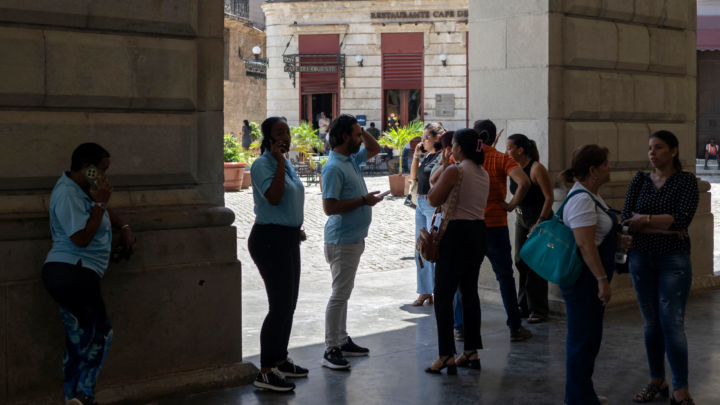
HAVANA, Cuba (AFP)—A strong earthquake struck off the coast of western Cuba on Monday, with AFP journalists in Havana reporting 20 seconds of shaking that forced Cubans out of buildings and into the streets.
The US Geological Survey said that the quake was 6.1 magnitude and struck about 62 miles (100 kilometres) off the island’s western tip.
No injuries or significant damage were recorded.
People milled around Havana’s city centre, checking their phones after the tremor, which, according to Cuban authorities, was felt “throughout the entire west of the country.”
“At first I just felt dizzy — it didn’t occur to me it was an earthquake, I’d never experienced that before,” Carmel Delgado, a 47‑year‑old economist, told AFP.
“But once we realized what it could be, we got out quickly.”
AFP reporters as far away as Florida also felt the tremble.
The US Tsunami Warning Center ruled out a significant tsunami threat following the quake.
But there was a “very small possibility” of tsunami waves along the coasts located near the epicenter, it said.
Francis Ruiz, a 41-year-old actor, was recording a radio drama in a fifth-floor studio in Havana’s historic center when he felt the tremor.
“We were recording in an office and all of a sudden the table moved and we all looked at each other,” Ruiz told AFP.
“The building shook, and right then chaos broke out, everyone running down the stairs,” he added.

TCI's Ashley Brooks returns as Quarterback to Brazil
The Brazilian American football scene is buzzing with excitement as Galo FA officially welcomes back quarterback Ashley Brooks, a dynamic athlete, who is expected to bring leadership, intensity, and explosive playmaking to the team this season.
Known for his athleticism, field awareness, and ability to energize both teammates and fans, Brooks’ return marks a major boost for Galo FA’s offense as the club looks to make a strong statement in the upcoming campaign.
In an announcement that quickly gained attention across social media, the club shared its excitement over the signing:
“The Atleticana American Football family has a new commander in Footbal!
Galo FA announces the arrival of Ashley Brooks in June, they announced on their website that reinforcement coming to elevate the level of our offense and bring even more excitement to the season! Get ready for incredible plays and plenty of determination on the field.
Here is Galo! 🐔🔥”
Brooks’ return to football has also sparked excitement among supporters online, with fans eager to see the quarterback back under center and leading the offense once again. His experience, confidence, and competitive spirit are expected to play a major role in shaping Galo FA’s season.
The quarterback has reportedly expressed enthusiasm about returning to the game to RTC Sports and embracing this new chapter in Brazil, where American football continues to grow rapidly in popularity and competitiveness.
With Ashley Brooks now back in action, expectations are high for Galo FA as the team prepares for an electrifying season filled with big plays, passion, and championship ambitions.
The host of Sports on the Go, told RTC Sports that while on the go, he will still host his program during the World Cup season this June on 89.1fm.

BARBADOS Evelyn wins 100m at Enhanced Games to earn US$250, 000
Barbadian female sprinter Tristan Evelyn walked away with US$250, 000 after winning the women’s 100m at the controversial Enhanced Games on Sunday.
Running as a non-enhanced athlete, the 28-year-old Olympian crossed the finish line in 11.25 seconds to comfortably win gold in the six-woman field.
Shania Collins of the USA was second in 11.43 seconds to win US$125, 000, with her compatriot Taylor Anderson claiming US$75, 000 after finishing third in 11.48 seconds.
The race also featured three other athletes from the Caribbean, with Denae McFarlane of Jamaica placing fourth in 11.61 seconds to take home US$50, 000, while Guyana’s Jasmine Abrams (11.72) and Jamaica’s Shockoria Wallace (13.30) finished fifth and sixth and earned US$30, 000 and US$20, 000 respectively.
An emotional Evelyn said she was elated to have won the event and the massive payday.
“I can’t even put it into words, I’m just so grateful,” she said fighting back tears.
“This is everything. This is my childhood dream coming through. I believed in my ability…For a lot of years I’ve doubted myself but this time I wanted to be confident in who I am and in the work that I put in and I did that tonight.
Source- CMC
Pollard describes Mumbai Indians’ cricket season as “disappointing” in IPL.
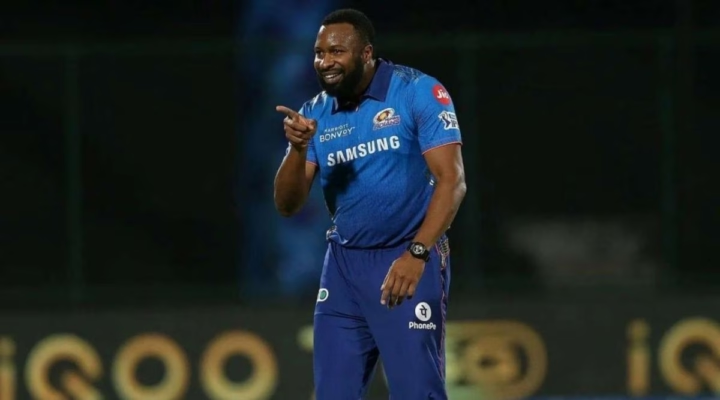
Batting coach for the Mumbai Indians, Kieron Pollard has admitted that the team’s performance in the 2026 Indian Premier League (IPL) fell well short of expectations.
Mumbai Indians placed ninth in the 10-team tournament, mustering just eight points from their 14 matches with only four wins.
Speaking after their 30-run defeat to the Rajasthan Royals in their final match on Sunday, Pollard conceded that the team failed to deliver.
“If this had happened, if we had done this, if we had done that, if we had played this one, if we had batted, it’s a bit of that,” Pollard said at the press conference after the game.
“Overall, it has been disappointing for all of us as Mumbai Indians. I’m sure the fans and everyone would have felt the same and there’s no hiding from that. We weren’t good the entire tournament. We weren’t able to sort of string together wins and use the momentum when we got it.”
The former West Indies all-rounder said the team would perform a postmortem at a later date to determine what went wrong.
“Right now is not the time and place to talk about that [postmortem]. All these things will be sort of emotional decisions and thinking of every aspect of what’s needed.
“Everyone needs that time and space to go, sit down, recollect, have a fair idea and assessment as to where it went wrong for us. That’s where better decision-making is going to come about. If you sit here right now and say you need to do this, you need to do that, I think that will be irresponsible from a management perspective,” Pollard said.
“Guys are going to sit back and actually think about what’s needed. It has been a while since we won the championship and that’s something that we have accepted as a team. And I said, another disappointing campaign adding to what would have transpired before. So deep thinking is going to go into it.”
Source-
CMC

Singer D4vd arrested on suspicion of murdering teenage girl
US singer D4vd has been arrested on suspicion of murdering a teenage girl who went missing last year, police say.
The star, whose legal name is David Anthony Burke, was the target of a grand jury investigation into the apparent murder of Celeste Rivas Hernandez, whose remains were found in his Tesla in September.
The Los Angeles Police Department said on Thursday that the 21-year-old was being held without bail and the case will be presented to the District Attorney's office on Monday.
In a statement to US media, Burke's lawyers said: "Let us be clear - actual evidence in this case will show that David Burke did not murder Celeste Rivas Hernandez and he was not the cause of her death."
They added: "There has been no indictment returned by any grand jury in this case and no criminal complaint filed. David has only been detained under suspicion."
Police earlier said they had arrested Burke "for the murder of Celeste Rivas".
Questions had been mounting since the discovery on 8 September of the 14-year-old's remains in a Hollywood tow yard, after authorities received reports of a foul odour coming from the vehicle.
Investigators found her decomposed head and torso in a cadaver bag in the front boot of a Tesla car registered to D4vd's address in Texas, court documents said.
The county's medical examiner said the body was "severely decomposed" and deferred on making a ruling on how she died pending the death investigation. She might have been dead "for several weeks" before the discovery of her body, officials said.
No cause of death in the teen's case has been announced, with authorities only saying for months that they were treating the case as a death investigation.
A judge ordered that the teen's death records be sealed in November to ensure officers received information from the medical examiner before the public.
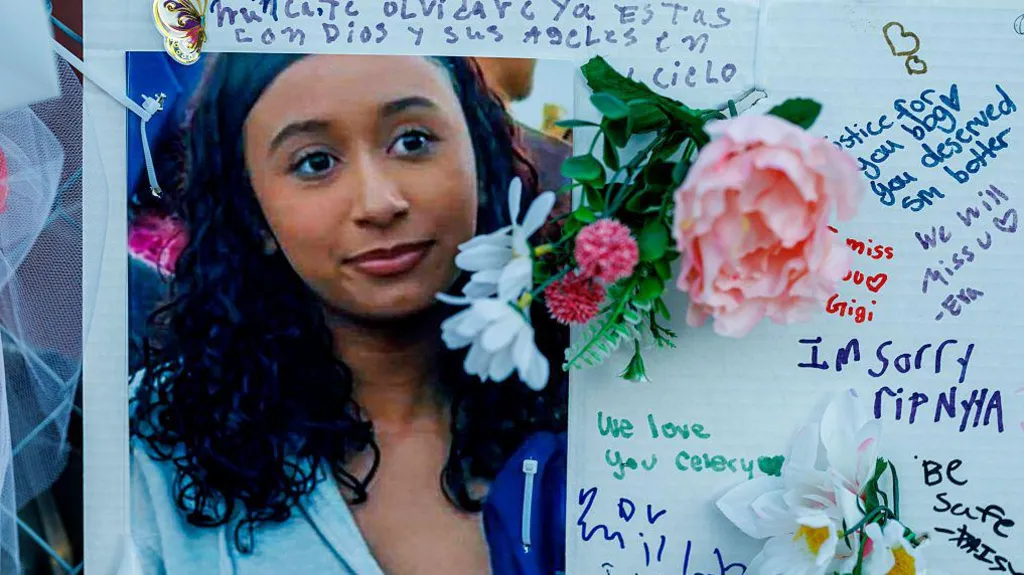
Rivas Hernandez - who lived about 75 miles (120km) from where her body was discovered - had last been reported missing by her family in April 2024, but it was not the first time she had run away from their Lake Elsinore home. A first-generation daughter of immigrant parents from El Salvador, neighbours recognised her as a girl who would visit the corner store almost daily to buy candy and soda, according to the Los Angeles Times.
The lack of information in the macabre death has fuelled intrigue and ignited an online following, with many hypothesising about the girl's connection to the singer.
A grand jury began hearing evidence in the case in December, but Burke's arrest on Thursday marks the first significant development in the case in months.
More details about the case emerged in court filings after the singer's family was summoned from Texas by a California court to testify before the grand jury.
When Dawud Burke, D4vd's father, fought against the summons in a Texas court he included material from the California case that had not been previously available to the public.
The filings, obtained by the BBC, confirmed that D4vd had been identified as a "target" of a grand jury investigation in Los Angeles and that he may be subject to proceedings for one count of murder.
The singer has been virtually silent on the case, but his representatives previously said he was co-operating with authorities. The BBC has contacted his representatives about Thursday's arrest.
The few details that have so far been shared with the public before include that Rivas Hernandez was wearing a tube top, size small black leggings and jewellery, including a yellow metal stud earring and a yellow metal chain bracelet, when her body was found.
She also had a tattoo that read "Shhh…" on her index finger - a marking nearly identical to that on Burke's own index finger.
Who is D4vd?
D4vd, from Houston, Texas, is best best known for moody, indie-pop hits like Here With Me and Romantic Homicide.
He initially made his name as a teenager, by posting videos of himself playing the video game Fortnite.
After teaching himself music production, he released his debut EP, Petals To Thorns, in 2023.
That same year, he landed on Variety's Young Hollywood list and opened for SZA on her SOS tour.
He released his debut album in April 2025, accumulating 22 million monthly listeners on Spotify and almost four million followers on TikTok.
He was also commissioned by Fortnite to create the game's first official anthem, Locked & Loaded.
Shortly after Hernandez's body was found, the singer cancelled his world tour and retreated from the spotlight.
Police previously said they had raided the Hollywood Hills mansion where he was living, just blocks from where his Tesla had been towed. He was also dropped from marketing campaigns with US retailer Hollister and footwear giant Crocs.
In September, Telepatía singer Kali Uchis announced she was taking down their collaboration, Crashing.
- BBC
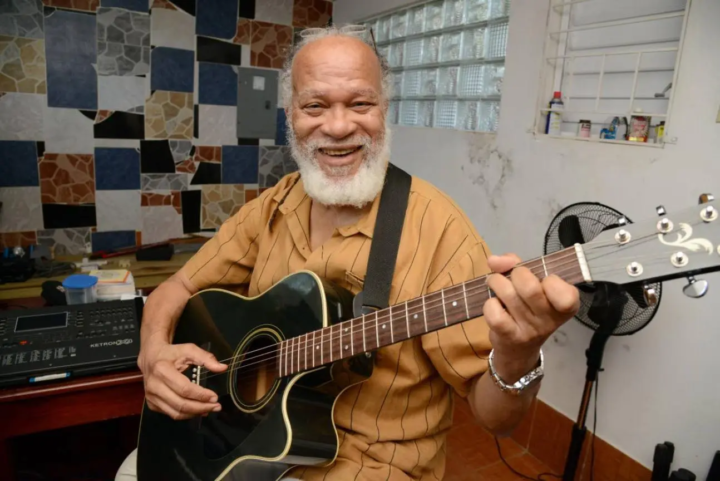
Ernie Smith dies at 80
FLORIDA (THE GLEANER) - The music fraternity is mourning the passing of legendary singer Ernie Smith, who died on Thursday evening at a hospital in Florida.
“He’s gone. He’s no longer with us,” his wife, Claudette Bailey-Smith, told The Gleaner.
Earlier on Thursday, Bailey-Smith had shared that the beloved reggae and folk singer, who underwent surgery on Sunday, had been experiencing health challenges since June last year.
“That surgical procedure had to do with an intestinal issue. He is now stable, and [since Wednesday] he has been a little bit more alert and responding to commands. He opened his eyes fully for the first time since Sunday, and I asked him to squeeze my hand, and he squeezed it strong,” Bailey-Smith, his wife of three years, shared at the time.
She stated, however, that the Life is Just for Living singer was still not yet out of the woods and required another procedure.
Later that day, however, the All for Jesus singer took his final breath.
His wife praised the hospital staff for the excellent care that was given to the iconic singer and thanked those who reached out with their prayers and well-wishes.
Joanna Marie Robinson, a member of Smith’s management team, said that “Ernie Smith was a true treasure to Jamaica and to the world.
“Today, we mourn not only the loss of a legendary artiste, but also the loss of a remarkable man whose warmth, wisdom, and spirit touched so many lives,” Robinson, who is the wife of singer Ed Robinson, told The Gleaner.
Ernie Smith began his music career in the late 1960s. By 1971, he found success with the songs Bend Down and Ride on Sammy. Among his well-loved hits are Pitta Patta, Duppy Gunman and Key Card. In 1972, he won the Yamaha Music Festival in Japan with Life Is Just For Living, a song originally written for a Red Stripe commercial. In 1973, he was awarded the Badge of Honour for Meritorious Service in the Field of Music by the Jamaican government. The award recognised his contribution to Jamaica’s cultural heritage.

BLOCKED!
KINGSTON (THE GLEANER) - Shockwaves rippled through the global track and field community – particularly in Jamaica – after World Athletics (WA) on Thursday blocked the transfer of allegiance to Türkiye for 11 professional athletes in an unprecedented ruling.
WA said the move, first revealed in June 2024, amounted to a coordinated state recruitment effort driven by financial inducements, with athletes lacking any genuine connection to Türkiye. The governing body argued that such arrangements undermine eligibility rules and threaten the integrity of international competition.
Among those affected are Jamaicans Jaydon Hibbert, Rajindra Campbell, Wayne Pinnock and Roje Stona, along with Nigeria’s Favour Ofili.
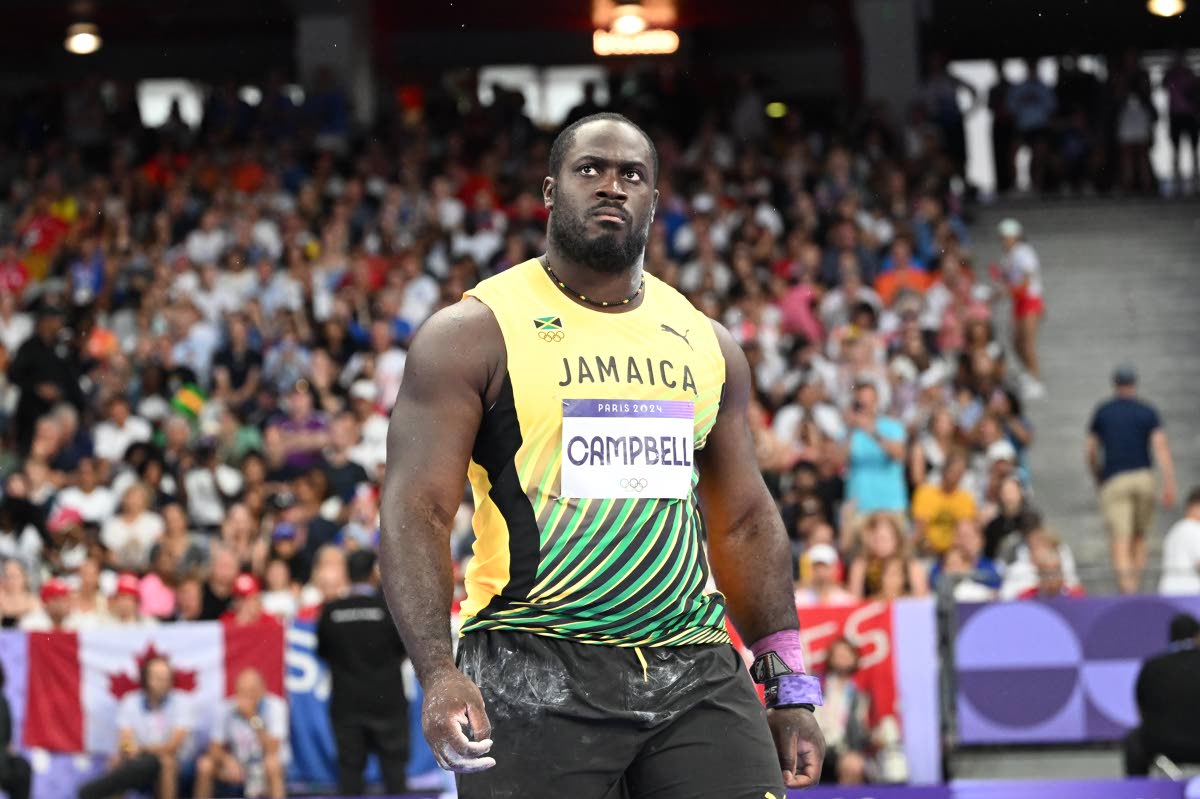


Analysts say the implications extend far beyond competition, touching on governance, fairness, and athletes’ rights.
Attorney-at-law Sayeed Bernard, who has represented athletes before the Court of Arbitration for Sport (CAS), questioned WA’s decision to assess the cases collectively rather than individually.
DISADVANTAGE TO ATHLETE
He suggested that that approach could disadvantage athletes with specific personal circumstances, pointing to Ofili and Campbell.
Ofili missed the 100m at the Paris Olympics due to administrative failures by her federation, while Campbell has struggled with limited financial backing despite winning Jamaica’s first Olympic medal in the throws. This, Campbell said, placed a financial toll on his training regime.
Bernard argued that such realities should be weighed carefully.
“World Athletics has to take that into consideration as it relates to why she (Ofili) is transferring her allegiance,” he said, adding that inadequate support systems can push athletes to seek better opportunities elsewhere.
“Jamaica, for example, does not support Rajindra Campbell – little to no financial support and lack of proper facilities to prepare – so he says well better mi try transfer and try my luck because I will have better training,” he told The Gleaner.
Any appeal must first go back to WA’s Nationality Review Panel – the same body that denied the transfers – before reaching CAS.
Bernard argued that success at CAS would likely depend on whether each athlete’s situation is judged on its own merits, particularly where lack of support affects preparation and earning potential.
“They (WA) basically said state-orchestrated, financially induced, and a mass-athlete recruitment will not be recognised as a valid reason for transfer of allegiance. That, to my mind, is a bold interpretation of the regulations, and so it will remain to be seen now if CAS would disturb that to say, notwithstanding the [number] of athletes going to any particular nation, each athlete must be taken on his or her own merit,” the attorney reasoned.
If approved, the transfers would have made the athletes eligible to represent Türkiye at the 2028 Los Angeles Olympic Games, and there is speculation that some may have already begun receiving financial support tied to the move.
CONTRACTUAL OBLIGATIONS
Bernard said contractual obligations could now become central to the dispute, noting that athletes may have already fulfilled their part of the agreement.
“For what we know, they said it was a sign-on bonus. As far as I am concerned, in the ordinary interpretation, devoid of having sight of the contract to see if there is any definition of what signing on means, they would have signed contracts, signed several documents in order for Turkiye to effect this process through World Athletics. And so, in my view, on a generous interpretation, they would have done their part, and it is not as a result of anything they have done or not done as to why World Athletics has made this order,” said the attorney.
The ruling has also reignited debate in Jamaica about opportunities for athletes compared to other professionals who migrate for better pay.
Sociologist Orville Taylor said the comparison is flawed, noting that switching sporting allegiance does not necessarily involve abandoning citizenship, unlike traditional labour migration governed by the International Labour Organization (ILO).
“You are moving for financial gain, yes, but you are not abdicating your relationship with your country, so it’s not a case where you are dropping your citizenship and involving yourself in a kind of mercenary-type situation,” Taylor told The Gleaner.
“So it is really not quite the same thing because at the end of the day, you are still Jamaican, unless you have actually gone through the entire immigration process.,” he continued.
Taylor added that while ILO standards aim to regulate recruitment and prevent exploitation, they have not kept pace with modern sport. He acknowledged that financial incentives in athletics raise legitimate concerns about fairness and the potential commodification of talent.
“If you want to draw some kind of comparison between these athletes, who don’t necessarily have any kind of feeling towards the country but are moving because of financial gain, the overall principles surrounding mercenaries, I think, would perhaps apply, and mercenaries are something that I think the ILO generally frowns upon,” he said. “But they are not mercenaries in the true sense because the ILO clearly defines mercenary as an individual who engages or attempts to engage in conflict.”
Still, he warned that unchecked recruitment by wealthy nations could erode the spirit of international sport.
“Just imagine what happens in the case where a country with immense wealth is able to completely poach the resources, the athletic resources from somewhere else. Now I don’t have a problem in principle with an individual deciding that he or she is going to make a decision at the individual level to move to do things which are in the best interest of one’s family, but it cannot be wanton, and it cannot be unregulated,” Taylor reasoned.
Psychologist Dr Leachim Semaj said the delayed ruling – coming 10 months after the applications were filed – is likely to have a deep emotional impact on the athletes, many of whom had already committed mentally to the transition.
“The athletes have already left. They left long time ago. From you start thinking about this you start working it through psychologically, you know, back and forth with your family, those close to you, and when you get to the point where it is accepted, you have made the transition,” said Semaj.
Explaining that decisions of this magnitude involve extensive planning and emotional investment, a sudden reversal, he noted, could be devastating.
“So they’ll go through a period of doing nothing, ... in grief, and they will have broken ties psychologically, broken ties with Jamaica, broken ties with their team already, and all of that, now having to come back and reintegrate themselves with their country and team. That’s going to take some doing,” said Semaj.
He added that reintegration into their original teams and national setups could also prove difficult, with some athletes facing questions of loyalty or even reconsidering their careers.