
Stevie Wonder To Be Honored At 2011 Apollo Theater’s Annual Spring Gala Benefit
The Apollo Theater announced on June 6th the complete lineup for its sixth Annual Spring Gala Benefit Concert honoring cultural icon Stevie Wonder, who will be inducted into the Apollo Legends Hall of Fame. The Benefit supports the preservation of the non-profit Theater’s unparalleled legacy, its current initiatives for emerging artists, and community and educational programs in New York City and beyond.
Wyclef Jean, Yolanda Adams, Melanie Fiona, Raphael Saadiq, Paul Schaffer, and Chick Corea, as well as other surprise guests, will perform during this special evening dedicated to Mr. Wonder’s legacy as an artist and philanthropist. The program will be hosted by celebrated comedian and former host of Showtime at the Apollo, Sinbad.
“I am proud to be hosting this outstanding evening honoring two ‘Wonders of the World’: the great Stevie Wonder and the legendary Apollo Theater,” said Sinbad. ”In many ways, hosting this event is like going full circle in my career. There isn’t a person in my time up to now that didn’t want to be Stevie Wonder. Getting to meet and hang with Stevie over the years-as well as hosting Showtime at the Apollo for two years-were milestones in my life.”
Stevie Wonder joins other iconic performers in the Apollo Legends Hall of Fame-musicians, artists, and entertainers whose path to fame included the Apollo-including Michael Jackson, Aretha Franklin, Quincy Jones, Patti LaBelle, Smokey Robinson, James Brown, Gladys Knight, Little Richard, and Ella Fitzgerald. Each Apollo Legends Hall of Fame inductee is honored with a plaque on the Apollo Walk of Fame, installed under the Theater’s iconic marquee on 125th Street in Harlem.
Additionally, The Apollo will present cosmetics giant Revlon with its Corporate Award, accepted by Chairman, Ronald O. Perelman, in recognition of Revlon’s support of the Apollo. Philanthropist and arts supporter Reginald Van Lee will receive The Percy E. Sutton Civic Leadership Award, named in honor of one of New York City’s legendary leaders and a champion of Harlem and its cultural institutions.
Produced by Ron Weisner for Ron Weisner Entertainment with events management services provided by JKS Events, the benefit concert will be under the musical direction of Ray Chew, whose credits include Musical Director for American Idol, NBC’s The Singing Bee, Showtime at the Apollo as well as the Apollo’s weekly Amateur Night show. Following the performance, the event will conclude with the Apollo Supper Club-a stylish lounge atmosphere created by David Monn featuring spectacular gourmet creations prepared by Great Performances. The world renowned DJ D-Nice will provide music for late-night dancing.

Last ‘Oprah’ Show Watched by 16 Million
When Oprah Winfrey said so long to her daytime audience last month, more than 16 million tuned in to witness history – which averages out to twice as many households than usual.
The Nielsen Co. reported today that the May 25 series finale of “The Oprah Winfrey Show” drew 16.4 million viewers, making it her most-watched episode in more than 18 years, reports the Associated Press.
The February 1993 airing of its “Why I Love Older Women” episode was seen by 17.3 million viewers.
Nielsen says the audience for the surprise farewell episode that aired May 23 drew 12.3 million viewers. The second part of that gala event attracted 13 million viewers when it aired May 24.
“The Oprah Winfrey Show” averaged 8.2 million viewers during May.
Western-Arab talks to focus on Libya after Gaddafi
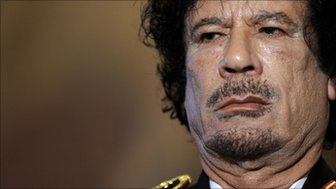 Western and Arab nations are to meet in the United Arab Emirates to discuss how events in Libya might develop if Col Gaddafi were no longer in power.
The so-called Contact Group is also expected to firm up its pledge to set up a fund to help the Libyan rebels.
The meeting comes as Nato intensified its air strikes on government targets in Tripoli.
Meanwhile, 14 rebels were reportedly killed in the city of Misrata as they tried to push back government troops.
Health officials and a rebel spokesman said more than 20 others were wounded when government forces responded with heavy artillery fire.
In a separate development, the chief prosecutor for the International Criminal Court (ICC) said there was evidence that Col Gaddafi had ordered the rape of hundreds of women as a weapon against rebel forces.
And in Geneva, the UN Human Rights Council is due to debate a report on alleged human rights violations allegedly committed by both government troops and the rebels.
Top government officials from the Contact Group - which includes Britain, France and the US, as well as Arab allies Jordan Kuwait and Qatar - will be meeting in Abu Dhabi later on Thursday.
US Secretary of State Hillary Clinton has already arrived in the UAE.
Ahead of the talks, a senior US official was quoted by Reuters as saying that "the international community is beginning to talk about what could constitute end-game" to the Libyan conflict.
"That would obviously include some kind of ceasefire arrangement and some kind of political process... and of course the question of Gaddafi and perhaps his family is also a key part of that," added the official, who spoke on the condition of anonymity.
British Foreign Office Minister Alistair Burt, who is also expected to attend the talks, said that "the contact group will also reiterate the unequivocal message... that Gaddafi, his family and his regime have lost all legitimacy and must go so that the Libyan people can determine their own future".
"Until Gaddafi does so, the pressure will increase across the board: economically, politically and militarily," Mr Burt said.
At least two powerful explosions rocked Tripoli late on Wednesday.
It was not immediately clear what was targeted in the air strike, but it reportedly happened close to Col Gaddafi's residence.
Last week, Nato extended its air operations for another 90 days and increased the scope of its UN-mandated campaign to protect civilians. Since then, attack helicopters have gone into action and command centres in Tripoli pounded.
Deadly militant attack on Pakistan security checkpoint
Eight Pakistani soldiers and 12 insurgents have been killed in fighting in north-western Pakistan, local officials say.
They say militants - armed with rockets and heavy weapons - attacked a security checkpoint in the volatile Waziristan region early on Thursday.
Security forces then responded by opening fire and killing 12 rebels.
Details of the attack are still sketchy, but one report said Taliban militants were involved in the assault.
Reports say that more than 100 militants armed with rocket launchers and other weapons attacked the checkpoint in South Waziristan near the Afghan border.
Earlier this month a top al-Qaeda operative, Ilyas Kashmiri, was killed in a US drone strike in the tribal region of South Waziristan.
Militants in Pakistan have vowed to avenge his killing, as well as the death of al-Qaeda leader Osama Bin Laden. He was killed by US forces in a garrison city north of Islamabad on 2 May.
New York Times Says US Intensifying Covert War in Yemen
A major American newspaper is reporting that the U.S. government has intensified its covert war in Yemen in recent weeks, deploying armed drones and fighter jets to attack militant suspects seeking to undermine the shaky Sana'a government.
Citing U.S. officials, The New York Times said that after nearly a year-long pause in American airstrikes, the U.S. has accelerated its campaign in an attempt to keep militants linked to al-Qaida from consolidating power. The attacks are being led by the U.S. Defense Department's Joint Special Operations Command in close coordination with the CIA.
The report said that last Friday American jets killed a mid-level al-Qaida operative, Abu Ali al-Harithi, and several other militant suspects in a strike in southern Yemen. Weeks before, drones fired missiles aimed at Anwar al-Awlaki, the radical American-born Islamic cleric that the U.S. has been trying to kill for more than a year. But he survived the attack.
The heightened campaign comes during a perilous period for Yemen, with President Ali Abdullah Saleh fleeing the country to Saudi Arabia for treatment of severe burns he suffered in last week's bomb attack on his presidential compound. He authorized American missions in his country in 2009, but placed limits on their scope and publicly has said that all military operations have been conducted by Yemeni troops.
The Times said the U.S. has carried out its attacks in the belief that Al-Qaida in the Arabian Peninsula poses a greater threat to U.S. security than the militants hiding in Pakistan's mountainous tribal areas next to its border with Afghanistan. The Yemeni group has been linked to the attempt to blow up a transatlantic jetliner on Christmas Day 2009 and last year's attempt to blow up cargo jets with bombs hidden inside printer cartridges.
U.S. and Yemeni officials say Mr. Saleh suffered injuries from the bomb attack on the presidential compound that are far more severe than first disclosed, raising doubts about his return to power. Mr. Saleh was initially said to have received a shrapnel wound, and his vice president was quoted earlier this week as saying the president would return to Yemen within days from Saudi Arabia where he is being treated.
But diplomatic sources say Mr. Saleh has burns on his his face, neck and chest. He also is believed to have suffered a serious head injury.
Yemen's prime minister, his two deputies, the heads of the two houses of parliament and the head of the ruling party's legislative bloc were all evacuated to Saudi Arabia with severe injuries.
Meanwhile, the unrest that has engulfed the nation for months shows no signs of ending, despite the president's absence.
Fresh fighting erupted this week in Yemen's second-largest city, Taiz, where armed opposition tribesmen have occupied a large area in the center of the town. Government forces also clashed with Islamist militants in the southern city of Zinjibar, more than a week after hundreds of militants seized control of the town.
Nearly 400 people have been killed since a popular uprising against Mr. Saleh began in January.
UN chief Ban calls world leaders to end Aids by 2020
UN Secretary General Ban Ki-moon has called for global action to end the Aids disease by 2020.
"That is our goal - zero new infections, zero stigma and zero Aids-related deaths," Mr Ban said at a UN summit on Aids in New York.
The three-day meeting marks the 30th anniversary since the discovery of HIV - the virus that leads to Aids.
Meanwhile, African leaders called for greater resources to battle the pandemic across the world.
Some 34m people have Aids, but about half of them do not know they have the disease, according to the UN.
'Insufficient funds'
"Today, we gather to end Aids," Mr Ban said at the opening of the United Nations General Assembly meeting on Wednesday.
"If we are to relegate Aids to the history books we must be bold. That means facing sensitive issues, including men who have sex with men, drug users and the sex trade," the UN chief said.
Mr Ban stressed that new infections have dropped by 20% since 2001 - the year when world leaders first pledged to act to control the pandemic.
He also urged the global community to "come together in global solidarity as never before" to achieve universal access to Aids treatment by 2015 and also efforts to lower costs.
The meeting is being attended by 30 presidents and heads of government, and some of the African leaders spoke of the desperate need for more funds to fight the disease.
"To say that adequate funding is critical to the success of our HIV and Aids response is an understatement," said Nigerian President Goodluck Jonathan, whose country has the highest number of HIV-positive people after South Africa.
Gabon's President Ali Bongo Ondimba said that resources available for Africa "remain insufficient given the size of the HIV/Aids impact on the continent".
More than 9m people still do not get retroviral treatment to keep HIV/Aids at bay, and an estimated 1.8m people die each year from Aids.
30 years of HIV
- 5 June 1981: Center for Disease Control mentions a new virus in its weekly mortality report
- 1982: The term Aids (acquired immunodeficiency syndrome) first used
- 1984: Virus identified and named HIV
- 1985: Rock Hudson dies of Aids, teenage haemophiliac Ryan White expelled from school because infected through treatment
- 1987: First showing of Aids Memorial Quilt on National Mall in Washington DC
- 1991: Jeremy Irons wears red ribbon and basketball's Magic Johnson has the virus
- 1993: Philadelphia film wins two Oscars
- 2000: Infection rate in US among African Americans overtakes that in gay men
- 2011: Global death toll 22m, infections 60m
French IMF Candidate Voices Satisfaction After Beijing Talks
French Finance Minister Christine Lagarde says she is “very satisfied” after two days of talks with Chinese leaders about her bid to become managing director of the International Monetary Fund.
Lagarde spoke to reporters in Beijing Thursday following her meetings with Vice Premier Wang Qishan, central bank chief Zhou Xiaochuan, and other senior officials. She said the sides had agreed that the selection process should be open, transparent and based on merit.
Chinese state media quoted Foreign Minister Yang Jiechi saying after a meeting with Lagarde on Wednesday that she has explained the purpose of her candidacy and that there is “an open field” for the job.
Lagarde is considered the frontrunner to succeed Dominique Strauss-Kahn, who resigned after being charged with attempted rape in New York City. Her strongest challenger for the post is Mexican central bank chief Agustin Carstens, who is due to visit China next week.
The candidates are touring world capitals to muster support for their candidacies. Lagarde failed to win any public endorsement after an earlier stop in New Delhi, prompting speculation that India may still be waiting to see if a regional candidate emerges.
Traditionally, the World Bank has been headed by an American and the IMF by a European. But many in Asia say the tradition should be abandoned in recognition of the region's rising economic might.
China's voting share in the IMF was increased last year to 6.19 percent from the previous 3.65 percent in recognition of its role as the world's second largest economy. The French news agency AFP quoted Lagarde on Thursday saying China's share should be boosted to 6.4 percent.
India beat Windies by seven wickets on Duckworth-Lewis method
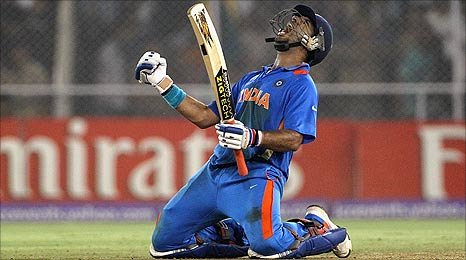 India beat West Indies by seven wickets on the Duckworth-Lewis method in the second one-day international in Trinidad to open up a 2-0 series lead.
Windies made a promising start but Amit Mishra took 4-31 as India restricted them to 240-9 off 50 overs.
India lost Shikhar Dhawan early on but reached a promising 100-1 by the time rain intervened to leave them a revised target of 183 off 37 overs.
Virat Kohli top scored with 81 as India coasted home with 20 runs to spare.
The hosts began promisingly after being sent in to bat at Queen's Park Oval, with Lendl Simmons and Ramnaresh Sarwan both hitting half centuries.
But the Windies collapse begain when Sarwan was caught by Yusuf Pathan, and their last five wickets fell for only 37 runs.
Dhawan, who was caught by Kieron Pollard for three, went cheaply as India began their reply but Kohli and Parthiv Patel, who hit 56 from 64 balls, enjoyed a second-wicket stand of 120.
India were held up for 80 minutes by the weather but never looked in trouble, with captain Suresh Raina hitting the winning runs on his way to an unbeaten 26.
The third match in the series will be played in Antigua on Saturday
Floyd Mayweather to make return against Victor Ortiz
Floyd Mayweather has announced he will end his latest spell in retirement by challenging Victor Ortiz for the WBC welterweight title on 17 September.
Mayweather has not fought since outpointing Shane Mosley in May 2010.
"My fans have been waiting long enough," said the 34-year-old American.
The return of unbeaten Mayweather, a five-time world champion, will raise hopes of an ultimate showdown with Philippine superstar Manny Pacquiao.
But first he must negotiate his way past Ortiz.
"At this stage of my career, these are the challenges I look for, a young, strong, rising star looking to make his mark in boxing by beating me," added Mayweather.
"Trust me, I will be ready."
American Ortiz, 24, won his title from defending champion Andre Berto in Connecticut in April. He was knocked down twice en route to winning a unanimous decision.
"I respect Mayweather because he has been a champion for many years and I know he will be ready but so will I," said Ortiz, who has lost twice in 33 fights.
"I'm a world champion for a reason and I am not going to let go of my title any time soon. This is going to be a great fight, but I will remain a world champion for many years to come."
Mayweather's time away from the ring has not been without incident.
Unbeaten in 41 fights, Mayweather faces felony charges in a domestic argument with his ex-girlfriend and two of their children last year.
He also faces misdemeanour harassment charges accusing him of threatening two homeowner association security guards outside his Las Vegas home.
The charges stem from an October dispute over parking with guards in the gated community where Mayweather lives.
Mayweather also faces a September trial on a misdemeanour battery charge stemming from allegations he poked a 21-year-old guard in the face during a separate argument over parking tickets in November.
The venue for the September fight has yet to be determined.
Rafael Nadal beats qualifier Matthew Ebden at Queen's
Rafael Nadal effortlessly reached the third round of Queen's with a straight-forward 6-4 6-4 victory over Australian qualifier Matthew Ebden.
Fatigue did not seem to overly trouble Sunday's French Open champion as he broke in the opening game against an opponent ranked 168th in the world.
Nadal, hoping to reclaim a title he won in 2008, broke early in the second set and easily served out the match.
"I feel a little tired," said the Spaniard. "I had a tough French Open."
The top seed admitted adjusting to his first singles match on grass this year was tricky, saying: "It's never easy at the start of the grass-court season.
"Everything is completely different, and you don't have a lot of days to adapt to the different surface.
"It's not enough, but I've progressed. I am a little bit tired because I had a tough Roland Garros and clay-court season but I am here to try my best like always."
Ebden served well throughout but offered little in the way of a real threat, apart from a solitary break-back point at 3-2 in the second set, which Nadal saved easily.
The world number one will play Radek Stepanek in the third round, after the Czech player fought back to beat Croat 16th seed Ivan Ljubicic 0-6 7-5 6-4.
The ATP confirmed on Wednesday night that Nadal's victory over Ebden means he has enough ranking points to secure a place at this year's World Tour Finals.
Nadal, the beaten finalist in 2010, joins Australian Open champion Novak Djokovic in qualifying for the event, to be held in November at The O2 in London.