
Damian Marley Collaborates with Mick Jagger
Damian Marley is known for his unique collaborations with different artists. His latest project involves Mick Jagger for a super group called Super Heavy.
Also involved is singer Joss Stone, Eurthymics member Dave Stewart and producer A.R. Rahman.
According to Rolling Stone, the group has been recording for at least 18 months and plan to debut the album in September.
“It’s different from anything else I’ve ever been involved in,” Jagger told the magazine. “The music is very wide-ranging — from reggae to ballads to Indian songs in Urdu.”
They are actually further along than expected. Super Heavy completed their first single and filmed the accompanying visuals and is looking around for a major label deal.

NHS troubleshooter 'given free Porsche and exotic holiday in the TCI' is sued for £250,000
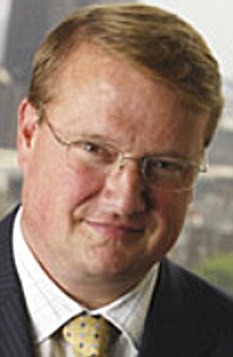 A former high-ranking civil servant who was given a free Porsche and a luxury Caribbean holiday is being sued for alleged corruption by the Department of Health.
A High Court writ issued in the name of Health Secretary Andrew Lansley claims up to £250,000 in damages and compensation from Ken Anderson – the controversial Texan businessman drafted into Whitehall by Tony Blair to encourage more private-sector involvement in the NHS.
The writ claims he was given a Porsche Carrera 911 by a former colleague whose consultancy firm was being paid £1,300 a day by the Department of Health, and a week-long holiday with his three sons in the Turks and Caicos Islands, gifts to which he was not entitled.
Mr Anderson, who lives in an £800,000 farmhouse near Wantage, Oxfordshire, was head of the Department of Health’s commercial directorate for four years until 2007. At one stage he was seen as a possible contender for the top job of NHS Chief Executive.
He left the health service to become a banker and is now being sued by Mr Lansley ‘in respect of benefits received corruptly and in breach of duty’, according to the writ. Mr Anderson strongly denies the allegations against him.
The 180mph sports car was allegedly given to him by Tyrone Robinson, whose consultancy firm, Broadsword, was hired by Whitehall officials in 2003 to advise them on NHS reforms.
The writ says the two men had first met several years earlier when they worked together at infrastructure company Amey, where Mr Anderson was involved in bidding for Government-backed private finance contracts.
The gift of the £70,000 car was intended to ensure that Broadsword retained its Department of Health contract and that Mr Robinson was paid above the market rate for his services, according to the 20-page legal document.
It says Mr Robinson was given a 100 per cent pay rise within a year of starting work with the NHS, boosting his daily earnings from £650 to £1,300 in a deal overseen by Mr Anderson. He was also promoted several times, becoming the direct-orate’s Chief Operating Officer.
Broadsword’s contract with the Department of Health ended in 2005 after it had received £226,000 in fees. The consultancy was struck off the Companies Register and dissolved in 2007.
The Caribbean holiday referred to in the writ was allegedly arranged by law firm Eversheds, which gives advice to the Department of Health and other Government bodies.
Mr Anderson’s family stayed at the luxurious Osprey Beach Hotel which has a private beach from where guests can scuba dive on the world’s third-largest coral reef. Although Mr Anderson had only two brief meetings with local officials, at which healthcare policies were discussed, the entire trip, including flights and hotels, was paid for by the Turks and Caicos government. 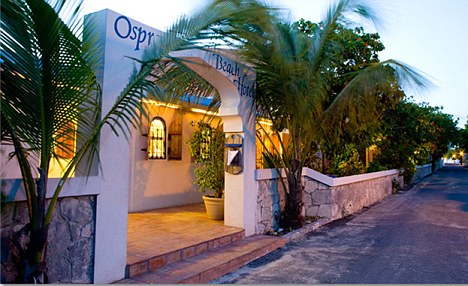
Mr Lansley’s writ includes the text of emails between Mr Anderson and Eversheds partner Alun Cole.
Mr Cole wrote on August 15, 2005: ‘Hope you all had a good weekend! This time next week hopefully we’ll be enjoying a beer on the beach! I have gone out of my way to stress to TCIG [Turks and Caicos Islands government] that this is your holiday week with the boys. I believe that you will have only two formal appointments. There may be informal invitations . . . but you are and must feel at liberty to turn any or all of them down.’
Three days later Mr Cole sent another message: ‘The government of the Islands has paid for you and I to go Business Class. I’m afraid the boys will have to slum it in Economy!’
Mr Anderson replied: ‘Alun, that sounds great! Am starting to feel a little like a free loader! Have checked into diving. Not a busy time of year so we will leave it until we arrive and do a little resort-based stuff I would imagine. Thanks for setting this up . . . the boys and I are very excited indeed.’
On his return, Mr Anderson discussed his trip with Neelam Sekhri, a San Francisco-based healthcare consultant who was then a member of the Department of Health’s Commercial Advisory Board.
Ms Sekhri, who is married to an eminent British professor, Sir Richard Feachem, was subsequently hired by the Turks and Caicos government to help implement its health service reforms.
The £24,000 bill for her services, however, was paid by the Department of Health – on Mr Anderson’s instructions, it is claimed. According to the writ, this was improper use of public money and Ms Sekhri’s fee, as well as the cost of the holiday, should be returned to the taxpayer.
Mr Anderson worked for private healthcare firms in the US and Germany for more than a decade before moving to Britain. At the NHS, he oversaw the introduction of treatment centres run by independent operators, a policy opposed by health campaigners and unions. He is now based in London as a managing director of Swiss-owned financial services giant UBS.
His solicitor, Sue Thackeray, of Finers Stephens Innocent, said: ‘Mr Anderson vigorously defends the allegations. He will serve his full defence within the next week that will put his position clearly forward.’
Mr Robinson failed to respond to calls from The Mail on Sunday.
Mr Cole’s solicitor, Phil Sherrell, said his client had done nothing wrong. He was invited separately from Mr Anderson to the islands to advise on a health project. He had no know¬ledge of any arrangements that may have been made for Ms Sekhri to provide consultancy services to the Turks and Caicos government.
Ms Sekhri was unavailable for comment. The Department of Health said: ‘We do not comment on ongoing legal proceedings.’
Sourcee: dailymail
South Caicos Regatta returns
South Caicos Annual Regatta comes alive on Thursday, May 26, 2011, with a float parade. Everyone can join in this event by purchasing your T-shirt now on sale for seven dollars ($7.00). Bring your flag along as well. The entire community is invited to be a part of ‘Regatta 45 …..Bringing It Alive!’
Visitors coming to the island by boat or plane will be greeted as usual with a “Welcome Party”, known only to the hospitality of South Caicos.
South Caicos is known for its outstanding performance in sports and this focus has always been a part of the Regatta activities. The ‘Basket Ball’ capital of the Turks and Caicos Islands has produced excellent teams who once ago were considered TCI’s best. The original FIRE FIGHTERS, ROCKETS, SHOOTERS and BREAKERS will give you many kodak moments in an exhibition match. If you would prefer a more relaxing environment, there is a table tennis match at Marjorie Basden High School compound.
The Regatta Beauty Pageant and Inagua Contact Band will be your enjoyment for a fun-filled evening.
Miss Regatta:
Straudia Forbes - Caicos Oil
Phara Knowles - Saunders & Co.
Daphne Pierre - Prestigious Properties
Little Miss Regatta:
Savannah Moore - New Star Construction
Joanna Pierre - Maxx’s Fashions
Kartinard Menard - Caicos Coin Laundry
Kayanna Gibson - Adams Square
Alresa Taylor - Caicos Fisheries Ltd.
Wichland Fernard - Sail Rock Development
Regatta Village will be the place to be. These activities will take place on Friday, May 27.
Saturday, May 28, “Regatta Fun Day’ begins in true TCI culture with junkanoo. Move to the rhythm of ‘We Funk Junkanoo Group’. The “Opening Ceremony” at 10:00 a.m. is a beginning for the entire family to celebrate by joining in the fun or just coming along to cheer others on. The excitement depends on how you participate, because this could last all day. There will be lots to do, watch, eat and drink, make this your special treat. Boat races you are sure to see. After you leave town, watch the basket ball “Slam Dunk” going on. There is also music into the night.
Sunday, May 29, the opportunity waits all to see the basket ball finals, ‘HARBOUR BOYS’ challenged by ‘HARBOUR HAULERS’! A match you cannot afford to miss. This day climaxes with Gospel Extravaganza at 8: 00 p.m. come and receive a spiritual blessing as talented men and women of God bless your hearts in music and song. The venue is Sea View Supermarket.
Monday, May 30, brings to an end Soccer Finals at 4:00 p.m. and following this, Regatta 2011.
The Regatta Committee 2011 expresses profound thanks and appreciation to all who have supported them through this trying time in order to keep the festival alive.
Wreath laying cermony for 1st natioanl hero this week
National Heroes Day will be celebrated on Monday, May30th, 2011 throughout the Turks & Caicos Islands.
The Cultural & Arts Commission cordially invites you to the Annual Heroes Day Wreath Laying Ceremony to be held at the J.A.G.S. Memorial Site in Grand Turk at 10:00 am.
honouring the First National Hero of the Turks and Caicos Islands the Late, Hon. J.A.G.S McCartney.
Special guest speaker will be Robert Hall of Expressions fame.
For those who are unable to attend, the ceremony will be broadcast live via Radio Turks and Caicos.

PNP party Jamaica,unveils shadow cabinet
OPPOSITION leader Portia Simpson Miller has unveiled a new shadow cabinet. In a release to the media today Simpson Miller revealed that former Finance Minister Omar Davies has been shifted from the finance portfolio to Transport and Works. He has been replaced by Peter Phillips.
The shadow cabinet has five new faces in Colin Fagan, Local Government and Community Development; Ronnie Thwaites, Education; Noel Arscott, Mining; Morais Guy, Housing and Mark Golding, Justice.
Simpson Miller will assume responsibility for Development, Information, Gender Affairs and Sports.
Below is the full slate of members of the People's National Party shadow cabinet.
- Peter Phillips — Finance, Planning and the Public Service;
- Omar Davies — Transport and Works;
- Peter Bunting — National Security;
- AJ Nicholson — Foreign Affairs and Foreign Trade;
- Robert Pickersgill — Lands, Water, Environment and Climate Change;
- Anthony Hylton — Industry, Investment and Commerce;
- Morais Guy — Housing;
- Fenton Ferguson — Health;
- Roger Clarke — Agriculture and Fisheries;
- Wykeham McNeil — Tourism and Entertainment;
- Ronald Thwaites — Education;
- Lisa Hanna — Youth and Culture;
- Mark Golding — Justice;
- Phillip Paulwell — Energy, Science and Technology;
- Derrick Kellier — Labour and Social Security;
- Colin Fagan — Local Government and Community Development; and
- Noel Arscott — Mining
Natalie Neita Headley and Sandrea Falconer will work from within the Office of the Leader of the Opposition.
Plan tackles rising food and fuel
Caribbean Community (CARICOM) trade and economic affairs ministers who met here over the last weekend have agreed to the immediate establishment of a technical committee to determine the list of goods to be considered for a suspension of the Common External Tariff (CET) over a two-year period.
A CARICOM Secretariat statement said the meeting of the CARICOM Council of Trade and Economic Development (COTED) took the initiative as part of the efforts to deal with the soaring costs of fuel and commodities on the region.
It said the ministers also agreed that the good to be considered for CET suspension “must have significant weight in the consumer price index, and must not be produced or have a close substitute in the region”.
In addition, the technical team will determine the reduction or elimination of the CET on some inputs and equipment used in food production and preparation with the aim of reducing the cost of production and delivery of food within the region.
The team is also tasked with formulating strategies to continue the protection of the region’s consumers, from exploitation, “given the adverse impact on member states resulting from the increased prices on commodities,” the statement noted.
Oil prices reached US$115 a barrel in mid-March 2011, an increase of over 40 per cent from an average of US$80 a barrel in 2010.
As a consequence, the cost of regional and international transportation has risen significantly, also pushing up food prices that the Secretariat said increased by 52 per cent during the period 2007 and 2008.
The Food and Agriculture Organisation (FAO) Global Food Price Index surpassed the high level it reached in 2008 and there is speculation that food prices will remain at high levels for the foreseeable future.
The Secretariat said that the COTED meeting also agreed that urgent action should be taken to advance the implementation of policy actions such as the Jagdeo Initiative, the Common Fisheries Policy and the Regional Food and Nutrition Security Policy (RFNSP). (CMC)
Cuban light bulb trial delayed
The Cuban light bulb trial is set to be further delayed as the Director of Public Prosecutions (DPP) Paula Llewellyn continues to fight an order for her to testify as a witness in the matter.
Supreme Court judge Donald McIntosh this morning granted leave for the DPP to go to the Judicial Review Court to challenge the order for her to testify.
Justice McIntosh also granted a stay of the Cuban light bulb trial pending the outcome of the review hearing.
A date for the hearing is yet to be set.
Last month, Senior Resident Magistrate Judith Pusey granted an application by the defence for the DPP to be called as a witness in the light bulb matter.
Senior RM Pusey also ordered that Llewellyn stays out of the courtroom while prosecution witness, Rodney Chin, gives his evidence.
Chin is the main prosecution witness in the corruption and money laundering trial of former junior energy minister, Kern Spencer, and his co-accused, Colleen Wright.
However, Llewellyn has consistently challenged Pusey’s ruling on the grounds that the issuing of the subpoena for her to be called as a witness is an abuse of the process of the court.
The DPP is seeking an order to quash Pusey’s ruling for her to be absent from the courtroom while Chin is testifying.
Llewellyn also wants an order to quash the magistrate’s decision not to set aside the subpoena calling her as a witness.
James, Bosh, Wade carry Heat over Bulls, 101-93
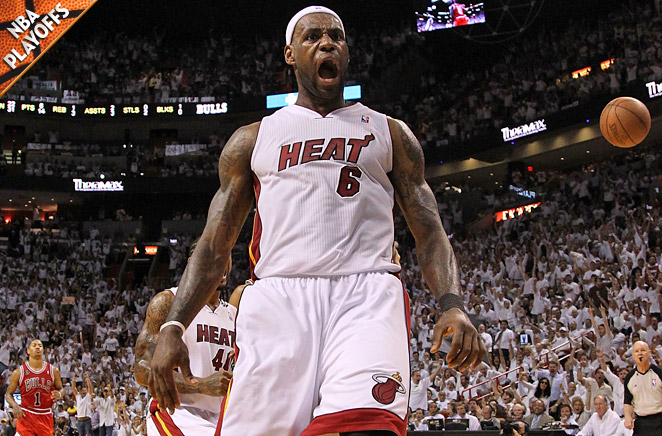 Dwyane Wade was ailing, so LeBron James and Chris Bosh more than picked up the slack.
Then Wade found his groove at the perfect time, and the Miami Heat , the team put together solely to win championships, moved one emotional victory away from the NBA finals.
James scored 35 points, Bosh added 22 and the Heat beat the Chicago Bulls 101-93 on Tuesday night, taking a 3-1 lead in the Eastern Conference finals.
Game 5 is Thursday in Chicago, when the Heat can wrap up their first finals trip since 2006.
"Even though it took an extra five minutes, we held serve," James said.
Wade went scoreless for nearly 33 straight minutes, before making a jumper with 2:08 left in overtime to help Miami keep the lead. He had two blocked shots in overtime, and after James made a contested jumper with 29 seconds remaining for a six-point lead, Derrick Rose's layup was swatted away on the next Chicago possession.
At long last, it was over.
"My teammates kept telling me that I would make the biggest play of the game," Wade said. "They told me to stick with it, stick with it - and I did. The game is not won in the first minute, it's won in the last so I stuck with it and was able to do some things to help us get a victory."
Bosh scored the first four points of overtime, and the Heat - now 8-0 at home in the playoffs - never trailed in the extra session. James closed it with two free throws with 1.4 seconds left, his 12th and 13th of the night, all without a miss. Bosh was 10 for 11 from the line, and Miami outscored Chicago 32-17 in that department.
The Heat made their final 24 free throws.
Rose scored 23 points for the Bulls, who got 20 apiece from Luol Deng and Carlos Boozer. Chicago has lost three straight games for the first time this season.
But what this game will be remembered for was how the Heat rallied around Wade - then watched him save his best for the very end.
"We reminded him in one of the final huddles, this is his time," Heat coach Erik Spoelstra said.
The 2006 NBA finals MVP was in the arena late Monday night, trying to work on some things in one of his customary playoff after-dark sessions.
Sometimes it works. Sometimes it doesn't. This seemed like it would be the latter.
Whatever answer he sought, he didn't find for much of Game 4. Wade made just 5 of 16 shots from the field, lacking his usual lift at the rim. He made a pair of free throws with 1:50 left in the first half for his seventh and eighth points, and didn't score again until overtime.
Better late than never.
That was just the start for the Heat.
"Hey, they're a great team," Bulls coach Tom Thibodeau said. "They compete. They play hard. They play great defense ... and they made plays at the end."
Chicago turned the ball over on consecutive possessions, Wade turned the second of those into a layup with 1:01 left for a 95-89 lead, and the Heat soon knew they were one win away from the title round.
Mike Miller scored 12 for Miami.
"I'm going to learn from it," said Rose, who tried to take personal blame for the loss.
The fourth quarter was pure theater, both teams clearly knowing - clearly relishing - the stakes.
Miami scored the first seven points for a 70-69 lead. Chicago took the lead back on a pair of free throws by Rose with 6:34 left, and Miami answered with a four-point possession - two free throws by Bosh after a flagrant foul against Boozer, followed by Miller making a jumper over Rose for a 78-77 edge.
Back and forth from there, with the lead, the momentum, control of the series, all seeming to turn every time the ball crossed midcourt.
"It's been a long time coming," Miller said. "I've been waiting for a game like this."
Rose had a chance with 28 seconds left, his jumper from the left side hitting the rim and eventually being corralled by Miller. The Heat called time with 23 seconds left, 18 seconds on the shot clock, everyone in the building probably thinking the play would be set up for James.
It was. And it never got a chance for liftoff.
Referee Bennett Salvatore called James for an offensive foul with 8 seconds left, saying Ronnie Brewer beat him to the spot as the two-time MVP tried to back down the right side of the lane.
So instead of winning the game late in regulation, James had to send it to overtime with defense. He guarded Rose on the final possession, forcing the Chicago guard into a taking a jumper that fell way short, and off to an extra 5 minutes they went.
"Just came up short," Rose said.
Rose finished 8 for 27 from the field, with seven turnovers.
"All I can do now is put it behind me and go forward," Rose said.
A day after being fined $50,000 for directing an anti-gay slur at a fan in Game 3, Bulls center Joakim Noah had six points and 14 rebounds in 45 minutes. And there seemed to be very little, if any, unusual rancor from Miami fans toward Noah.
Chicago's lead was 46-44 at halftime, after some wild emotional swings - a 19-4 run by the Bulls, followed by a 29-9 spurt for the Heat, then capped by an 18-7 rebuttal by the Bulls to close the second quarter.
Game 2 star Udonis Haslem replaced Bosh with 3:49 left in the opening quarter, and for whatever reason, that was when the Heat began what became a 20-point turnaround over the next 10 minutes. They took a 19-8 deficit and turned it into a 37-28 lead, with Haslem on the floor the entire way.
Chicago grabbed the lead back, thanks to - who else? - the MVP.
Rose was 2 for 11 after getting blocked by James with 5:01 left in the half, and wouldn't remain quiet much longer. He blew past Mario Chalmers for a dunk with 2:03 left until halftime, then had an even better slam - getting free with a crossover dribble, then elevating past Joel Anthony at the rim - for another three-point play 25 seconds later to put Chicago back on top.
The Heat never led in the third quarter, but Chicago never pulled away.
The Bulls were up by eight and had possession with 3 minutes left, before Miami scored eight of the game's next 10 points to make a precarious deficit a bit more manageable and set up the unbelievable final quarter.
"Look, this series is an absolute bloodbath," Spoelstra said. "It's about as competitive and physical as it can be."
And down 3-1, Rose conceded nothing.
"They are beatable," Rose said.
Source: Sports illustrated
Tiger Woods expects his injuries to heal before US Open
Tiger Woods expects he will be "ready to go" for the US Open in mid-June despite injury problems with his knee, Achilles, calf and back.
Woods has been using crutches and wearing a protective boot on his left leg to ensure he will be fit.
But the 35-year-old remains doubtful for the Memorial Tournament that starts on 30 May in Dublin, Ohio.
Woods said: "I feel that, in the next week or so, I can start practicing pain free. That's where I'm at."
To Woods's relief doctors have not mentioned the possibility of further leg surgery.
"I've had four surgeries on it," said Woods. "Obviously, it's not what it was when I was little."
Woods expects to start fitness training again by the end of the week but will not be able to start hitting balls again until he knows how his leg responds.
If, as expected, he is unable to play in the Memorial, Woods would go to the US Open, which takes place from 16-19 June, with little competition under his belt, although he has been in that situation before.
In 2008, he had arthroscopic surgery after the Masters and did not play again until the US Open but still won the tournament.
Doctors discovered a double stress fracture in his left tibia in the weeks before the major but Woods ignored their advice Woods played and won at Torrey Pines in a play-off lasting 19 holes.
He says his left leg is not nearly as bad as it was then but Woods was forced to withdraw after only nine holes at The Players Championship this month.
He has also fallen out of the world top 10 for the first time in 14 years and is currently ranked 12th.
Woods said: "I haven't played. It's one of the reasons I've fallen as far as I have. When I did play, I haven't played well. Winning takes care of all of that."
Before speaking to the press on Tuesday, Woods posted on Twitter that he would donate $1m to his foundation if no reporters asked him about his leg.
He was asked about the injured limb but Woods later tweeted that he would donate the money anyway.
Usain Bolt set to start season, and ready for Tyson Gay
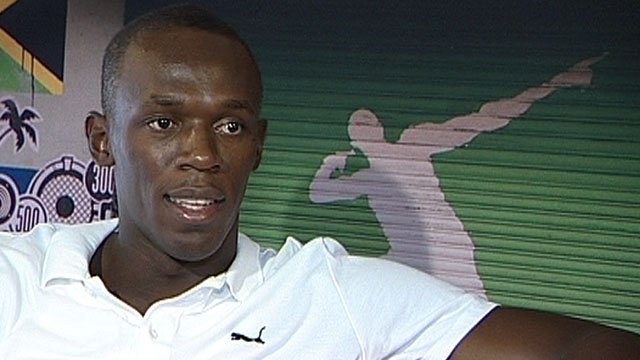 Olympic 100m champion Usain Bolt is confident he can beat rival Tyson Gay over 100m this season, gaining revenge for a surprise defeat last August.
World record-holder Bolt was struggling with a back injury when he lost to American Gay in Stockholm last year.
"Yes - Tyson beat me and he deserved it. As long as I am in shape, I have no worries," Bolt told BBC Sport.
Bolt makes his European season debut at Thursday's Rome Diamond League meeting, taking on Asafa Powell over 100m.
But he has his eyes on a meeting with Gay before the World Championships in Daegu, South Korea, which start at the end of August.
"We're going to take the Diamond League as a stepping stone leading to the World Championship to determine how good my start is, what I need to adjust," he explained.
"If me and Tyson meet before the World Championship it would be good - to determine what I need to do and don't need to do."
Away from the track, Bolt cuts a more relaxed figure but he was far more focused when I met up with him in Jamaica recently than he had been in similar circumstances two years ago.
It's no secret that Bolt enjoys a party. In marketing terms, it has become part of the fastest man in the world's brand.
So I was expecting him to be central to some lively celebrations at his brother Sadiki's birthday party in a swanky nightclub in Jamaica's capital, Kingston. What I found was very different.
A strikingly slimmed down but broader-shouldered Bolt nodded his head to the tracks booming out from the speakers but stood on outskirts of the dancehall.
He had a drink in his hands but sipped it slowly, while those around him threw back the shots.
Two years ago, he had a drink in each hand, danced away until the early hours and lapped up the attention.
Two days after the party we sat down in a small hotel room, filled with PR people, cameras and bright lights. He was in a thoughtful mood and the most relaxed I had seen him in front of the camera as I asked about that defeat in Stockholm.
"For me last season was just a season. It wasn't a serious season," he said.
"We went out there and my coach told me that last season was a season for us not to do too much and try and rest up a little bit for the upcoming seasons - because these were going to be strenuous on my body.
"But this season I'm ready and I'm just working hard trying to get into shape."
The rivalry between Bolt and Gay is great for athletics. Before last August, some had questioned whether Bolt had any serious competition - something that clearly never crossed Bolt's mind.
"Tyson is like a track guru!" Bolt said with a wide grin. "I think he works harder than everybody. He said it: he doesn't drink, he doesn't party… I don't think he does anything but track!
"He does everything so well. He's so determined.
"When he runs you can see it in his eyes that he wants to win. He works hard and he's determined that he wants to be the best."
Gay isn't Bolt's only rival. He opens up his season on Thursday fellow Jamaican Asafa Powell, the 100m world record-holder from 2005 to 2008 and a man Bolt holds in a very high regard.
"He's a great person and he's fun to be around which a lot of people may not know because he doesn't show that on the track," Bolt said.
"Asafa has laid the foundation for Jamaicans in the 100m sprint."
Another Jamaican we should be looking out for is Yohan Blake. Bolt reveals his training partner is pushing him hard everyday.
"This kid is like a beast," said Bolt. "If you see him in training, he strives to beat me everyday in training.
"He works so hard and he's going to be really good in the future I promise - that's one thing I'm sure of.
"He tells me 'I'm going to beat you'. I keep telling him 'no! It's not going to happen'. That keeps me on my toes - because I see how hard that he works."
A day before our interview, we filmed Usain at the Jamaican Boys and Girls High School Championships.
Camera crews from Brazil, Japan, Switzerland and France, and others from the UK, filmed his every move.
As thousands gathered at the national stadium, cheering and screaming his name it was easy to forget that there was a time when Bolt was not a superstar athlete.
At the 2005 World Championships, he finished last in the 200m final, having picked up an injury, and in 2007 he was second to Gay. So what changed?
"I was young and I was kind of satisfied with the situation I was in," revealed Bolt. "Then I really sat down and me and my coach talked and he said, 'You can be the best, you can run fast times'.
"After the 2007 World Championships I said to my coach, 'How can I be a champion?' and he said, 'You have to get stronger, you got to be more focused on what you want'.
"So that's what I did I just changed a few things and that was it."
Those changes saw Bolt take his abilities to another level. He was suddenly doing things he never even dreamed he would achieve.
"I knew I could run 9.8 [seconds for 100m] probably 9.7 if I'm lucky - but I never knew I would be running 9.5. I never saw that!" he said laughing.
At his peak, experts questioned whether Usain had any motivation to really push himself. He was winning every race, and at times without looking like he was trying.
But as we talked about his strengths and the season ahead I sensed last season's defeat has ignited the motivation that others had questioned.
"I think I'm a little bit back from the past seasons," said Bolt. "But I always do better under a challenge. I always try to do extra better when I'm behind so that's kind of good in a way.
"When I'm under pressure I work even better."
And judging by his understated actions in the nightclub, Bolt has found the motivation and focus to make 2011 a comeback year to remember.