
THE PEOPLES DEMOCRATIC MOVEMENT POSITION PAPER ON THE PUBLIC CONSULTATION ON THE FOREIGN AND COMMONWEALTH OFFICE DRAFT CONSTITUTION FOR THE TURKS AND CAICOS ISLANDS
We, THE PEOPLES DEMOCRATIC MOVEMENT, REJECT the FCO draft constitution. Offered below are a number of reasons why it is unacceptable for our people and country at this stage of our development.
Background and recent history
The 2010 review of the constitution of the Turks and Caicos Islands comes from an unfortunate period of maladministration and corruption exposed by a far reaching Commission of Inquiry requested by our party for the good of the country.
The findings of the Commission were shocking, and it did expose numerous failings on the part of individuals in the last Government including individuals in the Foreign and Commonwealth Office and the Governor. Ironically, while the Commission was in oral hearings the Turks and Caicos Governor was still busy signing off on transactions where there was alleged corruption. The final report does not cite one constitutional failure as a cause for these alarming acts on the part of Ministers.
It must be pointed out that this was not the first Commission of Inquiry to be requested. If former Gov. Richard Tauwhare is to be believed, he also declared at a Chamber of Commerce meeting in May 2008 that he had requested the FCO to call a commission of inquiry as far back as 2005. This was during a period before the 2006 constitution was enacted in reality the Governor did have greater authority and responsibility to act and correct failures of the local Government at that time.
The FCO did not listen. What remains to be seen is whether the FCO will listen to the voice and wishes of the people to return our 2006 constitution or whether the FCO and its Ministers will turn a deaf ear towards our concerns on OUR constitution.
As for the information in the Commission of Inquiry the PDM stands resolute in our stance that “WE TOLD YOU SO” and can safely say that we did what was right during this period of maladministration unlike Governor Poston, Richard Tauwhare, Meg Munn and Leigh Turner who did what was wrong and ignored our concerns of corruption, and gross maladministration when they were brought forward and were summarily dismissed as lacking sufficient evidence.
The greatest obstacle to good governance and deterrent to sound financial management is a lack of hearing and adherence to the already existing laws of the Turks and Caicos Islands on the part of persons in authority. When this happens with locally elected officials we have a remedy at the polls through a General Election, but when this happens with UK officials at the FCO the people of the territory have no recourse and we suffer for years, sometimes even decades.
Even today the FCO is not listening to their own MP’s such as Andrew Rosindell and Lord Nigel Jones who have both warned that a constitution cannot and should not be forced on the people of the Turks and Caicos Islands. Even to this day the FCO has neglected to pave a path for DIRECT NEGOTIATIONS with the political parties on any change to the constitution as called for by our party and the British Parliament’s All Party Parliamentary Group on Turks and Caicos Islands, despite the precedent set during the 1986 suspension.
The FCO must remember that it has appointed over the years Governors and Attorneys General who have not served the interest of the people, but who served their own interest and broke the law.
The FCO cannot simply look at the last 8 years and try to impose a constitution on the people based upon this period but it must look back and honestly assess its own failings, gross neglect and incompetence in administering its constitutional obligations to the Turks and Caicos People and our territory, obligations that is has agreed with the world to uphold and move towards. Yet, in this FCO draft constitution the UK’s UNITED NATIONS obligations are being DISREGARDED. It is clear that the FCO is attempting to move the country backwards to an era of colonialism. It is seeking to extend temporary Direct Rule into permanent authority over the Government of the Turks and Caicos Islands through its proposed draft constitution. This is unacceptable and we utterly REJECT IT.
One of the measures being used to extend permanent authority over the Turks and Caicos people and their Government is by granting greater authority to the Governor under the pretext to correct failures of the past. The Governor would be granted the authority to:
-
reject the decision of cabinet,
-
make decisions contrary to cabinet; and
-
solely make appointments to public bodies.
Two cases come to mind that discredit this theory that granting greater constitutional power to Governors will avoid corruption or conflicts of interest. Specific examples arise namely Attorney General Terrence Donnegan and Governor Christopher Turner. These two such cases involve abuses of constitutional power. One was convicted and deported after the 1986 inquiry and the other left the territory in disgrace after granting special concessions to close relatives which ended up costing the Turks and Caicos Islands people millions of dollars to correct. The FCO and the British Government did nothing to pay for their mistakes. The people of the Turks and Caicos Islands cannot trust their constitutional destiny to a Governor with unchecked power and authority over the three branches of Government, the legislature, the executive and the judiciary. Our history has proven that Governor’s can and will fail to act with integrity and honesty in their decision making powers. This draft FCO constitution also grants the Governor unchecked power and authority over the institutions protecting the three branches of Government making him a complete and total constitutional dictator.
We have been down this road before where the level of incompetence and corruption in Government by locally elected officials coupled with the incompetence and neglect at the FCO has caused our country’s constitution to be temporarily suspended. We have equally been down the road where the imposed solutions to fix the equal failings of the locally elected Government and the FCO robs the people of their democratic, constitutional and fundamental human rights. We wish not to go down that road again as proposed in this draft constitution. Again, we respectfully REJECT IT.
In introducing the draft 2006 constitution for public consultation and debate Lord Triesman remarked, “The UK has only retained those powers, including for the Governor, which are – and will remain - necessary in TCI to ensure the implementation of international obligations; to protect itself against contingent liabilities; and to ensure good governance.” So what happened to the Governor and its constitutional ability to ensure good governance? Again, it was not the people or the constitution that failed. It was the individuals the FCO appointed who failed in giving the necessary attention to the Turks and Caicos Islands. The FCO now seeks to cover up its failings and problems by imposing an untenable constitution on an unwilling people. Again, we REJECT IT.
SPIRIT OF THE NEW CONSTITUTION IS AGAINST THE WILL OF THE PEOPLE
The fact is the FCO failed to uphold their responsibility to good governance, yet the people are being punished for it through a draft constitution that is regressive. This draft represents a major backward step for the people and the protection of their fundamental rights. Specifically, it has components that ignore the WILL OF THE PEOPLE as expressed through their representatives in our Parliamentary system of democracy. This document would eliminate Parliament’s authority on specific matters. The message communicated is one of distrust and suspicion. We can only conclude from the constitutional proposals that the FCO does not trust the people of the Turks and Caicos Islands to make sound decisions through their representatives and the mechanisms to make law because decisions can be overridden, limited and removed from Parliament’s ability to handle the country’s business. This is dangerous. Here are the points we make against the spirit of the constitution.
-
In this document, the tone is undemocratic allowing, for instance, the Governor to remain as he is now under direct rule; a constitutional dictator.
-
In this document, the constitution insults the will of the people by subjecting the principal of the sovereignty of Parliament to non elected bodies such as the Integrity Commission. Parliament cannot for instance set payment for its members.
-
In this document, the other partner, the UK, accepts and offers no constitutional scrutiny for their obligations to the people and their elected representatives.
All of the changes proposed can be dealt with in subsidiary legislation and not enshrined into our constitution. We do not accept any proposed changes that marks for constitutional regression.
Part I Section 1- 22 FUNDAMENTAL RIGHTS
The constitution SHOULD NOT BE SILENT ON TRIAL BY JURY
The constitution should not diminish the rights of people and must have a presumption for the right to trial by jury. We agree that all persons must be equal before the law. We accept that there may be rare occasions for the use of trial by Judge alone, however, the constitution cannot be completely silent least we have a greater situation develop of corruption in our justice system. The temptation will be there for the judiciary to have absolute power over the lives of our people. Our people are capable of making sound decisions and should not be shut out of the process and it should not be enshrined in our constitution. Our view is that the jury system provides a form of checks and balances on the justice system. Our history has proven that we cannot simply leave the matter of trials of persons simply up to the “system”. The people must have a voice and the jury system acts as the voice and will of the people in deciding whether or not persons should be convicted based on evidence. The system will become weakened if the constitution does not provide speak positively of a presumption to right to trial by jury. This right should not be unduly denied.
Definition of legal representative Section 22
In the interpretation section the issue of definition of what a legal representative is should be redefined to mean someone “admitted” to practice law in the islands and not simply someone “entitled” to practice law. The constitution could do harm to accused persons if for any reason that person is not admitted and cannot help the accused.
Lawful administrative action Section 19
When section 19 is read in conjunction with section 126 it raises the concern that the grant of Belongership is something that the FCO wants as a procedure and that if someone applying for Belongership feels they have been adversely affected that they can appeal. There must be no appeal when a person applies for Belongership and is denied. Belongership is not a right. It is discretionary, and as this constitution conceives, it is based upon the views of a commission of Belongers who would have considered the issues.
Part II Section 23-29 The Governor
INCREASING THE GOVERNOR’S POWERS ARE WRONGLY ASSUMED TO BE THE SOLUTION TO BAD DECISIONS MAKING
The constitution rewards the British Government through their Governor with increased and advanced powers when the truth is that the FCO and the Governor was culpable in causing the crisis that now exists. Richard Tauwhare made this known when he publicly announced before he departed that he had requested a commission of inquiry into Government corruption in 2005 but his request was rejected by the FCO at the time. In 2005 most of the allegations of corruption had not occurred and had this request by former Governor Richard Tauwhare been granted the people could have avoided this painful episode of the Interim Government.
29 (2) b. The governor has veto power and can ignore the will of the people. We reject it. The Statement of Governance principles can be best be described as a set of moral and ethically values that will be interpreted by The Governor to impose yes or no decisions on a Government elected by the will of the People. The Governor will sit not just as a constitutional dictator but a constitutional JUDGE. This concept is completely foreign to any parliamentary democracy. Besides, we have had Governors; such has Mr. Poston who has been a complete and total moral failure according to the morals and values of the Turks and Caicos Islands people. The will of the electorate cannot be subjugated to this type of bizarre constitutional arrangement.
Section 28 STATEMENT OF GOVERNANACE PRINCIPLES
We reject the Statement of Government principles. This section is completely against the will of the people. The Governor cannot sit as a constitutional judge and dictator. This represents constitutional regression. It also speaks to the attitude that the FCO has toward the territory. As if the FCO and the Minister does not want to be bothered with serious decisions that the Governor has to take when history shows that the Minister must and should take an interest in the matter that the Governor raises to avoid the situation that we now find ourselves in. This is a recipe for chaos and uncertainty. We are now in a period of uncertainty and it has resulted in disastrous results for the people of the TCI. The provision for the governor to act contrary to the advice of Cabinet in an area of ministerial responsibility is contrary to the principles of parliamentary democracy. This has to change. The Governor’s powers should be limited to his reserve responsibilities. If HMG would like to increase the reserve powers of the Governor that is another matter but there has to be a clear line between local Government and HMG responsibility for oversight.
Section 25 The DEPUTY GOVERNOR
The deputy Governor must constitutionally be a Belonger without exception. The clause allowing the Governor to act contrary to this based on his or her opinion is wrong and we reject it. Additionally, there must be consultation and move towards advice of the cabinet on the choices that the Governor is considering for deputy governor.
THE EXECUTIVE PART III
Section 31 the Cabinet
The size of the cabinet must not be reduced. This is regressive. We reject any change to it. The size of the cabinet has not been proven to be the cause of any corrupt act.
Section 37 Governor’s special responsibilities
The special responsibilities of the Governor need to be seen as being taken on by a Minister of Cabinet to promote and enhance political development. Therefore we believe subsection (3) should simply mention that the Governor may delegate after consultation with the Premier any responsibility of section 37(1). We reject the notion that some of the Governor’s reserve power cannot be delegated to a Minister. If the Turks and Caicos Islands are to develop politically then a Minister must be seen as being competent and trustworthy in the constitution, if not in deed, to administer these responsibilities.
SECTION39 (5) Proceedings and quorum in Cabinet
The Governor should not be allowed to unilaterally publish information without consultation of the cabinet.
Section 41 Attorney General
Since the Attorney General will be the principle legal adviser to the Government his appointment should be subject to the advice of cabinet not in the Governor’s sole discretion.
THE LEGISLATURE PART IV
MAKE UP AND SIZE OF THE HOUSE OF ASSEMBLY
The Legislature consists of a single House of Assembly. For accountability and transparency reasons, it is important for the size of the Parliament to be larger than 15 Members. We recommend that the 19 members remain as is. In order for the committee systems to be effective, there has to be sufficient members to select from to be on committees. In addition, the rules of the Standing Orders of the House of Assembly have to be amended to allow the opposition to have majority members on certain watchdog Committees. Again, the size of the House of Assembly has not been proven to be the cause of any corrupt act.
SECTION 45 (1) THE ELECTORAL SYSTEM
The proposal to change the WAY MEMBERS OF THE HOUSE OF ASSEMBLY ARE ELECTED IS COMPLETELY REJECTED. This voting and election system as many drawbacks including:
-
It is completely foreign to the voters in the TCI and will create confusion in the minds of voters. This will lead to lower voter participation. Each voter has two set of ballot to mark; the election of the island member and nine other persons from a list of quite a number of candidates is alien to the people and will cause a great delay in the balloting process. This process will be overly consuming. Many people turn away from the polls now because of the waiting time where only one choice has to be made. Many will refuse to wait and leave before voting. This runs counter to the system of Parliamentary democracy and the outcome will not be the settled will of the people.
-
This system will usher in a period of lack of accountability by elected members to the population because he or she will have no set constituency, no one to answer to or no cause to fight for. Is this the desired outcome where there is no one to whom the people can call on in case of need?
-
We feel that there has to be a better system that works to bring about a bicameral system with some form of proportionality while maintaining some semblance of geographic cohesion produced by defined constituencies.
-
This system potentially produces nine people pulling in 9 different directions without a cohesive plan will ensure that the Governor has the ultimate authority over decisions of cabinet if there was a coalition Government. This will return the Turks and Caicos Islands back to unfettered colonialism.
-
Provides for disenfranchisement because different communities will not have any one specific representative to address their concern.
-
Against the fundamental rights of organizations to organize and contest elections.
-
This system will pit Political party members against each other vying for votes.
-
The system is designed to kill the party system under which we have enjoyed all of our advancement.
Section 48(1) Declaration by candidate for election to House of Assembly
The legal fees associated with a candidate having to defend him or herself against court action must be borne by the judicial system and not the candidate. This can amount to a serious impediment to candidates.
Prorogation and dissolution
Section 55(1) The Governor cannot be in a position to unjustifiably deny the Premier the right prorogue the House of Assembly. This is against all conventions of Parliamentary democracy.
Section 55(2). The Governor cannot be in a position to unjustifiably deny the Premier the right to dissolve the House of Assembly.
Section 59(1) This section allows the Governor to deny the House of Assembly the approval of the Standing Orders by giving him the authority to approve or disapprove the standing orders acting in his or her own discretion. Alarmingly, this is one change that is not highlighted by The FCO, even though it is added in at the end of the paragraph. This violates again the principle of Parliamentary Sovereignty.
Part VII INSTITUTIONS PROTECTING GOOD GOVERNANCE
WATCHDOG INSTITUTIONS
The main watchdog institution is the Official Opposition. The draft FCO constitution seeks to deny the Government and Opposition from appointments to these bodies. This is wrong and we reject.
The integrity commission should not have the constitutional power under Section 120 of the constitution. Again, this insults the convention of Parliamentary Sovereignty. The people elect representatives to make decisions on their behalf. The Integrity should not have the role of expressing its opinion on what is a lawful salary for a Member of Parliament; that role is for the Government and the other members of the House. The Integrity Commission should not be makeup of an equal number of members as is recommended in Section 98(1).
CROWN LAND
The cabinet should have the determination of disposal of crown land, if the Governor feels otherwise then he should notify the house of assembly to have the matter debated by elected representatives of the people. Crown land should only be disposed to Belongers or a scheme involving direct Government ownership in the land. This draft constitution introduces a system of legal maneuvers to allow the Governor to grant land in his sole discretion. We reject it.
Sec 105 PUBLIC FINANCIAL MANAGEMENT
This section may cause the Government to face two political campaigns, one before taking office and one after during the consultation on public finances. In general, these provisions should be placed in subsidiary legislation and not form part of the constitution.
Section 118 THE NEW COMMITTEE SYSTEM
The public accounts committee does not reflect the numerical strength in the House of Assembly and does not hold the Government to account because it lets the committee co-opt members who will be chosen by majority. This debunks the theory laid out by Sir Robin Auld that it was the committee system that failed. The proposed Public Accounts Committee system will result in the Government having authority over that committee. It limits the Official Opposition to the chair and not the numerical strength of its membership of Parliament.
APPOINTMENTS MADE BY ADVICE OF PREMIER AND LEADER OF THE OPPOSITION
Where there is to be an appointment to the PSC, JSC or any other public body it should explicitly state who the Governor should take advice or consultation from i.e. one appointment after consultation with the Premier and one appointment after consultation with the leader of the opposition. Consider section 82(2) (b). This can create confusion and the Governor can use it to his advantage not to make specific appointments. The draft constitution robs the Premier and Leader of the Opposition with the authority to make appointment by advice to the Governor and moves all appointments to a system of consultation of which the Governor is not bound to accept. This is extremely regressive.
Section 126. BELONGERSHIP
We reject this system proposed because it transfers control of who is granted Belongership to the British Government and not the Turks and Caicos People. The only persons who could be seen as being granted Belongership are the persons whom the British Government will deem acceptable. This is prejudicial and robs the Turks and Caicos people of controlling who it allows into the country. We have to ensure that, procedurally, the grant of belonger status is not automatic. When combined with Section 19 it may take the will of the grant of Belongership out of the hands of our people. The FCO seems to be saying if they cannot enlarge the voting franchise then the people of the Turks and Caicos Islands will not be able to grant Belongership except it is someone the Governor approves of.
A BRIEF DISCUSSION ON THE UNITED KINGDOM’S OBLIGATION TO THE UNITED NATIONS ON BEHALF OF OUR COUNTRY
In exercising its remit in the Turks and Caicos Islands the FCO should be concentrating on fulfilling its commitment made to the rest of the world in the United Nations charter.
The UK will argue, wrongly, that it is not bound by International obligation as former FCO Minister, under the Labour Government, Lord Triesman pointed out in his speech to the Turks and Caicos Islands on April 24 2006, he said “In this context, it might be helpful if I set out the UK position on alternative forms of relationship, some of which I know have been discussed here in TCI in recent weeks. UN General Assembly Resolution 1541 set out some options for the relationship between Administering Powers and Territories, including independence, integration and free association. The UK did not vote in favour of that resolution, and does not regard itself as bound by it”.
However, we are eager to point out to the FCO that not being bound to 1541 does not mean there isn’t still an obligation to Turks and Caicos Islands under the UNITED NATIONS Charter. The text of Chapter XI of Article 73 paragraph A and B of the United Nations Charter DECLARATION REGARDING NON-SELF-GOVERNING TERRITORIES reads, “Members of the United Nations which have or assume responsibilities for the administration of territories whose peoples have not yet attained a full measure of self-government recognize the principle that the interests of the inhabitants of these territories are paramount, and accept as a sacred trust the obligation to promote to the utmost, within the system of international peace and security established by the present Charter, the well-being of the inhabitants of these territories, and, to this end:
-
to ensure, with due respect for the culture of the peoples concerned, their political, economic, social, and educational advancement, their just treatment, and their protection against abuses;
-
to develop self-government, to take due account of the political aspirations of the peoples, and to assist them in the progressive development of their free political institutions, according to the particular circumstances of each territory and its peoples and their varying stages of advancement;
Clearly, if we are to hold the British Government to account for their role in helping the Turks and Caicos Islands and our people with achieving any measures of advancement the grade would be low. The fact is this exercise of constitutional change is counter and opposite to the obligations that the UK Government has agreed to the world to uphold with regard to Turks and Caicos Islands. We reject it and will continue the work on drafting a constitution for the people of the Turks and Caicos Islands.

Whale of a Tale- An Easter Rescue
The Department of Environment and Coastal Resources (DECR) and the local fishing community continue to celebrate the recent rescue of a humpback whale which was trapped among the reefs next to Long Cay (south east of Grand Turk).
The Department was first contacted about the matter on Friday April 22nd (Good Friday), and local fishermen indicated that the whale may have been trapped for up to three weeks. It was thought that the whale may have been travelling with her calf and another pod member when it lost its way through a small cut in the reef and was thereafter unable to find its way out.
The humpback whale (Megaptera novaeangliae) is a species of baleen whale with adults ranging in length from 12 to 16 metres (39 to 52 ft) and weighing up to 36,000 kilograms (79,000 lb). Humpback whales are known to migrate through the Turks Islands Passage passing Salt Cay and Grand Turk every year between the months of February and April after giving birth, and then make their way back to the polar waters to feed during summer.
With global populations still struggling to rebound from intense hunting during the 1960’s, the DECR decided that every effort should be made to free this whale and so contacted the Whale and Dolphin Conservation Society (WDCS), a global charity organization established in 1987 dedicated to the conservation and welfare of whales and dolphins.
Under their guidance, the Department with the assistance of Oasis Divers (Grand Turk) went into the area where the whale was trapped late in the evening with a small boat. As recommended by the WDCS, the banging of solid wood and plastic objects was used to generate sound under water to guide the whale
through the cut back into open ocean.
Because of the darkness the team could not determine if their efforts were successful, but when they returned the following day, with an additional boat
hired from a local fisherman and a catamaran, to increase the noise level, they found, to everyone’s satisfaction that the whale was gone.
The DECR would like to thank Sue Rocca of WDCS, Oasis Divers and the local fishing community for their assistance in freeing this trapped whale which would have died had it remained in the area much longer.
The Department encourages members of the public to continue to report any incidents or situations relating to the welfare and preservation of both the marine
and coastal environment.
TCI delegation returns to the islands
A delegation from the Turks & Caicos returned to the islands over the weekend after a mission to Tortola, British Virgin Islands attending the third Steering Committee Meeting of the Management of Protected Areas to Support Sustainable Economics Project. The trans-territorial project is co-funded by the European Union and the National Trust of the Cayman Islands, BVI National Parks Trust and Turks & Caicos National Trust.
The four-member delegation comprised of the Chair of the Steering Committee and Territorial Authorizing Officer, Mr. Delton Jones, Chair of the Turks & Caicos National Trust Mr. Princie Harris, Permanent Secretary in the Ministry of Environment & District Administration, Mrs. Mary Harvey and Project Manager, Ms. Ethlyn Gibbs. Also traveling from TCI to attend the meeting was Dr. David Alizondo, Technical and Financial Assistance Officer to the Project. Other delegates included representatives from the Cayman Islands, the UK Overseas Territories Conservation Forum, the EU Delegation in Jamaica and the BVI National Parks Trust.
The meeting agenda covered topics on progress reports from the three national trusts, challenges and solutions, best practices guidelines and sharing of experiences.
While the business sessions were conducted at the BVI Parks Trust Botanic Gardens in Tortola, participants welcomed the opportunity to visit site locations in Virgin Gorda. These specific sites are earmarked for project activities to improve management and infrastructure. The purpose of the sites visit was to allow delegates to experience the sites first hand in order to participate knowledgeably in subsequent discussions pertaining to best practices.
The next trans-territorial Steering Committee Meeting is slated to take place in the Cayman Islands in May of 2012.
POSTPONED - LE REVE FOURTH ANNUAL GALA BALL
Organizers of the Le Reve Gala Ball announced that its “Mardi Gras” themed cocktail affair scheduled to be held on Saturday, June 11, 2011, at The Veranda Resort on Grace Bay Beach has been postponed until further notice.
“Our patrons have become accustomed to an upscale, well-organized event, said Ms. Michelle Swann, President of the Le Reve Gala Ball. After much deliberation, we concluded that the current economic climate does not support the production of an event that is synonymous with the Le Reve brand, and we have therefore postponed the event until further notice.”
The organizing committee extends its sincere apologies for any inconveniences caused.
RO Plant repair Works in Grand Turk
Residents today were advised that the water problem that is still affecting Grand Turk is being worked on.
RTC News today was informed that currently repair works are in progress to the Grand Turk water production (RO) Plant.
The project Manager informed our newsroom that while repairs are being carried out it will greatly affect the distribution pressure of portable
water in all areas of Grand Turk.
EMS Water Department is requesting that all customers
close all valves leading to their homes and tanks overnight, to minimize air accumulation in the pipelines.
Despite the growing concerns the Project Manager urged all consumers to be patient while the problem is being rectified stated that distribution pressure is improved.
RTC News will continue to update you during the course of this
week. Anyone requiring further information on the matter please call 946 2526.
Haiti swears in new president
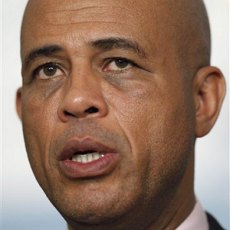 Michel Martelly was sworn in on Saturday as president of Haiti in a ceremony in the capital, Port-au-Prince.
Martelly, who in March won the second, run-off round in the presidential election, succeeds René Préval as president.
In welcoming Haiti's first ever transfer of power from one democratically elected president to another, the United Nations has urged the country's new leader, his government and the people to harness the political goodwill to “rebuild together a new Haiti.”
In a press statement issued late Saturday, the UN peacekeeping mission in Haiti (MINUSTAH) congratulated Martelly on his inauguration and the people of Haiti for a “lesson in civic maturity” during the lengthy election process.
“The day of 14 May 2011 is historic and carries with it all the hopes of change for the people of Haiti: hopes for reconstruction, progress, stability, social peace, rule of law [and] development,” the statement noted.
The mission called on Martelly, his government, Haiti's politicians, civil society groups and wider citizenry to “make this historic moment their rallying point for sealing a new political, economic and social pact to rebuild together a new Haiti.”
The new Haiti, the statement added, would be a country that “fully respects democratic values and human rights [and] which is proud of its entire human and cultural richness.”
British women ambushed and raped on isolated beach
Two men were assisting police in their investigations after two female British nationals were reportedly ambushed and raped by six masked men while on an isolated beach on the island’s north east coast.
Police said that the women, whose names were not given, are in their early 30s, and were on an environmental expedition which entailed camping at the location.
Police said that the women had returned to their camp to find that their belongings had been tampered with and as they were making preparations to leave, they were attacked and raped by the men.
The incident is also being invested by officials of the Ministry of Agriculture who explained that officers from the department would normally accompany students undertaking such assignments in these isolated locations.
“We need to determine where the break down occurred in ensuring that the usual assistance was provided by the ministry, as it is normal for students undertaking these outdoor assignments to be facilitated,” a spokesman said.
An official from the St Lucia Crisis Centre said that people need to be more cognizant and aware of their surroundings especially in unfamiliar or secluded areas.
“It just highlights how persons need to be careful when they are going to the beaches at night, even if you are in a car. Sitting in a car does not make you safe, it’s never pleasant to hear situations of rape happening,” said counsellor Ashley Rae.
CMC
Bulls take Game 1 from Heat, 103-82
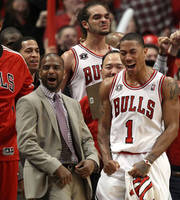 Frustrated by a rough start, Derrick Rose(notes) stood up at halftime and apologized to his teammates. As makeups go, they’ll take it.
Rose scored 28 points, Luol Deng(notes) contained LeBron James(notes) and the Chicago Bulls struck first in the Eastern Conference finals, pulling away to beat the Miami Heat 103-82 in Game 1 on Sunday night.
The Bulls are off to a good start after sweeping the Heat during the regular season. They went on a 10-0 run midway through the third quarter, then pulled away in the fourth.
As the final minutes ticked away, fans chanted “Over-rated!” and “Beat the Heat!”
Game 2 is Wednesday night in Chicago, and they’d be just fine with another performance like this.
Rose settled down after committing three of his four turnovers in the opening minutes and showed why he is the MVP. He hit three 3-pointers and the Bulls converted 10 of 21 in all.
As for his apology?
“It was on me,” Rose said. “Careless turnovers. You can’t do that against this team. When they get into the open court, they’re too dangerous. … I’m the point guard. I’ve got to do way better.”
He did just that after the early hiccup, particularly in the second half and hit some big shots down the stretch. Even so, this was no solo act.
Deng had 21 points. He hit four 3s, had four steals, seven rebounds and simply put the clamps on The King, holding James to 15 points on 5-of-15 shooting.
“Definitely to guard a guy like that the whole defense has to stay focused,” Deng said. “There were times we switched and times we forced him into the double. Our bigs were great at forcing him into the front.”
Carlos Boozer(notes) added 14 points and nine rebounds. Joakim Noah(notes) had 14 rebounds and the Bulls pounded the Heat on the glass, 45-33, grabbing 19 on the offensive end while outscoring them 31-8 on second-chance points.
“You play defense. You play defense hard and the shot goes up and they get an offensive rebound, kick it out for a three or get a layup or a dunk,” James said. “Those are demoralizing for a defensive team. We’ve got to figure out a way to clean that up.”
Chris Bosh(notes) led Miami with 30 points and nine rebounds. Dwyane Wade(notes) scored 18 points, but the Heat simply were overmatched down the stretch.
“Dwyane and LeBron are going to create a lot of attention,” Bosh said. “This is a good defensive team. … They’re going to make them distributors. We have to look at where we fell short as a team for Game 1 and come back with a better approach.”
The Heat were leading 58-57 midway through the third when the Bulls made their move, reeling off 10 straight and seizing the momentum.
Rose and Bogans started it by nailing 3-pointers. A steal by Bogans against Wade led to two free throws by Rose after he got knocked to the floor going for a fast-break layup.
Then, after a timeout, Noah blocked a layup by Wade and scored seconds later on a layup off an inbounds along the Bulls’ baseline, making it 67-58.
The Heat’s James Jones(notes) ended the run with a 3, but the Bulls simply weren’t about to be stopped.
When Deng hit a 3 with 1:15 left to make it 72-63 with 1:15 remaining, the crowd jumped to its feet and let out a roar. More important, that started a 14-3 run that stretched into the fourth and put this one away.
Whether it was Boozer feeding Omer Asik(notes) for a dunk early in the fourth or Deng racing in to put back his own missed jumper after a 3 by James, there was plenty for the Chicago fans to cheer during that stretch. They were loving it when Ronnie Brewer(notes) stole a pass from Mario Chalmers(notes) and hit two free throws, then dunked to make it 80-66. And when C.J. Watson(notes) buried a 3 to put the lead at 17, they just about came unglued.
For at least some Chicago fans, beating Miami to get to the NBA finals would be sweet redemption after what happened during the summer.
With enough salary-cap room for a pair of stars, the Bulls went after James, Wade and Bosh in the summer, hoping to land some combination of the two.
You know the rest of that story.
“We felt like we could compete against anybody,” Noah said. “This is just a really exciting situation right now. The position that we’re in is unbelievable. We feel like we’re not satisfied, have a long way to go. Nobody believed that we could be in this position right now. We’re not worried about the praise. We’re not worried about the criticism. We’re just focused on what we need to do, and we believe in each other.”
The Bulls wound up with a league-leading 62 wins after hiring Coach of the Year Tom Thibodeau and beefing up their roster with Boozer and solid role players. The biggest boost, of course, came from Rose, who emerged as the league’s youngest MVP and ended James’ two-year run while helping Chicago match its best record since the 1997-98 season, when Michael Jordan and Scottie Pippen completed their second three-peat.
Along the way, the Bulls swept three close games from the Heat, winning them by a combined eight points. James missed the first with an ankle injury, Bosh went 1 for 18 in the second and the Heat shed tears after falling to Chicago again in March.
That was during a five-game losing streak, but Miami regrouped after that, winning 15 of 18 down the stretch and then knocking out both Philadelphia and Boston in five games. Now, the Heat will have to collect themselves again.
“We took it on the chin tonight,” coach Erik Spoelstra said.
Canada banks propose rival stock exchange deal
 Canada’s TMX Group, operator of the Toronto Stock Exchange, has received a takeover proposal from a group of Canadian banks and pension funds that could trump a friendly $3 billion bid from the London Stock Exchange. A bid from the Canadian financial institutions could represent a more palatable alternative for opponents of the LSE proposal, many of whom are concerned about control of the country’s largest stock market falling into foreign hands. Legislators and other elected officials in Ontario, the province where Toronto is located, want assurances that the city will not lose its status as a world financial center. The latest proposal, announced by TMX in a statement on Saturday, could address those concerns. “Now Canadians have a Canadian alternative to look at that points to the strength of our financial services sector,” said Ontario Finance Minister Dwight Duncan, an early opponent of LSE’s takeover bid.
As if to emphasize the Canadian identity of the banks and pension administrators making the proposal, they have taken the name Maple Group Acquisition Corp-evoking the country’s most patriotic symbol, the maple leaf. The Maple Group includes four of Canada’s largest banks—Toronto Dominion Bank, National Bank of Canada, Canadian Imperial Bank of Commerce and Bank of Nova Scotia—and pension funds from the provinces of Ontario, Quebec and Alberta, a source with knowledge of the deal told Reuters. Canada’s two other largest banks, Bank of Montreal and Royal Bank of Canada, are advisers in the LSE-TMX deal, and support it.
Wave of consolidation
The offers are part of a wave of consolidation in the global exchange industry. Two bidders are courting NYSE Euronext, while Australia last month rejected an offer for its main exchange from the Singapore Exchange on nationalistic grounds. The same fate could await the LSE. It must pass muster with a series of provincial regulators, including the Ontario Securities Commission. The final and perhaps most formidable hurdle is a federal review under the Investment Canada Act.
For approval, the government must certify that a deal carries a net benefit for Canada. BHP Billiton’s $39 billion bid for Potash Corp, the world’s largest fertilizer maker, fell victim to such a review last year. Alison Crosthwait, director of global trading strategy at Instinet, said the proposal from Maple Group would face the same regulatory hurdles as an LSE deal, but wrapped in the Canadian flag would likely have a better chance of getting through. “I think Canadians like to own their own institutions and I think the government is going to be more comfortable with a Canadian deal,” she said.
Offer above market price
TMX did not say how much the financial institutions were prepared to pay for the operator of Canada’s largest equities market, only that the cash and equity proposal was above the current market price for TMX shares. TMX Group stock closed at C$41.75 on Friday, valuing the company at about C$3.11 billion ($3.2 billion), higher than the LSE’s all-stock offer. The Globe and Mail said on its website the Maple Group bid was worth C$48 a share, or some C$3.6 billion, compared with the LSE bid of about C$39.21 per share.
“If you have a strong cash bid, if you own stock and you’re running a fund, the natural propensity is to take the money and run,” said Thomas Caldwell, whose firm, Caldwell Securities, is a major shareholder in TMX Group. ‘I’m not sure what their (London’s) counter is, unless London says, ‘Hey, forget about a stock deal, we can do cash,’ but I’m not sure that London has that firepower.” The LSE confirmed on Saturday it had been notified by the TMX of the rival approach from Maple Group, but said it remained committed to its merger with TMX. In addition to the Toronto Stock Exchange, Ontario-based TMX owns the TSX Venture Exchange for small-cap stocks and the Montreal Exchange for derivatives trading. (Reuters)
BP faces tight deadline to seal Rosneft share swap
BP (BP.L) will struggle to meet a Monday deadline to complete its US$16 billion share swap with Russian group Rosneft, leaving the companies to agree a second extension or allow the deal to fall apart. BP Chief Executive Bob Dudley, who has been criticised by investors for the difficulties encountered in executing the deal, said he was optimistic that it would be concluded but declined to express a view on whether the deadline would be met. “I think we will find a resolution to this over time,” Dudley told Reuters in an interview on the sidelines of a conference in St Gallen on Friday.
Analysts said the opacity around the situation made it impossible to know whether Rosneft would agree to extend the deadline but noted a lot of elements had to be agreed before the share swap could be concluded. BP and Rosneft agreed to a $16 billion share swap and an exploration venture aimed at unlocking potentially 40 billion barrels of oil in the Russian Arctic Sea in January. The deal, which was announced with great fanfare by BP, was supposed to mark a turning point in the London-based oil giant’s fortunes after the Gulf of Mexico oil spill. But BP’s oligarch partners in its Russian joint venture, TNK-BP (TNBP.MM), objected, saying the transaction violated an agreement BP made, when founding TNK-BP, to use TNK-BP as its principal vehicle for investment in Russia.
AAR, the group which represents the four oligarchs that own a half-share in TNK-BP, secured an injunction blocking the Rosneft tie-up, unless BP convinces Rosneft to execute the Arctic deal through TNK-BP. However, it is unclear if Rosneft, Russia’s largest oil producer, will agree to working with TNK-BP. The Kremlin-controlled company has previously said it saw no sense in partnering with TNK-BP, which has no offshore experience. The agreement, sealed in January, to swap a 5 per cent stake in BP for a 9.5 per cent stake in Rosneft expires on Monday, having already been extended once already.
The two stakes were valued at around US$8 billion at the time the deal was signed but BP’s shares dropped due to fears about the dispute with its TNK-BP partners, while Rosneft’s shares have risen, creating a US$1.4 differential between the value of the two stakes currently. BP investors fear that Rosneft may demand a redraft in the terms that could see BP paying, either in cash or shares, another $1billion or more to complete the deal—something which would further dent Dudley’s credibility.
(Reuters)