
Barbados lawmaker says country's reputation must be protected from money laundering
Barbados lawmaker Gline Clarke is concerned about the image of his country and said that, while the government wants to attract foreign direct investment, it must guard against money laundering and other financial crimes.
Clarke told Parliament that, while Barbados may be seen as a good place to do business in the international arena, he cautioned that the requisite measures must be taken to "ensure the protection of our economy and the Money Laundering and Financing of Terrorism (Prevention and Control Bill) now being debated in Parliament is therefore very important."
He added, "In the banking institution, if you deposit more than $10,000 in any bank, you have to say where this money came from and this has been introduced for a while now. Mechanisms had to be put in place in order to ensure that persons who are depositing or withdrawing large sums of money will say what they plan to do with the money."
He said that Barbados has a good civil service and the Central Bank has good regulations, and pointed out that Barbados as far as the international standard is concerned is really doing extremely well and Bajans must be proud of "where we have come from and what we have achieved".
Clarke stressed that "we must protect our economy and whatever has to be done we have to protect the good name that we have got over a number of years".

European parliament approves deal on banana import tariffs
The European parliament on Thursday approved a deal to reduce import tariffs on Latin American bananas.
BBC Caribbean reported that lawmakers in Brussels voted 501 in favour, with 114 against, to give the green light to a December 2009 deal that was brokered by the World Trade Organisation (WTO).
The move is seen as one intended to end the decade long banana war between the European Union (EU) and the Americas.
Caribbean producers, who enjoy preferential market access in Europe, have been speaking out against a deal they insist will further damage their banana industry.
The new arrangement now means that customs duties on Latin American bananas entering the EU will gradually fall from US$240 a tonne to US$114 by 2017.
The EU has offered a US$272 million aid package to Caribbean, African and Pacific banana growers as a cushion for their projected losses.
Lawsuit: JPMorgan was warned on Madoff
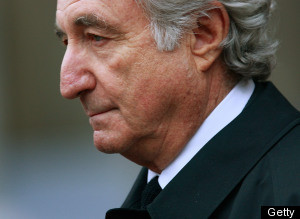 JPMorgan Chase executives suspected that Bernard Madoff's investment strategy was actually a Ponzi scheme years prior to its collapse, but did nothing to stop it, according to the court-appointed trustee trying to recove assets stolen by Madoff.
The claims come in a lawsuit filed by trustee Irving Picard against JPMorgan Chase (JPM, Fortune 500). The suit, filed in a New York bankruptcy court in December, was unsealed Thursday.
The complaint seeks to recover nearly $1 billion in fees and profits and an additional $5.4 billion in damages stemming from the bank's long stint as Madoff's banker.
The complaint contains a redacted e-mail from a JPMorgan risk officer warning as early as June 2007 that Madoff was running a Ponzi scheme, and using the bank to hold his money.
"For whatever it[']s worth, I am sitting at lunch with [JPMC Employee 1] who just told me that there is a well-known cloud over the head of Madoff and that his returns are speculated to be part of a [P]onzi scheme," the e-mail reads.
Despite the warning about Madoff's activities in 2007, the complaint alleges that JPMorgan didn't bring the matter to the attention of authorities until October 2008.
At that time, the bank admitted in a filing made to the United Kingdom's Serious Organized Crime Agency that Madoff's firm's performance was "so consistently and significantly ahead of its peers year-on-year, even in the prevailing market conditions, as to appear too good to be true -- meaning that it probably is."
But even that failed to stop JPMorgan's involvement, according to Deborah Renner, a partner at Baker & Hostetler, the court-appointed counsel for the trustee.
"Even then, JPMC executives did not restrict the BLMIS [Madoff's] bank account, even though it was being used to launder money from the Ponzi scheme," said Renner.
In addition to the e-mails, the trustee says JPMorgan should have been tipped off by the way Madoff's account was being used. According to the complaint, the account had frequent large dollar transactions, suspicious spikes in activity, and wire activity with offshore accounts, all of which should have raised red flags.
In a statement to CNNMoney, a JPMorgan spokeswoman said the complaint is "meritless" and "based on distortions of both the relevant facts and the governing law."
"Contrary to the trustee's allegations, JPMorgan did not know about or in any way become a party to the fraud orchestrated by Bernard Madoff," she said, adding that at all times, "JPMorgan complied fully with all laws and regulations governing bank accounts."
The complaint was initially filed under seal, but after an agreement between lawyers for the two parties, the document was made public.
"We have reached an agreement with opposing counsel to unseal a large majority of the complaint, with the exception of several allegations as well as the identities of the bank's employees and customers," said Renner, the lawyer for the trustee.
What remains unclear is exactly which executives at JPMorgan were allegedly warned about Madoff, but a statement from Renner says that senior management was involved.
"The bank's top executives were warned in blunt terms about speculation that Madoff was running a Ponzi scheme, yet the bank appears to have been concerned only with protecting its own investments," Renner said.
Credit boom in Barbados
BUSINESSES ARE REPORTING a significant increase in debit and credit card use for customers’ purchases, as strict measures remain in place for the acceptance of cheques.
More customers have apparently been flashing plastic in supermarkets and petrol stations. Managing director of Super Centre Limited, David Neilands, and manager of Texaco’s Kendal Hill, Christ Church operation,
Osmond Crichton, said there was a greater use of debit and credit cards in their business.
Crichton reported a rise in usage of about ten or 12 per cent from around the last quarter of 2010.
Neilands said that 35 to 40 per cent of payment across the Super Centre chain now comes via debit and credit cards. Both leaders spoke of the need to put measures in place to protect the establishments from bad cheques.
Neilands told the WEEKEND NATION they insisted that people writing cheques produce their identification cards.
“Where I think we have difficulty in business is where people have cheque books with business names that are not necessarily incorporated or recognised businesses . . . ,” he said.
“Then you have no means of traceability if you accept a cheque.
“So we’re looking at the possibility of how we will tighten that up to ensure that any cheque given should be presented with an ID. The dilemma is with cheques that you’re really not sure who the originator is.” Neilands said Super Centre would not be going the way of some establishments in North America, refusing customers’ payment by cheque.
“We are stipulating that you must submit an ID with your cheque and we also ask people to submit an ID with their credit card – and people get upset.”
These moves are to help safeguard against ID fraud and protect the customer and the company, he explained.
He said there was a credit cheque list that staff operated by and “strict guidelines” about the dollar figure to accept without an override by a manager.
“What we would really like to have is an online database which allows a cashier to be able to see on a screen whether someone is a good or bad credit risk,” he admitted.
Crichton said one of Texaco’s concerns was having to “run down” customers to collect money.
“We try to manage it real tight because we have to pay cash for the gasoline and then we have to run down the people to collect the money,” he admitted.
With regard to the acceptance of cheques, Crichton said the business operated from a list.
“You’re on the list and that’s who we take cheques from,” he said. “Obviously, if you want to go on the list you have to seek permission.
“Now . . . if we get a returned cheque, you come off of the list.”
How federal spending cuts trickle down to you
In their push to downsize the federal bureaucracy, Republican lawmakers are flooding the field with proposals to lower federal spending. But, in a twist, their cuts could hit state and local budgets the hardest.
Congress is singling out a tiny slice of the federal budget -- the 15% known as non-security discretionary spending -- for a major rollback.
Almost a third of that money gets funneled through federal agencies like the Department of Education and the Department of Health and Human Services -- and ends up in state and local coffers.
It's funding that states have come to rely upon.
A full 26% of state expenditures in fiscal year 2008 originated in Washington. Two years later, federal funds went up to 35% of state expenditures, according to the National Association of State Budget Officers.
That increase was driven by the 2009 Recovery Act, which temporarily boosted federal aid to states. But those funds are almost all gone, and if Republicans get their way, the Feds will be passing along even less.
"Most states are already facing big budget gaps as far as the eye can see, and those gaps assume a certain level of federal assistance," said Robert Ward, deputy director of the Rockefeller Institute of Government. "If you cut that level, by definition, it makes the future gaps bigger."
A large part of federal money to states helps pay for Medicaid. But substantial sums also flow through the federal departments of agriculture, housing transportation and education.
Take, for example, the Department of Education. It made $36 billion in grants and other payments to states in fiscal year 2008 -- before the Recovery Act kicked in -- according to the Census Bureau.
Cash-strapped California got almost $5 billion from the department, while New York and Texas, both now struggling with budget shortfalls, each received more than $3 billion.
Once the funds make their way from the Education Department to state and local governments, they are used to fund special education, vocational, English language acquisition and adult literacy programs.
"Federal funding is particularly important for special education and for poor urban school districts, said Ward. "The typical suburban school district doesn't get an awful lot of money from Washington, but many urban districts do."
An impending crunch: The threat of cuts come at a terrible time for states and localities. Some have already been forced to make tough cuts due to sharply lower revenue levels, and increased entitlement obligations.
Earlier this month, Texas lawmakers proposed a budget that calls for a 13% hit to public education and a 7.6% drop in higher education support. Among the cuts, funding for pre-K Early Start programs would be slashed, and four community colleges would be closed. California and New York are considering similar plans.
"All governors appreciate the value of K-12 education, but given the shortfall, they have no choice but to make cuts," said Phil Oliff, an analyst who studies state budgets at the Center on Budget and Policy Priorities.
0:00 /2:49City cuts budget, lays off cops
That's setting off warning bells as other states attempt to fund education at current levels, while keeping a watchful eye on Washington for rumblings of reductions in federal aid.
Much will depend on how Washington's budget battle shakes out over the next few months. Some House Republicans want to return non-security discretionary spending to 2008 levels. Others want further reductions, and a rollback to 2006 spending levels.
Two lawmakers, Sen. Rand Paul of Kentucky and Rep. Michele Bachmann of Minnesota, have suggested eliminating the Department of Education altogether.
No matter how deep the cuts, it's hard to predict how states will react.
"Some states assume that a dollar in cuts from Washington means a dollar in cuts at the state level," said Ward. "Others look at it differently, and would try to make up the shortfall."
Mass protests planned for Friday as Mubarak holds on
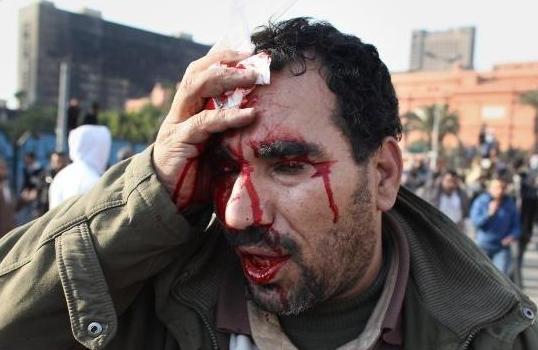 One week ago, angry, disenfranchised and energized Egyptians emerged from Friday prayers, took to the streets and chanted, "Freedom!"
"We want (Mubarak) to leave," said one 19-year-old man hours after the intense day of protests.
Egyptian President Hosni Mubarak is not gone, but his days are numbered. The leader agreed Tuesday to not seek re-election in September. He told ABC News Thursday he would like to step down right away, but cannot because he does not want to risk plunging his nation into chaos.
In the bloody blur of days since his announcement that he would not stand for re-election, regime foes and opponents have clashed repeatedly in Cairo's Tahrir Square, the center of anti-government demonstrations. Eight people have been killed and nearly 850 injured, according to the health ministry.
Although his government has made concessions, Mubarak faces another challenge Friday, which opponents have dubbed "Day of Farewell" and "Day of Departure" -- references to further large protests they hope will prompt the president to step down now.
Thursday saw an escalation of attacks on journalists, many of whom asked whether the government was clearing them out of the way so as to cloak its actions. Journalists said it was too dangerous to be at Tahrir Square or to provide live camera feeds.
Vice President Omar Suleiman laid some of the unrest's blame on the media.
"I actually blame certain friendly nations who have television channels, they are not friendly at all, who have intensified the youth against the nation and the state," Suleiman told Nile TV. "They have filled in the minds of the youth with wrongdoings, with allegations, and this is unacceptable."
State-run Nile TV said a segment of anti-government protesters, called the 25th of January Youth, will leave the square and form a political party to compete in upcoming elections.
Meanwhile, CNN's Anderson Cooper said on "Parker Spitzer" Thursday night that, if anything, the Mubarak foes increased the portion of Tahrir Square they occupy in the standoff.
It's not clear if organizers of the protests planned after Friday prayers would be able to rally the numbers they had last week or reach the presidential palace, Cooper said. Tension was building before dawn Friday, he said.
Mubarak told ABC News correspondent Christiane Amanpour that he was troubled by the bloody clashes that broke out Wednesday in Tahrir Square.
As the United States and other countries condemned increasing attacks on journalists and diplomats, Mubarak rejected the notion that government instigated the violence in the country, instead blaming the Muslim Brotherhood, an Islamist umbrella group that is banned in Egypt.
"I don't care what people say about me," Mubarak told ABC. "Right now I care about my country, I care about Egypt.
"I was very unhappy about yesterday. I do not want to see Egyptians fighting each other," he said in the interview, which was conducted at the heavily guarded presidential palace where the embattled leader has been staying with his family.
Mubarak told ABC that U.S. President Barack Obama is a very good man but bristled at the notion of an ally's interference in internal problems. He said he told Obama: "You don't understand the Egyptian culture and what would happen if I step down now."
Obama has said he told Mubarak a transition must take place, and it "must be meaningful, it must be peaceful and it must begin now."
Mubarak said he never intended to seek re-election. Nor did he intend his son, Gamal, who was believed to be groomed as Mubarak's successor, to seek the post. He made the comment to Amanpour in his son's presence.
The Obama administration had no comment on the interview. A White House aide told CNN the only thing that caught the administration's attention from the interview was Mubarak's comments on his son.
Suleiman, tapped as Mubarak's vice president last Saturday, publicly announced Thursday that Gamal Mubarak will not stand in September elections.
Hosni Mubarak, who has ruled Egypt for three decades, announced this week that he would not run for re-election. But that concession has not been enough for tens of thousands of protesters demanding immediate change.
Sen. John McCain, R-Arizona, told CNN's John King that negotiations on new leadership and elections are crucial. "The longer that this transition is delayed the likelihood of further escalation and violence is increased," he said.
Although Alexandria, Egypt's second-largest city, was largely calm Thursday, there are concerns about possible clashes when anti-Mubarak demonstrators mark a "Day of Farewell," a reference to the president, according to CNN's Nic Robertson.
Mubarak's regime moved Thursday to quell the deadly revolt, telling protesters their demands had been met and cracking down on journalists and human rights activists bearing witness to the crisis.
All day long, Mubarak's supporters and foes clashed to retain control of Tahrir Square, the central city plaza that has become the symbol of the 10-day Egyptian uprising. Many looked like medieval warriors, toting handcrafted shields while throwing stones and other objects.
Top government leaders vowed to hold accountable perpetrators of the bloodshed and told protesters to return home.
"I want to thank the youth for all you have done," Suleiman said on state-run Nile TV. "You are the lights that have ignited reform in this period. Please give the (government a) chance to play its role. All of your demands have been met."
Suleiman told ABC that Egyptian troops will not force anti-Mubarak protesters to leave Tahrir Square.
Mubarak supporters, some believed to be paid government thugs, converged with anti-government crowds Wednesday in a confrontation that quickly evolved into continuing mayhem in Tahrir Square. At least eight people were killed and 836 injured, including 200 wounded within one hour Thursday morning, according to the health ministry.
Journalists covering the crisis also became targets -- beaten, bloodied, harassed and detained by men, most all in some way aligned with Mubarak.
Numerous news outlets -- including the BBC, ABC News, Fox News, the Washington Post and CNN -- reported members of their staffs had either been attacked or arrested. Amnesty International and Human Rights Watch also reported that staffers were detained.
In several cases, news personnel were accused of being "foreign spies," seized, whisked away, and often assaulted.
Graeme Wood, a correspondent for The Atlantic, told CNN he was dragged from a car at a checkpoint Thursday and accused of spying for Iran.
"This is a dark day for Egypt and a dark day for journalism," said Joel Simon of the Committee to Protect Journalists. "The systematic and sustained attacks ... leave no doubt that a government-orchestrated effort to target the media and suppress the news is well under way."
New York Times columnist Nicholas D. Kristof said he fears an even broader crackdown.
"Why doesn't the government want us around? What is it that it plans to do in the next few days that it really doesn't want cameras to be able to report on?" Kristof asked on CNN's "Situation Room."
The U.S. State Department publicly condemned the crackdown on journalists, and officials told CNN they have received reports that Egypt's Interior Ministry was involved.
Secretary of State Hillary Clinton called such attacks "a violation of international norms that guarantee freedom of the press, and it is unacceptable in any circumstances." Vice President Joe Biden told Suleiman that Egypt's government is responsible for ensuring that peaceful demonstrators aren't attacked.
Increasingly concerned about the potential for further violence, Clinton called on the government, political parties and others to immediately begin talks "on a peaceful and orderly transition."
The leaders of France, Germany, Italy, Spain and Britain also urged a "rapid and peaceful transition," and the European Union foreign affairs chief, Catherine Ashton, called on Mubarak to act "as quickly as possible."
Egyptian Prime Minister Ahmed Shafiq apologized repeatedly for the violence. He blamed infiltrators and a "complete disappearance" of police for the human toll in the "catastrophe."
"This group got in and some clashes happened," Shafiq said, adding that he would look into whether the violence was part of an organized attempt to disband the opposition.
Shafiq said he and Suleiman were meeting with the opposition -- including protesters in Tahrir Square. He said no one would be excluded from the national dialogue, including the Muslim Brotherhood.
The United States is stepping up pressure on the opposition to begin immediate negotiations with the Egyptian government, recognizing the orderly transition to democracy Obama called for could prove difficult if Mubarak stepped down immediately.
"We can't dictate what an orderly transition means, but it's time for both of them to roll up their sleeves," a senior State Department official told CNN. "The government has to take some steps, but the opposition has to be willing to participate in negotiations as well."
CNN's Frederik Pleitgen, Nic Robertson, Saad Abedine, Arwa Damon and Jenifer Fenton, Elise Labott and journalist Ian Lee contributed to this report.
Diddy Denies Buying Son Another Maybach
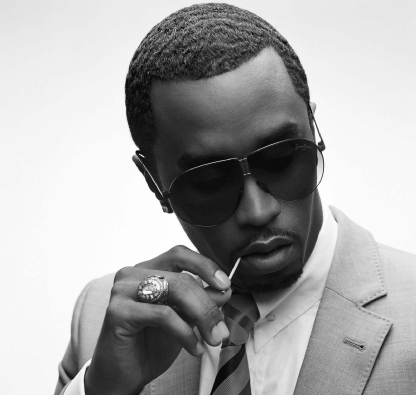
Hip-Hop mogul Sean "Diddy" Combs is hitting back at reports around the world that he bought his son a $360,000 limousine for making the honor roll.
Combs' blasted out a message to his 3,249,069 followers that he didn't buy Justin a new limousine for making the honors, although its still being reported on by media outlets as of today (February 3rd).
"Attention blogs!!!.... Didn't get my son another car. I don't know where these rumors start. Have a blessed day!" Diddy said via Twitter.
The reports started after an interview with Diddy in UK newspaper The Independent, in which the mogul explained why he bought his 16-year-old son $360,000 Maybach for his birthday - in 2010.
"I wanted to treat him," Diddy said in reference to the original purchase. "It's a collector's car so maybe he will use it for special occasions like on a first date, but like all my kids, he prefers the simpler things than the expensive things. Simple tastes."
In related news, Diddy will be hosting The Official Super Bowl party with the NFL tonight (February 3rd) at the Main Street EventCenter.
Naomi Campbell: ‘Drugs are an Allergy for Me’
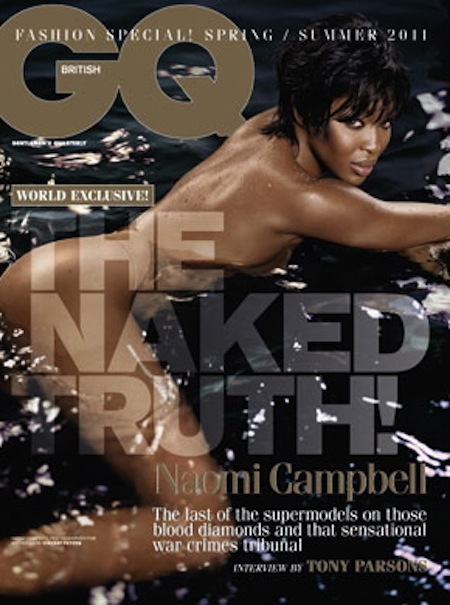
In the latest UK edition of GQ magazine, Naomi Campbell opens up about her past alcohol and drug abuse issues and their effect on her life, referring to both as “an allergy” for her.
“It rips you world apart. I never thought I was an alcoholic but it goes hand in hand with the drugs,” she said. “Emotionally I was just gone. I was emotionally unattached to myself. You just want to numb your pain. And I’ve got tons of stuff. Same as everybody else. I didn’t like the way I was. Drink and drugs are an allergy for me, and they don’t make me a better person.”
Campbell’s mother Valerie raised her as a single parent from the age of 18 after her father walked out on them both when Naomi was just two months old. The supermodel has admitted she experimented with cocaine when she was in her 20s, and at the time didn’t realize the damage it could cause.
“I was a party girl. I started quite late, 24. I was having fun,” she said. “It wasn’t that I couldn’t get out of bed in the morning without it. It wasn’t a coping mechanism. It was a party thing and I didn’t realize how powerful it was, in a very wrong way. The fun comes with consequences, you are killing yourself…I was an active addict. But I could still function.”
The 40-year-old model was proud of herself when she stopped using cocaine and insists there is no shame in seeking help.
She said: “Recovery is a positive thing. There’s nothing to be ashamed of. When you know you need help, and seek help, you need that time to deal with it. Get used to that new discipline. Tell when you are ready to tell. There’s no shame. There are people who get out of that prison, like Eric Clapton. I wanted to know what it was – that peace, that serenity. A lot of my friends didn’t want to hang out with me when I came back. That hurt.”
Cee Lo, Gwyneth Paltrow Reuniting for the Grammys
People.com is reporting that Cee Lo Green will team up with Gwyneth Paltrow once again – this time for a performance during the upcoming Grammy Awards.
It was also reported that they’ll be joined on stage by some furry friends: “The Muppets.”
In all probability the song that the actress and the rapper will be performing will be, “Forget You,” the radio friendly version of Green’s smash hit and Grammy Nominee for Song of the Year and Record of the Year, “F**k You.”
The duo performed a duet on “Saturday Night Live” last month, where Paltrow served as guest host and Green was the musical guest.
Paltrow also performed “Forget You” on the Fox series “Glee.”
Green told PopEater, “I am actually supposed to go into the studio with her in the next few days. We are doing another personalized version of ‘Forget You’ and we may do something spontaneous.”
The 53rd Annual Grammy Awards will be held on Sunday Feb. 13.
Angela Bassett Covers Special March Issue of Essence
Veteran actress Angela Bassett appears on the cover of Essence magazine’s March issue marking its 4th annual Essence Black Women in Hollywood Awards.
Bassett is the publication’s 2011 honoree, along with Viola Davis, Jennifer Hudson and Loretta Devine.
In the cover story “Unstoppable,” Bassett shows that even without the glam and glitz of Hollywood, she would still find her way to a stage—her passion for acting runs that deep. But the true source of her happiness lies in her faith and family. And the best is still yet to come.
“When I look at a role, I will deliberately find the joy, the sensitivity, the strength, the vulnerability, the resilience, Bassett says in the article. “Because that’s what I appreciate about women and black women, in particular. That’s what I want to celebrate—our resilience and our strength.”
The March issue of Essence hits newsstands Feb. 11.