
Nadal and Federer stay on course for Qatar final showdown

Rafael Nadal and Roger Federer stayed on course for an eagerly-awaited final clash at the Qatar Open by easing through last eight matches on Thursday.
Top seed Nadal saw off the potentially awkward challenge of fifth seed Ernests Gulbis 7-6 6-3, while world number two Roger Federer was back to his best with a 6-2 6-2 win over Serbia's Viktor Troicki.
Again, Troicki, who scored the vital point as Serbia beat France in the Davis Cup final, was expected to offer stiff opposition, but Federer stepped up a gear.
The 29-year-old Swiss maestro broke four times from no less than 16 break point opportunites against Troicki and raced to victory in just 65 minutes.
"I feel great. I thought it was a great match for me," Federer told the official ATP Tour website.
"Viktor was obviously coming off a fantastic win with Serbia in the Davis Cup, so I knew it was going to be difficult and that's why I had that extra focus. I was able to play really well tonight and I'm very happy."
He will play Jo-Wilfried Tsonga of France in the semifinals after the third seed beat Guillermo Garcia-Lopez of Spain in two tiebreak sets.
Tsonga, who is returning after injury, saved two set points in the second set breaker before wrapping up victory in one hour 51 minutes.
"I served unbelievable on some good points and I did it with depth, so I'm happy to win today," he said.
Nadal, who dropped a love set to Lukas Lacko before winning his second round match, was winning for the fourth time against the talented Gulbis, taking control after claiming the first set tiebreak 7-3.
He will play Nikolay Davydenko in the semis after the defending champion beat Ivo Karlovic of Croatia 6-3 7-5 in the final quarterfinal.
SOURCE:CNN

Yao Ming has ankle surgery
Houston Rockets center Yao Ming underwent surgery Thursday to repair a stress fracture in his left ankle, a procedure he says may end his career.
The 7-foot-6 Yao has been out since Nov. 10, and played in only five games this season before the team declared him lost for the season. The seven-time All-Star missed all of last season following reconstructive foot surgery.
Team doctor Tom Clanton performed the procedure in Houston.
"I know this will be another long rehab," Yao said in a statement. "But I'm looking forward to beginning my recovery. I will use this time to consider all of my options, and will make a decision regarding my career plans as I get closer to the end of my rehab."
The Rockets drafted Yao with the top overall pick in 2002, but his NBA career has been derailed by a rash of injuries, mostly to his left foot and ankle.
His contract with Houston expires after this season, and the Rockets are still awaiting word from the league if they'll be granted a disabled player salary exception for Yao.
That would allow Houston to acquire a free agent, or trade for a player without having to match salaries, up to the value of the midlevel exception (about $5.75 million).
The league granted Houston the same disabled player exception for Yao in 2009, and the Rockets used that money (about $5.7 million) to sign swingman Trevor Ariza. Houston traded Ariza to New Orleans after one season as part of a four-team deal that brought Courtney Lee to the Rockets.
Houston is 16-19 heading into Friday's game at Orlando.
Yao missed only two games in his first three seasons. The injury problems began in the 2005-06 season, when he missed 21 games with an infection in his left big toe. He broke his left foot late in the season, and missed the last four games.
He played in 77 regular-season games in 2008-09, but then sustained a hairline fracture in his foot that required complex surgery.
The Rockets carefully monitored his minutes going into this season, but Yao was injured in Houston's 98-91 loss to the Washington Wizards on Nov. 10.
Source:ESPN
Defense secretary announces billions in budget cuts
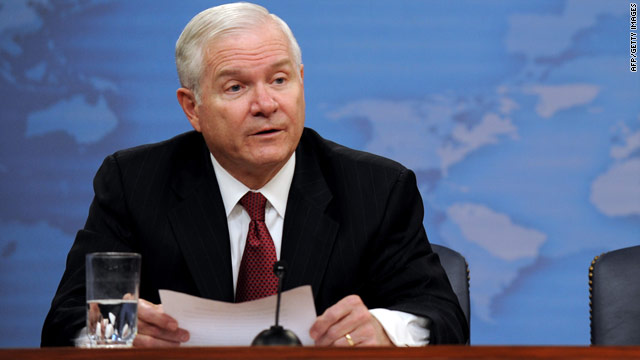
Defense Secretary Robert Gates staged a pre-emptive attack Thursday in Washington's looming budget battles, announcing cuts of $78 billion to the U.S. military and defense department, including reducing the size of the Army and Marine Corps.
In addition, Gates said the Army, Navy and Air Force had found $100 billion of savings that they would retain, allowing them to continue developing major weapons and modernizing their forces over the next five years.
"These reform efforts, followed through to completion, will make it possible to protect the U.S. military's size, reach and fighting strength despite a declining rate of growth and eventual flattening of the defense budget over the next five years," Gates said at the start of a lengthy opening statement at the Pentagon.
Under the Gates plan, the Marine Corps would slash 15,000 to 20,000 people, a 10% reduction. The Army would shrink by 27,000 active duty personnel, 4% cut, on top of an already planned reduction of 22,000 -- for a total of 49,000 fewer soldiers.
The smaller fighting force won't take effect until 2015, to coincide with the scheduled handover of security to local forces in Afghanistan.
"A major objective beyond creating monetary savings is to make this department less cumbersome, less top heavy and more agile and effective in the execution of its responsibilities," Gates said. "My hope and expectation is that as a result of these changes over time, what had been a culture of endless money, where cost was rarely a consideration, will become a culture of savings and restraint."
The chairman of the Joints Chiefs of Staff, Adm. Mike Mullen, seated beside Gates at the Pentagon briefing, pushed back against anticipated criticism that the proposed troop reductions would cut too deeply.
"These are modest changes and ones that we think are well within the risk envelope, as we understand things right now, particularly given where we think we'll be with respect to Afghanistan in 2015, when these force structure changes start to kick in," Mullen said.
And Gates said he is proposing a slowdown in the rate of growth of the military, not what he called "absolute cuts," and he insisted the U.S. military will be ready and able for the future.
"My message to both our allies and to our friends -- and in light of what some of our closest allies have had to do in terms of their own military capabilities -- is that this president understands and accepts our global responsibilities and we will continue to invest in the defense capabilities that are necessary to sustain our military strength and meet our global responsibilities," Gates said.
The Defense Department had instructed the individual branches of the military to identify $100 billion in cuts over the next five years, with Gates' pledge that they could keep the savings they identified instead of it being returned either to the larger Defense Department pool or the U.S. Treasury.
Some of the plan could collide with the wishes of members of Congress, which often include protecting jobs in their districts, although part of the proposals can be implemented by Gates alone.
The cuts Gates announced Thursday drew quick fire from Capitol Hill.
"I'm not happy," said Rep. Howard "Buck" McKeon, R-California, who just took over as chairman of the House Armed Services Committee. "I remain committed to applying more fiscal responsibility and accountability to the Department of Defense, but I will not stand idly by and watch the White House gut defense when Americans are deployed in harm's way."
McKeon said he is particularly concerned by the proposed cuts for the Marine Corps.
"Members of the House Armed Services Committee remain committed to the Marine Corps as an expeditionary fighting force 'in ready,' which includes the capability to conduct amphibious landings," McKeon said in a prepared statement. "This mission could be jeopardized by the cancellation of the Expeditionary Fighting Vehicle, a capability revalidated by the secretary just last year, and delays in the Joint Strike Fighter and amphibious ship construction."
The ranking Democrat on the committee, Rep. Adam Smith, D-Washington, also signaled that Congress wants a say in Defense Department spending, saying the Gates announcement was just the start of a process.
"Everyone is concerned about the debt, no one wants to make substantial cuts that jeopardize our national security, and it's going to be a very hard public policy challenge to balance those two interests," Smith said in a written statement
Some big programs, identified by Gates and the services as "troubled or unneeded," are under the budget ax, including the Marine Corps Expeditionary Fighting Vehicle. And some parts of the multiservice Joint Strike Fighter will be stretched out over a longer time. Gates announced that the vertical take-off version of the jet requested by the Marine Corps -- and plagued by design and cost problems -- will be placed on what amounts to a two-year probation.
Gates warned that if the program couldn't meet its goals it would be cancelled.
The Pentagon plan for savings came from reducing overhead and finding new efficiencies and improved business practices as well as combing through weapons programs.
Substantial new investment harvested from these savings will stave off additional cuts to the number of personnel in uniform as well as allow additional modernization.
In one example of the proposed cuts -- certain to fire up sharp opposition in Congress and elsewhere -- the Pentagon will seek to increase medical premiums for retired working-age military personnel. Gates said the costs of health coverage had not been revised since the 1990s and are only a fraction of the costs of private health insurance.
These cuts have no direct impact on the continuing operations in Iraq and Afghanistan, which are funded separately.
The Pentagon budget will increase next year and taper off at the end of the five-year period now under consideration.
As part of its budget cuts, the Pentagon is previewing expansion in certain areas. For example, the Air Force will be able to use its savings to develop a new long-range nuclear-capable penetrating bomber, a project that had earlier been put on hold, and buy additional unmanned aerial vehicles.
The Army can use its savings to invest in suicide prevention and substance-abuse counseling and to modernize its tanks, Bradley fighting vehicles, Strykers and other vehicles.
The Navy will be able to purchase additional ships, and more F18s to hedge against any delays in the Joint Strike Fighter.
The Marines will be able to use savings to repair and refurbish equipment returning from the battlefields of Iraq and Afghanistan.
The budget plan brings the Pentagon in line with President Obama's request to reduce projected spending on the military by $78 billion over the next five years.
The Defense budget, under the Gates plan, has overall spending increasing 3 percent in the coming year, then dropping for two years before zero growth in the final two years.
"This country's dire fiscal situation, and the threat it poses to America's influence and credibility around the world, will only get worse unless the U.S. government gets its finances in order," Gates said. "As the biggest part of the discretionary federal budget, the Pentagon cannot presume to exempt itself from the scrutiny and pressure faced by the rest of our government."
Source: CNN
MQM party to rejoin Pakistani PM Gilani's coalition

Pakistani Prime Minister Yousuf Raza Gilani has pulled his coalition back from the brink, persuading a former ally to rejoin the government.
The Muttahida Quami Movement (MQM), which walked out last Sunday, relented a day after Mr Gilani defied the IMF with a climbdown on fuel price rises.
Mr Gilani told parliament on Thursday he was scrapping last month's 9% rise in the price of petrol and kerosene.
The prime minister had been warned he could face a no-confidence vote.
Mr Gilani's car was showered with rose petals as he arrived to meet MQM leaders on Friday in Karachi, the capital of the southern province of Sindh.
The MQM's change of heart comes a day after the prime minister told parliament fuel prices would be restored to the levels they were on 31 December.
His U-turn was criticised as a "mistake" by the US and by the International Monetary Fund (IMF), which has been withholding part of an $11bn (£7bn) loan to Pakistan.
Source:BBC
Germany farm egg alert: Tests 'found dioxin last March'
Tests from a German animal feed plant found excessive levels of the poisonous chemical dioxin last March, officials say, as contamination fears spread.
The findings from supplier Harles und Jentzsch only came to light last week and should have been publicised earlier, regional officials said.
Some 4,700 German farms have been closed after large amounts of feed were found to contain dioxin.
Officials insist the levels of dioxin do not pose a risk to humans.
They say the closures - mostly affecting pig farms in Germany's Lower Saxony region - are only a precaution.
Initially, the scare was confined to Germany but then it emerged that a batch of eggs had been exported to Holland and from there to Britain.
British authorities said that the amounts of dioxin - which is linked to the development of cancer in humans - in any egg would be very small, and not enough to be dangerous.
The dioxin scare has prompted South Korea to block imports of German pork and poultry products from reaching consumers because of health concerns, local media reported on Friday.
Source:BBC
8 killed, 3 injured in Honduras bus attack
Eight people were killed and three others were injured after a group of gunmen opened fire on a private bus in Honduras, officials said.
The small bus was carrying a family when gunmen ambushed it Thursday night, fireman Angel Urbina said.
Photos that firefighters took after the attack showed a woman slumped over, her head on a seat covered with blood stains and shattered glass. Outside the bus, rescuers surrounded a child covered with blood. Body bags sat on the roadside while investigators examined the scene.
The Thursday night attack appeared to target one or two of the people on the bus, which was traveling from the city of Catacamas to the city of Juticalpa, security ministry spokesman Leonel Sauceda said.
Police were investigating whether the attack was connected with drug trafficking, and whether it was connected with another attack nearby where three people were shot, Sauceda said.
Four women and four minors were among those killed, Sauceda said.
"They opened fire without taking into account that there were innocent people inside the bus," Sauceda told CNN affiliate Televicentro.
Three people were hospitalized with injuries, Sauceda said.
Federal security officials were on the way to the scene late Thursday to investigate, he said.
Source:CNN
Mubarak warns Israel against another incursion in Gaza
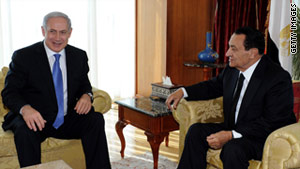 Egyptian President Hosni Mubarak warned Benjamin Netanyahu on Thursday against initiating "any new assault" on Gaza, state-run Nile TV reported.
The warning came as the two Middle East leaders met in Egypt's Red Sea resort of Sharm el-Sheikh to discuss the stalled peace talks between Israel and the Palestinians.
Mubarak said Egypt would reject "any new assault on the people of Gaza," Nile TV said. Two years ago, an Israeli incursion into Gaza killed more than 1,400 Palestinians, accoding to Gaza officials.
The Israeli military said 1,166 people were killed in the 22 days of fighting, 60% of whom were "terror operatives."
Nile TV said the 82-year-old Egyptian leader emphasized to Netanyahu "the necessity for Israel to reconsider their position and policies, and to take the initiative and conduct procedures that will build trust with the national Palestinian authorities."
Talks between Israel and the Palestinians ended in September after an Israeli moratorium on settlement construction in the occupied West Bank expired.
But Netanyahu said there remained a possibility for a resumption of talks.
"Netanyahu reiterated that he believes that a peace agreement between Israel and the Palestinians is possible provided that the latter are willing to end the conflict," a statement from the Israeli prime minister's website said. "He asked President Mubarak to act to persuade the Palestinians to move to direct, intensive and serious negotiations -- in which all core issues will be raised -- forthwith."
The statement added, "Netanyahu said that Israel is committed to aggressively fighting terrorist elements in Gaza that endanger its security and peace."
Palestinian officials have been calling for a halt to Israeli construction in the West Bank and East Jerusalem, which they consider to be the capital of a future Palestinian state.
Israel, which annexed the eastern part of the Jerusalem in 1967, considers the entire city to be its sovereign capital, a claim not recognized by the international community.
Source: CNN
West Bank civilian dies in Israeli army raid in Hebron
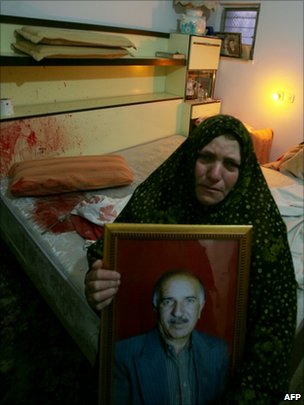 Israeli troops have shot dead a 67-year-old Palestinian man by mistake in an operation to arrest members of the Islamist militant organisation, Hamas.
The pre-dawn raid happened in Hebron, in the West Bank, a day after six supporters of Hamas had been released from jail by the Palestinian Authority.
The man who died was a neighbour of one of the Hamas men.
Hamas has said it holds the Palestinian Authority and the Israel responsible
Reports from the scene of the shooting said it took place in a bedroom on the building's first floor.
The Reuters news agency has reported that the man, Amr Qawasme, was shot and killed in his bed when soldiers broke into his home before dawn.
His wife, Sobheye, said she heard several shots fired and later saw her husband lying in a pool of blood.
"I was praying when they entered. I do not know how they opened the door. They put their hand to my mouth and a rifle to my head," she told Reuters.
"I was shocked. They did not allow me to talk. I asked them, "What did you do?" They asked me to shut up."
The IDF said in a statement: "A Palestinian man who was present in one of the terrorist's homes was killed. The IDF regrets the outcome of the incident." The army has ordered an investigation.
Reports say Israeli forces carried out a number of raids across the city, rounding up five men.
On Thursday Palestinian Authority President Mahmud Abbas ordered the release of six Hamas prisoners who had been on hunger strike. Five were being held in a Hebron jail, while the sixth was imprisoned in Bethlehem.
The Palestinian Authority exercises limited control over parts of the West Bank. The territory is under overall Israeli security control.
Israel has occupied the West Bank since 1967, settling close to 500,000 Jews in more than 100 settlements. There are about 2.5 million Palestinians living in the West Bank.
Source: CNN
Medical experts appointed to probe source of cholera epidemic in Haiti
 UN Secretary-General Ban Ki-moon on Thursday named four top medical experts to an independent panel to investigate the cause of a cholera epidemic in Haiti amid media reports that Nepalese peacekeepers from the United Nations mission there may have been the source.
The panel will be chaired by Alejandro Cravioto of Mexico, from the International Center for Diarrhoeal Disease Research in Bangladesh. The other three members are Claudio Lanata of the Instituto de Investigacion Nutritional in Peru, Daniele Lantagne of Harvard University in the United States, and Balakrish Nair of the National Institute of Cholera and Enteric Diseases in India.
“The members of the panel have been selected based on their global stature, expertise and extensive experience working with cholera in all its aspects,” a statement issued by Ban’s spokesperson said, stressing that the panel will operate completely independently of the UN and have access to all UN records, reports and facilities as it probes an epidemic that, as of last month, has killed at least 2,800 people and infected 130,000 others.
Widespread media reports have said Nepalese troops from the UN Stabilization Mission in Haiti (MINUSTAH) were the likely source of the outbreak, with infected water spreading from their base into a nearby tributary of the Artibonite River, used for drinking and washing by many rural Haitians.
In announcing his intention to appoint the panel last month, Ban noted that there were several theories, and not all reports reached the same conclusion, with MINUSTAH and the government conducting several tests, all of them negative. But he stressed that “there remain fair questions and legitimate concerns that demand the best answer that science can provide.”
Thursday’s statement said Ban had been deeply concerned by the outbreak since the first cases were detected in October.
“Determining the source of the cholera outbreak is important for both the United Nations and the people of Haiti,” it added.
The epidemic has struck while Haiti is still reeling from a devastating earthquake that killed over 200,000 people and displaced some 1.3 million others, most of them still living in crowded and unsanitary tent camps as the disaster’s first anniversary approaches on 12 January.
MINUSTAH, currently with nearly 12,000 military and police personnel, has been on the ground in Haiti since mid-2004 after then president Jean-Bertrand Aristide went into exile amid violent unrest.
Government failing Barbadians, says opposition leader
Barbados opposition leader, Owen Arthur, said that the administration now led by Freundel Stuart is a "broken government" with broken promises, which they intend to show Barbadians through a strong and vigorous campaign.
Arthur was speaking to reporters after the nomination of the candidates for St John on Wednesday afternoon in which Hudson Griffith is opposing Mara Thompson, widow of the late Barbadian Prime Minister, David Thompson, for the constituency held by her late husband.
The opposition leader said that the by election will not only be bringing to light the issues affecting the people of that constituency, but the people of Barbados in general and the failure of the government to address them.
The Barbados Advocate newspaper reported that the former prime minister added, "In this campaign you are going to hear about the issues that concern the people of Barbados... you have a government that is broken, you have an economy that is in shambles, and all across Barbados there is a sense of despair and we are bringing hope."
He added that the Barbados Labour Party is a mass-based party, and it is the oldest political institution in the Caribbean.