Neil Diamond to enter Rock and Roll Hall of Fame

Neil Diamond will be inducted into the US Rock and Roll Hall of Fame next year alongside artists including Alice Cooper and singer-songwriter Tom Waits.
Sweet Caroline singer Diamond, 69, said he had thought in the past that he may be nominated "but I kind of figured they'd get around to me at some point".
Rock star Cooper, 62, said it had been "a waiting game".
Phil Spector collaborator Darlene Love and singer Dr John will also be inducted in New York on 14 March.
Acts including the Beastie Boys, Bon Jovi, Donna Summer and LL Cool J had been shortlisted.
Diamond, whose early hits in the 1960s included Cherry, Cherry said he had initially been "a lone voice out there with a guitar, and it was different than what was going on because it was the English invasion and I wasn't doing that".
He said of his induction: "I'm glad they did it before I'm dead."
Cooper, whose hits with his band include School's Out and Poison, said that before they came onto the scene in the late 1970s "there was no spectacle in rock 'n' roll".
"I think what we did was we kind of brought theatre to rock 'n' roll," he added.
Love, 72, who had a number one US hit with He's A Rebel with Spector-produced girl band The Crystals in 1962, said: "It still hasn't hit me yet.
"I still have that nervous stomach and I'm still excited."
New Orleans pianist and singer Dr John, 70, has released more than 20 albums.
The Rock and Roll Hall of Fame musical excellence award will go to keyboardist Leon Russell who this year teamed up with Elton John on his album The Union.

Australia launches criminal probe into asylum shipwreck
Australia is launching a criminal investigation into the Christmas Island shipwreck that killed at least 28 people, under people trafficking laws.
Prime Minister Julia Gillard said more bodies may be pulled from the sea after a boat carrying suspected asylum seekers crashed into jagged rocks.
She said the boat may have been carrying more than the 70 passengers originally thought.
Forty-two people were rescued from the heavy surf after the boat broke apart.
"We do not know with any certainty how many people there were on the boat so we've got to prepare ourselves for the likelihood that more bodies will be found and that there has been further loss of life than we know now with the numbers available to us," said Ms Gillard.
Immigration Minister Chris Bowen said as many as 100 people may have been on board- some 30 more than originally believed.
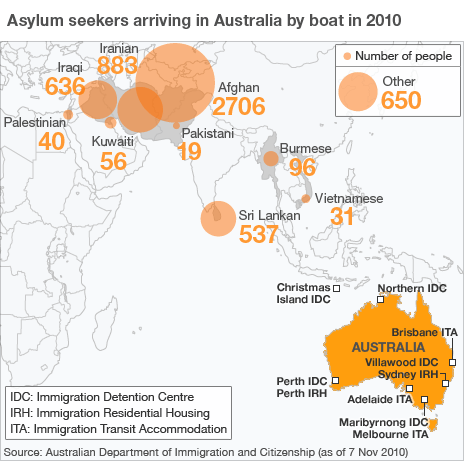
The passengers of the flimsy wooden boat are believed to have been asylum seekers making their way to Australia via Indonesia. In recent years increasing numbers of people from countries such as Sri Lanka, Iran, Iraq and Afghanistan have been making their way to Australia in boats organised by people smugglers.
"It is an evil trade," said Ms Gillard. "But I believe Australians are responding to these events today as human beings."
'Extreme conditions'
Questions have been asked about how the boat managed to elude the Australian agencies charged with watching the country's sea approaches.
Christmas Island lies in the Indian Ocean about 2,600km (1,600 miles) from the Australian mainland, but only 300km south of Indonesia.
The boat approached the island early on Wednesday. The alarm was raised when residents heard the passengers' screams as heavy seas propelled the vessel onto the island's rocky shoreline.
Witnesses said the boat was smashed to pieces within an hour and survivors struggled to hang on to pieces of wreckage in the pounding surf.
It is believed the engine on the vessel failed, and island residents said the seas were the heaviest they had seen in months.
One resident, Simon Prince, told Associated Press: "The engine had failed. They were washing backward and forward very close to the cliffs here, which are jagged limestone cliffs, very nasty.
"When the boat hit the cliff there was a sickening crack. All the people on board rushed to the land side, which is the worst thing they could do."
Ms Gillard said the "extreme weather conditions" meant the boat was not detected "until seen from Christmas Island itself".
"In very rough and dangerous seas there is a limit to what can be achieved through radar and other surveillance mechanisms," she said.
Christmas Island is home to a detention centre housing nearly 3,000 asylum seekers who are waiting for their claims to be processed.
All passengers killed in Nepal plane crash
All 22 people travelling in a small passenger plane that crashed in Nepal were killed, police say.
The Tara Air Twin Otter plane took off on Wednesday from Lamidanda Airport, 162 km (101 miles) east of Kathmandu and was heading to the capital.
The wreckage was found on a hillside in eastern Nepal's Himalayan foothills.
A police spokesman told the AFP news agency that 20 bodies had been recovered, "but we can be sure there are no survivors".
The plane had "broken up completely" and the wreckage was spread over 200m of dense forest, Bigyan Raj Sharma said.
The plane was found early on Thursday after the search resumed at first light.
The operation had been suspended later on Wednesday due to heavy cloud cover and fading light.
The plane was carrying 19 passengers and three crew. Tara Air said one of the passengers was an American citizen while the rest were believed to be Nepalese citizens, all whom were returning from a pilgrimage to a Hindu temple.
Aviation accidents are not uncommon in mountainous Nepal.
In August, a plane heading for the Everest region crashed in bad weather killing all 14 people on board, including four Americans, a Japanese national and a British national.
Wikileaks founder Julian Assange awaits bail hearing
Swedish authorities will be at the High Court on Thursday to try to block bail for Julian Assange, founder of the whistle-blowing website Wikileaks.
The 39-year-old Australian was granted bail earlier this week on condition he provides sureties of £240,000.
But he has remained in Wandsworth Prison after Swedish prosecutors appealed against giving him bail.
Mr Assange is fighting extradition to Sweden where he faces sex allegations involving two women, which he denies.
Curfew condition
He was granted bail by District Judge Howard Riddle at City of Westminster Magistrates' Court on Tuesday, pending extradition proceedings due to start on 11 January next year.
Conditions included the posting of a £200,000 cash deposit, with a further £40,000 guaranteed in two sureties of £20,000.
He was also told live under curfew at the home of journalist Vaughan Smith, founder of the campaigning Frontline Club.
However, the Swedish Judicial Authority has appealed against the bail decision.
The appeal is expected to be heard in Court 4 at the Royal Courts of Justice in London by Mr Justice Ouseley.
He is the judge who last week upheld bail for Shrien Dewani, whose wife was murdered on their honeymoon, following an appeal by South African authorities.
'Politically motivated'
Mr Assange has received the backing of a number of high-profile supporters including human rights campaigners Jemima Khan and Bianca Jagger, and film director Ken Loach.
Mr Assange's website has published 250,000 sensitive American diplomatic cables, details of which have appeared in the Guardian in the UK and several other newspapers around the world.
He has come under criticism in the US where former Republican vice-presidential candidate Sarah Palin has said he should be hunted down like the al-Qaeda leadership.
Mr Assange argues that the allegations against him are politically motivated and are designed to take attention away from the material appearing on Wikileaks.
Mr Assange is accused of having unprotected sex with a woman, identified only as Miss A, when she insisted he use a condom.
He is also accused of having unprotected sex with another woman, Miss W, while she was asleep.
Gulf of Mexico oil leak: US sues BP over oil disaster
The US is suing BP and eight other firms for allegedly violating federal safety regulations in connection with the Gulf of Mexico oil spill.
The lawsuit asks that they be held liable without limitation for all clean-up and damage costs.
The Deepwater Horizon drilling rig explosion in April killed 11 workers and spilled millions of barrels of oil over several months.
The oil leak became the worst environmental disaster in US history.
The lawsuit charges the companies under the US Clean Water Act and Oil Pollution Act.
US Attorney General Eric Holder said the complaint alleged that "violations of safety and operational regulations" caused the 20 April explosion.
The companies named in the lawsuit are BP Exploration and Production Inc, Anadarko Exploration & Production LP, Anadarko Petroleum Corporation, MOEX Offshore 2007 LLC, Triton Asset Leasing GMBH, Transocean Holdings LLC, Transocean Offshore Deepwater Drilling Inc, Transocean Deepwater Inc and insurer QBE Underwriting Ltd/Lloyd's Syndicate 1036.
The key accusations are:
- Failing to take necessary precautions to keep the Macondo well under control in the period leading up to the 20 April explosion
- Failing to use the best available and safest drilling technology to monitor the well's conditions
- Failing to maintain continuous surveillance
- Failing to use and maintain equipment and material that were available and necessary to ensure the safety and protection of personnel, equipment, natural resources and the environment
"We intend to prove that these defendants are responsible for government removal costs, economic losses and environmental damages without limitation," Mr Holder said.
"As investigations continue, we will not hesitate to take whatever steps necessary to hold accountable those responsible for this spill."
In a statement, BP said the filing "does not in any manner constitute any finding of liability or any judicial finding that the allegations have merit".
BP said it would continue to co-operate with government inquiries and fulfil its commitments to clean up spilt oil in the Gulf.
Halliburton, the company that cemented the Macondo well, and Cameron International, which provided equipment for the well, were not targeted in the lawsuit.
But the justice department said on Wednesday that the investigation into the oil spill was ongoing and that more defendants and charges could be added to the lawsuit.
Mr Holder did not specify a timetable for legal proceedings, instead saying the US would move as quickly as possible in the matter.
Transocean disputed the charges brought by the government, saying that it should not be held liable for the actions of others.
"No drilling contractor has ever been held liable for discharges from a well under the Oil Pollution Act of 1990," the company said in a statement.
"The responsibility for hydrocarbons discharged from a well lies solely with its owner and operator."
Before the White House's announcement on Wednesday, more than 300 lawsuits had been filed related to the spill and consolidated in federal courts in New Orleans.
People working in the fishing and tourism industries, as well as the owners of restaurants and various properties along the Gulf of Mexico, were among those involved in the suits.
The latest news on the BP oil spill follows the federal government's decision not to open new areas of the coast along the eastern Gulf and Atlantic to drilling.
Eleven workers on the Deepwater Horizon drilling rig were killed by the explosion on 20 April, and hundreds of miles of coast were polluted before the leaking well was closed off in July.
Wikileaks on Cuba: Fidel Castro 'nearly died'
Cuban leader Fidel Castro came close to death in 2006, according to the latest secret US diplomatic cables published by Wikileaks.
Mr Castro almost died after suffering a perforated intestine during an internal flight, unnamed sources told US diplomats in Havana.
The illness led Mr Castro to hand power to his brother Raul, although he has since returned to public life.
The 84-year-old's health is considered a state secret in Cuba.
The Wikileaks cables, published by the Spanish newspaper El Pais, reveal the intense efforts made by US diplomats in Havana to find out the nature of Fidel Castro's illness and his chances of recovery.
The names of the sources of information reported in the cables have been redacted by Wikileaks, but some apparently knew people who were close to the Cuban leader, or had access to his medical records.
The details of what they say cannot be independently verified.
One cable, sent in March 2007 by the then-head of the US interests section in Havana, Michael Parmly, quotes a report by an unnamed doctor on the moment Mr Castro fell seriously ill in July 2006.
"The illness began on the plane from Holguin to Havana," reports the cable.
As it was a short flight there was no doctor on board and they had to land urgently once they knew of Mr Castro's bleeding. He was diagnosed with diverticulitis of the colon.
The source said Mr Castro had a perforation of the large intestine and needed surgery.
But it says he "capriciously" refused to have a colostomy, with the result that his condition deteriorated over time and he required further surgery.
"This illness is not curable and will not, in her opinion, allow him to return to leading Cuba," the report concludes.
"He won't die immediately, but he will progressively lose his faculties and become ever more debilitated until he dies."
Further leaked cables quote other sources as saying Mr Castro was terminally ill, and examine statements by his medical team and reports of specialist drugs being brought into Cuba.
But the reports of his imminent death have proved to be exaggerated.
Mr Castro has since made an apparent recovery and earlier this year returned to making speeches and appearing in public, though he has not taken back the reins of power from his brother Raul.
The former Cuban leader recently praised Wikileaks and its founder, Julian Assange, saying the leaks of thousands of diplomatic cables had brought the US "morally, to its knees".
"Julian Assange, a man who a few months ago hardly anyone in the world had heard of, is showing that the most powerful empire in history can be defied," he wrote in an article published by Cuban state media.
The US government and its intelligence agencies have been staunch enemies of Mr Castro and the communist government in Cuba for more than half a century.
So far, all their predictions of the imminent demise of communist party rule on the island have proved false.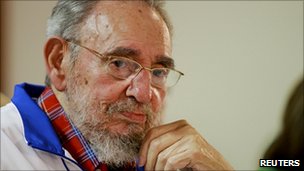
India, China sign $16bn business deals during Wen visit
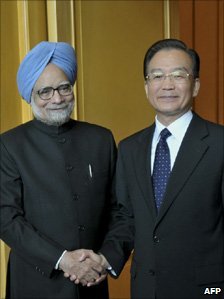
Indian and Chinese companies have signed business deals worth $16bn (£10.2bn) on the opening day of Chinese PM Wen Jiabao's three-day official visit to India.
The latest of a number of world leaders to visit India, Mr Wen is accompanied by some 400 Chinese business leaders.
China is India's largest trading partner - two-way trade volumes are set to hit $60bn (£38bn) this fiscal year.
Mr Wen is due to meet Indian PM Manmohan Singh on Thursday.
Indian and Chinese companies signed some 50 deals in power, telecommunications, steel, wind energy, food and marine products worth $16bn at the end of a business conference attended by Mr Wen in the capital, Delhi, on Wednesday evening.
This overtakes the $10bn of business agreements signed between Indian and American businessman during the recent visit of US President Barack Obama to India.
"There is enough space in the world for the development of both China and India and there are enough areas for us to cooperate," Mr Wen told the business conference.
Mr Wen - who last visited India five years ago - brings with him one of the largest teams of Chinese business leaders ever to visit India.
The Chinese delegation dwarfs the number of trade chiefs led in recent weeks to India by US President Barack Obama (215), French President Nicolas Sarkozy (more than 60) and British Prime Minister David Cameron (about 40).
The Chinese premier will hold talks later on Thursday with his Indian counterpart Manmohan Singh, External Affairs Minister SM Krishna and the ruling Congress party chief Sonia Gandhi.
Later this week, Mr Wen will travel to India's nuclear-armed neighbouring rival, Pakistan, for a two-day official visit.
Though bilateral trade with China is booming, the relationship is not benefiting India as much as it might, say analysts.
Delhi has been demanding greater access to Chinese pharmaceutical and IT markets as it seeks to level a large trade surplus in China's favour of up to £25bn.
China's envoy to India, Zhang Yan, told reporters ahead of Mr Wen's visit: "Relations are very fragile, very easy to be damaged and very difficult to repair. Therefore they need special care in the information age."
Ties between the two countries were tested in August when India cancelled defence exchanges after China refused a visa to a Kashmir-based general.
Last year, India protested against the Chinese practice of issuing visas to people from Indian-administered Kashmir on separate pieces of paper, unlike the standard visas it offered to other Indians. China gave no explanation for the move.
Celtics escape NY with Paul Pierce

Paul Pierce thought it was good. So did the fans who roared in celebration at what appeared to be the victory that would punctuate the New York Knicks' return to relevance.
Ray Allen knew otherwise, and so did the referees.
Amare Stoudemire's 3-pointer came just after the final buzzer, giving the Boston Celtics a thrilling 118-116 victory Wednesday night and their 11th straight win.
"It was great basketball. It was a great Eastside barnyard knockdown, backyard scuffle, if you will," Boston's Kevin Garnett said. "Good basketball, though."
Pierce made a tiebreaking jumper with 0.4 seconds left to win it. The Knicks' eight-game winning streak is over, but a dormant rivalry might be back.
"We definitely earned our respect," Stoudemire said. "I guarantee you right now Boston respects us. We're no slouch. We're ready to play every night. Boston knows it."
Pierce's late jumper proved to be enough for the Celtics after a video replay of Stoudemire's shot showed the ball was clearly still in his hands as time expired.
"The Knicks are playing great basketball, can't take anything away from them, and I actually thought Amare's shot counted," Pierce said. "I would have been stunned there for a minute, especially after all the theatrics, so I'm glad we got the win."
Pierce scored 32 points for the Celtics, who trailed most of the night before running their record to 20-4, best in the Eastern Conference.
Stoudemire tied a season high with 39 points, extending his franchise-record streak to nine straight 30-point games. But the Knicks were denied the victory they crave over a top team.
They get another chance Friday, when LeBron James and the Miami Heat come to Madison Square Garden.
Allen scored 26 points and Garnett had 20 points and 13 rebounds for the Celtics, enjoying their fifth winning streak of 10 games or more since their Big Three came together before the 2007-08 season.
Raymond Felton had 26 points and 14 assists, Danilo Gallinari scored 20 points and Wilson Chandler had 18 points and 12 rebounds for the Knicks, who lost for just the second time in their last 15 games.
Most of those victories came during a soft part of the schedule, leaving the Knicks needing a victory over an established NBA power to prove doubters they were back, despite their 16-10 record.
The Celtics just wouldn't let it happen.
Stoudemire's dunk snapped a 94-all tie with 8:05 left, and the Knicks stayed ahead until Garnett made two free throws with 1:29 remaining. Felton was late getting back after landing hard on a missed drive and the Celtics swung the ball around to Allen, whose 3-pointer gave Boston a 116-113 lead with 1:02 to play.
Gallinari answered with a three-point play and the Knicks got the ball back after the Celtics threw it away trying to find Allen, but Stoudemire's shot from the lane rolled out.
Pierce ran the clock down and created enough space to make his shot over Stoudemire, who had picked him up on a switch. After a timeout, the Knicks inbounded the ball to Stoudemire behind the arc, and the Madison Square Garden crowd that was standing for most of the final minutes roared when his shot went through.
But the referees had ruled it came too late, and with the Celtics standing behind them as they watched it again on video, they saw their judgment was correct.
"When I seen that shot, it was like he went to a natural shooting rhythm and just seemed like he took a little bit more time," Allen said. "And that goes back to our possession when P hit the shot, taking as much time off the clock that we could, because imagine if they had .8 on the clock or .9 on the clock, that would have been a different story."
The Knicks were seeking their first nine-game winning streak since winning 15 in a row from March 1-April 2, 1994. But the Celtics, showing their huge advantage in late-game experience, scored 67 points in the second half.
"Very disappointing," Chandler said. "We had the game all the way until the last minutes of the game. We got to give our hats off to them because they're a veteran team. They've done it in and out, won championships."
With the Knicks off to their best start since the mid-1990s, this one had a big-game feel that's been missing at Madison Square Garden — especially when Spike Lee danced out onto the floor at halftime and slapped five with fellow front-row fans after Felton banked in a running 3-pointer just in front of them to give the Knicks a 58-51 lead.
Stoudemire had to work hard to extend his streak in Sunday's 129-125 victory over Denver, but this one came easily. He was more than halfway there by the time the first quarter was over, and surpassed 30 points in the final minute of the third.
With Shaquille O'Neal and Jermaine O'Neal both on the bench with injuries, the Celtics used Turkish rookie Semih Erden and then Glen "Big Baby" Davis on Stoudemire, and neither could contain him. Stoudemire was 7 of 10 for 17 points in the first quarter, Chandler scored 10, and the Knicks led 32-24.
Gallinari was 0 for 10 from the field in his first six quarters against Boston this season, then broke out with a huge third quarter. He scored 11 in the period, highlighted by a driving reverse dunk, and the Knicks led 90-83 after Felton made all three free throws when Pierce inexplicably fouled him with 0.1 seconds left.