
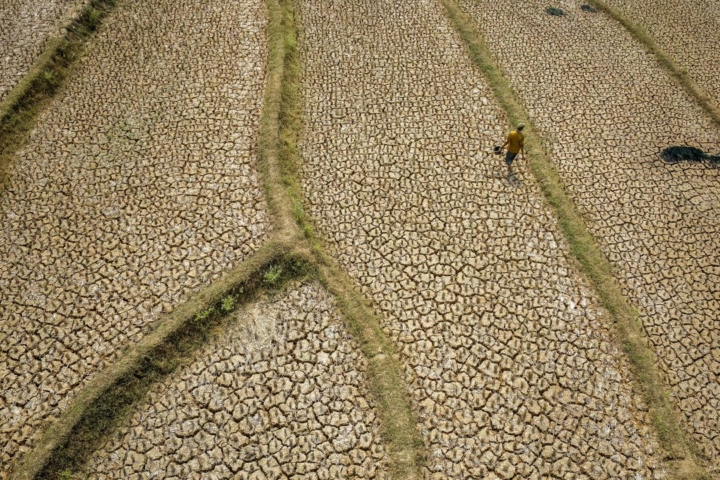
Super-sized El Niño Could Cause More than 450,000 Heat Deaths by February, Study Suggests
Nearly half a million people across the world could lose their lives by February due to El Niño-driven extreme heat, according to a sobering new report.
El Niño, a natural climate pattern which typically ramps up global temperature, has now crossed into super-sized territory and is on its way to becoming record-breakingly strong.
Combined with the global warming the planet is already experiencing from fossil fuel pollution, the heat consequences could be devastating, according to the analysis from the Climate Impact Lab, a team of scientists, economists and data engineers headquartered at the University of Chicago, and published Wednesday.
Heat is the most deadly form of extreme weather — although heat deaths are not well-tracked, even in rich nations. The report estimates the heat from El Niño could take 451,000 lives between June 2026, when it arrived, and February 2027. Those deaths would be in addition to the usual number of heat-related deaths.
The researchers believe this number is likely to rise — El Nino is expected to last until the Northern Hemisphere spring, meaning its heat impacts will linger into the summer months.
The deaths from extreme heat would also come in addition to those expected from other El Niño-fueled extreme weather, including fires, floods and droughts, according to the report.
The report has not yet been peer-reviewed but uses peer-reviewed methodology to reach its conclusions.
“We have long been able to predict the impacts of temperatures on crops, and now we can predict their impact on the worst outcome — death,” said Michael Greenstone, a report author, co-founder of the Climate Impact Lab and an economics professor at the University of Chicago.
“This is such a large number that it can be numbing, but it is made up of parents and children, grandparents and neighbors, people going to work, caring for families, and living their lives,” he added.
Scientists project that El Niño will push global land temperatures up 1.2 degrees Celsius (2.1 Fahrenheit) above normal in the coming months. This unusual warmth is exactly what climate change is projected to bring in 20 years time, and will lead to 44% more days of extreme heat than would be expected in a normal year, according to the study.
The current El Niño is a “postcard from our future” that’s arriving before the world’s had time to adapt, the authors write.
The regions expected to be most affected are overwhelmingly in the Global South. The report identifies Nigeria as where the most El Niño heat deaths are expected, with a projected 31,400 lives lost. Other countries at high risk include Indonesia, Sudan, India and Brazil. The United States is also in the top 20 affected countries, with a projected 3,500 deaths.
The report combined peer-reviewed methods on the relationship between temperature in more than 24,000 regions across the world and mortality and seasonal temperature forecasts. The death projections were compared to the same months of an average year between 1996 and 2025.
Raquel Nunes, associate professor in health and environment at the University of Warwick in England, who was not involved in the report, said “the estimate of 451,000 deaths is plausible as a modeling exercise, but it should not be viewed as a definitive prediction. Its value lies in highlighting the potentially severe consequences of El Niño-driven extreme heat and the urgent need for preparedness.”
The study is currently awaiting peer-review, but the scientists said they released the shorter report first due to El Nino’s rapid strengthening. “Given that there is still time now for policymakers and others to take action to prevent these deaths, we felt our findings couldn’t wait for the peer review process to play out. That would certainly be too late to act for this El Niño cycle,” said a Climate Impact Lab spokesperson.
Measures countries can take include early heat warnings, health action plans, ensuring cooling and hydration centers are available and expanding healthcare coverage, the report says.
“Increasing emergency response and better targeting our efforts can save many lives this year,” said report co-author Tamma Carleton, faculty head of research for the Climate Impact Lab and an assistant professor at the University of California, Berkeley. “But 20 years from now, once today’s extreme temperatures become the new normal, we don’t want to be in a constant state of emergency.”

El Niño is Supercharging Pacific Storms. A New Hurricane Threat for Hawaii and Monstrous Polo are Further Proof
A prolific Pacific hurricane season fueled by a super El Niño is showing no signs of slowing down with another tropical threat taking shape for Hawaii just a day after Hurricane Polo exploded into a Category 5 monster off of Mexico’s coast.
El Niño has been supercharging this year’s Pacific hurricane season with extremely warm water that’s been like rocket fuel for storms and minimal storm-killing wind shear. The extra helping hand from El Niño is on top of already warmer-than-normal oceans as the planet heats up from fossil fuel pollution.
Eighteen named storms — including three Category 5 hurricanes — have roamed the eastern and central Pacific so far and there are two full months of the season left to go. Sixteen originated in the eastern Pacific basin, which typically sees up to 15 storms in an entire season.
Later this week, Hawaii will face its third close brush with a hurricane this season, and it could be the strongest yet: A new tropical depression is poised to strengthen and approach the island chain by the weekend.
It could be the first time that three hurricanes have come within 100 miles of Hawaii’s main islands in a single season since at least the 1950s.
Yet another hurricane threatens to inundate Hawaii
Tropical Depression 15-E was more than 300 miles south-southeast of the state’s Big Island as of early Wednesday morning, local time, according to the National Hurricane Center. It’s set to pass close to the Big Island as a hurricane Saturday, bringing extreme rain, damaging winds and dangerous surf.
“Life-threatening, catastrophic flooding and mudslides are possible” again on portions of the Big Island and Maui, the National Hurricane Center warned Tuesday night.
Tropical alerts could be issued later today for parts of the state.
The depression is forecast to become Tropical Storm Nolo sometime Wednesday and reach hurricane strength by Thursday night, local time.
It’s expected to make its closest approach to the Big Island Saturday night as a Category 3 major hurricane. Its center could be only 50 miles from the Big Island’s southern shoreline at the time.
Hurricane Lala took a similarly close track to the Big Island in mid-August as a Category 1 storm and unleashed catastrophic flooding there. On the other side of the state, Hurricane Lowell delivered a blow to Kauai and Niihau in early September as a Category 2 storm.
Nolo’s close pass as a potential major hurricane means damaging winds are a considerable threat. Tropical storm-force winds stronger than 40 mph are likely and hurricane-force winds stronger than 75 mph are possible on the Big Island’s south side Friday through at least Saturday. Stronger gusts are likely in the island’s high elevations.
A flood threat will build well ahead of the system’s closest approach. Rain will begin later Wednesday on the Big Island and spread to reach Maui, Lanai and Molokai later Thursday or early Friday.
Ten to 15 inches of rain are possible over the Big Island through Sunday with up to 35 inches in the steepest terrain, according to the National Hurricane Center. Mountains force air to rush upwards, wringing out more moisture that falls as torrential rain. Lala dumped more than 40 inches of rain on parts the Big Island and the results were catastrophic.
In Maui, 5 to 10 inches are possible with isolated amounts up to 20 inches. About 1 to 3 inches of rain is expected elsewhere on the main islands.
Offshore, dangerous seas will build and reach their peak Friday and Saturday. Rough conditions will likely last through the weekend and into next week even as the hurricane starts to track west away from the island Sunday night into Monday.
Ferocious Hurricane Polo
Earlier this week, Hurricane Polo showed exactly what the extremely warm Pacific is capable of when it exploded from a tropical storm to Category 5 hurricane in just 24 hours.
That’s called extreme rapid intensification, a wind increase of 58 mph or more in 24 hours. Polo met that criteria and then some, with a 110-mph increase in its sustained winds from Monday to Tuesday morning.
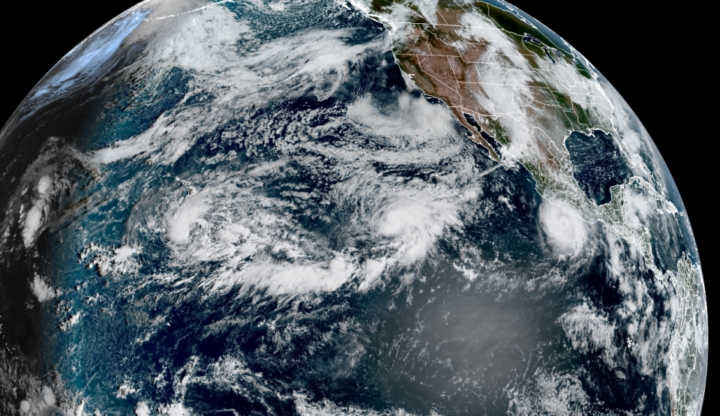
Three tropical systems were active in the central and eastern Pacific Ocean on Wednesday. Tropical Depression 15E was south of Hawaii, Hurricane Polo was near Mexico and Hurricane Odalys was between the two in the open ocean.
Three tropical systems were active in the central and eastern Pacific Ocean on Wednesday. Tropical Depression 15E was south of Hawaii, Hurricane Polo was near Mexico and Hurricane Odalys was between the two in the open ocean.
CSU/CIRA & NOAA
A prolific Pacific hurricane season fueled by a super El Niño is showing no signs of slowing down with another tropical threat taking shape for Hawaii just a day after Hurricane Polo exploded into a Category 5 monster off of Mexico’s coast.
El Niño has been supercharging this year’s Pacific hurricane season with extremely warm water that’s been like rocket fuel for storms and minimal storm-killing wind shear. The extra helping hand from El Niño is on top of already warmer-than-normal oceans as the planet heats up from fossil fuel pollution.
Eighteen named storms — including three Category 5 hurricanes — have roamed the eastern and central Pacific so far and there are two full months of the season left to go. Sixteen originated in the eastern Pacific basin, which typically sees up to 15 storms in an entire season.
🌧️ Check your local forecast in the CNN Weather app
Later this week, Hawaii will face its third close brush with a hurricane this season, and it could be the strongest yet: A new tropical depression is poised to strengthen and approach the island chain by the weekend.
It could be the first time that three hurricanes have come within 100 miles of Hawaii’s main islands in a single season since at least the 1950s.
Yet another hurricane threatens to inundate Hawaii
Tropical Depression 15-E was more than 300 miles south-southeast of the state’s Big Island as of early Wednesday morning, local time, according to the National Hurricane Center. It’s set to pass close to the Big Island as a hurricane Saturday, bringing extreme rain, damaging winds and dangerous surf.
“Life-threatening, catastrophic flooding and mudslides are possible” again on portions of the Big Island and Maui, the National Hurricane Center warned Tuesday night.
Tropical alerts could be issued later today for parts of the state.
The depression is forecast to become Tropical Storm Nolo sometime Wednesday and reach hurricane strength by Thursday night, local time.
It’s expected to make its closest approach to the Big Island Saturday night as a Category 3 major hurricane. Its center could be only 50 miles from the Big Island’s southern shoreline at the time.
Hurricane Lala took a similarly close track to the Big Island in mid-August as a Category 1 storm and unleashed catastrophic flooding there. On the other side of the state, Hurricane Lowell delivered a blow to Kauai and Niihau in early September as a Category 2 storm.
Nolo’s close pass as a potential major hurricane means damaging winds are a considerable threat. Tropical storm-force winds stronger than 40 mph are likely and hurricane-force winds stronger than 75 mph are possible on the Big Island’s south side Friday through at least Saturday. Stronger gusts are likely in the island’s high elevations.
A flood threat will build well ahead of the system’s closest approach. Rain will begin later Wednesday on the Big Island and spread to reach Maui, Lanai and Molokai later Thursday or early Friday.
Ten to 15 inches of rain are possible over the Big Island through Sunday with up to 35 inches in the steepest terrain, according to the National Hurricane Center. Mountains force air to rush upwards, wringing out more moisture that falls as torrential rain. Lala dumped more than 40 inches of rain on parts the Big Island and the results were catastrophic.
Rainfall forecast from Wednesday through Sunday.
Rainfall forecast from Wednesday through Sunday.
CNN Weather
In Maui, 5 to 10 inches are possible with isolated amounts up to 20 inches. About 1 to 3 inches of rain is expected elsewhere on the main islands.
Offshore, dangerous seas will build and reach their peak Friday and Saturday. Rough conditions will likely last through the weekend and into next week even as the hurricane starts to track west away from the island Sunday night into Monday.
Ferocious Hurricane Polo
Earlier this week, Hurricane Polo showed exactly what the extremely warm Pacific is capable of when it exploded from a tropical storm to Category 5 hurricane in just 24 hours.
That’s called extreme rapid intensification, a wind increase of 58 mph or more in 24 hours. Polo met that criteria and then some, with a 110-mph increase in its sustained winds from Monday to Tuesday morning.
This rate of rapid intensification is “truly remarkable,” the National Hurricane Center said Tuesday morning, and is among the fastest on record in the Eastern Pacific.
Hurricane Patricia set the Eastern Pacific 24-hour intensification record in 2015 when its winds jumped 120 mph. Polo is comparable to 2023’s Hurricane Otis, which had a wind increase of 105 mph in 21 hours before it devastated Acapulco, Mexico. More hurricanes are rapidly intensifying as Earth and its oceans warm from fossil fuel pollution.
Polo’s winds topped out at 180 mph on Tuesday afternoon, tying a pair of super typhoons in the West Pacific as the strongest storms on the planet so far this year.
Three tropical systems were active in the central and eastern Pacific Ocean on Wednesday. Tropical Depression 15E was south of Hawaii, Hurricane Polo was near Mexico and Hurricane Odalys was between the two in the open ocean.
Three tropical systems were active in the central and eastern Pacific Ocean on Wednesday. Tropical Depression 15E was south of Hawaii, Hurricane Polo was near Mexico and Hurricane Odalys was between the two in the open ocean.
CSU/CIRA & NOAA
A prolific Pacific hurricane season fueled by a super El Niño is showing no signs of slowing down with another tropical threat taking shape for Hawaii just a day after Hurricane Polo exploded into a Category 5 monster off of Mexico’s coast.
El Niño has been supercharging this year’s Pacific hurricane season with extremely warm water that’s been like rocket fuel for storms and minimal storm-killing wind shear. The extra helping hand from El Niño is on top of already warmer-than-normal oceans as the planet heats up from fossil fuel pollution.
Eighteen named storms — including three Category 5 hurricanes — have roamed the eastern and central Pacific so far and there are two full months of the season left to go. Sixteen originated in the eastern Pacific basin, which typically sees up to 15 storms in an entire season.
🌧️ Check your local forecast in the CNN Weather app
Later this week, Hawaii will face its third close brush with a hurricane this season, and it could be the strongest yet: A new tropical depression is poised to strengthen and approach the island chain by the weekend.
It could be the first time that three hurricanes have come within 100 miles of Hawaii’s main islands in a single season since at least the 1950s.
Yet another hurricane threatens to inundate Hawaii
Tropical Depression 15-E was more than 300 miles south-southeast of the state’s Big Island as of early Wednesday morning, local time, according to the National Hurricane Center. It’s set to pass close to the Big Island as a hurricane Saturday, bringing extreme rain, damaging winds and dangerous surf.
“Life-threatening, catastrophic flooding and mudslides are possible” again on portions of the Big Island and Maui, the National Hurricane Center warned Tuesday night.
Tropical alerts could be issued later today for parts of the state.
The depression is forecast to become Tropical Storm Nolo sometime Wednesday and reach hurricane strength by Thursday night, local time.
It’s expected to make its closest approach to the Big Island Saturday night as a Category 3 major hurricane. Its center could be only 50 miles from the Big Island’s southern shoreline at the time.
Hurricane Lala took a similarly close track to the Big Island in mid-August as a Category 1 storm and unleashed catastrophic flooding there. On the other side of the state, Hurricane Lowell delivered a blow to Kauai and Niihau in early September as a Category 2 storm.
Nolo’s close pass as a potential major hurricane means damaging winds are a considerable threat. Tropical storm-force winds stronger than 40 mph are likely and hurricane-force winds stronger than 75 mph are possible on the Big Island’s south side Friday through at least Saturday. Stronger gusts are likely in the island’s high elevations.
A flood threat will build well ahead of the system’s closest approach. Rain will begin later Wednesday on the Big Island and spread to reach Maui, Lanai and Molokai later Thursday or early Friday.
Ten to 15 inches of rain are possible over the Big Island through Sunday with up to 35 inches in the steepest terrain, according to the National Hurricane Center. Mountains force air to rush upwards, wringing out more moisture that falls as torrential rain. Lala dumped more than 40 inches of rain on parts the Big Island and the results were catastrophic.
In Maui, 5 to 10 inches are possible with isolated amounts up to 20 inches. About 1 to 3 inches of rain is expected elsewhere on the main islands.
Offshore, dangerous seas will build and reach their peak Friday and Saturday. Rough conditions will likely last through the weekend and into next week even as the hurricane starts to track west away from the island Sunday night into Monday.
Ferocious Hurricane Polo
Earlier this week, Hurricane Polo showed exactly what the extremely warm Pacific is capable of when it exploded from a tropical storm to Category 5 hurricane in just 24 hours.
That’s called extreme rapid intensification, a wind increase of 58 mph or more in 24 hours. Polo met that criteria and then some, with a 110-mph increase in its sustained winds from Monday to Tuesday morning.
This rate of rapid intensification is “truly remarkable,” the National Hurricane Center said Tuesday morning, and is among the fastest on record in the Eastern Pacific.
Hurricane Patricia set the Eastern Pacific 24-hour intensification record in 2015 when its winds jumped 120 mph. Polo is comparable to 2023’s Hurricane Otis, which had a wind increase of 105 mph in 21 hours before it devastated Acapulco, Mexico. More hurricanes are rapidly intensifying as Earth and its oceans warm from fossil fuel pollution.
Polo’s winds topped out at 180 mph on Tuesday afternoon, tying a pair of super typhoons in the West Pacific as the strongest storms on the planet so far this year.
As of Wednesday morning, Polo was a very powerful Category 4 hurricane about 200 miles offshore of southern Mexico’s state of Guerrero.
Polo is not expected to make landfall there, but it is bringing rain and some tropical storm-force winds to parts of the coast. Heavy rain is Polo’s most significant threat and could cause life-threatening flooding and mudslides in this region.
Rainfall totals in coastal Guerrero and Michoacán states could reach 3 to 6 inches, with locally up to 8 inches in spots through Thursday. Coastal portions of Oaxaca, Colima and Jalisco states could receive 2 to 4 inches of rain.

Hayden Panettiere’s Death Highlights Risk of Overdose Death After Stopping and Resuming Drug Use
A coroner’s report notes actor Hayden Panettiere had been in rehab just weeks before her death from an accidental drug overdose.
Although details of her care are unknown, people with drug addictions face a high risk of fatal overdose immediately after a period of sobriety. Experts say they may not realize their tolerance has dropped in that time, meaning a previously tolerated dose could overwhelm the body.
Panettiere, 36, was found unresponsive in an apartment in Greenville, South Carolina, on Aug. 16. The Greenville County Coroner’s Office said several drugs were found in her system, including fentanyl and its chemical byproduct, the anti-anxiety medication alprazolam, a muscle relaxer and a drug used to treat major depression and other serious mental health disorders. The case report says a senior deputy was told she had been in rehab for two or three weeks in Malibu, California.
Last year, about 70,000 Americans died of drug overdoses, down about 14% fewer from the previous year, according to preliminary government data released in May.
How opioid addiction can be treated
For people struggling with addictions, there are various types of care, including therapy and counseling, medication and support groups.
With addictions to fentanyl, heroin, oxycodone and other opioids, treatment may include medications and behavioral therapy. The National Institute on Drug Abuse says medications are the standard of care for opioid use disorder. Treatment options include methadone, buprenorphine and naltrexone, which research shows can reduce the risk of resumed drug use and a fatal overdose. Behavioral therapy for opioid use disorder is most effective when combined with medication, the institute says.
Using drugs after stopping them can be deadly
Using opioids again after withdrawal can be especially dangerous.
According to the National Library of Medicine’s MedlinePlus, most opioid overdose deaths occur in people who have just undergone detoxification. Because withdrawal reduces the person’s tolerance, those who have just gone through withdrawal can overdose on a much smaller dose than they previously took.
This risk has long been known. A 2003 study in the British Medical Journal said “treatment reduces mortality but can sometimes increase mortality transiently,” including among people with prior opioid addiction after their release from prison.
Experts at Pennsylvania State University’s Social Science Research Institute said the risk of overdose death is higher immediately after opioid use disorder treatment, including after detox and stopping medication for the disorder.
They cited research showing that the month after completing treatment is associated with a much higher risk — five times higher for ending treatment without medications and two times higher after ending medication treatment. That’s compared to periods more than a month after ending treatment.
What friends and family can do to reduce risk of overdose death
The first thing to know is that someone who recently stopped using drugs is at higher risk for an overdose if they relapse. Be ready to respond if that happens.
Death following opioid overdose can be prevented if the person gets prompt basic life support and the medication naloxone, an antidote that rapidly reverses the effects of an opioid overdose if administered in time.
The New York State Department of Health recommends taking these steps if someone witnesses an overdose:
1. Call 911 and say, “I think someone may have overdosed.”
2. If the person isn’t breathing, begin mouth-to-mouth breathing by pinching the nose and blowing into the mouth
3. Administer naloxone if available.
4. Place the person on their side once they have resumed breathing
5. Stay with the person until the ambulance arrives
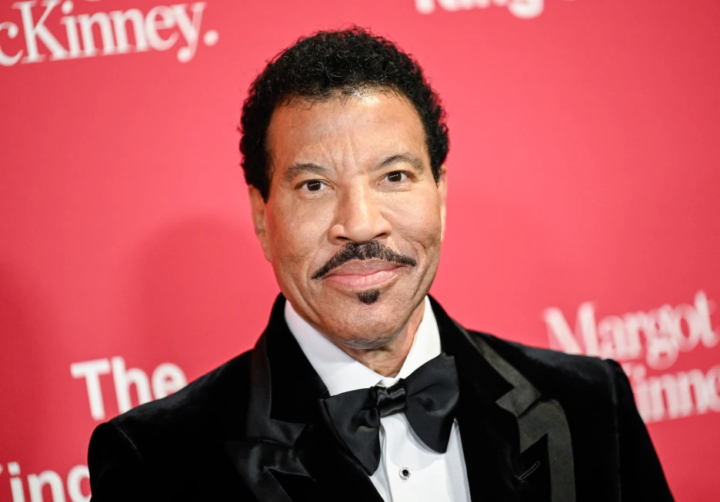
Lionel Richie is Taking a Break from Performing Following a Heart Procedure
NEW YORK (AP) — Lionel Richie is taking a break from touring as he recovers from a heart procedure, a representative for the singer confirmed in a statement to The Associated Press on Wednesday.
Richie underwent a common procedure for atrial fibrillation, or A-fib, and the “doctor said everything went perfectly,” it read. “Lionel is doing great but will take some time off and will be back on stage soon.”
A-fib is a quivering or irregular heartbeat that is a worrisome stage-setter for blood clots, stroke and heart failure. Some researchers believe more than 10 million Americans have it — most of them older.
The 77-year-old singer also postponed two concerts earlier this year, in June, after falling ill. And in August, reports of Richie checking himself into a hospital after a performance in St. Louis made the rounds online.
Richie was scheduled to perform with Earth, Wind & Fire Saturday in San Francisco, Sept. 30 in Chicago and Oct. 3 in Columbus, Ohio.
According to his website, he is currently scheduled to launch his “King of Hearts” residency shows at Las Vegas’ the Wynn in October and November.
The Oscar and four-time Grammy Award-winning Richie launched his career with The Commodores before becoming a successful solo artist. In addition to his well-known hits like “Hello,” Richie co-wrote the iconic charity single “We Are the World” with Michael Jackson and has sold over 100 million records. He is also a judge on “American Idol.”
World's Largest Copper Mine Halts Operations After Worker Death
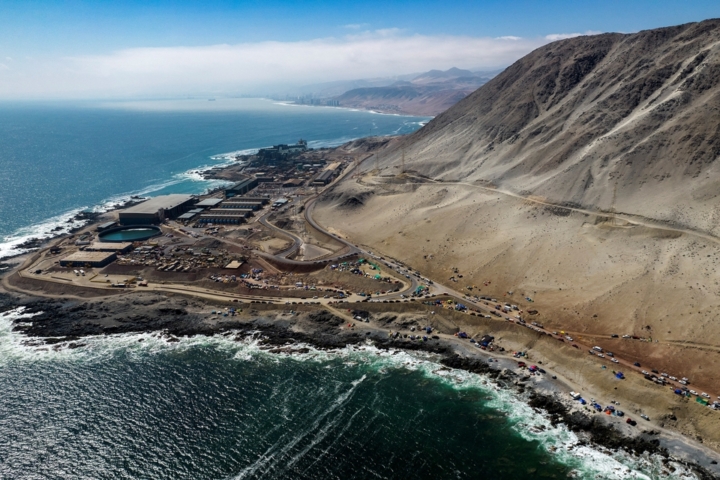
SANTIAGO, Sept 23 (Reuters) - Operations at the world's largest copper mine, BHP's (BHP.AX), opens new tab Escondida mine in Chile, were suspended on Wednesday after a worker was killed in an accident, the firm said.
BHP said the worker had been killed while carrying out maintenance work. The union representing the site had previously told Reuters that the accident involved a front-end loader frequently used by the industry.
"All operational activities at the mine have been suspended," BHP said in a statement, without giving a timeline for when they may restart.
Typically in Chile, mines may only kick off activities after a fatal incident once inspectors verify that conditions are safe enough for a restart.
Escondida is located in Chile's Atacama Desert. BHP operates the mine, while Rio Tinto (RIO.L) holds a 30% stake and Japan-based JECO Corp 12.5%.
BHP had estimated the site would produce up to 1.28 million metric tons of the red metal this year.
- Reporting by Fabian Cambero; Writing by Kylie Madry; Editing by Franklin Paul, Anthony Esposito and Nick Zieminski

Kremlin Says It Is Considering US Invitation for Putin to Join G20 Meeting
Sept 23 (Reuters) - Kremlin spokesman Dmitry Peskov was quoted as saying on Wednesday that Russia would consider the invitation extended by US Secretary of State Marco Rubio for President Vladimir Putin to attend a G20 meeting later this year in the United States.
"We saw the reports in the media and the statements by the secretary of state. We are grateful and appreciative for this invitation," Russian news agencies quoted Peskov as saying.
"We will make a decision and work through it via diplomatic channels."
Rubio, speaking after meeting Russian Foreign Minister Sergei Lavrov, said he hoped Putin would accept the invitation, adding that the occasion would serve as an opportunity for Putin to speak to US President Donald Trump.
The G20 meeting is scheduled for December in Florida.
- Reporting by Reuters; Editing by Cynthia Osterman

Brazil Has Record Number of Indigenous Candidates for General Elections
RIO DE JANEIRO, Sept 23 (Reuters) - Almost 200 Indigenous candidates, a record, are running for public office in Brazil's general elections next month, official data showed, campaigning on environmental protection in an increasingly conservative political landscape where agribusiness interests wield significant influence.
"We Indigenous women need to have a voice, and we need to occupy decision-making spaces. We have to be in those decision-making spaces as part of our struggle for our territories, for Mother Earth, and for the environment," said Tereza Arapium, who is running for a seat in the state congress in Rio de Janeiro, using actual leaves as campaign leaflets.

The record comes as Indigenous groups push the government for faster official recognition of their territories, a status that grants these lands legal protection against invasions, while seeking to shield their interests in legislative houses from agribusiness, as well as energy and infrastructure projects.

Brazil's electoral authorities have registered 191 Indigenous candidates, the highest number since ethnicity data on candidates started being published in 2014, data gathered by Indigenous umbrella group APIB showed, but still a tiny fraction of the almost 21,000 candidates registered with electoral authorities.
APIB has publicly supported the reelection of leftist President Luiz Inacio Lula da Silva, who opinion polls show is neck and neck with the main opposition candidate Flavio Bolsonaro, the son of far-right firebrand and former President Jair Bolsonaro.
The group welcomed Lula's creation of a Ministry of Indigenous Affairs and the resumption of official recognitions of Indigenous lands, but criticized the pace of such recognitions and the government's push for oil drilling near the mouth of the Amazon River.
Lula has claimed the drilling would be done in the safest way possible.

- Reporting by Pilar Olivares, Aline Massuca in Rio de Janeiro and Bruno Kelly in Manaus; additional reporting and writing by Andre Romani in Sao Paulo; Editing by Aurora Ellis

Dramatic Eviction of 87-year-old Madrid Tenant Spotlights Spain's Housing Crisis
MADRID, Sept 23 (Reuters) - Police evicted an 87-year-old woman on Wednesday from her Madrid home of more than seven decades despite hundreds of people protesting outside and the government criticising the eviction order, in a dramatic new flashpoint of Spain's housing crisis.
After being given just 30 minutes to leave with only essential belongings, Maricarmen Abascal was eventually removed from the building on a stretcher accompanied by social services officials and driven away in an ambulance as supporters chanted "Maricarmen, you're not alone!" and "Murderers!"
The case highlights mounting pressure on long-term tenants in major Spanish cities, where soaring rents, gentrification and a shortage of affordable housing have fuelled social and political tensions.
The apartment in the capital's affluent Retiro neighbourhood had been acquired by an investment fund that sought a steep increase in her rent.
Maricarmen's lawyer, Beatriz Duro, said court officials and representatives of the investment fund, Urbagestion, had refused to suspend the eviction despite a pending court filing, humanitarian appeals and evidence that public authorities were working to secure alternative accommodation.
Urbagestion did not immediately respond to requests for comment.
Duro said an anonymous individual had offered to cover the rent payments, but the landlord declined to sign a new lease.
"I've lived here for 71 years and I don't want to leave," Maricarmen told reporters on the eve of the eviction.
The eviction sparked tense scenes outside the building, where police forcibly removed protesters blocking the entrance. Reuters witnesses saw officers dragging and pushing demonstrators, lifting some by their arms and legs as they cleared the doorway.
Spain remains divided over how to tackle a worsening housing affordability crisis.
The left-wing coalition government has pushed for stronger tenant protections and wider rent controls, but has struggled to secure backing in a divided parliament, while the conservative-led Madrid regional government has favoured a more market-oriented approach.
Madrid's regional leader, Isabel Diaz Ayuso, is embroiled in a scandal regarding her government's purchase, via a public real estate agency, of a €6.3 million ($7.2 million) luxury penthouse. The opposition accuses Ayuso of seeking to use the property as her personal residence while bypassing public spending and transparency rules, which she denies.
Referring to that scandal, activists at Wednesday's eviction shouted: "Ayuso's penthouse for Maricarmen!"
($1 = 0.8763 euros)
- Writing and additional reporting by Emma Pinedo, editing by Andrei Khalip and Gareth Jones

Harvey Weinstein Sentenced to 15 Years for New York Sexual Assault
NEW YORK, Sept 23 (Reuters) - A New York judge sentenced former Hollywood producer Harvey Weinstein to 15 years in prison on Wednesday for sexually assaulting a former production assistant in 2006, following the ex-movie mogul's conviction at a retrial last year.
Weinstein, 74, was convicted in June 2025 of first-degree criminal sexual act for assaulting Miriam Haley at his Manhattan apartment, the culmination of a six-year legal saga that saw his 2020 conviction overturned by New York's highest court. Weinstein has denied assaulting anyone or having non-consensual sex.

Manhattan District Attorney Alvin Bragg on Wednesday praised Haley for her testimony and said he was moved by her courage.
A Weinstein spokesman said in a statement that Weinstein maintains his innocence and strongly disagrees with the sentence imposed by Judge Curtis Farber.
Weinstein was first convicted in New York in 2020 of assaulting Haley and raping aspiring actress Jessica Mann and was sentenced to 23 years in prison. New York's highest court overturned that conviction in 2024, finding that he had not received a fair trial. At his 2025 retrial, jurors convicted him of a charge related to Haley, acquitted him of assaulting former model Kaja Sokola and deadlocked on a rape charge involving Mann.
A third trial on Mann's allegation ended in another mistrial in May. Prosecutors dropped the charge the following month after Mann said she did not want to testify in a fourth trial.
Weinstein, who co-founded the Miramax studio, was separately convicted in California in 2022 of rape and sexual assault and sentenced to 16 years. A California appeals court in June upheld those convictions but ordered him resentenced because the trial judge had considered his since-overturned New York convictions as an aggravating factor.
Weinstein's original conviction was a milestone for the #MeToo movement, which encouraged women to come forward with allegations of sexual misconduct by powerful men.
More than 100 women, including famous actresses, have accused Weinstein of misconduct. He has denied the allegations.
- Reporting by Jack Queen in New York; Editing by Alistair Bell

Iranian Americans plan protests and watch parties ahead of team’s World Cup opener
INGLEWOOD, Calif. (AP) — Iranian Americans are torn over Iran’s participation in the World Cup, as some community members plan to watch Monday’s match and others plan to protest outside the stadium where the team will play.
A rally is planned for outside the stadium near Los Angeles, home to the largest Iranian community outside Iran. Many of Southern California’s Iranian Americans arrived after the Islamic Revolution, and a hub of eateries, shops and markets about 10 miles (16 kilometers) from the stadium is known as “Tehrangeles.”
Rally participants plan to wear lion-and-sun T-shirts and wave the country’s flag from before the 1979 Islamic Revolution in protest of Tehran’s deadly January crackdown on dissent.
Ali Javahery, a 59-year-old consultant who was born in Iran and lives in California’s Orange County, said he will be outside protesting Iran’s opening match against New Zealand, not inside watching it. He said soccer and politics are intertwined, and though he loves the sport, he says the national team’s players are under pressure to adhere to the Iranian government’s positions.
“This is not ‘Team Melli,’” as the national team is known in Persian, Javahery said. “This is Team Islamic Republic.”
Iran’s participation in the tournament has been fraught with conflict because of the country’s war with U.S. and Israeli forces. The team moved its training base to Mexico from Tucson, Arizona, and some of the country’s key soccer officials had not been granted visas to enter the United States. Many in the diaspora have mixed feelings over how to show their support of the Iranian people, but not the government, through their love of soccer.
“We play for every Iranian, be it in the diaspora or in Iran. People have different opinions, but we are here to unite people and we will try to bring joy to all Iranians wherever they live,” team captain Mehdi Taremi said at a press conference Sunday. “We are here to bring joy to Iranian people. We do not get involved in politics. We are here to play football.”
Reza Garajedaghi, 57, said he will watch the game with his 96-year-old father in San Diego. He said he didn’t buy tickets for the game, partly because of the sky-high pricing. But he said he supports the team, politics aside, while respecting the wide range of views shared by Iranians in the diaspora.
“I’m a football die-hard, and the boys, they’re representing all Persians, Iranians around the world,” said Garajedaghi, who left Iran when he was 10 years old. “To me, it has nothing to do with whatever government they have in Iran.”
Watch parties are planned to cheer on the team in Southern California, and when Iran was assigned last year to play in LA, many bought tickets. But in recent months some said they have sold off their tickets in anger, following January’s brutal repression.
Some Iranian American soccer fans have also said the team is currently tied up in politics. In the past, Iranian athletes have faced serious consequences for speaking out. In 2022, a prominent former member of the national team was arrested for allegedly protesting against the country’s leadership, and star striker Sardar Azmoun wasn’t selected for the World Cup squad this year, reportedly because of a social media post that angered authorities.
Iran coach Amir Ghalenoei called Azmoun an “excellent player” and said he wished he were with the team.
“I am just happy that they are coming to watch us and I hope that they will pray for us and I hope that they will encourage us,” Ghalenoei said Sunday when asked about the sizable diaspora. He added that he hoped the team would pay back that loyalty by playing a good game.
Some Iranian Americans are also upset about FIFA’s rule barring political flags from being flown. They want to fly the pre-revolution lion-and-sun flag, which is not the official flag of Iran. The Iranian American Institute for Voices for Liberty said it filed a lawsuit last week in California to challenge FIFA’s flag rule.
During Friday’s opening ceremony in Los Angeles, members of the mostly American crowd booed when Iran’s flag was brought onto the field.
Late Sunday, President Donald Trump announced that the U.S. had reached a deal with Iran to end the war and open the Strait of Hormuz. The war launched by the U.S. and Israel on Feb. 28 has rattled the region and virtually shut down oil and natural gas shipments from the Persian Gulf. Details of the deal, expected to be signed Friday, weren’t available.