
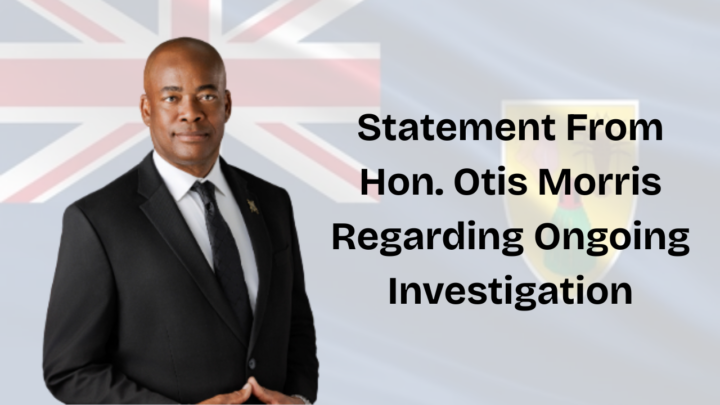
Statement from Hon. Otis Morris Regarding Ongoing Investigation
April 17, 2026
Providenciales, Turks and Caicos Islands — The Honourable Otis Morris, Member of Parliament for Grand Turk North, issues the following statement to address the ongoing circulation of a fabricated video, the recent publication of a preliminary forensic report, and the deeply concerning handling of this matter by both the Government and the Royal Turks and Caicos Islands Police Force.
First and foremost, Mr. Morris categorically and unequivocally maintains his denial that he is the individual depicted in the video currently in circulation. He has been the victim of a malicious and criminal extortion plot, wherein unknown individuals demanded funds under the threat of releasing this fabricated material. Mr. Morris refused to capitulate to these criminal demands and immediately reported the extortion attempt to the authorities.
It is profoundly disappointing that the sensationalisation of this matter has entirely overshadowed the actual crime committed—the criminal extortion of which Mr. Morris is the clear victim.
Mr. Morris notes with grave concern the recent dissemination of a newspaper article citing a "Forensic Visual Assessment Report" prepared by the Major Organised Crime & Anti-Corruption Agency (MOCA) of Jamaica. This report is explicitly classified as "SENSITIVE - FOR OFFICIAL INVESTIGATIVE USE ONLY."
The act by the police to reveal, or allow the leaking of, sensitive findings from an active and ongoing investigation is highly unusual, irregular, and prejudicial. Such actions compromise the integrity of the investigative process and appear designed to try this matter in the court of public opinion rather than through proper legal channels.
While certain media reports have seized upon isolated phrases within the preliminary report to suggest the image is Mr. Morris, a full reading of the document reveals that its findings are entirely inconclusive, heavily caveated, and fundamentally unreliable as definitive proof.
The report's author, Dr. Patrick A. Linton, explicitly outlines severe limitations that preclude any definitive identification:
- The report explicitly states that its assessment "does not amount to formal biometric identification" and "does not constitute a positive forensic identification of the depicted individual."
- The examination was conducted on a low-resolution (480 x 848 pixels) screen-recorded copy of a video playing on another device, not an original file. The report notes this "introduces compression degradation and reduces the sensitivity of artefact detection."
- Crucially, the report acknowledges that "the absence of detected AI artefacts does not exclude the possibility that sophisticated manipulation was applied and subsequently obscured by the quality reduction inherent in the screen-recording process." It notes that high-quality deepfakes can survive such compression without leaving detectable traces.
- The report is explicitly titled a "Preliminary Forensic Visual Assessment" and notes that "the resolution constraint limits the sensitivity of artefact detection and precludes formal biometric identification."
- The report itself recommends six further investigative steps, including securing the original device, conducting first-generation analysis, and submitting the material to specialist AI deepfake detection platforms. None of these essential steps have been completed.
To present this preliminary, heavily qualified, and limited assessment as conclusive proof is not only factually incorrect but deeply irresponsible.
Furthermore, Mr. Morris must highlight the appalling handling of this situation by the Government. The summary revocation of his ministerial responsibilities was executed in blatant violation of his fundamental rights to natural justice.
To date, Mr. Morris has not formally received any official notification or explanation of his dismissal from the Premier. He was afforded no opportunity to be heard, to state his position, or to defend himself before the revocation was published in the Gazette. This rush to judgment, based on unverified material and an incomplete investigation, represents a profound failure of leadership and due process.
Finally, it must be noted that even if the allegations were true—which they are emphatically not—the act alleged to be reflected in the video is not criminal in nature, and there is no contention whatsoever that the video was published or distributed by Mr. Morris.
Mr. Morris remains steadfast in his commitment to the people of Grand Turk North and the Turks and Caicos Islands. He will continue to cooperate with any legitimate investigation into the extortion plot against him and will vigorously defend his name and reputation against these baseless attacks.
- END -


TCI Border Force Issues Warning to General Public and Reminds of Legal Consequences
The Turks and Caicos Islands Border Force is issuing a Strong Warning on Immigration Offences and Reinforces Legal Consequences.
The public is reminded of the following legal provisions under the TCI Immigration Act;
1. Section 12(1) A person shall not engage in any gainful occupation in the Islands unless he is lawfully authorized to do so, including being in possession of a valid work permit or otherwise exempt under law.
2. Section 12(2) A person shall not employ another person who is prohibited from engaging in gainful occupation under subsection (1).
3. Section 95(2) Any person who employs an individual not lawfully permitted to work commits an offence and is liable on summary conviction to: a fine of ten thousand dollars ($10,000) or imprisonment for a term of two years, or both; and, in the case of a continuing offence, an additional fine of one hundred dollars ($100) for each day the offence continues; with the court further empowered, upon repeated offences, to suspend a business license for a period not exceeding six months.
4. Section 105 A person who assists or facilitates the transportation or entry into the Islands of an individual known, or reasonably suspected, to be an unlawful entrant commits an offence and is liable on summary conviction, to a fine of $20,000 or imprisonment for four years, or both; or on conviction on indictment, to imprisonment for up to seven years.
5. Section 105 Where such actions place individuals at risk: A person who facilitates unlawful entry in circumstances giving rise to a danger of death or serious harm is liable on conviction on indictment to imprisonment for up to fourteen years.
6. Section 106 A person who knowingly harbors an individual unlawfully present in the Islands commits an offence and is liable: on summary conviction, to a fine of $20,000 or imprisonment for four years, or both; or on conviction on indictment, to imprisonment for up to seven years.
The Border Force remains resolute in its commitment to protecting the integrity of our borders, safeguarding lawful employment, and upholding the rule of law. Any breach of the Immigration Act will be met with decisive enforcement action.
Anyone with information regarding irregular migration is strongly urged to contact the nearest police station, call 911, the Serious Crime Unit at 231-1842, or report anonymously via Crime Stoppers at 1-800-8477, through the Crime Stoppers P3 app or via email at tciintel@gov.tc.
Guyana's Customs Anti-Narcotic Unit (CANU) Successful in Q1 of 2026
Guyana’s Customs Anti-Narcotic Unit (CANU) reported major progress in combating drug trafficking in the first quarter of 2026, seizing over 370 kilograms or over 800 lbs of illegal drugs and disrupting networks across several regions.
The Ministry of Home Affairs said CANU confiscated 371.24 kilograms of narcotics between January and March through 26 operations.
These efforts led to 37 arrests, 30 charges, and 18 court cases, reflecting what officials described as a focused, intelligence-driven strategy.
Cocaine remained the most valuable drug seized, totaling 113.01 kilograms, underscoring Guyana’s continued role as a transit hub for international trafficking. Cannabis made up the largest share by volume, with significant seizures tied to local cultivation.
Region 6 recorded the highest volume of seizures, mainly cannabis, while Regions 2 and 4 also showed notable activity, pointing to established trafficking routes and distribution centers.
Authorities also confiscated four firearms and 166 rounds of ammunition during the operations, highlighting the connection between drug trafficking and violent crime.
The Ministry estimated the local street value of the seized drugs at more than GYD $190 million, with international values exceeding GYD $1.2 billion.
During the quarter, CANU expanded its international partnerships and policy engagement, increasing intelligence-sharing and taking part in regional and global initiatives to strengthen coordinated drug control. Officials said this reflects a shift toward more proactive enforcement and improved readiness to address emerging threats.
Beyond enforcement, the agency reached over 2,400 individuals through school and community outreach programs aimed at prevention.
Officials noted that Guyana’s drug landscape remains complex: cannabis dominates in volume, cocaine drives value, and synthetic drugs are an emerging concern.

Soca Artist Patrice Roberts Ordered to Pay Canadian Entertainment Company
Soca artiste Patrice Roberts has been ordered to pay US$25,104.12 to a Canadian-based entertainment company following a breach of contract dispute dating back to 2015.
The ruling was handed down by Robin Mohammed in the High Court of Trinidad and Tobago, bringing closure to a long-running legal matter involving Soca Bookings Incorporated.
The dispute stemmed from an oral management agreement made in February 2015, under which the company provided artiste management services, including bookings, branding, recording arrangements, and international promotion.
Justice Mohammed found that while a valid contract existed, several key terms were unclear particularly whether management fees were to be paid immediately or only after the venture became profitable.
The court accepted Roberts’ position that fees were to be deferred until profitability, noting that the company failed to prove that this threshold had been met.
Despite this, the judge ruled that Soca Bookings was still entitled to compensation for services rendered and financial advances made to support Roberts’ career. The company was awarded US$35,472.
However, the court also upheld Roberts’ counterclaim, finding that the company owed her US$10,367.88 in digital music sales collected during the management period.
This amount was set off against the original award, resulting in a final payment of US$25,104.12 to be made by Roberts. Both parties were also awarded pre-judgment interest and legal costs.
A separate claim for US$11,600 related to a music video shoot was dismissed due to insufficient evidence.
In his ruling, Justice Mohammed highlighted the risks of informal agreements in the entertainment industry, noting that the dispute could likely have been avoided if the parties had formalised their arrangement in writing.
The case serves as a cautionary example for artistes and managers to ensure clear, written contracts outlining financial terms, obligations, and expectations.

BBC To Cut Jobs In Order to Reduce Costs
The BBC announced Wednesday that it plans to eliminate up to 2,000 jobs over the next two years as part of an effort to cut 10%—about £500 million ($677 million)—from its annual budget. The layoffs, revealed during a staff call, mark the broadcaster’s largest workforce reduction in more than a decade.
In an email to employees, interim Director-General Rhodri Talfan Davies acknowledged the uncertainty the decision creates but said transparency was important. He explained that the cuts are being driven by inflation, pressure on license fee and commercial revenues, and broader global economic instability.
Earlier this year, the BBC warned it was facing significant financial strain and aimed to reduce roughly a tenth of its budget by 2029, with most of the cuts expected in the fiscal year starting April 1, 2027.
The restructuring comes as former Google executive Matt Brittin prepares to take over as director-general next month, following the departure of Tim Davie and news chief Deborah Turness.
Their exits came after controversy over a misleading edit in a documentary about U.S. President Donald Trump’s Jan. 6, 2021 speech ahead of the Capitol riot. Trump has since filed a $10 billion defamation lawsuit against the BBC.
Long regarded as a cornerstone of British culture, the BBC is funded primarily through an annual license fee—recently increased to £180 ($244)—paid by households that watch live TV or access BBC content. However, criticism of the fee has intensified in the streaming era, as audiences move away from traditional television and competitors challenge the model.

Coca Cola Florida Donates to Students Across Florida
Coca-Cola Beverages Florida has partnered with the City of Miramar to support local students through a technology giveaway held during the recent Afro-Carib Festival.
During the cultural celebration, Coca Cola Florida presented nine laptops to top senior students from Miramar High School and Everglades High School, recognizing their academic achievement and leadership. The devices are intended to help students prepare for college, career training, and future professional opportunities.
Providing students with technology tools like Chromebooks helps ensure they are prepared for the next chapter of their educational and professional journeys.
Since launching its technology access initiative in 2018, Coca Cola Florida has invested more than $1 million to increase digital access for residents across Florida.
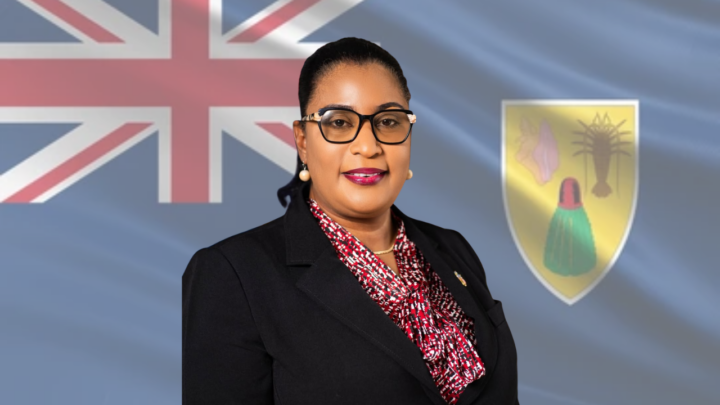
Rosetta Talbot Appointed Deputy Clerk within TCI Parliament
The Office of the Deputy Governor of the Turks and Caicos Islands is pleased to announce the appointment of Ms. Rosetta Talbot as the Deputy Clerk within the Parliament of the Turks and Caicos Islands.
With over two decades of service in the Turks and Caicos Islands Public Service, Ms. Talbot brings a wealth of knowledge and experience to her new role. Her career includes various positions in which she managed critical electoral logistics, including maintaining the electors register, financial monitoring and coordinating general elections. She also held significant tenures as an Administrative Assistant within the Examination Unit of the Department of Education and the House of Assembly, where she prepared minutes and facilitated legislative sittings. Throughout her career, she has demonstrated strong organisational skills, attention to detail and a commitment to public service excellence.
Ms. Talbot is currently pursuing an Associate's Degree in Business Management at Penn Foster College. Her professional development includes a Certificate in Strategic Reform of Electoral Processes obtained in the United Kingdom and she possesses advanced proficiency in administrative systems and computer programming.
Reflecting on her appointment, Ms. Talbot shared, "I am deeply honoured to accept the appointment of Deputy Clerk to Council of the Turks and Caicos Islands. In this role, I am fully committed to upholding the constitutional integrity of our legislature and providing steadfast support to the Clerk in the administration of parliamentary affairs. My primary focus will be to enhance the efficiency of the House while dedicatedly serving the democratic values and people of our beloved Islands."
Deputy Governor and Head of the Public Service, Her Excellency Anya Williams said: Congratulations are extended to Ms. Rosetta Talbot on her appointment as the new Deputy Clerk of the Turks and Caicos Islands Parliament, following the retirement of the former Deputy Clerk, Mrs. Lydia Butterfield.
We express our appreciation to Mrs. Butterfield for her many years of dedicated service to the Turks and Caicos Islands Government and wish her well on her retirement.
The role of Deputy Clerk to the Parliament is a critical one, requiring the provision of procedural advice, the maintenance of parliamentary records and the efficient administration of parliamentary business. It is a position that supports the effective functioning of the legislature and upholds the integrity of the parliamentary process.
Ms. Talbot’s in her previous role in the TCI Elections Department discharged her duties with diligence and distinction and we are certain will continue to contribute meaningfully to the advancement of good governance in the Turks and Caicos Islands in this new role.”
Congratulations Ms. Talbot on your well-deserved promotion and every success in your new role.

Brandy Garland-Williams Appointed Director of Services within TCI Border Force
The Office of the Deputy Governor of the Turks and Caicos Islands is pleased to announce the appointment of Mrs. Brandy Garland-Williams as the Director of Services in the Turks and Caicos Islands Border Force within the Ministry of Immigration and Border Services.
Garland-Williams holds a Bachelor of Laws Honours with Criminology from the University of Law, which she completed in September 2025 and an Associate Degree in Paralegal Studies from the Bahamas Institute of Business and Technology, obtained in 2018. She is currently pursuing a Master’s Degree in Immigration Law at the University of Law.
Garland-Williams joined the Public Service as an Assistant Customs Officer in 2020 and was promoted to Customs Officer in 2021. In 2023, she was elevated to Senior Officer and subsequently promoted in 2024. Throughout her tenure, she has gained specialized expertise in border security, intelligence operations and enforcement coordination, supported by numerous professional certifications including Silver Commander Certification and advanced analytical training from the International Association of Law Enforcement Intelligence Analysts.
In her new capacity as Director of Services, Mrs. Garland-Williams will oversee all critical services provided by the Border Force, including the issuance and management of visas, residence permits and extensions of visits. She is also responsible for managing the Entry Processing Unit, which facilitates the processing of cargo entering the Turks and Caicos Islands via official entry processing systems. Additionally, her remit includes the management of the two detention facilities, ensuring the highest standards of security and operational oversight.
Reflecting on her appointment, Mrs. Garland-Williams shared, “I am deeply honoured to have the privilege of serving my country in this new capacity and for the opportunity to continue contributing to the protection and national security advancement of the Turks and Caicos Islands. My professional journey truly reflects the power of prayer, hard work, dedication, faith and continuous growth. It is my hope that my professional and educational journey can serve as an inspiration to young adults. Remain committed to pursuing your purpose with integrity, prayer, faith and dedication and you will continue to achieve excellence in whatever path you choose. As Myles Munroe once said, ‘The greatest tragedy in life is not death, but a life without purpose.’ I am also guided by the words of Book of Mark 11:24, which says, ‘Therefore I say to you, whatever things you ask when you pray, believe that you receive them and you will have them.’”
Deputy Governor and Head of the Public Service, Her Excellency Anya Williams in congratulatory remarks said, "I extend sincere congratulations to Mrs. Brandy Garland-Williams on her appointment as Director of Services within the Turks and Caicos Islands Border Force in the Ministry of Immigration and Border Services. We are pleased to welcome her to this distinguished role and wish her every success as she embarks upon this new chapter in contributing to the critical work of the TCI Border Force.”
Congratulations on your well-deserved promotion, Mrs. Garland-Williams!
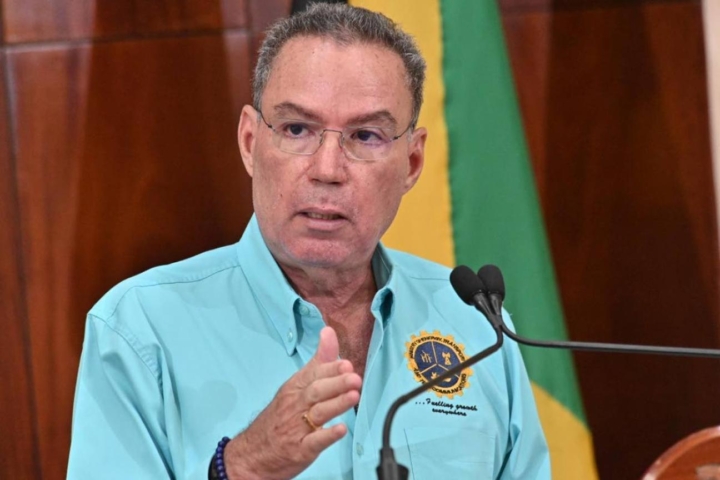
Gov’t to weigh movement restrictions as fuel costs surge – Vaz
KINGSTON, JAMAICA (JAMAICA GLEANER) – The Government is exploring options to get Jamaicans to conserve fuel amid rising global prices, with Energy and Transport Minister Daryl Vaz signalling that COVID-19-style movement restrictions could be considered.
No decision has been made, and the matter is to go before Cabinet for discussion.
The move comes as Vaz indicated that Petrojam has absorbed losses of $11.8 billion over the past four weeks while cushioning the impact of higher oil prices driven by the ongoing war in the Middle East.
Vaz described the losses as “unaffordable and unsustainable,” warning that prices will continue to rise for as long as the conflict persists.
He urged Jamaicans to begin conserving fuel immediately.
“We are going to see increases as long as this war continues. We will continue to do what we can, but it is important that you understand that you need to conserve starting today,” he said.
“The Government is going to have to look at policies to limit movement, especially transportation. I don’t know if we can go back to a COVID-19 hybrid version of working from home, but something has to happen,” he added.
“The level of traffic that I’m seeing on the road doesn’t show that anybody realises that there is a war and that fuel prices will continue to go up.”
Vaz noted that oil prices have climbed from about US$70 per barrel before the conflict to an average of US$100, reflecting volatility in the global market.
He indicated that between March 12 and April 8, transport fuel prices increased by an average of $49.20 per litre.
He said of that amount, only $18 was passed on to consumers under the Government’s pricing cap at Petrojam, which limits adjustments to $4.50 per litre on increases or decreases.
A revision of the $4.50 cap has been proposed to Cabinet as part of a new tiered pricing mechanism aimed at reducing losses while maintaining consumer protection.
“While the current mechanism has been effective in cushioning consumers, it has resulted in significant financial losses by Petrojam,” Vaz said, citing the $11.8 billion.
“That is, in fact, two-thirds of this budget year’s revenue measures. You have to understand the magnitude of the impact of the war on Jamaica. This level of support is not sustainable indefinitely, especially in a prolonged high-price environment.”
He said the proposed system would likely introduce multiple pricing tiers to allow greater flexibility in responding to global market shifts.
“It means that we will probably have three different tiers of caps that reflect what is happening in the market. And if prices are changing weekly, it means we can adjust on a weekly basis,” he added.
“Let me be blatantly, truthfully upfront, in your face, the Government of Jamaica cannot stomach a $11.8 billion with all of what we have to do and the contending priorities. And anybody who tell you any different, I’m sure they will after this press conference, rubbish. No government, in a situation like this, can sustain that,” Vaz added as he urged businesses and ordinary citizens to conserve fuel.
Added Vaz: "My words to you Jamaica definitively is you are going to see increases as long as this (war) continues. We will do what we can do but it is important that you do what you need to do to understand that you need to conserve."

Multi-Agency Exercise Conducted on Providenciales for Informal Settlements
The Informal Settlements Unit (ISU), in coordination with the Planning Department and key partner agencies, conducted a multi-agency enforcement exercise on Thursday, April 9, 2026, at Block and Parcel 60802/49 and 60802/65, located in the Caicos Lodge area.
The operation was led by the Planning Department, with coordination by the ISU and support from the Royal Turks and Caicos Islands Police Force, the TCI Border Force, Pelican Energy TCI, and DevCon Power Supply. All agencies worked collaboratively to ensure the exercise was carried out in a safe, orderly, and controlled manner.
The enforcement action followed a structured and lawful process in accordance with the Physical Planning framework of the Turks and Caicos Islands. A total of fifty (50) unauthorized structures were removed during the exercise.
Section 45 Enforcement Notices were first issued on the affected parcels on December 11 2024, identifying unauthorized structures in illegal occupation. This was followed by the issuance of Warning Notices on March 26 2026, which clearly advised occupants that they were in breach of planning and land use regulations and provided a 14-day period to remove the structures voluntarily. Despite these notices and the time afforded for compliance, the unauthorized structures remained in place.
The Government wishes to emphasize that the structures removed were unauthorized developments, constructed without the required planning approvals and in breach of established building and land use regulations.
Planning regulations exist to ensure that all developments meet minimum standards for safety and structural integrity. Unauthorized settlements, regardless of appearance, often lack these safeguards and can pose serious risks to occupants and the wider community.
The enforcement of these regulations is therefore not only a legal obligation, but a necessary measure to protect lives, property, and public health.
The Turks and Caicos Islands Government remains fully aware of the housing challenges currently facing the country. However, unlawful development cannot be allowed to proliferate in a manner that compromises safety, undermines planning systems, and infringes on property rights.
All persons undertaking construction or occupation of land must do so in accordance with the law, including obtaining the necessary planning approvals.
The Government will continue to work collaboratively across agencies to:
- Uphold planning and development regulations
- Protect private and public lands
- Prevent the expansion of unsafe and informal settlements
- Advance long-term solutions for sustainable community development
This exercise represents part of an ongoing commitment to ensuring that development within the Turks and Caicos Islands is lawful, safe, and aligned with national standards.