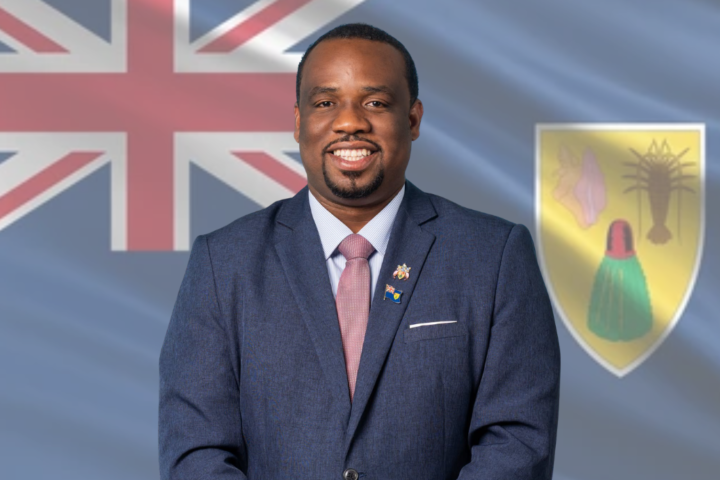
Mr. Speaker, Through the grace of God and his eternal mercies, I arise to present the estimates of revenue and expenditure for the fiscal year 2018-2019 under the theme consolidating the gains, expanding the hope and empowering our people.
We have formulated this budget understanding that in December 2016 the people voted for change. Our people did not want business as usual. They wanted to turn their backs on transactional governance: one that just kept the boat afloat. Our people wanted a transformational government: one that will change fight for them, their future, their children’s future and our country.
We came in Mr. Speaker with no illusions. We understood that things won’t change without a fight.
When we got into office, we met certain institutional structures that were resistant to the change the people wanted; that were bent on maintaining the status quo and, on frustrating the will of the people and diluting the power of their vote.
And so this budget Mr. Speaker, but must be seen as a significant part of the foundation we are re-building.
We have had not only to navigate the institutional and structural landmines put in the people’s way, but also face head on the challenges that nature presented.\
In the summer of 2017, we were rocked by the passage of two hurricanes, which negatively impacted on the growth projections of the fiscal year just ended.
And while these events of nature provide many unique challenges, it also provided us with opportunities to begin to reconfigure the economy, and to address issues related to environmental management and climate resilience.
We are acutely aware Mr. Speaker, that reforms that promote quality education and health, as well as improve infrastructure services could substantially bolster potential growth here in the Turks and Caicos.
We will seek to expand the economy by attracting more investments, particularly in the services sector; and by maximizing our potential in tourism and other related services and industries.
The performance of the real estate sector continues to be strong.
In the next few years we expect massive growth in the construction sector that will positively impact employment levels.
Indeed, this change of which we speak, shall be for real.
We shall build an economy that affords greater opportunity to our youth, making financing more available so that they can access their dreams.
We shall embark on policies that will fight poverty where it exists; we shall bring people out of the economic shadows; and the change the people in South Caicos, and Sandy Point, and the Backsalinas yearn for, shall indeed come.
When we came into office in 2016, figures indicate that a third of our population was living in poverty. We are determined to cut that figure by half in the next few years. We learnt that studies had shown that 60% of our people could not pay all of their bills within a month.
Mr. Speaker, this presentation will outline the foundation on which this change shall be built, understanding that change is not a destination, but an ongoing process of development that inches this society forward every year, and that lifts people up, household by household.
There will be the critics who can only see the problems. Our task as government is to see the opportunities and find the solutions.
And while our opponents jostle for their own power; we shall fight to bring genuine power to the people.
In the next two and a half years we shall be pre-occupied with the bread and butter issues of people.
Our people have a right not to never be satisfied. Our government too, shall never satisfied; because every time we reach a never frontier, we will still yearn for something better.
On The Road To Recovery
Mr. Speaker, the Hurricanes Irma and Maria of September 2017, dealt a significant blow to the Turks and Caicos Islands, affecting our lives, our families, our economy, our infrastructure but most significantly our schools. The damaged assessment reports revealed that “approximately 80% of all residence received some level of impact.” The report went on to say that the “most impacted island was South Caicos where nearly all houses (99%) received some level of damage, with just under 80% of the 232 residential properties suffering major damage (level 3) or were destroyed (level 4).”
Despite these challenges, my Government have met these challenges head-on and has risen to the occasion. My Government remain committed to rebuilding our infrastructures throughout the islands to be more robust, strengthening our economy to be more secure, and support our people to be more resilient. Mr. Speaker let us not make any mistake about this, the recovery process is a long road ahead of which there will be many twist and turns and uphill battles, but with God’s grace and our dedication to the people of these Beautiful by Nature Islands, we shall persevere.
The experts have categorized the recovery process into four major groups:
- Early recovery which takes place within 6 months after impact
- Short term recovery, 6-12 months after impact,
3. Medium term recovery-1-2 years after initial impact and
4. Long term recovery which is 2-5 years and beyond.
Mr. Speaker, I am happy to report that the Turks and Caicos Islands are ahead of the curve in respect to our recovery process. Three weeks after the storms, my government started the recovery process once the damage assessment reports were received from CDEMA, UNDP, ECLAC and other international and regional agencies. Some of the actions taken as part of our immediately early recovery strategy included, but not limited to the following:
I. Immediately following the storms my Government amended our fiscal policies, and passed several Customs Concessions Orders to allow many persons who were impacted to import materials duty free, this was even extended up to 3 times to allow those who received late payment from the insurance/bank to still benefit.
a. As of 31st March 2018 a total of $7.9m was provided as relief of duties to the public of the Turks and Caicos Islands. The exemption of duties was granted on specified hurricane relief items, specified building materials, specified furniture and fuel.
b. This key decision allowed our businesses, homeowners, hotels etc. to resume operations in less than two months. An unprecedented feat in the region, given our level of impacted sustained. Many of the countries in the region that suffered similar level of impact are still struggling to rebound.
II. Removal of bureaucratic red tapes to enable the private sector to bring in resources to repair or rebuild their infrastructure such as the hotels, small and medium businesses, telecommunication services and utilities services as part of the recovery process.
III. Based on the lessons learnt, we have strengthened public-private partnership through drafting of MoUs to enable continuous recovery efforts and faster response time this and future potentials impacts.
IV. We are currently in the process of reviewing a number of key legislations including the Disaster Management Ordinance and the Planning ordinance to strengthened the powers of the Director and expand the mandates of the Department under these ordinances, with view to build greater resilience within our community.
V. The assessment reports from CDEMA and ECLAC provided a snap-shot of key priority areas which the Government should focused its short-medium recovery efforts. As part of our early recovery efforts, each Ministry and each Department were directed to reprioritize their work and begin immediately to implement the key recommendations of these report. This Mr. Speaker, forms part of our early recovery strategy and our secret for the quick recovery or the tourism season and the improvement you are now seeing in the economy.
Mr. Speaker these short to medium term recovery strategies, some of which are in the process of being implemented, serves as the foundation for the long term recovery of the Turks and Caicos Islands. I am pleased to inform this Honourable House, that my Government have retained the services of the Caribbean Centre for Development Administration (CARICAD) (a CARICOM Organ), to work with the Government to develop the national recovery plan.
Mr. Speaker, this plan will build on the work that we are currently putting in place and expand into strategies for recovery for the next 5 years and beyond. CARICAD is diligently working with TCIG and we expect to have the first draft of this plan later this month.
We have established A National Recovery Task Force which consist of key stakeholders including public and private membership to oversee the implementation of the recommendations of the reports and the National Long Term Recovery Plan. The recovery task force has started their work and have held several meetings to date. They are working with existing subcommittees where they existed and in some cases, they have established new subcommittees, these include:
- Housing, Infrastructure and Utilities,
- Economic and Recovery Team and
- Social Services, Heath and Psycho-Social Support
Mr. Speaker in order to avoid wastage, duplication of efforts and in order to maximize our resources both human and economic resources, it is important that we understand the recovery process. When we think of the work that the Government on a whole or individual departments will be doing as it relates to the recovery process, it is important to note that these are not necessarily additional work but are work that would have been reprioritized as part of the recovery process.
For example, one of the strong recommendations coming out of the report is the need to address the concern of lack of adherence to the building code by the planning department to do frequent inspections. My Government in response to this has provided Planning with additional resources such as vehicle, manpower etc. to enable them to enforce the building code more effectively. Each department were asked to reprioritize their needs and in this budget to reflect the priority recommendations coming out of the report. The role of the recovery board therefore is to highlight the priority actions and to coordinate with the respective departments in order to ensure that these priority areas are being addressed in a timely manner.
Mr. Speaker we are well on the road to recovery and with the finalization of the Recovery Plan, we will ensure that our people are informed and involved in the process.
GLOBAL & REGIONAL ECONOMIC DEVELOPMENTS
The context of our local economic performance, Mr. Speaker, cannot be devoid of both the regional and global economic context.
Growth in the region is projected to advance to 2 percent in 2018, from an estimated 0.9 percent in 2017. Growth momentum is expected to gather as private consumption and investment strengthen, particularly among commodity-exporting economies.
But the World Bank is predicting that additional policy uncertainty, natural disasters, a rise in trade protectionism in the United States, or further deterioration of domestic fiscal conditions could throw growth off course.
Indeed, escalating trade restrictions and rising geopolitical tensions could dampen confidence and activity in the World Economy that could have a trickledown effect here.
Brexit and EU Engagement
At the Joint Ministerial Council in London in November 2016 the UK Government committed to taking forward future engagement on negotiations to leave the EU through the creation of the UK-Overseas Territories Joint Ministerial Council on European Negotiations. The UK Government reiterated that the referendum result does not change the UK Government’s position on sovereignty over the Territories. The UK have reaffirmed that while the UK remains a member of the EU, and during the Implementation Period, current EU funding arrangements will continue unchanged. Further where Territories are eligible for EU funds that have been covered by assurances from Her Majesty’s Treasury, those guarantees will extend to the Territories.
Thus far there have been four Joint Ministerial meetings in London Chaired by Mr. Robin Walker MP, Parliament Under-Secretary of State at the Department for Exiting the EU, and Lord Ahmad, the Foreign Office Minister with responsibility for the Overseas Territories. The most recent Joint Ministerial was last week on 14 June, 2018.
The objective of the Joint Ministerial meetings is to facilitate political engagement and collaboration between the UK Government and the OT Governments to ensure that the OTs requirements are taken into account in the UK’s preparation for the process of leaving the EU.
The thematic areas that have been addressed during the Joint Ministerial meetings include:
- Trade: Fisheries and Agriculture;
- Free movement and boarder arrangements;
- EU Funding; and
- Non EU Trade
The next Joint Ministerial will take place in November during JMC week.
OCTA and the European Commission
TCI’s Chairmanship of OCTA concluded in February with the hosting of a very successful OCT EU Ministerial in Brussels. TCIG remains a member of the OCTA Executive Committee and Tracy Knight, the UK Representative, is currently Vice President of the Executive Committee of OCTA.
Under the European Development Fund, EDF 11, TCI is to receive a territorial allocation of €14.6 million to support the education system. The first tranche of €4 million Euros was disbursed in September 2017. The application for the second tranche was submitted in May.
Following Hurricanes Irma and Maria an application under the ‘B Envelope’ for top-up assistance to support the education system to rebuild post hurricane was submitted to the European Commission. This application is currently being considered by the Commission.
TCI are also participating in the Caribbean Regional Programme and the Thematic programme. The Caribbean Regional Programme, of €40 million Euros, will focus on Sustainable Energy, Marine Biodiversity and Resilience. The EDF 11 Thematic Envelope, amounting to €16 million Euros, has been split into two focal sectors: Climate Change and Disaster Risk Reduction and Sustainable Energy. The programming of both the Caribbean Regional Programme and the Thematic Programme is expected to be completed by the end of 2018.
The European Commission have recently announced a top up of 2 million Euros from the Global Public Goods and Challenges programme which supports biodiversity in the OCTs to 2020.
DOMESTIC ECONOMIC PERFORMANCE
While we achieved economic growth in the last fiscal year that was stronger than many Caribbean economies, it was however lower than we had projected. This was largely due to the effect of the two hurricanes on our territory.
The weaker growth figures were mainly because output in the tourism sector was significantly weaker during the last quarter of 2017 than forecasted, reflecting in part weather-related factors, mainly hurricanes Irma and Maria, which resulted in delays and the cancellation of significant travel itineraries during the period September to December 2017.
Moreover, the loss of significant hotel room capacity on the Island of Providenciales, which we know is the country’s largest market, during the final quarter of 2017, following the passage of the hurricanes negatively impacted the sector and resulted in the projected growth not being achieved.
However, despite suffering the same strength and wrath of the hurricanes as many other islands in the Caribbean, we were able to bounce back more quickly because of the TCI resilience.
In the aftermath of Hurricanes Irma and Maria, real GDP is therefore estimated to have contracted by 1.5 percent in 2017.
Yet Mr. Speaker, TCI was able to maintain its BBB+ (Triple b Plus) rating. However, S & P has revised its outlook on the Turks and Caicos Islands (TCI) to stable from positive. This announcement was made on Thursday 28th June 2018.
Mr. Speaker This is the fifth consecutive year the TCI has obtained a BBB+ rating. However, with TCI’s economy being subject to volatility, due to the heavy reliance on the tourism industry, (which is extremely vulnerable to external shocks and which accounts for 38% of our GDP directly), the outlook has been revised to stable. This comes as no surprise as TCI was hit with two major hurricanes during 2017 within a two-week period.
A team from S&P made the annual visit to the islands in June and met with a range of officials, from the various sectors within TCI, as part of the review process.
This decline is supported by the decreased activity in the external sector, namely tourism.
Stay over arrivals in the TCI decline by 8.2 percent during 2017 when compared to 2016. Cruise arrivals declined by 1.8 percent.
The decline in both cruise visitors and stay-over visitors is explained by the closure of the cruise ports and the closure of a number of major properties for a period after the passage of the hurricanes.
Despite the lower performance in 2017, preliminary information suggests that the domestic economy stabilized during the first quarter of 2018.
This can be directly attributed to the fiscal measures implemented by your government, which has resulted in the Turks and Caicos Island now having a stable and robust economy; coupled with the investments of the private sector which helped in restoring the Turks and Caicos Islands production capacity immediately after the hurricanes.
In 2017 construction activity increased slightly. It is projected however to show significant growth in 2018 and steady growth going forward.
The rebuilding activities started in 2017 and has increased significantly in 2018, as persons and businesses repair their properties, destroyed by the two hurricanes last year. As a result of increases in both public and private sector spending, domestic demand will therefore increase. Private investments will increase as the reconstruction of more businesses and homes continues.
Additionally, the government has more than $12 million in construction projects which have already been contracted and more than $38 million in new projects for the current fiscal year which will greatly impact the performance of the construction industry going forward.
Unemployment is projected to be seven percent in 2018 and will be even lower over the next few years. The fact that unemployment is projected to be lower over the next few years is suggesting that there will be increased participation in the economy’s growth by increasing numbers of residents.
We are on course to have the lowest unemployment rate in the region over the next two years.
Mr. Speaker more than a thousand new jobs will be created in the immediate period through the construction of three major projects alone.
Six hundred people will be employed on the Ritz Carlton Project during the construction phase; and then we will have 400 full-timers once the hotel is operational.
Three hundred more people will be employed on the Toscana project, and another 50 on the Wymara project.
When these projects are completed, they will create almost 600 permanent jobs.
Mr. Speaker, this is just a sampling of the developments and the jobs of which we speak.
With the many projects to come on stream, soon unemployment in the territory will be negligible. Indeed, in the coming period, the real challenge will be improving the earning potential of our people, and making further dents into poverty.
This is a government that is motivated by the biblical precept of: whatever you do unto the least of these, you do unto me.
That’s why Mr. Speaker, I said from the onset of this address, that empowerment of people will be at the center of our policy platform going forward; and through this budget debate period, you will hear about real measures that will be taken in this regard.
Preliminary projections indicate that our economy grew by 2.5 percent over the last fiscal year, in spite of all the challenges which we have already outlined; while at the same time inflation remained stable at 2.1 percent.
The increase in real GDP growth can be attributed to the growth in the U.S. economy, which is assumed to have a trickle-down effect on the Turks and Caicos Islands economy. The projection of inflation rate remaining stable can be attributed to world oil prices remaining stable.
The real estate sector and the construction sector are all expected to contribute positively towards the economic growth for the TCI in 2018.
Several varied-scale investment projects – some of which we have already alluded to –along with ongoing rebuilding work in the aftermath of Hurricane Irma and Maria, bolstered activity in the construction sector.
The recovery process was also helped for the most part by the relatively quick settlement of insurance claims and the contributions of the private sector, which helped greatly in mitigating against any further decline in the TCI economic performance.
I must point out here that, yes there are some individuals who may still be fighting with their insurance companies – but for the most part the process was relatively quick.
The TCI, unlike some of our neighbors in the Eastern Caribbean, was therefore able to bounce back quickly from the two hurricanes and is once again set to experience economic growth, which is forecasted to average more than 2 percent over the next few years.
This speaks to the resilience of the TCI economy.
The two percent economic growth in the next year, is in keeping with the Caribbean-wide average projected by the Caribbean Development Bank for the period.
Growth in our economy will be maintained, and eventually even expand further, through smart new investments not just in the services sector, but also in areas of finance, real estate as well as in areas driven by technology.
Invest TCI is now charged with an investment promotion policy, which centers on not only attracting new investment, but through its aftercare program, seeks to maintain and strengthen old investments which helps in strengthening our economic structure.
There is an investment policy which outlines the priority sectors and priority international target markets for Invest TCI.
The employment opportunities that are expected to increase steadily over the next few years, are also due to an increased demand for services provided in, among others, the tourism, construction, fisheries, and other sectors.
As a part of the government’s overall sustainable development strategy going forward targeted sectors within the Turks and Caicos Islands economy will be stimulated.
The government is now set to implement the recommendations in the National Tourism Strategic policy and strategic implementation plan, which is aimed at the further development of the tourism sector.
The main objective of the Strategic plan is to foster sustained increases in the tourism industry’s overall contribution to the economy within the next few years and improve the competitiveness of the Turks and Caicos Islands within the region.
The strategic emphasis of the plan is on increasing tourist arrivals from other destinations while maintaining the same or increasing the number of arrivals from the United States (US).
Other economic reform efforts will be led, and guided, by the Medium Term Development Strategy, which should serve as a platform to develop structural reforms that foster higher and more sustainable economic growth.
FY2017-18 Financial Performance
Despite the challenges brought on in particular by the two hurricanes, the fiscal performance of this administration over the last 12 months has been strong and encouraging.
Our fiscal management has been efficient and consistent, subscribing to the full tenets of prudence and responsibility.
In the year under review, your Government earned 282.9 million dollars, while spending 218.3 million.
In that period, we had accumulated an operating surplus of 64.6 million dollars. This represents a 9% improvement over the previous year. This operating surplus resulted in a net cash flow of 32.3 million at the end of the financial year, after capital contributions and debt repayments.
Mr. Speaker, this performance means that the government will had the fiscal space for further strategic investments in the economic, including our human resource capacity.
Our revenue collection performance was greater than the budgeted amount by $8.9 million and showed an increase of $15.7 from last year’s results.
This was as a result through greater efficiency in collections and enforcement.
It should be noted that a total $10.9 million in revenue was foregone due to concessions given in the aftermath of hurricane’s Irma and Maria. On the other hand, the country benefitted from both multi-lateral and bi-lateral support after the storms, including a $15.2 million insurance payout from the Caribbean Catastrophic Risk Insurance Facility. These, along with early gains in the financial year, mitigated the adverse effects on Turks & Caicos Island’s fiscal performance.
While we earned more than projected, we also spent less than budgeted, through strong financial management, the cutting back on wastage.
Indeed, we are governed by the two R’s – responsibility and respect, for we believe that for the change we advocate to effectively take root, the culture of governance must change.
The seeds of change have already been planted, and we will all monitor its growth and expansion in the coming period.
This past fiscal year, we spent 218.3 million dollars – which is 8.4 million dollars less, or 4% of the original spend projection.
Despite the projected savings, the expenditure was actually 10.4 million dollars more than the previous year’s actual expenditure. This should be generally expected, giving the challenges we face in the aftermath of the twin hurricanes.
CAPITAL PROJECTS
Mr. Speaker, in the year under review, 16.1 million dollars of the expenditure were spent on capital projects from the previous financial years. In FY 17/18 over $19 million was committed in capital projects, with nearly a third of those going to school construction and repairs.
It cannot be over-emphasized that one in every three dollars we spent last year on capital projects, was spent on the education sector.
We are acutely aware that there is even more to be done in that sector, and that further expenditure and more preparation has to be done for the new school term.
But our expenditure on school construction and repairs in the last fiscal year clearly shows the commitment of this government to our children.
The facts and the figures contradict the noises being made by the opposition, and paints the true picture of our commitment.
Every community in these islands will benefit directly from these investments – and they are set to continue into this next budget cycle.
In all Mr. Speaker we spent 5.6 million dollars on school repairs throughout the island this past year,
Additionally, Mr. Speaker, on the capital side, we also spent $2.9 million on road development and repairs, and a further $2.9 million on the purchase of transport equipment, of which $1.3 million was used to purchase police boats and half a million dollars on mobile clinics.
Mr. Speaker despite the crucial and unavoidable decision to have to cancel projects after a shift in priorities following the Storms, my Government noted 78 Projects for bother Government and Statutory Bodies and only 8 Projects were cancelled due to either legal challenges that halted the works, frustration of works after the Storms or unlikelihood or inability to complete Projects before year end.
And this year’s Capital Program will be an even more aggressive one for the works that needs to be done:
Mr. Speaker this Hon House 5 months after the Storms (In February 2018) passed a Supplementary Appropriation Bill which included $3,276,300 to fund the repairs of the following Schools:
- Oseta Jolly Primary School,
- GT Campus of the TCICC,
- Raymond Gardiner High School,
- HJ Robinson High School,
- Iris Stubbs Primary School, and
- the Marjorie Basden High School.
Mr. Speaker I am grateful for the support of my colleagues in this Hon House for this. Unfortunately, Mr. Speaker though funding was available, only two of these Schools completed the procurement process before Financial Year End March 31, 2018. The reconstruction work for the Schools on South Caicos begins July 16, 2018. The remaining Schools will be funded in this new Budget year.
We are grateful to DDME and the Ministry of Home Affairs for securing new shelters and we are ever grateful to the new partners who provided their institutions and buildings for this purpose. Nonetheless, we have allocated the required $1.5m in this year’s Budget to repair 15 Shelters around the TCI.
Mr. Speaker we will pave critical roads in Providenciales
We have committed $5.9m for repairs to buildings for critical Government Agencies with $4m committed in this financial year.
We have had to commit $1.7m this financial year and $1.15m for the next financial year for the replacement of furniture that was damaged during the passage of the September Storms.
We will reinstate the critical Salt Cay Break wall and will provide further upgrade based on the recommendations of the ongoing CDB Study.
Mr. Speaker, we have committed $582k in our start to replace Government fleet loss following the passage of the two Storms.
We are committed to the restoration of our Heritage sites and for new attractions for our Islands. To this end Mr. Speaker, we have committed funding for over the next two years for:
- The Bottle Creek Promenade and Boardwalk
- The Straw Market at Flamingo Pond in Whitby North Caicos
For repair works at the following attractions:
- Cheshire Hall Historic Site/Bird Rock Point and Wades Green
- Little Way Cay Nature Reserve
- Beaches and Club Med Vendor Markets
2019/2020
- Middle Caicos Conservation Center
- Middle Caicos Conch Bar Caves
- Front Street Vendor Market
Mr. Speaker my Government will invest in critical software systems that will aid in a more targeted, aggressive marketing strategy.
BUDGET 2018-19
Mr. Speaker, in the coming fiscal year, your government is expected to spend 290 million dollars, while we project total revenues of 279.6 million dollars.
This year’s expenditure represents a budgetary increase of some 8.2 % over last year’s estimates.
Twenty-two more million dollars are allocated to be spent this year, because of the need to strive for more efficiency in government, to expand services to people and to meet our commitment in a growing economy.
This projected figure Mr. Speaker is also 16.5 % higher – or about $41.0 million than the revised budget for 2017/18.
Recurrent Expenditure for the new fiscal year will be $234.2 million, which is 80.8% of the total expenditure. Non-Recurrent Expenditure of $10.7 million is 3.7% of expenditure. Capital Contribution-$45.1m includes contribution to the Development Fund of $37.1m and $8.0m representing the initial allocation to the National Wealth Fund.
While we will increase the amount of revenue we earn, at the same time, we will spend more, as part of a deliberate policy to draw down on revenues to change people’s lives.
Special circumstances call for special measures – and while we take particular pride in balancing our books –we take an even greater pride in balancing the lives of our people.
In this next financial year, we will spend more, on more empowerment programs.
And so, this year’s debt will be a worthy down-payment; and a worthy investment in the future of our people; in the laying the basis for a strong economic foundation, that is sensitive to the needs of our people; and that is determined not to leave anyone behind.
For if we have to fight poverty; and if we have to lift people up; as we said we would, we must not be too frugal; even while we continue to be responsible.
And this coming year, the people’s money will go into more scholarships for their children – for one of the best ways to lift people out of poverty is to give their children an education.
And so we are increasing the scholarship budget by 8% even. In the next year, we will spend just over four million dollars on scholarships alone. Mr. Speaker in the midst of the many priorities, we must not and cannot ignore education which continues to receive the second highest level of funding, second only to health.
If you have the ability, we will support you – no matter your economic status or where you are from.
Mr. Speaker, we are pleased to declare today, that this is real commitment to real people; and it’s from a government that is committed to real change.
Mr. Speaker, we are spending increasing our support for programs for special needs children, as well as to support public and private after school programs.
And Mr. Speaker, the change is real for the many parents who had no access to a speech pathologist on Island, we are changing this Mr. Speaker. The Change is real.
We know that this will be good news for so many parents.
This is good news for that hardworking mother in Providenciales who has not one but two beautiful children whose lives will certainly be impacted for the better.
Mr. Speaker, this is real commitment to real people; and the bed rock of our commitment to bring real change to the society.
The people’s money this year is going into supporting youth in business and providing a facility for young people who want to start their own.
A government cannot provide all the jobs the people need; but a progressive government can provide the environment so that businesses can start up and job creators can thrive.
And so Mr. Speaker, in the coming fiscal year, we will earmark monies through a Policy under the MSME Program for youth in business.
Mr. Speaker while the MSME Program has been around for 3 years, there has not been a youth focus. We will change this.
The change for our budding young entrepreneurs is real!
And these are now just mere promises Mr. Speaker but they are progress reports. These are programs that will affect the youth of Providenciales and Grand Turk as well as the youth South Caicos and North Caicos and all over this beautiful archipelago.
We project that this program could result in the formation of new businesses in the coming period that can provide hundreds of jobs to our people.
Mr. Speaker, let’s all go tell this nation that the rhythm of hope beats from West Caicos to Grand Turk and this liberating melody is the sound of transformation.
Our policies will get more money in the hands of people, but for us we are most excited by the fact that in this coming renaissance, our strongest currency shall be hope.
That’s’ why Mr. Speaker we are investing in more skills development training.
We are working with the Ministry of Education on the implementation of the certification programs.
Your government will use the findings of the Skills Audit to propel our people forward in critical areas of national need.
If we are to lift our people out of poverty; we are to train them to take the jobs that are fast becoming available.
Mr. Speaker, there is also familiar saying that health is wealth.
This government wants, as a deliberate policy going forward, to spend more on keeping people well, then at the backend, paying to help sick people.
Our emphasis on wellness is tied to our multi-faceted policy that involves a primary health care program, investing in agriculture under our ‘eat what you grow’ campaign, and that encourages sports and other healthy lifestyle activities.
And Mr. Speaker that very program will save us millions of dollars in the long term. But more importantly will improve the quality of life of our people; will reduce pain and suffering.
Mr. Speaker, we will spend 76.5 million this year on health care – the biggest slice of the national budget.
Most of the money will go into the existing agreement with Interhealth Canada, as we are locked into this contract we inherited.
We will continue to advocate a renegotiation of this contract so that our people can get better value for money; and that our people can have better health care choices.
Mr. Speaker also — Approximately, $33.0 million will be transferred to the NHIB to facilitate the treatment-abroad program, and subsidize the health care costs for Wards of the State, the indigent population and utility charges for the hospitals.
Whilst this allocation is 8.0% lower than the revised budget for 2017-18 it accounts for 11.4% of the planned expenditure.
Infrastructure unitary payments for the hospitals is budgeted at $20.7m or 7.2% of expenditure.
We are pleased to announce that in the coming period, we will be accessing hospitals in the United States once again for the treatment of our people who require treatment oversees.
We have entered into new contract arrangements in that regard as we strive to give our people the best health options their money can afford.
But Mr. Speaker, all these processes speak to treating people when they get sick.
We want to adopt a deliberate policy going forward of a prevention…. We want to intervene to stop so many people getting sick.
While many of these decisions come down to personal responsibilities, we believe that there is a role for the government here. And we are investing in that role.
Mr. Speaker we are expanding on primary health care, with the opening of a number of health clinics this year.
We will be opening three health clinics where people can go to get primary heath checks, and have some simple things as their pressure tested.
People must not only see their doctors when they get sick; but before they get sick. Full preventative medicine is our posture.
The people of Bottle Creek are getting their health center Mr. Speaker.
We are also establishing a mobile health clinic, which will move around the various communities on schedules to be announced.
We are bringing care Mr. Speaker, direct to the people.
A healthier population, with less incidences of sickness is not just a moral desirability, but a needed economic investment.
It will lead to a more productive community that will be for the benefit of all.
That’s why Mr. Speaker, we are also investing more in sports, because we see involving in sports and physical activity as an important part of helping to build a healthier nation.
We are spending hundreds of thousands of dollars this year on upgrading, and renovating of the sporting facilities throughout the country.
Another trust in our policy to promote wellness is our investment in agriculture.
Mr. Speaker, all previous governments have ignored the value of agriculture, and its potential to ensure our food security; and its added potential of providing us with relative inexpensive and high quality fruits and vegetables.
Mr. Speaker we will spend more money this year working with our famers and developing the sector.
We want to encourage more people to get involved in agriculture.
Mr. Speaker, we shall be responsible with the people’s money – and the full details of how every single dollar is spent is available in these documents we will put before the House today.
But Mr. Speaker, in this presentation today, I want to highlight some of the key areas of expenditure.
Mr. Speaker….
- 97.8 million dollars are allocated for personnel costs, pension and gratuities. This figure represents 35% of revenue and 33.7% of recurrent expenditure. It’s 3% over over the approved budget for 2017/2018.
- Included in this budget are over 60 newly created positions. Yes Mr. Speaker, more than a 100 people will find work this year directly with the government alone.
- 15 – Border Control and Employment
- 24 – Home Affairs, Transportation and Communication
- 12 Prison Officers
- 8 Social Welfare Officers
- 2 Road Safety officers
- 2 Disaster Management and Response officials
- 11 people in Infrastructure, Housing and Planning
- 6 in Public Works Department
- 4 in Planning
- 1 in Mechanical Services
- 4 – Ministry of Tourism
- 12 new positions in Ministry of Health
As much as we are pleased to be able to be expanding the offering of government’s direct services, we are even more excited about the opportunities opening up in the private sector coming through new investments and expansions, as a result of the efforts of this government to attract and maintain investments.
We are pleased with the confidence level of investors and businesses in our economic policies.
Investor confidence is at the highest it has been in a very long time.
But more on that later Mr. Speaker.
But continuing on our expenditure allocations in this year’s budget:
We are also spending
- $4.9 million or 1.7% of expenditure is allocated for Travel and Subsistence expense.
- Utility and communication allocation of $5.5 m or 1.9% of expenditure.
- Allocation for Rental of Assets of 5.1m is 1.8% of expenditure
- Subvention allocations (Excluding NHIB) is $13.3 million is 4.5% of expenditure.
- The Integrity Commission’s budget has increased by half a million or 30% over the revised budget.
- Training expense across ministries, is now allocated at 1.0m or 0.3% of expenditure.
- The Contingency Fund is now at $4.2m or 1.4% of the expenditure.
- Professional and Consultancy is forecast at $5.4 million, approximately 1.8% of expenditure.
And the breakdown includes:
- Valuation of Government Fixed Assets 200,000
- Maintenance of Radar Tower and Equipment 100,000
- Population Policy 250,000
- Digitization of Records 1,000,000
- Establishment of Delivery Unit 864,000
- Cost of Supply Study 120,000
Debt services is projected at $0.7m or 0.2% of expenditure
- The top ten or areas of spending in the budget are:
- $76.5m or 26.4% of total expenditure for the Ministry of Health, Agriculture and Human Services and $73.4 million of recurrent expenses. This is inclusive of the $33.1m allocation to the NHIP.
- $43.7m or 15.0% of total expenditure for the Ministry of Education, Youth and Library Services. $13.4 million in Capital Expenditure.
- $31.7m or 10.7% of the total budget for the Ministry of Infrastructure, Housing and Planning. That is $17.5 million for recurrent expenses and $14.2 million for Capital expenses.
- $27.8m or 9.6% of total expenditure for the Royal Turks and Caicos Islands Police Force. That is 25.0 million for recurrent expenses and 2.8 million for Capital expenses.
- $19.7m or 6.8% for the Ministry of Finance, Trade and Investment;
- $14.5m or 5.0% – can be announced for the Ministry of Home Affairs, Transportation and Communications including 12 new staff for the Prison and two for the Road Safety. There are 8 new officers for the Social Department.
- $11.0m or 3.7% for the Office of the Deputy Premier and Ministry of Border Control and Employment.
- $8.6m or 3.0% for the Ministry of Tourism, Environment, Heritage and Culture. With recurrent budget allocation of $7.2 million. Capital expenditure is $1.4 million.
- There will be a $9.1m or 3.2% of the total budget for the judicial administration. Allocation for the SIPT legal aid programme is $5.4 million.
- Finally, there will be $6.9m or 2.4% of the total budget for the Attorney General’s Chambers. Recurrent expenses will account for $6.4 million. Capital Expenditure for the AGC is $500,000.
Within the proposed budget there will also be:
- $23.1m for pensions and gratuities, transfer to the National Wealth Fund, Contingency fund and Debt Servicing.
- $7.0 m for the Governor’s Office
- $3.1m for the House of Assembly
- $3.2m for the Premier’s Office and District Administration
- $2.5m for the Deputy Governor’s Office
- $1.6m for the Director of Public Prosecutions
REVENUE
The expenditure budget will be funded from existing revenue streams and cash reserves.
- Total expenditure is $279.6m
- Recurrent Revenue – $273.1m
- EU Grant – $3.8m
- and Capital Receipts – $2.7m
- Accommodation Tax – $62.5m – 22% of Revenue
- Import Duties – $70.7m – 25.3% of Revenue
- Customs Processing Fees – $30.0m 10.8% of Revenue
- Work Permit and other Immigration Fees – $26.2m – 9.4% of Revenue
- Stamp Duty on Land Transactions -$27.0m -9.7% of Revenue
- Vehicle and Driver’s Licenses – 4.6m – 1.7% of Revenue
- Fuel Tax – 9.7m – 3.5% of Revenue
- Seaport Departure Tax – 3.2m – 1.1% of Revenue
- Excess Revenue – $8m – 2.8% of Revenue
- Ports Authority – $3m
- FSC – $2.5
- InvestTCI -$2m
- Telecommunication’s Commission -$0.5m
Other Receipts -$23.3 – 8.3% of Revenue
Transfer from Reserves – $21m
FINANCIAL PARAMETERS SET OUT IN THE FRAMEWORK DOCUMENT
Mr. Speaker please permit me to take a quick trip down memory lane to the period 2008 to 2012. We all can recall the events that occur during this period, as hurricane Ike made landfall to the TCI. While this catastrophic hurricane only caused major damage to Grand Turk, Salt Cay and South Caicos, the effects of that tropical cyclone, coupled with the then economic atmosphere, still lingers in the minds of many residents of these islands.
Post Ike is when we as TC Islanders learned that the TCIG was not financially stable. We learned that although we boast of having millions of dollars set aside in the Development Fund, Infrastructure Fund and Conservation Fund, this was just in theory. TCIG was reduced to the saying “robbing Peter to pay Paul”.
During this period the Turks and Caicos Islands Government fell to its knees. We saw a Government that was unable to:
- service its loan in a timely manner
- pay its employees on time
- pay its local and international vendors
- carry out and fund a Capital programme
During this period TCIG created walls of cheques that could not be released, because the monthly revenue collections was reduced to over half of what we are collecting today. Many of the relationships that TCIG established, with its vendors and lenders, were broken. At that juncture TCIG had no other alternative but to seek the help of UK with a $260m loan guarantee.
As you know would recall the guarantee had strings/stipulations attached and many of these financial stipulations are embedded in our Constitution and systems still today.
Mr. Speaker please permit a few moments to remind us all of the financial parameters set out in the Financial Framework Document which we this year will seek a review of:
1. Government Operating Surplus
The compliance target set for operating surplus is that it is to be positive in all years. The forecast is for an operating deficit to occur in 2018/19 and a return to operating surplus in all future years.
2. Debt Service
Debt servicing cost for the year should be no more than 10% of core Revenue by the end of fiscal 2018/19.
The Debt Service is defined as annual payments resulting from public borrowing commitment or any other forms of borrowing, including the entire public sector, any other debt guaranteed by the government. The Government has been compliant with the principles of responsible financial management ratio of 10 percent or less, since March 2017.
3. Government Net Debt
The compliance target is for net debt to be no more than 110 percent of core revenue by 2015/16 and 80 percent by 2018/19.
Government Debt is all public-sector debt and those Statutory Body debts that have been guaranteed by the Government, less unencumbered cash balances, as a share of recurrent revenue. The targets were achieved in 2014/15, and Net Government Debt is forecast to be approximately 9.4 percent of recurrent revenue at the end of the 2018/19 fiscal year.
The compliance target requires that it is a minimum of ninety (90) days planned expenditure by the fiscal year 2018/19. Liquid Cash Reserves is including the TCNWF, if the Fund or a part thereof, will be easily converted to cash. The forecast is to have ninety-nine (99) days of planned expenditure as at fiscal year 2018/19. If the investment portfolio of the TCNWF is changed to long-term, then the liquid cash reserves will change accordingly.
Explanation
Of the $100.7m in Cash Reserves, 28.5m is encumbered:
- Development Fund $23.5m
- NFF Balance $5.0 m
- Free Cash-Flow – $72.2m – equivalent to approximately 100 days of Liquid cash using 2018-19 planned expenditure.
- 90 days of Cash approximately $63m
Mr. Speaker, $72.2m is a merely short-term liquid cash to cover 100 days of government expenditure. There are no qualms about the need for liquid cash. We have been down that unfriendly road before. You may recall TCI’s situation post hurricane Ike in 2007 when the islands cash reserves were depleted and we were unable to service our debt; pay our salaries and creditors; or maintain TCIG’s infrastructure.
Mr. Speaker, you will recall that we are on a path-to economic growth even after going through not one, but the two worse-hurricanes that have graced our era. The favorable positon the Turks and Caicos Islands boast of today, even after the experience in the aftermath of two devastating hurricanes, are not as a result of mere luck, it is because of prudent financial management that this government and even the previous government lead by the then opposition leader, who was then Minister of Finance worked tirelessly to achieve. The hurricanes were a true test of our financial stability.
Recall, the horror stories of our other sister territories – with limited cash-reserves,
- Delay in salaries payments
- Delay in servicing debt
Let us recount the TCI experience in the aftermath of the hurricanes:
- Revenue collection fell by approximately 60% in the 2 months after the hurricanes
- Once the IT Systems were up -Suppliers were paid promptly
- Civil Servant were given an advance on salary equivalent of 50% of salary-with repayment plan of 6 months
- Insurance Payout -15.3m
- Debt payments were made promptly – No fall out in our credit rating
Therefore Mr. Speaker, it would be reckless of this government, to follow the suggestion of the Leader of the Opposition to spend the cash reserves wantonly. It is there as a buffer for ‘hard times’. We must agree that our territory is volatile to the weather related events that we must plan for.
You see Mr. Speaker; I believe that the Leader of the Opposition is disingenuous when he makes the suggestion that we should borrow wantonly against the reserves. I refer you to page 15 in the Fiscal Strategic Policy Statement that this Government is prepared to go for Debt-Financing to aid the economic recovery programme after the economic recovery board provides a recommended listing of projects to be restored.
Again, Mr. Speaker, he is disingenuous to our people to suggest that we should borrow wantonly to hoard cash given the know challenges we have been experiencing with the execution and delivery of projects. We will be establishing a project delivery unit in the Office of the Premier that is aimed at alleviating some of these issues. In the meantime, in 2018/19 approximately $60m in projects are expected to be delivered. We have prioritized, some sectors for immediate funding ahead of the report being received from the Economic Recovery Committee. We are well on our way with the recovery efforts.
Not having the minimum 90 days in reserves require the UKG’s approval for Budget and FSPS.
There is no secret that the people of these islands are not happy with this process. The Leader of the Opposition himself is not happy with this process. He has worked tirelessly to ensure that we have an independent economic program, and I will not as the Minister of Finance deviate from his plan.
CONSTITUTIONAL AND PARTIALLY FUNDED STATUTORY BODIES
Mr. Speaker, you will appreciate that a network of bodies, organizations and commissions that support government in its work, are crucial for the function and effectiveness of both our democracy and governance.
And our administration is committed to paying its fair share for those things which are required in a modern society.
And so the level of subvention to many of these bodies are either maintained or increased.
The biggest increase for such bodies goes to the Integrity Commission – which in itself speaks to our commitment to integrity and honor in public service.
Mr. Speaker there is a 30 person increase in allocation to the Integrity Commission.
This year we have allocated almost two million dollars for its work – 1.9 million dollars to be exact.
The costs will cover the hiring of two additional workers that are key in helping the commission to do its work.
The Integrity Commission will hire this year a Financial Investigator and an IT Technical Investigator.
The Commission must not sit there in name only, but must be equipped to do its work.
Mr. Speaker, the work of the Financial Intelligence Unit is a crucial part of this democratic architecture as well, and of the policy of open and transparent government of which we speak and promote.
We are in a different time, under a different administration where honesty in office matters; and where we understand that people should not use high office to cut low deals below. And that the art of governance is to from a national agenda, where the people’s interest matters; rather than a personal mobilization scheme.
These long sordid days of graft, shady deals are over – and now this is a government in the sunshine.
So money spent on supporting the institutions are investments in the defense of our national identity and the protection of our credibility.
We are raising our subvention to the Financial Intelligence Agency to over 370-thousand US dollars to make it more cap bale of doing is work.
In the new budgetary cycle, we have also allocated $233.9 million dollars to the Complaints Commission so that it can adequately do its work. Most allocations will go to staff costs, with the rest for operating expenses.
Our subvention to the Human Rights Commission this year will be 439.5 thousand dollars.
This year, Mr. Speaker, we are spending 42 million dollars on subventions to government statutory bodies.
The biggest portion of that – by far – goes to the National Health Insurance Board.
We will provide almost 50 percent of its revenue this year, through a 33-million-dollar subvention.
But the NHIB itself should collect total revenues of 34.9 million dollars, including 26.9 million through Private Sector Contribution and 8 million through Self-Employed and Government Contributions.
The NHIB is projected to spend 65.2 million dollars this year, which will give it an operational surplus of 3.2 million dollars.
There will be an increase in staff costs with the addition of seven new technical people.
It is projected to spend 29.4 million dollars on the treatment abroad programme.
Other areas of expenditure:
- Payment to IHC-$29.8m
- Hospital Utility Charges – $4.0m
- Capital Expenditure – $352.5k
- Pharmaceutical Software Alternative $100k
- IT Business Support Software – $92.5k
- IT Equipment -20k
- Motor Vehicles -35k
Mr. Speaker, we are also providing 4 million dollars in subvention to the Community College.
The work of the Community College is central to our development thrust of turning out people with the requisite skills to take advantage of the emerging opportunities in our economy.
It is a central plank of our emphasis on empowering our people.
Our subvention of 2.7 million dollars will enable the college to carry out its mandate fully, and embark on new programs that emphasize skills training.
Our policy decision to develop and strengthen the college comes at the same time when we are putting more money into tertiary scholarships at overseas universities.
There is natural synergy between these two policy positions.
Mr. Speaker, within the next 5 to 10 years, under this policy direction – we will have the most skilled and the most educated workforce in the Caribbean.
Our people will be well-poised and better positioned to take over all the jobs that are coming on stream. Jobs we have spoken about here already.
For we understand, that if we do not properly train our people, they will not be in a position to maximize on the wealth opportunities, and we will be forced to import the requisite labor; pushing our people into a permanent under-class in their own land.
Our policies on education and training will ensure that this is never the case.
We note that where there is no vision, the people shall perish. Mr. Speaker, this government is the administration that has the vision of how our people shall be empowered.
Putting people first is not a slogan. For us it is a way of life.
And speaking of people – and we have already spoken at length about our many people centered efforts – and about our investments in health and education that underpin those efforts.
We are providing over half a million dollars to the Health Regulation Authority. The Authority should be up and running Quarter 3. This year they are hiring 10 additional staff to be better able to carry out its mandate.
As we look at other statutory bodies, Mr. Speaker:
Our subvention to the Civil Aviation Authority will amount to 1.3 million dollars for the next budgetary year.
This is to bridge the gap in its expected revenue shortfall, and help Authority adequately cover its operating expenses.
The authority will earn 700-thosuand dollars on its own – but is total expenditure is expected to be in the vicinity of 1.9 million dollars.
This year the Authority will spend 55-tousand dollars on updating its computer software, to make its work more efficient, and to guarantee that it is up to the industry expectations.
Mr. Speaker, our assistance to Invest Turks and Caicos is also an important plank in building our economy that will me more meaningful to our people; that will help improve the standard of living and in the medium and long term, and eliminate poverty as we know it.
Our support includes one million dollars that will be used for grants that support entrepreneurial development, and that will give small people access to capital to help start businesses.
We all know Mr. Speaker, that tourism is the lifeblood of our economy; and we are satisfied that the tourist board is doing a lot of work to properly position the Turks and Caicos in the travel marketplace.
We have an experienced team of professionals at the board; and we have a Minister who has come from that background with a wealth of experience to help guide the further development of the industry.
This year we will forward 3.3 million dollars to help in its operations. A third of that will go to marketing and promotions, as we seek to improve the number of visitor arrivals.
We are not only seeking to consolidate our traditional markers, but also looking to expand into new areas.
The core of our market will always be the United States, Canada and the United Kingdom; but there are opportunities in South America, other parts of Europe and Asia that we can better position ourselves to exploit.
Increasing spend on the use of social media must be an integrate part of marketing this destination. And we must engage partners in that regard.
Brand Turks and Caicos is a powerful brand in the marketplace; and we must maximize on it.
Our payments to the National Trust this year will be 170-thousand dollars, which forms a substantial part of its overall budget of just over half a million dollars.
Telecommunications Commission
The commission’s revenue is projected at 2.1m, 8-thousand above the outturn for 2017/18 and 65-thousand above previous year’s outturn.
Expenditure is proposed at 1.7m, 10% above actual performance for 2017/18 and 21% above approved budget.
Some of its main expenditure area are:
- Staff costs of $796k
- Operating costs of $915k which is 5% above the outturn of 2017/18.
- Capital projects that are being proposed for the commission total $115-thousand.
- As a consequence of all of this, the Telecommunications Commission is proposing an operating surplus of $48k in the fiscal year.
Financial Services Commission
At the start of the 2017-18 year, the Financial Services Commission identified three priorities which together shaped its regulatory and organizational focus for that period.
On the regulatory front, the Commission targeted two main objectives:
- continued enhancement of supervisory methodologies and the legislative architecture governing regulation of financial services; and
- contributing to national preparations for the impending 4th round Mutual Evaluation by the Caribbean Financial Action Task Force scheduled to commence in September of this year.
The Commission made good progress against both of these multi-year priorities.
On the legislative front, 2017-18 saw the drafting of Regulations to support the Domestic Insurance Ordinance which was passed in 2016.
Once in force, both pieces of legislation will serve to streamline and modernize supervision of that sector. The Commission also advanced its phased implementation of risk-based supervision to strengthen the link between identification of sector risks and deployment of supervisory resources towards assessment of how those risks are being managed. This streamlining of supervisory processes, together with the ongoing preparations for the Mutual Evaluation, are the cornerstone initiatives which will anchor the supervisory program into 2018-19.
The third target for the 2017-18 year was the completion and roll-out of the K-Registry platform, to modernize delivery of Companies Registry services. Concluding the K-Registry project, along with operationalizing the new Companies Ordinance and putting arrangements in place to administer a beneficial ownership registry for the TCI, have generated considerable activity, and will continue to direct much of the Commission’s focus into 2018-2019.
In addition, the 2018-19 year will also see the Commission pursue new areas of focus in furtherance of its mandate.
Now that the Insolvency Ordinance has been passed, work will commence in short order to develop a licensing regime for insolvency practitioners. This year as well, the Commission intends, with the support of its stakeholders in the industry and in the Attorney General’s Chambers, to conclude drafting and carry forward several key pieces of legislation relating to supervision of banks and credit unions, and implement urgently required measures for resolution of systemically important financial institutions.
Revenue
The Financial Services Commission’s total Revenue for the financial year 2018-2019 is forecasted to be at $8.4m, this represents a decline of over 2017/18. The decline is largely due to the fact that land share transfer duty intake is not expected to perform at the level projected for the year to March 2018.
Operating Expenditure
The Commission is projecting a recurrent expenditure budget of $7.0m for the fiscal year 2018-2019. That is an increase of 15% over the unaudited actuals of 2017-2018 of $6.1m.
Capital Expenditure
Capital projects that are being proposed total $771k also for the Commission.
Exchange of Information Activities for Tax Purposes – Director EOI Unit
Tax transparency continues to be global phenomenon following the release of the Panama and Paradise papers on assets held offshore in various jurisdictions. Turks and Caicos Islands entities and firms operating in this relatively small sector of our economy have demonstrated to be in compliant with the international regulatory bodies such as the Caribbean Financial Action Task Force, Global Forum on Tax Transparency & the Automatic Exchange of Financial Accounts known as the Common Reporting Standards. An active partner of the United States FATCA – Foreign Accounts Tax Compliance Act.
The relationship with the European Union on the production of a non-cooperative list of jurisdiction saw Turks and Caicos Islands meeting the main 3 core criteria standards for tax transparency for 2018, and as a result not place on any of the EU member states blacklist.
Turks and Caicos Islands will undergo several fiscal assessments this year by the international regulatory bodies; CFATF assessment to test the effectiveness of Anti-Money Laundering & Terrorist Financing legislations in practice. Included in the month of July 2018 an onsite visit from the OECD / Global Forum Tax Transparency Assessment Division on the revised methodology of the exchange of information on request processes. Previous assessments revealed largely compliant ratings.
The automatic exchange of financial accounts information for FATCA exchanges will again see Turks and Caicos Islands meeting its obligation with the United States Intergovernmental Agreement to exchange information on US reportable persons and entities in September 2018. Likewise, for the Common Reporting Standard, automatic exchanges of financial accounts for participating jurisdictions will also see in September 2018 exchanges with more than 120 countries.
To ensure there is an equal footing and a level playing field of full tax transparency by all global taxpayers, the OECD established in June 2016 the Base Erosion and Profit Shifting program commonly called BEPS.
Turks and Caicos Islands is a full member of the Inclusive Framework on BEPS – Base Erosion and Profit Shifting. Of the 15 action points initiatives, Turks and Caicos Islands and many of the Overseas Territories have an obligation to implement the 4 minimum standards to ensure compliancy with BEPS.
The 4 minimum standards are;
- Transparency framework for the exchange of tax rulings.
- Treaty shopping
- Country-by-Country reporting
- Mutual agreement procedures
The financial services sector is a small but relative contributor to the TCI economy, and despite the internal regulatory oversight, we will ensure that it is operating under the global rules ensuring good governance principles, preserving and protecting the jurisdiction opportunity to be a key player in the offshore sector thereby limiting any potential reputational risk.
Financial Services Review
In late January 2018, the TCI Government undertook a strategic analysis of the TCI’s financial services industry believing that the TCI has a fair opportunity for growth in this sector.
If not to increase its market share globally, TCIG believes that the prospect exists for the Financial Services Sector to increase as a larger proportion of the country’s Gross Domestic Product (GDP). In 2017, this industry recorded output of USD$85m representing approximately 8.5% of the country’s USD 1.071 billion in nominal GDP.
The study conducted by KPMG was widely consulted. It held meetings with political leaders, local businesses, local law firms, the FSC and InvestTCI and complementarily conducted three online studies for private sector companies, government related bodies and the Producers Owned Related Companies (PORCs) industry.
The final report has already been submitted to the Ministry of Finance and will be presented to Cabinet in mid July 2018; thereafter it will be distributed to the public.
Without prejudices the findings and recommendations emanating from the report, in the implementation stage, an alignment of interests will be necessary. The project will require long term energy, and all hands on deck; that is bipartisan political support, the private sector support and the support of the regulator.
Mr. Speaker whilst this work was ongoing and near completion, we witnessed the amendment to the UK Government’s UK Sanctions and Money laundering Bill which is to see the introduction of public registers. Mr. Speaker the UK Government committed to introducing public registers by Order In Council in the Overseas Territories if not introduced by 2020.
As shared with the country already, we, like other OTs affected, wrote to the PM Theresa May and we were joined and invited to participate in a conference call with the Prime Minister, Lord Ahmad (OT Leader) and 5 other OT Premier colleagues.
TCI has met with OTs in our regular UKOTA meeting and discussed this matter from a constitutional perspective and the overreach of the UK. We have agreed to build a united front on this issue.
Whilst the BVI citizen led street protests took place in March and Cayman Islands has announced its intention to challenge the decision in its own Court and Bermuda is considering Independence, OT Leaders are finalizing its steps to be taken together.
As stated already in a public release, in my letter to the UK’s Prime Minister and during our Joint Ministerial Council Meeting with UK Officials last month, TCI remains committed to complying with all global standards and to the fulfillment of the Exchange of Notes that established an open register last year, but it is not in support of this amendment which creates an uneven playing field in favor of the Crown Dependencies, US cities and others which will continue to provide confidentiality to their clients.
TCI will support public registers only if and when it becomes a global standard.
The TCI Civil Aviation Authority (TCICAA)
Overview of the past year
The Civil Aviation Authority like all other organizations/entities were significantly impacted by the two hurricanes of 2017.
The technical office which was located on the JAGS McCartney international airport was totally destroyed in the hurricane. The Civil Aviation Authority headquarters office was rendered un-inhabitable. As a result, the Authority had to relocate to temporary premises in the Pedro Ariza complex on Good Street, for the remaining 6 months. However, this arrangement has been extended to accommodate the technical staff of the TCICAA.
The Headquarters staff is expected to return to the newly renovated office at Hibiscus square between mid to end of June.
This disruption had quite an impact on the operation of the Authority, forcing some plans to be delayed. However, all regulatory mandates were attended to.
Current Initiatives:
The Civil Aviation Authority current initiatives embodies a number of carry-over initiatives from last year and these include:
- The establishment of an overseas aircraft mortgage register to tap into the lucrative and prestigious global aircraft market;
- Modernization of the CAA management processes, through the implementation of an electronic management system;
- The achievement of financial independence of the CAA by establishing a safety oversight fee on inbound passengers in addition to the introduction of the offshore register and the revision of the 2008 Air Navigation Fees Regulations.
- New initiatives include the Facilitation of InterCaribbean EMB 145 jet aircraft into the current fleet, as it expands its air route throughout the region.
In carrying out this oversight activity, the Civil Aviation Authority will be enlisting the assistance from our neighboring Overseas Territories which have operated this kind of equipment over the years and are able to lend their experience. This will be at cost to the CAA as there will be on-sight visits for about one-year duration.
Other initiatives for the year is the recognition of 40 years in the aviation industry that will be a joint collaboration between the TCI Civil Aviation Authority and the TCI Airports Authority.
COLLABORATIVE
The Authority remains committed to facilitating the establishment of a local flight school based on approaches made by prospective clients.
GOALS FOR THE NEW FINANCIAL YEAR
The TCI Civil Aviation Authority continues to pursue a number of objectives that it hopes will be realized within the upcoming financial year, that have been mentioned under the current initiatives.
THE TCI PORT AUTHORITY
Port Highlights of 2017/18
Mr. Speaker, moving now to report on the activities and projections of the Port Authority:
The ports system was not spared damages caused Hurricanes Irma and Maria in September 2017.
Emergency operating procedures were instituted enabling the ports system to play vital role in the post-hurricane economic recovery in the TCI.
The ports system was a staging post and a critical connection hub for the distribution of relief supplies and materials and equipment imported to support the recovery effort. The Ports Authority devoted an edition of its newsletter –The Navigator- to showing how the ports system supports the recovery effort.
Notwithstanding the recent hurricanes, the performance of the Ports Authority in 2017/18 surpassed the performance of 2016/17.
The unaudited revenue outturn for 2017/18 was $5,8786,372, compared with the budgeted amounted of $5,481,009.
The Ports Authority recorded an unaudited operating surplus of $2,992,967 during 2017/18, compared to $2,303,462 in 2016/17. This improved performance correlates with increased construction activity taking place in the tourism sector and increased imports of building materials following the hurricanes.
Growth ensued in all major categories of imports such as fuel, aggregates and vehicles.
Cargo handled by the ports system totaled 471,112 tons in the year under review – 60 thousand more tons than in the previous fiscal year.
During the same period, 526 compliant vessels made calls at the ports, compared with 433 calls in 2016. There was a 5% increase in imported TEUs for calendar year 2017/18, compared to 2016/17 – increasing to 16,022 from 15,336
PORT PROJECTS
2017/18 was the first year of implementation of The Port Authority’s Medium-Term Infrastructure Plan.
A budget of $7,235,200 allocated for capital projects in accordance with the Plan. Progress on implementing capital projects was delayed as the TCI ports system sustained major damage to critical assets and infrastructure during Hurricanes Irma and Maria in September 2017.
The Ports Authority had to reprioritize its capital projects.
Accordingly, about $1.3 million was reallocated to apprising and commencing post-hurricane rehabilitation projects. In all close to 20% of the capital budget was reallocated. However, the impacts of the hurricanes on absorption of capital projects is greater, as manpower also had to be devoted to apprising related projects which caused delays in appraising other projects included in the Budget.
Revenue
This year’s revenue forecast is $6.0m, representing an increase of 2.7% over the unaudited outturns of $5.8m for the previous year. It is $0.5m higher than the Approved Budget for 2017/18. Hurricanes Irma and Maria attributed to the revenue increases for fiscal year 2017/18, as the importation of building materials was the major driver of the increases. This trend is expected to continue into 2018/19 in addition to the start of the construction of the Ritz Carlton, which should have an impact on revenues in the final quarter of 2018/19.
Operating Expenditure
Recurrent Expenditure is forecast at $5.2m, approximately 2.3% higher than the Approved Budget for 2017/18 and 12% higher than the unaudited outturn.
Staff Costs
Two new positions – 1 security officer and 1 senior PFSO understudy.
Operating Costs
Operating costs is 894k approximately 8% over the outturns of 2017/18 and 2% above the approved budget.
CAPITAL PROJECTS
Capital projects that are being proposed total $6.7m.
Operating Deficit
The Port’s Authority is proposing to operate a deficit budget in the fiscal year. The deficit will be funded from the build-up of cash reserves.
Transfer to TCIG
$3m is projected as net revenue for the next financial year.
Notwithstanding the impacts of the hurricanes, progress was made on implementing post-hurricane rehabilitation projects as well as several of key projects included in the original budget for the 2017/18. All total, contracts for ten (10) capital projects was approved. Implementation of these projects will be completed in 2018/19.
The Ports Authority’s capital project priorities for the 2018/19 include:
- Completing the rehabilitation key port infrastructure and super-structure that were destroyed or damaged during the hurricanes by the end of August 2018;
- Completing the consultancy for redevelopment and modernization of main port at South Dock Providenciales and preparing and arranging financing for a phase 1 redevelopment project;
- Undertaking short term improvements at South Dock, Providenciales including the dredging of 300 feet radius, 16 feet deep turning basin and improvements to the container yard;
- Construction of a RoRo ramp and pavements at South Dock, Grand Turk
- Rehabilitation of the South Caicos Port, following Hurricane Irma
- Completion of Environmental Impact Assessments for Caicos Islands maintenance dredging projects.
A number of tourism related construction projects have been announced for Providenciales and North Caicos. These will TCI will place extra demands on the ports system, particularly the main port, South Dock, Providenciales, which is already very congested and a safety hazard for port workers.
The main priority for the Ports Authority for 2018/19 is therefore appraising and arranging funding for the redevelopment and modernization of South Dock, Providenciales, within a 15-20 years’ timeframe.
During 2018/19, the Ports Authority will prioritize building deeper relations with our private stakeholders, building synergies and greater collaboration with the Maritime Department and increasing awareness and understanding of the important role the maritime sector plays in national development in the TCI.
Compliance efforts would be enhanced during 2018/19 to reduce outstanding accounts receivable to an acceptable level.
Training of frontline staff is critical to our core objective of a ‘secure and safe ports system supporting sustainable development of the Turks and Caicos Islands.’
ACHIEVEMENTS OF THE CUSTOMS DEPARTMENT
Mr. Speaker, I am happy to report on the successes and achievements of the Customs Department for FY 2017/18, as well as the Department’s plans facilitated by my Government for FY 2018/19.
Mr. Speaker, despite the impact of two major Hurricanes, as at the 31st of March 2018 total Customs revenue collections were $113,904,027, a minimal decrease of 0.41 below the budgeted figure of $114, 371, 058. This represented a 1.2% increase over previous year’s collections.
Mr. Speaker, with my Government’s focus on resilience, this minimal decrease may be attributed to revenue foregone through the grant of generous post hurricanes exemptions granted to Turks and Caicos Islands Residents.
Mr. Speaker, these included exemptions in Import Customs Duties on food, sanitary products, equipment, building materials, furniture and appliances, in the amount of $14 million, exemptions in the Customs Processing Fee on the same commodities, in the amount of $3 million, and exemptions in the fuel tax in the amount of, $1.2 million.
Mr. Speaker my government continues to assist our people in the rebuilding following the hurricanes, by our approval and implementation of a policy to provide further duty exemptions to the persons who were unable to benefit from the exemptions, under certain circumstances, such as where there were shipping delays, where there were delays in payments from insurers, where there were delays in obtaining quotations from contractors.
Mr. Speaker despite the Customs Department’s challenges, they were still able to achieve a record number of enforcement activities/operations, leading to, not only additional revenue, but detection and interception of illicit goods and contraband. This Mr. Speaker was larger attributed to the approval of 5 additional officer positions by my government.
Mr. Speaker for FY 2018/19, it is the intention of my government, to continue to make positive investments in the Customs Department, our number one revenue earner. In this budget, funds were allocated for the further technical training, through the junior basic officer training, as well as narcotic detection training, and other training and attachments. Mr. Speaker with the increase in resources coupled with plans for further building capacity, the department is now positioned, to continue its compliance and enforcement activities, including jointly with the other Law enforcement bodies, thereby fulfilling one of its pivotal roles of the protection of TCI Borders, and by extension society.
Mr. Speaker, I am happy to report on the successes and achievements of the Customs Department for FY 2017/18, as well as the Department’s plans facilitated by my Government for FY 2018/19.
Mr. Speaker despite the Customs Department’s challenges, they were still able to achieve a record number of enforcement activities/operations, leading to, not only additional revenue, but detection and interception of illicit goods and contraband.
This Mr. Speaker was larger attributed to the approval of 5 additional officer positions by my government.
AIRPORT AUTHORITY
Revenue
Revenue is projected at $36.8m, representing $2.1m or 6.0% decline over the approved budget for 2017/18 and 3% above the unaudited actuals of $35.7m.
Operating expenditures
Recurrent and Non-Recurrent Expenditure is projected at $23.2m, a 4% decline over last year and 28% above the unaudited actuals.
Staff Costs
There is no increase in salary that is being proposed for the AA staff. Three new positions (2 Junior Accountant, 1 Airport Coordinator) is being proposed. Total current vacancies are 73.
Capital Expenditure
Capital projects that are being proposed total $9.3m in the next fiscal year, but almost 16 million over two years.
These projects include, the South Caicos Terminal. We will spend $4.5 million dollars in that project this year. An accompanying new tower will be built.
We are also purchasing this year a new fire chuck for the PLS airport at a cost of $950-thousand dollars; and we will also lay the foundation for the construction of a new head office at PLS. When it is finished that will cost 1.5 million dollars, but this year the preparatory will be done at a cost of 150-thousand dollars.
GDT TERMINAL REHABILITATION
With the passage of hurricanes IRMA and Maria, the Grand Turk Terminal Building was severely damaged. We invited contractors to submit proposals for the rehabilitation of the Grand Turk Terminal in which we received five bids. JAMALCO was selected as the successful bidder and a contract was awarded. The works are expected to commence in June 2018 and is expected to be completed during the first quarter of 2019.
This year the Rehabilitation of the GDT Terminal Building at a cost of thousand dollars.
GDT FIRE DEPARTMENT
The ravages of nature, Mr. Speaker, affected all aspect of national life.
The Grand Turk Fire Hall was destroyed and we are in the process of obtaining plans for the Fire Hall and parking Bays for the Trucks.
Thereafter, we will prepare the BOQ, following which contractors will be invited to submit tenders to construct the Fire Hall. We anticipate the commencement of the project in the second quarter of the fiscal year with completion in the fourth quarter of the fiscal year.
350-thousand dollars will be spent on that project.
SOUTH CAICOS TOWER
With the passage of hurricanes IRMA and Maria, the South Caicos Tower was severely damaged and we will be inviting contractors to submit tenders for the repair of the damage sustained. We anticipate this project to commence in the second quarter of the fiscal year with expected completion by the end of the third or early in the fourth quarter of the fiscal year.
SOUTH CAICOS TERMINAL AND COMBINE SERVICES BUILDINGS
The South Caicos Terminal and Combine Services Buildings is the final phase of the redevelopment of the South Caicos Aerodrome project which was approved in 2015. This project was sent out to tender in 2015 and we received four bids in 2016 from which a preferred bidder was identified. However, in late 2016, this process was stopped for review and this has resulted in further challenges.
It is the hope of the authority that this could all be resolved and the project process recommence with an expected completion date of eighteen months from the date of commencement. With this project not being completed, the South Caicos Aerodrome was restricted to an aircraft limit of 10,000 kilograms maximum landing weight by the regulator.
FIRE TRUCK FOR PROVIDENCIALES AERODROME
The Providenciales Aerodrome is required to upgrade its category from 7 to 9 to accommodate the British Airways flights into Providenciales. Since the Authority does not presently have the equipment to accommodate same, we are using a water tender from the Domestic Fire Service to facilitate the upgrade. Should this vehicle not be available, we will not be able to accommodate the BA flight.
As such, we have engaged in negotiations with a supplier for the purchase of a 6×6 fire truck which will satisfy our needs. Once the terms are agreed and the order is placed, we expect to take delivery of this truck one year from the date of placing the order.
COMPUTERS, SERVERS AND PRINTERS
The above equipment is required to maintain redundancy, support the increasing demands from the airline industry and upgrade the administrative and operational infrastructure to keep in line with regulatory standards.
TCI AIRPORTS AUTHORITY HEAD OFFICE BUILDING
With the increasing demand for operating space, training facility and office space from stake holders, management has decided to construct its office block to address these needs. This project is expected to be completed within 18 months from the commencement of the project.
When this project is completed, it will also be a potential revenue earner for the authority.
SALT CAY AERODROME
Air transportation is the main form of transportation in Salt Cay. This means that the Aerodrome is critical to the movement of an aging population. The apron and runway are in need of resurfacing and as such we have commenced the project for the rehabilitation of the Salt Cay Aerodrome. The engineering works (design) have been completed and we are in the process of obtaining the necessary permits from the Planning Department after which we will invite contractors to submit tenders for the works on The Salt Cay Aerodrome.
Once the bids are received and evaluated and a contractor is selected, we will commence works and expect that the project will be completed within six to nine months from the date of commencement.
The authority has budgeted 2.1 million dollars for The Salt Cay Aerodrome in this fiscal year.
NATIONAL INSURANCE BOARD
The Turks & Caicos Islands National Insurance Board continues to be guided by its mission to provide social insurance protection to the aged, working population and their dependents. We remain equally committed to being financially viable and providing reliable and caring social security services to our contributors and beneficiaries.
During the 2017/18 fiscal year, the institution celebrated its 25th Anniversary and is beginning to mature.
Based on the unaudited statements as March 31, 2018 the National Insurance Board collected a total of $36.9M in contributions in the financial year April 2017 to March 2018. This represented an increase of 10.9% over the amount of $33.3M budgeted for the year. The total income from all sources including from Investments, Contribution Income and Other Income was $69.5M.
The National Insurance Fund has grown by $41.7M to $288.0M over the 2017/18 financial year primarily through investment performance and net contributions into the Fund. The investment portfolio earned a 12.37% rate of return for the year.
The return for the NIF was 251bps above the Policy Index return of 9.86% and 697bps above the absolute return target of 5.40%.
As such, the Fund surpassed its investment objective this year.
The financial year was characterized by low volatility and strong returns in risk assets. The portfolio was tactically positioned to take advantage of this environment and was able to outperform its model portfolio (i.e. the Policy Index). All asset classes had positive returns and the majority of active managers outperformed their benchmarks. The combination of good active management and the overweight position in equities were the driving forces behind portfolio return this year.
The Total Benefit Expenditure for the year was $16,611,771.
- Short Term Benefit Expenditure totaled $2.74M
- Long Term Benefit Expenditure was $13.176M
- Industrial Benefit Expenditure was $ 694.7K
Administrative Expense as a percentage of Benefit plus Contribution Income which is the Social Security Benchmark, was 8.8% against a strategic benchmark of 13%. This is in keeping with the organization’s commitment to contain administrative cost. The year-end surplus was $48.2M.
During the year the NIB increased Retirement, Invalidity, Survivors’ and Disablement pensions in payment from 6.5% – 17.5% on benefits awarded prior to March 2014; depending on the year the pension was awarded. Minimum pensions and grants were also increased.
National Insurance was able to reopen its doors for business within a week of the passing of the second hurricane in 2017. The computer servers were relocated temporarily from Grand Turk to Providenciales to minimize the disruption of our benefit processing. All servers have since been returned to Grand Turk.
The improvement of our Compliance efforts is one of our key objectives for the next year. We will be taking a multi-prong approach to this objective, including recruitment, training and the relaunching of our strategic initiatives; all with the aim of achieving an on time compliance payment rate of 70% by March 2019. Collections due to compliance efforts was in excess of $1.3m in 2017/18.
We will redouble our efforts to improve benefit processing time and increase our marketing and customer engagement efforts.
In the year under review, the National Insurance processed over four thousand claims, with retirement pensions and sickness benefits provide the bulk of the claims.
Maternity grants and maternity allowance payments also took up a substantial junk.
The Board of Trustees and Management will be working together to strengthen the Board’s governance framework. Work is already in progress on a governance manual and risk management system.
The NIB has added over 2,200 new accounts to its database.
The Board of Trustees and Management would also be working together to resume the task of identifying a new computer system for the institution. In the interim however, we continue to explore new technological advances we can adopt using the existing system. We plan to introduce a mechanism for the electronic submission and payment of contributions this fiscal year.
The NIB remains committed to improving the efficiency and effectiveness of the institution in an effort to ensure the continued feasibility of the plan.
THE NATIONAL INSURANCE BOARD
NHIP
The pharmaceutical review done in 2016 highlighted key components of the management of the medicine benefit under the NHIP. One of the key recommendations was for a review for a review of the existing drug formulary. The draft drug formulary was finalized with the key input of the local pharmacists as well as other stakeholders. The draft document is currently being circulated for further reviews.
Other key components of the review including the acquisition and upgrade of necessary systems and software have also been included as part of the capital projects for the upcoming financial years. In FY 18/19 the NHIB will partner with the recently recruited National Pharmacist and the Ministry Health in gaining approval for the drug formulary.
The NHIB has been committed to enhance its focus on collections and compliance.
Your Government has recognized that greater efficiency is required to detect and respond to the needs of this institution’s costumers. During FY16/17 work begun to make additional changes to increase the digitalization of the compliance and collection systems. To date the NHIP is approximately 60% completed, these efforts resulted in $1.6 million in additional revenue collection which was $500k above the target set for the financial year 17/18.
Arising from the management review of the NHIB; management changes were made at the executive level and critical changes were made to the composition of the Board of Directors. These will allow for greater accountability and oversight.
The Treatment Abroad Program (TAP) managed by the NHIB on behalf of the Ministry of Health had a very active during FY 17/18.
There were 1,404 overseas referrals in 2017/18, up from 1,385 in 2016/17.
This included 258 emergency referrals, compared to 215 for the similar period in FY16/17.
In 2017/18 there were 137 air ambulance 50 charters and 1,253 transfers on commercial flights. We have also noted significant activity under the TAP related to Cardiology transfers (328), Ophthalmology (316) Oncology (95), Neurosurgery (119), Vascular surgery (68). On average 70- 80% of all persons who were transferred overseas were TCI Islanders.
In relation to the Treatment Abroad Program, there will be an expansion of the provider network to include hospitals in Florida. Hospitals already identified include; Broward Health, Holy Cross, Cleveland Clinic, and Children’s Hospital of Tampa. Increased focus will be on provider contracts to gain the greatest value for money while not compromising quality of care.
The NHIB played a significant role in responding the emergencies and the disruption in in services at TCI Hospitals due to the passage of Hurricanes Irma and Maria. Over 25 charter flights were made between Grand Turks and Providenciales between September and November 2018 to transfer over 10 dialysis patients and nurses so as to ensure the continued provision of their care, which was interrupted due to damages done at the Cockburn Town Medical Center.
In FY 18/19 the NHIP compliance team will engage with the NIB to build on their expertise in the area of compliance as well as to create synergies. There will be increased field efforts and targeted interventions to reduce the delinquency as well as collect outstanding contributions.
The NHIP actuarial review will be completed by the week of July 2-6, 2018 and its content will be made public, key policy decisions will be made arising from the recommendations of the report. These will inform the NHIB funding policy, strategic plan and key performance indicators for the Organization.
During FY 18/19 The NHIB will continue to partner with TCIG in ensuring greater oversight of the Project Agreement with Interhealth Canada as well as work with the Ministry of Health and wider community stakeholders in areas such as health screening and prevention, and Primary Healthcare Renewal. The NHIB will also identify areas of specialized care that can be incorporated into the existing services on or within the Islands so as to reduce the numbers of person who travel overseas for such services. The focus for FY18/19 will be in the areas of cardiology and ophthalmology which have consistently been identified as areas that require increased on Island services due to the epidemiological profile of the TCI Population.
MINISTRY OF FINANCE DEPARTMENT MAJOR FOCUS
In the 2018/19 fiscal year, Revenue Department’s main focus will be on assisting taxpayers to comply with their obligations and enhancing Department’s ability to detect non-compliance and promote voluntary compliance. Furthermore, Revenue Department is expecting to engage in discussions with Vacation Rental by Owner (VRBO) providers such as Airbnb to further strengthen voluntary compliance in this sector by signing Memorandum of Understanding (MOU) and coordinating compliance activities to detect and address non-compliance.
With the first upgrade to the Standard Integrated Government Tax Administration System (SIGTAS) since its introduction in 2004 is nearing completion, Revenue Department will be introducing e-services including e-filing and online payments in the 2018/19 fiscal year. Furthermore, Revenue Department has embarked on the initiative of second upgrade to SIGTAS which will further improve operational efficiency and capacity in administering compliance programs. The second upgrade will:
- Fully incorporate all areas of tax administration i.e. registration, assessment, and collections.
- Have built-in internal controls
- Provide basic taxpayer segmentation and risk assessment approach to selection of audit cases
- Allow Revenue Department to interface with other IT systems within TCIG
Finally, in 2018/19 fiscal year Revenue Department will continue on addressing deficiencies in various tax ordinances as they emerge. Notably, Revenue Department will be focusing on proposing amendments to HTT to improve tax collection performance and ensuring that the measures are punitive rather than punishing and the overall integrity of the tax system is maintained.
RECRUITMENT
At the beginning of FY 17/18 we had 150 new and/or existing vacancies in the budget. The team at the Human Resource Management Directorate (HRMD) in collaboration with the various Ministries developed a very aggressive recruitment strategy which resulted in more than 250 recruitment exercises and Public Service Commission (PSC) approval for approximately 180 post during the year. My Government expressed its thanks for the work of the HRM Unit, the PSC and the many Ministries.
TRAINING AND DEVELOPMENT
Following on from recruitment is the need to continue to offer training and capacity building opportunities to new and existing staff. The Office of the Deputy Governor via the Training Department receives an annual allocation of $300k outside of the National Scholarship Program on staff development. This is primarily done utilizing two methods. Firstly, the Training Department develops and offers a variety of programs throughout the course of the year which on average has an accumulative impact of 900 participants.
Secondly, the Professional Development Fund (PDF) provides Public Officers specifically with financial assistance for continuous development programs such as short courses and workshops, accredited programs, secondments, online degree programs, professional certificate programs such as CPA and ACCA as well as providing financial support for Civil Servants enrolled at the Turks and Caicos Islands Community College and grants to Civil Servants pursuing Bachelor or Graduate degree programs. We encourage civil servants to avail themselves of the opportunities.
CONTRACTS AND PROCUREMENT
Another major initiative last year was the ‘Contractors Workshop’ hosted by the Contracts and Procurement Unit in collaboration with the Project Management Division within Public Works Department under the insistence of the Ministry of Finance. Mr. Speaker my Government continues to be concerned at the inability of many contractors to secure TCIG’s contracts and will continue to carry out its review to be completed ahead of the many projects to be rolled out this year. My Government remain grateful to the office of the Deputy Governor who allowed the Contracts and Procurement Unit to lead jointly with the Public Works Department of the Ministry of Infrastructure.
The workshops commenced on Thursday 29th June in Salt Cay, followed by meetings in Grand Turk, South Caicos, Middle and North Caicos and ended in Providenciales on Thursday 6th July.
RECRUTMENT AND TRAINING
In this upcoming year my Government has approved funding for 50 new posts coupled with 80 existing vacancies which results in 130 employment opportunities for current public officers, unemployed and underemployed persons as well as persons seeking a career change and looking to join the Civil Service.
CUSTOMER SERVICE AND SERVICE DELIVERY
TCIG continues to grapple with the criticism of poor and inefficient customer service and my Government recognizes the challenges in this area. Whilst the management of the public remains the responsibility of the Governor who delegates his powers to the Deputy Governor, we deem it important as a Government to provide the manpower and other resources. This year we have heavily resourced the Ministry of Border Control in the furtherance of my Government’s goal to increase efficiency. The increase in manpower and the introduction of the border management system nearing its completion will enhance customer service for the delivery of the many projects.
Mr. Speaker this change of which we speak is real and yet too many entertain the narrative that nothing is happening. Mr. Speaker and these false witnesses are fully aware of much of the ongoing initiatives.
Mr. Speaker change is a process and yes Mr. Speaker anyone whose finger is on the pulse of our societies does know the priorities of our people yet the Leader of the Opposition saw it fit to criticize the use of a poll to consult with our people and Mr. Speaker these are the same persons who criticized the effective tool of Town Hall Meetings around our Islands where we speak to and hear from our people or the use of social media which is proving effective for all corporate or individual bodies to communicate.
POVERTY ASSESSMENT
Mr. Speaker, I want to speak briefly on the issue of poverty, because tackling it is an important component of the economic thrust going forward.
We are taking serious preparatory steps so that we can adequately address this issue in the medium term.
The CDB has recently launched the Enhanced Country Poverty Assessment Programme in a response to the pressing need for high-quality poverty data. The Statistics Department is benefitting from this program and has already received training and is currently getting ready to attend a “Training of Trainers” workshop which will allow it to conduct a multidimensional poverty assessment during this fiscal year.
CDB will also be offering other technical assistance which range from sampling design to data processing during the process.
Multidimensional poverty measurement considers how poor people experience poverty which goes beyond income considerations, and takes into account other deprivations of education, health, housing, empowerment, personal security, and more. The data will be able to help my government make informed, evidence-based policy decisions and help my government to make meaningful, measurable progress in reducing and ending poverty.
There was a CPA conducted in 2012 by the statistics department with assistance from CDB and whereas that study was done before the return of elected government, but to the best of my knowledge, despite identifying incidence of poverty and making recommendation to address these incidence nothing was formally done to address the situation.
Because that study is now more than 6 years old my government has mandated the Department of Statistics to conduct a poverty assessment during this fiscal year as we know the situation of poverty might have been compounded by Irma and Maria last year. This will give my government a better understanding of the state of poverty and we will use the recommendations to design programs to address the situation going forward.
Currently, UNICEF is providing technical assistance to the Department of Statistics in conducting a multiple indicator cluster sampling (MICS) survey which will help will fulfilling a number of difficult indicators for the sustainable development goals (SDG’s). A four-member team, which involved a member from the epidemiology unit and the statistics department recently received an introduction and training to the MICS and during this month a representative of UNICEF and a sampling expert sponsored by UNICEF visited the TCI to start work on the sampling frame and other aspect of the MICS for the TCI.
My government consider work being done on the MICS and the poverty assessment as important as it will help us to get a better understanding of our people well-being. You will notice that we have increased the department of statistics budget to help with conducting these surveys.
Medium Term Development Strategy (MTDS)
Honourable Speaker, I now turn to the Medium Term Development Strategy – a 3-4 year rolling plan, reviewed annually, comprising development programs and projects.
At the onset I want to share a quote from Peter Drucker, (an Austrian born American management consultant who is considered to be the “Father of Modern Management”) that underpins my personal perspective on strategic planning in general with specific implication on the approach taken to develop a MTDS. He penned these words and I quote: “Long range planning does not deal with future decisions, but with the future of present decisions”.
With these evocative words, Drucker challenges us to be futuristic in our current decision making. That is, to make decisions now that are bipartisan, will have multi-period implications, and can even be intergenerational (a generation is usually deemed a 20-year period).
I believe that in the context of the budget and fiscal responsibility, Drucker implores us to reflect on the country’s current financial status as well as the economic outlook, and then to determine how the decisions made today, will support our development objectives of tomorrow.
Honourable Speaker, I will go a little further and say that the same applies to decision on the efficiency of Government, I believe Drucker is challenging us to ensure that today’s decisions on ICT developments and those pertaining to procedures and processes of service delivery in the civil service are made and sped-up to move in lockstep with the pace of the growing economy or should leap-frog today’s growth in anticipation of growth expansion.
Honourable Speaker, to get to a 2017-2020 Medium Term Development Strategy it was important to chart the vision of the country, which detailed as a starting point, the aspirations of our people. The three-year Medium Term Development Strategy emanates from Vision 2040 and is based on the tenets of inclusive growth, economic development and economic transformation.
This Government understands that whether it be short, medium or long-term, people are looking for tangible improvements in their lives. Turks and Caicos Islanders are looking for plans that seek to transform their economic and social standing first and foremost; and then, that of every person intending to meaningfully contribute to the growth and development of this country. Our people want inclusive growth that is fueled by strategies implemented at an efficient pace.
Honourable Speaker, to realize tangible improvements, we need resources, resources are finite and the tax structure is still susceptible to leakages and slippages in compliance. This Government is no different from any other Government. Each day we are faced with competing priorities and a budget constraint that will not see any noticeable shifts unless existing sources of revenue increase exponentially or new sources are identified. That said, the country is small enough that it need only, on average, attract a $100M investment annually to achieve sustained GDP growth of over 5% per annum. For you see, relatively small investments can have huge upside potential for access to new sources of revenues, and more resources. On the other hand, an exogenous shock or a natural disaster can bring unfathomable downside risks and negative consequences in an economy. This makes managing small economies like that of the TCI particularly challenging. Often times, depending on the shift of the level events force a Government to review its goals and to re-prioritise its priorities.
However, Mr. Speaker, we know the priorities that cannot be shifted and our people have confirmed them through our first of many polls. Mr. Speaker the Official Opposition has different priorities from our people’s priorities and hence Mr. Speaker why the Leader of the Opposition has called the Throne Speech and the Budget empty.
Mr. Speaker, the Throne Speech which is a mere statement of Policy and never meant to be detailed and the Budget are in perfect alignment.
Our people have said told us –
That illegal Sloops are top concern for them. This is why Mr. Speaker we have taken a serious approach. Speaker never before in the history of this country has there ever been such a consistent and deliberate clamp down on illegal migrants. Operation Guardian is hailed a success …
Additional resources are allocated for this initiative and a full Plan is now being finalized
Mr. Speaker it is sad to see the politicization of such a serious national issue and the joke being made of such an issue by members of the official opposition and their supporters. Mr. Speaker in fact, I can’t stop the sloops was trivialized and scoffed at by a member of the Opposition in the last meeting and one of the opposition’s party supporters placed the words “PDM all the way” on a Haitian sloop on the water. We are happy that the UK took this issue seriously and have given this issue serious attention. I use this opportunity again to thank Lord Ahmad for receiving a call on a Friday evening…the member opposite calls it weakness to ask for regional and international support, I call it leadership.
- Speaker our people have told us that health care matters remain a priority for them and this is why Mr. Speaker, we are moving aggressively on the NHIB restructure and …. This is why Mr. Speaker the review of the Hospitals Contract now completed was a priority for my Government and we await now the final outcomes of dialogue with IHC. This is why Mr. Speaker we are focused on strengthening primary health care by reinstating and recruiting a primary healthcare manager, by recruiting doctors, nurses, securing equipment and focusing on repairs to Clinics and commissioning a mobile Clinic.
- Speaker our people through the polls tells us that school repairs are critical and we agree that our children need the best environments within which to work. This is why Mr. Speaker despite the LOO’s statement in February that it was an exercise in futility to reprioritize the Budget and make available $3.2m for School repairs, we listened to our people.
- Speaker crime tied with School repairs in priority and my Government under its 12-point plan are pleased to report that we have followed through under the points that remain totally under our remit. We have provided rest.
- Our people Mr. Speaker have told us that fifth on their list of priority is unemployment. Mr. Speaker the Ministry of Border Control on the heels of Graduation are running 18 Unemployment Drives over the Summer and I am encouraging those who wish to be employed to register. Mr. Speaker and in this Budget we have increased the number of Labour Inspectors in the Labour Department to enhance services in this Department.
- Speaker our people told us that customer service in Government Departments was placed as sixth out of a top ten list of priorities. Mr. Speaker we hear it often the complaints and as a show of my Government’s commitment, we continue in this Budget to provide resources that will enhance service: We have increased staffing levels in customer service in Ministry of Border Control, the new Border Management System once stalled should soon be completed, the scanning of documents such as birth certificates etc. at a cost of $1m will aid greatly in the provision of services. Mr. Speaker yet this Budget is empty only to eyes who refuse to see. Mr. Speaker Departments under the Ministry of Border Control and in the Invest TC Agency will begin to introduce customer service level agreements.
- Speaker seventh on the people’s priority list is the road repairs and Mr. Speaker we are pleased to advise that in this Budget is $4.5m in road works for Providenciales. Grand Turk roads budgeted at $2.3m and approved since March 2017 and noted in March 2018 continues in the process and we anticipate movement shortly.
- Speaker the people have told us in the People’s Poll that Constitutional development is critical. Mr. Speaker to date we have had 3 Meetings with the Opposition and expect to hold a final one in a week’s time before we travel to the UK together later this year for Talks and I am pleased to report that the Minister has welcomed this submission during my last Bilateral last month.
- Speaker the People’s Poll has told us that the Home Ownership Program is important for them and whilst the LOO has offered snide comments on this initiative, Mr. Speaker, we hear the people loud and clear and we must deliver.
- Speaker we cannot forget our youth and each Ministry will focus on at least one major Youth Program whilst the MOE formulate its Plan from the 1st Listening Tour and completes the 2nd Listening Tour for unattached, older youth.
Mr. Speaker, you see there are many other things that the LOO will wish for us to focus on and this is why they call the Throne Speech and this Budget empty but for our people, it is a Throne Speech and Budget full of change. We are a proactive and a responsive Government.
Our people hired us and we must follow what they have set and not what the LOO wishes for us to do especially when it does not align itself with the People’s Poll and wishes.
THANK YOUs
Mr. Speaker, as I end this presentation, I want to thank you and the staff of the parliament here for all the arrangements for this Session.
I have been fortunate to have a team of dedicated professionals in the Ministry of Finance and in the small but effective Office of the Premier; all of whom who have worked assiduously in helping us to finalize the budget and to assist me in carrying out the People’s Mandate.
I want to especially thank the PS Finance and the Budget Director, the many regional and international partners and donors, my Cabinet Colleagues, Accounting Officers, HM’s Government Especially Minister Lord Ahmad who continues to govern closely, attentively and with respect.
WRAP UP
Mr. Speaker we lay these estimates of revenue and expenditure before this House.
The documents before this parliament in regard to the Budget are available for all to review. We will shortly post the Citizens Budget online and make hard copies available at key locations throughout the TCI. Mr. Speaker this is the people’s Budget: these are the people’s monies and we are spending them as the people have told us to in the People’s Poll.
We look forward to the debate; and to the reports from our various ministers about their stewardship.
We are happy for the scrutiny of our records, because we can proudly speak of our achievement.
This Change is real Mr. Speaker.
But as the old Bacchman Turner Overdrive song says: You ain’t see nothing yet!
And so Mr. Speaker, we look to the future not with trepidation, but with hope. Our people don’t fear tomorrow, but they embrace it and revel in the prospect of growth.
Mr. Speaker our commitment to the change we champion is real.
We believe that the best way to secure the future, is to invest in our people; and to give them new opportunities.
It is the history of the world that societies don’t automatically embrace change; and that deep interests are bent on maintaining the status quo.
The status quo we inherited where one segment of the society benefits from the marginalization of the other, must go.
The status quo that says a people can elect a government, but then their vote should be diluted by an outdated system that does not allow that government – to in all situations – act in the interest of the people that voted for it – must go.
The people have a right to hold us accountable. Then, the system must be constructed so that a government can perform to its best of it ability, and report back to the people who put it there.
For us to fully deliver on the promise of change, our democracy must be strengthened and deepened; not check-mated.
These statements are appropriate here because the economic framework of which we speak, to deliver the change of which we promise, is beholden to the quality of its governance.
If we have to deliver on the change we promote; If we are to properly empower our people, then the time has come for us to embark on constitutional change, so that the people’s will can be effectively carried out.
And so the issue of governance, cannot be divorced from the issue of economic wellbeing.
Mr. Speaker we have begun to engage the opposition on this matter – because the issue transcends our party political battles.
This, of which we speak, is a genuine national endeavor, worthy of patriots to fight, so that if not us, our children will inherit a space that not just builds an economy, but a community.
We will articulate this vision more broadly in the weeks and months ahead. But today our people must rest assured that this process of change is irreversible.
We went on our knees two years ago praying for change; today we stand up on our feet so that we can march forward.
We march forward as we consolidate the gains, expand the hope and empower our people.
I thank you very much. God Bless you and may God bless Turk
End.