Think of the racy, 700-horsepower Blade concept car as a Trojan horse, utilising eye-catching curves and gob-smacking performance to highlight the innovative thinking within.
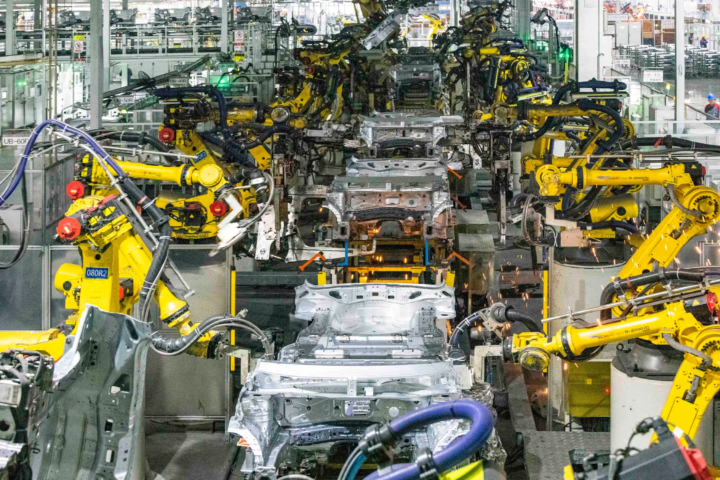
Divergent Microfactories, a startup based in the Silicon Valley city of Palo Alto, California, plans to use 3D-printing technology to empower small companies with small budgets to build cars locally, without unduly taxing aging infrastructures or fragile ecosystems.
Chief executive Kevin Czinger points to a US National Academy of Sciences report indicating that more energy is used producing cars than driving them. With three billion vehicles expected to be cruising the planet in 2050, energy-intensive production practices are not sustainable, he argues.
“If we continue to manufacture the way we have been, we are going to destroy our health, our children’s health and the health of our planet,” he says
Touting a new, leaner manufacturing process is a good way to enthrall an engineer, if not the public at large. Divergent has consequently applied its technique to build a single-seat super sports car. As a single-seater, its spec sheet reads like those of a Formula 1 racer: 700 horsepower and 1,400lb (635kg) weight, combining for a run – purely theoretical, mind – from zero to 60mph (100km/h) in less than two seconds.
The Blade’s curvaceous carbon-fibre bodywork is as genre-correct as the car’s claimed performance is shocking. Beneath it all is a tuned version of the gasoline four-cylinder screamer found in cult rally car the Mitsubishi Lancer Evolution. However, in this application the engine runs on natural gas, which not only burns cleaner than petrol, but also could tread more lightly on the planet because it typically requires less extensive refining.
Czinger may score enthusiast points with the Evo engine choice, but he emphasises that the Blade is “powertrain agnostic”. Microfactory-built cars, then, could be propelled by any current or future power technology.
The company’s aim is to spread the world about its low-cost, low-impact manufacturing technique and to license that know-how to would-be entrepreneurs. Meanwhile, Divergent expects to build small numbers of relatively expensive cars in the next 18 to 24 months to demonstrate the potential for the technology. Czinger declined to predict pricing or sales volume.
Source-BBC Auto