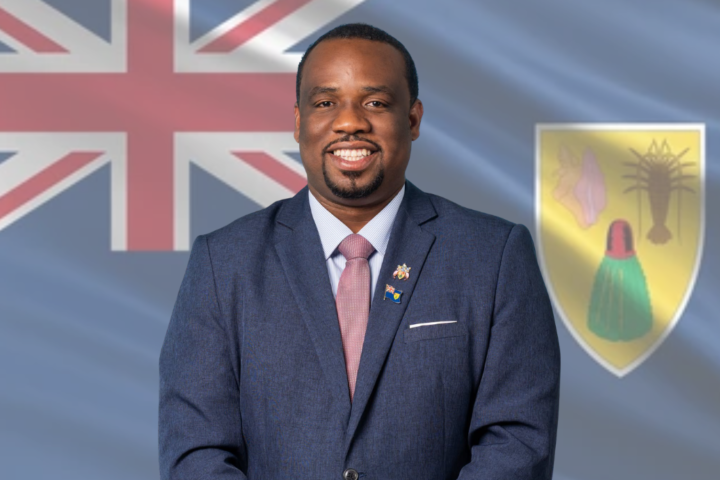
GOVERNMENT is working to introduce biometric surveillance legislation that will aid the Police in solving crimes throughout the Turks and Caicos Islands.
This was revealed by Premier Sharlene Cartwright –Robinson on Monday June 5 during a radio interview.
Biometrics are unique physical characteristics, such as fingerprints, that can be used for automated recognition.
According to the Premier the Biometric system will see the entire populace being entered into the database.
“We will have legislation in place for that, it would be absolutely nonsensical to just do part of the population, we must finger print everyone.
She explained: “When I first raised it under the consultative forum, they had persons talking about human rights issues, when we go to America and every time we have to place our fingers to print on whatever that machine is ,I mean they also look into the camera and all these things we don’t complain.
“The fact is, if we`re not going to have persons who are going to be coming forward to help the police solve offences then we have to look at all crime fighting initiatives that will help and that is one of the things we have to do.
“It’s necessary for Turks and Caicos and I’m going to guided by the Attorney General`s chambers, but at the end of the day we must have a database because unless you have committed an offence your records are not in the system for the police and that can`t help.”
The People’s Democratic Movement (PDM) party while in opposition introduced a motion in the House of Assembly in May 2014 that would allow the use of biometrics by law enforcement authorities as a crime fighting tool.
The motion was aimed at addressing the escalating crime rate in the country.
At that time shadow minister for Home Affairs Goldray Ewing stated that the opposition had asked the government about “fingerprinting laws and surveillance laws and they said that they had no appetite for that at the time.
“But after the police commissioner came out with crime statistics the party decided that we wouldn’t leave it up to the government or to the police to determine what type of tools they need to fight crime.”
As a result, the PDM has long maintained the position to introduce legislation that will allow the Royal Turks and Caicos Islands Police to determine whether or not they wish to utilize biometrics in the course of their investigations.
The law will also determine the legality of using the technology in the financial sector.
The national police force already utilizes forensic technologies such as DNA and fingerprint identification during the course of criminal investigations.
In information technology, biometrics refers to technologies that measure and analyse human body characteristics, such as DNA, fingerprints, eye retinas and irises, voice patterns, facial patterns and hand measurements for authentication purposes.
Authentication by biometric verification is becoming increasingly common in corporate and public security systems, consumer electronics and point of sale (POS) applications.
In addition to security, the driving force behind biometric verification has been convenience.