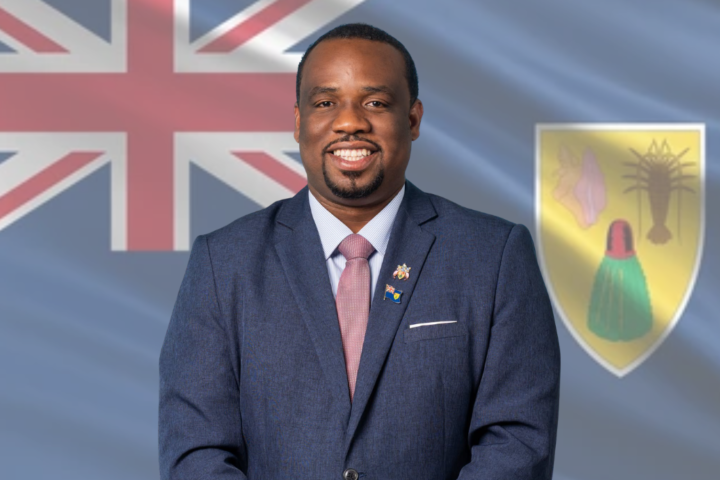
H.E. the Governor, Dr John Freeman, held a media breakfast on 12 April. Among the reflections and points he made in his opening statement were the following:
“I want to start with some reflections on the past year or so, including of course the dreadful impact of hurricanes Irma and Maria last September. I want especially to touch on the UK’s role over that period and I want also to look forward somewhat, given the approach of the 2018 hurricane season.
But I want to open by praising all those involved in recovery efforts since last September. I want to praise the public and private sectors alike, but I must emphasise and commend the key role played by the hotels and tourism sector (including the cruise company in Grand Turk) in the revitalisation of the Islands. I want to empathize with all those directly affected by hurricane damage, including not least school students and their parents, all those awaiting repairs to their homes (and businesses) whether by publicly-funded renovation or via insurance pay-outs. I have seen the continuing impact myself, not least in the family islands of Grand Turk and South Caicos. I too lost my home in Grand Turk and am awaiting repairs to my official Residence, Waterloo – a symbol of the Capital of Grand Turk and one of the few truly historic public buildings in TCI.
Looking back, we all, I suspect, need to recall that there was a pre-Irma and Maria period, such was the huge impact of the hurricanes. In any case, some issues that had been under discussion before the hurricanes (e.g. the Prison and its needs) were made more urgent still as a result of the hurricanes.
Issues that were current before the hurricanes came, included some affecting the security of these Islands and their residents. There were concerns then about crime levels (and especially aggravated crimes) and border security. The National Security Council then as now, had a key role in drawing together the many strands and agencies involved in assessing and providing security: including the RTCPIF, Border Control and Immigration, Home Affairs for the Prison and other aspects of crime prevention (e.g. child protection). The wider community also, then as now, had parts to play in support of security agencies, and I applaud the way the private sector was ready to contribute and is now directly supporting crime prevention by gifting certain equipment. Together we are all helping to make a difference; year-on-year crime statistics support this assessment. But there is still much to be done in the continuing fight against crime and in dealing with the security of our borders in terms of bearing down on illegal migration. All of these issues require a whole-of-Government approach and adequate funding.
The hurricanes did not help in this regard. In terms of border security, the damage done to the radar system was a case in point. So too were the challenges faced by the already challenged Prison. Ensuring security at the prison during and following the hurricanes was a very difficult task and the then Prison Superintendent and his team showed real professionalism and courage in their response, but they needed additional help. The Superintendent showed great personal courage at critical points and provided much of the assessment which pointed the way to needed improvements at the Prison.
Both before the hurricanes (e.g. through the UK-financed Security Needs Assessment Report and by means of the FCO’s Prison Advisor’s Report) and since, the UK has sought to play its part in meeting the challenges evident both before Irma and Maria visited and following the hurricanes. As Governor I am very grateful indeed for all assistance provided (and being provided still) to TCI by the UK Government in this regard.
Let me refer more specifically to the kinds of assistance provided and still being provided, by the UK to TCI:
- First, immediately following Irma and Maria: the direct assistance and support given by the UK Armed Forces and DFID. That initial assistance (supplies, repairs etc.) was vital to early recovery. TCI and other UK Territories in the Caribbean affected by the hurricanes, received relief costing the equivalent of tens of millions of US Dollars. This was given as an expression of UK solidarity with all those affected.
- Secondly, over the succeeding few months: ways were explored to provide ongoing, longer-term, advice and assistance. Advice was offered, e.g. on future resilience in communications between the Islands; on vector control; on Airport security (a team of British Engineers remained in TCI till late November and assisted in this regard) and in other ways.
- Thirdly, direct assistance with recovery was and remains, extensive and important. Let me illustrate this with the following examples:
- The Radar system: this has been overhauled and is now fully operational. Cost to UK: USD 500K
- Vector control: equipment, chemicals and vehicles. Expected to be completed within next two months. Approximate cost to UK and TCI around USD 900K.
- HM Prison: temporary assignment of SERCO Prison officers (to reflect advice on Prison officer numbers in the Prison Advisor’s Report): cost since deployment in November 2017, over USD 1.4M.
Prison projects: perimeter fence lighting repairs (up to USD 128K) and internal zone fencing (up to USD 270K).
Other examples of UK assistance:
- Providenciales Children’s Home: repairs, generator replacement, etc, ongoing: total cost USD 50K
- National Museum, Grand Turk: replacement of air conditioners, including specialist units for preservation of artefacts: USD 52K
I should mention also support for work to deter and respond to a recent surge in illegal migration: UK assistance in terms of the deployment of RFA Mounts Bay and deployment of a RCIP helicopter, the extra costs of which in terms of accommodation and transport of the two crews, were met by the UK.
In terms of preparation for the 2018 hurricane season, UK assistance provided already last year (e.g. generators) will continue to be relevant in the months ahead. Of course there are needed repairs to shelters and replenishment of hurricane supplies, and these are all issues under discussion in TCIG. In terms of disaster preparedness – the key Committee is co-chaired by me and the Premier – we met in January and March and we have another planning meeting scheduled for later this month. DDME will clearly play a key co-ordination role in this process.”
H.E. The Governor touched on some other issues in his opening remarks, which were also covered in his answers to later questions from journalists present.