
MISS TURKS AND CAICOS UNIVERSE 2013 CONTESTANTS UNVEILED
Providenciales, Turks and Caicos Islands; Monday, February 11th 2013 - As the 2013 Miss Turks and Caicos Universe competition is quickly approaching, the ladies are gearing up to show why they have been selected to represent our beautiful by nature country. The six beauties, Miss Snwazna Adams, Miss Crystal Coleby, Miss Cortrina Cooper, Miss Vanessa Hall, Miss Tymant Dean and Miss Frenica Williams who are contending in one of the country's most exciting national traditions, were unveiled Monday, February 11th, at a ‘Meet the Press’ event hosted by Beaches Turks and Caicos Resort Villages and Spa.
Among those in attendance were Premier Hon. Dr. Rufus Ewing; Leader of the Official Opposition, Honorable Sharlene Cartwright-Robinson and Public Relations Officer for Tourist Board, Mr. Dave Fennimore.
The Miss Turks and Caicos Universe Beauty Organization (MTCUBO) President, Mr. Kazz Forbes said, “Today we begin a new era of pageantry in the Turks and Caicos Islands. We welcome the business community to partner with us, the government to generously support us, and the public to cheer each of these beautiful young ladies as they stand at the threshold of a new chapter in their lives.”
Also bringing remarks was MTCUBO Vice President and Legal Advisor Mrs. Tremmaine Harvey, “Today, we are witnesses to dreams being realized, potential being fulfilled, and passions being pursued. Today begins that one moment in time for six beautiful young ladies vying for the title of Miss Turks and Caicos Universe when their dreams are a heartbeat away. It is our goal as an organization to produce a national titleholder from this batch of young ladies that is more than just a beautiful face and visually appealing.”
Speaking on behalf of the Turks and Caicos Tourist Board, Public Relations officer Mr. Dave Fennimore said, “Through this pageant, it’s going to be so wonderful for promoting the destination to the world. We look forward to the natural beauty that comes out of this; we look forward to the unveiling of the natural beauty that’s going to represent our beautiful by nature destination to the world.”
Over the past several weeks, the contestants have engaged in a rigorous schedule. Coaching sessions on confidence, elegance and poise, (sitting like a lady, making a first impression, entering a room, on stage training, feet positioning, hand movements, flirting with the camera), interviewing and presentation skills. The contestants have all benefited from a full makeover and image styling. Until the big night in April, there will be mandatory workshops on health, skincare and self-esteem. The six beauties will also participate in workout and fitness routines. All training sessions will continue to take place twice weekly for a minimum three hours, until the week before coronation night.
Other than awards and prizes, The Miss Turks and Caicos Universe 2013 titleholder will become affiliated with many organizations, such as RAPPORT and the Turks and Caicos AIDS Awareness Foundation, as a goodwill ambassador and spokesperson. As titleholder, Miss Turks and Caicos Universe 2013 will seek to be an inspiration to hundreds of youngsters who would wish to emulate her image of a well-spoken and well groomed personality. A successful Miss Turks and Caicos Universe will also play a major role in promoting her country, which like her, is beautiful by nature.
Providenciales, Turks and Caicos Islands; Monday, February 11th 2013 - As the 2013 Miss Turks and Caicos Universe competition is quickly approaching, the ladies are gearing up to show why they have been selected to represent our beautiful by nature country. The six beauties, Miss Snwazna Adams, Miss Crystal Coleby, Miss Cortrina Cooper, Miss Vanessa Hall, Miss Tymant Dean and Miss Frenica Williams who are contending in one of the country's most exciting national traditions, were unveiled Monday, February 11th, at a ‘Meet the Press’ event hosted by Beaches Turks and Caicos Resort Villages and Spa.
Among those in attendance were Premier Hon. Dr. Rufus Ewing; Leader of the Official Opposition, Honorable Sharlene Cartwright-Robinson and Public Relations Officer for Tourist Board, Mr. Dave Fennimore.
The Miss Turks and Caicos Universe Beauty Organization (MTCUBO) President, Mr. Kazz Forbes said, “Today we begin a new era of pageantry in the Turks and Caicos Islands. We welcome the business community to partner with us, the government to generously support us, and the public to cheer each of these beautiful young ladies as they stand at the threshold of a new chapter in their lives.”
Also bringing remarks was MTCUBO Vice President and Legal Advisor Mrs. Tremmaine Harvey, “Today, we are witnesses to dreams being realized, potential being fulfilled, and passions being pursued. Today begins that one moment in time for six beautiful young ladies vying for the title of Miss Turks and Caicos Universe when their dreams are a heartbeat away. It is our goal as an organization to produce a national titleholder from this batch of young ladies that is more than just a beautiful face and visually appealing.”
Speaking on behalf of the Turks and Caicos Tourist Board, Public Relations officer Mr. Dave Fennimore said, “Through this pageant, it’s going to be so wonderful for promoting the destination to the world. We look forward to the natural beauty that comes out of this; we look forward to the unveiling of the natural beauty that’s going to represent our beautiful by nature destination to the world.”
Over the past several weeks, the contestants have engaged in a rigorous schedule. Coaching sessions on confidence, elegance and poise, (sitting like a lady, making a first impression, entering a room, on stage training, feet positioning, hand movements, flirting with the camera), interviewing and presentation skills. The contestants have all benefited from a full makeover and image styling. Until the big night in April, there will be mandatory workshops on health, skincare and self-esteem. The six beauties will also participate in workout and fitness routines. All training sessions will continue to take place twice weekly for a minimum three hours, until the week before coronation night.
Other than awards and prizes, The Miss Turks and Caicos Universe 2013 titleholder will become affiliated with many organizations, such as RAPPORT and the Turks and Caicos AIDS Awareness Foundation, as a goodwill ambassador and spokesperson. As titleholder, Miss Turks and Caicos Universe 2013 will seek to be an inspiration to hundreds of youngsters who would wish to emulate her image of a well-spoken and well groomed personality. A successful Miss Turks and Caicos Universe will also play a major role in promoting her country, which like her, is beautiful by nature.
As the competition progresses, the Miss Turks and Caicos Universe Beauty Organization has facilitated an online voting ballot for the public to cast its vote for its favorite 2013 Miss Turks and Caicos Universe Contestant. Results will be announced on coronation night.
Leading up to the finale, there will be a number of promotional and community events, including a cocktail party fundraiser, Saturday, February 16th 2013 hosted by Beaches Turks and Caicos Resort and Spa. Contestants will also make a special appearance at the 2013 Rake and Scrape Festival on North Caicos, March 2nd, 2013.
To date, the Miss Turks and Caicos Universe 2013 Pageant sponsors include: the Turks and Caicos Tourist Board, Beaches TCI Resort Villages and Spa, Saint George Fashion House, Tremm Jocale, Fetish TCI, Digicel TCI, Caribbean Property Management and Realty, Kazz Forbes Photography, Meta Mindsets, Blakout Entertainment, 4C’s Dental Clinic, Paradise Smiles, Gilley’s Enterprises Ltd., Business Solutions, Rubis Turks and Caicos Ltd., Platinum Promotions, The Regent Palms Resort, Miniature Golf and Acres of Diamonds, Tropical Shipping Ltd., TCI Ferries, Caribbean Crusin', FOTTAC and Jais.
To view the Miss Turks and Caicos Universe Beauty Organization full calendar of national events, please visit www.MissTCI.org.
As the competition progresses, the Miss Turks and Caicos Universe Beauty Organization has facilitated an online voting ballot for the public to cast its vote for its favorite 2013 Miss Turks and Caicos Universe Contestant. Results will be announced on coronation night.
Leading up to the finale, there will be a number of promotional and community events, including a cocktail party fundraiser, Saturday, February 16th 2013 hosted by Beaches Turks and Caicos Resort and Spa. Contestants will also make a special appearance at the 2013 Rake and Scrape Festival on North Caicos, March 2nd, 2013.
To date, the Miss Turks and Caicos Universe 2013 Pageant sponsors include: the Turks and Caicos Tourist Board, Beaches TCI Resort Villages and Spa, Saint George Fashion House, Tremm Jocale, Fetish TCI, Digicel TCI, Caribbean Property Management and Realty, Kazz Forbes Photography, Meta Mindsets, Blakout Entertainment, 4C’s Dental Clinic, Paradise Smiles, Gilley’s Enterprises Ltd., Business Solutions, Rubis Turks and Caicos Ltd., Platinum Promotions, The Regent Palms Resort, Miniature Golf and Acres of Diamonds, Tropical Shipping Ltd., TCI Ferries, Caribbean Crusin', FOTTAC and Jais.
To view the Miss Turks and Caicos Universe Beauty Organization full calendar of national events, please visit www.MissTCI.org.

VAT Not to be Implemented in Turks and Caicos at This Time
FCO Minister, Mark Simmonds, responded to Premier the Hon Dr Rufus Ewing yesterday evening in relations to a letter from the Premier dated 29 January 2013 which raised a number of concerns about the proposed implementation of VAT in the TCI from 1 April 2013.
A copy of the letter was also sent to the Leader of the Official Opposition Hon. Sharlene Robinson,simultaneously.
The Government and Opposition have clearly stated their opposition to the implementation of VAT.
The UK Government has agreed that VAT will not be implemented in the TCI at this time. According to the FCO Office, "It remains Her Majesty’s Government’s (HMG) view that VAT would provide a more stable, fairer and broader based system of revenue for TCI than that which is currently in place."
'The Government of TCI has a responsibility to ensure sound finances in the Territory. This includes constraining expenditure within the legally binding fiscal framework which is now in place and being able to refinance its debts in 2016 without a further UK Government loan guarantee.'
According to the FCO, 'The TCI Government will face more difficult choices to ensure stable and sustainable revenues and expenditures in the absence of VAT.'
HMG is clear that we will not accept a return to the dire financial situation in TCI which prevailed before the Interim Administration.
Meanwhile, the TCI is waking up to good news today, one citizen said, 'VAT is not a good thing for us at this point, the economy is just rebounding and some of us still have hell feeding our children let alone paying higher prices.' A professional businessman in the Capital said he has no problem with VAT, just the timing.
RTC News will have more on the story following the Premiers press conference.
Attached is a copy of the letter sent to the Premier by the FCO Minister Mark Simmonds.
White Gold: How Salt Made and Unmade the Turks and Caicos Islands
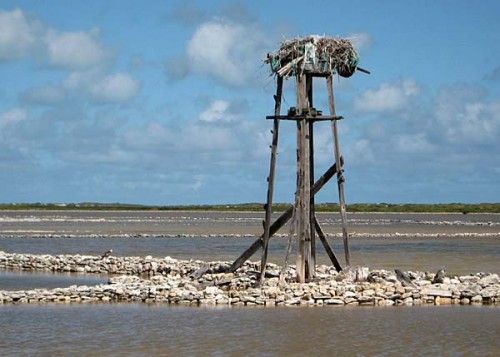
The remains of a windmill, once used to pump brine into the salt pans of the Turks and Caicos Islands. Photo credit: www.amphibioustravel.com.
Salt is so commonplace today, so cheap and readily available, that it is hard to remember how hard to come by it once was. The Roman forces who arrived in Britain in the first century C.E reported that the only way the local tribes could obtain it was to pour brine onto red-hot charcoal, then scrape off the crystals that formed on the wood as the water hissed and evaporated. These were the same forces that, according to a tradition dating to the time of Pliny the Elder, gave us the word “salary” because they once received their wages in the stuff.
Salt was crucially important until very recently not merely as a condiment (though of course it is a vital foodstuff; hearts cannot beat and nerve impulses cannot fire without it), but also as a preservative. Before the invention of refrigeration, only the seemingly magical properties of salt could prevent slaughtered animals and fish hauled from the sea from rotting into stinking inedibility. It was especially important to the shipping industry, which fed its sailors on salt pork, salt beef and salt fish. The best salt meat was packed in barrels of the granules–though it could also be boiled in seawater, resulting in a far inferior product that, thanks to the scarcity of fresh water aboard wooden sailing ships, was then often cooked in brine as well, reaching the sailors as a broth so hideously salty that crystals formed on the sides of their bowls. The demand for salt to preserve fish was so vast that the Newfoundland cod fishery alone needed 25,000 tons of the stuff a year.
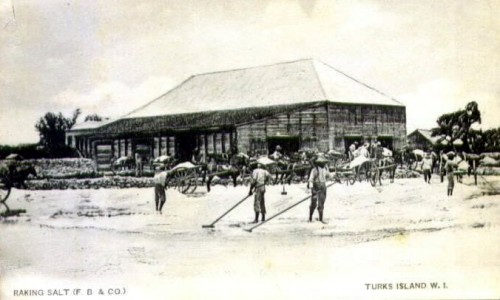
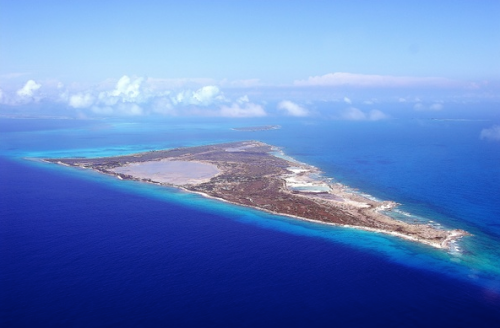
All this demand created places that specialized in producing what was known colloquially as “white gold.” The illustration above shows one remnant of the trade in the Turks and Caicos Islands, a sleepy Caribbean backwater that, from 1678 to 1964, subsisted almost entirely on the profits of the salt trade, and was very nearly destroyed by its collapse. The islands’ history is one of ingenuity in harsh circumstances and of the dangers of over-dependence on a single trade. It also provides an object lesson in economic reality, for the natural products of the earth and sky rarely make those who actually tap them rich.
The islands, long a neglected part of the British empire, lie in the northern reaches of the Caribbean, far from the major trade routes; their chief call on the world’s notice, before salt extraction began, was a disputed claim to be the spot where Christopher Columbus made landfall on his first voyage across the Atlantic. Whether Columbus’s first glimpse of the New World really was the island of Grand Turk (as the local islanders, but few others, insist), there is no doubt about the impact the Spaniards had once they began to exploit their new tropical empire. The indigenous population of the Turks and Caicos—estimated to have numbered several tens of thousands of peaceable Lucayan Amerindians—made a readily exploitable source of slave labor for the sugar plantations and gold mines the conquistadores established on Haiti. Within two decades of its discovery, the slave trade and the importation of diseases to which the Lucayans possessed practically no resistance (a large part of the European portion of what is termed the Columbian Exchange), had reduced that once-flourishing community to a single elderly man.
By the 1670s, not quite two centuries after Columbus’s first voyage, the Turks and Caicos were uninhabited. This was very much to the advantage of the next wave of settlers, Bermudans who arrived in the archipelago in the hope of harvesting its salt. Though by global standards the Atlantic island is a paradise of lush vegetation and balmy airs—so much so that it was hymned by Shakespeare—Bermuda was too cool and too damp to produce white gold. But it had a population of hardy seafarers (most of them originally Westcountrymen, from the further reaches of the British Isles) and plenty of good cedar to make ships.
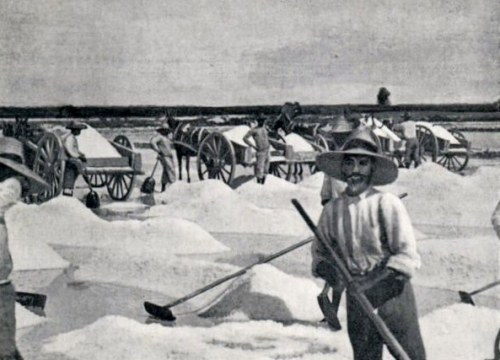
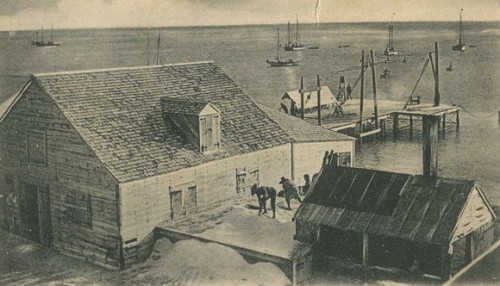
Venturesome Bermudans lighted on the Turks and Caicos as an ideal spot to begin producing salt. In addition to being uninhabited—which made the islands “commons,” in the parlance of the time, open to tax-free exploitation by anyone—the islands had extensive coastal flatlands, which flooded naturally at high tide and baked under the tropical sun. These conditions combined to produce natural salt pans, in which—the archaeologist Shaun Sullivan established by experiment in 1977—16 men, armed with local conch shells to use as scoopers, could gather 140 bushels of salt (about 7,840 pounds) in a mere six hours.
 Hatred of the Bahamas ran high in the Turks and Caicos then, and it continued to play an important role in what passed for island politics for a further century. A British government resolution of 1803, aimed at ending the possibility of bloodshed, formally transferred the islands to the Bahamas, and in the first half of the 19th century salt taxes made up fully a quarter of the Nassau government’s revenues—a fact bitterly resented on Grand Turk, whose representative in the Bahamian House of Representatives, the writer Donald McCartney says, “did not attend meetings regularly because he was not made to feel part of the Bahamian legislature.” It was commonly observed in the Turks and Caicos that little of the tax was used to improve the islands.
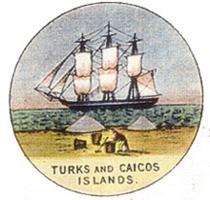 London seemed barely to care about things that mattered greatly on Grand Turk. When in the 1870s the British government decided that the Turks and Caicos needed its own flag, an artist was commissioned to
2012 Election Results : The Story behind the numbers.
TCI Election Results
- Confirmation of the declared result for all 15 seats in the Turks and Caicos Islands election contested on 9 Nov 2012.
- The Progressive National Party (PNP) win eight seats and is the largest party in the House Of Assembly.
- The People’s Democratic Movement (PDM) has seven seats.
|
ED |
Electoral district Member of the Assembly |
All Island Members of the Assembly |
|
1 |
Grand Turk, North: George Lightbourne PNP |
11. Sharlene Cartwright Robinson PDM
12. Rufus Ewing PNP
13. Derek Taylor PDM
14. Washington Misick PNP
15. Josephine Connolly PDM
|
|
2 |
Grand Turk, South: Edwin Astwood PDM |
|
|
3 |
South Caicos: Norman Saunders PNP |
|
|
4 |
Middle Caicos & North Caicos: Ricardo Don Hue Gardiner PNP |
|
|
5 |
Leeward: Akierra Missick PNP |
|
|
6 |
The Bight: Porsha Stubbs Smith PNP |
|
|
7 |
Cheshire Hall and Richmond Hill: Amanda Missick PNP |
|
|
8 |
Blue Hills: Goldray Ewing PDM |
|
|
9 |
Five Cays: Sean Astwood PDM |
|
|
10 |
Wheeland: Vaden Delroy Williams PDM |
What happens next?
- The leader of the largest party, Rufus Ewing of the PNP, will write to His Excellency the Governor stating that they believe that they can form a Government. Clearly, this assumes that the parties’ leaders are themselves elected through the All Island district that they have chosen to stand in. If a leader is not elected, the party will need to appoint a news leader from its group of elected members.
- The Governor will then request the names of intended Ministers and portfolios.
- The Premier will then be sworn in by the Governor at the earliest possible opportunity.
- The Governor will propose the date of the first Cabinet meeting. This is intended to take place this week. The Governor chairs Cabinet. Before the Cabinet meets all members of the cabinet will be sworn in. This is intended to be on Wed, 14 Nov 2012. Non-elected members of Cabinet are: The Governor, Deputy Governor and Attorney General.
- One of the agenda points for this first cabinet meeting will be the need to decide a date on which to recall the House of Assembly. As previously indicated a provisional date has been set for this, but is subject to confirmation by Cabinet, that of Mon, 19 Nov 2012.
TCI Flag Town
To mark the election the TCI flag is being flown over the Foreign Office Building in London – image attached: http://www.flickr.com/photos/foreignoffice/8169069710/in/photostream
The flags of the Overseas Territories will now be flown on state occasions in London, including Trooping the Colour and other ceremonial occasions.
This brings representation of the Overseas Territories in line with the Commonwealth nations, which have long had their flags flown on such occasions. Flying these flags is a sign to the people in the Territories, and those in the UK, of our renewed commitment to the Territories, which was outlined in the White Paper earlier in the year. It is intended to help raise the profile of the Overseas Territories in the UK and around the world.
The Election Observer Team
- Head of Mission: Hon J Bossano, MP, Minister for Enterprise, Training and Employment, Gibraltar
- Mr Thomas Docherty MP
- Mr James Duddridge MP
- Ms Juliette Penn, Election Commissioner, BVI
- Mr Keith Lowenfield, Assistant Chief Election Monitor, Guyana
- Rev. Lenworth Sterling, Senior Returning Officer for the constituency of St. Ann South Western, Jamaica
- Mr Gasper Jn Baptiste, Deputy Chief Elections Officer, St Lucia
- Mr Konrad Olszewski, Senior Independent Adviser to the Election Observer Mission
How to Complete the Two Ballot Papers
On the white Electoral District ballot paper, choose ONE candidate. Using the
pencil provided, mark the paper by placing a mark (X) in the box opposite the
name of the candidate of your choice. Important: if you vote for more than
one candidate your vote will not count.
On the green All Islands ballot paper, choose up to but not more than FIVE
candidates. You do not have to use all five votes. Using the pencil provided,
mark the paper by placing a mark (X) in the box opposite the names of the
candidates of your choice. You can allocate your votes to more than one party.
Important: if you vote for more than five candidates your vote will not be
counted.
Identity Requirements
Section 44(10) of the Elections Ordinance states:
"(c) the voter must produce his passport, drivers licence or such other official
form of picture identification as will enable the presiding officer to confirm the
voter’s identity"
This will be taken to include one of the following: Turks and Caicos Islander
Status Card, passport, NIB card, NHIP card or Driver’s Licence. US and
Bahamian Driver’s Licence will be accepted also.
If the presented form of identity is unclear or believed to be unsatisfactory
to establish the voter’s identity, the Presiding Officer is at liberty to request a
second piece of picture identification by way of corroboration.
A birth certificate cannot be presented as a form of identification as it does not
meet the requirement of being “picture identification”.
No Media Access to Polling Stations
The Supervisor of Elections, Dudley Lewis, has confirmed that there is to be no
media access to the polling stations on Fri, 9 Nov. To be clear: there will be no
photo opportunities of politicians casting their votes.
Mr. Lewis' decision has been made in strict accordance with the provisions set
out in the Elections Ordinance in relation to the proper voting process, the
secrecy of the ballot and the prohibition on the use electronic communication
equipment or devices within polling stations (section 49 (7) of the Elections
Ordinance).
He has instructed his Returning Officers of this decision. Please respect his
conclusion. I know that you will be disappointed by this decision, but hope that
you can understand Mr Lewis' intentions: protecting the integrity of the ballot is
his paramount concern.
There is, of course, no reason why photos etc. cannot be taken of politicians
arriving at polling stations or leaving polling stations after they have voted.