
Jamaica's Daryl Vaz gets death threats after gay-funding question to PNP
JAMAICA Labour Party (JLP) candidate for West Portland Daryl Vaz says he has received death threats after asking the Opposition People's National Party (PNP) to state whether it has got funding from the international gay community.
According to Vaz, he got two calls on Sunday in which the callers, he said, admonished him for "fighting against" gays after threatening his life.
"You must' die before election," Vaz reported one of the callers as saying. The other, he said, told him: "Yu gwine cause PNP fi lose."
Yesterday, the police confirmed that Vaz had reported the threats to them.
"We have received a report of threats on the life of a candidate," a senior police officer, who requested anonymity, told the Observer.
"The threats are being investigated by the National Intelligence Bureau and the Criminal Investigation Branch."
On Sunday, Vaz was reported as asking the PNP to state whether it received funding from the gay community and what, if any, commitments were given in exchange for that funding.
Vaz suggested that PNP President Portia Simpson Miller had injected homosexuality into the election campaign when, in response to a question in the national leadership debate last week, she said that a future PNP Government would review the buggery law and initiate a conscience vote on the issue in the legislature.
Vaz, who made the query in his personal capacity, said he was trying to ascertain whether there was any truth to claims that the PNP had received money from the international gay community.
"We would like to know if this is true; and more importantly, what commitments the PNP has made in exchange for that funding, because we know that is how it works," he said.
"We are not happy about the opposition leader introducing the issue of homosexuality into the campaign and we are wondering how deep it goes and how much involved the international gay community is with the PNP. We have been hearing of the interest that that community has taken in our elections since her pronouncement," said Vaz. "It is the first time that we have seen such strong interest from the gay community in any Jamaican election," he added.
Vaz was referring to a report last week on gay website, Gaystarnews.com, praising as "positive" Simpson Miller's promise to review the buggery law and not to discriminate against homosexuals in appointing her Cabinet.
The Gaystarnews.com story also said that the PNP has at least two gay candidates contesting the upcoming election and one of them is being targeted by the governing JLP in a homophobic campaign.

US government spent over $200 million for subversion activities against Cuba
US administrations since 1997 have earmarked more than $200 million for subversion activities against the Cuban government, the Cubadebate.cu website reported on Tuesday. The figure was released after a study was carried out by Just the Facts, a civilian guide to the US government’s spending for defence and security assistance in Latin America and the Caribbean.
The research took place between 2009 and 2010 and it came after critics questioned the efficiency of the Cuba programs, most of which are managed by the US Agency for International Development (USAID).
The article by Cubadebate added that, over the past few years, USAID paid a Washington D.C. firm at least $1.47 million to audit the agency’s Cuba programs.
In March 2011, journalist Tracey Eaton, who manages the blog Cuba Money Project, requested a copy of the audit results through the Freedom of Information Act (FOIA) and USAID replied earlier this month, providing a 10-page report that omits most of the findings, recommendations and other key information.
“I find it impossible to believe that a $1.47 million audit didn’t leave more of a paper trail,” Eaton wrote after USAID said it could not find any other reports or paperwork related to the audit.
“That would mean that the 10 pages posted above cost taxpayers nearly $150,000 each,” the journalist noted.
Meanwhile, an article published by The Miami Herald under the title “Time to clean up US regime-change programs in Cuba,” authored by former Senate Foreign Relations Committee’s lead investigator Fulton Armstrong, claimed that the US State Department’s programs to provoke a regime change in Cuba “have all the markings of an intelligence covert operation.”
Armstrong added that “like the other millions of dollars we have spent to topple the Cuban government, these programs have failed… It’s time to clean up the regime-change programs…”
Armstrong worked on the Cuba issue on the National Security Council during the Clinton administration and later as National Intelligence Officer for Latin America and senior advisor on the Senate Foreign Relations Committee.
Over two hundred Haitian migrants apprehended in The Bahamas
A sloop carrying 244 Haitian migrants was apprehended west of Exuma in The Bahamas on Sunday afternoon, according to Director of Immigration Jack Thompson.
Royal Bahamas Defence Force (RBDF) Sub-Lieutenant Origin Deleveaux said the 60-foot wooden sloop was sighted around 3:40 p.m. during surveillance patrols in the Exumas. The sloop was immediately intercepted.
“They favour traveling within the channel and chain area because it provides some camouflage, which makes them more difficult to track,” Deleveaux said on Monday.
“What these vessels tend to do is come up from Haiti to Inagua and hit the chain of lights from Crooked Island through to Long Island, and up again through the channel.”
The 187 men, 54 women and three children were transported to HMBS Coral Harbour Base before being turned over to the Department of Immigration for further processing.
“We observed them and there are some physical signs that we look for, but they have to be tested,” said Deleveaux, when asked if any migrants displayed signs of cholera.
“They were in good condition from our standpoint. There were one or two persons who were dehydrated but they were overall in good health.”
Thompson told The Nassau Guardian that the 244 migrants were transported to the Carmichael Road Detention Centre early Monday morning and were processed.
“A medical team of six persons checked them out and there were no cases of cholera found,” he said.
Deleveaux explained that there has been a high number of illegal Haitian migrant landings this year, particularly during the month of December, “which is consistent with previous years”.
“The water is very rough in December and it is certainly not a favourable time to make these kinds of trips,” he noted.
“However, they favour around this time because there is a popular belief that the country is enjoying the festivities and authorities will not be as attentive.”
He added, “We step up patrols around this time because this is when a lot of them make that trip and attempt to land in The Bahamas.”
Defence Force operational statistics reveal an increase in the number of Haitian migrants illegally landing and attempting to illegally land in The Bahamas since 2009, according to Deleveaux.
A total of 718 Haitian migrants were apprehended during 2009, compared to the 1,258 Haitian migrants apprehended in 2010.
Some 1,093 Haitian migrants have been apprehended for 2011 so far.
Deleveaux pointed out that Haitian migrants are often prepared to be assimilated into Bahamian society, frequently traveling with additional clothing and cellular phones.
Source:http://www.thenassauguardian.com
Three Jamaicans to face courts over drugs
THREE Jamaican nationals are expected to appear before a magistrate tomorrow on drug trafficking charges. The three were arrested in separate incidents at the weekend.
In the first instance, on Friday around 2.30 p.m., officers of the Organised Crime, Narcotics and Firearms Bureau (OCNFB) went to a hotel in Port of Spain and searched the room of a guest.
Officers also searched the man's underwear and allegedly found a sex toy filled with 342 grammes of cocaine.
The officers believe the man was awaiting the arrival of a female drug mule who would have taken the drugs out of the country. The man is expected to appear in the Port of Spain Magistrates' Court.
And around 8.30 p.m. on the same day, a 33-year-old man, a clothing salesman, was arrested shortly after arriving in Trinidad aboard a Caribbean Airlines flight. The man, who officers reported has only one leg, was using a motorised battery-operated wheelchair.
A search was conducted by officers of the OCNFB and Customs and Excise Division and 10.9 kilogrammes of high-grade marijuana were allegedly found in the compartment of two batteries powering the wheelchair.
The marijuana has an estimated street value of $35,000, police said.
He is expected to appear in the Arima Magistrates' Court.
On Christmas Day, around 12.55 a.m., two passengers exited a Caribbean Airlines flight at Piarco International Airport.
One of the passengers, another man in a motorised wheelchair, was accompanied by a relative. The casing of batteries was searched, and 7.3 kilogrammes of marijuana were allegedly found.
The 30-year-old man is expected to appear in the Arima Magistrates' Court. His relative was still being interrogated up to yesterday.
Boxing Day shooting is 17th murder of 2011
Police were still busy identifying the St. Maarten's 17th murder victim for 2011 on Monday night. The man was shot dead close to 3:00 p.m. on Boxing Day (December 26) close to Ace on Well Road in Cole Bay.
Both the Public Prosecutor Hans Mos and Police Spokesman Inspector Ricardo Henson confirmed the shooting, but neither had the man’s name when contacted by this newspaper. Several sources have said the man’s name is Raoul.
Police were first called to the Cole Bay for the shooting at 2:50 p.m. Once there they closed off the area and called the police doctor, who declared the man dead. He’d been shot once.
Officers from the Forensics Unit have collected the available evidence and detectives have questioned witnesses. None of the information they had was enough for police to make a concrete determination of what happened.
Oil jumps over 2% as Iran threatens supplies
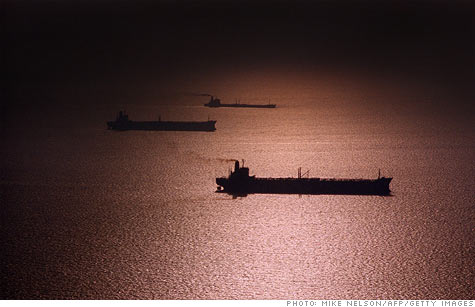 Oil prices jumped over 2% Tuesday, crossing the $100-barrel-mark after Iran threatened to choke off the flow of oil passing through the Strait of Hormuz.
The Iranian threat came in response to a recent tightening of Western sanctions against Iran that attempt to limit the amount of oil that country can export.
"If Iran oil is banned, not a single drop of oil will pass through Hormuz Strait," Iran's 1st Vice President Mohammad Reza Rahimi said Tuesday, according to the Iran State News Agency.
Iran is also currently conducting Naval exercises in and around the Strait.
Over 15 million barrels of oil a day passed through the Strait in 2009, according to the U.S. Energy Information Agency. That's about a sixth of the world's total oil production and a third of all oil traded worldwide. EIA calls it the "world's most important oil chokepoint."
Most of the oil passing through the strait goes to Asia, but because oil is a globally traded commodity, a shortage of oil in any one place impacts oil prices worldwide.
Iran oil targeted by Obama sanctions
Analysts note that with escalating tensions in the Persian Gulf the potential exists for an accident or some other event to lead to a full scale war.
"We are in a situation where there is essentially no communication between the Iranian government and the U.S. government," Trita Parsi, president of the National Iranian American Council, told CNN Monday after reports said Iranian military forces confronted a Western helicopter near the Strait. "It is very worrisome."
Iran has been sparring with the West over its nuclear program for years. Iran says its uranium enriching activities are for peaceful purposes, but many Western governments suspect they are intended to produce a weapon.
Last month the Obama administration upped the pressure on Iran by declaring its central bank a threat, which many analyst took as a prelude to an attempt to cut off Iran's oil exports entirely.
Iran, the world's third-largest oil exporter, conducts its oil export business through its central bank.
It's thought that Washington and other Western governments would love to put additional pressure on Iran by threatening its oil industry, but they are mindful of the impact that may have on oil prices.
Investment bank Merrill Lynch predicts a $40 rise in oil prices if the country's 2.2 million barrels day of crude are shut off completely.
Prices could spike much higher if Iran tries to disrupt oil tanker traffic flowing through the Strait of Hormuz, although it's unclear how long the spike would last.
Iran attacked ships passing through the Strait during the 1980s in an attempt to cut off Iraq's oil exports when those two countries were at war. The impact on prices was minimal however after foreign navies began escorting oil tankers through the Strait.
Many experts say Iran would only have limited success in blocking the Strait for an extended period of time as many governments maintain a naval presence in the region, notably the United States.
Sears and Kmart to close up to 120 stores on poor sales
Shares in US retail giant Sears fell 27% by the end of the day in Wall Street after announcing plans to close up to 120 Sears and Kmart stores.
Sears Holdings, the department store group which owns the two major retail chains, blamed falling sales.
In the eight weeks to Christmas Day, sales at Kmart fell 4.4% and by 6% at Sears.
The company, which has 2,200 outlets in the US, says the closures should raise up to $170m (£108.5m; 130m euros).
It added that it expected fourth-quarter earnings to be less than half of last year's amount.
Retail analyst Howard Davidowitz told the BBC that the news came as no surprise: "Sears took their cash flow and used it to buy back shares instead of enhancing their offer to the customer. This has proven to be a disastrous investment that was made even though the company has been losing market share every single quarter for the past four years."
Both Sears and Kmart have experienced a decline in demand for consumer electronics, amid fears of another US recession.
Kmart has also reported a decline in clothing sales over the same period.
Chief executive Lou D'Ambrosio said: "Given our performance and the difficult economic environment, especially for big-ticket items, we intend to implement a series of actions to reduce on-going expenses, adjust our asset base, and accelerate the transformation of our business model."
The results point to "deepening problems at this struggling chain and renewed worries about Sears survivability," said Gary Balter, an analyst at Credit Suisse.
"The extent of the weakness may be larger than expected, but the reasons behind it are not. It begins, and some would argue ends, with Sears' reluctance to invest in stores and service."
The firm's third quarter sales saw the company post a loss due to weakness in its Canadian stores, soft electronics sales and struggles in clothing and pharmaceutical sales at its Kmart unit.
Stocks end mostly flat amid mixed economic reports
U.S. stocks ended a listless session little changed Tuesday as investors weighed reports on consumer confidence and home prices.
The Dow Jones industrial average (INDU) eased 3 points, or less than 0.1%, to end at 12,291. The S&P 500 (SPX) added less than 1 point to 1,265. The Nasdaq (COMP) gained 6 points, or 0.2%, to 2,625.
Trading volumes were well below average, with many market participants taking time off this week for the holidays. Stock markets in the United States and Europe were closed Monday for the Christmas holiday.
Stocks opened lower after a report said home prices fell 1.2% in October compared with September. But the market turned higher following a stronger-than-expected report on consumer confidence.
"Consumers are definitely showing a ray of hope here," said Peter Cardillo, chief market economist at Rockwell Global Capital.
U.S. stocks have been supported recently by signs of improvement in the economy, including declines in weekly claims for unemployment benefits and an uptick in new home construction.
5 Worst Market Calls of 2011
But investors say the market remains vulnerable as the debt crisis in Europe continues to threaten the outlook for the global economy and financial markets.
While many investors have already closed their books for the year, the next few trading days could determine whether the major indexes end 2011 with gains or losses.
On Friday, investors pushed the S&P 500 back into positive territory for 2011 and the Dow up 6% for the year.
"I think we've got a decent chance of ending the year in positive territory, if not close to it," on the S&P 500, said Bruce McCain, chief investment strategist at Key Private Bank.
Still, the bigger question is whether the stock market can continue moving higher in 2012 as economies in Europe and Asia appear to be slowing down, he added.
"The trends developing overseas are negative enough that it will be hard for the U.S. economy to entirely avoid a slow down in the global economy," said McCain.
Meanwhile, oil prices jumped 1.5% after a top Iranian official warned that the nation could block the Strait of Hormuz, a key transit point for oil exports from the Middle East.
The warning, from Iranian vice president Mohammad Reza Rahimi, came as the United States and the European Union have been ratcheting up sanctions on Iran's oil industry in response to the nation's nuclear program.
Companies: Sears Holdings (SHLD, Fortune 500) on Tuesday reported a sharp drop in holiday sales compared to a year ago, and said the results will force it to close 100 to 120 Sears and Kmart stores. Shares plunged 27%.
On Monday, Sony (SNE) said it would end its joint venture in liquid crystal display panels with Samsung Electronics.
Are you a markets whiz?
World markets: European stocks closed mixed. The DAX (DAX) in Germany added 0.1% and France's CAC 40 (CAC40) ended flat. London's market remained closed.
Asian markets ended mixed. The Shanghai Composite (SHCOMP) fell 1.1% and Japan's Nikkei (N225) fell 0.5%. Hong Kong's market was closed.
Currencies and commodities: The dollar lost strength against the euro, the British pound and the Japanese yen.
Gold futures for February delivery lost $10.90 to $1,595.10 an ounce.
Bonds: The price on the benchmark 10-year U.S. Treasury edged higher, with the yield easing to 2.01% from 2.03% late Friday.
Japan's industrial output dips 4% on yen and flooding
Japan's industrial production fell in November, pulled down by a strong yen and weak global demand, and after flooding in Thailand damaged many suppliers.
Production fell 4% in November from the same month a year earlier, the Ministry of Economy, Trade and Industry said. It was 2.6% lower than in October.
Japan is one of the world's biggest exporters.
However, weak demand saw it cut growth forecasts for this year and the next.
Last week, the government said Japan's economy will shrink by 0.1% in the year to the end of March, down from a previous forecast of 0.5% growth.
The government also said that in the 2012 fiscal year growth would be 2.2%, down from its earlier target of as much as 2.9%.
Japan has been hit by a number of issues that are hurting expansion.
Thailand's worst flooding in 70 years closed a number of Japanese companies and their suppliers.
At the same time, the yen has hit levels that exporters say make their goods uncompetitive and too expensive for foreign buyers.
And finally, the continuing economic problems in the eurozone were identified by the Bank of Japan Governor Masaaki Shirakawa last week as being a continuing threat to the country's economy.
Unemployment set to rise in 2012, suggests CIPD
UK unemployment is set to keep rising to 2.85m in 2012 and peak in 2013, says a report by the Chartered Institute of Personnel and Development (CIPD).
The think tank, which specialises in employment, warns the private sector will fail to offset the 120,000 job losses in the public sector in 2012.
But is does not detect signs of widespread new redundancies in the private sector.
A government spokeswoman said the labour market was stabilising.
Government measures should also stop the numbers of young and long-term jobless getting worse, the CIPD says.
"As long as there is a relatively benign outcome to the eurozone crisis we expect the 2012 jobs recession to be milder than that suffered in 2008-9," said John Philpott, chief economic adviser at the CIPD.
"But unemployment in the coming year will be rising from a much higher starting point, so the UK jobs market in 2012 will be weaker than at any time since the recession of the early 1990s."
In response, a spokeswoman for the Department for Work and Pensions said: "There has obviously been an unwelcome increase in unemployment since the summer but the latest unemployment figures show some signs that the labour market is stabilising.
"The number of people in employment is higher than last month's published figure and the number of unemployed people is steadying."
She added that "the increase in those claiming Jobseeker's Allowance has slowed and our welfare reforms are having a positive impact with overall benefit claimant numbers falling by around 40,000 in the last 18 months."
However, shadow work and pensions minister Ian Austin said it was "crystal clear that this government is failing to get people off benefits and into work".
"With unemployment continuing to rise, the benefits bill is going up too - and that's making the deficit harder to bring down."
Record joblessness
The forecast is more downbeat than estimates published by the Office for Budget Responsibility (OBR) in November.
The OBR, which was set up by the government to provide independent assessments of the UK economy, expects unemployment to peak at 8.7% of the total workforce in the final quarter of 2012. The CIPD believes the unemployment rate will hit 8.8% in 2012.
Official figures showed that the UK unemployment hit its highest level since 1994 in the three months to October, when it rose by 128,000 to 2.64 million.
The Office for National Statistics (ONS) said the jobless rate for the three months to October was 8.3%, up from 7.9% in the same period last year.
Youth unemployment rose to 1.027 million, the highest since records began in 1992.