
Ex-Fannie Mae and Freddie Mac bosses charged with fraud
The US financial regulator has brought civil fraud charges against six former top executives at mortgage giants Fannie Mae and Freddie Mac.
The Securities and Exchange Commission (SEC) said the executives had misled investors about the companies' exposure to risky subprime mortgages they held when the housing bubble burst.
Fannie Mae and Freddie Mac were rescued by the US government in 2008.
Those charged include former chiefs Daniel Mudd and Richard Syron.
Mr Mudd was fired from Fannie after the government took over. Mr Syron resigned from Freddie in 2008.
In a statement released through his lawyer, Mr Mudd said the lawsuit "should never have been brought" and said the government had reviewed and approved all of the company's financial disclosures.
"The SEC is wrong, and I look forward to a court where fairness and reason - not politics - is the standard for justice," he said.
Mr Syron's lawyers said the case was "without merit" and said the term subprime "had no uniform definition in the market" at that time.
Fannie and Freddie both entered into agreements with the government on Friday, accepting responsibility for their conduct without admitting or denying the charges.
The companies also agreed to co-operate with the SEC on the cases against the former executives.

Multi-million dollar contract to upgrade water system
The National Water Commission (NWC) in Jamaica has signed a US$115 million loan with the Bank of Nova Scotia for funding of the second phase of the Jamaica Water Supply Improvement Project (JWSIP).
The JWSIP, which is divided into segments A and B, is the single largest project ever undertaken by the NWC. It has a total cost of J$17 billion (US$211 million) and, on completion, will bring an additional 20 million gallons of water to residents in Kingston and St. Andrew, St. Catherine and other areas of Jamaica.
Housing, Environment, Water and Local Government Minister Dr. Horace Chang said that part of the objective of the NWC is to not only improve efficiency and reliability, but to expand the facilities to ensure that urban Jamaica has a reliable and safe water supply.
“It seems a very daunting task at the beginning, because that takes a significant amount of funding. In fact, I didn’t fully appreciate the cost of a water system until I got into the Ministry. It is far more expensive than most other infrastructure,” he said.
He noted that the US$115 loan from the Bank of Nova Scotia is the largest loan for infrastructure in Jamaica that is being organised by a local bank.
“It is not the easiest thing to put together a loan of this size. The team persisted and the government is committed to making the National Water Commission a viable and efficient company,” Chang said.
“In addition to renegotiating this particular loan and a number of others, we had to demonstrate changes within the NWC that will ensure that the NWC will be able to repay these loans. It is essentially a commercial loan and we are a public company, backed by government guarantee, but the intention is that we cannot go back to the Consolidated Fund for funding,” he added.
The Minister said that, “not only did we have to look at water rates, but we had to look at the structural management of the Water Commission and we had taken steps to make changes that our financiers are satisfied that we are going in the right direction.”
President and Chief Executive Officer of the Bank of Nova Scotia, Bruce Bowen, emphasized the importance of getting water to people, and that building the infrastructure of the country was something that attracted the bank to the project.
“It was also being done in a manner that was going to be able to pay for itself and as a commercial financier, this is something that you are looking for,” Mr. Bowen said.
Under the agreement, the principal loan will be repaid by the NWC by way of 18 equal quarterly instalments of US$1.9 million, following the 30-month moratorium period, with a final payment of US$80.5 million. There is also an interest rate of 5.80 per cent, per annum.
JO
Early US stock market rally fades
An early rally faded on the stock market yesterday, leaving indexes down about three per cent for the week as worries resurfaced about a breakup of the euro. BlackBerry maker Research in Motion plunged after slashing its forecast for holiday sales. The Dow Jones industrial average closed down 2.42 points yesterday, less than 0.1 per cent, at 11,866.93. It had been up as many as 99 points after the Italian government won a confidence vote on austerity measures. It turned mixed around midday as Fitch warned that it might downgrade the debt of Italy, Spain and four other countries that use the euro.
Materials and industrial companies rose, signaling that traders expect the economic recovery to remain on track. Utilities, health care and consumer staples companies lagged the market as traders sold stocks that are considered to be safer when the economy is weak. The Dow Jones Industrial Average broke a three-day slump Thursday on news that claims for unemployment benefits plunged last week and measures of manufacturing in the Northeast improved dramatically. The Dow lost 360 points over the first three days of the week as investors questioned whether Europe’s agreement to closer co-ordinate fiscal policy would be enough to save the euro from a catastrophic breakup. Some analysts believe nervousness about Europe this fall and winter pushed stock prices lower than their fair value. Investment adviser Uri Landesman, president of Platinum Partners, expects stocks to rise into next year because of the growing likelihood that economic news will remain positive.
Landesman said the market is near the low end of its recent trading range, and a dose of positive news could set off a mini-rally. Any market moves next week could be sharp as trading volume thins out before the Christmas holiday, Landesman said. The Standard & Poor’s 500 index rose 3.89, or 0.3 per cent, to 1,219.65. The Nasdaq composite index rose 14.32, or 0.6 per cent, to 2,555.33 The Dow is down 2.6 per cent for the week; the S&P 2.8 per cent. The Nasdaq lost 3.5 per cent. The yield on the ten-year Treasury note plunged to 1.85 per cent from 1.93 per cent earlier yesterday after the government said consumer prices were unchanged last month, suggesting that inflation remains low. Low inflation makes bonds more attractive because it doesn’t diminish the buying power of the fixed return a bond provides over time.
AP
EU and IMF end informal Hungary debt talks
The European Commission and the IMF have cut short informal aid talks with Hungary due to worries over the independence of its central bank.
Hungary had been seeking a standby credit line of 15-20bn euros ($19.5bn, £12.6bn) in case it ran into trouble issuing new debt.
In November its credit rating was downgraded to 'junk' status by Moody's.
EU negotiators objected to a proposed law which they said would compromise the independence of the central bank.
"Unfortunately we did not receive assurances concerning the intentions of the Hungarian government, (which went on) to push forward in parliament the vote on the law that could potentially undermine the independence of the central bank," said European Commission spokesman Amadeu Altafaj.
Bank governor Andras Simor has said the proposed bill amounts to a takeover of the central bank.
However, the Hungarian government and members of the country's ruling Fidesz party played down the disagreement.
"Hungary owes the IMF significant amounts of money," said Fidesz parliamentary group leader Janos Lazar.
"I have no doubt that they will return to collect what we owe them."
Funds bid
Hungary received a 20bn euro bailout from the fund following a banking crisis in 2008.
Hungary has pursued an unorthodox economic policy since Prime Minister Viktor Orban's government was elected in April 2010.
In a bid to tackle the deficit - and avoid further IMF loans - the government has transferred private pension assets to the state and put new taxes on its banks.
However, the government, which has delayed recent attempts to raise money from the markets, is now seeking an IMF/EU funds guarantee.
Formal talks between Hungary and the IMF and EU are supposed to begin in January.
Senate approves two-month extension of payroll tax cut
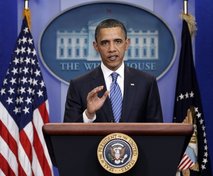 Senate lawmakers on Saturday voted overwhelmingly to extend the payroll tax cut by another two months, after both sides were unable to reach a comprehensive agreement to extend the cuts and unemployment benefits for a full year.
The deal, should it pass the House, includes a provision to speed up a decision on the controversial Keystone XL pipeline, giving the Obama administration 60 days to make a call on the project.
President Barack Obama told reporters that he was pleased with Saturday's vote, which passed 89-10, but added that extending the cuts and assistance through next year should be just a formality.
To do otherwise, he said, would be "inexcusable."
The impasse involved how to pay for the programs for a full year, a Democratic source and a Republican source said. However, the two-month extension would be fully paid for, according to the sources.
Senate Majority Leader Harry Reid, D-Nevada, said Democrats supported the proposed two-month deal because "that was the best we could get," as it was important to preserve the payroll tax break -- even temporarily.
"Democrats have worked tirelessly to prevent a thousand-dollar tax increase on middle-class families," he said.
Failure to pass the payroll tax measure -- a major part of Obama's job-creation plan -- would cost working Americans an average of $1,000 in higher taxes next year.
The White House issued a statement after news of the two-month proposal broke Friday, lauding the agreement despite the inclusion of the pipeline provision -- something the president has said he would reject.
"This is an important step towards enacting a key provision of the president's American Jobs Act and a significant victory for the American people and the economy, because as independent analysts have said, failing to extend this tax cut would have had a damaging effect on our recovery and job growth," said the statement issued by White House spokesman Dan Pfeiffer. "The president urges Congress now to finish up their business for the American people."
A senior administration official noted that though the president has said he would reject any attempt to "mandate" construction of the pipeline before it receives further review, the Keystone provision Senate leaders have agreed to speeds up the approval process -- giving the administration 60 days to make a decision -- but does not mandate construction.
When asked about the apparent contradiction by the president over the pipeline provision, another senior administration official said the president's top priority is making sure taxes don't go up on January 1.
In the Senate, the payroll tax measure has faced an impasse over specific provisions sought by each party.
Senate Democrats proposed a new tax on income of more than $1 million to help pay for the lower payroll tax rate for another year, but Republicans have blocked the plan from proceeding on two occasions.
Meanwhile, House Republicans pushed through their own version of a payroll tax measure this week that included the Keystone pipeline provision.
The Obama administration has delayed until 2013 a decision on the pipeline that would transport oil from Canada's tar sands production facilities in northern Alberta to refineries on the Gulf Coast of Texas.
GOP Senate Minority Leader Mitch McConnell said he had "no idea why (the pipeline) could be called controversial."
"The labor unions like it. Many Democrats want it," he added. "It strengthens our national security by decreasing amount of oil we get from unfriendly countries. And it wouldn't cost the tax payers a dime."
The delay followed complaints by environmentalists and Nebraska officials that the pipeline route could threaten that state's Sandhills region and vital Ogallala aquifer. Alternate routes are being considered, and Nebraska officials as well as the pipeline company, TransCanada, acknowledge that the process of approving a final route will last into the second half of 2012.
Republicans, who traditionally back the oil industry, accuse Obama of delaying the issue until after his re-election bid next year for political reasons. Labor unions that usually support Democrats back the pipeline project, while environmentalists who are also allied with the political left oppose it.
The State Department, which has final authority to approve the oil pipeline, has warned that a shortened deadline for approving the project would leave insufficient time to assess the route alteration.
A Senate Democratic leadership aide said a two-month payroll tax-cut extension would set up further negotiations on a larger deal.
But House Speaker John Boehner, R-Ohio, said Friday that any attempt for a short-term extension of the payroll tax cut and unemployment benefits would be altered in the House.
The recent legislative maneuvering was a last-gasp bid to end weeks of political wrangling that threatened a partial government shutdown and raised public frustration with Congress even further.
A poll released Thursday by the Pew Research Center for the People and the Press showed public discontent with Congress at record levels, with two-thirds of voters saying most lawmakers should be voted out of office next year.
At least 436 dead after storm pummels Philippines
At least 436 people are dead after Tropical Storm Washi pummeled the Philippines, Red Cross Secretary General Gwen Pang said Saturday.
The vast majority of the bodies were found in the cities of Iligan and Cagayan de Oro, according to military officials and the National Disaster Risk Reduction and Management Council. Five people were killed in a landslide, but all others died in flash flooding.
The provinces of Compostela Valley and Zamboanga del Norte were also hit, added Benito Ramos, chairman of the National Disaster Risk Reduction and Management Council.
About 400 people remain missing after the storm, which is called Sendong locally. More than 2,000 have been rescued, the country's military reported.
Defense Secretary Voltaire Gazmin said officials are investigating reports that an entire village was swept away.
Authorities have also begun distributing food rations for some 10,000 families affected by the storm, while also handing out thousands of blankets and mosquito nets, the Red Cross reported Saturday.
Flash flooding overnight -- following 10 hours of rain -- fueled the devastation, compounded by overflowing rivers and tributaries. As much as 20 centimeters (8 inches) of rain fell within 24 hours in some areas.
Ramos said despite government warning, some did not evacuate.
An estimated 100,000 people are displaced, according to the Department of Social Welfare and Development.
At least 20,000 people were staying in 10 evacuation centers in Cagayan de Oro, Social Welfare Secretary Dinky Soliman said Saturday.
Some 20,000 soldiers embarked on search-and-rescue operations, the military said.
Officials asked for volunteers to pack food to send to those displaced.
Though Washi was headed away from the Philippines on Saturday, trouble could loom for Vietnam, as the storm's westerly path could cross Ho Chi Minh City on Tuesday.
CNN
Arab League Plan for Syria May Go to UN Security Council
The Arab League may ask the U.N. Security Council to adopt an Arab peace plan aimed at ending Syria's violent crackdown on anti-government protesters.
Qatar's Prime Minister said Saturday that Syria is delaying its response to the Arab peace proposal.
He said Arab foreign ministers will meet in Cairo on Wednesday to discuss taking the peace plan to the U.N. Security Council if Syria does not accept the proposal and begin carrying it out. His remarks appeared to rule out any military action by the Arab League against Syria.
The prime minister spoke in the Qatari capital, Doha, after an emergency meeting of the Arab League.
The Arab peace plan calls for President Bashar al-Assad to withdraw his forces from restive cities, free prisoners and start a reform-minded dialogue with the opposition.
Violence continued on Saturday. The Britain-based Syrian Observatory for Human Rights said security forces killed at least 20 civilians, many of them in the restive province of Homs.
Activists said security forces killed at least 17 people on Friday.
Separately, an Iraqi delegation in Damascus held talks Saturday with Mr. Assad on ending the escalating violence. The head of the delegation, Iraq's national security adviser is quoted as reporting the talks were “positive.”
The Iraqi official is heading next to Cairo to report his findings to Arab League members on the nine-month-long uprising.
The U.N. estimates that 5,000 people have been killed since the uprising began in February. Syria's U.N. ambassador has rejected that figure as “incredible.”
Tunisians Rally on Anniversary of Uprising
Thousands of Tunisians rallied Saturday to celebrate the first anniversary of the popular uprising that sent the former president into exile, ending decades of dictatorship, and sparked revolutions across the Arab world.
The crowd gathered peacefully in the town of Sidi Bouzid, one year after a young fruitseller, Mohamed Bouazizi, set himself afire in an act of protest that triggered the uprising. He later died.
Streets were filled with Tunisian flags, pictures of those who died in the revolution and a large photo of Bouazizi.
Newly elected President Moncef Marzouki attended the rally. He paid tribute to Tunisians for rising up and defying longtime President Zine el Abidine Ben Ali, who fled the country in January and now is in exile in Saudi Arabia.
The climac tic outcome of the Tunisian revolution sparked popular movements across much of the Middle East and North Africa. What soon became known as the Arab Spring prompted citizens to defy autocratic rulers and call for reforms in Egypt, Syria, Bahrain, Yemen, Jordan and Libya.
State of Emergency in Kazakhstan After Deadly Protests
Kazakh President Nursultan Nazarbayev has declared a state of emergency in the western city of Zhanaozen, where Kazakhstan's independence celebrations turned deadly.
Mr. Nazarbayev ordered the presidential decree on Saturday, a day after at least 10 people were killed in clashes between police and oil workers in the Caspian town. The state of emergency will last until January 5.
Oil workers in Zhanaozen, including some fired from their jobs, have been demanding better wages.
Officials said the clashes erupted after some of the protesters tore down traditional yurts, or tents, that had been put up in the city's central square. But demonstrators told social media networks that they had been surrounded by police, who opened fire.
The sound of what could be gunfire could be heard on video from the scene obtained by the Associated Press, but officials in the capital of Astana denied police fired their weapons.
Friday marked the 20th anniversary of Kazakhstan's independence, when it separated from what was then the Soviet Union.
Oil and resource-rich Kazakhstan has been Central Asia's largest and most successful economy. But the mainly Muslim nation of 17 million has seen an increase this year in small-scale bombings and shootouts, many blamed on Islamist extremists.
Italy's Monti faces confidence vote over austerity
The government of Italian Prime Minister Mario Monti faces a confidence vote in parliament as it seeks to pass crucial austerity measures.
His government needs approval for a 33bn euro ($43bn; £27bn) package of cuts and reforms intended to restore confidence in Italy's economy.
The vote, to be held in the Chamber of Deputies in the afternoon, should be passed easily, analysts say.
Mr Monti, appointed in November, heads a government of unelected technocrats.
They are trying to tackle a collapse in market confidence that put Italy at the heart of the eurozone debt crisis.
Crucial to the government's plans is a package of tax increases, spending cuts and pension reforms aimed at balancing Italy's budget by 2013.
However, analysts say rising borrowing costs and the prospect of a deepening recession still threaten to undermine the government's efforts.
On Thursday, Mr Monti said his government would move on to growth-boosting measures after the austerity bill is passed, Ansa news agency reported.
Mr Monti, a former EU commissioner, has broad support in parliament.
Although the two main parties - the centre-right PDL and the centre-left Democratic Party - have misgivings over parts of the bill, they cannot sabotage it for fear of unleashing economic catastrophe, analysts say.
Mr Monti's predecessor, Silvio Berlusconi, said his PDL party would back the government out of a sense of responsibility, not because it agrees with the sacrifices being asked of Italians.
The BBC's Alan Johnston in Rome says there are many on the left who feel that the proposed austerity measures are unfair and that the poorest in society are being asked to bear too much.
He says Mr Monti has softened the edges of the austerity package but more opposition can be expected as the sacrifices bite deeper.