24 Hour Crime Recap Providenciales
During the past twenty four (24) hours Police in Providenciales responded to four reported crimes, namely three (3) Burglaries and one (1) Attempted
Burglary. All investigations are still under investigation with no arrests being made to date.
During this same time period a female was arrested on suspicion of sending death threats and extortion via email. This incident is still under investigation.
A male has been charged for taking a Motor Vehicle without Authority. This is relation to an incident which occurred on Monday the 12th of December.
A female has also been charged for Possession of Cocaine, Possession of Cocaine with intent to supply, Possession of Cannabis and Possession of
Cannabis with intent to supply. This is in relation to a stop search and subsequent residence search which occurred on the 10th of December. This
female was released on Police bail with a surety.

The Help leads Screen Actors Guild award nominees
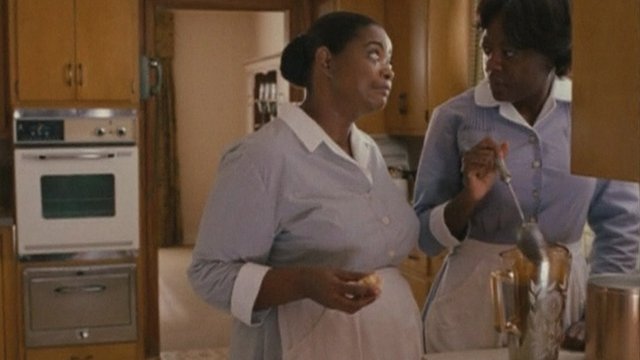 Deep South drama The Help has scored the most nods in the film categories at the Screen Actors Guild (SAG) Awards.
As well as best ensemble cast, Viola Davis is up for best female with co-stars Jessica Chastain and Octavia Spencer receiving supporting honours.
Sitcom Modern Family led the field in the television categories, also securing four nominations.
British actresses Emily Watson, Dame Maggie Smith and Kate Winslet dominated the TV movie/miniseries category.
Davis will be up against Meryl Streep for The Iron Lady, Glenn Close for Albert Nobbs, Tilda Swinton for We Need To Talk About Kevin and Michelle Williams for My Week With Marilyn on the best film actress shortlist.
Silent movie The Artist also received three nods for its actors, including best ensemble cast in a film.
The male lead acting nominations went to Demian Bichir for A Better Life, George Clooney for The Descendants, Leonardo DiCaprio for J. Edgar, Jean Dujardin for The Artist and Brad Pitt for Moneyball.
Kenneth Branagh is also nominated for best supporting male for his role as Laurence Olivier opposite Williams in My Week With Marilyn.
Dame Maggie is recognised for her role in ITV1's Downton Abbey, Winslet is up for period drama Mildred Pierce and Watson is shortlisted for her part in the Fred West drama Appropriate Adult.
The trio will go up against Diane Lane for HBO's Cinema Verite and Betty White for CBS' Hallmark Hall of Fame: The Lost Valentine.
White also scored a second nomination for best female in a comedy series for her role in Hot In Cleveland.
Modern Family stars Ty Burrell, Julie Bowen and Sofia Vergara are recognised in the best male and female categories, with the sitcom is in the running for best ensemble cast in a comedy.
The casts of 30 Rock, The Big Bang Theory, Glee and The Office will also compete in that category.
Best male in a TV movie/miniseries nominees include Laurence Fishburne, Paul Giamatti, Greg Kinnear, Guy Pearce and James Woods.
Boardwalk Empire, Breaking Bad, Dexter, The Good Wife and Game of Thrones will compete to win best ensemble in a drama.
The SAG awards ceremony is due to take place in Los Angeles on 29 January.
Madonna Signs Three-Album Deal With Interscope
Madonna has signed a three-album deal with Interscope in which she will earn a base of $1 million per record. The pop star's pact with Interscope and the Universal Music Group will work in tandem with her 10-year multi-rights "360" deal with Live Nation, the promoter of her top-grossing Sticky and Sweet tour in 2008. Madonna signed that deal in 2007, and the promoting giant had always intended to partner with a label to release new music.
Madonna's first album for Interscope, expected to arrive sometime in 2012, will be the star's first record for a company other than Warner Bros., her label of 25 years.
Flavor Flav Pleads No Contest Over Traffic Violations
Flavor Flav has pleaded no contest to a variety of misdemeanor charges in Las Vegas.
The 52-year-old hypeman was busted in May for driving with a suspended license and having no insurance.
He was also busted for outstanding warrants for traffic and parking violations.
Flavor Flav, born William Drayton, must now pay a $250 fine.
He must also attend drug counseling classes.
Warrant for Bob Marley's granddaughter withdrawn
A warrant that was issued for the arrest of the granddaughter of Reggae legend Bob Marley yesterday, was withdrawn today by Senior Magistrate Judith Pusey.
RM Pusey withdrew the warrant after she was informed that Donisha Prendergast had in fact attended the Corporate Area Resident Magistrate's Court yesterday but was not summoned to answer a charge of possession of ganja.
Prendergast, 26, today paid a fine of $100 to avoid a 10-day jail sentence after a small amount of ganja was found in her possession.
She was accompanied by her attorney Diane Jobson who asked the judge not to record the conviction. The request was granted.
Prendergast was arrested on November 21 after police officers who were doing spot checks along Water Lane in downtown, Kingston searched her car and found three clear plastic bags containing a small quantity of ganja.
Deejay Vybz Kartel has been slapped with another charge.
Yesterday, it was revealed in the Corporate Area Resident Magis-trate's Court that Gaza Slim, whose real name is Vanessa Saddler, and Kartel are jointly charged with attempting to pervert the course of justice.
Saddler was remanded in court yesterday. She is being represented by attorney Pierre Rodgers.
The court also heard that the police are searching for a third person known by the alias 'Pim Pim' in relation to the same matter.
Allegations are on October 29, Saddler went to the police to report that she had been robbed by Clive 'Lizard' Williams, one of the men whose murder fellow entertainer Kartel has been charged with.
The police believe this was an attempt to prove that Williams was not dead.
Investigators claim they have a cellular phone with a text message proving Saddler and Kartel fabricated the story.
Saddler was charged by the St Andrew North police on December 8, days after she surrendered herself subsequent to being named as a person of interest.
They are to return to court on December 19.
Kartel's co-accused, fashion stylist Calvin 'Moonie' Haye, deejay Shawn Storm, and Cairo Jones, are to also reappear in court on that same date.
It is reported that on August 16, Williams, a resident of Portmore, St Catherine, was killed in Havendale, St Andrew.
Williams was allegedly taken to a house in Havendale, where he was beaten and stabbed to death over the loss of an illegal gun.
His body has not been found.
Clippers land Paul from Hornets
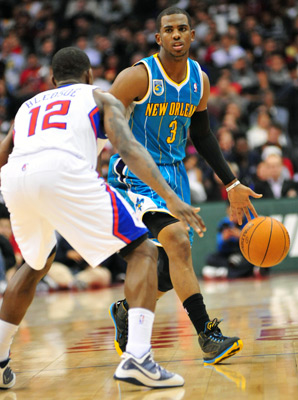 The NBA-owned New Orleans Hornets have reached an agreement to send point guard Chris Paul to the Clippers, two sources with knowledge of the deal confirmed to SI.com.
While the Clippers will receive the four-time All-Star point guard to pair with franchise centerpiece Blake Griffin, the Hornets will receive an All-Star caliber guard Eric Gordon, veteran center Chris Kaman, forward Al-Faruoq Aminu and the 2012 first round pick from Minnesota that was atop their wish list of assets in these talks all along. Sources said the Clippers will also receive two future second-round picks in the deal.
After the NBA vetoed a three-team deal involving the Lakers and Rockets on Dec. 8 -- and the Lakers backed out of a revised version of the deal two days later -- the Paul trade show continued anew on Monday night. The Hornets and Clippers re-engaged in discussions, with Commissioner David Stern and league associates Stu Jackson and Joel Litvin continuing their relentless push to attain the sort of assets that they saw fit for a rebuilding team.
"I knew we were doing the best thing for New Orleans and that was my job," Stern said. "You have to stick with what you think was right. I must confess it wasn't a lot of fun, but I don't get paid to have fun."
In the process, the most unique of dynamics was the latest black eye for a league looking to re-engage its fans after a contentious lockout had threatened the season. Hornets general manager Dell Demps, who had worked diligently to set the table for a possible Paul deal since coming aboard last season, was circumvented in the final stages of this process while the league officials took control. And while the end certainly doesn't justify the means, there's no mistaking that the Hornets landed quite a haul.
"Our sole focus was and will remain, until we sell this team, hopefully which will be in first half of 2012, how best to maintain the Hornets, make them as attractive and a competitive as we can and ensure we have a buyer who can keep them in New Orleans," Stern said.
In Gordon, New Orleans acquires a fourth-year player who averaged 22.3 points in 56 games last season. The Hornets will have a team option on Gordon for next season and can begin discussing a contract extension immediately. In Kaman, they acquire a top-tier big man with a $12.7 million expiring contract that could come in handy leading up to the league's February trade deadline. Aminu, a 6-foot-9 small forward out of Wake Forest who was a rotation player in Clippers coach Vinny Del Negro's system, has potential as well. Above all else, though, the Hornets landed the draft pick they've coveted all along.
"For the long-term future of the New Orleans Hornets, this is the best deal," Demps said in a statement.
Of all the assets in play in the trade talks for Paul, the Wolves' pick was atop the Hornets' wish list alongside Golden State guard Stephen Curry. Next year's draft is being billed as one of the deepest in years, with Kentucky forward Anthony Davis, Connecticut center Andre Drummond and North Carolina small forward Harrison Barnes among the many players who could do wonders for the Hornets' rebuilding effort. And while the Timberwolves are expected to improve under new coach Rick Adelman, the Hornets will be rooting all season long for a terrible showing that would lead to a high pick.
Sources had said in recent weeks that Paul was open to joining the Clippers long-term, and a source confirmed that he will likely pick up his player option worth $17.8 million for the 2012-13 season as a sign of his commitment. Changes to the rules in the new collective bargaining agreement mean that players are paid less by immediately extending their contract, so the Clippers and Paul will likely sign a new, more lucrative deal in the summer.
ESPN.com first reported news of the trade being agreed upon.
Information from the Associated Press was used in this report.
Magic GM said Howard trade talks may stretch to end of season
Magic general manager Otis Smith said Wednesday the team's goal remains to keep Dwight Howard in a Magic uniform as long as they possibly can and that the trade talks "could go to the end of the season."
Smith would not say whether trade talks for the center are off, but did say there was no deal in place.
"We're at the same place we've always been," Smith said. "We don't have a deal until we have a deal. Right now we still have him in a Magic uniform, and that's where we expect him to be until that changes."
Howard, who is entering the last year of his contract, confirmed over the weekend that he had requested a trade to New Jersey, Dallas or the Los Angeles Lakers. However, the 26-year-old center has since publicly softened his stance, saying he would be amenable to remaining in Orlando.
The Magic have said they will not risk losing Howard without compensation, which means they must either sign him or trade him before the March deadline. However, Smith said they could keep Howard beyond that.
"As I've said, our objective is to keep him in a Magic uniform as long as we possibly can," Smith said. "With that said, we could go to the end of the season."
Howard tried to deflect all trade questions Wednesday.
"Nobody will understand what I'm going through, what we as players have to go through, night in and night out, unless you're a player," he said. "I could write a book of all the stuff I've heard from teammates. Other guys around the league hear it. A lot of people have called me to make sure I stayed off my Twitter, my Facebook, so I don't have to go through (the public reaction).
"But it's a process, and I think I'm doing a great job of not letting it affect who I am. At one point it was, but I'm not going to let that affect me . . . It's been a roller coaster, but I'm enjoying it. I'm going on a good ride."
And it could be a long one.
Though there are reports that the Nets have been trying to engineer a multiple-team trade to get Howard, Smith indicated nothing is imminent.
"I think we're going to continue to talk to every team out there, but that doesn't mean anything is going to happen," he said.
Coach Stan Van Gundy said the Magic's practice sessions have been relatively free of distractions. They open a two-game preseason at Miami Sunday night and will open the regular season on Dec. 25 at Oklahoma City.
"I was kind of expecting this," guard J.J. Redick said. "I knew that there would be this cloud of uncertainty around Dwight because I saw what happened last year with Carmelo (Anthony), I saw what happened the year before that with LeBron (James), and Dwight is obviously in their league of superstardom. So there's going to be a lot of attention until something happens."
With the hammer of free agency, Howard appears to be in control of what happens. But for now, at least, it seems the Magic can control when anything happens.
"Dwight and I have talked about this. He has a great heart and he genuinely wants to please people, whether that's fans, teammates, our management, our coaches. He wants to be well-liked," Redick said. "Anytime you run into a situation like this, people take things personally. If he was to get traded, I think people would take that as a knock on Orlando.
"Dwight recognizes and knows that this city has been great for him and he's been great for this city. My hope is that he will continue to be great for this city."
Bravo seeks to revive international career
Dwayne Bravo said he hoped his participation in the Big Bash League Twenty20 would spark his revival and spur his return to the West Indies team. The 28-year-old Bravo arrived in Sydney on Monday following a 32-hour journey that started in his native Trinidad and took in stops in St Lucia, London and Bangkok.
Bravo has signed to play for the Sydney Sixers in the revamped Big Bash and wanted to use the four games he will play to tune up for the Caribbean Twenty20 Championship next month. “I definitely want to get back into the Test team, and these four games for the Sixers will set the tone for me in 2012,” he said in an article appearing in the Herald Sun newspaper.
Bravo has played 40 Tests, 117 One-day Internationals and 22 Twenty20 Internationals, but he has not played for West Indies after taking a self-imposed exile from the game following the second One-day International against India last June in Port-of-Spain.
He said players like his younger brother Darren, Kirk Edwards, among others gave him hope that West Indies could become competitive once again on the international scene. “We have lot of young players, but the talent is there,” he said. “Within the next year or two, you will see good improvement and consistency.” The Sixers face the Brisbane Heat in tomorrow’s Big Bash League opener on home soil at the Sydney Cricket Ground.
Close sailing in the 2011 Bacardi National Laser Championships
The 2011 Bacardi National Laser Championships were held in the North Sound by the Cayman Island Sailing Club (CISC) over the weekend of 26th and 27th November 2011. Racing was extremely close and the conditions tested every sailor to their full ability. In the end the two main fleets, the Laser Standard fleet and the Laser Radial fleet were won by a single point.
This is the now the fourth year that Bacardi has sponsored this prestigious national dinghy championship and Maya Ogorzalek, Marketing Manager at Cayman Distributors said, “We are really happy to be sponsoring the most significant dinghy competition in Cayman’s sailing calendar. This year’s event was yet again a great success and it’s fantastic to see so many people from our community taking part in the sport of sailing at such a high level.”
Three races were held on the first day of racing and provided the strongest wind conditions that the competition has experienced in the last three years. Peta Adams, the race officer for the event said, “The conditions on day one made the regatta a real test of seamanship first, before trying to beat your closest competitor”.
The first day saw a broken mast, nose dives, epic surfing sessions on the renowned North Sound chop and plenty of capsizes. The stand out performance of the day was Raph Harvey in the Laser Standard full rig, who won all three races placing a firm grip on the trophy. The other was Aaron Gardner in the Laser Radial fleet who led his class into the second day of racing on Sunday.
After the first day of racing the Saturday night function was full of long stories of the close calls – aided by the regatta refreshment – Bacardi dark and stormy.
On the second day the wind dropped a little, but the waves were still a challenge and after a gruelling first day of racing the competitors were given no respite. Peta Adams set some fast, fun triangular courses to test the sailor’s reaching and gybing abilities.
Nick Taylor found his form winning the last three of the day’s four races, but by then Raph Harvey had amassed an unbeatable lead. Raph said, “Nick and I were battling it out for every moment of every race and were only seconds away from each other most of the time! There was never any let up and while I was pleased to win the regatta the trophy could have easily have gone Nick’s way”.
Kelvin Browne found some consistency to take third and Mike Farrington sailed two good finishing races to come fourth and secure the Clydesdale (or heavy-weight) trophy.
In the Laser Radial fleet, Eduardo sailed brilliantly to come first in the final three races and therefore win the Radial class. Chris Delaney came second by a single point, unable to break Eduardo’s dominating end to the regatta. Last year’s Laser Radial winner, Tomeaka McTaggart, came third.
All the sailors would like to thank Peta Adams and her support crew for putting on two days of perfect racing and course management in harsh weather conditions; Bacardi for sponsoring the event and for the great prizes; and the Cayman Islands Sailing Club for managing and organising another successful Laser Nationals.