
Guyana police commissioner accused of rape
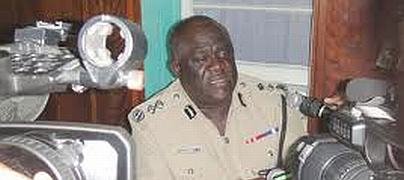 Guyana’s Police Commissioner Henry Green is facing allegations that he violently raped and falsely imprisoned a thirty-four year old mother of two at gun-point. The woman, the wife of a Guyana Defence Force officer, said the incident occurred at a guesthouse, for which she said Green had keys to a room.
The alleged victim said she went to see Green on November 15, 2011 about an assault by a police officer whose wife was involved in an extra-marital affair with her husband. She claimed to have been assaulted by the officer over a video recording she secretly had made of his wife and her husband allegedly having sex in October 2011.
The victim related that, after hearing about her plight, Green appeared to empathize with her and assured her that he would investigate the matter. She said the top cop even gave her money to attend to her kids on two separate occasions, on November 15 and subsequent to the alleged incident.
The woman claimed that Green asked her to return the following week. She said upon her return on November 22, she was made to wait for hours until evening. When she finally saw Green it was night and he offered her a ride. She said that instead of taking her to her home, the Police Commissioner drove her to a hotel, forced her into the room and demanded that she remove her clothing.
The alleged victim said Green brandished his gun in the vehicle as well as in the hotel room. When she resisted he slapped her in the face and choked her into submission, she recalled.
She furnished telephone records that purportedly establish that Green made dozens of phone calls and sent several text messages to her cellular phone from his private cellular phone after the incident. The woman asserted that most of the subsequent communication from Green was threatening. She said Green also threatened to kill her on more than one occasion, and expressed fear for her life. She claimed to have sought but only received limited medical treatment.
She has retained the services of attorney-at-law Nigel Hughes, and has filed an official complaint at the Brickdam Police station in Georgetown. Reports are that Guyana’s Crime Chief as well as the Head of the Presidential Secretariat were aware of the incident before it became public.
Green has been previously accused of rape during President Desmond Hoyte’s administration. He was a senior superintendent at the time, and was reportedly sent on leave but reinstated after the investigation allegedly stalled over a lack of evidence.
Green’s US visa was revoked in 2006 by the US government for alleged involvement with criminals, including drug lords. The then US Ambassador to Guyana in 2006 warned then President Bharrat Jagdeo not to appoint Green as police commissioner, as he was possibly under DEA investigation and could be indicted by the US Justice Department.
Following these allegations, the New York-based Caribbean Guyana Institute for Democracy (CGID) has called for Green’s removal as police commissioner.
CGID president Rickford Burke said in a statement on Wednesday, “Although Mr Green himself as police commissioner has countenanced the abridgement of many a citizen’s right to natural justice, as well as egregious violations of human rights, he is entitled to due process and a presumption of innocence until convicted in a court of law.”
Burke added that the Institute’s call for Green’s removal is in no way a rush to judgment on the rape allegations.
“This position is not a rush to judgment but was informed by a distressing accumulation of red flags including substantiated allegations of other criminal and unethical conduct; a determination by the US government that Commissioner Green ostensibly has criminal associations with and may have benefited from narcotics traffickers; the revocation of his US visa; the unchecked political bias of the police under his leadership and their systemic failures to adequately fight crime,” he noted.
Burke also called on recently-elected President Donald Ramotar to end the culture of lawlessness in Guyana by demanding accountability from public officials, beginning with Green.
“It is time to end the cycle of injustice in Guyana. If these allegations are deemed by the DPP to have merit, CGID expects that Mr Green will be arrested, charged and prosecuted like any other citizen facing similar allegations would be.”
Burke called on Ramotar to “end Green’s tenure, as he is unfit to lead a law enforcement agency while under this cloud of alleged impropriety.”
Green, who has passed retirement age, has been retained by the PPP government on a month to month basis. Police sources say his retention has stagnated promotion among the force’s top ranks.

Bahamas earning too little to make ends meet, says IDB
The Bahamas “is just not earning enough to make ends meet”, according to the lead economics specialist for the Caribbean at the Inter-American Development Bank (IDB).
The forecast from Valerie Mercer-Blackman follows the Debt Analysis & Fiscal Sustainability Workshop held in Nassau last week.
The concern also expressed by Mercer-Blackman is that with increased public debt, the country’s debt-to-GDP ratio could enter the critical range if measures are not taken.
One of the chief concerns at the two-day event was rising debt in The Bahamas over the last five years.
“It is simply not making enough tax revenues given their expenditures,” Mercer-Blackman told Guardian Business from Washington. “The Bahamas is just not earning enough to make ends meet. It means they have to borrow and the deficit is getting worse. This is not because of a specific project. Its overall revenues are not keeping up with expenditures.”
As a general rule of thumb, the country has adequate capacity to pay its debt if interest payments on public debt are less than 15 percent of all government revenues. Mercer-Blackman said The Bahamas is not quite there yet, but “it is getting very close at around 13 percent”.
Meanwhile, illustrating the rise of national debt over the last five years, she told Guardian Business that the IDB pegged the country’s debt-to-GDP ratio at 31.7 percent in 2007. In 2011, it has risen to 48.7 percent.
“It could easily get to 60 percent by 2014,” she said.
“So far, that’s a huge increase over four years, even though it’s still below the standards of the Caribbean in terms of debt.”
The IDB specialist warned that taking on so much debt means spending is restricted in other areas, which ultimately discourages outside investors. It ends up having a “dampening effect” on growth, she added.
Given the nature of the economy, one of the main culprits for a decline in tax revenue is the drop-off in tourism. Although arrivals have been picking up, according to the IDB, total revenue has taken a hit.
“People are not spending as much. You have a rise in group sales, meaning people are coming on deals and a general lowering in spending. I think the way people save is by going, but for less time and trying to restrict costs,” Mercer-Blackman explained.
However, the IDB did see some hope in the situation.
A slow and steady recovery for tourism is expected in the next year, with a 2.5 percent rise over 2011.
Mercer-Blackman also credited the Baha Mar project’s role in aiding the economy in terms of construction and boosting GDP growth for next year.
“Overall, we are in agreement with the projection on growth.”
Nassau Guardian
St Kitts hosts regional security conference
St Kitts and Nevis Prime Minister Dr Denzil Douglas discussed local, regional and international security issues on Monday with Commander of the United States Southern Command (USSOUTHCOM), General Douglas Fraser ahead of a Caribbean Nations Security Conference 2012 (CANSEC).
Fraser and Commander of the St Kitts-Nevis Defence Force, Lt Colonel Patrick Wallace, paid a courtesy call on Douglas, who was due to deliver the feature address at the December 12-14 conference.
The three-day conference, which is co-hosted by USSOUTHCOM)and the St Kitts-Nevis Defence Force, is an annual executive level conference that affords regional military chiefs and the combatant commander of SOUTHCOM, a forum to discuss US military support to regional information sharing.
The theme of this year’s conference is “Regional Information Sharing; to Counter Transnational Organized Crime (C-TOC) and assist Foreign Humanitarian Assistance and Disaster Response (HA/DR).”
The meeting is attended by military chiefs of those CARICOM member states with military forces; those countries without military forces are represented by their commissioners of police.
Also attending are the interim director of CARICOM IMPACS, the Co-ordinator of the Regional Security and observers from other regional organisations.
Caribbean News Now
Cuba appreciates solidarity from CARICOM on US blockade
“Cuba appreciates that CARICOM countries share a clear position against the economic, commercial and financial blockade imposed by the United States of America against Cuba and openly express themselves publicly in this regard”.
These were the words of Cuban Ambassador to Barbados Lisette Perez Perez on Tuesday night during a CARICOM-Cuba lecture and cultural event at the Barbados Community College library, which was held to mark the 39th anniversary of established diplomatic relations between Cuba and Barbados, Guyana, Jamaica and Trinidad and Tobago.
She further stated: “Of the 19 countries of the region that expressed their rejection against the blockade in their speeches at the 66th session of the United Nations General Assembly, 10 are members of CARICOM, including Barbados, which we really appreciate,” she said of the blockade that has been in effect for over 50 years.
She went onto say that this support is beneficial and necessary to both the CARICOM states and Cuba, as we face significant challenges likely insurmountable as individual islands.
Perez also reaffirmed Cuba’s pledge to commit to the Community of Latin American and Caribbean States (CELAC).
“We know this is going to be a long road full of obstacles, including those arising from ourselves. One of the key issues in the midst of that diversity however, is to have tolerance and patience and to move steadily, little by little, but always moving and never becoming stagnant as President Raul Castro expressed also in Port of Spain.”
However, she opined that there are many opportunities on offer with Cuba’s willingness to continue to strengthen relations with CARICOM member countries and to execute collaborative projects.
Meanwhile, for next year’s 40th anniversary, it was revealed that Cuba’s international book fair – the most significant cultural event of the Cuban publishing movement – will be dedicated to the Caribbean.
Eurozone faces winter recession, Ernst & Young says
 The eurozone is facing a "bleak" winter, according to audit firm Ernst & Young.
A "mild" recession is likely in the first half of next year, leading to economic growth of just 0.1% for the whole of 2012, it predicted.
Ernst & Young also said unemployment in the eurozone was unlikely to fall below 10% until 2015.
Meanwhile, Greece - Europe's most indebted country - said that it would have its worst recession ever in 2011.
Greek Prime Minister Lucas Papademos warned on Wednesday that his country's contraction would be greater than the 5.5% currently forecast.
Greece's economy shrank by 4.5% in 2010, when it received its first bailout from the EU and International Monetary Fund.
'Uncertainties'
Last week, 26 of the 27 members of the European Union backed new fiscal rules to keep budgets in line, with only the UK abstaining.
But many fear that the budget pact will still not be enough to prevent more countries from seeking a bailout.
On Wednesday, the euro fell below $1.30 for the first time since January.
"The reforms agreed at the summit on 9 December were a step in the right direction and the response seems to have been mildly positive," according to Ernst & Young.
"Yet investors remain very concerned about the commitment and ability of eurozone governments to implement reforms quickly."
The audit firm predicts that eurozone growth will recover to between 1.5% and 2% in 2013.
"The uncertainties hanging over the Eurozone can only continue to dampen the enthusiasm for European companies to make long term investment and recruitment decisions," said Mark Otty, Ernst & Young's managing partner for Europe, Middle East, India and Africa.
UK’s unemployment at highest level in 17 years
Austerity measures, prolonged economic weakness and a eurozone crisis have taken their toll on Britain’s work force, with figures published yesterday showing that unemployment has reached a 17-year high. Britain’s government has staked its reputation on a strategy of cutting costs and jobs in the public sector while trying to boost private sector growth. Yesterday’s unemployment data, which show that unemployment is rising and that women and young people are hardest hit, raise doubts over whether that strategy is working, and leave Prime Minister David Cameron open to criticism that he is taking away opportunities for some parts of society.
The highest level since 1994, 2.64 million people were unemployed in Britain at the end of October—128,000 more than in the previous quarter, according to government statistics. Britain’s unemployment rate is now 8.3 per cent, up 0.4 per cent on the quarter and at its highest level since 1996. In particular, unemployment among 16 to 24 year olds has reached the highest level since records of youth employment began to be kept in 1992 with 1.03 million young people out of work. “I’ve applied for hundreds and hundreds jobs and not got anything,” said 17-year-old Tamika Dodd of North London. “I keep getting told I don’t have experience, but they won’t let me get any.”
Tamika, who left college because she “wanted to earn her own money” is convinced her youth is against her in the sales assistant and receptionist jobs she has applied for. “I keep being told I don’t suit the job,” she said. “What does that mean? They don’t even know me.” This section of society—labeled NEETs (Not in Education, Employment or Training)— was held widely responsible for the riots and looting across Britain in the summer and is now finding it hard to get work. “Young people do get a very bad press at the moment, and employers are getting reluctant to take them on,” said Emma Aeppli, who works for Camden Jobtrain, a north London charity that helps young people find work. “There are also simply not as many apprenticeships and training schemes for young people as there once were, and they don’t have the experience to just walk into a job,” she said.
The figures open old wounds—unemployment under Prime Minister Margaret Thatcher hit 3 million in the early 1980s and gave the Conservative party a reputation for not caring about joblessness. Statistics show that in the third quarter of the year, 67,000 jobs were cut in the public sector, while only 5,000 private sector jobs were created. The public sector cuts also hit women hard because they are more likely than men to work in the public sector, pushing the number of women unemployed up by 45,000 to 1.1 million, the highest since 1988. Dave Prentis, leader of the public sector union Unison, said the figures showed the government strategy is failing. “The government continues to ignore the human cost and push ahead with its hard and fast cuts, clinging to the hope that a struggling private sector can pick up the pieces,” he said. “These figures deliver a cold hard dose of reality.”
Cameron was careful this time to describe the unemployment figures as “bad news and a tragedy for all those involved” and promised to help people find work. The youth unemployment figures have allowed opposition leader Ed Miliband of the Labour Party to repeat his accusation the government is “betraying a whole generation of young people.” But Tim Leunig, an economic historian at the London School of Economics, said youth unemployment is a worldwide problem, not unique to Britain. “People just don’t want to employ people without any skills, and if you are 16 or 17 and job hunting, the chances are you are doing that with very few qualifications,” he said.
Leunig pointed to data from the Organisation for Economic Co-operation and Development that showed that Britain’s young people are actually more likely to be employed than youths in other countries, including Germany, Sweden and France. The organisation said unemployment across the eurozone had risen to 10.3 per cent in October, but there are wide variations between Spain, the hardest hit, and Germany, the best off. The US had an unemployment rate of 8.6 per cent. “British unemployment is not that bad compared to other countries but it is still a tough thing to live with,” Leunig said.
“We had hoped we would be coming out of recession by now. In any other era we would be close to improving. We certainly wouldn’t be expecting unemployment to be rising the rate it is.” The danger appears to be that the longer it takes to find work, the harder it becomes. “When I go for a job, people ask me what I’ve been doing in the last few months and if I tell them I’ve been looking for a job I can see they don’t believe me,” said 16-year-old Asharani Kaur, who has been seeking work since the summer. “They ask why I don’t get a job in a shop or something when that’s what I’m trying to do.”
Bank of Japan says businesses are pessimistic
Japanese manufacturers' sentiment has turned pessimistic due to a strong yen and Europe's debt crisis, the latest Tankan survey has found.
In its quarterly survey, the Bank of Japan said large manufacturers' sentiment in the three months to December dropped to minus four from plus two three months ago.
The survey is one of the factors considered by the bank's rate-setters.
Analysts said sentiment could worsen if Europe's debt crisis continues.
"Companies are taking more cautious views of the economy due to the one-two punch of the slowdown in overseas economies and the firmer yen," said Yoshikiyo Shimamine from Dai-Ichi Life Research Institute in Tokyo.
"Given the likelihood that overseas economies including those of emerging nations will slow further, we should be aware of the risk of big manufacturers' sentiment towards the business outlook worsening more."
A reading of 100 would be the best mood possible, with minus 100 as the worst.
Multiple blows
Japan's economy has rebounded from a recession triggered by the 11 March earthquake and tsunami, but as the initial boost from companies restoring supply chains and production facilities subsides, exports and factory output could slow again.
Adding to the problems was the effects of the floods in Thailand, which further disrupted supply chains. Sentiment was also hit by the decreasing demand from Europe as growth slowed.
"I think the BOJ will be slightly shocked by this Tankan," said Hirokai Muto from Sumitomo Mitsui Asset Management.
"This Tankan report also shows signs of weak overseas demand."
Yen conundrum
Another effect of the uncertainty in Europe and the US has been that global investors have turned to the Japanese currency as a safe haven, which has pushed up the strength of the yen.
For big exporters such as Toyota Motor and Sony, this has reduced the value of their overseas profits when brought back into Japan.
It has also made them less competitive overseas.
Some of Japan's big manufacturers have been shifting production to other countries to counteract this effect.
Bernanke worries Europe's woes will spill into U.S.
Federal Reserve Board Chairman Ben Bernanke told Republican senators on Capitol Hill on Wednesday that he's concerned about European sovereign debt problems spilling over to the U.S. economy, according to senators.
The Senate Republican caucus invited the Fed chief to brief them on problems in Europe. Sens. Orrin Hatch of Utah and Mike Johanns of Nebraska both said that Bernanke warned that the economic unraveling of Europe would have a negative impact on the U.S. economy.
"He's very concerned," Hatch told CNN. "He did say that if they can't get their things in order, it could affect us. A collapse over there would be detrimental to us."
The European sovereign debt crisis has been raging on for more than 18 months.
Last Friday, European leaders hashed out a 'fiscal plan' aimed at resolving the crisis. All 17 eurozone members signed on, with the bulk of the remaining European Union members indicating they were interested as well.
But various parliaments still need to give their approval, and cracks in the plan have started to emerge.
A key part of Friday's deal calls for eurozone members to contribute €200 billion more to the International Monetary Fund. But some government leaders have voiced their reluctance to sign on.
Furthermore, the overall plan would require a number of treaty changes and, once again, some countries are balking. According to news reports, opposition leaders in Ireland are calling on Prime Minister Enda Kenny to hold a public referendum on the deal.
China to tax US-made car imports in trade dispute
China will levy duties on some cars made in the US in the latest escalation of trade disputes between the two largest economies.
China's commerce ministry said in a statement that vehicles were being dumped on the Chinese market, causing damage to the domestic industry.
The taxes will affect models from General Motors, Chrysler, Mercedes Benz and BMW that have been made in the US.
China is now the world's largest vehicle market.
Individual duties on each company range from 2% to 21.5% and will be levied on imported cars and SUVs with engines larger than two litres for two years, the commerce ministry said.
The decision to tax US-made cars came after China lost a two-year battle over tyre exports to the US in September.
The World Trade Organisation ruled in favour of the US and allowed a proposal to significantly increase duties on Chinese tyres coming into the US.
It rejected an appeal from China that the 2009 duties were protectionist.
Hong Kong stock market debuts struggle in weak market
Shares in two of Hong Kong's biggest stock market flotations this year have fallen in their first day of trading.
Shares in jeweller Chow Tai Fook fell as low as HK$13.66 in morning trade, down 9% from an offer price of $15.
New China Life, an insurer, fell to HK$25.9 from an offer price of HK$28.5.
Recent Hong Kong initial public offerings (IPOs) have struggled to attract investors amid volatility on stock markets worldwide.
Hong Kong's benchmark Hang Seng index fell for a sixth consecutive session on Thursday and is down 21% this year.
Its once booming market for IPOs has been hit as a result.
Companies listing in Hong Kong have raised $30.4bn (£19.7bn) so far this year, far behind the $57bn raised in 2010, according to figures from market data firm Dealogic.
However, Hong Kong remains the world's top market for new listings, with more funds raised than New York or London.
Chow Tai Fook raised $2bn by selling shares to investors in Hong Kong's third largest IPO this year.
The amount raised lagged behind the $2.5bn Italian fashion house Prada raised in its Hong Kong IPO in June and the $2.1bn raised by Shanghai Pharmaceuticals.
While its name does not travel far outside its home market, Chow Tai Fook is a major brand in China and its listing had been hotly anticipated.
New China Life, meanwhile, raised $1.9bn in its IPO in a dual Hong Kong and Shanghai listing. It will begin trading in Shanghai on Friday.