
Roger Federer beats Kei Nishikori to win Swiss Indoors
Roger Federer beat Japan's Kei Nishikori in the Swiss Indoors final to win only his second title of 2011.
Federer, 30, triumphed 6-1 6-3 over the 32nd-ranked wildcard, who shocked world number one Novak Djokovic in the semi.
Swiss world number four Federer was playing in his 98th ATP singles final, while Nishikori was in his third.
"It's great to win at home again," said Federer. "Kei put up a good fight. I knew when I hit with him as a teenager that he could have a good future."
Federer, the former world number one, won his home title in Basle for the fifth time in six years.
The 16-time Grand Slam champion, who was playing in his first final since losing to Rafael Nadal in the French Open in June, dropped just one point on serve in a 28-minute opening set, while Nishikori took only six points off Federer's serve in the entire match.
Federer, who was playing in his first singles tournament since the US Open in September, admits he is in good spirits going into this week's Paris Masters.
"It was a perfect match for me. Now I have big hopes for Paris and London [the ATP Tour Finals].
"It's been a long time since I felt so good physically.
"I'm feeling ready and fit and fired up, that's how it's supposed to be. This is the last push of the season and I'm ready for it."
Of Federer's main rivals, Djokovic re-injured his right shoulder against Nishikori, while world number two Nadal has already pulled out of Paris with an unspecified injury.
Briton Andy Murray, ranked third, withdrew from the Basle event with a strain in his right gluteal muscle.
Federer added: "It's been a great start to the autumn, I think my pause paid off. I've got different priorities than some of the younger guys who are ranked around me.
"I needed to take that time off, it was best for my mind, my body, my family and my fitness. There is a lot of tennis to be played until the end of the season and it will be packed in early 2012.
"I want to be a danger everywhere that I play."
Nishikori, who will go to Paris with a special exemption, played Federer for the first time in his career and said it had been an ambition of his.
"He didn't give me a chance, he was too good for me today," said Nishikori, 21, who inflicted only the fourth defeat of the season on Djokovic.

West Indies start battle with India
West Indies Head Coach Ottis Gibson has called on his players to be “fearless” during the upcoming series against India and captain Darren Sammy believes that’s the “way to go”.
On Friday, Gibson made the rallying call and Sammy backed it up on the eve of the tour opener. The captain was speaking on Saturday afternoon as the Windies had a three-hour training session at the Feroz Shah Kotla, venue for the first of three Test matches.
First ball on Sunday 12 midnight Eastern Caribbean Time.
“This is the biggest series for most of the guys here. Playing cricket in India is indescribable. This by far is the biggest test for us and for me as the captain as well,” the 27-year-old Sammy said.
“I totally agree with the coach. We have come here to play and we should be fearless. When we played at home earlier this year our sponsors Digicel had the launch of the Fire in Babylon movie and all the guys present know what West Indies cricket means to the people in the Caribbean. Some guys have actually walked with it on this tour and have been watching when they get the opportunity.”
The Windies arrived in Delhi on Thursday directly from Dhaka where they beat Bangladesh 1-0 in the two-match Test series and 2-1 in the One-Day series. During the first training session on Indian soil, Gibson urged his young side not to back down against the home side, but rather to assert themselves and play boldly.
“India may not be at the Number 1 position anymore but it is still a top side and we need to challenge ourselves against them and see where we are. We need to be fearless. The number seven team is playing the Number 3, and if we take a backward step it will be a sign of weakness,” Gibson said.
“Whether it is against Bangladesh or a top-ranked nation, winning first is very important. It is good to see so many of our young players coming into form and put in outstanding performances. But this is a different challenge and one that we are really looking forward to.”
The Head Coach added: “Over the last six to 12 months our fast bowlers have done well. We know that India obviously will be heavy on spin but we believe in the quality of our bowlers. What believe we have the quality to back ourselves. We know the ball doesn’t swing very long in India. You need to have added skills and we pay a lot of attention to that. We are skilled enough to reverse it and get wickets as well.”
This is Sammy’s fifth Test series in charge since taking up the job a year ago when the West Indies toured Sri Lanka. So far this year the West Indies have two wins, two defeats and three draws in Test cricket. Four bowlers – Devendra Bishoo, Ravi Rampaul, Fidel Edwards and Sammy – have taken more than 20 wickets.
“Over the last year we have been able to bowl out teams twice in Test cricket. It’s an improving attack. We expect to continue the same way and let our pace do the talking. We also have Devendra Bishoo to complement us with his good leg-spin bowling.
“So far, we prepared well for the sub-continent. We just had a successful tour of Bangladesh where we played well in all departments. Our top order is scoring runs. We not only getting good runs, but they (batsmen) are also occupying the crease. Test match cricket is also about time in the middle and battling in all circumstances. We just hope the good form continues here in India.”
West Indies Squad: Darren Sammy (captain), Adrian Barath, Carlton Baugh, Devendra Bishoo, Kraigg Brathwaite, Darren Bravo, Shiv Chanderpaul, Fidel Edwards, Kirk Edwards, Kieran Powell, Denesh Ramdin, Ravi Rampaul, Kemar Roach, Marlon Samuels, Shane Shillingford
Team Management Unit: Ottis Gibson (Head Coach), Richie Richardson (Team Manager), David Williams (Assistant Coach), Desmond Haynes (Batting Consultant), C.J Clark (Physiotherapist), Hector Martinez-Charles (Strength & Conditioning Co-ordinator), Richard Berridge (Video & Statistical Analyst), Philip Spooner (Media Manager), Virgil Browne (Massage Therapist)
Tour Schedule
November 6-10: 1st Test at Feroz Shah Kotla, Delhi
November 14-18: 2nd Test at Eden Gardens, Kolkata
November 22-26: 3rd Test at Wankhede Stadium, Mumbai
November 29: 1st ODI at Cuttack
December 2: 2nd ODI at Visakhapatnam
December 5: 3rd ODI at Ahmedabad
December 8: 4th ODI at Indore
December 11: 3rd ODI at Chennai
Lady Gaga dominates MTV Europe Music Awards in Belfast
 Lady Gaga has dominated the MTV Europe Music Awards in Belfast, collecting four prizes in a range of outfits.
The US pop singer gained awards for best song, best video, best female and biggest fans at the ceremony, in the Odyssey Arena.
She wore several outlandish costumes, including an oversized silver dress topped off by a satellite dish hat.
Teen star Justin Bieber and R&B singer Bruno Mars were the other big winners, receiving two prizes each.
Backstage after the show, Lady Gaga said she was overwhelmed by her haul of trophies.
"I never anticipate or perceive that anything will come easily to me," she said.
"It's always a fight from the bottom up."
Actor David Hasselhoff had some trouble working out how to hand over the best female trophy to the 25-year-old star.
"I was trying to find her hand but I ended up having to hold the award," he said.
"I was just trying to figure out 'what do I do here?' But she is lovely."
Other winners were Katy Perry, who received the best live act accolade, Eminem, who won best hip-hop and Linkin Park, who beat Coldplay to take home best rock.
Queen received the global icon award, with band members Brian May and Roger Taylor picking up their honour on the night.
At the same time as the main awards ceremony in the Odyssey Arena, Northern Ireland band Snow Patrol were playing a free gig to 15,000 people at City Hall, with Red Hot Chili Peppers performing at the Ulster Hall.
The ceremony opened with Coldplay performing Every Teardrop Is A Waterfall.
It also included a tribute to singer Amy Winehouse, who was found dead at her home in London in July.
An emotional Jessie J presented the tribute, and said the Brit and Grammy award-winner had been an inspiration to her.
"I never got to thank Amy for breaking boundaries as I truly believe without her I wouldn't be standing here today," she said.
"She set a new standard for British female artists."
This reverential tone was not the dominant theme of the ceremony, however.
Lady Gaga rivalled host Selena Gomez in her ability to change outfits and at one stage perched herself on a model of a moon.
Jessie J burst out of a giant safe to deliver her song Price Tag and at one point, a streaker bound on to the stage and exchanged words with US actress Hayden Panettiere.
Dream
Ms Panettiere said it was "definitely the most surprising award show I've ever been to".
Earlier, Snow Patrol frontman Gary Lightbody had said Belfast was "literally vibrating with joy" at staging the event.
"It is great that Northern Ireland is getting an international spotlight thrown at it in such a positive way," he said.
Mr Lightbody, who is from Bangor, County Down, said it was an "incredible opportunity for people to think about the music in Northern Ireland".
"The list is endless of new bands at the moment and it is great that MTV have taken their cameras around some of the smaller gigs as well over the past week," he said.
The singer, whose hits include Chasing Cars and Run, added: "It's kind of a dream to stop the traffic in Belfast.
"Very often Northern Ireland in the past has been in the news for other reasons and this is a really, really amazingly positive reason to be in the news."
Selena Gomez, whose boyfriend Justin Bieber performed at the show said it was a "huge honour" to have been given the role.
The European branch of the MTV Awards is generally more relaxed and off-the-cuff than the bigger, American version.
The ceremony lands at a different destination every year, from Berlin to Madrid. Belfast is the smallest host city so far.
Courtship
Organisers said there had been a "10-year courtship" between the council and MTV.
Previously, it had been felt that Belfast's infrastructure could not cope with the demands of a show that requires 39 separate hotels to house personnel from production crews to celebrity entourages.
"It's a multi-million dollar event," MTV's Richard Godfrey said. "It's the most ambitious show we've done for a long time."
Belfast City Council believes the ceremony could generate £10 million in tourism revenues, while a specially organised Belfast Music Festival in the run-up to the show saw several local bands sign management and record deals.
Gary Lightbody said:"I hope this will speed things up for them.
"Snow Patrol went through 10 years of not selling any records. I'd love that not to happen to any of these bands."
Beyonce Bermuda Baby Rumour Goes Viral
Entertainment website “Media Take Out” has given birth to a rumour now sweeping the Internet — that Beyonce Knowles’ widely-reported pregnancy is a hoax and she and husband rapper Jay-Z are instead using a surrogate they have moved to Bermuda to carry their child.
“Media Take Out” posted a speculative item recently, claiming a former assistant of the R&B superstar and actress is now pregnant and has been “whisked away from her humble Brooklyn apartment to luxury accommodations on Bermuda.”
Websites and gossip magazines have for weeks argued that Beyonce’s “questionable baby bump keeps publicly going up and down in size, also bending, creasing, folding and shifting on television.”
During a recent Australian TV interview to promote her new album “4″, Beyonce discussed her pregnancy and said she is due to give birth in February, adding that she feels “grateful” and “blessed’ to be expecting her first child.
But the TV footage promoted speculation on gossip websites and in tabloid newspapers that she is wearing a prosthetic bump and using the surrogate to carry the child she and Jay-Z are expecting.
Even TV talk show host Wendy Williams addressed the mounting speculation about Beyonce’s pregnancy on her programme.
Some mainstream news outlets are currently investigating the story, which has been dismissed out of hand by spokesmen for both Beyonce and her husband, with “The Washington Post” calling the rumour “weird” and laughing it off.
But ABC News asked “Is Beyoncé’s bump as big as she’d have us believe?” — although the network stopped short of endorsing conspiracy theories that she was faking her pregnancy while a surrogate mother carries her baby.
Beyonce is no stranger to the island, having appeared at the 2008 Bermuda Music Festival.
Source-BERNEWS
Cops say ... Strong video evidence against Kartel
The investigating officer in one of the murder cases brought against dancehall entertainer Adidja 'Vybz Kartel' Palmer and his co-accused informed the Corporate Area Resident Magis-trate's Court yesterday that the police have video evidence implicating the accused in the murder of Clive 'Lizard' Williams.
Kartel along with fellow dancehall entertainer Shawn 'Shawn Storm' Campbell and fashion designer Calvin 'Moonie' Haye were all remanded until December 2.
A fourth man implicated in the murder, Kiero Jones, was not brought before the court on the day as the prosecution revealed that he had to answer to other matters in other jurisdictions.
At the same time, Senior Resident Magistrate Judith Pusey revealed that Campbell and Jones' fingerprints be submitted to the police.
Meanwhile, the investigating officer told the court that the police are in possession of evidence which was described as 'technical scientific evidence' including video footage, phone records and statements linking the accused to the murder.
Interestingly, while the matter was being heard, Hayewas said to have been pointing to a police officer in the courtroom in a threatening manner and appeared agitated which led RM Pusey to advise his attorney Christian Tavares-Finson to have a word with him.
Haye then raised his handto gain approval to speak but was denied an audience.
All three men were then escorted from the courtroom in handcuffs.
It was reported that on August 16, Williams, a resident of Portmore, St Catherine, was killed in Havendale, St Andrew.
THE WEEKEND STAR understands that Williams was taken to a house in Havendale where he was beaten, and stabbed to death over the loss of an illegal gun.
His body has not been found.
Investigators are alleging that attempts were made to destroy the evidence when fire was set to the house.
Singer Andy Williams has cancer
Singer Andy Williams has bladder cancer, is undergoing treatment and plans to return to performing in 2012, he said.
"You may have read or heard that I have bladder cancer. It's true and I'm currently undergoing treatment to deal with it," Williams said in a statement.
The singer also told fans at a concert in Branson, Missouri, Saturday night that he has cancer, a reporter who attended the concert told CNN on Sunday.
"But that is no longer a death sentence. People with cancer are getting through this thing," Williams said, according to Tyler Francke with the Branson Tri-Lakes News.
"They're kicking it, and they're winning more and more every year. And I'm going to be one of them," Francke quoted the singer as saying.
Williams, 83, shared the news during his Christmas Show at the Moon River Theater, which he founded in 1992, according to the theater's website. "Moon River" was one of Williams' most popular songs.
The description of Williams' Christmas Show on his website lists several guest stars, and notes that "due to health reasons, Andy may not make a live appearance in his Christmas Show."
In his statement, the singer said he plans to return to performing in 2012.
Attempts by CNN to contact the Moon River Theater for comment were not immediately successful.
Williams began his singing career as a child in a quartet with his three older brothers. He later got a regular gig on Steve Allen's "Tonight" show and then his own variety program, "The Andy Williams Show," in the 1960s.
CNN
CBS commentator Andy Rooney dies at 92
Legendary CBS News commentator Andy Rooney, known to millions for his witty essays on mundane topics, died Friday night in New York. He was 92.
He had been hospitalized after suffering complications following minor surgery last month.
"It's a sad day at '60 Minutes' and for everybody here at CBS News," said Jeff Fager, chairman of CBS News and the executive producer of '60 Minutes.' "It's hard to imagine not having Andy around. He loved his life and he lived it on his own terms. We will miss him very much."
Rooney made his last regular weekly appearance on "60 Minutes" on Oct. 2. A few weeks later, CBS announced he was in a hospital.
Rooney's colleague and longtime "60 Minutes" correspondent Morley Safer told CNN Saturday that Rooney worked to the very end and that he would not have wanted it any other way.
"That's the way to go," Safer said. "The only thing better than three weeks would have been three minutes."
Correspondent Steve Kroft reflected on the length of Rooney's storied career.
"What a life: ninety-two years of doing what you love to do while engaging and entertaining millions and millions of people," he said.
And Lesley Stahl, also Rooney's colleague on the show, called him "our poet laureate."
"He was the Oracle of West 57th Street, an everyman if everyman wrote like a dream," she said. "He was the most popular member of our team, loved by the audience, and far more loved by all of us than he knew."
Rooney got his start in journalism as a writer in the Army and went on to spend nearly six decades at CBS, half behind the camera as a writer and producer and then as an on-air commentator in 1978 when he joined "60 Minutes." His commentaries earned him the title King of Grouch.
On looking for a job, he said: "We need people who can actually do things. We have too many bosses and too few workers. More college graduates ought to become plumbers or electricians, then go home at night and read Shakespeare."
On his bushy eyebrows: "I try to look nice. I comb my hair, I tie my tie, I put on a jacket, but I draw the line when it comes to trimming my eyebrows. You work with what you got."
On the "shock and awe" campaign that started the Iraq war in 2003: The phrase "makes us look like foolish braggarts."
He thought of himself as an ordinary guy and wanted to keep it that way.
"Part of my success," he said, "is how average I am. I'm a very normal guy. It does not occur to me walking down the street that anyone on the street recognizes me and it bugs me when they do."
He wore his curmudgeon status like a uniform, said a CBS statement Saturday.
"His essays struck a chord in viewers by pointing out life's unspoken truths or more often complaining about its subtle lies," the statement said.
But former CBS correspondent Bob Arnot said underneath that gruff exterior was a nice man. Think of him as Uncle Andy, he said.
"The interesting thing about Andy is, he pretended to be this curmudgeon but he really wasn't," Arnot said. "He had this kind of bluster but he was the nicest, sweetest guy you could ever begin to possibly imagine."
But Rooney always remained true to himself, Safer said.
Time.com: 10 grumpy Andy Rooney segments
"The person you saw on television was the real person," he said. "Nothing he ever did was an act. He never tempered his thoughts. He said what he believed.
Les Moonves, president and CEO of CBS Corporation, called Rooney an icon.
"Words cannot adequately express Andy's contribution to the world of journalism and the impact he made -- as a colleague and friend -- upon everyone at CBS," Moonves said.
"His wry wit, his unique ability to capture the essence of any issue, and his larger-than-life personality made him an icon, not only within the industry but among readers and viewers around the globe." he said.
Rooney was born in Albany, New York, on January 14, 1919. He attended Colgate University until he was drafted into the Army in 1941 and began writing for Stars and Stripes. He won a Bronze Star for his reporting on the battle of Saint-Lo, France.
Rooney eventually published a book, one of more than a dozen he wrote, about his World War II experiences.
After the war, Rooney became a free-lance writer but later turned to television, then in its infancy. He joined CBS in 1949 as a writer for Arthur Godfrey's radio and television entertainment show.
He went on to collaborate between 1962 and 1968 on a series of essays with his friend, the late newsman Harry Reasoner.
Over his long career, he earned six Writers Guild of America awards, one Peabody and four Emmys, two of which were for his show-ending commentaries on "60 Minutes."
He was suspended from his job for three months without pay in 1990 for comments that offended African-Americans and homosexuals.
"There was some recognition in 1989 of the fact that many of the ills which kill us are self-induced," he said. "Too much alcohol, too much food, drugs, homosexual unions, cigarettes. They're all known to lead quite often to premature death."
He apologized for those comments but was then quoted in The Advocate newspaper as saying: "I've believed all along that most people are born with equal intelligence, but blacks have watered down their genes because the less intelligent ones are the ones that have the most children. They drop out of school early, do drugs, and get pregnant."
Rooney denied making the comments about blacks, later apologizing for those he made about gays, and was reinstated after 24 days.
In 2004, he again drew controversy when on "60 Minutes" he called actor Mel Gibson and the Rev. Pat Robertson "wackos." He received more than 30,000 pieces of mail and e-mail about the remark.
Despite his on-air success, Rooney always considered himself a writer first.
In a 2010 interview conducted for his alma mater, Colgate University, Rooney told his son Brian Rooney, a television correspondent, that he always admired writer E.B. White.
"Oh, God, he was my hero. I thought he wrote better than anyone who ever lived."
He said he was proud of what he had accomplished. He had written a lot, he said, but he wished he had been more of an intellectual. He was glad, however, that he had become a chronicler of the particular.
"Well, not many other people are doing it," he said in the Colgate interview. "I am interested in details. If you go into anything far enough, you get into the details of it, and people turn out to be interested in what makes things work."
In something as simple as a door, Rooney found enough material for an essay.
"It was fun to pick some simple object like a door and look into all the aspects of a door in our lives," he said. "There are so many things about doors that are important to us, whether it is open or closed, whether you lock it or not, and it was interesting for me to look into the details of these things."
But he said he thought of himself as influential only in a minor way.
"Oh I don't think people take what I say very seriously," he said. "And I don't think they follow anything I say."
Still, he searched for ideas in the ordinary. He said people often don't notice what he, as a writer, noticed.
"There is nothing that is not an idea." he said. "I mean, I look at my desk here and it is just covered with ideas."
It was from that desk, often cluttered with things Rooney was talking about, that he appeared on "60 Minutes" each week with a diatribe to end the show.
Rooney announced Oct. 2, 2011 in his 1,097th essay for "60 Minutes" that he would no longer appear regularly and delivered his last commentary, in signature style.
"I recently bought this new laptop to use when I travel," he said. "Look at that, though. It fits right into the briefcase. It weighs less than three pounds. I lose that much getting mad, waiting to get on the plane through security at the airport. "
Rooney's wife of 62 years, Marguerite, died in 2004. He is survived by his four children: Ellen Rooney, a photographer; Brian Rooney, the television correspondent; Emily Rooney, the original host of a Boston public affairs TV program; and Martha Fishel, chief of the public services division of the U.S. National Library of Medicine. Rooney also leaves behind five grandchildren and two great-grandchildren.
Funeral services will be private, the CBS statement said. A memorial service will be announced at a future date.
CNN's Tom Watkins, Melissa Gray and Gary Tuchman contributed to this report.
VOLUNTARY REDUNDANCY CONTRIBUTES TO COST REDUCTION SAYS GOV TODD
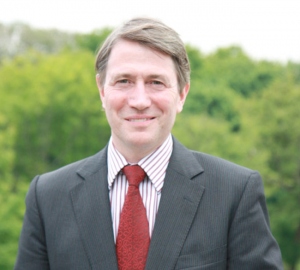
H.E Governor Damian Todd has laid put significant steps towards ensuring a sustainable Turks and Caicos public sector was taken with the launch of a Government voluntary severance scheme on Friday, 4 November 2011.
The scheme will help TCI Ministries reach the size that they need to be efficient and to provide a much improved public service.
It will also contribute to the achievement of a balanced budget in 2012-13 and so provide a major contribution to the achievement of the pre-election milestones of public sector reform and improved public financial management.
It is hoped that much of the required efficiency improvements will be reached through the voluntary scheme. Any remaining savings will be achieved via a subsequent compulsory scheme whose terms will be less favourable than the voluntary programme.
Although the scheme is open to all sectors of the Public Service, an application is no guarantee of acceptance. This is to ensure that essential skills are retained in Government and to ensure effective management of the scheme’s costs. Statutory Bodies are not included in the voluntary scheme at this time.
The voluntary scheme is based on similar programmes being run with UK Civil Servants. Its terms include:
-
Monthly paid staff (a) under 50 years of age, and (b) aged 50-54 years with post 1992 service only: One month’s pay for every year of service up to 21 years plus three months in lieu of notice plus up to 30 days accumulated untaken leave, subject to a maximum payment of two years salary.
-
Monthly paid staff aged 50-54 years of age with pre-1992 service: Early severance with pension payable from age 55 of which up to 25% of pension may be commuted and paid as a lump sum on the date of severance, plus a severance payment calculated at the lesser amount of:
-
-
the normal maximum severance of up to two years salary (one month’s pay for every year of service plus three months in lieu of notice) and up to 30 days accumulated annual leave: or
-
a payment equivalent to one month’s salary for each month the officer has remaining up to pension age (55) at the date of severance plus 3 month’s in lieu of notice and 30 days accumulated undertaken annual leave (with a maximum of 24 months)
-
-
Monthly paid staff aged 55-59 years of age with post 1992 service: 75% of TCIG pension entitlement, payable up to age 60, with NIB entitlement from that date. There is no severance or gratuity entitlement.
-
Monthly paid staff aged 55-59 with pre 1992 service: Current pension entitlement and option to take a lump sum (commuted pension gratuity for a reduced pension) if not already paid. No severance.
-
Persons aged 60 and over: released with no severance
-
Weekly paid staff aged up to 59: one week’s pay for each year of service plus four weeks pay in lieu of notice.
Individuals who apply for voluntary redundancy but who are not accepted will be protected from any compulsory scheme for 12 months.
Individuals interested in the scheme should apply for an individual assessment by completing and signing an Expression of Interest form which should be returned to the Office of Public Service Management (OPSM) (Voluntary Severance Section) by 4.00pm on Monday 14th November 2011
Those who then wish to proceed should sign and return their forecast notification to OPSM by 4.00pm Friday 9th December 2011. TCIG will make the final decision on who receives the Voluntary Severance Package based on the needs of the organization and cost. Those who are accepted will have their employment terminated from 31 January 2012. Some people may be asked to work beyond this date to minimise disruption with salaries still drawn and compensation payments not affected.
Any subsequent compulsory redundancy scheme will see the maximum payment set at the equivalent of 12 months’ salary for those under 55 years of age and 50% of the value of the voluntary offer for person within 2 years of the 55 age. Weekly paid staff will only receive 1 week’s notice instead of 4 weeks.
A support package for staff will be available and will include counseling, developing CV and job interview skills, and financial advice from local banks as to how to make their redundancy payments work best for them.
NIB LETTER CLEARS UP CONCERNS
In a release sent to RTC news that states: A number of statements have, in recent times, been made by certain person or persons with respect to various aspects of the operations of the NIB which have hitherto gone unaddressed. In light of the growing concerns as expressed to various members of the Board by stakeholders as a result of such statements, the Board of Directors of the NIB have decided to take the unusual step of issuing the following release in responses to some of those statements and allay some of the concerns expressed by the certain stakeholders to members of the Board.
ON THE ISSUE OF TRANSPARENCY
As stakeholders are aware, the National Insurance Board is a creature of statute. Its operations and dealings with stakeholders and the public are therefore governed by and is subject to the provisions of the National Insurance Ordinance. Within that context, the Board is committed to ensuring that adequate information regarding its operations are at all times available to stakeholders and the public in general and the NIB has consistently endeavored to ensure that all relevant and pertinent information is made available through its annual report that is normally available on the NIB’s website http://www.tcinib.tc, including the NIB’s Mission Statement, Annual Audited Accounts, Tri-Annual Actuarial Reviews and information on benefits as well as information on the most recent Pension Adjustments, etc. The NIB’s 2010/11 Audited Financial Statements have, as required by law, been sent to the Governor in his capacity as Minister of the NIB. Once the Governor has arranged for such audited accounts to be tabled before the Legislative Council, presumably now the Consultative Forum, as required under the relevant provisions of the National Insurance Ordinance, they will likewise be posted on the NIB’s website. The NIB’s 2010/11 Annual Report will likely be released in December, 2011 and will again likewise be posted on the NIB website. These documents give interested persons a broad range of information on the functioning of the organization and its operations.
INVESTMENTS
In response to independent professional advice advice and Consultation with the Governor’s Office the NIB has adopted a new Investment Policy Statement to govern its investment activities. The Investment Policy Statement was approved earlier this year by the Governor in his capacity as Minister, a copy of which is likewise available on the NIB website. As a result of the new Investment Policy Statement, the Board is, in consultation with its Investment Committee, in the process of rebalancing its investment portfolio, including its investment of funds held at domestic banking institutions. At this point, it should be noted that the National Insurance Board does not currently have any investments, or deposits with British Caribbean Bank, formerly Belize Bank, or in any of its other related firms. Moreover, the NIB has never held deposits with that bank totaling $30 and $60 million as alleged. The NIB does have funds at risk at the TCI Bank, but we are endeavoring to recover as much of that debt as possible. The NIB is confident it will recover its $5.5 million debenture and a portion of the monies originally provided as fixed deposits. Of course, the NIB’s $2 million in equity investments in the TCI Bank has been permanently lost, along with the equity provided by hundreds of other TC Islanders to the Bank.
NHIP FUNDING CLAIMS
Under the National Insurance Ordinance, the National Insurance Board is obligated to provide employment injury benefits to eligible recipients and it has done this for almost 20 years. In addition the NIB is obliged to reimburse the TCI Government for “actual medical expenses incurred for eligible costs to qualified recipients.” The onus is and has always been on the TCI Government to submit to the NIB, claims and receipts that substantiated the medical care expenditures arising out of employment injuries. Between 1992 and 2009 the NIB consistently made a $50,000/annum within its annual budget for this purpose, but no claims were ever received from Government.
In 2009, the Government submitted claims totaling $837,000 and discussions were undertaken between the NIB and the Ministry of Finance regarding these claims. In the end, the parties agreed that the NIB would transfer $836,734 to the Government in exchange for all parties confirming that this was the full and final amount owed to the Government for the period 1992-2009.
In 2009/10, the National Health Insurance Ordinance modified Section 49 of the National Insurance Ordinance, mandating that actuarially accessed compensatory transfers be made to the NHIB for medical services to employment injury beneficiaries. In February, 2011 the NIB paid the NHIB $612,000, being the amount assessed by the Actuary for that year, to cover the eligible injury claims for fiscal year 2010/2011. Currently the Board is awaiting the latest actuarial analysis to agree with the NHIB on the funds to be transferred to the health care system in 2011/12.
The NIB strongly disagree with the NHIB’s Actuary’s position that funds placed into the Employment Injury Fund in excess of the actual injury claims must be transferred to the NHIP. The National Insurance Fund is a single fund into which the monies are deposited into four categories to ensure that persons will receive the benefits to which the ordinance entitles them to receive. Today there is more money in all four categories than is immediately required, but as the fund matures over the years, these monies will be needed to ensure we provide the full range of benefits to all the eligible beneficiaries. The four categories in the National Insurance Fund are there to show that we are treating each area with high priority and were never designed as discrete funds whose monies cannot be shifted between uses. The National Insurance Boar is determined to protect the National Insurance Fund from unwarranted efforts to transfer funds to the health care system.
In one of the statements made by persons unknown concern was expressed over the statement contained in the Actuary’s report that the NIB has the potential for a $119 million shortfall in the fund by 2030 if it does not undertake a program to raise contributions, increase our investment return and reduce our operating costs. If no action is taken, such as situation could occur, but the NIB is in the process of addressing all three of these factors to ensure the fund is secure far into the future. Any effort by third parties to compromise those goals will obviously make it more difficult to meet that target and provide benefits to the people of TCI.
The potential losses from the TCI Bank is a big challenge and the current demands for NIB to reduce the Fund by a further $22 million to pay for matters unconnected with the core functions of the NIB will be detrimental to our beneficiaries. In 30 years these withdrawals would translate into a $40 million shortfall in our investment income or about 1/3 of the Actuary’s potential shortfall. The NIB Board and Management believes that the Government should solve its debt and health care issues through a different approach than simply taking the people’s pension funds and using them as a stop gap measure to fund the financial crisis.
By order of the Board of Directors
TURKS AND CAICOS NATIONAL INSURANCE BOARD
SUSTAINABLE HEALTH CARE PLANS REVEALED BY TCI GOVERNOR
Significant steps to ensure the future of the TCI health care system were taken in key decisions at the Advisory Council (AC) meeting in Grand Turk yesterday, Thursday 3 November 2011.
These recognised the challenge of how to make the health care system sustainable and affordable.
There are currently 11,000 dependants of the the National Health Insurance Plan (NHIP) supported by 18,000 paying contributors.
The decisions reached were informed by public feedback to the Health Care Funding Challenge consultation announced last month.
The Advisory Council accepted proposals to:
-
Increase NHIP contribution by 1% to 6% of earnings – split 50:50 between employers and employees. This figure was directly influenced by public feedback which was concerned about proposed rise to a 9% contribution. This will raise an additional $3.5m a year.
-
Establish a minimum payment of $50 per month for each contributor. Introduce a fee of $10 per dependent for up to three children. Together these proposals will raise a further $1.5m a year.
-
Abolish the co-pay charges for the primary care level while continuing to review this service.
-
Begin to shift resources to primary health care in the community by opening the Blue Hills Clinic in Providenciales
Measures to control costs and make the system fairer include:
-
Working with InterHealth Canada to reduce the number of overseas referrals, and making better use of Caribbean based providers. This could see all tertiary treatments outside of the region stopped, unless an exceptional circumstance.
-
Reducing inter-island travel for some basic diagnostic procedures, by improved scheduling and better use of technology and equipment.
-
Work permit holders and temporary residents will only be entitled to on-island primary and emergency care. They will be directly responsible for care or treatments beyond that provided locally.
-
Reviewing the contract with Interhealth Canada to jointly find ways to make the contract more flexible and to improve patient care.
-
Work more closely with the Pan American Health Organisation to procure drugs more cheaply.
Judith Campbell, Permanent Secretary, Ministry of Health and Human Services, said, “I believe that these decision will improve how we conduct health care business here in TCI, by improving delivery and making its future more sustainable.
“I would like to personally thank everyone who responded to our consultation about how we meet the challenges faced by our health care system and how we can make it better meet the needs of our population”.