
GOVERNOR PROVIDES IMPORTANT ADVISORY COUNCIL UPDATE
Significant steps towards the Interim Administration’s milestones were taken at the Advisory Council (AC) meeting in Grand Turk yesterday Thursday, 3 November 2011.
Speaking at a news conference in Providenciales TCI Governor Ric Rodd outlined how several key motions agreed by the AC will contribute to making the TCI a better governed, more accountable and financially stable territory.
The two most significant decisions reached were (more detailed single topic releases are included):
-
A wide ranging set of cost reductions and increased charges in order to close the current funding gap in the islands TCI health care system, as well as looking at new innovative ways of delivery services to Islanders.
-
The launch of a voluntary severance scheme which will contribute to making the TCI Civil Service sustainable, efficient and the right size for its population. It will also contribute to the 25% reduction in the cost of the public service.
In addition Governor Todd outlined other papers that were discussed and which will be subject to later announcements:
-
Responding to public feedback Governor Todd has agreed that only Turks and Caicos Islanders can initially apply for the 5 new Permanent Secretaries’ posts. Advertisements for these vital posts are due to appear shortly.
-
Further work to prepare for a full public consultation on making the pathway to achieving Islander status more transparent is currently under way.
-
Increases in work permit charges will soon be announced.
-
A significant inward investment deal is soon to be signed.
“The work of the Interim Administration, the institutions and the people of the Turks and Caicos is doing to achieve milestone is accelerating. Everyone has the same end in sight – achieving the milestones allows free and fair elections to take place, but more secure in the knowledge that the Islands are better managed, more efficient and sustainable as a result of all of our efforts,” said Governor Ric Todd.
“There was a number of items at this Advisory Council that are of tremendous interest to everyone who lives here and I believe that we have struck a responsible balance between making the necessary difficult decisions and understanding the needs of the Islands as it works to emerge from difficult times.”

Police investigates shooting incident
The Royal Turks and Caicos Islands Police, Criminal Investigation Department in Providenciales are investigating a shooting incident which occurred in Five Cays Providenciales on Wednesday night 2nd November 2011 at approximately 9:40 pm. A young man sustained a gunshot wound to his right leg. He was taken to the Cheshire Hall Medical Centre for medical attention and is still hospitalized. His injuries are considered non-life threatening
The Police are seeking the public’s assistance in obtaining any information as it relates to this incident. Contact can be made via the Police at 911, Crime Stoppers at 1-800-TIPS (8477), or through a web tip on www.crimestoppers.tc or as a friend of crime stoppers Turks and Caicos on Facebook.
Greeks agree coalition government without Papandreou
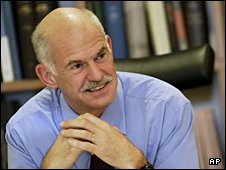 Greek leaders at crisis talks in Athens have agreed to form a new national unity government, the president's office says.
Beleaguered Prime Minister George Papandreou has agreed to stand down and his successor will be chosen during talks on Monday, a statement said.
The coalition is to lead the country until elections, which could be held on 19 February, the finance ministry said.
The announcement followed a week of turmoil over Greece's debt crisis.
Once the new leader is named, Mr Papoulias will invite parties to join the new government, according to the statement from the president's office.
The plan envisages elections once the government approves an EU bailout package.
Talks between Mr Papandreou and main opposition leader Antonis Samaras were hosted by President Karolos Papoulias on Sunday evening.
Mr Papandreou had been trying to build a national unity government to replace his Pasok party administration, but Mr Samaras, of the New Democracy party, had been refusing to negotiate unless his rival resigned first.
The two men also disagreed sharply on the timing of new elections, with Mr Papandreou seeking a delay of several months while Mr Samaras wanted them immediately.
There has been speculation that the new coalition could be led by current Finance Minister Evangelos Venizelos or by Lukas Papademos, a former deputy president of the European Central Bank.
A Greek government spokesman a new administration would be sworn in and a confidence vote held within a week if all went well.
"Today was a historic day for Greece," Ilias Mossialos said.
A spokesman for the New Democracy party said it was "absolutely satisfied" with the outcome of the talks.
"Our two targets, for Mr Papandreou to resign and for elections to be held, have been met," the New Democracy spokesman told AP news agency, speaking on condition of anonymity.
At a late-night meeting on Sunday, Mr Venizelos met opposition members and agreed that 19 February would be the most suitable date for elections, according to a finance ministry statements.
However few other details have emerged, such as how quickly the bailout deal might be approved.
Referendum plan
Mr Papandreou narrowly won a confidence vote on Friday, but had been under continuing pressure to resign amid chaos over the debt crisis.
The fresh bailout deal was agreed by the European Union last month, but Mr Papandreou faced the wrath of fellow EU leaders when he announced that he would put the deal to the people of Greece in a referendum.
The idea was dropped days later, but not without sparking a deeper financial crisis and triggering the political crisis which led to the confidence vote.
The EU says no more funds will be released to Greece until the new bailout deal has been approved.
It gives the government 130bn euros (£111bn; $178bn) and imposes a 50% write-off on private holders of Greek debts, in return for deeply unpopular austerity measures.
The country has come under huge international pressure to resolve its political crisis, in order to calm the markets.
The possibility of Greece leaving the euro has also been raised by EU leaders, if it fails to resolve its political and financial problems.
A meeting of EU finance ministers is taking place on Monday, which added to the pressure on Greece to find an early solution to the political deadlock.
News of the crisis talks involving President Papoulias emerged after an emergency cabinet meeting led by Mr Papandreou.
Both Mr Papandreou and Mr Samaras had held separate talks with the president earlier in the weekend.
Further Homs deaths as Arab League adds pressure
Security forces in Syria have killed at least 19 protesters during demonstrations against the government, rights groups say.
The latest deaths, which come at the start of the Muslim festival of Eid al-Adha, come a day after 27 people were killed in violence in Homs.
The Arab League is to meet again next weekend to discuss the crisis.
Earlier, it said a failure by the Syrian government to bring an end to the bloodshed would be catastrophic.
On Sunday, 16 civilians were killed by security forces while protesting in the city of Homs, 140 km (90 miles) north of the capital, Damascus, said the London-based Syrian Observatory for Human Rights.
Majd Amer, a local Homs activist quoted by the Associated Press news agency, said people performed morning prayers to the sound of explosions that sometimes shook the mosques.
"It's been like this for days now," he said of the military assault on the city.
Most of the deaths occurred in the Baba Amr neighbourhood of Homs, where clashes have raged for days, the Observatory for Human Rights said.
The city has become a focus of anti-Assad unrest in recent months - more than 100 people have been killed there in the past week.
Security forces also shot dead two civilians in the city of Hama, which lies further to the north, and another in Idlib province, near the border with Turkey, the observatory said.
The group also said troops had opened fire on a protest in Talbi, near Homs, and that dozens had been injured in the Idlib town of Kafruma.
The authorities say security forces are fighting militant gangs who have been killing civilians in Homs.
On Wednesday the Arab League announced a plan for Syria calling for an end to violence, the withdrawal of the army from urban areas, and talks between the regime and opposition.
The government of President Bashar al-Assad has said it will pull its forces off the streets and begin dialogue with the opposition, but despite this, the violence has continued.
Emergency meeting
On Saturday Arab League Secretary General Nabil al-Arabi called on the government to implement the plan, saying a failure to do so would have "catastrophic consequences for the situation in Syria and the region".
Following Sunday's killings, the League announced it would hold an emergency meeting on 12 November to discuss "the continuation of violence and because the Syrian government did not implement its commitments in the Arab plan".
French Foreign Minister Alain Juppe said the latest deaths had made it clear there was "nothing more to expect from this regime and that despite its occasional announcements it will not commit to a programme of reforms".
He said there had been a "failure" at the UN Security Council to take action against Syria, after a motion to introduce measures against Syria, including possible sanctions, was vetoed last month.
The United Nations estimates that at least 3,000 people have been killed since the uprising began in March.
The government says Islamist militants and foreign-backed armed gangs have killed 1,100 members of the security forces.
Suicide Bomber Kills 7 in Northern Afghanistan
Two suicide bombers targeted worshippers as they were leaving a mosque in northern Afghanistan Sunday, with one blowing himself up and killing seven people, including a police officer. At least 18 people were wounded in the blast.
Authorities said the second would-be bomber was captured before he could set off his explosives.
The attack took place on the outskirts of Baghlan city, the capital of Baghlan province, following prayers marking the start of the Eid al-Adha Muslim holiday.
There was no immediate claim of responsibility, but the Taliban routinely targets Afghan officials and security forces, as well as international troops. On Friday, the Taliban issued a statement urging its fighters to avoid killing civilians.
Commander of NATO-led coalition forces, General John Allen, joined Afghan President Hamid Karzai in condemning the bombing. Allen said “it is obvious by these acts that the insurgents do not respect the holy religion of Islam or the people of Afghanistan.” He called the attack “despicable.”
Mr. Karzai later met with Australian Prime Minister Julia Gillard who made an unannounced stop in Afghanistan on her way back from the G20 summit meeting in the French resort town of Cannes.
Ms. Gillard's trip came after a rogue Afghan soldier shot dead three and wounded seven Australian soldiers during a parade late last month.
The attack brought Australia's death toll from the Afghan conflict to 32.
Separately, NATO said two of its service members were killed in two separate insurgent attacks. One died Saturday in the south, while the other was killed Sunday in the country's west.
Protesters Ring the White House Opposing Pipeline Plans
Protesters say they have formed a human chain around the White House to oppose plans for an oil pipeline they say would be bad for the environment.
Thousands of protesters gathered Sunday afternoon and linked hands in a big circle around the presidential residence and buildings on either side of it. They called on President Barack Obama, who was away from the White House at the time, to scrap plans for the pipeline which would carry oil from tar sands in Canada to oil fields in Texas.
The State Department is currently reviewing the pipeline proposal, but Mr. Obama has indicated he will make the final decision.
White House spokesman Clark Stevens said Sunday the president recognizes there are “a number of critical issues” to consider, including climate change, public health and natural resources. But he said the State Department would also consider U.S. energy security and economic issues.
A spokesman for the company behind the pipeline, TransCanada, argued the project would create thousands of jobs and reduce U.S. reliance on overseas oil.
4 Dead 57 Missing in China Mine Explosion
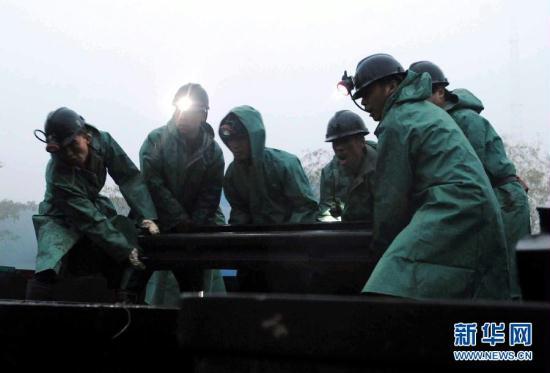 Chinese officials said Friday that four people have been confirmed dead and at least 57 are missing after a rock burst in a coal mine in central China's Henan Province.
Officials say the accident happened Thursday evening in the Qianqiu Coal Mine in the city of Sanmenxia.
A total of 75 miners were working in the shaft at the time of the accident. Fourteen miners managed to escape.
Officials say rescue efforts are underway and there is a chance that some of the missing miners could have survived.
A rock burst occurs when rock under high pressure suddenly releases its energy in a violent explosion.
Greek Opposition Leader Calls for Early Elections
A Greek opposition leader has called on Prime Minister George Papandreou to resign and repeated a call for early elections, ahead of a confidence vote expected in parliament on Friday.
Antonis Samaras made the demand Thursday during a parliamentary meeting to vote on whether to accept a European Union bailout package that contains deeply unpopular spending cuts.
Mr. Papandreou said Thursday that calling early elections would be "catastrophic." The prime minister also said Greece must implement the EU bailout plan.
Those developments came after Mr. Papandreou told his Cabinet earlier in the day that he will drop plans for a nationwide referendum on the plan.
Officials say Mr. Papandreou dropped his call for the referendum after the opposition reversed its position and said it would support the deal. The prime minister said if he had the opposition's backing on the deal, there was no need to hold a referendum.
European leaders have warned Greece that if it does not follow the terms of the bailout package, it will get no more EU funding. Mr. Papandreou has said that Greece's future in the eurozone is at stake.
Earlier Thursday, opposition leader Samaras called for the creation of a transition government to prepare for early elections, rather than allow Mr. Papandreou to hold the referendum. Lawmakers in Mr. Papandreou's own party had threatened to abandon his government over the controversial vote.
And Greek Finance Minister Evangelos Venizelos broke ranks Thursday with Mr. Papandreou over the referendum proposal, saying Greece's status in the eurozone should not be put to a popular vote.
On the street, some Greek citizens say they want the euro, but they fear future hardships.
"I believe we must stay in the euro even though the European Union is not a saint. It followed a policy that was in the interest of the large political powers and that is why Greece is having problems, but I believe it provides a support for the country," said a student.
"I prefer we stay in the euro because we will be destroyed otherwise. They are trying to destroy us but I hope they don't succeed. I think they [the government] should go home," said another person.
"There is no other solution. Is there any other solution than the euro? When we will be paying for gas in drachmas what will we do? They [the government] have no idea what they are doing unfortunately," said another.
"Greece must stay in the euro, but Papandreou must resign," said a pensioner.
"Since we entered the European Union, I see that instead of having a better life, things are getting worse and I don't know where we will end up. There are many vested interests outside and inside Greece, and I don't know how this will end. I don't know from now on what is best for us," said another person.
Some information for this report was provided by AP, AFP and Reuters.
Palestinians Face Setback in U.N. Membership Bid
France is expected to explain its decision on Friday to abstain from any vote on Palestinian membership in the United Nations.
The move comes a day after U.N. envoys announced the planned abstentions of France, Britain and Colombia.
Palestinians need at least nine votes in the 15-member U.N. Security Council for their membership resolution to succeed. The United States has pledged to veto the measure if it is brought to a vote.
Palestinian President Mahmoud Abbas submitted the application for U.N. membership in September in a bid to gain Palestinian statehood recognition. The U.S. has been urging Palestinians to return to direct peace talks with Israel.
Tensions between Israel and the Palestinians heightened on Monday after the U.N. cultural agency, UNESCO, approved a Palestinian request for full membership.
On Thursday, Israeli Prime Minister Benjamin Netanyahu ordered his government to freeze the country's $2 million annual funding of UNESCO. The U.S. said on Monday that it would stop funding UNESCO.
Also this week, the Israeli Cabinet announced it would expedite construction of Jewish settlements in East Jerusalem and the West Bank and suspend the transfer of tax revenue it collects for the Palestinian Authority.
A senior Israeli official said the moves were a punitive response to what he called recent unilateral actions by the Palestinians.
The Palestinians' U.N. observer urged the Security Council to take action against Israel for accelerating settlement building and what he said was “illegally hijacking” Palestinian tax revenue.
Direct peace talks between Israel and the Palestinians broke down more than one year ago after an Israeli moratorium on West Bank settlement construction expired. Palestinians oppose building on land they want as part of a future state.
G20 seeks solution to debt crisis
The G20 leaders are set to continue their talks on Friday as they seek to find a sustainable solution to the eurozone debt crisis.
They are expected to discuss ways to increase the firepower of the International Monetary Fund (IMF).
The hope is that increased resources will help the IMF to support struggling eurozone economies, such as Greece.
There have also been calls for a "financial firewall" to protect vulnerable economies such as Italy.
The US President, Barack Obama, said on Thursday that resolving the eurozone debt crisis was "the most important aspect of our task over the next two days".
Greek threat
The second day of the G20 meeting will also see the Greek prime minister George Papandreou face a confidence vote in parliament.
The opposition as well as several government MPs have called for Mr Papandreou to quit after his decision on Monday to hold a national vote sparked a turmoil on financial markets and upset his German and French counterparts.
Some members from his own party, including the finance minister said that they were against the referendum.
On Thursday, the prime minister said he would scrap the move if the conservative opposition party voted to pass the bailout package in parliament.
However, there are fears that he may lose the confidence vote and Greece may have to hold fresh elections, a move which may further delay the implementation of a Greek bailout package.
Eurozone leaders have already withheld 8bn euros ($11bn; £7bn) of fresh rescue loans to Greece and there are fears that further delays may see the government run out of cash and default on its payments.
Mixed messages
In other developments on the first day of the two-day G20 summit in Cannes:
- President Obama warned that the eurozone financial crisis threatened to engulf the world
- Italy is to commit to further cuts to its debts and its annual borrowing rate according to a draft communique
- China indicated that it would not consider providing money to the eurozone bailout fund until the situation in Greece has been resolved
- Chinese President Hu Jintao also played down the chance of allowing the value of the yuan to rise, contradicting more optimistic remarks by the US
- India and Canada expressed their opposition to the idea of a tax on financial transactions, something strongly backed by eurozone governments
- the G20 agreed to look at the credit default swaps markets, which has been blamed by some European leaders for exacerbating the eurozone debt crisis
Meanwhile UK Prime Minister David Cameron has called for "political will" to solve the current economic woes.
In a report to the summit, Mr Cameron said willingness to act in a united way was the way forward.
"We have the machinery that we need already," he said.
"What we need above all is the most precious and intangible commodity - political will.
"Political will to act together, and to build the consensus we need to confront squarely the problems before us so that we can return our economies to health and vigour."
'Explosion of Europe'
Mr Cameron's comments came amid increasing concerns about the breakup of the eurozone.
This after German Chancellor Angela Merkel said that the Greek referendum on the bailout package was essentially a vote on whether it wanted to be a part of the group.
She said the stability of the eurozone was more important than Greece's continued membership of it.
There are fears that if Greece decides to leave the eurozone, other economies may follow, a move that is likely to have huge implications for the region.
French President, Nicolas Sarkozy warned that "we cannot accept the explosion of the euro, which would be the explosion of Europe".
This is the first time that the French and German leaders, and Mr Papandreou himself, have openly talked for the first time of the possibility of Greece leaving the euro if it is unable to ratify the bailout package.
The uncertainty created by the developments in Greece has fanned fears of its impact on eurozone's other vulnerable economies such as Italy and Spain.
The biggest fears have been about Italy, whose debt levels are substantially higher than that of Greece.
It has already resulted in a surge in Italy's borrowing costs. It is now having to pay 5.1% on one-year loans, the highest rate since joining the euro compared with the 0.3% interest paid by Germany.
The Italian government has also been facing increasing pressure from the eurozone leaders to implement austerity measures and reforms in a bid to reduce its debt levels.
The fears were fanned further after six former allies of Silvio Berlusconi wrote an open letter on Thursday, urging him to quit after his government failed to agree urgent economic reforms.
The Italian cabinet agreed a limited package of budget reforms at an emergency meeting on Wednesday evening.
But they failed to agree to issue a decree implementing the changes, meaning that they must now go to a confidence vote in parliament - one that Mr Berlusconi may be at risk of losing.
"Italy holds the key to the eurozone debt crisis," said Luigi Speranza of BNP Paribas.
"Developments in Italy are a crucial test for the credibility of the anti-crisis framework set by the European Union."