
Europa League final: Porto 1-0 Braga
Falcao scored the only goal of a scrappy Europa League final to give Porto victory over their Portuguese neighbours Braga in Dublin.
Custodio wasted an early Braga chance when he smashed a shot wide from the edge of the penalty area but they soon settled into a defence-minded strategy.
Braga held out until 44 minutes when Fredy Guarin crossed for Falcao to plant a header in the top corner.
Mossoro almost equalised when through one-on-one but Helton saved well.
Porto's victory continues their superb season, in which they have won their league title and remain on course for a Treble - they face Guimaraes in the Portuguese Cup on Sunday.
And coach Andre Villas-Boas becomes the youngest man - at 33 - to win a Uefa club competition.
But Porto, whose dominance in their domestic league saw them go unbeaten and finish 38 points ahead of Braga, were far from their best in Dublin.
With two sides from the same nation competing for the trophy, it was always likely to be a cagey affair.
As so it proved as underdogs Braga opted to keep things tight and flooded the midfield and defence.
The ploy worked well for them for 44 minutes - and they even had a decent chance very early on for Custodio - but it made for a tedious game to watch.
However, Braga were undone by carelessness in possession and then a lapse in marking - Alberto Rodriguez gave the ball away and the defence failed to pick up Falcao, who finished with style.
Until that point Falcao had cut an anonymous figure, while his strike partner Hulk had been on the end of a number of very strong challenges by Braga.
Only 38 seconds after the interval, Braga should have hauled themselves level when substitute Mossoro was clean through on goal but he hit his shot at the legs of keeper Helton.
Mossoro and fellow substitutes Kaka and Albert Meyong did their best to rouse Braga and their side did respond to exert a degree of pressure on Porto for the first time.
But the number of chances were outweighed by the number of bookings - eight in total - as the game continued to be feisty rather than fluent.
Meyong did get a sight on goal but scuffed his shot from the edge of the box and the ball dribbled out of play.
Porto were able to comfortably defend and even looked the more threatening when they countered - Hulk sent a shot over and Fernando Belluschi went closer with a drive from distance.
In the end, one moment of clinical finishing proved enough to give Porto the edge in a game that failed to live up to hopes and expectations.
Porto coach Andre Villas Boas: "Without a doubt this is a great feat. We have one trophy left for a memorable season.
"This has a huge emotional impact for us. Round after round, we kept believing more. Porto becomes an even more special club, even more unique.
"It adds another trophy, which is important and builds its future."
Braga coach Domingos Paciencia: "I am very proud, I lived unique moments here. These players also did, it's a beautiful story.
"May Braga continue to grow, we dignified Portuguese football."

Mills backs Bolt
Glen Mills, coach of world's fastest man Usain Bolt, has backed up statements made by his star athlete who dismissed recent concerns that back problems have continuously hampered his preparations this season.
Bolt suffers from scoliosis, an abnormal curvature of the spine, which has caused the world's fastest man to constantly undergo treatment from German specialist Hans Muller-Wohlfahrt several times per year.
worrisome
Yet to open his 2011 season and having already gone to see the physician twice this year, speculation has been rife that the condition is proving to be more worrisome than usual. However, his coach insisted that none of the situations were unusual.
"Going overseas to Wohlfahrt is a routine thing, he has five visits every year regardless of what condition he is in, that's standard. He goes five times a year and he has only gone two, so he is doing well," Mills said.
"He is scheduled to start in Rome next week. We were a bit behind in our training schedule but it's a long season. This year is the latest that the World Championship will be held so we have to strategise our preparations. If you notice most of his serious major competitors have just started running, so it's not anything out of the ordinary to start at a later point in the season."
Bolt is expected to make his long-awaited season debut when he faces compatriot Asafa Powell at the Golden Gala meet in Rome over 100 metres next week. In his 100m opener last year, Bolt clocked 9.86 seconds in South Korea after registering an impressive 19.56 over 200m earlier in the season.
Mills, has however, revealed very little about what kind of shape he believed the sprinter was in, time-wise, this time around. The coach at the same time rubbished rumours that the sprinter had clocked 24-plus over 250 metres at a time trial last week.
"That's a false report. I do not predict the times, I too am interested to see what he can do in his first race," he said.
Beach soccer to find home in CFU
Fifa Development Officer, Daryll Warner, believes that beach soccer may well find a home in the Caribbean region. While addressing a participants at a the closing ceremony of a Beach Soccer Course in the Cayman Islands yesterday Warner stated: “The potential of beach soccer in Caribbean Region is immense, our coastlines are pristine and known worldwide while this sport is still in its infancy we have the ability to tap into something great. The possibilities are endless.” Commenting specifically on the situation in the Cayman Islands, Warner stated: “With coastline that features some of the world’s best beaches and a population of roughly 45,436 that includes more than 4,000 footballers according to the last Fifa count, Cayman Islands certainly has huge potential when it comes to beach soccer.”
Until recently, however, the football authorities on this island nation were focusing their efforts almost entirely on the well-established grass version of the game. Beach soccer was just something for the weekend, a casual kickabout that people could enjoy as an alternative to sunbathing or swimming.
Of course, beach soccer thrives on this fun, laid-back image and will continue to be played on the world’s beachfronts in exactly this kind of informal manner. But there is also much more to the sport than that. To take their game to the next level, players need an understanding of the Laws of the Game. They need referees who can apply those rules, coaches who can work on their skills and tactics, and national or regional structures to make sure these elements are available.
“Considering that for most participants beach soccer was totally new, I was impressed by how quickly they got familiar with the Beach Soccer Laws of the Game and improved their level of refereeing during the festival,” according to Fifa beach soccer refereeing instructor Raveino Massimo of Tahiti. Though the game is still in its infancy as an internationally organised sport, beach soccer World Cups have been held regularly since 1995, coming under the Fifa umbrella with the staging of the first official Fifa Beach Soccer World Cup in Rio de Janeiro in 2005.
Japan back in recession as earthquake cuts consumption
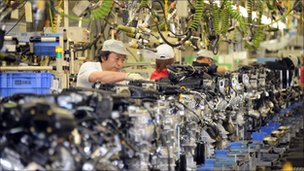 Japan, the world's third largest economy, contracted sharply in the first three months of the year, after a tsunami and earthquake caused devastation in March.
Gross domestic product (GDP) shrank 0.9% in the first quarter, the Cabinet office said. That meant the annualised rate of contraction is 3.7%.
Japan is now in recession, after two consecutive quarters of decline.
Analysts say consumption and exports were worst hit.
The contraction was bigger than expected with most forecasts of the annualised rate at around 2%.
"Japan's economy is expected to remain weak for the time being," said Japanese Economics Minister Kaoru Yosano on Thursday.
However, Mr Yosano said that supply constraints are easing and reconstruction demand will likely spur growth.
"The economy has the strength to bounce back," Mr Yosano said.
Pessimistic consumers
Naomi Fink of Japan strategies says the most worrying part of today's data was the decline in private consumotion of 0.6%, as people cut their spending after the quake.
Private consumption accounts for almost 60% of the Japanese economy.
"It was already soft in the final quarter of 2010," said Naomi Fink, Japan Strategist at Jefferies.
The earthquake, however, has further dampened sentiment.
The consumer confidence index fell to 33.1 in April, according to the Cabinet Office.
A reading below 50 suggests consumer pessimism.
"Judging by the drop in retail sales and household expenditures over March, consumption should be one of the greater contributors to negative growth in the first quarter," said Ms Fink.
Damaged supply chains
The second biggest component of the world's third largest economy is trade.
Exports made up 13.5% and imports 12.7% of GDP in 2009.
The massive quake and tsunami devastated exports, while the costs of imports rose due to high commodity prices.
Japan's trade surplus fell by 34.3% in March compared with the same month a year ago.
"One issue on the export side is the ongoing struggle to restore damaged production lines and supply chains," said Ms Fink of Jefferies.
"On the import side, the increase in demand for fossil fuels, to offset the drop in supply of nuclear energy, is unlikely to fade anytime soon," she added.
Reconstruction demand
Once rebuilding gathers momentum, however, it should have a positive impact on the economy.
But that is only likely to happen towards the end of this year.
"I do not expect positive growth in the second quarter," said Ms Fink.
The country's central bank begins its two-day meeting on Thursday to discuss its monetary policy.
"Japan's economic strength is gradually declining," Bank of Japan (BOJ) Governor Masaaki Shirakawa told a parliamentary committee meeting on Tuesday.
Analysts say this signals that the central bank will stick to its ultra-loose monetary policy.
"The BOJ is likely to fine tune its existing policies," said Ms Fink.
The bank has pumped billions of dollar into the financial system to stabilise the economy since the massive earthquake.
The BOJ is also expected to keep the rates unchanged at the lowest level in a range of 0.0% to 0.1%, to help stimulate the economy.
Greece warned over economic reforms by IMF
The man leading the IMF mission to Greece has warned that the country's plans for reducing its budget deficit will fall short without further reform.
Greece must cut its budget deficit to 7.6% of GDP this year to meet the terms of its EU and IMF bail-out.
Poul Thomsen told a conference in Athens that it would struggle to get the deficit below 10% at the moment.
Also on Wednesday, Greece appointed banks to help with its privatisation programme.
The government is considering selling some of the state gaming monopoly OPAP and the racetrack operator ODIE and establishing a new company to run state lotteries.
Greece has a target to raise 50bn euros ($71bn; £44bn) through the sale of state assets.
"We will frontload this process by announcing the reduction or elimination of the stake which the state owns in listed companies in telecoms, ports, water management, as well as electricity and gaming," said Greek Prime Minister George Papandreou
The EU and IMF are waiting for Greece to give further details of its plans before paying the next tranche of cash.
Mr Thomsen said: "The programme will not remain on track without a determined reinvigoration of structural reforms in the coming months.
"Unless we see this invigoration, I think the programme will run off track."
'Recipe for catastrophe'
There has been much response to Tuesday's comments from the head of the eurozone finance ministers Jean-Claude Juncker, when he said that a "soft restructuring" of Greece's debts was a possibility.
The European Central Bank's chief economist Juergen Stark said restructuring the debt would be a "recipe for catastrophe".
He blamed "vested interests" in the UK and the US for fuelling pressure on Greek financial markets.
Lorenzo Bini Smaghi, a member of the board of the ECB, also rejected the soft restructuring idea, saying it would bring the Greek economy "to its knees" and be bad for the whole eurozone.
Greece is receiving a package of bail-out loans worth about 110bn euros ($156bn; £96bn) as it struggles to cope with its debts.
US Stocks Advance
U.S. stock indexes advanced in Wednesday's trading. The Dow Jones Industrial Average rose seven-tenths of a percent to close at 12,560. The S&P 500 index gained nine-tenths of a percent to end at 1,341 while the NASDAQ gained 1.1 percent to finish at 2,815.
European stock prices closed higher. London's Financial Times index ended up 1.1 percent to finish at 5,923. The CAC-40 in Paris advanced nine-tenths of a percent to close at 3,978. The DAX index in Frankfurt gained seven-tenths of a percent to end at 7,304.
In Asia, Tokyo's Nikkei index gained one percent to finish at 9,662. Hong Kong's Hang Seng index was up half a percent to finish the day's trading at 23,011.
The price of gold rose nearly $7 to trade at $1,493.45 an ounce.
The dollar is up against the yen and down against the euro.
ECCU accounting professionals increase capacity in financial reporting standards
Over 50 accounting professionals from the Eastern Caribbean Currency Union (ECCU) member countries are engaged in a train the trainers workshop on the international financial reporting standards (IFRS) at the ECCB headquarters in St Kitts and Nevis.
The workshop, which opened on Monday, seeks to develop the capacity of regional financial reporting trainers to provide training in the use of IFRS for small and medium size enterprises (SMEs). The workshop is also designed to provide a forum for interaction among trainers, the sharing of experiences and the discussion of common issues in relation to the application of IFRS in SMEs.
The Institute of Chartered Accountants of the Eastern Caribbean (ICAEC), the IFRS Foundation and the Eastern Caribbean Central Bank (ECCB), are coordinating the workshop, which is part of a World Bank sponsored project.
The IFRS are a set of accounting standards developed by the International Accounting Standards Board (IASB). They are being adopted globally as the standard for the preparation of public company financial statements. Three members of the IASB are conducting the sessions, which focus on the standards, interpretations, framework and requirements of the IFRS.
Obama to Deliver Major Speech on Changes in Mideast, N. Africa
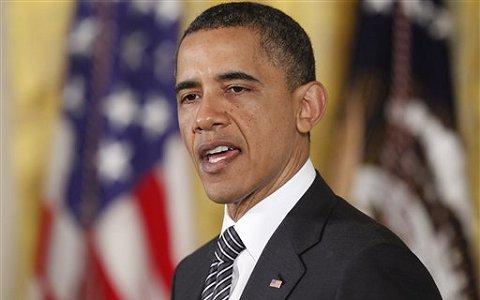 President Barack Obama delivers a major address Thursday about historic changes in the Middle East and North Africa, and their impact on U.S. policy toward the region. The address comes as the U.S. stepped up pressure on Syria's government in response to its crackdown on protesters, and urged faster movement toward political transition in Yemen.
The speech will be broad in scope, as Mr. Obama focuses on the peaceful democratic movements for change that have swept the region, discusses implications for U.S. policy, and offers what administration officials call some concrete policy proposals.
He will give his assessment of the impact of popular uprisings that have led to political changes in Egypt and Tunisia, and which continue in places like Syria, Libya and Yemen.
Senior administration officials say Mr. Obama will speak of a moment of opportunity, after a decade of great tensions and divisions, in which people of the region and U.S. policy can begin to turn the page toward a more positive and hopeful future.
The stalemated Israel-Palestinian peace process will be an important element. However, Mr. Obama is expected to frame it as part of a wider picture and say that leaders on both sides of that conflict should seize an opportunity for peace.
Speaking to reporters this week, White House Press Secretary Jay Carney said that where Mideast peace efforts are concerned, Mr. Obama will not say that this is a "now or never" moment, but will make the case that change generally must be embraced by all in the region.
"While change can be unsettling, it can even be scary because we don't always know where it is headed, it is something in this case to be embraced, because the opportunity is there to help shape a better future for the region and for the world," Carney said.
President Obama's address, to be delivered at the State Department, comes as the U.S. and other countries step up pressure on Syrian President Bashar al-Assad in response to his government's bloody crackdown against protesters.
Mr. Obama has signed an executive order freezing assets of Mr. Assad and six other Syrian officials in American financial institutions. Similar sanctions were imposed on Libyan leader Colonel Moammar Gadhafi as a means of pressuring him to give up power.
Not known is whether President Obama will specifically call on the Syrian leader to step down. But on the eve of the speech, the White House pointed reporters to remarks by a senior administration official discussing new sanctions targeting Mr. Assad. "President Assad has a clear choice: it's either lead this transition to democracy, or to leave," the official said.
On the eve of the address, the U.S stepped up pressure on Yemen's President Ali Abdullah Saleh, who was urged by Mr. Obama's counter terrorism advisor, John Brennan to move forward immediately with political transition.
Senior administration officials also outlined another key aspect of President Obama's speech, involving a series of initiatives focused initially on Egypt and Tunisia, to support economic modernization, reform, and stability.
President Obama is expected to outline a combination of debt relief and investment steps. Officials say these would amount initially to about $1 billion with an additional $1 billion in loan guarentees, along with additional financing from multilateral development banks.
As he speaks about the potential of the Middle East and North Africa, President Obama is also expected to draw a contrast between the violent ideology of al-Qaida, and democratic aspirations of peaceful protesters.
Speaking about the U.S. killing of Osama bin-Laden recently, Mr. Obama's national security advisor Tom Donilon said al-Qaida's faces a real challenge from the popular uprising known as the Arab Spring.
"The Arab Spring presents al-Qaida with a potent ideological challenge. For its entire existence, al-Qaida's message has been that violence is the only path forward. It has never had an affirmative program, which speaks to the aspirations of people in the Middle East, and it could not have been further removed from or relevant to those who came to Tahrir Square this past January," Donilon said.
The day after President Obama's address, he welcomes Israeli Prime Minister Benjamin Netanyahu back to the White House to discuss ways to end the deadlock in Palestinian-Israel peace efforts.
Israel and Palestinians continue to accuse each other of responsibility for stalemate, caused among other things by Israel's settlement policy in the occupied West Bank, and exacerbated by the recent political unity pact between the Palestinian Authority, and Hamas.
White House officials have sought to downplay descriptions of Mr. Obama's address as being merely an update of his 2009 speech in Cairo delivered about six months into his presidency in which Mr. Obama called for a "new beginning" between the United States and Muslims around the world.
White House officials say Thursday's address, amid the Arab Spring, will be Mr. Obama's effort to explain to the region and the world what U.S. values and principles are and how these will be applied in supporting the democratic aspirations of the people in the region.
Al-Qaida Releases Posthumous bin Laden Audio
Al-Qaida has released an audio recording by Osama bin Laden made just days before his death.
A U.S.-based monitoring service, SITE, said Wednesday that in the audio, the al-Qaida former leader praises revolutions sweeping the Middle East and North Africa and expresses joy at the victory of uprisings in Egypt and Tunisia.
In the tape, bin Laden addresses the revolutions and offers advice and guidance.
U.S. special forces killed bin Laden on May 2 in a raid on his compound in northern Pakistani garrison city of Abbottabad.
Strauss-Kahn arrest: IMF boss faces new bail hearing
International Monetary Fund (IMF) head Dominique Strauss-Kahn will make a new plea for bail at a court hearing on Thursday morning, his lawyer says.
Mr Strauss-Kahn, 62, faces a number of charges in the alleged sexual assault of a hotel maid in New York and was denied bail on Monday.
Mr Strauss-Kahn, on suicide watch at New York's infamous Rikers Island prison, denies all the charges.
The maid, 32, has said she is "scared" but will testify against him.
Mr Strauss-Kahn's lawyer, Benjamin Brafman, said the new bail hearing would be in Manhattan on Thursday morning.
The IMF chief faces charges of committing a criminal sexual act, attempted rape, sexual abuse, unlawful imprisonment and forcible touching.
On Monday a judge in New York denied Mr Strauss-Kahn bail - despite the offer of a $1m (£618,000) guarantee - saying there was a risk the IMF chief would flee the country. France and the US have no extradition agreement.
The BBC's Laura Trevelyan in New York says the defence will offer a new package that they hope will convince the judge that Mr Strauss-Kahn will not try to flee while he prepares his defence.
That could include Mr Strauss-Kahn offering to wear an electronic ankle tag, surrendering his passport and living under very restrictive conditions, our correspondent says.
'Scared and incredulous'
Earlier on Wednesday the maid's lawyer, Jeffrey Shapiro, said that his client feared for herself and her daughter when she discovered Mr Strauss-Kahn's identity a day after the incident on 14 May.
He said she had only become aware of Mr Strauss-Kahn's identity "a day later when a friend called her to tell her, 'do you have any idea who this man is who did this to you?'".
Mr Shapiro said his client was "scared and incredulous".
"When she found out this encounter was with a man of great power and wealth she feared not only for herself but more importantly for her daughter."
The woman had now been reunited with her 15-year-old daughter in a "safe place", he added.
Mr Shapiro said she had tried to return to her home - a sub-let flat in the Bronx - but had found about 30 people waiting outside.
He said: "She has been in a whirlwind since this has taken place... She has not had a moment of peace, has not been able to return home or seek help.
"She doesn't know what her future will bring."
Carpet examined
Mr Strauss-Kahn's lawyer, Benjamin Brafman, said on Monday that the defence believes the forensic evidence "will not be consistent with a forcible encounter".
However, Mr Shapiro said there was "nothing consensual about what took place in that hotel room" in New York.
Police have removed a piece of carpet from the Sofitel hotel, in search of evidence to support the maid's allegation she was forced into an act of oral sex.
Mr Shapiro told NBC television that his client was expected to testify before a grand jury later on Wednesday.
The maid, from the West African nation of Guinea, told police that when she entered the hotel room, Mr Strauss-Kahn came out of the bathroom naked, chased her down and sexually assaulted her before she broke free and fled.
Mr Strauss-Kahn, one of France's most high-profile politicians, has been seen as a front-runner in next year's presidential elections. His arrest has shocked France.
His wife, former French TV interviewer Anne Sinclair, is thought to be visiting him in the next two days.
Public opinion in France appears still to be backing Mr Strauss-Kahn, with polls suggesting many people believe he was the victim of a conspiracy - an accusation strongly denied by the accuser's lawyer, Mr Shapiro.