
Lil Wayne’s European Tour Not Cancelled, Says Management
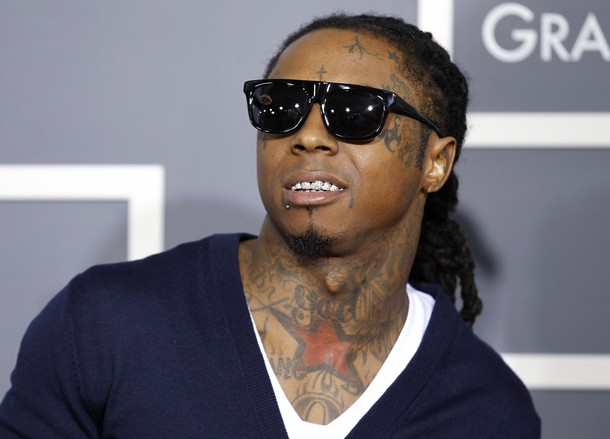 Reports that Lil Wayne cancelled European tour dates because his U.K. visa application was denied are not true, the rap star’s management tells Billboard.com — because he never even filed a visa.
“No visa was ever filed, nor were there any tour dates announced, or tickets sold,” Wayne’s management says in a statement. “Lil Wayne is currently headlining his I Am Still Music Tour across the US and Canada with plans to extend the tour through North America this summer. We hope to bring the I Am Still Music Tour to the UK in the later half of the year.”
Reports of a European tour cancellation were sparked by U.K. newspaper the Guardian, which reported that Wayne had applied for a U.K. visa and was denied due to criminal history.
Wayne’s North American arena tour wraps with two dates in Canada and a May 1 headlining gig at Bamboozle fest in East Rutherford, N.J. The rapper will headline the Bonnaroo festival in Nashville, Tenn. with Eminem in June.

Ice Cube Directing Bow Wow In New TV Series
Rapper Bow Wow is bringing his acting talents to the small screen, via a new partnership with TV/movie director, Ice Cube.
Bow Wow, who stars in Tyler Perry's latest movie "Madea's Big Happy Family," has also had major roles in box office hits such as "Like Mike," "Roll Bounce," and "Fast and Furious: Tokyo Drift."
The rapper, who also starred in two Ice Cube produced flicks ("All About the Benjamins" and "Lottery Ticket") is re-teaming with the hit director on an upcoming, untitled sitcom.
Bow Wow told AllHipHop.com that longtime mentor/Atlanta mogul Jermaine Dupri will create the score for the series.
"I just spoke with JD yesterday and I got him doing the score and he is actually about to do the music for the TV show sitcom that I am doing with Ice Cube," Bow Wow told AllHipHop.com.
"I partnered with Ice Cube and he is producing my sitcom," the rapper continued. "I told JD when Will [Smith] had his own show ["The Fresh Prince of Bel-Air"], Quincy Jones did all the music so it’s only right that he does mine. So I got him doing all the scores to the TV show. I speak to JD daily.
The untitled sitcom is still in the early stages, so while details were scant, Bow Wow said the deal had just been signed and writers were currently being sought for the television show.
"Once we get that we will have a name and we will definitely be filming this year, you’ll be hearing a lot about that," Bow Wow told AllHipHop.com.
Check out Bow Wow in Madea's Big Happy Family, which hits movie theaters on April 22nd.
Kimberly Elise Starring in African Film
Here’s an update for all you Kimberly Elise fans. The actress is starring in a Nollywood production called “Ties That Bind.”
If you’re thinking we somehow managed to spell Hollywood with an N, you’re wrong. Nollywood is the nick name for the Nigerian/African film industry.
Shadowandact.com is reporting that “Ties That Bind,” which is currently shooting in Ghana, is a multimillion dollar film production directed by Ghanaian director Lila Djansi and also stars Ghanaian actress Ama K. Abebrese.
Elise’s role in the film sounds like it’s in the territory of the one she portrayed in Tyler Perry’s “For Colored Girls.”
“Bind” is the story of three women who are bound together by one common tragedy-the loss of a child. The matriarchal trio meets in a small village and journey together to “redemption, love, life and forgiveness” while renovating a dilapidated clinic.
The film’s release date hasn’t been announced.
Kanye West's Track "Stronger" Labeled Best Workout Cut of 'All-Time'
Gold's Gym has announced the results of a nationwide poll that has crowned Kanye West's song "Stronger" the greatest workout song of all-time.
Gold's Gym hosted the first ever "March Music Competition" that allowed hundreds of gym members, celebrity trainers and fitness experts to vote on 64 of the best workout songs.
Songs that were in the running included the "Theme from Rocky," Eminem's "Lose Yourself," Black Eyed Peas' "Boom Boom Pow" and Guns N Roses classic song "Welcome to the Jungle."
Kanye's track, which was nominated by FOX NFL Sunday Analyst and former New York Giant Michael Strahan. The Giants walked out to West's tune "Stronger" during Super Bowl XLII, which was Strahan and company defeat the New England Patriots 17-14.
As a result of his winning nomination, Gold's Gym is donating $5,000 to the charity of Michael Strahan's choice.
"I was thrilled to hear that 'Stronger' won the March Music Madness Bracket Challenge," said Michael Strahan. "The song brings back great memories of Super Bowl XLII (The New York Giants came out to 'Stronger' before beating the New England Patriots 17-14) and is still on my iPod everyday in the gym. What's even more special is that I get to share this win with my friend Sammy Arthur, with the proceeds going to his charity, The Health & Humanitarian Aid Foundation."
Arthur admits 'finger rape' could tarnish Barbados
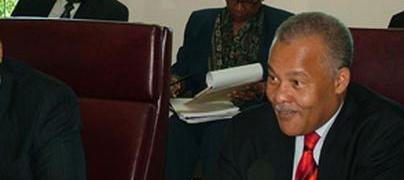 Former prime minister Owen Arthur today called for “quiet diplomacy” in the handling of the Sanique Myrie incident, warning that it must not be allowed to tarnish relations between Barbados and Jamaica.
“I do not want this matter pertaining to foreign relations appear as though I am castigating Barbadian officials, but just put it this way, that I feel the Foreign Ministry should understand the role of diplomacy in solving problems and that that is the first thing that you use,” Arthur said in an interview with the Nation Newspaper.
Arthur, who is also the Leader of the Opposition, suggested that Minister of Foreign?Affairs Senator Maxine McClean might have rushed to judgement on the matter when she stated publicly that Myrie’s claims that she was cavity-searched at Grantley Adams International Airport last month were unfounded.
Arthur believes Bridgetown has more to lose than Kingston, given its heavier dependence on regional exports, and further cautioned the Freundel Stuart administration that it cannot afford to have the matter “spiral out of control”.
The Barbados Labour Party (BLP) leader acknowledged that the matter of immigration had been a hot potato even when he was in Government but said he was careful not to support “bad treatment as an official position”.
CMC
Gunmen and cops trade shots at wake in Jamaica
Gunmen opened fire at police in St.Cathrine, Jamaica who attempted to shut down the wake of an alleged gangster here last night.
No one was injured in a subsequent shootout, which started about 8:00 pm and lasted several in the Hopeful Village community, said police.
"We went over there to close it down because they never had any permit. And before we could move man just start fire shot from in the bushes," said one police officer.
The men then escaped.
According to one of the cops who was involved in the operation, the wake was for Joel Jennings, otherwise called 'JJ', an alleged member of the notorious Klansman gang operating out of St Catherine.
Jennings was among two men killed by cops during a shootout in Spring Village, Old Harbour last month. Another alleged member of the gang was injured in the shootout.
A brother of Jennings was killed by police earlier this week. That incident again forced police to raise their threat level in anticipation of repeat retaliatory attacks by the gang.
Last month, the gang attacked the Spanish Town Police Station and several patrols in the vicinity. No cops were injured.
That attack was in retaliation for the incident in Spring Village and the killing by cops of Donovan Topping, an alleged enforcer for the gang in Manchester the day before.
Source: jamaicaobserver
New policy shows up ‘rogue pharmacies’
The new policy for a dispensing fee to be charged by private pharmacies, which came into force on April 1, has brought to light unlawful behaviour by some pharmacies.
Minister of Health, Donville Inniss, told the Barbados Advocate in an exclusive interview that some pharmacies have been charging for items that are on the drug formulary and should therefore be free of cost.
“They are charging not just the dispensing fee, but charging also for the medication. That is wrong,” he asserted.
In addition, there are some pharmacies using a fee structure that is not in accordance with what the Ministry of Health and the pharmacies have agreed. The minister was quick to stress, however, that these were the actions of a few “rogue pharmacies”.
“Let me say that the majority of pharmacies and pharmacists that we work with are very much true partners of ours and we will continue to work closely together to make everything work as smoothly as possible,” he emphasised.
However, he noted that those infringing the regulations were running the risk of giving not just the new fee initiative, but also their own industry a bad name.
He assured that he has called on the Director of the Barbados Drug Service (BDS) to thoroughly investigate every complaint received, noting that the BDS may opt not to do business with
persons found to be in breach of regulations.
However, he also highlighted the role patient and consumer awareness can play in reducing the incidence of being exploited by those few pharmacies.
“We are not going to be wielding a big stick and threatening anybody,” he said of the rogue pharmacies. “I believe in the power of education and I believe that an enlightened patient or consumer will be the greatest weapon that we have to use in any such challenges that we may face.”
He explained that if patients are aware of the drugs listed on the formulary, they can challenge a pharmacist who tries to charge them for it. Likewise, if they are aware of the cost of their medication they would be in a position to query the dispensing fee charged.
He pointed out that one benefit to the implementation of the dispensing fee noted thus far has been that members of the public are gaining a better appreciation of the actual cost of their medication.
“I think it’s going to start a behavioural change in the population. People perhaps will start to pay more attention to diet, exercise and start leading healthier lives,” he observed.
He said that his ministry is not looking for quick fixes, but is designing a system that is sustainable and will take the country forward. As such, they are currently working on improving the physical conditions of public pharmacies, as well as recruiting additional staff.
The minister also reported a slight increase in the number of persons filling prescriptions at government pharmacies, where they are not required to pay the dispensing fee. He however stated that this might simply be a “knee-jerk reaction” to the start of the new policy and suggested the situation will be monitored over the next three months, during which time he expects the numbers to level out.
He assured, “I’m not about being irresponsible and taking decisions that are construed to be penny wise and pound foolish. Whatever decisions we make, you can rest assured were made after deep and thorough consultation and looking towards the future.”
US military assist in disaster preparedness exercises
More than 150 United States military personnel and military and civilian officials from Trinidad and Tobago, United Kingdom, Canada, the Co-operative Republic of Guyana, and the Republic of Suriname are gathered in Trinidad to participate in the annual Fuerzas Alidas Humanitarias (FAHUM 2011) or Allied Forces Humanitarian Exercise.
FAHUM 2011 is conducted to enhance a nation’s response capabilities and interoperability with regional and international military forces and humanitarian assistance agencies.
This year’s two week exercise will simulate a catastrophic earthquake in Trinidad and Tobago, requiring assistance from outside countries.
“We have received great support from the host nation,” said Col John Mansfield, 60th Medical Group deputy commander and observer for the exercise.
“The Trinidad military has been superb in meeting our demands and needs. Our focus is to support the host nation.”
Fifteen volunteers from the 1st Engineer Battalion from the Trinidad military acted as patients for the first day of the exercise and the Emergency Room team treated them within the first 20 minutes.
“Once receiving life saving medical care, patients are transferred to civilian hospitals,” said Col. Mansfield. “The team is thinking about discharge planning prior to the completion of the facility. The facility cannot hold many patients because it does not have the in-patient beds to do so. This is why partnerships with the host nations are so important.”
“We are working in conjunction with the Ministry of Health in Trinidad, the Trinidad military, the US Embassy assigned here and several other agencies,” said Lt Col Michael Bruhn, deputy chief of Expeditionary Medical Operations Division at Air Combat Command.
“We started planning about a year ago and have coordinated with the Trinidad army and air guard to ensure rapid transport of equipment.”
The government of Trinidad will exercise and evaluate their ability to respond to a disaster, identifying areas of improvement in order to increase their readiness for a major hazard impact.
The Trinidad army is also providing base operating support to include fuels, meals, billeting and water.
Colin Powell in TT
FORMER United States Secretary of State, retired General Colin Powell, and his wife, Alma Powell, are due in TT to launch the National Youth Mentorship Programme, with Prime Minister Kamla Persad- Bissessar and Minister of National Security John Sandy.
The event takes place today at 10 am at the National Academy for the Performing Arts (NAPA).
General Powell will give the feature address and officially launch the mentorship programme. He and his wife are both leaders of “America’s Promise Alliance”, a cross section partnership of more than 400 organisations which engage in advocacy to improve the lives of young people.
The National Youth Mentorship Programme is being run by the Ministry of National Security, in collaboration with the Ministries of Education; Science, Technology and Tertiary Education; People and Social Development; and Sport and Youth Affairs. Later today, the Powells will attend a lunchtime reception at the Diplomatic Centre, St Ann’s, hosted by the Prime Minister.
He will also pay a courtesy call on President George Maxwell Richards this morning.
Masters 2011: Charl Schwartzel wins dramatic Masters
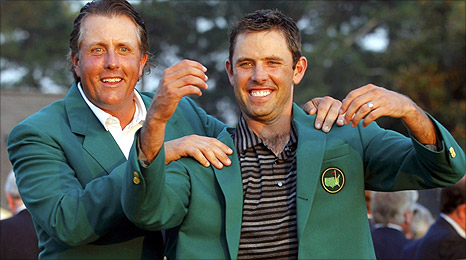 South Africa's Charl Schwartzel emerged from the pack to clinch his maiden major title on an absorbing final day at the 75th Masters.
The 26-year-old fired a closing 66, including birdies on the last four holes, to reach 14 under and beat Australian duo Jason Day (68) and Adam Scott (67) by two shots at Augusta.
American Tiger Woods (67), England's Luke Donald (69), and another Australian Geoff Ogilvy (67) tied for fourth at 10 under with Argentina's 2009 champion Angel Cabrera (71) nine under.
Northern Ireland's Rory McIlroy, 21, who led for three rounds, collapsed on the back nine and carded a round of 80 to end four under.
Schwartzel becomes the third South African to win the Masters on the 50th anniversary of Gary Player's breakthrough win for a non-American at Augusta. Player also won in 1974 and 1978, while Trevor Immelman triumphed in 2008.
"It was such an exciting day, with all the roars," said Schwartzel. "The atmosphere was just incredible."
His victory means that for the first time since 1994, none of the four majors are held by an American. He joins countryman Louis Oosthuizen, who won the Open last July, Northern Ireland's Graeme McDowell (US Open) and Germany's Martin Kaymer (US PGA).
Schwartzel, who was tied 30th on his debut last year, is a six-time winner on the European Tour and climbs to 11th in the world rankings.
The Johannesburg-born player started the final day tied second with Cabrera on eight under, four strokes off McIlroy's overnight lead.
But he made an electric start to the fourth round, chipping in from off the green for a birdie at the first and holing his second from the fairway for an eagle at the third hole to reach 11 under and share the lead with McIlroy, who bogeyed the first.
However, Schwartzel slipped back to 10 under at the fourth, where he would remain until his final birdie barrage.
McIlroy slipped further back at the fifth but recouped the stroke at the seventh and still led by one from Schwartzel, Cabrera, Choi and Woods after the ninth.
But when McIlroy endured a nightmare spell of triple-bogey, bogey, double bogey from the 10th, the tournament was wide open.
Scott became the first player to reach 12 under after a birdie on the 16th but could only par his way home.
"It's just disappointing that I didn't win when I held the lead with a few holes to go," said the 30-year-old.
"I'm usually a pretty good closer. I didn't do a bad job but Charl was better. It was an incredible finish. I'm proud of the way I played but I'm disappointed that I didn't get it done when I was right there at the end."
Scott's playing partner Day birdied four of the last seven holes, including the last two to jump up to a tie for second with his compatriot.
However, he said: "You can't do anything about a guy who birdies the last four holes of a tournament.
"If you want to go out and win a tournament, that's how you do it.
"Obviously we fell short a little bit but it just shows how good Australian golf is right now."
At one stage it had looked like it was going to be Woods's day. The former world number one began the final round seven shots behind but four birdies in the first seven holes hinted at a potential charge up the leaderboard.
When he then eagled the eighth hole to get to 10 under and post a front nine score of 31, the momentum seemed to be behind him.
But he squandered birdie chances on the par-five 13th and par-three 16th when it looked like he was about to surge clear and had a good chance of an eagle on the 15th but could only make a birdie as he finished tied for fourth for the second straight year at Augusta.
"I got off to a nice start there and posted 31," he said. "And then on the back nine, I could have capitalised some more. It could have been. I hit it good all day."
His search for a 15th major continues as he looks to chase Jack Nicklaus's record of 18.
Australia's search for a first ever Green Jacket must wait another year. Scott and Day both challenged until the very end to match Greg Norman, who managed three second-placed finishes at Augusta.
Ogilvy made five birdies in a row from the 13th to get to 10 under and tie with Woods and Donald, who birdied four of the last six but then bogeyed the 17th to end any hopes he had of a first major. Donald's fourth place finish sees him move up to third in the world rankings.
Reigning champion Phil Mickelson never threatened as he shot 74 to finish well down the field.
Lee Westwood shot a closing round of 70, featuring four birdies and a double-bogey at the short 12th after finding water, to finish in a tie for 11th with compatriot Justin Rose, who carded a 68.
Ross Fisher finished on four under, with Scotland's Martin Laird a shot further back on his Masters debut.