
South Korea firms in bidding race for Korea Express
Three of South Korea's biggest companies have bid for a controlling stake in Korea Express, the country's biggest logistics firm.
POSCO, Lotte Group and CJ Group have all submitted preliminary bids to buy 37.6% of the firm as they look to reduce their transport costs.
The stake has been put up for sale by Daewoo Engineering and Construction.
The final bids are due on 13 May and the preferred bidder will be announced on 16 May.
Analysts are expecting a strong response, with some predicting that the stake sale could fetch up to 2 trillion won ($1.8bn; £1.1bn).
The sale will be keenly watched as an indicator of merger and acquisition activity in the country this year.

Japan to discuss nationalising Tepco, reports say
Speculation is growing that the Japanese government may start talks to nationalise Tokyo Electric Power, which owns the Fukushima nuclear plant.
Conflicting reports in local media caused nervousness among investors and Tepco's share price fell by 18%.
Tepco's future has been in question after the earthquake that struck Japan caused a radiation scare at Fukushima.
The company has said it will need to raise about $25bn (£15.6bn) to shore up its finances.
The talk of Tepco being nationalised has been fuelled by a statement from cabinet minister Koichiro Gemba to the Reuters news agency that a discussion about bailing out Tepco was possible.
But Chief Cabinet Secretary Yukio Edano said the government was not currently considering a nationalisation.
"Although details cannot be seen such as how exactly the government is going to nationalise the company, as long as there are concerns that Tepco may be nationalised, investors don't want to hold the stock," said Hajime Nakajima of Cosmo Securities.
On Tuesday a flood of sell orders caused Tepco shares to stop being traded temporarily.
A day earlier, the shares dropped to their lowest level in three decades.
Conflicting reports
A spokesman for Tepco told the Reuters news agency that he was unaware of any plan for nationalisation.
"Our first and biggest priority at this moment is to prevent the nuclear power plant accident from worsening further," Hajime Motojuku said.
However, The Yomiuri Daily has reported that some members of the government proposed a plan for the state to take a majority stake in the company and help it pay for damages from the nuclear accident.
Some Japanese banks have said they are in talks to give the company emergency loans.
Gyptian moving!
Coming off a successful year, reggae artiste Gyptian has several things in the pipeline which he hopes will propel his career even further.
The artiste recently recorded songs like Duggu Duggu, Come Out that is a collaboration with Chi Ching Ching and Laden and For Your Love. He has also done a collaboration with Shaggy called The Way You Look which is scheduled for release next month.
In addition, Gyptian takes the lead in We Are One Japan that is a tribute to the country that was hit by a major earthquake and tsunami recently. The song also features other artistes like Alison Hinds, Voicemail, Pressure, Wayne Wonder, Michael Rose and Japanese Fumibella.
"So far I've been recording a whole lot and doing shows all over," Gyptian told THE STAR.
Last year, he had a strong year with his song, Hold Yuh, gracing a few Billboard charts. The remix of the song with rapper Nicki Minaj also went on to gain success overseas on various charts. He also received MOBO and Soul Train awards in the best reggae artiste category, as well as numerous nominations locally and abroad.
But living up to last year's success is not something Gyptian is worried about.
"It is no problem, I just categorise it with the other hits from before," he said.
Gyptian added that he has a number of collaboration with other international acts lined up but he was reluctant to disclose names until everything has been finalised. Nonetheless, he said he is pleased with their interest to work with him.
"It's a good feeling when a lot of artistes want to work with us," Gyptian said.
Meanwhile, he has upcoming tours of the United States, Europe and Canada.
Bunji Garlin to loose locks
LOCAL soca artiste Ian “Bunji Garlin” Alvarez created a stir yesterday by suddenly announcing his intention to cut off his lengthy dreadlocks and subsequently posting photos of his new haircut on social networking website, Twitter.
The photo went viral and spread to popular social website Facebook
At about 2 pm, he posted a Twitter message: “Bye, bye dreadlocks” which seemed to spark some protest because a few minutes later he tweeted, “It’s hair it can grow back.” He also posted pictures of the barber salon where he was going to take the hair cut and a “before” picture with his locks loosed down his back.
His wife, soca artiste Fay Ann Lyons also updated her Twitter account to update followers of her husband’s trip to the barbershop. The next picture posted was his locks placed in a cap on his lap. Fay Ann confirmed that the deed was done on her account. A picture of Bunji sporting his new haircut soon began circulating on Blackberry Messenger and on Facebook. Two hours later, the artiste posted his own picture on Twitter with the tweet, “My biggest fear was silenced. My daughter knew who I was when I just walk in. I can breathe now.”
Bunji received compliments from some of his followers including Meiling Incorporated.
Many woman were impressed with the new haircut commenting on how handsome the artiste looked. Bunji could not be reached for comment since his mobile phone went straight to voice mail when Newsday attempted to contact him yesterday afternoon.

US$13m regional infrastructure fund
The Caribbean is expected to benefit from a US$13 million regional infrastructure integration fund supporting cross-border projects designed to reduce transport and logistics costs to expand trade.
The Inter American Development Bank (IDB) will manage the fund that has received contributions from Canada, Mexico and the United States governments.
The IDB said that a recent study estimated that Latin America and the Caribbean is at 50 per cent of its intra-regional trade potential due to insufficient regional infrastructure and a still imperfect trade and regulatory architecture.
The study suggested that countries should prioritise integration projects to reduce trade costs, boost the region's export capacity and promote a better distribution of the benefits of deeper integration.
The contributions were announced on the margins of a meeting of finance ministers of the Americas during the annual meeting of the IDB's Board of Governors in Calgary, Canada.
The fund is expected to reach US$20 million, with additional contributions from other donors.
"Infrastructure investment is of utmost importance for the integration of Central America and the Caribbean," said Mexican Finance Secretary Ernesto Cordero.
"Also, a more integrated Latin America and Caribbean region will enhance the growth potential of the global economy."
US President Barack Obama named the facility the "Crossroads Fund", recognising the strategic location of Central America and the Caribbean as a point of encounter of the Americas.
He announced his government's US$5-million contribution to the fund last week during a visit to El Salvador, where he underscored the need to increase trade and economic growth across the region.
Under the framework of the existing Fund for Integration Infrastructure - called FIRI - the IDB created a new multi-donor window to support its mandate on regional and global integration.
This window will allow the bank to leverage its traditional lending resources with innovative financing mechanisms to underpin high-impact cross-border infrastructure projects and efforts to harmonise regional trade-related regulatory frameworks.
- CMC
'Finger rape' case raises Caricom free movement questions
Prominent Caribbean academic and political scientist, Professor Neville Duncan, is calling on Caricom governments to make a definitive statement on the issue of free movement within the region.
His statement follows the decision of the Jamaica government to take claims of by one of its nationals that she was sexually and verbally abused by Barbadian customs and immigration officials to the meeting of the Caricom Council meeting this week.
Security minister Dwight Nelson has written to Public Defender Earl Witter asking him to intervene in the issue after the woman, Shanique Myrie, claimed she had been subjected to sexual and verbal abuse at the hands of the authorities at the Grantley Adams International airport last week.
But Parliamentary Secretary in the Prime Minister's Office, Harry Husbands, who has responsibility for Immigration, is quoted in the Barbados Nation newspaper as saying that there was no record of Myrie being searched by either immigration or customs officers and that a full statement would be issued after more investigations.
The newspaper quotes Husbands as saying "Shanique Myrie, on arrival in Barbados, claimed she would have been staying with a female resident.
"But a closer investigation; however revealed she was actually staying with a Barbadian man, who actually facilitates the entry of non-nationals into the island," the newspaper report added.
In an interview with the Caribbean Media Corporation (CMC), Professor Duncan is cautioning countries from taking a position on the matter.
He said the issue speaks to the wider issue of free movement under the Caricom Single Market Economy (CSME) that allows for free movement of goods, skills, services and labour across the region.
He said regional governments now need to have a clear political will to facilitate hassle free travel.
“I think they (regional leaders) just need to determine this is one of the best things they could do for the region because this is how we are going to generate true business.
"We are in a global situation which is about to collapse any moment now because there might be a major shift from the United States dollar as the reference currency and basically we need to be sure within ourselves, within the region that we can move food, that we can move people, move expertise easily from Caribbean country to Caribbean country so that we can maintain a certain level of living and to be protected against needless interference and frustration."
Duncan said that the region should take a closer look at how the European Union (EU) handles free movement within its market and economic union.
He suggests the introduction of modern technology will make it easier for Caribbean nationals to move across member states.
"Everything known about you will be on the passport, we need to do that for the Caribbean. If some countries are not ready for the electronic system those who can should help them in this regard," said Duncan, adding "but without a smooth system like that we are always going to be coming up with complaints of one sort or another and by now that should be history."
Source: Observer
David Smith pleading guilty to US$220m fraud
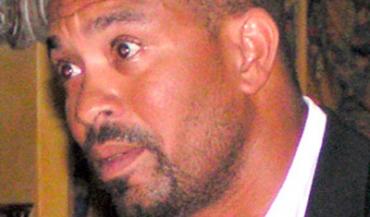 DAVID SMITH, the former head of collapsed investment scheme Olint, is set to plead guilty to defrauding thousands of customers of more than $US$220 million in an Orlando court today, reports the Florida Sun-Sentinel.
As part of a plea agreement, Smith has admitted guilt to four counts of wire fraud, one count of conspiracy to commit money laundering and 18 of money laundering.
Last year, he received a prison sentence of just over six years in the Turks and Caicos Islands, where he pleaded guilty to fraud and conspiracy charges. United States authorities collected Smith from the Caribbean island in November to face federal charges.
Prosecutors said that more than 6,000 people invested with Smith. He admitted in his plea agreement that Olint was a "massive" Ponzi scheme, whereby he paid returns to investors not from profit but from their own money or that paid by subsequent investors.
These funds, transferred to his own personal bank accounts, reportedly enabled Smith to live a lavish lifestyle. Among his expenditures included political contributions, gambling, a down-payment for the purchase of a Lear jet and sponsorship of the Jamaica Jazz and Blues Festival.
A raid by authorities in Jamaica forced him to shut down his business in Jamaica and relocate to the Turks and Caicos Islands.
Libya: Obama says US intervention will be limited
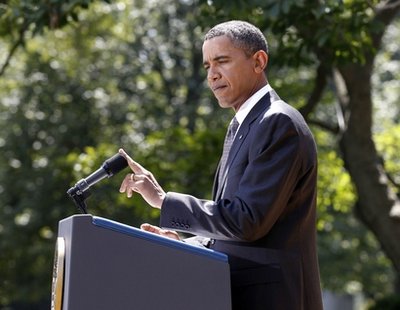 US President Barack Obama has defended the first military intervention of his presidency, insisting US involvement in Libya will be limited.
He said US participation in the coalition had saved "countless lives", but that overthrowing Muammar Gaddafi by force would be a mistake.
Delegates from dozens of countries are gathering in London for a conference on the future of Libya.
The rebel advance there has been halted near Col Gaddafi's birthplace, Sirte.
Anti-Gaddafi forces had made rapid progress westwards from their stronghold in Benghazi in recent days, greatly aided by international air strikes.
But rebel fighters said pro-Gaddafi forces had used heavy weaponry to check their advance some 50km (30 miles) east of Sirte, says the BBC's Ben Brown in Ajdabiya.
In eastern Libya, rebel radio has been urging more people in the west of the country to join the anti-Gaddafi uprising.
While Nato insists it is impartial in the conflict, Russia has renewed its expressions of concern, saying intervention in an internal civil war is not sanctioned by UN Security Council Resolution 1973.
Ahead of Tuesday's conference, British Foreign Secretary William Hague said he wanted Col Gaddafi to leave power and face trial at the International Criminal Court.
Some 40 delegations - from the coalition, the UN, Nato, the African Union and Arab League, but not the Libyan government - will be represented in London. Rebel officials have been invited for talks on the meeting's sidelines, although not to the conference itself.
In a letter to those attending the conference, Col Gaddafi called for an end to the "barbaric offensive" on his country.
'Regime change' ruled out
In his first televised address on the Libyan intervention, Mr Obama said that having led the initial campaign, the US would hand over to Nato allies on Wednesday.
"We have stopped Gaddafi's deadly advance," he said at the National Defense University in Washington DC.
But the lead in enforcing the no-fly zone and protecting civilians on the ground would now move to the Americans' allies, he added.
"Because of this transition to a broader, Nato-based coalition, the risk and cost of this operation - to our military, and to American taxpayers - will be reduced significantly," Mr Obama said.
"We must always measure our interests against the need for action," the president continued. "But that cannot be an argument for never acting on behalf of what's right."
Earlier on Monday, in a video conference with French President Nicolas Sarkozy, German Chancellor Angela Merkel and UK Prime Minister David Cameron, Mr Obama had agreed that Col Gaddafi "had lost any legitimacy to rule and should leave power, and that the Libyan people should have the political space to determine their own future", the White House said.
Symbolic target
An Italian proposal to end the crisis includes offering Col Gaddafi an escape route from Libya, ensuring a quick ceasefire and facilitating dialogue between rebels and tribal leaders.
Foreign Minister Franco Frattini said he had discussed the proposals with Germany and France.
Libyan Deputy Foreign Minister Khaled Kaim, meanwhile, has called on those attending Tuesday's conference in London to act as "peacemakers, not warmongers".
In recent days, anti-Gaddafi forces have seized a number of coastal communities and important oil installations, including Ras Lanuf, Brega, Uqayla and Bin Jawad.
However, repeated attacks by government troops have prevented them reaching the symbolic target of Sirte.
A Pentagon spokesman in Washington, Vice Admiral Bill Gortney, said that because the Libyan rebels were not well organised, any military gains they made would be tenuous.
He said the rebels were clearly benefiting from actions of the US, which has started using heavily-armed low-flying aircraft against government forces.
Nato has denied that its air strikes are meant to provide cover for a rebel advance.
George Clooney named as Berlusconi 'defence witness'
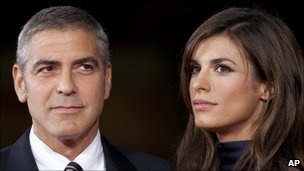 Hollywood star George Clooney is one of 78 witnesses named by Italian PM Silvio Berlusconi for his trial on charges of sex with an under-age prostitute.
Mr Clooney's girlfriend, Italian model and TV star Elisabetta Canalis, is also on the list as are MPs and ministers.
The couple were said to have been seen at one of Mr Berlusconi's parties by Karima el-Mahroug, the teenager whom he is alleged to have paid for sex.
The trial is due to start on 6 April. Mr Berlusconi denies the charges.
As well as the sex charge, Mr Berlusconi is also accused of abuse of power for intervening in a separate case in which Ms Mahroug, known as Ruby, was detained by police on suspicion of theft.
Lawyers acting for both the defence and prosecution submitted their witnesses on Tuesday in preparation for the trial.
Lake Como villa
Although it is for the judges to decide who appears as a witness, Ms Canalis is believed to have denied being present at the party in question at the prime minister's villa near Milan in February 2010.
Mr Clooney has a villa of his own not far away, beside Lake Como.
Among the other named defence witnesses are supermodel Belen Rodriguez and TV presenter Barbara d'Urso.
Ruby has been named as a prosecution witness, Italian media report, as have 32 other women alleged to have attended erotic parties which are also said to have taken place at the prime minister's residence.
Prosecutors allege that the Italian leader paid for sex with Ruby while she was still 17, an offence under Italian law. They maintain that the prime minister had sex with her on 13 occasions.
Syrian cabinet resigns amid unrest, says state TV
The Syrian government has resigned, state-run television has said.
President Bashar al-Assad accepted the cabinet's resignation following a meeting on Tuesday.
The resignation is the latest concession by the government aimed at curbing pro-democracy protests in which dozens of people have been killed.
President Assad is expected to address the nation in the next 24 hours to announce he is lifting the emergency law and restrictions on civil liberty.
The president has appointed outgoing Prime Minister Muhammad Naji Otari as caretaker prime minister until a new government is appointed, the official Syrian news agency has said.
A new government is due to be appointed within 24 hours, but there is word the changes will be "beyond expectations", the BBC's Lina Sinjab reports in Damascus.
The government has little power in Syria, where it is concentrated in the hands of the president, his family and the security apparatus, observers say.
Mr Otari has been prime minister since September 2003, with at least four cabinet reshuffles over the last eight years.
A former parliamentary speaker and long-serving member of the ruling Baath party, he has also served as mayor of his home town and Syria's second city, Aleppo, and as governor of the province of Homs.
Mr Otari's government was a mix of Baathist and non-Baathist ministers, and many are expecting the new government to be of new blood from outside the Baath Party, our correspondent adds.
Tens of thousands of people have been staging a demonstration in central Damascus, as well as in other major cities, in support of the president as he attempts to reassert his authority.
But tension has been rising in the cities of Deraa and Latakia where at least 12 people died over the weekend, our correspondent says.
Longstanding law
There are hopes that President Assad's talk will help to defuse tension, but many are fuelled with anger over the latest deaths, she adds, and there is talk of a bigger "day of rage" on Friday.
Mr Assad is trying to quell pro-democracy protests against his regime that human rights groups say have left more than 60 people dead.
The unrest has become the biggest threat to the rule of the president, who succeeded his father Hafez on his death in 2000.
Syria's emergency law, which effectively suspends most constitutional protections, has been in place since the Baath Party came to power in a military coup in 1963.
Syrian governments have justified the continued imposition of the law by the state of war that exists with Israel, and by threats posed by militant groups.
The current turmoil in the country started earlier this year after the arrest of several teenagers who scrawled anti-government graffiti on a wall in the southern city of Deraa, and quickly spread to other provinces.