
India and Pakistan to co-operate in Mumbai attack probe
Indian and Pakistani officials are to visit each other's countries to investigate the 2008 Mumbai attacks.
The move is being seen as a breakthrough and follows talks between the sides in the Indian capital, Delhi.
A joint statement said officials also agreed to set up a hot line to share information about terrorist threats.
The news comes a day before Pakistani PM Yousuf Raza Gilani is due in India to attend the Cricket World Cup semi-final between the two sides.
He is travelling at the personal invitation of India's Prime Minister, Manmohan Singh.
Relations between the nuclear-armed neighbours hit a low after Pakistani militants attacked India's commercial capital, Mumbai (Bombay).
The attack drove Delhi to cut ties with Islamabad, but earlier this year it announced talks could resume.
Tuesday's joint statement was issued after two days of talks between the home secretaries.
"Pakistan conveyed its readiness, in principle, based upon the principle of comity and reciprocity, to entertain a commission from India with respect to Mumbai terror attack investigations," it said, adding that details of the visit still had to be worked out.
India believes the attacks were planned in Pakistan with the support of elements within the military - a charge Islamabad has always denied.
In return, the statement said Pakistani officials would travel to Mumbai in connection with the trial of Mohammad Ajmal Amir Qasab, the only gunman captured alive after the attacks.
The dates of the visit, the statement said, would be "conveyed by India within four to six weeks".
Last month the high court in Mumbai upheld the death penalty for Qasab. The assault on the city killed 165 people. Nine other militants also died.
The Delhi talks have been bolstered by Mr Singh's cricket diplomacy and much attention will be focused on the two prime ministers' discussions while they watch Wednesday's match in the northern city of Mohali.
In February, the two countries agreed to resume peace talks "on all issues". Peace moves were put on hold after the 2008 attacks, although the sides have met a number of times in the past year.
Pakistan's foreign minister will visit India by July to review progress in the dialogue.

Business House soccer matches heats up Grand Turk
Sunday evening caught two double headers at the Parade Grounds in Grand Turk.
In the opening game the Haitian All Stars comprehensively beat Olympic Construction F. C. 2 goals to nil. Goals by Jacquelin Jacques in the first half and a second half strike by star forward Roody Defult were enough to hand the construction workers their first defeat of the season.
In the second game of the afternoon between Grand Turk Academy and International Strikers keenly contested one with the youngsters getting good scoring opportunities early in the first half. National under 20 striker Events Alide Jean received at least three clear cut chances but failed to put away any and they paid dearly for those missed opportunities . Hard tackling wing back Carlton Samuels picked up a loose ball in the 18 yard box and fired home beating goalkeeper Jemmy Tissaint to send International Strikers in the lead which they held on to the end.
Meeklight Atherton and Kerrion Sealy were red carded late in the second half by referee Clifford Campbell thus International Strikers ended up playing with 9 men.
Games to be played next weekend April 3, 2011 will feature another double header when Olympic Construction F. C. vs. International Strikers F. C. 4:00 pm
and the Haitian All Stars vs Grand Turk Academy at 6:10 pm.
New Zealand face mighty challenge
As far as challenges go, it won't come much harder than the one facing New Zealand tomorrow in the World Cup semi-final.
Already underdogs in a last four dominated by the major subcontinental cricketing powers, New Zealand face a rampant Sri Lanka team that swatted aside the challenge of England with a 10-wicket thrashing on Saturday.
The Black Caps are serial semi-finalists, having reached the last four six times, but have never reached the final.
Spin great Muttiah Muralitharan will be fit for the game and, as if that wasn't enough, Colombo's Premadasa Stadium will be full to bursting with noisy and partisan Sri Lankans.
The New Zealanders need cool heads in charge and none are cooler than coach John Wright, widely respected as a New Zealand opening batsmen and ex-coach of India.
"We have to bat well, that's the key for us,'' Wright said. "I think the boys are learning, you need those wickets in hand going into the last overs and you set those targets.''
In the quarter-final, New Zealand overcame South Africa despite setting a modest total of 221 for eight, with mercurial batsman Jesse Ryder curbing his usual aggression on a docile Dhaka wicket to score 83.
Cruising to victory
The South Africans were cruising to victory at 121 for three when they imploded in the face of a naggingly accurate, but seemingly unthreatening Kiwi bowling attack, the kind that often frustrates batsmen and could be New Zealand's main hope.
Admittedly, New Zealand did not bother Sri Lanka too much in the group stages when the tournament co-hosts won by 112 runs.
Wright said the bowling unit's work had been outstanding in Dhaka against South Africa.
"We sort of scrapped and got as many runs as we could, which gave us a chance,'' he said. "Any side in big games, no matter who it is, if you get early wickets there's always going to be pressure.''
Wright will not have been upset to have seen a streak of aggression creep into the New Zealand game. Two senior players received hefty fines after an on-field confrontation with a South African batsman.
"It was reasonably interesting viewing,'' Wright said of the mid-pitch altercation. "There was a lot at stake.''
New Zealand lost two of their group-stage games, to Sri Lanka and Australia. Like Sri Lanka, the Kiwis crushed Zimbabwe, Kenya and Canada and pulled off a surprising 110-run victory over Pakistan, thanks mainly to a destructive century by Ross Taylor.
Sri Lanka's game against Australia was washed out by heavy rain when Sri Lanka had reached 146-3 after 32.5 overs and looked set for a big total. Kumar Sangakkara's squad only lost to Pakistan, a close match at the Premadasa when Sri Lanka failed by 11 runs chasing 277.
Stifling humidity
Victory tends to energise players, but opener Tillakaratne Dilshan and Umar Tharanga struggled in the stifling humidity on Saturday night as they won the game with a 231-run partnership. Dilshan had to be helped from the field and Tharanga needed a runner as both players passed their centuries.
Their form is unquestioned and New Zealand's only hope is that the Sri Lankan tail is long. Once past Thilan Samaraweera at number five, the batting is unproven, with pace bowler Lasith Malinga listed to bat at eight against England.
On the slow Colombo wicket, both bowling attacks are similar and likely to be dangerous. Pace is often expensive if batsmen are given any latitude from line and length. New Zealand are famous for the 'dibbly dobbler' bowlers who took the team close to the World Cup final in 1992. Perhaps the same style of bowling attack is needed again.
Jimmy Carter visits Cuba
Former U.S. President Jimmy Carter and his wife, Rosalynn, landed in Havana today for a private visit aimed at lowering tension between the Cold War enemies and seeing firsthand the economic reforms sweeping the communist island.
Unlike his first visit in 2002, when then-Cuban President Fidel Castro personally greeted Carter on the tarmac, this time Foreign Minister Bruno Rodriguez was on hand to receive the former American leader.
He was invited by current Cuban President Raul Castro on a non-governmental mission and will meet with officials and Jewish and Catholic leaders during his three-day visit.
But expectations are high that Carter also will work behind the scenes to secure the release of American contractor Alan Gross, who was recently sentenced to 15 years in prison for what Cuba considers "subversive" work connecting dissidents to the internet. Gross, a U.S. Agency for International Development contractor, was arrested in Havana in 2009.
The U.S. government says Gross was simply helping the Jewish community use the internet and has repeatedly said that bilateral relations cannot improve until Gross is released.
Secretary of State Hillary Clinton met with Carter before his departure, according to Molly Koscina, a spokeswoman for the U.S. Interests Section in Havana, to discuss the issue. "We hope President Carter will urge the Cuban government to immediately release Mr. Gross on humanitarian grounds," Koscina told CNN.
Today, Carter will meet with U.S. diplomats and then religious leaders. Tomorrow, he will have a face-to-face with Raul Castro.
UWI celebrates 50 of its distinguished Alumni
On April 2, the University of the West Indies (UWI), St. Augustine Campus will honour 50 members of its alumni at the inaugural Distinguished Campus Alumni Awards.
Fifty awardees were selected by a bi-partisan Committee of Campus academic staff and the Trinidad and Tobago Chapter of the UWI Alumni Association, in commemoration of the Campus’s 50th Anniversary.
“Selecting 50 distinguished alumni from more than 20,000 graduates from across 50 years was a mammoth yet highly enjoyable challenge for the Committee” said Mark Regis, co-chair of the selection committee and president of the Trinidad and Tobago Chapter of the UWI Alumni Association. “The 50 awardees are an excellent example of the leading professionals and personalities that have studied at the UWI’s St Augustine Campus.”
The Awards will be held in the newly built 400 seat Engineering Auditorium (Lecture Theatre 1) on the St. Augustine Campus.
CEO addresses CSA concerns
Mark Capes has responded to the CSA’s 17 point demands on behalf of the interim government.

In addressing the issue of pension and gratuity, Mr. Capes said “Payments are now being processed for outstanding pensions and this he said, should
be achieved by Wednesday, 31 March 2011. However, he said it is important to understand that the NIB Ordinance Section 64 (2) prescribes that the
provisions of the Pensions Ordinance do not apply to a person who was not the holder of a pensionable office on 6 April 1992, the day appointed for
the coming into operation of the provisions of the Ordinance. “This means that any person employed by TCIG after that date is not legally entitled
to a pension or gratuity under the Pensions Ordinance. In effect the TCIG pension scheme, governed by the Pensions Ordinance, became a closed scheme
on the date of the introduction of the NIB Ordinance, restricted to those people already employed at that date,” Mr. Capes said.

With regards to payment of Gratuity to all retired Civil Servants who are eligible for such if so requested and the calculation of such according to
provisions in the Pension Ordinance and Regulations, Mr Capes said these payments are being processed for all outstanding gratuities to which
people are legally entitled; we aim to achieve this by 31 March 2011.
However, as explained that the provisions of the Pensions Ordinance do not apply to a person who was not the holder of a pensionable office on 6
April 1992, the day appointed for the coming into operation of the provisions of the Ordinance.

Turning his attention to the issue of Payment of pension and gratuity to all Civil Servants whose posts were abolished such as persons who were
transferred to the New Hospital, Mr. Capes said there is no legal provision for the payment of pension and gratuities to officers whose
employment is terminated. “We are considering urgently how we can introduce a mechanism for payment for loss of office as this is likely to
be an ingredient of the rightsizing exercise,” he noted.

The CSA in its list of demands/recommendations, rejects the proposal to amend the Pension Ordinance so as to remove the option for Civil Servants
to receive up to 25 percent of their pension as gratuity upon retirement from the service or upon abolition of their post.
In response, Mr. Capes said changes to the entitlement of gratuity will be essential to reduce the in-year expenditure given the current economic
conditions. “It is important to note that this proposal does not reduce the overall pension payable and most civil servants will be better off in
the longer term. However, the Interim Government has listened to staff concerns and is sympathetic to those persons retiring soon who might have
already made plans based on such a gratuity payment, Mr. Capes said.
He added that the government is prepared to postpone the implementation of these changes to allow time for further consultation. “One option we might
consider would be a transitional scheme under which the value of the conversion will be reduced from 25% to 10% of the pensionable amount
reducing by a further 2% each year until it is fully removed in 5 years.
It is worth reiterating that this will not reduce the overall pensions payable; as the average life expectancy is increasing over the longer term
pensioners would be financially better off to take the higher pension rather than convert part of it to a gratuity. I would welcome your views
on this,” the CEO noted.

The CSA in #6 of its demands/recommendations,  requested that all Civil Servants employed in a pensionable post after April 5, 1992 and who have
been confirmed in such post, be paid a gratuity upon retirement from the service or on being made redundant as provided for in the Pension
Ordinance for persons employed before April 6, 1992.
To this, Mr. Capes noted that the introduction of the NIB Ordinance means that civil servants employed on or after 6 April 1992 are not entitled to
any benefits under the Pensions Ordinance and to provide these, he said, would be illegal. However, he said the Interim Administration has
identified a problem with the legislation. “When these officers retired at 55 they would potentially be left with no income until the age of 60 when
they would be entitled to their NIB pension. We therefore propose to change the law to allow us to pay an interim pension worth ¾ of the value
that they would have received under the Pensions Ordinance had they been entitled to it, without the option of a gratuity. This proposal seeks to
enforce the existing legislation but it addresses the historic anomaly and will be corrected once the retirement age has been increased,” Mr. Capes
added.

RTC News will share more of the CEO response to the Civil Service
Association’s demands and recommendations in a subsequent news cast.
TCI students make the top 10 in the CXC exams
A student from the Maranatha High School in Providenciales and another from the Raymond Gardiner High in North Caicos are thrilled to be included
in the top ten among schools throughout the region in the recent Caribbean Examinations Council (CXC) exams.

The students are Lounise Louis formerly of Maranatha High School and Kenya Swan formerly of Raymond Gardiner High. Lounise placed 7th in Home
Economics Management from a field of 5,712 students who sat the exam. She received a Grade One with Straight ‘A’ Profile.

Kenya tied with two other students from Belize for 7th place in Physical Education and Sports from a field of 4,946 students who sat the exam. She
also received a Grade One with ‘A’ profile. The Merit List was instituted last year by the Caribbean Examinations Council to highlight the outstanding
academic achievement of the top 10 students in each subject area across the region.

The news of the students’ achievements came as a delight for both the Ministry and the Department of Education, which lauded the students for their
exploits in the regional exams. “The Ministry and Department of Education is pleased to recognize the outstanding achievement of two
students who placed in the top ten regional achievers in two subjects at the May/June 2010 CXC Examinations. The Ministry and Department of
Education as well as the TCI National Committee would like to use this opportunity to congratulate both students and wish them much success in
the future,” a joint statement from both entities said.

Both students were recognized at the 14th Annual National Awards Ceremony held at Horse Stable Beach in Whitby North Caicos, for their outstanding
achievements in the CSEC examinations. Kenya is currently attending the TCI Community College pursuing studies in, Business Education while
Lounise is assisting with study classes at her Alma Mater.

Meanwhile, the external examination results for January 2011 are out, and while the results show a fall in the pass rate initially, examination
officials have yet to analyse and compare both of these results.

RTC News will bring you that analysis as soon as we get them from our sources.
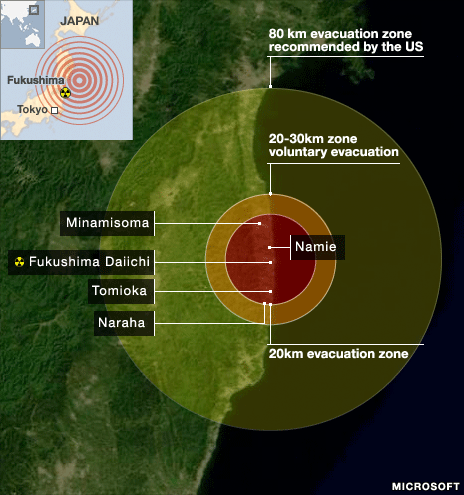
Radiation leak found outside Japan nuclear reactor
Highly radioactive water has been found for the first time outside one of the reactor buildings at Japan's quake-hit Fukushima nuclear plant, officials say.
The leak in a tunnel linked to the No 2 reactor has raised fears of radioactive liquid seeping into the environment.
Earlier, Japan's government strongly criticised the plant's operator, Tepco, over mistaken radiation readings.
Officials said the radiation scare inside the No 2 reactor was caused by a partial meltdown of fuel rods.
This discovery of highly radioactive water outside a reactor building is a worrying development, says the BBC's Mark Worthington in Tokyo.
Up until now, pools of water with extremely high levels of radiation have only been detected within the reactor buildings themselves.
The water was found in an underground maintenance tunnel, with one end located about 55m (180ft) from the shore.
However, Tepco said there was no evidence that the contaminated water had reached the sea.
The discovery comes as Japan's chief cabinet secretary said that the priority at the plant was to ensure that contaminated water did not leak into the soil or the sea.
Yukio Edano was speaking at a news conference a day after Tepco said radiation levels at reactor No 2 were 10 million times higher than normal before correcting that figure to 100,000.
"Considering the fact that the monitoring of radioactivity is a major condition to ensure safety, this kind of mistake is absolutely unacceptable," Mr Edano said.
That water is the most contaminated to be found at the plant so far. Radiation levels were measured at 1,000 millisieverts an hour, a dose that can cause temporary radiation sickness.
Tepco has apologised but the mistaken reading at the Fukushima Daiichi plant has called into question the operating company's handling of the current crisis, our correspondent says.
Tepco has been criticised for a lack of transparency and failing to provide information more promptly and for making a number of mistakes, including worker clothing.
Two workers were taken to hospital last week after wading though contaminated water with inadequate protection. They were expected to be released on Monday.
Workers are battling to restore power and restart the cooling systems at the stricken nuclear plant, which was hit by a quake and tsunami over two weeks ago.
A 9.0-magnitude earthquake on 11 March and the powerful tsunami it triggered is now known to have killed 10,901 people, with more than 17,000 people still missing.
More than 190,000 people are living in temporary shelters.
The BBC's Roland Buerk in Rikuzentakata, Iwate prefecture, says prefabricated houses are being wired for electricity, but there is initially room for only 150 of the 1,000 survivors there.
In Miyagi prefecture - another of the worst-hit areas - the authorities estimate it will be three years before all of the rubble and debris has been cleared.
Some 20,000 US troops are bolstering Japan's Self-Defence Forces, delivering aid in what is said to be the biggest bilateral humanitarian mission the US has conducted in Japan.
As well as shortages of food, water and fuel, survivors are also having to endure frequent aftershocks.
Japan lifted a tsunami warning earlier on Monday that was issued after a 6.5-magnitude quake struck off the northern coast.
It is not reported to have caused any injuries or damage.
For the first time since the disaster, the government has permitted a foreign medical team to enter the country to treat victims, the Japan Times reports.
The health ministry has lifted a ban on holders of foreign medical licences from practising in Japan, allowing a team of 53 medical aid workers from Israel, including 14 doctors and seven nurses, to work.
CSA Meets members today
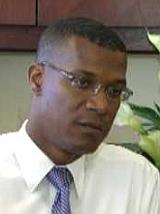 President of the CSA Dr. Rufus Ewing today explained to the people of the Turks and Caicos Islands that the association did not any sick out in the TCI yesterday
Speaking at a press conference earlier today Ewing entertained questions from the media and expressed disappointment over comments made by the Governor's office regarding the possible late payment of salaries
Ewing said that salary forms were submitted since march 17th and it was highly unlikely that one day of alleged slowed workforce could not disrupt that government department that severe
He also went on to express his frustration and what he termed as disrespectful meeting with Colin Roberts and his team at the Governors reception party.
The CSA will be meeting with their members today at 12:30pm to discuss the counter proposals on Pensions and Payrolls by the Interim Administration. Also to be discussed is the ongoing Right-Sizing Process.
BBC Caribbean Service makes final broadcast

The BBC Caribbean Service has made its final broadcast, ending seven decades of programming for the region.
The service is being shut as part of budget cuts announced by the BBC World Service in January.
BBC managers say they have had to make tough choices because of a 16% cut in UK government funding.
But one critic called it a short-sighted decision, showing the BBC did not understand the complexities of the region.
The Macedonian, Albanian, Serbian and Portuguese for Africa services have also been closed in a bid to to save $75m (£46m) a year.
Seven other language services have moved away from radio to focus on online, mobile and television content.
These include Spanish for Latin America which last month ended its remaining radio broadcasts, on short-wave and intended mainly for Cuba.
This week, members of the Caribbean Service team have each presented a final programme, including material from the BBC archives.
Copies of the sound and text content of the service's radio and online output are being donated to the University of the West Indies, which will have a team working at the BBC's Bush House base to catalogue the material.
Regional voice?
E-mails to the Caribbean Service overwhelmingly voiced sadness at its closure.
"It filled a great need for the Caribbean audience to have a view of the world not provided by local radio stations," wrote Jacqueline Sharpe in Trinidad and Tobago.
Regional media commentators have said the demise of the BBC Caribbean Service should spur renewed efforts to create a pan-Caribbean news network.
"Since the announcement, we have come to truly know the important role we have been playing across the Caribbean. We're going out on a high - what more can any broadcaster ask for?" said Caribbean Service head Debbie Ransome.
The origin of the Caribbean Service was Calling the West Indies, a programme that began in 1939, featuring West Indian troops on active service during World War II reading letters to their families.
From 1943 to 1958, it became Caribbean Voices, highlighting West Indian writers, including VS Naipaul, George Lamming, Andrew Salkey and Samuel Selvon.
In 1949, We See Britain was introduced as part of the programming for the Caribbean under the management of cricketer-turned-producer Ken Ablack.
Over the next three decades, the Caribbean Service nurtured producers and presenters, including Trevor McDonald who became one of the best-known newsreaders on British television.
The service closed in the mid-1970s, but in 1988 it reopened as a news and current affairs department.
David Jessop, director of the London-based Caribbean Council, has described the closure as another marker of Britain's "less than joined-up approach to the region".
In an article at the time of the announcement in January, he said: "The sole vehicle offering the region the chance to hear on a daily basis about events from a broader perspective and sometimes hold politicians to account, will be no more and leading figures in public life will find it virtually impossible to present their views to a region-wide radio audience."
Announcing the cuts, BBC Global News director Peter Horrocks said the closures were "not a reflection on the performance of individual services or programmes".
"They are all extremely important to their audiences and to the BBC," he said.
"It is simply that there is a need to make savings due to the scale of the cuts to the BBC World Service's grant-in-aid funding from the UK's Foreign and Commonwealth Office, and we need to focus our efforts in the languages where there is the greatest need and where we have the strongest impact."