
Trinidad government pays out $33 million to CLICO policyholders
 Two years after the CLICO insurance company collapse and rescue by the Trinidad and Tobago government, policyholders have finally started getting back some of the money they invested in the country’s largest insurer.
After several promises to repay policyholders by Christmas and then Carnival, the government has since paid approximately $33 million (US$5.2 million) to CLICO policyholders who invested in high-interest bearing Executive Flexible Premium Annuity financial instruments offered by the company.
The Trinidad Express reported that the Ministry of Finance said on Wednesday that the government had to date made $33 million in payments to EFPA owners with contracts valued at $75,000 or less.
"This represents payments to1,053 eligible payees," the ministry said in a statement. "Over 80 per cent have chosen to have their payments deposited directly to their bank accounts and this has happened successfully."
CLICO's EFPAs were short-term deposit instruments, which had 25,000 customers and had liabilities of about $12 billion, Finance Minister Winston Dookeran said last September.
There are about 10,000 policyholders who hold investments of $75,000 each or less.
Total funding by the government and the Central Bank to rescue CLICO as at May last year stood at $7.3 billion. CLICO and another CL Financial subsidiary, British American, had combined assets of about $16 billion, but liabilities of around $23 billion.

Guatemala first lady Sandra Torres confirms divorce
Guatemala's First Lady, Sandra Torres de Colom, has confirmed that she is divorcing president Alvaro Colom so she can stand for election to succeed him.
Ms Torres fought back tears as she told Guatemalans she was leaving a loving marriage for the sake of the nation.
"I am divorcing my husband but I am getting married to the people," she said at a news conference.
Guatemala's constitution bans close relatives of the president from standing to succeed him.
The main opposition candidate for September's presidential election - former Gen Otto Perez Molina - has called the first couple's divorce electoral fraud.
Ms Torres, 51, announced her candidacy for president for the governing party earlier this month.
Difficult decision
The news that she was seeking a divorce to overcome the constitutional block on her running for office emerged on Monday, but this is the first time she has publicly confirmed it.
She said the decision, which will force the first couple to live apart, was "very difficult".
"I am not going to be the first or the last woman who decides to get a divorce, but I am the only woman to get a divorce for her country," she said.
Ms Torres is Mr Colom's third wife and is already a divorcee. They have been married for eight years.
She has played a prominent role in Alvaro Colom's presidency, supervising the government's poverty relief programmes.
Critics have alleged that she wields even more power over her husband behind the scenes.
It is not clear if the constitutional ban on relatives of the president standing to succeed him includes ex-spouses.
The final say on whether Ms Torres can stand will rest with Guatemala's Constitutional Court.
BVI up, Bahamas down
The British Virgin Islands (BVI) has reversed recent trends by becoming the only offshore financial centre to have its rating boosted in the latest Global Financial Centres Index. The improvement comes against a backdrop of decline among all other offshore jurisdictions.
The ninth edition of the GFCI (GFCI 9) revealed that the BVI has improved its GFTI rating by two points, securing 40th place in the rankings outright, having previously shared the spot with Brussels.
BVI's achievement was made all the more remarkable by the fact that every other offshore centre fell in both the ratings and ranking, continuing a trend that began with the onslaught of the global financial crisis in 2008.
Sheri Ortiz, Executive Director of the BVI International Financial Centre believes the BVI's boost in the latest edition of the GFCI is testament to the centre's ongoing commitment to regulation, transparency and continued growth in its financial services offering.
Meanwhile, The Bahamas has slipped another three places to 67th on the GFCI.
The Nassau Guardian reported that the jurisdiction’s slip in ranking came along with a fall in its rating, from 529 six months ago to 517, behind all other offshore centres on the list.
The news comes as The Bahamas hosts financial training institutes from around the world during the 9th World Conference of Banking Institutes. Ironically, their role impacts greatly on the single most important determinant of jurisdictional competitiveness — the availability of skilled personnel.
“The Bahamas is a leading financial center, but it needs to keep working at it. You can’t be complacent. London had a slippage too, but in order to get going you need a skill base,” Simon Culhane, chief executive of the Chartered Institute for Securities and Investment told Guardian Business.
“In the wealth management market [the availability of skilled personnel] is very important, because people who have the money will look carefully to make sure the advice is top quality. So they won’t want the minimum standards, they want people who have got much more than the minimum,” Culhane said.
A retired banking executive, Al Jarrett, said that immigration policies are also contributing to a less-skilled labour force.
“About 12 years ago Bahamians had the opportunity to go outside The Bahamas and the Caribbean for training on a global level,” Jarrett said. He added that he had opportunities to work in New York, Canada and other jurisdictions that prepared him to be an international banker. Now, with the movement of mind and management of several leading Canadian banks out of The Bahamas to Caribbean centres such as Trinidad and Tobago and Barbados, he said Bahamians are being precluded from the critical global exposure.
Cuban doctors & nurses to stay put
PRIME MINISTER Kamla Persad-Bissessar says Government will not be terminating the contracts of Cuban doctors and nurses who were recruited under the previous PNM administration to fill vacancies in the health sector until those positions could be filled by qualified nationals.
She made the point while giving the assurance that there was no health crisis in the country, following the suspension of five doctors and four nurses at the San Fernando General Hospital (SGFH) in the wake of the death of Chrystal Ramsoomair at the institution on March 4.
On Monday, Opposition Leader Dr Keith Rowley claimed Government will not be renewing the contracts of Cuban doctors and nurses when their contracts expire in August and December respectively.
“Until the Government can tell us that we are in a position to fill all the positions with nationals, they must also tell us how they will treat with the vacancies that they will exacerbate when they do not renew the contracts of the Cuban support staff that we have working here,” Rowley said.
Speaking with reporters after addressing the opening of an EMA business forum at the Hilton Trinidad on Wednesday, Persad-Bissessar said, “No. No such decision (not to renew the contracts of Cuban doctors and nurses) has been taken by the Cabinet.” Asked whether she felt there was a health crisis in the country in the wake of the suspension of medical personnel at SFGH, Persad-Bissessar replied, “There are several concerns with respect to the health sector. It is a matter that is ongoing. We will do what we can to bring to an end whatever impasse there may be.”
TNT had 450 dengue cases in 2010
THERE was a total of 450 cases of dengue fever reported in this country last year. This finding is contained in the first report of the Government Ministries joint select committee (JSC) which was laid in the Senate on Tuesday.
The report also said over the last 20 years, there has been an increase in the number of peak periods of dengue due to environmental conditioning and climate change. The report added that this pattern has occurred throughout the Caribbean, Central and South America.
The JSC noted that while the Health Ministry has developed several effective systems and programmes to deal with vector-borne diseases such as dengue, there were a few shortcomings.
These shortcomings included the “limited use of the media by the ministry outside of the peak dengue periods”; the non-implementation of a water barrel project in Trinidad while this project was successfully done in Tobago and “some deficiencies in the competence of the personnel charged with the first stage diagnosis of dengue fever.”
Among the recommendations made by the JSC for the Health Ministry to improve its ability to deal with dengue were a sustained public education campaign throughout the year; implementation of a water barrel replacement programme in Trinidad and working with the Local Government Ministry to find a solution to the health risks presented by vacant and abandoned private lots within municipalities.
Independent Senator Corinne Baptiste-McKnight is the chairperson of this JSC. Other members include Energy Minister Carolyn Seepersad-Bachan, Diego Martin Central MP Dr Amery Browne and Opposition Senator Faris Al-Rawi.
TNK-BP blocks BP Russian Arctic venture with Rosneft
Russian shareholders of TNK-BP have blocked BP's Arctic exploration deal with state-owned Rosneft.
"We won," said a spokesman for the oil joint venture's Russian shareholders.
A Swedish arbitration panel in London agreed that the Arctic deal violated a previous agreement between them and BP made when they set up TNK-BP.
BP said it was disappointed at the decision, and hoped it could still go ahead with a share swap agreed with Rosneft as part of the deal.
"BP looks forward to finding a way to resolve its differences with its Russian partners to allow these important Arctic developments to proceed in future," said the UK oil firm in a statement on the arbitration panel's decision.
However, the UK firm faces an effective deadline for breaking the deadlock of 14 April, according to the BBC's business editor, Robert Peston.
That is the date on which BP's agreement with Rosneft must be consummated by, or else it will expire.
The oil giant signed the controversial new deal with its Russian state-owned counterpart in January, in order to exploit potentially huge deposits of oil and gas in Russia's Arctic shelf.
But TNK-BP's Russian shareholders claimed BP broke an agreement to inform them of any other Russian oil business deals.
The "strategic global alliance" with Rosneft would have seen the UK and Russian firms exchange expertise in exploring the region.
As part of the deal, the pair had agreed that Rosneft would take 5% of BP's shares in exchange for approximately 9.5% of Rosneft's shares.
It is this share exchange that is said to have particularly upset TNK-BP's Russian shareholders.
The Alfa-Access-Renova (AAR) consortium, which represents the Russian shareholders, won a High Court injunction in London last month that put the BP-Rosneft deal on hold until the dispute could be resolved by arbitration.
It was hoped that the joint venture might be given a role in the Arctic exploration deal, but TNK-BP's shareholders failed to agree on this.
The arbitration panel has now ruled that the temporary injunction "should continue" according to BP.
"Wilfully ignoring the provisions of the shareholder agreement was a serious misjudgement by BP that has severely damaged the relationship between the TNK-BP shareholders," said Stan Polovets, chief executive of AAR.
"It has also harmed BP's reputation in Russia," he added. "We expect [BP chief executive] Bob Dudley to make every effort to rectify the situation and rebuild the trust that has been lost between BP, AAR and the management of TNK-BP."
Portugal Moves Closer to Emergency Bailout
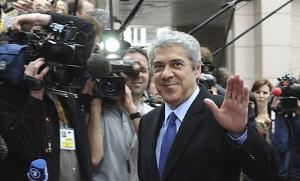 Portugal's financial collapse now appears more likely following Prime Minister Jose Socrates abrupt resignation this week. "The opposition took away the government's ability to continue running the country. Consequently, I have presented to the president of the republic my resignation from the post of Prime Minister," Socrates said.
Markets took the resignation as a sign that debt-heavy Portugal has given up its year-long battle to avoid a bailout.
The announcement pushed interest rates on the government's 10-year bonds to a record high - making it more likely that Portugal will ask for emergency rescue funds just as Greece and Ireland did last year.
In Brussels, where anti-austerity protests have begun, the new crisis threatens to overshadow an EU summit meant to reassure markets that the euro is sound.
"There is another EU summit today [Thursday] at which the bail [out] package is due to be raised, so these new developments will influence that. We can definitely see an influence on the Euro which dropped two cents overnight," said Market expert Fidel Helmer.
Analysts estimate the cost of the Portugal bailout at 80 billion euro, or about $113 billion. Angus Campbell at London Capital Group says investors are waiting for concrete action from Brussels. "The difficulty for the euro at the moment is of course getting coordinated agreement and more than anything else, getting support from Germany which is of course the power house of Europe," Campbell said.
German Chancellor Angela Merkel expressed disappointment. She was critical of the country's politicians for not being able to reach a compromise.
"It is about the future of the euro, it is financial stability and whether a country and its prime minister, whether a Social Democratic or Christian Democratic, shows responsibility. And it is regrettable that parliament did not support the reforms," Merkel said.
Portugal's outgoing leader says the country has enough cash reserves to meet a $6.4 billion debt repayment next month. But analysts say a smiliar payment in June is doubtful.
Portugal is one of the smallest economies in the 17-nation eurozone, but its financial collapse could trigger fresh worries about other debt-heavy euro countries such as Spain, Belgium and Italy.
EU Leaders Discuss Spreading Debt Crisis
European leaders are holding talks Thursday and Friday on ways to halt the spread of the eurozone debt crisis that has led to the resignation of Portugal's prime minister.
Even before European Union leaders gathered in Brussels, two events served to remind them that the economic crisis is far from over. Late Wednesday, Portuguese Prime Minister Jose Socrates submitted his resignation after the parliament rejected his latest austerity budget.
And thousands of workers demonstrated in the Belgium capital against economic reforms they claim are too pro-business.
EU leaders were supposed to agree during this summit to a comprehensive set of steps to prevent the spread of the financial crisis within the 17 nations sharing the euro currency. But analysts like Olivier Jehan, head of the Brussels office of the French Institute of International Relations, doubt that will happen.
"It's difficult to reach an agreement if you have a caretaker government in Portugal," said Jehan. "And also some political difficulties in Finland."
Chancellor Angela Merkel of Germany, whose population has balked at bailing out debt-strapped members like Greece, also is facing key regional elections. Berlin is likely to demand tougher conditions for lending to poorer members.
In Portugal, Prime Minister Socrates has been reluctant to follow the path of Greece and Ireland, which both accepted EU bailouts. Jehan doubts a debt measure for Portugal will be agreed to this month.
"The first thing is to find a new government," he said. "I'm not sure that the current government, after the resignation of the prime minister, is able to take any decision on this matter."
Libya also is expected to dominate the agenda, with EU members divided over the current military action. Observers say it is unlikely leaders will come to any major decision this week on Libya beyond humanitarian assistance.
US Stocks Rise
U.S. stock market indexes advanced sharply in Thursday's trading.
The Dow Jones Industrial Average gained seven-tenths of a percent to end at 12,171. The S&P 500 moved up nine-tenths of a percent to close at 1,310, and the NASDAQ advanced 1.4 percent to reach 2,736.
European stock markets closed higher. London's Financial Times 100 index ended up 1.5 percent to close at 5,881. The CAC40 in Paris moved up 1.4 percent to end the day's trading at 3,969, while the DAX in Frankfurt jumped 1.9 percent to finish at 6,934.
Earlier Thursday in Asia, Tokyo's Nikkei index lost two-tenths of a percent to close at 9,435. Hong Kong's Hang Seng index gained four-tenths of a percent to finish the day's trading at 22,915.
The price of gold fell more than $10 to trade at $1,426.95 an ounce.
The dollar rose against the yen but lost value compared to the euro.
Gold Hits Record Price
The price of gold has hit a record high — due largely, analysts say, to the turmoil across much of the globe.
Gold sold for nearly $1,448 an ounce on Thursday, pushing past the previous record set earlier this month.
Gold is often viewed as a safe haven during times of crisis. Analysts say many investors are uneasy about the value of other securities — especially with political uprisings in the Middle East, worries about European debt and concerns about the economic aftershocks of Japan's earthquake and tsunami.
Also at a record high is the price of another precious metal — silver. It reached a 31-year high of more than $38 an ounce Thursday.