
New Pics from Rihanna’s Chris Brown Beating Surface

Just days after Rihanna’s restraining order against ex-boyfriend Chris Brown was relaxed, new pictures of the badly beaten R&B star leaked online.
The previously unseen pictures, posted by gossip site MediaTakeOut.com, were reportedly taken in the hours after Rihanna was assaulted by Brown in February 2009. The photographs appear to show the singer with extensive bruising, mainly on her right eye and lips.
Meawhile:
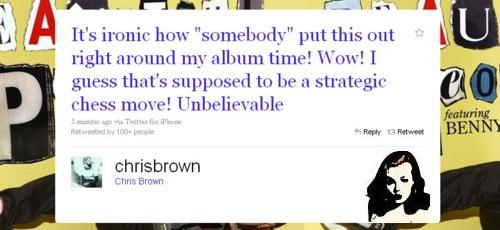
Chris Brown has taken to Twitter to complain about the timing of leaked photos showing the extent of his attack on ex-girlfriend Rihanna.
“The Devil is always busy. But when u have a destiny, nothing or no one can stop what god has planned,” Brown wrote in one of the tweets, which have since been removed from his page.
Source:EUR

Donald Trump: Rihanna is Disrepectful and Can’t Sing
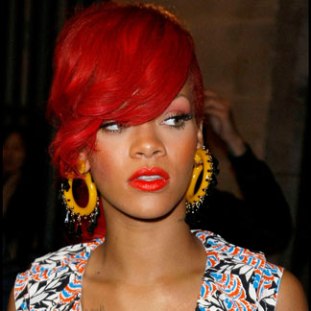 Over the weekend, Rihanna canceled on money man Donald Trump, claiming she was sick. But the singer performed at the All-Star Game.
According to Trump, he hired her for a fundraiser in South Florida, but bailed last minute due to illness. But within 24 hours, she miraculously was healed and on stage in Los Angeles doing her thing.
“I thought that (Rihanna bailing) was insulting to everyone,” Trump shared. “But for Rihanna to go to the All-Star game and perform after she told us she was sick, that is just a lack of respect.”
Reportedly, Trump paid the Barbados native $500,000 for her performance. But fortunately, a replacement, Jennifer Hudson, came through last minute.
“Nothing was missed. Jennifer’s a beautiful girl. She came on her day off even though she performs almost every night,” Trump said of his super sub. “She is an unbelievable talent, and her voice is better.”
Motown Sound and Legend Honored at White House
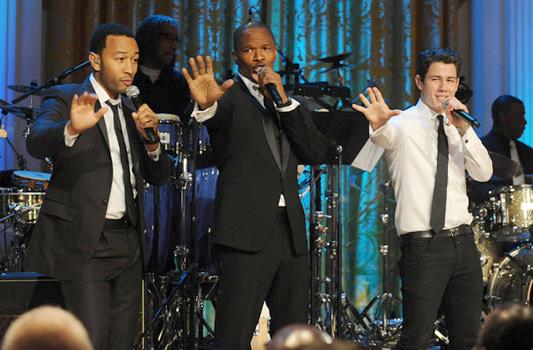
John Legend, Jamie Foxx, Nick Jonas, Seal and other musicians busted out the Motown classics at the White House on Thursday for a group of cheering teens in the spirit of President Barack Obama and his wife’s musical youth.
“Times have changed but the amazing thing is that that music is still relevant,” Legend said after he sat down at a piano in the State Dining Room and delivered a room-filling rendition of Stevie Wonder’s “Love’s in Need of Love.”
The singer shared some of his own childhood memories when he first was introduced to Motown, saying it was his dad and uncle’s singing that inspired his love for music.
Mrs. Obama explained that it was more than music; it was a social movement.
“As Motown rose, so did the forces of change in this country,” she said. “During that time, it was the time of King and Kennedy, it was a time of marches and rallies and groundbreaking civil rights laws.”
But there was more music in store before the evening was over. In fact, several of the Motown vets as well as the man himself, Berry Gordy, were in the house and represented the big M quite nicely.
Smokey Robinson took the stage with Sheryl Crow for a duet on his hit, “You Really Got a Hold on Me,” and then Stevie Wonder followed with his classic, “You Are the Sunshine of My Life.”
“Berry, thank you for this incredible Motown ride,” Wonder said, calling for the crowd to celebrate by “dancing in the streets” to introduce the showstopper of the same name, joined by all the other performers, as well as Martha Reeves of Martha and the Vandellas.
In a bit of Motown soul, Reeves brought down the band in the middle of the song to improvise some praise for Gordy as the music continued lightly, and then the Obamas and daughter Sasha took the stage for the rousing finish.
Remy Ma's Appeal Struck Down By Court
Remy Ma's appeal of her conviction was rejected by a Court of Appeals today (February 24th).
Remy Ma was convicted of shooting her friend Makeda Barnes-Joseph in July of 2007, during an argument over $3,000.
The rapper was sentenced to eight years in prison for criminal possession of a weapon.
According to the Associated Press, a court rejected Remy Ma's argument that jurors were not properly informed before the guilty verdict was rendered.
Remy Ma, who is serving her prison time at Bedford Hills Correctional Facility for Women, is slated to be released in 2013.
LL Headed To 42nd Annual NAACP Image Awards
Rapper/actor LL Cool J is among the many guests who will attend the 42nd annual NAACP Image Awards, which will broadcast live from Los Angeles this March.
LL will join a variety of celebrities who will honor the top African-American achievers in literature, film, music and television.
Stars like Halle Berry, Vanessa Williams, Kerry Washington, Kimberly Elise and comedian Affion Crockett will also appear during the NAACP Image Awards, which will feature performances by Mary Mary and Michael Franti.
The 42nd Annual NAACP Awards will be hosted by Holly Robinson Peete and Wayne Brady.
The event will be broadcast from Los Angeles' Shrine Auditorium on Friday, March 4th from 8:00-10:00PM EST.
Carmelo Anthony's Wife La La Lands New Reality Show
Carmelo Anthony's wife La La Vazquez has landed a new reality show that will chronicle the couple's move from Denver, Colorado to New York.
La La is gearing up to film "La La's Full Court Life" for VH1, the follow up to the network's hit 2010 reality series "La La's Full Court Wedding."
The announcement comes on the heels of Anthony's trade from the Nuggets to the New York Knicks on Monday (February 21st).
According to Variety, 10 episodes of "La La's Full Court Life" will run on VH1 starting this August.
"Viewers connect with La La because despite the fairy-tale wedding and NBA-star husband, she is a real, down-to-earth, hardworking woman who stays true to herself," Jeff Olde, VH1 original programming and production EVP told Variety. "The best thing about the new series is that while pursuing and realizing her dreams, La La gets to take us back to her home in New York, where her story began."
The series is being executive produced by Chris Abrego and Carmelo Anthony's Krossover Entertainment, which also counts Hip-Hop artist Diege Cash as an artist on the roster.
How gas spikes 6 cents in one day
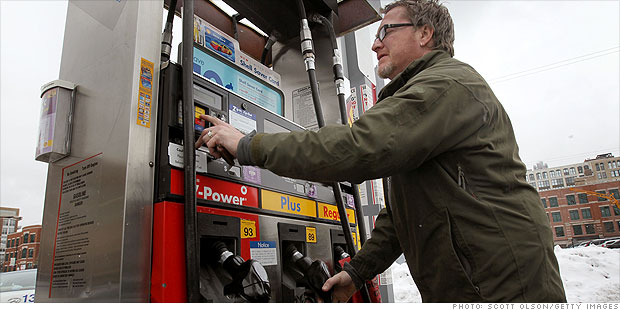 Gas prices spiked 6 cents Friday, the biggest one-day jump in two years, and drivers are probably wondering how prices can rise so much in such a short period of time.
Sure, oil prices surged past $100 a barrel Thursday in the wake of violence and protests in the Middle East. But the gas you're pumping at the station was probably made two or three weeks ago, when U.S. crude was trading in the high $80s.
So why the 6 cent jump?
Current gas prices aren't pegged to how much it cost refiners to make the gallon going into your car. They're pegged to what it will cost them to replace the gallons you're consuming.
Refiners sell gasoline and other products at pipeline terminals and barge ports scattered around the country. There are about 350 terminals where gas gets picked up for distribution and this is where wholesale prices are set.
The oil used to produce a gallon of gas may have cost the refiner $85 but the price of that gallon of gas will depend on the price of oil at the time of sale.
"If a refiner sells that gallon, what will it cost him to replace it the next day," said Brian Milne, refined fuels editor at Telvent DTN, an information provider. "The market is dictating these prices, it's not a retailer or wholesaler trying to gouge."
When gas prices go up, motorists generally blame the gas station. In fact, the recent spike has been quite tough for station owners. While retail prices have risen 12 cents, wholesale prices have surged 19 cents -- jumping 13 cents on Wednesday alone.
"Gas station owners are miserable, and they still haven't passed on all the price increases," said Tom Kloza, Chief oil analyst at the Oil Price Information Service. "They would love to see prices drop."
Station owners actually make their money when prices are on the way down -- when they can buy the replacement gas for a cheaper price than they are selling the stuff that's stocked in their tanks, Kloza said.
U.S. crude out of whack
Astute market watchers may have become suspicious when gas prices spiked at the same time as U.S. oil prices. But U.S. oil prices aren't the whole story.
U.S. prices were depressed by a glut in supply and began their surge just in the past week. But worldwide oil prices had already been rising for over a month.
Gasoline consumed here is made from oil that comes from all over the world, so just watching U.S. prices doesn't yield a clear picture of why gasoline has become so expensive.
Shutdown: Washington gets ready
Washington has started getting ready for a possible government shutdown.
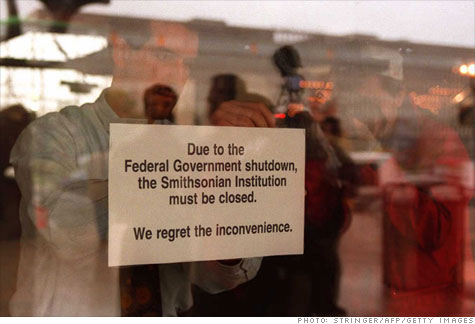 Behind the scenes, federal agencies are working on their plans for shutting down operations and deciding how many workers they need to perform essential operations.
Congress has one week -- until the end of March 4 -- to pass another short-term bill to fund federal agencies. If they fail, agencies are legally obligated to perform only essential activities necessary to protect life and property.
In other words, agencies have to move at warp speed to quickly wind down most operations. If they don't, they face legal ramifications for spending money they're not allowed to.
Social Security is safe in a federal shutdown
The government would keep essential services -- like air traffic control and the national security apparatus -- in full operating mode.
Each agency has its own shutdown plan. To prepare for next week, the agencies are updating their plans and submitting them to the White House's Office of Management and Budget.
Obama administration officials have declined to release those plans, which include details like how many employees are needed to perform essential functions, and how long it will take each agency to complete a shutdown.
The budget office maintains the agencies are prepared.
"OMB is prepared for any contingency as a matter of course -- and so are all the agencies," Kenneth Baer, OMB communications director, said earlier this week in a statement. "In fact, since 1980, all agencies have had to have a plan in case of a government shutdown, and they routinely update them."
Both Democratic and Republican leaders in Congress have said they want to avoid a shutdown.
But OMB is watching Congress. According to the guidance distributed to other federal agencies, OMB says it will monitor the status of congressional actions and notify agencies if shutdown plans are to be implemented.
The last time the federal government went dark was during the Clinton administration: five days in November 1995 and another 21 days ending in January 1996.
At the time, Sen. Dianne Feinstein asked the Government Accountability Office to prepare a report that detailed how many workers would be kept on the job.
Relying on each agency's shutdown plan, the GAO found that some agencies, like NASA, would furlough more than 90% of its employees. Meanwhile, the Justice Department would retain 75% of its staff.
Of course, 15 years have passed since the GAO studied the issue, and plans might look significantly different. And in practical terms, agencies are allowed some wiggle room in who they keep on the job.
During the Clinton-era shutdown, new Social Security claims weren't being processed because the Social Security Administration furloughed 61,415 employees. As the shutdown wore on, the agency adjusted its plan and recalled workers to start processing new claims.
Still, a lot of services provided by the government would go dark.
In the last major shutdown, the government closed 368 National Park Service sites, along with national museums and monuments, according to a Congressional Research Service report.
In addition, 200,000 passport applications went unprocessed, and toxic waste cleanup work at 609 sites stopped, according to the same report. The National Institutes of Health stopped accepting new clinical research patients, and services for veterans, including health care, were curtailed.
Sri Lanka president calls for new world financial order
The president of Sri Lanka has called for a new financial order to prevent future world financial crises.
President Mahinda Rajapaksa said the industry had been mainly focusing on regulating institutions since the 2008 downturn.
But he said the emphasis need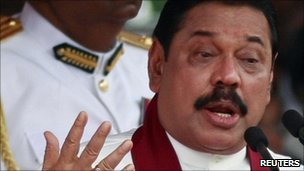 ed to move to managing economies that had a global impact.
President Rajapaksa singled out the US as needing to act with more global responsibility.
He accused Washington of injecting "massive quantities of new money" which would have a "massive negative impact on the world".
'Double standards'
Addressing a regional summit of bank governors in Colombo, Mr Rajapaksa said the world had learned individual and common lessons from the crisis which had shaken the very foundations of the global financial structure.
There was therefore a need for a new financial order, and a model that would better equip the world to face similar crises in the future, he added.
President Rajapaksa commended financial communities for deciding to regulate and supervise the financial institutions which were considered "too big to fail".
But he added that "by the same token, it is also necessary for the worldwide financial community to focus upon the management of economies that have a global impact, and therefore have become 'too big to fail'."
Opening the South East Asian Central Bank Governors' (SEACEN) Conference, the Sri Lankan president said "double standards, the obvious policy contradictions and inconsistencies, the stubbornness of large economies to face realities and attempts to politicise multi-lateral financial organizations" had been the main causes of the global economic crisis.
Pointing to the US as an example, Mr Rajapaksa called upon "globally influential economies" to act in a "globally responsible manner" without putting their partners in danger.
"Many economic analysts have pointed out how the world has been anxiously watching while massive quantities of new money were injected by [the] USA into their economy, and through such infusion, into the entire world," he said.
"It is widely expected that such infusion, while possibly stimulating growth and employment within the issuing nation, would have a massive negative impact on the rest of the world in time to come."
UK GDP figure revised down further
The UK economy shrank by more than previously thought during the last three months of 2010, revised figures show.
Gross domestic product (GDP) slipped by 0.6% in the period, according to fresh data from the Office for National Statistics (ONS).
Its initial estimate had suggested the economy had contracted by 0.5% - with heavy snow blamed for the slump.
However the ONS said that the revision was not a dramatic one.
"It's not that much of a shock, this is a very small revision," the organisation's chief economist Joe Grice told BBC News.
"The snow effect we think is still 0.5%. On the basis of that, the economy is still flattish at minus 0.1%. The overall picture is still a flattish underlying economy in the fourth quarter."
The latest US GDP figures for the same period were also released on Friday and also revised down, from growth of 0.8% to 0.7%.
The pound fell slightly after the UK figures were released, to trade at $1.607, down 0.5 of a cent. Against the euro, the pound was unchanged at 1.17 euros.
The ONS statement said that production industries, which include manufacturing and mining, had grown slower than previously estimated.
The service sector had also contracted by more than first thought, by 0.7% rather than 0.5%, the ONS said.
But the slump in construction had not been as bad, with the output of the industry declining by 2.5% rather than 3.3%.
GDP figures for a particular quarter are produced first as a so-called "flash" estimate, and are later revised at least twice as more detailed information is collated.
Shadow chancellor, Ed Balls, said the latest figures were "disappointing".
"Of course, we should always treat one quarter's figures with caution, but it is not cautious for the Treasury to plough on regardless," he added, accusing Chancellor George Osborne of "being complacent now in refusing to accept that his choice to cut too deep and too fast is holding back our economy and putting jobs at risk".
However Chief Secretary to the Treasury, Danny Alexander, said he expected the economy to recover.
"Of course, as we have said before these figures are disappointing. We have got to deal with the fact that we have inherited an enormous budget deficit - the previous government maxed out the nation's credit card.
"But we have also got to do what we can to support the economic recovery. The early survey data suggests that the economy is able to bounce back and we are going to continue to do everything we can to support that."
One small business lobby group, the Federation of Small Businesses (FSB), said the weak figures meant the government should do more to help.
"We need to see the government use next month's Budget to provide economic stability," said FSB chairman John Walker.
"The government does have tools at hand to help boost the confidence of small firms, such as extending the National Insurance holiday to existing businesses that take on new staff and keeping to its manifesto promise and introducing a fuel duty stabiliser."
The BBC's economics editor Stephanie Flanders cautioned against reading too much into the revision.
But she added that there was some "bad news" in the figures, especially the 2.5% decline in investment, which is considered an indicator of future business activity.
She added that net trade, once again, had made a negative contribution to the recovery - with exports growing 2.3%, but imports up 3%.
ING economist James Knightley said he expected the economy's poor performance to continue.
"The detail shows that government spending was the only positive growth driver. This is fairly worrying given we know about the wave of fiscal austerity that is now starting to hit the UK economy, meaning that we will soon be starting to see negative figures for this component."
Change of heart
Meanwhile Vicky Redwood, an economist at Capital Economics, said figures showing a worsening economics performance may cause a change of heart among those previously in favour of raising rates.
"The slight downward revision might give the more hawkishly inclined members of the MPC reason to pause for thought," she said.
Documents released on Wednesday showed three of the Bank of England's policymakers voted for a rate rise at their last meeting, with the remaining six Monetary Policy Committee (MPC) members voting to keep rates at historic 0.5% lows.
The minutes from the MPC's last meeting stressed that recoveries from recession were rarely smooth, so more weakness would not be unusual.
But it also said growth could pick up in the first quarter if the level of activity returned to normal after the snow, helped along by postponed expenditure.
They also indicated that those who had been against a rise in interest rates this month would consider changing their minds if GDP figures for the first three months of 2010 suggested the economy had picked up.