
Lloyds returns to profit to make £2.21bn
Lloyds Banking Group has returned to profit for the first time since it was bailed out by the government at the height of the financial crisis.
It saw a pre-tax profit of £2.21bn, compared with a £6.3bn loss in 2009.
A recovery in High Street banking offset rising bad debts in the Republic of Ireland, though its overall cost of bad loans fell from £24bn to £13bn.
The group had already revealed outgoing chief executive Eric Daniels would receive a £1.45m bonus.
Speaking to BBC business editor Robert Peston, Mr Daniels said he had not decided whether to take it.
Payment is deferred, he pointed out, and he would decide at a later date whether to accept it.
Mr Daniels said that 2010 had been an "important year, marking our return to profitability, and a further reduction in risk in our business".
"Our significant progress in the year has positioned the group well to become the best bank in the UK for all our stakeholders," he added.
The group added it had trimmed its bad debts thanks to the "slowly improving economic environment", but warned its problems in the Irish Republic had worsened in the last three months of the year, with bad loans hitting £4.3bn from £2.9bn in 2009.
It also cited Australia as a country that was presenting it with "specific economic challenges", because although economic performance had been "robust", property values outside the major cities were "particularly weak".
Lloyds shares fell around 4.5% on the news, although owing to a technical breakdown at the London Stock Exchange, morning share trading was blocked for several hours.
Heavy adjustment
Lloyds, which is 41%-owned by the government, said its profit figures had been heavily adjusted to reflect the acquisition of HBOS - Halifax Bank of Scotland - in 2009 - a deal that was brokered by the then-Labour government.
The 2009 pre-tax loss figure of £6.3bn assumes Lloyds owned HBOS for the whole of the year, even though the merger happened part way through it.
Eric Daniels said he was highly satisfied with the figures.
"Clearly when you have a bank of this size and a troubled portfolio, as we inherited from HBOS, you're going to see some swings and roundabouts, but it was a very, very good year, and probably the most pleasing part was we also reduced risk while we were doing it.
"We repaid a lot of central bank funding last year, £61bn. We also announced this morning that we repaid a further £13bn, and we've reduced the balance sheet quite considerably. So all in, a very good set of results."
Chris Skinner, chairman of the Financial Services Club, told the BBC that the bank's performance had been good enough to justify Mr Daniels taking his bonus.
"I think he deserves it. He's been there since 2003. This was a shotgun marriage that they had to made happen and work.
"He's made it work. There's a new chief executive coming in in March, so as a recognition of his success he has been successful and should take the money."

Brazil companies Petrobras and Vale post record profits
Brazil's two biggest companies have posted record profits for 2010, in the latest sign of the South American nation's growing economic might.
The oil giant Petrobras - which is partly state-owned - made $20bn (£12.4bn).
The mining company Vale made $17.3bn (£10.7bn), more than tripling its profits of the year before.
The two Brazilian companies have benefited from high global prices and rising demand for oil and iron ore.
Both are planning major expansion in the next few years.
Petrobras's profits were up 17% on the year before, largely as a result of high oil prices.
The oil giant raised $70bn in funds last year in the world's largest-ever public share offering.
That capital will be used to fund the development of huge oil reserves recently discovered off the coast of Rio de Janeiro.
'Best days'
Vale, the world's second biggest mining company and biggest iron ore producer, said its highest-ever net profits were the result of a "stellar performance".
"We are living through our best days," Vale's chief executive Roger Agnelli said in a company statement.
"However, given the size and quality of our pipeline of growth projects, amid a scenario of sustained global demand growth for our products, I strongly believe that even better days are ahead of us," he added.
Vale operates in more than 30 countries, but the export of Brazilian iron ore - above all to China - accounts for around two-thirds of its revenue.
It has been enjoying much higher income since it moved from an annual to a quarterly system for negotiating ore prices.
Other major oil and mining companies around the world also posted huge profits for 2010 as the result of high commodity prices and rising demand in emerging economies, coupled with economic recovery in developed nations.
Earlier this month Brazilian President Dilma Rousseff announced $30bn in public spending cuts in order to curb inflation and help stop the economy from overheating.
Brazil judge blocks Amazon Belo Monte dam
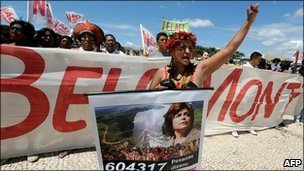 A Brazilian judge has blocked plans to build a huge hydro-electric dam in the Amazon rainforest because of environmental concerns.
Federal judge Ronaldo Desterro said environmental requirements to build the Belo Monte dam had not been met.
He also barred the national development bank, BNDES, from funding the project.
The dam is a cornerstone of President Dilma Rousseff's plans to upgrade Brazil's energy infrastructure.
But it has faced protests and challenges from environmentalists and local indigenous groups who say it will harm the world's largest tropical rainforest and displace tens of thousands of people.
Judge Desterro said the Brazilian environmental agency, Ibama, had approved the project without ensuring that 29 environmental conditions had been met.
In particular, he said concerns that the dam would disrupt the flow of the Xingu river - one of the Amazon's main tributaries - had not been met.
His ruling is the latest stage in a long legal battle over Belo Monte. Previous injunctions blocking construction have been overturned.
The government says the Belo Monte dam is crucial for development and will create jobs, as well as provide electricity to 23 million homes.
The 11,000-megawatt dam would be the biggest in the world after the Three Gorges in China and Itaipu, which is jointly run by Brazil and Paraguay.
It has long been a source of controversy, with bidding halted three times before the state-owned Companhia Hidro Eletrica do Sao Francisco was awarded the contract last year.
Celebrities such as the singer Sting and film director James Cameron have joined environmentalists in their campaign against the project.
They say the 6km (3.7 miles) dam will threaten the survival of a number of indigenous groups and could make some 50,000 people homeless, as 500 sq km (190 sq miles) of land would be flooded.
Ivory Coast: Rebels take western town Zouan-Hounien
Ivory Coast rebels fighting to oust President Laurent Gbagbo have taken control of a town in the west of the country, Mr Gbagbo's forces confirm.
The rebels, who control the north of the country, seized the town of Zouan-Hounien in an overnight attack.
Witnesses say unrest has spread to the capital Yamoussoukro, and the UN has warned that the country is at risk of relapsing into civil war.
Mr Gbagbo refused to stand down after losing an election last November.
The UN and foreign leaders have urged Mr Gbagbo to hand power to rival Alassane Ouattara, widely seen as the winner of the election.
The country has been divided along north-south lines since the end of civil war in 2003.
'Disturbing escalation'
Much of the recent fighting has centred on the main city of Abidjan, which is in Gbagbo-controlled territory.
This week, there has been heavy fighting in the Abobo neighbourhood of Abidjan, forcing hundreds of residents to flee.
The BBC's West Africa correspondent Thomas Fessy says it is unknown how many people have been killed during the gun battles, but Abobo is now the scene of daily bloodshed.
Meanwhile, a resident of Yamoussoukro, north-west of Abidjan, told the BBC that shots had been fired in the streets of the capital overnight.
Unconfirmed reports said five people were killed after clashes between pro-Gbagbo soldiers and Ouattara supporters.
It comes a day after violence erupted in the west of the country.
After fighting overnight, the rebels took the small western town of Zouan-Hounien from a pro-Gbagbo militia, residents and a militia leader said.
"Zouan-Hounien has fallen to the rebellion but we're in the process of re-organising ourselves [with the Ivorian army] to retake the town," Yao Yao, head of operations of the Front for the Liberation of the Greater West militia, told Reuters news agency.
On Friday, UN secretary-general Ban Ki-moon expressed concern at the spreading violence.
"These developments mark a disturbing escalation which draws the country closer to the brink of reigniting civil war," Mr Ban said in a statement released by his office.
He called on pro-Gbagbo forces to stop intimidating UN peacekeepers in the country.
Armed intervention?
Separately, the UN's refugee agency says the number of civilians fleeing west to Liberia has surged.
"Until mid-week we were seeing around 100 people crossing the border daily. But over the past 24 hours alone, the numbers coming across have swollen to 5,000 people," the agency said in a statement.
Meanwhile, Nigeria's foreign minister Odein Ajumogobia has said any international military action to remove Mr Gbagbo will have to be approved by the United Nations.
He suggested an air or naval blockade would be more likely than a ground invasion.
An armed rebellion in 2002 split the world's largest cocoa producer between the north, held by New Forces rebels, and the government-controlled south.
Mr Ouattara, recognised by the UN as the winner of the elections, has been holed up in an Abidjan hotel secured by UN peacekeepers since the beginning of December.
Correspondents say in the intervening months business activity has come to a standstill.
All the main commercial banks closed their doors last week and tensions have escalated.
Libya unrest: Britons urged to leave on final flight
Britons still in Libya are being urged to leave on the final government-chartered flight from Tripoli later.
There are thought to be fewer than 500 Britons left in Libya, many of them oil workers in desert regions.
Foreign Secretary William Hague said the rescue operation was about to enter its final phase, but there was still concern over the isolated oil workers.
The Foreign Office says it has helped about 600 British nationals to leave the crisis-hit North African country.
Reports say anti-government protesters have faced heavy gunfire in the capital Tripoli, as the Libyan leader Colonel Muammar Gaddafi defies calls for him to stand down.
Fighting has raged for the past week between anti-government forces and pro-Gaddafi troops and militiamen in towns and cities outside the capital.
'Way out'
On Monday, Mr Hague will attend the UN Human Rights Council in Geneva as part of international efforts to end the violence.
In a statement, he said: "The message is clear: that there will be a day of reckoning for those guilty of the appalling atrocities. The world will act together to hold them to account."
He said there had been "gross and systematic human rights violations by the Libyan authorities".
Earlier, Mr Hague said as well as Saturday's last flight, the Royal Navy frigate HMS Cumberland would return to Benghazi, Libya's second largest city, to pick up more evacuees, probably on Sunday.
"There are now very few British nationals remaining in Tripoli. It's very important that those that remain go to the airport, that they do so at first light [on Saturday]," he said, adding that Saturday would see the last government chartered plane leave Tripoli.
"For.. anyone else who can get to Benghazi, HMS Cumberland will return probably on Sunday. I want them to know that they do have a way out."
With regards to those stranded in desert locations, Mr Hague added: "We are doing a lot of work on how we can help them. We can't say anything more about that at the moment."
The Foreign & Commonwealth Office (FCO) has given details of flights returning British nationals to the UK:
- A flight chartered by oil company BP carrying 79 Britons landed at Gatwick airport on Thursday morning
- An FCO-chartered flight carrying 181 adults and two children, including 113 Britons, landed at 2030 GMT on Thursday
- Another FCO-chartered flight arrived at Gatwick at 0315 GMT on Friday, carrying 130 people including 53 Britons
- A charter flight carrying three Britons arrived at Stansted airport at 0530 GMT
- A charter flight which left Tripoli at 1630 GMT, arrived at Gatwick at 1954, carrying 34 Britons, 18 Canadians and 27 other nationals
Some 49 British nationals have also departed on a US ferry from Tripoli harbour.
HMS Cumberland has picked up 207 people including 68 British nationals from Benghazi and is due to arrive in Malta on Friday night, where evacuees can pick up flights to the UK.
An FCO spokesman said: "We are doing all we can to get [British nationals] out of Libya, drawing on both military and commercial assets, as well as working with international partners."
The FCO said it had helped directly about 450 British nationals to leave Libya, and facilitated the departure of another 150.
It added that information from British companies indicated there may be more than the 170 British workers in remote desert camps previously thought, but it would not be drawn on the exact number for "security reasons".
British Airways and fellow UK carrier bmi, which both usually operate daily flights between Heathrow and Tripoli, have cancelled their Libya services up to and including Monday.
Prime Minister David Cameron has apologised for the speed of the government's response to the crisis in Libya and said lessons would be learned.
Labour leader Ed Miliband said: "There is a worrying whiff of incompetence about the way this government is handling this issue, and it's become a pattern with this government about the way decisions are made and the way things are handled.
Libya: United States announces sanctions
The United States is to impose unilateral and multilateral sanctions on Libya, including halting operations from the US embassy in Libya.
The US was acting "to put pressure on the regime" to cease the violence, White House spokesman Jay Carney said.
The move was made "in concert with our international partners", he added.
It was announced after reports from the Libyan capital said anti-government protesters in Tripoli had come under heavy gunfire.
There are reports of deaths and injuries, but no reliable information about casualties.
Protests in the city resumed as those seeking the overthrow of Libyan leader Muammar Gaddafi emerged from mosques following Friday prayers.
The people of Libya have expressed that Libyan leader Muammar Gaddafi's continued use of "deadly violence" is unacceptable, Mr Carney said.
'Violence or atrocities'
The White House also said it was acting to cut off limited military assistance to Libya and had placed financial institutions on notice to watch for the sudden movement of funds from the country.
The US would not take any options off the table in regard to its response to the violence in Libya, including potential US military action, Mr Carney said.
"The United States is committed to utilizing the full extent of its capabilities to monitor the Gaddafi regime's behaviour to ensure that evidence is gathered of further violence or atrocities committed against the Libyan people," Mr Carney said.
"Colonel Gaddafi has lost the confidence of his people," he added, saying the leader's legitimacy has been "reduced to zero".
The Obama administration has been criticised for not responding swiftly enough to the turmoil in Libya, and Mr Carney's announcement is being seen as a significant shift in Washington's stance on the violence.
The news by the White House came as the last known US citizens in Libya were evacuated from the country.
A boat chartered by the US carrying more than 300 evacuees reached the safe shores of the Mediterranean island of Malta, and a chartered plane also flew US citizens out of the country and to Turkey.
Britain and India have also sent warships to Libya to carry foreign nationals to safety, while hundreds of sub-Saharan Africans are said to be fleeing southern Libya into Niger.
Isolating military leaders
The UN Security Council is due to meet later on Friday in New York to discuss options to respond to Libya's repression against its people.
Diplomats say Britain and France have drawn up a draft resolution with a package of measures aimed at isolating Libya's political and military leaders.
Meanwhile, Libyan state television has shown pictures of Col Gaddafi addressing a large crowd in Tripoli's Green Square.
He was shown speaking from the old city ramparts and urging the crowd to arm themselves and defend the nation and its oil against anti-government protesters who have taken control of large parts of the country.
"This is the people that brought Italy to its knees," he said, referring to the overthrow of Libya's colonial rulers. "I am amid the masses, and we shall fight, and we shall defeat them."
TCI Civil Service Association Management Council Meets Governor and His Team
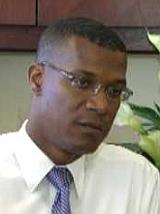 The Turks and Caicos Islands Civil Service Association Management Council met with His Excellency Governor Wetherell and his team this pass Friday on an introductory meeting. The meeting was seen as a positive first step in what is expected to be a continuous dialogue between the revitalized TCI Civil Service Association and the Interim Administration in an effort to find amicable solutions to the many issues that face Civil Servants today.
Chief on the agenda was the already commenced Civil Service reform exercise with the Civil Service Reform Advisor Mr. Steven Catchpole in attendance to present the methodology of the Reform Process. Outlined was the timeline for which the process will be completed, whom and how persons will be involved in the process, and the desired outcome. It was agreed that the Mr. Catchpole would meet with Civil Servants in Grand Turk in early March 2011 in the first instance.
Also discussed was the role of the numerous advisors employed to assist the TCI Government. The Management Council sought clarification of their Terms of Reference and raised the widely held concern by many Civil Servants that the attitudes of and treatment by said advisors is unbecoming of the positions they hold. To this the Chief Executive Mr. Mark Capes assured that should there be any legitimate cases in this regard that he be informed post hast so that he may deal with them immediate.
Additionally, the Management Council has put forth a number of issues to the Chief Executive for which they are confident will be answered in a timely manner.
Present at Meeting:
TCI CSA Management Council
Dr. Rufus Ewing, President, TCICSA
Jamell Robinson, Vice President, TCICSA
Louise Thomas, Public Relations Officer, TCICSA
Samantha Glinton, Secretary General, TCICSA
Hue Adams, Provo CSA Branch Representative
Interim Administration
H.E. Governor Gordon Wetherell
Mark Capes CEO, OPSM
Susan Malcolm, P/S Human Resources, OPSM
Caroline Gardner, CFO, Min of Finance
Steven Catchpole, Civil Service Reform Advisor, OPSM
TCHTA PRESENTS 2011 BOARD OF DIRECTORS

The first Annual General Meeting (AGM) of the Turks and Caicos Hotel and Tourism Association (TCHTA) was held in January 2011. The overall objective of the meeting was to address issues affecting the tourism industry in addition to announcing the 2011 Board of Directors.
The meeting was chaired by TCHTA’s CEO Caesar Campbell, who welcomed everyone and further went on to recap the accomplishments of 2010, such as the boastful returns from marketing initiatives. Mr. Campbell also focused on the way forward for 2011 while encouraging members to remain steadfast in their support of the Association.
The highlight of the evening was the presentation of the newly elected Board of Directors, which was announced by Karen Whitt, President of the TCHTA.
-
Karen Whitt – President, The Regent Palms
-
Adrian Whitehead – Vice President, Beaches Resort
-
Beverly Williams – Director, Point Grace Resort
-
Mike Hryniuk – Director, North West Point Resort
-
Pierre Beswick – Director, The Sands Resort
-
Tierria Missick – Director, The Tuscany
-
Alan Jardin – Allied Director, Dive Provo
-
Chloe Zimmerman – Allied Director, Marco Travel
-
John Smith – Ex Officio Member, TCI Airports Authority
In an effort to bring about clear explanation regarding the selection process, Ms. Whitt explained that, “The by-laws stipulate that members are not eligible to serve more than one consecutive term, which is identified as a two-year post. It was unanimously agreed to amend the by-laws to allow board members and elected officers to serve two consecutive terms, for a total of four years.”
Members also agreed that the current Board of Directors should remain in place since they were all pleased with the work that has been done, especially in the area of marketing the destination.
US coast guard to stay in TCI waters
The Turks and Caicos Islands will not be alone in the fight against illegal drugs and migration as many feared when the UK announced that they plan to withdraw their ships from the Caribbean as part of a cost cutting exercise.
There will still be OPBAT and the US Coast Guard.
This assurance comes after a report that the British will no longer provide a warship for anti-narcotic operations in the region, and will have to reduce its role in disaster relief work. The services will lose personnel and equipment, with the navy surface fleet of destroyers and frigates being reduced from 23 to 19.
Operations Bahamas, Turks and Caicos (OPBAT), is a joint U.S. Drug Enforcement Administration (DEA), U.S. Immigration and Customs Enforcement (ICE) and Coast Guard anti-drug and migrant smuggling operation.
U.S. Embassy’s spokesperson, Erica Thibault recently informed local media that the TCI are an integral part of the OPBAT program, and the effectiveness that the joint program has witnessed in the last 12 months is due to the mutual commitment to the OPBAT program on behalf of all three signatory Tripart Governments.
“Our mutual commitment to the OPBAT program, and its mission, was recently renewed and highlighted during the Joint Task Force conference held in Nassau, The Bahamas in December 2010,” she said.
The navy's Caribbean patrol was originally set up to guard British dependencies in the West Indies. In recent years, it has taken up a joint role countering drug runners and coping with humanitarian disasters during the June-October hurricane season. The navy operates with ships from other countries, including the US, the Netherlands and France. Its patrols in the area have made a significant impact on drug
TCI reef fund established
Two dedicated divers and part-time Turks and Caicos Islands residents have formed the Turks and Caicos Reef Fund to raise money to compliment and supplement government efforts to help preserve the country’s pristine coral reefs.
Through the sale of wrist bands and dive tags, plus donations, the TCI non-profit foundation has begun to accept grant applications from individuals, groups and organizations for projects that will enhance the marine environment of the TCI.
David Stone and Don Stark, co-founders of the TCRF said they have been coming to the Turks and Caicos since 1993, and are impressed by the conservation efforts already in place here with the National Marine Parks system, but rapid development on the islands is placing tremendous pressure on the marine environment.
The fund has chosen as its first project, in cooperation with the Department of Environment and Coastal Resources, the refurbishing or replacement of the snorkel trail markers on the reef in front of the Coral Gardens Resort,
Stark says the fund intends to spend at least 85 percent of the money raised on projects selected by its board. The rest will pay for purchasing dive tags, wrist bands and other support materials.
Stark is an underwater videographer, producer, director and editor who founded ScubaVision Productions. A diver since 1988, he is also a PADI certified Open Water Scuba Instructor.
Stone has been a professional nature photographer whose work has been featured many magazines, including Audubon Field Guides and National Geographic Filmstrips. His most recent photography can be seen in The Lionfish Cookbook published by REEF in December.