
Bermudians jailed for smuggling ganja from Jamaica
Two women who smuggled almost US$30,000 worth of drugs into Bermuda on board a charter flight from Jamaica have each been jailed for 18 months.
Bermudians Desiree Burrows, 21, and Shaniqwa O'Brien, 20, admitted concealing marijuana on their bodies before boarding the flight from Jamaica to Bermuda on January 8 when they appeared in a magistrates' court yesterday.
Burrows and O'Brien drew suspicion from customs officers after arriving at LF Wade International Airport. They were arrested separately on suspicion of importing drugs.
They were later found to have imported 282 grammes of cannabis resin — 141.5 grammes each — with a total street value of US$28,300.
O'Brien later told police she and Burrows had been offered a total of US$5,000 by a Bermudian male whom she could not name.
"It would seem to me that the only mitigating circumstances are the early guilty plea. They must benefit from the early guilty plea," Senior Magistrate Archibald Warner said.
"The purpose of sentence in these type of cases is a deterrent and that all these cases it should be an immediate custodial sentence."
Addressing the magistrate, O'Brien said: "I am really sorry I did this and I just want to get back to living my life."
Burrows said: "I understand what I did and I need to take responsibility for my actions but I'm truly sorry.
"I don't know why I did it because I had a job."
Source: http://www.jamaicaobserver.com

LIME lands Cuba link

Chairman of LIME Jamaica, Chris Dehring (second left) and three workers of Denholm Offshore -- (from left) Dane Barrett, Kirk McDonald and Cavern McLeod — pull on the new fibre-optic cable that links Venezuela, Cuba and Jamaica. LIME only recently landed its East-West Cable that links Jamaica, the British Virgin Islands and the Dominican Republic. Late last year, LIME and its parent company, Cable & Wireless Communications, signed a contract with Telecommunicaciones Gran Caribe (TGC), a joint venture between Cuba (Transbit SA) and Venezuela (Telecom Venezuela).
Under the agreement, LIME will be TGC's strategic landing partner in Jamaica and Cable & Wireless Communications will carry voice and data traffic from Cuba to Europe. The 240-kilometre segment of the cable which runs from Cuba to Jamaica was landed yesterday in Ocho Rios, St Ann.
The 1500-km cable, which originates in Puerto de la Guaira, Venezuela is the first international telecoms cable connect to Cuba for several decades.
Slash mortgage deductions for the rich
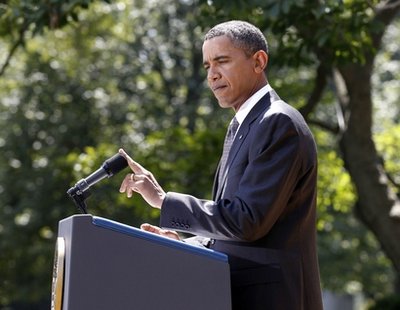 President Obama's plan to limit two popular deductions for wealthy taxpayers will hit a wall of resistance from entrenched special interests.
The president once again proposed in his budget to curtail high-income earners' tax deduction for mortgage interest payments and charitable contributions.
Under his proposal, taxpayers in the 33% and 35% tax brackets would only be able to deduct their contributions and mortgage interest payments at the 28% rate. It would affect those with taxable income of $250,000 and up and bring in $321 billion over 10 years, according to the White House.
The Obama administration, as well as several tax and deficit commissions, have called for limiting or eliminating the deductions in the past. But the proposals have gone nowhere and the same outcome is expected this year.
Still, the real estate industry and non-profit sector are not taking any chances. They are making it clear to both Congress and the White House that they strongly oppose any limits to the deductions.
'An attack on the middle class'
The real estate industry is a powerful advocate for the mortgage interest deduction. And they are a major lobbying force on Capitol Hill.
"We will oppose any limit," said Jerry Howard, chief executive of the National Association of Home Builders. "This is an attack on the middle class."
The industry is concerned that capping the deduction will hurt the housing market, which continues to stumble. The tax break makes homeownership more affordable, they argue.
This is the second time in recent months that the Obama administration has recommended curtailing the deduction, which costs the Treasury Department an estimated $131 billion a year. In December, a presidential debt panel recommended turning the itemized deduction in to a 12% non-refundable tax credit available to everyone. It would also cut the size of eligible mortgages in half to up to $500,000.
"NAR will remain vigilant in opposing any plan that modifies or excludes the deductibility of mortgage interest," National Association of Realtors President Ron Phipps said at the time.
And when the Realtors association speaks, lawmakers listen. The group spent $17.6 million on lobbying in 2010, the 13th highest, according to the Center for Responsive Politics.
In all, the real estate and home building industries spent more than $68 million last year.
Charities feel the pinch
While charities don't have the same spending power on lobbyists, they also plan to make their voices heard.
"We look for every opportunity to help policy makers understand the consequences of different proposals," said Tim Delaney, head of the National Council of Nonprofits, a network of charities.
Limiting the charitable deduction will likely curtail large donations to charities for the arts, environment, education and other sectors, he said. This would come at a tough time for many charities since they are seeing donations drop, while the demand for their services rises.
The 54 most generous donors in America gave only $3.3 billion in 2010, the smallest sum since 2000, according to a ranking compiled by The Chronicle of Philanthropy and Slate magazine.
Charities have tremendous clout, said Ken Berger, chief executive of Charity Navigator, which evaluates non-profits' fiscal operations. And they are very reliant on donations from the wealthy, who like their tax breaks.
"The deduction isn't the sole motivation, but it is significant," Berger said.
Chevron to fight multi-billion Ecuador ruling
Chevron has vowed to fight a multi-billion dollar judgment from an Ecuadorian court accusing the oil company of polluting the Amazon rainforest.
"The Ecuadorian court's judgment is illegitimate and unenforceable," said Chevron, in a press release Monday. "It is the product of fraud and is contrary to the legitimate scientific evidence."
Chevron (CVX, Fortune 500) said it will appeal the decision "and intends to see that justice prevails."
But the organization Amazon Watch believes that justice already has prevailed.
Amazon Watch praised the court in Lago Agrio for ruling in favor of Ecuadorians from the Amazon region "who have spent the last 18 years seeking damages for crude oil pollution."
"Today's ruling in Ecuador against Chevron proves overwhelmingly that the oil giant is responsible for billions of gallons of highly toxic waste sludge deliberately dumped into local streams and rivers, which thousands depend on for drinking, bathing and fishing," said Amazon Watch, in a press release.
The organization said that Chevron "inherited the suit" upon purchasing Texaco in 2001.
The amount of damages varies in different news reports, but is the range of $8 billion to $9 billion
Stocks poised for weak ope
U.S. stocks were headed for a flat opening Tuesday, as investors digested a weaker-than-expected report on January retail sales.
Dow Jones industrial average (INDU), S&P 500 (SPX) and Nasdaq (COMP) futures were little changed ahead of the opening bell. Futures measure current index values against perceived future performance.
Stocks ended Monday's session mixed, as investors digested President Obama's 2012 budget proposal in a quiet trading session. The $3.7 trillion budget request would cut the nation's long-term deficit by about $1.1 trillion, over the next 10 years.
The market has been moving gradually higher this year, amid expectations of an improving economy. The S&P 500 is up nearly 6% so far in 2011.
"Despite inflation problems in emerging markets, political turmoil and ever higher commodity prices, the market continues to grind higher," said Bruce McCain, chief investment strategist at Key Private Bank.
While the advance has not been "hyperbolic," he said investors continue to have a strong appetite for stocks and that "for now the trend is higher."
Economy: The Commerce Department said retail sales rose 0.3% in January, down from an increase of 0.5% in December. Sales were expected to have gained 0.5% in January, according to consensus estimates from economists surveyed by Briefing.com.
Sales, excluding autos and auto parts, also rose to a weaker-than-expected 0.3% -- compared to a 0.5% increase in ex-auto sales in December. Economists had forecast a rise of 0.6% in the measure for January.
The price index for U.S. imports increased 1.5% in January, the U.S. Bureau of Labor Statistics stated. The report cited higher prices for fuel and nonfuel imports as contributors to the advance. U.S. export prices rose 1.2% in January, following increases of 1.5% in November and 0.6% in December.
After the opening bell, the National Association of Homebuilders is scheduled to release its preliminary housing market index for February. The index is forecast to rise to 17, up from 16 the previous month.
Companies: Sirius XM Radio (SIRI) reported a loss of 2 cents per share in the fourth quarter, and issued a 2011 sales outlook that was slightly below analysts' expectations. Shares were down 3% in premarket trading.
Shares of Netflix (NFLX) fell 1.5% in premarket trading, a day after the stock rose to an all-time high. Chipmaker Qualcomm (QCOM, Fortune 500) said Monday it is developing a new platform to bring Netflix and other video streaming services onto Google (GOOG, Fortune 500) Android-enabled smartphones.
Hotel chain Marriott (MAR, Fortune 500) announced late Monday plans to split into two separate, publicly-traded companies. Under the plan, Marriott will spin off its timeshare operations and development business, as a new independent company. Shares were up 4% before the bell.
After the closing bell, Dell (DELL, Fortune 500) will report its quarterly results. Analysts surveyed by Thomson Reuters expect the company to report earnings per share of 37 cents, on $15.71 billion in revenue.
World markets: European stocks were mixed in morning trading. Britain's FTSE 100 ticked fell 0.1%, the DAX in Germany gained 0.1% and France's CAC 40 added 0.4%.
China's consumer price index rose 4.9% in January, up slightly from 4.6% growth in December, according to data released by the Chinese government Tuesday morning.
Asian markets ended the session mixed. The Shanghai Composite was flat and the Hang Seng in Hong Kong slid nearly 1%, while Japan's Nikkei added 0.2%.
Currencies and commodities: The dollar fell against the euro, the Japanese yen and the British pound.
Oil for March delivery gained 41 cents to $85.22 a barrel.
Gold futures for April delivery rose $8.70 to $1,373.60 an ounce.
Bonds: The price on the benchmark 10-year U.S. Treasury was unchanged, with the yield at 3.61%.
Chinese consumers squeezed by rising prices
Inflation in China has been on a tear lately, and Chinese consumers are feeling the pinch of rising food, energy and housing prices.
"Fuel prices are rising, toll prices are higher, food prices are rising; but even if it's expensive, we still have to eat!" wrote Little Fu 01 on Sina Weibo, China's version of Twitter.
Another user called Silent Insects writes: "I am so frustrated...prices rising prices rising prices rising."
China's consumer price index rose 4.9% in January, up slightly from 4.6% growth in December, according to data released by the Chinese government Tuesday morning.
China's rate far outpaces inflation in developed nations. Consumer prices rose a mere 0.5% in the United States in December.
Chinese food prices alone rose a staggering 10.3%, up from a 9.6% pace in December.
A Sina Weibo user called Fat Lady Bei posted, "One renminbi can buy a very small tomato or one cucumber. When I eat at the cafeteria, it's more expensive, and the portion sizes are smaller. Are we going to have to be like Japan in the future and ration our portions?"
The country's explosive real estate market is another source of frustration among average Chinese. Housing prices rose by 6.8% during the month.
"Lots of peasants' land has been confiscated to build apartment buildings and factories, and fewer people are planting food. All people can do now is just try to shrink their stomachs," wrote Little Fu 01.
Reining in rising prices
Two unusual circumstances may have distorted January's data slightly, making the numbers seem even lower than they actually are, said Jennifer Lee, a senior economist with BMO Capital Markets
Every five years, the Chinese government adjusts the way it calculates its inflation data, and that adjustment may have reduced the inflation number by putting less emphasis on food prices, Lee said.
Chinese New Year also came into play. Food prices rise, for example, when consumers stock up on food for their New Years' celebrations, and fall soon after, as demand returns to more normal levels.
But one thing is clear: China's inflation is very rapid, despite several government efforts to tame its swift rise.
"They don't want the economy to overheat," Lee said. "Unlike the rest of the developing world -- which is trying to boost economic activity -- China is trying to cool it down."
International leaders have recently criticized China for keeping its currency the yuan, also called the renminbi, undervalued. They argue it artificially reduces the price of Chinese exports, giving businesses there an unfair advantage in international trade.
But a weak yuan also hurts China's own people, economists say.
To combat inflation, the Chinese government has recently implemented several measures to tighten the reins on its economy.
Its central bank has raised the level of reserves that banks are required to hold seven times in the last year, and raised interest rates three times in the last four months.
Source:CNN Money
Nokia to get billions from Microsoft
Nokia, the world’s largest maker of phones, and Microsoft announced their alliance Friday. Both investors and employees reacted with dismay: Nokia’s stock dived 14 per cent and Finnish employees used flex time to go home early.
On Sunday, a day ahead of the start of the Mobile World Congress cell phone trade show in Barcelona, Elop told press, analysts and industry players that apart from the benefits of the alliance that were laid out Friday, Microsoft is paying Nokia billions of dollars to switch to Windows Phone 7. “This is something I don’t think was completely explained,” Elop said. Elop, a former Microsoft executive, said Finland-based Nokia had been courted by Google Inc as well, which sought to convince it to use its popular Android software for smart phones. Microsoft’s payments are recognition that Nokia had “substantial value to contribute,” said Elop.
Redmond, Wash.-based Microsoft introduced Windows Phone 7 last year, on phones made by LG Electronics Inc. and HTC Corp., but has only captured a few percentage points of the smart phone market, according to analysts. Nokia’s worldwide market share in smart phones was just over 30 percent in last year’s fourth quarter, down from 40 per cent a year earlier. Those phones use Symbian, a relatively old software package that wasn’t designed to be used with touch screens. Money and in-kind contributions will flow both ways in the deal, Elop reiterated. Nokia will be contributing its Ovi mapping service and will be paying Microsoft royalties for the use of its software, as other manufacturers do. It will save money by not continuing development of its own software. The net benefit is still in the billions, he said.
Analysts believe Google pays manufacturers to use Android, but no figures have come to light. Elop was hired in September to shake things up at Nokia, but he may face an uphill battle in getting employees on board. At the Barcelona event, Elop was asked whether he’s a “Trojan horse” — a Microsoft insider who’s penetrated Nokia and steered it in a direction favorable to Microsoft. “The obvious answer is ‘No,’” Elop said. “Thanks for asking.” He said the decision to go with Windows Phone was unanimous in Nokia’s senior management team. Nokia’s board approved the deal Thursday night, a day ahead of the announcement in London.
Adding Nokia’s market share to that of existing Android phones would have left the world with only two real players in smart phone software, Elop said. He didn’t mention the iPhone, but it’s the other dominant force in smart phones. A duopoly would have big ramifications for everyone, he said. “A decision to go with Windows Phone creates a very different dynamic,” Elop said. “It’s an environment where now, Windows Phone is a challenger.” Microsoft has made smart phone software for more than a decade. Windows Phone 7 is an attempt to make a clean break with the past, and create an operating system designed for big iPhone-style touch screens.
Oil falls as US supplies outweigh Mideast tensions
The price of benchmark crude fell to its lowest level in 12 weeks yesterday as oil traders weighed growing US oil supplies against unrest in the Middle East. West Texas Intermediate crude fell 77 cents to settle at US$84.81 on the New York Mercantile Exchange. US supplies of oil are rising, while demand for energy products remains tepid. “The US market is not reacting to anything because it’s just so oversupplied,” said Tom Bentz, analyst at BNP Paribas Commodity Futures.
Meanwhile Brent crude rose US$2.14 to settle at US$103.08 a barrel on the ICE Futures exchange in London, with traders concerned that unrest in several Middle East countries may disrupt oil supplies in the region. Brent is used to price oil in Asia and in Europe. It also goes to some East Coast refineries to produce gasoline. There were anti-government protests in Iran, Bahrain, Yemen and Algeria following the resignation of Egypt’s President Hosni Mubarak last week. The military said it will guide Egypt through a democratic transition, but labour protests over wages and working conditions continue around the country.
Traders are concerned that the unrest could interfere with shipments of oil from OPEC countries such as Iran, analysts said. The 12-nation Organisation of the Petroleum Exporting Countries, of which Saudi Arabia is the de facto leader, supplies over a third of the world’s crude. “The entire region’s production comes into question,” PFGBest analyst Phil Flynn said. “The risk is still very, very high.” “The reactions that we’re seeing in the markets over what’s going on in the Middle East are quite startling,” Bentz said.
China’s reported that exports rose almost 38 per cent in January to US$150.7 billion. That’s more than double the rate in December. It also had near-record imports of crude oil. China is the world’s second-largest economy after the US and the second-largest consumer of oil, according to the Energy Information Administration. That demand has helped drive oil prices higher in recent months. While China’s economy is robust, growing at a pace of nearly ten per cent at the end of last year, the government is worried about inflation and has taken steps to try to slow growth and rising prices. If China’s economy slows, so will its demand for oil, and that could affect prices of oil, Bentz said.
Obama's wackiest budget cuts
The funding grants nobody wants. The "mobile" policing unit that doesn't get around much. How about the big fancy telescope that has been mismanaged?
President Obama's 2012 proposal lists more than 200 programs that he wants to cancel or cut, for billions in savings.
And it offers a bewildering tour of government projects that don't work, are hopelessly outdated or downright wacky.
There's the $10 million Department of Agriculture program -- named after former Sens. McGovern and Dole -- that funds the study of micronutrients. Obama wants it eliminated because only one person applied for a grant last year.
Obama also wants to eliminate a mobile drug investigation team the government found to be "not mobile." It's supposed to help local cops in rural areas but instead is being "operated primarily in metropolitan areas near DEA offices." That would save $31 million.
The budget would cut $17 million from a program that is trying to transfer 150 million acres of land from the federal government to the state of Alaska or its citizens. The program was launched in the 1960s; five decades later, it is only 58% done. The administration says it is time to "streamline" the program and focus resources on completing the task.
Painful cuts in $3.7 trillion budget
Of course, these cuts will have to make it through an arduous budget process before becoming law. But hey, it's a start.
Also on the chopping block are well-intentioned programs that have become mismanaged or are no longer necessary.
The James Webb Space Telescope, the successor to the Hubble, is among those programs. Obama wants to cut $64 million from the program, which an independent group of experts found to have a "fundamentally broken estimate of cost and schedule."
Savings of $12 million would result from canceling a Department of Homeland Security program that provides federal funds to bus operators to beef up their security operations. The budget notes that the program awards are "not based on risk assessment."
Wealthy farmers could also face a steep reduction in federal government subsidies. Currently, farmers with up to $750,000 in income are eligible for federal payments of $40,000. Obama's proposal would cap the benefit at $30,000 and reduce the maximum income for eligible farmers to $500,000.
A bevy of small scholarships also face an elimination of funding. One on the chopping block is the Harry S. Truman Foundation scholarship fund, which received $1 million in 2010 even though it had operated without government help since the 1970s.
The Obama budget would also knock out a $1 million scholarship for Olympic hopefuls who are pursuing postsecondary education and training.
That program is administered through the Department of Education, which "lacks evidence" as to the program's effectiveness, according to Obama's budget. The budget notes that athletes with financial needs may still receive grant, work-study and loan assistance through other programs.
In the context of Obama's $3.7 trillion budget plan, these programs are small-fry. The budget, which is likely to face stiff resistance in Congress, takes a big bite out of domestic spending and would slash deficits by $1.1 trillion over the next decade.
Two-thirds of those deficit cuts would result from spending reductions, while a third would come from an increase in tax revenue, according to senior administration officials.
Grenada will soon adopt CCJ, says PM
 Grenada Prime Minister Tillman Thomas, having criticised the Jamaica government for considering its own final appellate court rather than joining the Caribbean Court of Justice (CCJ), said that Grenada will soon take steps to adopt the regional court.
The CCJ started to hear appeals in April 2005, but so far only three countries, Guyana, Barbados and Belize, have accepted the CCJ as the final court.
Meanwhile, according to reliable sources, the lone female judge on the Court, Desiree Bernard, who reaches retirement age on March 2, has been given a three-year extension.
President of the Court, Michael de la Bastide, goes into retirement in May and it is understood that the Caribbean Community (CARICOM) heads of government will name his successor when they meet on February 25 and 26 in Grenada.
The Regional Judicial and Legal Services Commission has reportedly shortlisted three candidates for the top position.