
World leaders denounce attacks on Egyptian protesters
Leaders around the globe joined a chorus of condemnation Wednesday over the eruption of violence in Cairo as embattled Egyptian President Hosni Mubarak struggled to maintain his grip on power.
Violence between pro- and anti-government demonstrators spread through the Egyptian capital despite Mubarak's announcement that he will not seek re-election in the presidential election this year.
The time for a political transition in Egypt "is now," U.S. presidential spokesman Robert Gibbs said. The Egyptian people "need to see change," and a "meaningful transition must include opposition voices and parties being involved in this process as we move toward free and fair elections."
U.S. State Department spokesman P.J. Crowley denounced the attacks, calling them "a direct threat to the aspirations of the Egyptian people."
"The use of violence to intimidate the Egyptian people must stop. We strongly call for restraint," he said.
British Prime Minister David Cameron warned that "if it turns out that the (Mubarak) regime in any way has been sponsoring or tolerating this violence, that would be completely and utterly unacceptable."
"These are despicable scenes that we're seeing, and they should not be repeated," Cameron said outside 10 Downing Street. "They underline the need for political reform and, frankly, for that political reform to be accelerated and to happen quickly."
German Foreign Minister Guido Westerwelle called on Egyptian security forces "not to use force against the demonstrators."
"Any escalation of the situation must be avoided at all costs, (and) gangs of thugs must be curbed immediately," he said. "The scenes of violence on the streets of Cairo throws into question whether the Egyptian political leadership has understood the importance of a speedy democratic reconstruction."
French President Nicolas Sarkozy said his country "renews its support for the Egyptians' aspiration for a free, democratic and diverse society."
"France will be alongside all those who intend to demonstrate peacefully," he declared.
Israeli Prime Minister Benjamin Netanyahu expressed concern over the makeup of the regime that will follow Mubarak, who has helped enforce a more than three-decade peace between Egypt and Israel.
"I am convinced that that the forces that want to bring change and democratization in Egypt will also enhance peace between Israel and the Arab world," Netanyahu told the Knesset. "But we are not there yet. The struggle has not been decided. ... We need to do everything to make sure that peace endures."
United Nations General Secretary Ban Ki-Moon called the violence in Cairo "unacceptable" and said it is important for an "orderly and a peaceful transition" to take place.
"We should not underestimate the danger of instability across the Middle East," he added.
Turkish Premier Recep Tayyip Erdogan asserted that Mubarak's administration "is not inspiring confidence for a quick transition to democracy," the Anatolia News Agency reported. "This is the people's expectation. ... A roadmap and a calendar for this should be announced, (and) I believe that such a transition should be made under an interim administration."
How much impact are the calls for change having on Mubarak? Probably not much, according to one veteran Middle East analyst.
Robert Danin, a senior fellow at the Council on Foreign Relations, noted that the apparent crackdown on anti-government protesters started the day after former U.S. Ambassador to Egypt Frank Wisner told Mubarak he should not seek another term as president.
Wisner was reportedly conveying that message from Obama.
"The timing is interesting," Danin said. "That suggests Mubarak has basically said, 'Enough. I've laid down my timeline, and now I'm digging in.' "
Danin called the eruption of violence "a clear rebuff" of the push for more immediate reform being advanced by the American and other governments.
Danin called Mubarak a man who generally "keeps his own counsel." The Egyptian leader does have a close relationship with Saudi King Abdullah, but Riyadh has generally been expressing support for Mubarak, Danin noted.
"I suspect (King Abdullah's) heart is with Mubarak right now," Danin said.

Gulf of Mexico 'to recover from BP spill by end 2012'
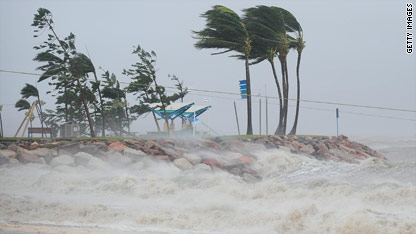 The Gulf of Mexico will have largely recovered from the BP oil spill by the end of 2012, the administrator of the $20bn (£12bn) pay-outs fund has said.
Attorney Kenneth Feinberg said that compensation to those who lost revenue from the disaster would be based on this prediction.
Meanwhile, a judge has ruled that Mr Feinberg make clear to claimants that he is not independent from BP.
The Deepwater Horizon spill was the biggest in US history.
The fund was set up by BP in August to compensate those affected by the spill, and has so far paid out about $3.3bn to 168,000 people.
Mr Feinberg said experts have determined that most of the oil would have dispersed and the economy picked up by the end of next year. There will be a 30% recovery in 2011, he added.
But he also noted that the recovery of oyster harvesting may take longer.
'Hybrid entity'
The assessment was based mainly on reports from a Texas professor and a consulting firm.
Based on the predictions, Mr Feinberg has proposed that claimants receive twice the amount they lost in 2010, apart from oyster harvesters, who will be offered four times as much.
Florida Attorney General Pamela Bondi, however, questioned the experts' predictions.
"While this office had hoped that the methodology would finally provide some transparency, this document provides no useful information to claimants beyond a simplistic multiplier and is based on very optimistic assumptions about unknown environmental and economic conditions," she said in a court filing.
A federal judge meanwhile said Mr Feinberg was not independent from BP and should not tell claimants that he is.
US District Judge Carl Barbier ordered that he clearly disclose in communications that he is acting for and on behalf of BP.
"The court finds that BP has created a hybrid entity, rather than one that is fully independent of BP," he said.
Mr Feinberg, who was appointed by BP and the White House, has faced repeated criticism about the time it is taking to pay out compensation, as well as the amount being handed out.
About half of the total 485,000 claims filed have been denied because of ineligibility or lack of documentation.
Louisiana resident Mike Helmer, a fishing guide, described the proposed offer as "a joke".
"He's asking people to sign away their rights for basically peanuts. I don't see anyone accepting this," he said . "This is an insult. This is unbelievable."
The Deepwater Horizon rig exploded on 20 April and sank off the coast of the Louisiana, killing 11 workers.
Larry Hagman to return for new Dallas series
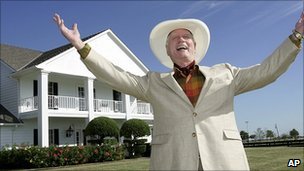 US actor Larry Hagman is to appear in a TV remake of classic 1980s soap opera Dallas, it has been announced.
The 79-year-old will reprise his role as oil baron JR Ewing in the new pilot, to be made by US network TNT.
Original stars Patrick Duffy and Linda Gray will also return to play Bobby and Sue Ellen Ewing respectively.
The new show will focus on the Ewing offspring - John Ross and Christopher Ewing - as they clash over the future of the family dynasty.
Desperate Housewives star Josh Henderson will play John Ross, played by child actor Tyler Banks in the original.
Jordana Brewster from The Fast and the Furious will play Elena, a character involved in a love triangle with the Ewing cousins.
Cynthia Cidre, who wrote 1992 film The Mambo Kings, has written the pilot for the next-generation update.
TNT has not confirmed when production will commence.
The original Dallas, which centred on two feuding Texan oil families, ran from 1978 to 1991 on US network CBS.
In 1980, 83 million viewers tuned in to find out "who shot JR" in one of the show's famous cliffhanger storylines.
In 2006 it was announced that Britain's Gurinder Chadha would direct a film version of Dallas, to star John Travolta in the JR role.
Little has been heard about the project since, though in a 2008 interview Chadha remained optimistic the film would eventually be made.
"Projects get resurrected and I like to think good scripts never say die," she told UK newspaper Metro.
Turn for the Worse: Mubarak Backers and Opponents Clash
 CAIRO – Supporters of President Hosni Mubarak charged into Cairo's central square on horses and camels brandishing whips while others rained firebombs from rooftops in what appeared to be an orchestrated assault against protesters trying to topple Egypt's leader of 30 years. Three people died and 600 were injured.
The protesters accused Mubarak's regime of unleashing a force of paid thugs and plainclothes police to crush their unprecedented 9-day-old movement, a day after the 82-year-old president refused to step down. They showed off police ID badges they said were wrested from their attackers. Some government workers said their employers ordered them into the streets.
Mustafa el-Fiqqi, a top official from the ruling National Democratic Party, told The Associated Press that businessmen connected to the ruling party were responsible for what happened.
The notion that the state may have coordinated violence against protesters, who had kept a peaceful vigil in Tahrir Square for five days, prompted a sharp rebuke from the Obama administration.
"If any of the violence is instigated by the government, it should stop immediately," said White House Press Secretary Robert Gibbs.
The clashes marked a dangerous new phase in Egypt's upheaval: the first significant violence between government supporters and opponents. The crisis took a sharp turn for the worse almost immediately after Mubarak rejected the calls for him to give up power or leave the country, stubbornly proclaiming he would die on Egyptian soil.
His words were a blow to the protesters. They also suggest that authorities want to turn back the clock to the tight state control enforced before the protests began.
Mubarak's supporters turned up on the streets Wednesday in significa
nt numbers for the first time. Some were hostile to journalists and foreigners. Two Associated Press correspondents and several other journalists were roughed up in Cairo. State TV had reported that foreigners were caught distributing anti-Mubarak leaflets, apparently trying to depict the movement as foreign-fueled.
After midnight, 10 hours after the clashes began, the two sides were locked in a standoff at a street corner, with the anti-Mubarak protesters hunkered behind a line of metal sheets hurling firebombs back and forth with government backers on the rooftop above. The rain of bottles of flaming gasoline set nearby cars and wreckage on the sidewalk ablaze.
The scenes of mayhem were certain to add to the fear that is already running high in this capital of 18 million people after a weekend of looting and lawlessness and the escape of thousands of prisoners from jails in the chaos.
Soldiers surrounding Tahrir Square fired occasional shots in the air throughout the day but did not appear to otherwise intervene in the fierce clashes and no uniformed police were seen. Most of the troops took shelter behind or inside the armored vehicles and tanks stationed at the entrances to the square.
"Why don't you protect us?" some protesters shouted at the soldiers, who replied they did not have orders to do so and told people to go home.
"The army is neglectful. They let them in," said Emad Nafa, a 52-year-old among the protesters, who for days had showered the military with affection for its neutral stance.
Some of the worst street battles raged near the Egyptian Museum at the edge of the square. Pro-government rioters blanketed the rooftops of nearby buildings and hurled bricks and firebombs onto the crowd below — in the process setting a tree ablaze inside the museum grounds. Plainclothes police at the building entrances prevented anti-Mubarak protesters from storming up to stop them.
The two sides pummeled each other with chunks of concrete and bottles at each of the six entrances to the sprawling plaza, where 10,000 anti-Mubarak protesters tried to fend off more than 3,000 attackers who besieged them. Some on the pro-government side waved machetes, while the square's defenders filled the air with a ringing battlefield din by banging metal fences with sticks.
In one almost medieval scene, a small contingent of pro-Mubarak forces on horseback and camels rushed into the anti-government crowds, trampling several people and swinging whips and sticks. Protesters dragged some riders from their mounts, throwing them to the ground and beating their faces bloody. The horses and camels appeared to be ones used to give tourists rides around Cairo.
Dozens of men and women pried up pieces of the pavement with bars and ferried the piles of ammunition in canvas sheets to their allies at the front. Others directed fighters to streets needing reinforcements.
The protesters used a subway station as a makeshift prison for the attackers they managed to catch. They tied the hands and legs of their prisoners and locked them inside. People grabbed one man who was bleeding from the head, hit him with their sandals and threw him behind a closed gate.
Some protesters wept and prayed in the square where only a day before they had held a joyous, peaceful rally of a quarter-million, the largest demonstration so far.
Egyptian Health Minister Ahmed Sameh Farid said three people died and at least 611 were injured in Tahir Square. One of those killed fell from a bridge near the square; Farid said the man was in civilian clothes but may have been a member of the security forces.
Farid did not say how the other two victims, both young men, were killed. It was not clear whether they were government supporters or anti-Mubarak demonstrators.
After years of tight state control, protesters emboldened by the uprising in Tunisia took to the streets on Jan. 25 and mounted a once-unimaginable series of demonstrations across this nation of 80 million. For the past few days, protesters who camped out in Tahrir Square reveled in a new freedom — publicly expressing their hatred for the Mubarak regime.
"After our revolution, they want to send people here to ruin it for us," said Ahmed Abdullah, a 47-year-old lawyer in the square.
Another man shrieked through a loudspeaker: "Hosni has opened the door for these thugs to attack us."
The pressure for demonstrators to clear the square mounted throughout the day, beginning early when a military spokesman appeared on state TV and asked them to disperse so life in Egypt could get back to normal.
It was a change in attitude by the army, which for the past few days had allowed protests to swell with no interference and even made a statement saying they had a legitimate right to demonstrate peacefully.
Then the regime began to rally its supporters in significant numbers for the first time, demanding an end to the protest movement. Some 20,000 Mubarak supporters held an angry but mostly peaceful rally across the Nile River from Tahrir, responding to calls on state TV.
They said Mubarak's concessions were enough. He has promised not to run for re-election in September, named a new government and appointed a vice president for the first time, widely considered his designated successor.
They waved Egyptian flags, their faces painted with the black-white-and-red national colors, and carried a large printed banner with Mubarak's face as police officers surrounded the area and directed traffic. They cheered as a military helicopter swooped overhead.
They were bitter at the jeers hurled at Mubarak.
"I feel humiliated," said Mohammed Hussein, a 31-year-old factory worker. "He is the symbol of our country. When he is insulted, I am insulted."
Sayyed Ramadan, a clothing vendor said: "Eight days with no security, safety, food or drink. I earn my living day by day. The president didn't do anything. It is shame that we call him a dog."
Emad Fathi, 35, works as a delivery boy but since the demonstrations, he has not gone to work.
"I came here to tell these people to leave," he said. "The mosques were calling on people to go and support Mubarak," he said.
The anti-Mubarak movement has vowed to intensify protests to force him out by Friday.
State TV said Vice President Omar Suleiman called "on the youth to heed the armed forces' call and return home to restore order." From the other side, senior anti-Mubarak figure Mohamed ElBaradei demanded the military "intervene immediately and decisively to stop this massacre."
Secretary of State Hillary Rodham Clinton spoke with Suleiman to condemn the violence and urge Egypt's government to hold those responsible for it accountable, State Department spokesman P.J. Crowley said.
Protesters had maintained a round-the-clock, peaceful vigil in Tahrir Square since Friday night, when the military was first deployed and police largely vanished from the streets.
After celebrating their biggest success yet in Tuesday's demonstration, the crowd thinned out overnight. By morning a few thousand protesters remained. Mubarak supporters began to gather at the edges of the square a little after noon, and protesters formed a human chain to keep them out.
In the early afternoon, around 3,000 pro-government demonstrators broke through and surged among the protesters, according to an Associated Press reporter at the scene.
They tore down banners denouncing the president, fistfights broke out, and protesters grabbed Mubarak posters from the hands of the supporters and ripped them to pieces.
From there, it escalated into outright street battles as hundreds poured in to join each side.
The battle lines at each of the entrances surged back and forth for hours. Each side's fighters stretched across the width of the four-lane divided boulevard, hiding behind abandoned trucks and holding sheets of corrugated metal as shields from the hail of stones.
At the heart of the square, young men with microphones sought to keep up morale. "Stand fast, reinforcements are on the way," said one. "Youth of Egypt, be brave." Groups of bearded men lined up to recite Muslim prayers before taking their turn in the line of fire.
Bloodied young men staggered or were carried into makeshift clinics set up in mosques and alleyways by the anti-government side.
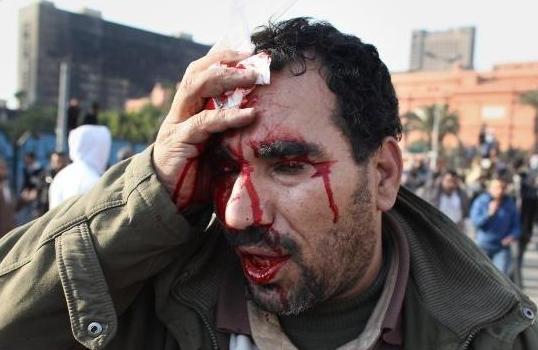
Women and men stood ready with water, medical cotton and bandages as each wave returned. Scores of wounded were carried to a makeshift clinic at a mosque near the square and on other side streets, staffed by doctors in white coats. One man with blood coming out of his eye stumbled into a side-street clinic.
As night fell, some protesters went to get food, a sign they plan to dig in for a long siege. Hundreds more people from the impoverished district of Shubra showed up later as reinforcements.
Wednesday's events suggest the regime aims to put an end of the unrest to let Mubarak shape the transition as he chooses over the next months. Mubarak has offered negotiations with protest leaders over democratic reforms, but they have refused any talks until he steps down.
As if to show the public the crisis was ending, the government began to reinstate Internet service after days of an unprecedented cutoff. State TV announced the easing of a nighttime curfew, which now runs from 5 p.m. to 7 a.m. instead of 3 p.m. to 8 a.m.
AP correspondents Sarah El Deeb, Hamza Hendawi, Diaa Hadid, Lee Keath, Michael Weissenstein and Maggie Michael contributed to this report.

Illegals in the TCI
The Police and government departments are making every effort to locate and apprehend a number of migrants who are believed to have entered the TCI illegally over the weekend.
Initial investigations indicate that a sloop landed undetected on Sunday and that some migrants may have dispersed into the community.
The Police/SPICE are currently conducting surveillance to locate and round up suspects.
Immigration, health and other government officials will work with the police to ensure the required checks are conducted and accepted procedures followed.
Further announcements will be made in due course. In the meantime members of the public with any information on this matter are asked to contact SPICE at 231-6464 or the crime stoppers hotline 1 800 TIPS (8477).
Humpback Whales spotted in TCI
 Each year between mid January and mid March, the annual humpback whale migration proceeds along the shores of Turks & Caicos Islands.
One of the main attractions for whale watching in Middle Caicos is that the trademark reef surrounding most of the TCI archipelago is almost
absent near Conch Bar village, allowing the whales to pass close to shore.
On Saturday January 22nd, the first official sighting of the whales off the shore of Middle Caicos was noted. Mark Parrish, eco-guide from Big Blue Unlimited was hiking into the old Haulover Plantation ruins on the east end of the island in the morning where he spotted a hump back whale.
The humpback whale (Me-gap-tera nova-eang-liae) is a species of baleen whale. One of the larger ror-qual species, adults range in length from 1216 metres (3952 ft) and weigh approximately 36,000 kilograms (79,000lb). The humpback has a distinctive body shape, with unusually long pectoral fins and a knobbly head. It is an acrobatic animal, often breaching and slapping the water.
TCI Officials talks about Carifta 2011
Reliable sources have confirmed that a bid has been made for the Turks and Caicos Islands to host the 2011 CARIFTA GAMES.
RTC understands that the local Track and Field Association has made a suggestion to the Governor and the Advisory Council to consider hosting the Games which are currently in limbo as designated host country St.Kitts and Nevis have said they were not ready to host the Easter Games.
Stating that having the games in the TCI would bring some much needed revenue to the tourism industry and the country more international exposure, TCAAA members are serious in requesting the Governors approval.
The TCI held the games in 2007 and from all reports it was a rousing success. There has been no word from the Governor as yet but RTC News will continue to follow this story.
Police has an APB out for Joram Rigby
The Royal Turks & Caicos Islands Police Force has put out an all points bulletin for Joram Rigby, a.k.a. Joey of Grand Turk, whose last known address is Five Cays Providenciales.
Rigby, born 23rd July 1983, is described as being 6' 3" height, broad nose, brown complexion, with long locks.
Joram RIGBY is wanted in connection with a report of Possession of Firearm and Vehicle Interference which occurred on Wednesday January 26th 2011. The Police are asking persons not to approach Rigby as he is considered armed and dangerous.
Anyone with information regarding Rigby's whereabouts is asked to please call the Police at 946-4259, 911 or Crime stoppers at 1-800- TIPS (8477).
911 Centre and the Police to work in unison
911 Communication Centre and the Police continue to work in unison in their diligent effort to combat CRIME.
The 911 Communication Centre and The Police continue to work in unison in their diligent effort to combat CRIME and one such occasion occurred yesterday Wednesday 26th January 2011 about 10:55am when two vehicles were broken into in Turtle Cove Providenciales and a number of items were stolen from both vehicles. The culprits used a getaway vehicle after committing the CRIMES.
A co-ordinate effort with assistance from the Public resulted in the apprehension of a male Turks and Caicos Islander and the recovery of the stolen goods plus the getaway vehicle within an hour time.
The Police in Providenciales are looking for a male Turks and Caicos Islander who is a person of interest in this incident.
PPC LTD'S parent company supports the Turks and Caicos Diabetic Association
Fortis Inc, Provo Power Company (PPC"s) parent company, has once again extended its phil-an-thro-pic arm to one of the countries non-profit organizations.
In lieu of Christmas cards, Fortis Inc. donated $2,000 to a TCI non-profit organization. Donations were made to charities based in each of the countries where Fortis Inc. operates. All employees were given the opportunity to submit the name of a charity to receive this annual donation. Once all names were submitted, the Charity with the most votes was selected.
The recipient of the 2011 donation is the Turks and Caicos Diabetic Association, a national voluntary health association whose mission is to improve public and medical awareness about diabetes.
PPC Ltd understands the significance of having such an established association to bring about awareness among the people of the Turks and Caicos Islands and has committed to assisting the Diabetes Association in its efforts. Corporate Services Manager, Daphne Penn comments, members of the association have voluntarily dedicated their time and resources to promote healthy life styles in our local schools and communities while offering support and referrals for individuals suffering from diabetes;hence PPC's willingness to continue being major sponsors of such a worthycause.
Penn also added: Since Fortis Inc became our parent company, they have given an overall total of $10,000 to the Cancer Society, Kidney Association, Provo Children's Home, Heart Foundation and now the Diabetic Association. Diabetes is a condition that has affected many persons in our communities whether it is directly or indirectly and we need to remain vigilant of this and assist where ever possible in keeping this Association operational.
President of the Diabetic Association, Mrs. Elaine Clare, in registering the associations thanks, said when they were advised that they were the recipients of the donation, they were extremely surprised and appreciative. The donation will definitely go a long way in helping us continue our Diabetes Awareness campaign. There are many persons in theTCI who can't afford diabetic testing equipment and the funds from PPCwill go towards this purchase, said Mrs. Clare.