
US to offer amnesty for Caribbean offshore account-holders
The United States said it plans to announce a new amnesty programme aimed at encouraging wealthy Americans with hidden offshore bank accounts in the Caribbean and elsewhere to come forward, declare the funds and pay the necessary taxes.
Internal Revenue Service (IRS) spokesman, Frank Keith, said that the programme would be formally announced "very shortly" and would not offer terms as generous as those put forth in a similar initiative last year.
Senior tax lawyers say the announcement will most likely come within several weeks, ahead of the 2011 tax filing season.
The government wants to encourage people not to lie on their upcoming earnings said Robert Katzberg, a criminal defence lawyer in New York, with offshore bank clients in the Caribbean and Switzerland.
The previous so called voluntary disclosure programme, which ended last October, was carried out amid a crackdown on Swiss private banks and their clients who hid money from the government.
The Jamaica Observer reported that the programme was used by 15,000 Americans with hidden accounts, some holding hundreds of millions of dollars, the IRS said.
It said an additional 3,000 with accounts at various offshore banks, including the Cayman Islands, came forward after the October 15 deadline.

Free movement of persons, but according to our laws, says Barbados PM
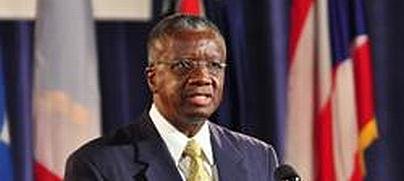
Barbados is not opposed to the freedom of movement of persons in this region, Prime Minister Freundel Stuart has reiterated.
He was responding to a number of questions concerning immigration matters on Wednesday at the 185th anniversary luncheon of the Barbados Chamber of Commerce and Industry.
Stuart said, "We have had to make the point that because we are committed to freedom of movement, because we are committed to the realisation of a single market and economy, it does not mean that you give up your sovereignty as a nation. And it certainly does not mean that you turn a deaf ear or a blind eye to issues of national security."
The prime minister added that the immigration laws of Barbados have not changed, rather, "all we ask is that the immigration laws be obeyed".
He pointed out that whenever the freedom of movement topic was discussed, it was cited as the "issue that defines the realisation of a Caribbean Single Market and Economy".
Stuart observed, "The right for people to move freely, if you have that, you have a Single Market and Economy... Now freedom of movement is organically linked to the issue of reliable and affordable regional transportation.
“There is no really reliable and nowadays very affordable reasonable transportation. But the government that is responsible for transportation within the Cabinet of the Heads of Government of CARICOM is not asked any questions about that."
He continued, "Barbados has lead responsibility for the Caribbean Single Market and Economy, so when no progress is being made on that issue, or when it appears that no progress is being made on that matter... or that there have been a few potholes or a few zigzags on that issue, you hear that CSME, for which Barbados is responsible, is making no progress."
However, he stressed that it was first essential to ensure that all of the elements that involved creating a Single Market and Economy were in place before anyone "could point an accusing finger at the Barbados government".
The prime minister added with respect to the free movement of individuals that laws had to be put in place to ensure that even though people are moving, their movement was "consistent with national security and all the other national interests of Barbados".
Former Court of Appeal judge sues St Lucia government for retirement benefits
Former Eastern Caribbean Court of Appeal Judge, Denys Barrow, has filed a claim against the government of St Lucia for his retirement benefits.
Barrow, a Belizean, said in a statement that he was forced to file a claim against the government of St Lucia because it has been ignoring his claim, and even failed to acknowledge receipt of letters of inquiry.
In his statement, Barrow said that after his resignation he returned to his homeland Belize and started a private practice. He said that he later decided to leave private practice and become a judge in Belize because he treated the expected pension benefits as part of his financial resources.
He added that now that expectation has been removed he has been forced to resign as a judge of the Court of Appeal of Belize.
Barrow, who is the brother of Belize prime minister, Dean Barrow, to the surprise of attorneys and judges tendered his resignation to Governor General Sir Colville Young on Tuesday, less than 18 months after he was sworn in.
He is only 58 years of age and his tenure as an appellate court judge would have ended at the age of 75.
His resignation takes effect on February 28.
The current panel of appellate court judges in the Central American state comprises: Belizean Manuel Sosa, the president; Justices Denis Morrison, a Jamaican, and Dominican Sir Bryan Alleyne.
Guyana will not arrest Suriname president
Guyana's President Bharrat Jagdeo says that his country will not arrest Suriname's head of state, Desi Bouterse, when he visits Guyana.
Jagdeo made the statement in response to a question posed by an officer of the Guyana Defence Force at the opening of the Annual Officers Conference on Tuesday at Army Headquarters in Georgetown.
The Kaieteur News newspaper reported that the question was sparked by recent revelations that Bouterse had links to convicted Guyanese drug lord Shaheed Roger Khan and had clandestinely visited Guyana on several occasions for rendezvous with Khan.
Bouterse, who has been sentenced by a court in the Netherlands for drug trafficking, was returned as president of Suriname last year following general elections in the neighbouring republic.
From all indications, the president's comments were not meant for the ears of members of the media, who were strangely asked to leave the venue during the president's response to the question of how Guyana's relations with Suriname would be affected by the recent revelations.
Jagdeo stated that some time ago Guyana was asked by a representative of a foreign mission in Guyana if the president of Suriname will be arrested when he visits Guyana, on account of him being wanted internationally.
"I said to him no, I said maybe you can get some other countries to do this," the Guyanese president stated emphatically.
He said if the people of Suriname overwhelmingly chose him (Bouterse) as their leader, Guyana should not judge him based on what transpired in the Netherlands.
"Who are we as Guyanese to say we should arrest him?" Jagdeo asked the Army officers.
Since his return to power, Bouterse has officially visited Guyana on three occasions.
Lime cuts top execs
Cable & Wireless Caribbean (C&W) has cut three of its very senior executives and Barbadian vice-president Donald Austin is among them.
In a major shake-up that a C&W official described yesterday as a “realignment of the management team”, the multinational telecommunications company, which trades as LIME, let go of Austin, its executive vice-president with responsiblity for legal and regulatory matters.
The comapany also severed Milton Brady, a Jamaican national who operated from Barbados as the company’s chief commercial officer, and Henry Reid, another Jamaican who was executive vice-president with responsibility for human resources. He operated from the Jamaica headquarters.
All three reported directly to David Shaw, LIME’s chief executive officer who operates from Jamaica. When Shaw was appointed in 2009, the British citizen’s main responsibility was to “lead the strategy to transform the Caribbean business”.
The DAILY NATION was informed that all three executives received “handsome” separation packages.
Austin, a chartered accountant and engineer, led C&W Barbados during one of its most contentous periods when it had to sever more than 400 workers.
He has been with C&W for more than two decades.
Sources said Austin would still work with the company in an “advisory capacity on Goverment relations and governance issues”.
Austin said in one of his public social network profiles that he “led teams in turnaround environments in four Caribbean islands [Turks and Caicos, St Vincent and the Grenadines, St Lucia and Barbados] for LIME”.
He added: “My particular strength is leadership of high-performing teams, using my finance and engineering knowledge and leadership skill sets to ensure that the best result is achieved for the organisation and the team.
“As a member of the senior leadership team, I have responsibility for strategy, revenue growth, profitability, investment strategy, customer experience levels, employee engagement and motivation, senior talent management, corporate governance, shareholder relations, Government relations, regulatory relations and risk management.”
When contacted yesterday, Austin referred all comments to LIME.
Tunisia: Arrest warrant issued for ex-president Ben Ali
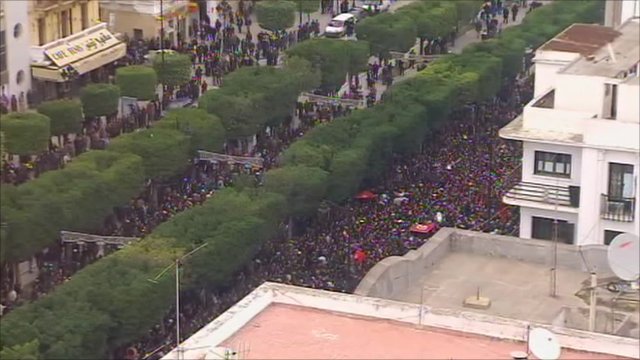 Tunisia has issued an international arrest warrant for ousted President Zine al-Abidine Ben Ali and his family, the nation's justice minister has said.
Lazhar Karoui Chebbi said the interim government had asked members states to work via Interpol to detain Mr Ben Ali, who fled to Saudi Arabia on 14 January.
Mr Chebbi said Mr Ben Ali was accused of illegally acquiring property and assets and transferring funds abroad.
The minister was speaking as anti-government protests continued.
Police fired tear gas at hundreds of demonstrators after they reportedly tried to breach barricades around the prime minister's office in the capital, Tunis.
Some in crowd responded by throwing stones at the police.
They were demanding that members of the interim government who served under Mr Ben Ali - including Prime Minister Mohamed Ghannouchi and the defence, interior, finance and foreign ministers - step down.
"We have only one demand: for the government to fall. They all have to go. Ghannouchi should go first," Bassem El Barouni was quoted as saying by the AFP news agency.
Hamid El Gribi, another protester, said: "We have to clean up the rest of the old government."
The prime minister has said he will quit "in the shortest possible timeframe" and promised to hold elections with six months.
He is reportedly preparing to announce replacements for the five opposition ministers who resigned because of the continued dominance of Mr Ben Ali's Democratic Constitutional Rally (RCD) party.
'This woman'
Earlier, Mr Chebbi, a former barrister who did not serve in the last administration, said he had issued an arrest warrant for Mr Ben Ali, his wife Leila Trabelsi, and other members of their extended family, for "illegal acquisition" of assets and "illicit transfers" of funds abroad.
"We are asking Interpol to find all those who fled, including the president and this woman, for trial in Tunisia," he told reporters. "No-one will be above the law."
The minister said seven family members were currently in Tunisian custody, and also that the head of the presidential guard and five other personnel would be put on trial for "conspiring against state security and inciting people against each other with weapons" after Mr Ben Ali's departure.
Before Mr Ben Ali was overthrown, many protesters expressed their anger at the power, wealth and influence of his wife's family. "No, no to the Trabelsis who looted the budget," was a popular slogan, while the president's relations were referred to simply as "the Mafia".
Later, Interpol confirmed that its bureau in Tunis had issued a global alert - known as an "Interpol diffusion" - requesting that member countries search for, locate and provisionally arrest Mr Ben Ali and six others. The Tunisian authorities would then formally request extradition, it said.
The BBC's Magdi Abdelhadi, in Tunis, says it is unlikely Saudi Arabia will hand them over but the warrants will restrict their ability to travel to other countries, especially in the West.
Earlier this week, the Canadian authorities refused entry to some of Mr Ben Ali's relatives. In France, prosecutors have opened a preliminary investigation into the former president's holdings, believed to range from apartments to racehorses.
Mr Chebbi also revealed that 11,029 prisoners - about a third of those held in Tunisian jails - had escaped during the unrest of the past 12 days.
Of those, 1,532 prisoners had been returned to their cells, he said. Another 74 prisoners were killed in fires that broke out at several jails.
Mr Chebbi also said 2,460 prisoners had been released. He did not say if they were political prisoners, whom the government has promised to free.
Meanwhile, the country's main trade union, the General Tunisian Workers' Union (UGTT), said up to 100,000 people had taken part in an anti-government protest in the second city of Sfax after it called a strike.
Another strike has been called by the UGTT on Thursday in Sidi Bouzid, the town where the uprising began in mid-December.
During a visit to Tunis on Tuesday, US Assistant Secretary of State Jeffrey Feltman urged the interim government to do more to satisfy the demands of the people and offered assistance in preparing for free elections.
"The more that the interim government of Tunisia takes concrete steps to prepare for and implement democratic elections and a democratic system, and the more the interim and future governments are able to answer the grievances that led to this popular movement, the stronger and the warmer its partnership with the United States will be," he said.
"The interim unity government... has made some encouraging statements and have taken some good steps regarding the need for elections, for greater openness, for significant reforms.
"These steps will need to be implemented, expanded upon and added to in the days and months ahead."
His comments came as Libyan leader Muammar Gaddafi told Tunisian TV he feared the uprising was being exploited by "foreign interests".
On Wednesday afternoon, the government eased the overnight curfew imposed under the state of emergency because of "improved security". It will now be in place from 2200 (2100 GMT) to 0400 (0300 GMT).
Bolivia: Coca-chewing protest outside US embassy
Indigenous activists in Bolivia have been holding a mass coca-chewing protest as part of campaign to end an international ban on the practice.
Hundreds of people chewed the leaf outside the US embassy in La Paz and in other cities across the country.
Bolivia wants to amend a UN drugs treaty that bans chewing coca, which is an ancient tradition in the Andes.
But the US has said it will veto the amendment because coca is also the raw material for making cocaine.
The protesters outside the US embassy also displayed products made from coca, including soft drinks, toothpaste, sweets and ointments.
They were supporting a Bolivian government campaign to amend the 1961 UN Single Convention on Narcotic Drugs to remove language that bans the chewing of coca leaf.
The convention stipulates that coca-chewing be eliminated within 25 years of the convention coming into effect in 1964.
Bolivia says that is discriminatory, given that coca use is so deeply rooted in the indigenous culture of the Andes.
The US is opposed to changing the UN convention because it says it would weaken the fight against cocaine production.
In a statement, the US embassy said Washington recognised coca-chewing as a "traditional custom" of Bolivia's indigenous peoples but could not support the amendment.
"The position of the US government in not supporting the amendment is based on the importance of maintaining the integrity of the UN convention, which is an important tool in the fight against drug-trafficking," it said.
The US is the world's largest consumer of cocaine and has been leading efforts to eradicate coca production in the Andes for decades.
Bolivia is the world's first biggest producer of cocaine after Peru and Colombia, and much of its coca crop is used to make the illegal drug.
Bolivian President Evo Morales has long advocated the recognition of coca as a plant of great medicinal, cultural and religious importance that is distinct from cocaine.
As well as being Bolivia's first indigenous head of state, Mr Morales is also a former coca-grower and leader of a coca-growers trade union.
The Bolivian amendment would come into effect on 31 January only if there were no objections.
BBC World Service cuts outlined to staff
The BBC has confirmed plans to close five of its 32 World Service language services.
Staff have been informed that up to 650 jobs will be lost from a workforce of 2,400 over the next three years.
The Macedonian, Albanian and Serbian services will be axed, as will English for the Caribbean and Portuguese for Africa, in a bid to save £46m a year.
The BBC estimates audiences will fall by more than 30 million, from 180 million to 150 million a week.
Director general Mark Thompson said it was "a painful day" for the BBC.
Writing in the Telegraph, he said the cuts would "inevitably have a significant impact on the audiences who use and rely upon the relevant services".
Yet he said they were "consistent with our long-range international goals and strategy" and that "supporters of the international role of the BBC should not despair".
The service, which started broadcasting in 1932, currently costs £272m a year and has an audience of 241 million worldwide across radio, television and online.
Last October the government announced the BBC would take over the cost of the World Service from the Foreign Office from 2014.
According to Mr Thompson, the cuts were necessary due to last autumn's Spending Review.
Radio programming in seven languages - Azeri (the official language of Azerbaijan), Mandarin Chinese, Russian, Spanish for Cuba, Turkish, Vietnamese and Ukrainian - will end as part of the plans.
Instead there will be more focus on online, mobile and TV content distribution in these languages.
The World Service will also cease short-wave transmission of six more services in March 2011 - Hindi, Indonesian, Kyrgyz, Nepali, Swahili and the Great Lakes service (for Rwanda and Burundi).
In a written statement to MPs, Foreign Secretary William Hague said the cuts in funding required "difficult decisions to be made".
"We agreed with the BBC that the overall objective was to ensure the World Service should remain an articulate and powerful voice for Britain in the world, and a trusted provider of impartial and independent news."
In Parliament, Mr Hague said the World Service had initally suggested to the Foreign Office the closure of up to 13 language services but he had refused to give permission.
He said the World Service had a "viable and promising future", but was "not immune from public spending constraints".
"It is absolutely right for the World Service to move more services to online and mobile," he said. "That is the way the world is going.
"The World Service has to move with the future, and of course some services have to close."
The BBC said two-thirds of jobs would go in the first 12 months.
Unions have called the moves "ferocious" and have condemned the "drastic cuts".
Speaking on BBC Radio 4's Today programme, Jeremy Dear, general secretary of the National Union of Journalists (NUJ), said that the World Service was "vital" and "should be protected".
The NUJ said it would hold a demonstration outside the World Service headquarters in central London on Wednesday.
It has also written to the chairman of the House of Commons foreign affairs committee, Richard Ottaway, and the chairman of the Culture, Media and Sport Committee, John Whittingdale, calling on them to review the plans.
According to the NUJ, the "drastic cuts" would "severely damage the national interest of the UK".
"These ferocious cuts to a valued national service are ultimately the responsibility of the coalition government, whose policies are destroying quality public services in the UK," Mr Dear said.
Broadcasting union Bectu has also expressed dismay, saying the cuts "must be challenged".
It said the union "expects calls for industrial action" and that "at this stage we cannot rule anything in or out".
BBC global news director Peter Horrocks said the closures were "not a reflection on the performance of individual services or programmes".
"They are all extremely important to their audiences and to the BBC," he said.
"It is simply that there is a need to make savings due to the scale of the cuts to the BBC World Service's grant-in-aid funding from the UK's Foreign and Commonwealth Office.
"We need to focus our efforts in the languages where there is the greatest need and where we have the strongest impact."
Former World Service managing director Sir John Tusa described the cuts as "bad, bad, bad".
Protesters in Egypt greeted by a police crackdown
Protesters taking to the streets in Egypt on Wednesday felt the wrath of security forces, a day after an unparalleled display of public rage at the government and full-throated cries for the ouster of the longtime president.
Police turned water cannons and tear gas on protesters in the early hours of Wednesday morning to try to break up anti-government demonstrations as the Interior Ministry warned it "will not allow any provocative movement or a protest or rallies or demonstrations."
In the heart of Cairo, where people were being beaten with sticks and fists and demonstrators were being dragged away amid tear gas. Witnesses saw security forces harassing journalists and photographers. Demonstrations continued into the nightime hours.
A minor clash happened in Suez, as well, according to the Interior Ministry.
The ministry urged "citizens to renounce attempts to bid and trade their problems and not lose sight of the consequences of provocation for those who attempt to try to open the door to a state of chaos or portray the situation in the country this way."
The clampdown comes after thousands of protesters spilled into the streets of Egypt on Tuesday, an unprecedented display of anti-government rage inspired in part by the tumult in the nearby North African nation of Tunisia.
At least four people died in the Tuesday clashes, the Interior Ministry reported -- three protesters in Suez and one police officer in Cairo. It also said at least 102 security personnel were injured.
The Interior Ministry put the size of the Tuesday demonstration in Cairo's Tahrir Square at 10,000 at its peak, falling to 5,000. CNN estimated that demonstration peaked at 15,000 to 20,000.
But Wednesday is a work day in Egypt, so the numbers on the streets of Cairo were lower than they were on Tuesday, a holiday known as Police Day.
Protesters had been expressing their anger over the rising cost of living, failed economic policies and corruption, but all those concerns were distilled into one overriding demand: the ouster of President Hosni Mubarak, a reliable American ally who's been in power for three decades.
Egyptian authorities have been aware of complaints, but protesters widely believe that the government has simply paid lip service to their grievances.
Protest organizers on Facebook called for "strikes and marches in populous neighborhoods" Wednesday, but did not outline specific plans.
"Tomorrow has to be spontaneous and must be in the more populous neighborhoods and not set for any particular time," the post said.
"Entering Tahrir Square will be dangerous and the response of security forces will be overwhelming," the post said, referring to the location of the largest protest Tuesday.
There is talk among protesters about staging a big demonstration on Friday, after Muslim prayers.
Twitter was blocked in Egypt on Tuesday, the microblogging site said, adding: "We believe that the open exchange of info & views benefits societies & helps govts better connect w/ their people."
Protesters used social media including Twitter and Facebook to organize the demonstrations and to communicate during the day.
Magdi Radi, spokesman for Egypt's prime minister, told CNN that the government "didn't block Facebook, Twitter or any other website. He said that "the websites may have been slow because of the heavy usage."
The Arabic Network for Human Rights Information, a human rights group, on Wednesday underscored a "national demand" -- the dismissal of Interior Minister Habib Al-Adli.
"Yesterday, disengagement of peaceful gatherings by using excessive force was added to his crimes as well as arbitrary arrests of hundreds of citizens and detaining them in illegal locations, such as security camps of Darrasa in Cairo and Madinet elSalam at the outskirts of Cairo, two locations completely controlled by the Interior Ministry."
The group said police "turned into monsters attacking demonstrators , especially small clusters in side streets, without distinction between an elderly man or a woman or youth."
Organizers said they hope to capture the regional momentum for political change set by Tunisians, who forced the collapse of Zine El Abidine Ben Ali's 23-year rule.
But Mubarak, unlike Ben Ali, remains in his country. Stories that Mubarak or any other member of his family left Egypt are categorically false," said Karim Haggag, Egyptian Embassy spokesman in Washington.
Calling its relationship with Egypt "strong and friendly," the U.S. State Department regards Mubarak's help in maintaining security in the Mideast as critical.
The government, which has diplomatic relations with Israel, has helped forge peace between Israel and the Palestinians and has helped in efforts to stabilize Iraq, the State Department said.
It contributes to U.N. peacekeeping missions, "played a key role during the 1990-1991 Gulf crisis," and is a "key supporter of U.S. efforts against terrorists and terrorist organizations such as Osama bin Laden and al Qaeda, the department said in a background note about Egypt.
U.S. military aid to Egypt totals over $1.3 billion annually, and the U.S. Agency for International Development has passed along over $28 billion in economic and development assistance to the country since 1975.
White House spokesman Robert Gibbs says the Obama administration continues to monitor the situation. He believes all parties should refrain from violence and that authorities should lift bans on protests.
He reiterated the position that "Egypt is a strong ally."
On Wednesday, U.S. Secretary of State Hillary Clinton and Jordanian Foreign Minister Nasser Judeh spoke to reporters about the ferment in the Arab world.
Clinton urged freedom for people and called on Egyptian authorities not to block social media. She urged the countries in the region to enact reforms and expressed optimism that the leaders there can do so.
"It is something that everyone knows must be on the agenda of the government as they -- not just respond to the protests -- but as they look beyond to what needs to be done economically, socially, politically. And there are a lot of very well-informed, active, civil society leaders in Egypt who have put forward specific ideas for reform and we are encouraging and urging the Egyptian government to be responsive to that."
Jordan has experienced demonstrations over economic issues, and the foreign minister was asked whether the protests that raged in Tunisia and Egypt will spread.
Judeh said Jordan doesn't exist in an economic bubble and faces hardships other lands endure. But he said the country is tackling a political and economic reform agenda and its system promotes freedom of expression.
Former South African President Nelson Mandela hospitalized
Former South African President Nelson Mandela has been hospitalized for "routine tests," his foundation said Wednesday.
"Mr. Mandela is at Milpark Hospital undergoing routine tests," the Nelson Mandela Foundation said in a statement. "He is in no danger and is in good spirits."
Mandela was flown to the Johannesburg hospital Wednesday from Cape Town, where he was on vacation, said a source close to the Mandela family who is not authorized to speak to the media.
Activity at the hospital continued as usual Wednesday afternoon, the South African Press Association said.
Archbishop Desmond Tutu of South Africa told the press association on Tuesday that Mandela is "frail."
"I saw him last week," Tutu said from Cape Town. "He was all right. I mean, he's 92 ... and he's frail."
Mandela rarely makes public appearances. His last appearance was at the closing ceremonies of the World Cup in South Africa over the summer.
He recently released a new memoir, "Conversations With Myself."
Under South Africa's apartheid regime, Mandela spent 27 years in jail after being convicted of sabotage and attempts to overthrow the government. He was released in 1990 and returned to the leadership of the African National Congress party. South Africa repealed apartheid in 1991.