
Brazil flood deaths top 800 with 400 still missing
Officials in Brazil say more than 800 people are now known to have died in floods and landslides in the south-east of the country this month.
More than 400 people are still missing after torrential rain caused whole hillsides to collapse.
The Brazilian government has said it will set up an early warning system to alert communities of impending danger.
The flooding is considered the worst natural disaster Brazil has ever experienced.
According to figures compiled by the newspaper O Globo, a third of all victims were under age.
The youngest fatality was a five-day-old baby buried in a mudslide in Nova Friburgo, the worst affected town with 324 dead.
Continuing danger
The number of missing has been declining as forensic experts identify more bodies, but rescue workers fear the full extent of the disaster is not yet known, with some remote communities still only reachable by helicopter.
Emergency workers say their priority is to make sure no new deaths occur.
They are warning of the risks of contaminated water.
Three people are known to have contracted leptospirosis, an infectious bacterial disease, which is caused by exposure to water contaminated with rats' urine.
In Teresopolis, doctors have been administering thousands of tetanus vaccines.
In Sao Jose do Vale, workers were erecting more than a hundred tents sent from the UK to house those whose homes were swept away or flooded.
Volunteers in Rio de Janeiro held an adoption fair in the hope of re-homing some of the 5,000 animals left without owners as a result of the disaster.
The government has allocated $240m (£150m) in emergency reconstruction money for the area.

Haiti's Preval: 'Baby Doc' Duvalier 'must face justice'
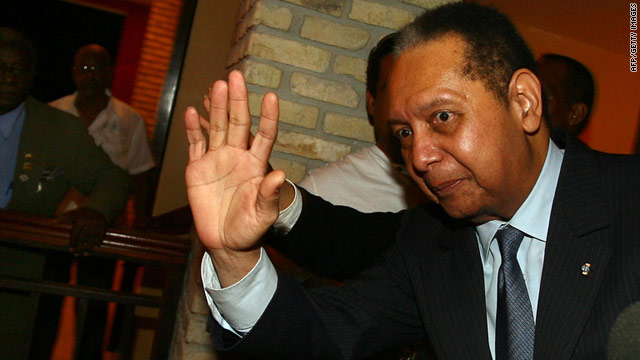
Haiti's ex-leader Jean-Claude "Baby Doc" Duvalier had the right to return to the country but must now face justice, President Rene Preval says.
Mr Preval was making his first comments on the issue since Mr Duvalier's unexpected return from exile last week.
Mr Duvalier has been charged with theft and misappropriation of funds during his 1971-1986 rule.
He is also being sued for torture and other crimes against humanity. He has said he is ready to face "persecution".
In a news conference on Friday, Mr Duvalier called for national reconciliation, claiming his return from France had been prompted by the earthquake that devastated Haiti last year and his desire to help rebuild the country.
On Saturday, Mr Preval said that according to the Haitian constitution, no-one could be forced to remain in exile.
"Duvalier had the right to return to the country, but under the constitution, he also must face justice," he said at a news conference during a visit by the Dominican president.
"If Duvalier is not in prison now, it is because he has not yet been tried."
Mr Duvalier is barred from leaving the country pending the outcome of an investigation into his alleged crimes, Mr Preval said.
Swiss funds
Mr Duvalier arrived on the day Haiti was supposed to hold a second round of elections to choose a successor to Mr Preval.
The vote has been postponed because of a dispute over who came second in the first round.
Official results said it was Jude Celestin, a protege of Mr Preval's, but international observers have urged Haiti to revise the result in favour of singer Michel "Sweet Mickey" Martelly, who was placed third.
Some have voiced concern that Mr Duvalier's return could add to the political uncertainty.
One theory offered by analysts and lawyers to explain Mr Duvalier's return is that he was trying to stave off attempts by Switzerland to donate to Haiti nearly $6m (£3.7) frozen in Swiss bank accounts.
Under a new Swiss law that comes into force on 1 February, the funds can be released even if Haiti has not made a legal move to get them.
Mr Duvalier wrongly predicted that he might be able to avoid prosecution, observers say.
"If Duvalier goes back to Haiti and is not prosecuted, then he could say 'I was available for prosecution, and you didn't prosecute me: Give me my money back,'" said Reed Brody, a lawyer at Human Rights Watch.
UN calls for Mexico probe into migrant train abductions
The UN human rights chief has urged Mexico to investigate the possible involvement of officials in the abduction of about 40 migrants.
Navi Pillay said the Central American migrants had been "abducted in highly questionable circumstances" from a cargo train in Oaxaca state last month.
They were reportedly taken by gunmen who stopped the train in Chahuites.
Mexico has said it is investigating, after initially saying the reports were unsubstantiated.
'Complicity'
According to a statement from Ms Pillay's office, the train was first stopped by police and migration officials, who arrested 92 of the 250 migrants who had been stowed away.
The driver of the government-run train then took money from about 150 who re-boarded, the statement says, but he also allegedly warned of "more problems ahead" as he had not been happy with what they had paid him.
Shortly afterwards, gunmen seized the train, robbing the migrants and kidnapping 40 of them, including at least 10 women and a child.
Speaking on Friday, Ms Pillay called for "a thorough and transparent investigation of the alleged ill-treatment and abuse of the migrants by the [Mexican] Federal Police and the National Institute of Migration staff."
"The Mexican authorities need to ascertain whether or not any state officials ... were complicit with the criminal organisation that carried out the abductions and extortion, both in this and other cases," she added.
Ms Pillay said that, since the incident, "there has been no trace of [the migrants], and human rights defenders working with other members of the same group have been repeatedly threatened".
The Mexican Institute of Migration previously said that officials had boarded the train and detained a number of them, but that - after speaking to local and federal officials - there was no evidence that there had been a kidnapping.
But it has since said it is still investigating the incident.
Mexico's UN mission in Geneva had no immediate response to Ms Pillay's comments, according to AP news agency.
Dominican Republic confirms first cholera death
The Dominican Republic has officially registered its first cholera death since an epidemic of the disease began sweeping through neighbouring Haiti.
Health officials said the victim was a 53-year-old Haitian who was being treated in the eastern town of Higuey.
The government said it would step up its prevention system in the area.
Almost 4,000 people have died of cholera in Haiti and close to 200,000 have been infected since the epidemic broke out in October.
The Dominican Republic tightened its border controls and health checks to try to stop cholera from spreading from Haiti soon after the first cases were reported.
But with tens of thousands of Haitians travelling to the Dominican Republic to seek work, the task was always going to be a difficult one.
The Dominican Public Health Ministry said the first fatality to be reported had been receiving hospital treatment in Higuey - the same town where the first cholera case was registered in November.
Officials said the man had died on Friday, and that since then, no other deaths had been registered.
Gold company to invest US$185mto expand Suriname operations

The Toronto-based parent company of Lam-gold, the largest gold-mining enterprise operating in Suriname, says a portion of its US$460-million expenditure this year will finance expansion of its operations in the CARICOM country.
In a statement, Lamgold Corp said that without expansion, output at the Rosebel mill would decline.
The cost of the expansion in Suriname will total US$185 million over the next seven years.
The project will add grinding capacity to allow mill throughput to be maintained between 12 and 14 million tonnes per year, "even with the increased hard rock volumes", coupled with additional mining equipment to increase annual mining capacity to 70 million tonnes to optimise mill feed grades, the company said.
"The expansion essentially brings gold production forward in time and reduces long-term fixed costs by reducing the currently planned mine life," said Lamgold.
The gold miner said it anticipates a 60 per cent return on the expansion capital after tax, and annual gold production of 400,000 to 450,000 ounces throughout the life of the mine.
"Rosebel mine is a world-class asset that has already demon-strated the excellence of our corporate social responsibility programmes and our development and operational teams," said Lamgold's president and chief executive officer Steve Letwin.
- C MC
Ricky Gervais plays down Golden Globe furore
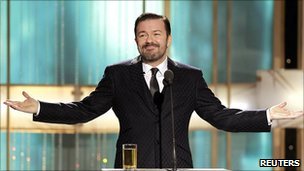
British comedian Ricky Gervais has defended jokes he made about Hollywood stars at Sunday's Golden Globes, insisting he did nothing wrong.
The Office star received mixed reviews as the award ceremony's host, after making jokes about Charlie Sheen, Angelina Jolie and Johnny Depp.
"If they didn't want me, they shouldn't have hired me," he told Piers Morgan on his new US talk show.
"I don't think I did anything wrong," the 49-year-old said.
"I'm not going to apologise for being true to myself. My strategy is to make me laugh. If there's anyone in the world like me, that's a bonus."
At one stage during the evening, Gervais introduced Iron Man star Robert Downey Jr - who has a history of drug problems - saying: "Many of you in this room probably know him best from such facilities as the Betty Ford Clinic and Los Angeles County Jail."
Morgan asked Gervais whether he cared about what the stars might be going through in their private lives.
"I'm not judging them for what they did," Gervais said on the CNN programme.
"I'm confronting the elephant in the room. Like, I'm going to go out there and not talk about the issues in their industry.
"Don't forget, I've got to be an outsider there. I mustn't come out there as everyone's mate and schmooze - that's nauseating. I've got to come out there, and I've got to roast them."
The comic insisted that he only accepted the job on the condition that he could say what he wanted.
During the ceremony, viewers speculated whether Gervais had been asked to calm his performance down, after he disappeared from stage for nearly an hour.
But Gervais denied that was the case, insisting that he did "every single introduction I was meant to. There just happened to be a long gap".
Beenie Man doing OK
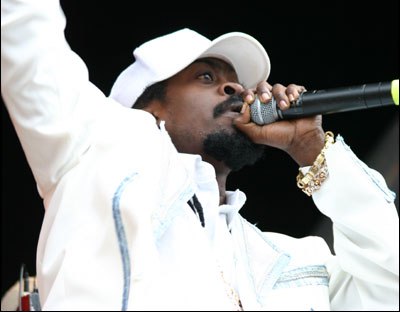
Dancehall King Beenie Man was recently diagnose with a hip condition that will required the veteran deejay to undergo surgery.
Sources close to the deejay told Urban Islandz that he is doing good and is in high spirit despite the set backs from his ailment.
“He did all the necessary check ups that he needed to, and will do a minor corrective surgery, so to all Beenie Man fans, he is doing good despite rumors that you might have heard,” the source exclaimed.
News broke earlier this week that the ‘I’m Ok’ deejay was ill and will be off the dancehall scene for a little while, there were also some rumors on some websites that the Doc is extremely sick and hospitalize, but Urban Islandz reliable sources confirmed that the deejay is doing good.
Beenie Man, whose real name is Moses Davis, shot the video for his Beenie Man and Friends medley last weekend, a project the Doc launch involving several dancehall artists.
Source: Urban Islandz
George Clooney recovering from malaria
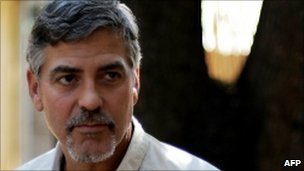
Hollywood actor George Clooney contracted malaria during a trip to Sudan earlier this month, but is now fully cured, a spokesman has revealed.
The 49-year-old is a frequent visitor to the African country to help raise awareness about the Darfur conflict.
He said his own experience shows how the right medication can turn "the most lethal condition" into "a bad 10 days instead of a death sentence".
Publicist Stan Rosenfield said it was Clooney's second bout with the disease.
The actor is expected to discuss the condition and his work in Africa on Piers Morgan's CNN show on Friday.
Britney Spears' new single tops chart in first week
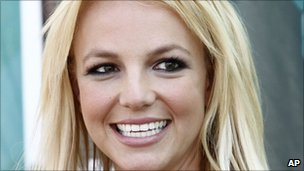
Pop star Britney Spears has become only the second artist in the US chart's 52-year history to have more than one single top the chart in its opening week, according to Billboard.
Hold It Against Me is the fourth number one single of Spears' career.
In 2009, the singer's track 3 also debuted at number one.
Mariah Carey is the only other artist to have had multiple first-week chart toppers - Fantasy and One Sweet Day in 1995 and Honey in 1997.
Hold It Against Me sold 411,000 downloads, according to Nielsen SoundScan.
It marks the highest first-week tally for a solo female artist, beating the 325,000 downloads sold by Taylor Swift's Today Was a Fairytale in February 2010.
Bruno Mars features twice in this week's top ten at number two and in tenth place with Grenade and Just The Way You Are.
Katy Perry's Firework track was in third place, followed by Rihanna's What's My Name?, with Wiz Khalifa at number five.
Enrique Iglesias, Kesha, Pink and The Black Eyed Peas rounded off the top 10.
Tony Blair's note told President Bush 'count on us'
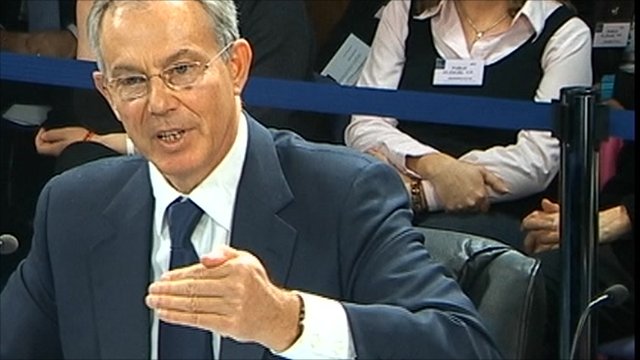
Tony Blair privately assured US President George Bush "you can count on us" in the run-up to the Iraq war.
The private note will remain secret - despite calls for it to be published by Iraq inquiry chairman Sir John Chilcot.
But Mr Blair, who is being grilled by the inquiry for a second time, summed up its contents.
He also revealed he disregarded Lord Goldsmith's warning that attacking Iraq would be illegal without further UN backing because it was "provisional".
The ex-PM said he had believed his top legal officer would change his position on whether a second UN resolution justifying force was needed when he knew the full details of the negotiations.
'Difficulties'
Sir John repeated what he said earlier this week, the panel was "disappointed" that the government would not allow the public release of statements Mr Blair made in July 2002 to Mr Bush and the then US Defence Secretary Donald Rumsfeld. The panel have seen them.
Mr Blair said that although he agreed with cabinet secretary Gus O'Donnell, who blocked their release on the grounds that they would compromise diplomatic confidentiality, he was "not going to hide behind the cabinet secretary".
Summing up the contents of the statements, he said he had told Mr Bush: "You can count on us, we are going to be with you in tackling this, but here are the difficulties."
The message he wanted to get across, he added, was "whatever the political heat, if I think this is the right thing to do I am going to be with you, I am not going to back out if the going gets tough. On the other hand, here are the difficulties and the UN route is the right way to go".
He said his foreign policy adviser Sir David Manning, who earlier told the panel he thought the statement was too sweeping and wanted the wording changed, would have preferred him not to have given "undertakings" to President Bush.
Mr Blair was also quizzed about apparent discrepancies between what he told the committee in January 2010 and recent statements to the committee by his Attorney General Lord Goldsmith.
'Uncomfortable'
Lord Goldsmith said he had been "uncomfortable" with statements Mr Blair made in the Commons ahead of the war suggesting Iraq could be attacked without UN authorisation, when he was warning at the time that such a move would be illegal.
Mr Blair told the panel he was also "uncomfortable" at the time, as he was trying to make the "political" case for taking action against Saddam.
"In the end I wasn't making a legal declaration, but a political point - if there was another breach we had to act," he told the panel.
He said "I was trying to hold that line in circumstances where it was very difficult" and if UK legal disagreements had emerged it would have wrecked ongoing negotiations.
"If a chink of light had opened up it would have been a political catastrophe for us," said Mr Blair.
Asked if Lord Goldsmith's legal doubts constrained him from making a commitment to the US, Mr Blair said "No".
Airing legal doubts to the US at that time would have damaged the coalition and encouraged Saddam, Mr Blair suggested.
The former prime minister told the inquiry: "I believe if I started to articulate this, in a sense saying 'I cannot be sure', the effect of that on the Americans, the coalition and most importantly on Saddam would have been dramatic."
But he said he was convinced that if Lord Goldsmith spoke to Sir Jeremy Greenstock, the UK's then ambassador to the UN, and to "the Americans" he would change his mind on the legality of war, which turned out to be the case.
Mr Blair issued a 26 page written statement ahead of his appearance in response to more than 100 detailed questions from the inquiry panel, in which, among other things, he set out the process by which he said Lord Goldsmith changed his mind.
'Gung ho'
The inquiry also released a note from Mr Blair to Jonathan Powell, his chief of staff, shortly before his visit to then US President George Bush's ranch in Crawford, Texas, in April 2002, in which he argued that Labour should be "gung-ho" about dealing with Saddam Hussein.
In the note, Mr Blair said that, from "a centre-left perspective", the case for action against the Iraqi dictator should be "obvious".
"Saddam's regime is a brutal, oppressive military dictatorship. He kills his opponents, has wrecked his country's economy and is a source of instability and danger in the region," he wrote.
"I can understand a right-wing Tory opposed to 'nation-building' being opposed to it on grounds it hasn't any direct bearing on our national interest.
"But in fact a political philosophy that does care about other nations - eg Kosovo, Afghanistan, Sierra Leone - and is prepared to change regimes on the merits, should be gung-ho on Saddam."
Mr Blair said the meeting with Mr Bush at Crawford "did not result in an alteration of policy".
Mr Blair told the committee he believed Saddam Hussein "never had any intention" of complying with the terms of UN resolution 1441 and there had been "heavy" pressure put on Iraqi scientists and officials not to co-operate with UN weapons inspectors.
If Saddam had been allowed to continue in power, there was a risk that Iraq could now be engaged in an arms race with Iran, Mr Blair he added.
The evidence session is to last more than four hours.
Mr Blair's previous appearance prompted demonstrations at Westminster, although the former prime minister arrived hours before the start and avoided any confrontation.
Similar protests are expected later.