
China's economy grew 10.3% in 2010

China's gross domestic product (GDP) grew a faster-than-expected 10.3% in 2010, official statistics show.
Growth figures for the fourth quarter also defied expectations of a slowdown, rising to 9.8% from 9.6%.
But inflation eased to 4.6% in December from a 28-month high of 5.1% the month before, as food price pressures waned. Inflation for 2010 as a whole was 3.3%.
Aware of the unrest sparked by past periods of high inflation, China's leaders make curbing it a priority.
Rising prices
They have raised interest rates twice in the past four months and raised banks' required reserves in a bid to control food and housing costs.
Analysts say the apparent easing of inflation reflects a relatively high base figure recorded in December the year before, and that the government needs to do more.
The December inflation figure was higher than markets had anticipated, as was fourth quarter growth.
The huge sums of money pumped into the world's second largest economy by state-run banks are hindering moves to bring inflation under control, they add.
However, Ma Jianting, head of the National Bureau of Statistics, reiterated the Communist Party line that inflation was being fuelled by overly loose monetary policy in developed countries.
Dongming Xie, of OCBC Bank in Singapore, told the Reuters news agency: "Growth momentum remains strong. However, inflation is the key focus of the market. It will be a challenging year for China to battle inflation.
"December inflation is higher than our expectations. Food prices continued to go up in the first half of this month due to seasonal demand," he added.
Tightening measures
Following the data release, short term market interest rates shot up almost 2%, while share prices on the Shanghai stock exchange fell 3%.
Market participants fear that the strong data will increase the authorities' determination to cool the economy in the near future.
The People's Bank of China has so far shied away from raising interest rates quickly - despite surging inflation - because of the pain it would cause to existing lenders.
Instead, the central bank has relied mainly on raising banks' reserve requirements in order to curb the volume of lending.
The central bank did so for the seventh time on Thursday, a day after it set a tough new quarterly lending quota for the main state banks.
But this approach did not stop banks overshooting the official 7.5bn yuan lending cap for 2010 by an estimated 45%.
A rise in the state-controlled exchange rate may also be another tool to slow down the economy, although analysts only expect Beijing to allow a 5% appreciation this year.
The yuan has strengthened 0.8% against the dollar in recent days, although this may be politically motivated to coincide with President Hu Jintao's visit to the US.
Rebalancing act
The inflation and growth data were officially published by the National Bureau of Statistics on Thursday, although they had been leaked a day early by Hong Kong-based Phoenix television.
Investment in construction and other fixed assets rose 23.8% in 2010, with the biggest state-controlled commercial lenders giving out $36.4bn in new loans, much of it for property development.
Sales of land-use rights to developers increased by 70% last year, helping property prices rise 6.4% compared with 2009.
Industrial output meanwhile rose strongly in 2010, suggesting there is growing demand again for Chinese-made goods.
In a more encouraging sign, retail sales rose by an inflation-adjusted 14.8% during the year.
Consumption in China absorbs a worryingly low proportion of economic output, with a much bigger share used up in investment.
Economists say that in order for the economy to rebalance smoothly, consumption will need to grow much more quickly than the overall growth level for many years.

Loudmouth Ryan's Jets are walking the walk
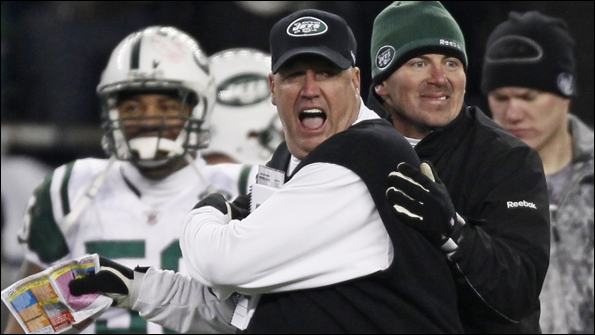 We're down to the final four teams bidding for Super Bowl glory in the NFL and the combatants for the 6 February title showdown in Dallas will be decided this weekend.
On what is always one of the best days in the American football calendar, the NFC Championship Game will feature one of the most storied rivalries in the NFL as the Green Bay Packers visit the Chicago Bears at Soldier Field (what a fitting name for a venue given the magnitude of this game).
Later on Sunday night, the Pittsburgh Steelers welcome the New York Jets to Pennsylvania for what is sure to be a hard-hitting AFC Championship Game. It is fitting in this wildest of NFL seasons that the top seeds in each conference (the Atlanta Falcons and New England Patriots) are no longer in the playoffs.
Despite some shocks along the way, there is so much tradition and NFL pedigree on display this weekend. The Bears-Packers rivalry dates back to 1921 and they boast 21 NFL titles between them. And no team has won more Super Bowls than the Steelers, who have a record of six wins and one loss in the greatest show on earth.
Yet as we approach the weekend's action, America's attention is firmly focused on the New York Jets - whose only Super Bowl success came in 1968 - and much of that is down to their larger-than-life head coach, Rex Ryan.
After guiding the Jets to the AFC Championship Game for the second year in a row, Ryan is within 60 minutes of everything he ever dreamed of - a personal appearance at Super Bowl Media Day.
Ahead of last week's defeat of New England, Ryan stoked up a war of words that ended up featuring players from both clubs. And while he supported his own men for speaking out, Patriots head coach Bill Belichick benched star wide receiver Wes Welker for the opening drive of the game for poking fun at Ryan.
Ryan is clearly a players' coach. He loves to goof around on the sidelines with his players and I get the impression he operates an open-door policy in New York. He doesn't quite let the lunatics run the asylum, but he does grant his players a fair amount of freedom to express themselves - both physically and vocally.
But do not be fooled into thinking this is a man only capable of demanding a response from his players on an emotional level.
Ryan is a defensive genius when it comes to the tactical side of the game. Putting together a dominant defence is in his blood. His father, Buddy, was a head coach at various clubs but he really made his name as defensive coordinator of the 1985 Super Bowl-winning Chicago Bears. Anyone with even a passing interest in the NFL will remember how physically dominant that unit - which featured the likes of Richard Dent, Mike Singletary and William "Refrigerator" Perry - was.
Rex learned strong defence from his father. But he also learned that, so long as you can walk the walk on Sundays, it's OK to talk the talk the rest of the week. Buddy was never short of a colourful and controversial quote and the only time he ever shut up was when he famously almost choked to death on a pork chop.
In advancing to the AFC Championship Game, Rex's defence has confused, pressured and bullied two of the game's greatest quarterbacks in Peyton Manning, of the Indianapolis Colts, and New England's Tom Brady.
Away from the X's and O's of the game, Ryan has a firm finger on the pulse of his team. He knows what makes his guys tick.
On the eve of that famous win in New England, Ryan invited former defensive end Dennis Byrd to address the team. Byrd was a promising young defensive end for the Jets before his career came to a shuddering halt in a game against the Kansas City Chiefs in November 1992.
Byrd was attempting to sack Chiefs' quarterback Dave Krieg when he smashed into team-mate Scott Mersereau. The play ended the careers of both men. Byrd broke his neck and was left paralysed. After months of extensive physical therapy, he was able to walk again but could not even begin to contemplate a return to the gridiron.
Knowing how sorely Byrd missed the game, Ryan invited him to Boston, where he told Jets players to make sure they enjoyed every play because they would never know when it might be their last.
Byrd delivered a stirring speech that led to a standing ovation led by wide receiver Santonio Holmes, who later Tweeted: "I have just heard the most inspirational speech of my life. I have never been more ready to perform in my life."
As Ryan hoped, his Jets were truly inspired and played like men possessed the very next day. That shows this is a head coach who knows how to push all the right buttons.
The Jets face a stiff challenge in Pittsburgh on Sunday night and they are playing in a game that could genuinely go either way. But this is a team packed with talent on both sides of the ball.
Quarterback Mark Sanchez is only in his second season in the NFL yet he already has an incredible four road wins in the playoffs to his name, running back LaDainian Tomlinson has found fresh legs in the Big Apple after looking stale with the San Diego Chargers and the receiving duo of Holmes and Braylon Edwards can be among the best in the league when on form.
Defensively, Shaun Ellis is applying plenty of pressure from the defensive end position, linebacker Bart Scott is about as fired up as any player in the playoffs and Darrelle Revis remains the best cornerback in the NFL by a country mile.
There are two things I know for sure: Ryan will motivate them into a pre-game frenzy and, once the opening kickoff sails into the frigid Pittsburgh air, he will create schemes that give his players the very best chance to succeed.
Of course, whether that will be enough remains to be seen. And that uncertainty is the beauty of these NFL playoffs.
Mary J. Blige, Sean Paul Aussie Gigs to Benefit Flood Relief

Organizers of a series of shows in Australia featuring Mary J. Blige, Sean Paul and Maxi Priest have vowed to donate proceeds to a relief fund for victims of the country’s devastating floods.
The state of Queensland suffered a state of emergency this month as heavy rain caused massive flooding throughout the region – at least 25 people have died and thousands of residents have been forced to flee their homes. The floodwaters have now also affected the state of Victoria.
Blige and Priest are among the stars due to perform at Brisbane’s Raggamuffin music festival on Jan. 30, and organizers have now renamed the gig Reggae For Recovery – Flood Relief Benefit Concert.
They’ve promised to donate money from ticket sales to the Premier’s Flood Relief Appeal, reports WENN.
Event bosses have also pledged 10 per cent of proceeds from other Ragamuffin shows in Sydney, Perth, Melbourne and Adelaide to disaster funds.
Promoter Andrew MCManus says, “Let’s hope we can raise a substantial amount of money to ease some of the pain and to aid in the rebuilding of Queensland.”
Eminem Nixes Award Show Gig after Producers Wouldn’t Say if he Won

Eminem has reportedly refused to perform at the BRIT Awards after organizers refused to tell him if he’d won one of the two awards he is up for.
The rapper was set to make a special appearance with Rihanna on their track “Love The Way You Lie” at the award ceremony next month, but has pulled out after producers wouldn’t tell him if he’d won in the categories he is nominated in, Best International Solo Male Artist and International Album – according to website M Is For Music.
Rihanna has already been confirmed as a performer at the awards, which will also see live appearances from Cee Lo Green, Adele, Arcade Fire, Mumford And Sons, Take That, Tinie Tempah and Plan B.
Eminem, meanwhile, is scheduled to appear at the Grammys, where he is nominated for 10 awards surrounding his last album “Recovery.”
The BRIT Awards 2011 take place on Feb. 15 at London’s The O2 venue.
Kelly Price Encourages Jazmine Sullivan to Hang in There
Kelly Price, a veteran voice in the industry, commented recently about Jazmine Sullivan’s decision to take a break from music. Price gave a few words of wisdom, being that she’s seen it all and been through it all since her start as a teen in the music business.
“The very first thing I said when I heard that is she needs some different people around her,” Kelly Price tells Singersroom.com. “She is one of the most incredibly gifted people that we’ve had in this new wave of singers. She’s one the most memorable vocalists in this era of singers.”
She continued saying:
“It does get difficult because she does have to contest with the fact that she has a voice that is in fact a ‘voice. It’s not typical, it’s not common, it’s very unique; she’s not cookie-cutter; you can’t duplicate what she does just by going and picking some other kid off the street and say I want you to do what Jazmine Sullivan does.”
Price obviously understands the challenges and even the stresses her young peer is going through right now. Her encouragement is for her to just keeping doing what she does best and be comfortable being the woman she is living in her own skin.
“She needs to sing what’s in her heart; she needs to sing what’s in her soul.”
Hu says China not seeking arms race or domination
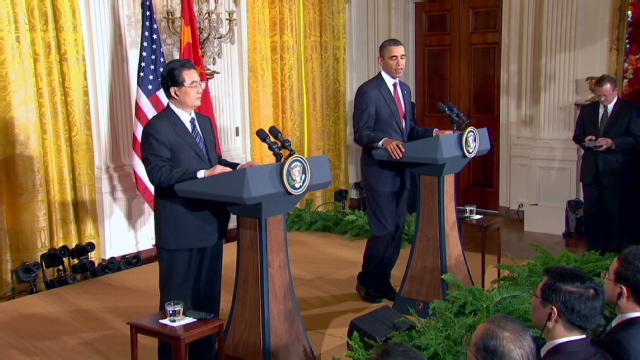
Chinese President Hu Jintao has said China has no interest in pursuing an arms race or exerting military dominance over other nations.
"We do not engage in arms races or pose a military threat to any country," the Chinese leader said in a speech to US business leaders.
Mr Hu called for US co-operation on economic and security issues.
On the third day of his US state visit Mr Hu met leading US politicians and was quizzed on a number of issues.
"China will never seek hegemony or pursue an expansionist policy," Mr Hu said during a speech at a lunch with senior US officials and business leaders.
The Chinese leader added that the US and China relationship had historically enjoyed a "smooth and steady growth" when the two nations considered each other's interests.
Earlier on Thursday, House Speaker John Boehner, a leading Republican, said he raised the need for tougher intellectual property protections and improved human rights at a meeting with Mr Hu on Capitol Hill.
Mr Hu said on that China still needed to do "a lot" over human rights, following a meeting at the White House with US President Barack Obama.
Source:CNN
FBI charges 127 alleged mobsters in north-east US

US federal agents have charged 127 suspected mobsters in multiple investigations into New York's organised crime families.
The arrests were made on Thursday morning throughout New York City, New Jersey, Rhode Island and other areas in the north-east US, FBI officials said.
The arrests are tied to charges of murder, extortion and narcotics.
Attorney General Eric Holder said the arrests amounted to the largest mafia crackdown in the history of the FBI.
"We are committed and determined to eradicating these criminals enterprises and bringing their members to justice," Mr Holder said during a news conference in Brooklyn.
Mr Holder said mafia-controlled taxes, which can affect ports and small businesses, have a negative impact on the US economy.
"It [the mafia] is an ongoing threat to the economic well-being of this country," he said.
Officials said alleged leaders of the Gambino, Genovese, Lucchese, Bonanno, Colombo and DeCavalcante families were among those who had been arrested.
The arrests were made as the result of information obtained through wiretaps, co-operation from informants and other central intelligence, said Janice Fedarcyk, FBI's New York division.
Former mob members, who recorded thousands of hours of conversations with mafia family bosses, also assisted in the investigation, authorities said.
Suspects arrested on Thursday are being charged with crimes that include arson, extortion, gambling, loan sharking and labour racketeering.
Mr Holder said the charges spawned from decades of offences, including murders within rivalling crime families, a killing during a botched robbery and even a double homicide after an argument in a pub.
The sweep began before dawn on Thursday with some 800 federal agents and police officers arresting a range of individuals in the US, from suspected small-time bookers to senior family leaders. One person was also arrested in Italy in connection with the investigation.
Mr Holder said all five major crime families in the New York City area were targeted in the investigation, which led to the largest FBI-led mafia crackdown in US history.
Mafia families in the US have seen a sharp decline in fortunes in the the past 10 years as the result of court testimony from informants, who have begun breaking their code of silence in recent years.
Former mafia member Salvatore Vitale was sentenced to prison in October after federal officials and prosecutors praised his work in double-crossing his own crime syndicate.
Vitale, who was arrested in 2003, gave authorities information on at least 11 murders, which helped bring down the once prominent Bonanno family in the New York area.
John "Sonny" Franzese, a 93-year-old member of the Colombo crime family, was also sentenced in Brooklyn on Friday to eight years in prison for extorting strip clubs and a pizzeria in the New York Metro Area.
Tunisia to legalise banned polical parties
Tunisia's new government says it will recognise all banned political groups, including Islamists, and grant an amnesty to all political prisoners.
The announcement comes after the new cabinet held its first meeting - nearly a week after President Zine al-Abidine Ben Ali was ousted amid mass protests.
The meeting had been postponed amid opposition calls not to give key posts to members of Mr Ben Ali's RCD party.
All eight RCD ministers in the cabinet had earlier quit the party.
The party had also dissolved its central committee.
On Thursday, troops fired warning shots at crowds who had massed near RCD headquarters in the capital, Tunis.
Reports said some protesters had tried to scale a wall at the building.
Judges also staged a demonstration in Tunis demanding the resignation of all judges who worked for the ousted president.
There were also reports of demonstrations in the towns of Gafsa and Kef.
Mr Ben Ali and his family fled to Saudi Arabia last week after mass street protests over unemployment, poverty and corruption.
Despite his departure, protests have continued, with demonstrators and opposition leaders demanding that all members of the RCD party be excluded from any future administration.
Although the situation across Tunisia remains tense, authorities have shortened the hours of curfew.
A state of emergency is still in place and the army is still deployed in the capital Tunis. Schools and universities remain closed.
The interim government has pledged free and fair elections within six months but has given no dates.
Sonia Peres, wife of Israeli president, dead at 87
Sonia Peres, the wife of Israeli President Shimon Peres, died at her Tel Aviv home Thursday morning, a president's spokeswoman said. She was 87.
The president was making his way to Tel Aviv from Jerusalem on Thursday, said spokeswoman Meital Jaslovitz.
The couple has lived separately since Shimon Peres was elected president in 2007, with his wife -- who preferred to remain out of the public eye -- remaining in their Tel Aviv home while her husband moved to the official residence in Jerusalem.
Dr. Rafi Valdan, Peres' son-in-law, told Israel Radio that she was found dead Thursday morning when a grandchild came to visit her, according to the daily newspaper Haaretz.
Sonia Peres was "all nobility and devotion," Valdan said. "The family members were very close to her. We would see her almost every day."
She was born in 1923 in the Ukraine and met Shimon Peres after they both came to Israel, Haaretz said. They married in May 1945 and had three children.
Aristide says he is ready to return to Haiti
On the heels of an exiled despot's arrival home, former Haitian President Jean-Bertrand Aristide said he is ready return to help his troubled homeland.
"As far as I am concerned, I am ready," Aristide said in a statement provided Thursday by the foreign ministry of South Africa, where Aristide has been living since fleeing Haiti during a violent 2004 uprising.
"Once again I express my readiness to leave today, tomorrow, at any time," Aristide said. "Since my forced arrival in the Mother Continent six and a half years ago, the people of Haiti have never stopped calling for my return to Haiti."
Aristide's lawyer in the United States said that the former president did not have a passport, and the Haitian government will not issue him one.
"If he were free to leave and had a passport, he'd be on a plane tomorrow," said Ira Kurzban.
Kurzban told CNN that no talks have taken place that would allow Aristide to return to the nation that elected him president.
"For Aristide to leave, he would need the cooperation of the U.S. government and the South African government," he added.
The U.S. State Department has made clear it is not enthusiastic about the idea of Aristide going home.
"We do not doubt President Aristide's desire to help the people of Haiti. But today Haiti needs to focus on its future, not its past," spokesman P.J. Crowley said on Twitter Wednesday. "This is an important period for Haiti. What it needs is calm, not divisive actions that distract from the task of forming a new government."
South Africa's Ministry of Foreign Affairs declined to comment.
An Aristide representative in South Africa refused to say whether the former president had a passport or if he believed the Americans and South Africans were blocking him from going back.
Aristide's lawyer said that if former dictator Jean-Claude "Baby Doc" Duvalier could return, Aristide should not be barred.
"If they can manage to allow Duvalier to go back, then certainly a democratically elected president should be allowed to return," said Kurzban.
The Miami attorney also told CNN that Aristide wants to return home as a private citizen.
"He does not want to be involved in politics," said Kurzban.
Aristide said in his statement that he wants to go back home to serve Haitians "as a simple citizen in the field of education."
"The return is indispensable, too, for medical reasons," he added, saying that he has had six eye surgeries in the six years he has lived in South Africa.
"The surgeons are excellent and very well skilled, but the unbearable pain experienced in the winter must be avoided in order to reduce any risk of further complications and blindness," he said.
The former Roman Catholic priest remains a controversial figure in the Caribbean nation.
Aristide was regarded as a voice for the poorest of poor and the father of democracy, becoming Haiti's first democratically elected leader. But he faced accusations of widespread corruption and despotism in his last years before a bloody revolt by street gangs and soldiers forced him to flee.
Aristide has repeatedly said over the years that he wants to return home. His latest statement, however, comes at a pivotal moment as Haiti is embroiled in political turmoil.
A late-November presidential election resulted in allegations of widespread fraud and final results have yet to be determined, even though current President Rene Preval's term is set to end in early February.
The return of Duvalier, whose ouster in 1986 gave way to the rise of Aristide, complicated Haitian politics even further. It's not clear whether Duvalier still harbors ambitions of holding Haiti's highest office again.
Duvalier's lawyer, Reynold Georges, said the strongman does not intend to quit Haiti, even though he faces charges of financial wrongdoing and possibly human rights abuses.
Georges told CNN that Duvalier would fight any charges against him and could very well get back into politics.
"You can bet your life on it," Georges said, referring to Duvalier's intention to remain in Haiti, adding that Duvalier is looking into renovating one of his old homes.
Duvalier made a brief appearance Wednesday, stepping out onto a balcony of the Karibe Hotel in Port-au-Prince and waving to dozens of supporters. "I will see you later," he said.
Source: CNN