
At least 32 killed in attack on pilgrims in Iraq
At least 32 people were killed and 150 others wounded in two explosions targeting Shiite pilgrims Thursday in Karbala, about 60 miles (100 km) south of Baghdad, police officials said.
It was the latest of several terrorist attacks across Iraq this week that have killed at least 118 people and wounded 450 others.
The attack in Karbala came as tens of thousands of Shiite pilgrims are making their way to the city for Arbaeen, a religious observation. It follows 40 days of mourning for Imam Hussein, a grandson of the Prophet Mohammed who was felled in a 7th century battle in the Iraqi city.
Another attack Thursday also targeted Shiite pilgrims: one pilgrim was killed and nine other people were wounded by a roadside bomb in southern Baghdad as they made their way to Karbala. On Tuesday, five Shiite pilgrims were wounded in an attack in Taji, just north of Baghdad.
Meanwhile, in a separate attack Thursday, a suicide car bomb targeting a police checkpoint in Baquba killed at least four people and wounded 33 others, police officials said. Two of the dead and nine of the wounded were police officers, according to authorities, who said the attack bears the hallmarks of al Qaeda in Iraq.
A suicide bomber rammed a minibus loaded with explosives into the main gate at Diyala police headquarters in central Baquba. The headquarters was preparing an exhibition of weapons and ammunition confiscated by Iraqi security forces from insurgents in 2010.
On Wednesday, suicide bombers hit a pair of locations in Diyala province, killing at least 16 people and wounding nearly 100 others, authorities said. A suicide bombing that targeted a recruitment center in Tikrit on Tuesday killed 65 and wounded 160.
Diyala was an al Qaeda stronghold until 2008, when Iraqi security forces, backed by U.S. troops, conducted major military operations in the province to push the militants out.
Awakening Councils also played a major role in hunting down al Qaeda fighters in the province. Awakening Councils, whose members are predominantly Sunni, have been recruited by the U.S. military to work against al Qaeda in Iraq and other militias.
Key security ministry positions remain vacant in Iraqi Prime Minister Nuri al-Maliki's government amid political wrangling. Al-Maliki serves as acting defense, interior and national security minister.
Source: CNN

'Baby Doc' Duvalier faces charges for old crimes
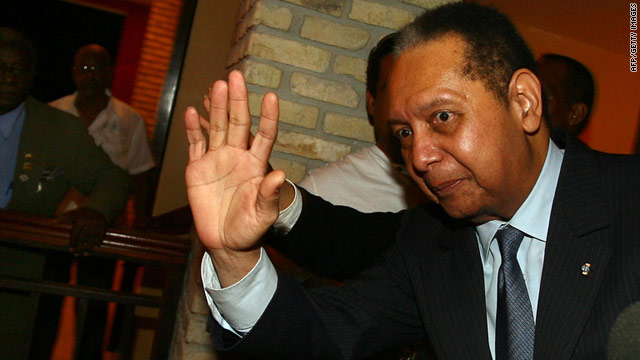
Haiti on Tuesday filed embezzlement and corruption charges against former dictator Jean-Claude "Baby Doc" Duvalier, who is accused of torturing thousands of Haitians and stealing hundreds of millions of dollars during his 15-year reign.
Haiti's top prosecutor brought the charges against Duvalier in a day of high drama surrounding the ailing one-time despot, who stunned Haitians on Sunday when he stepped off an Air France flight at the international airport.
After a hearing that lasted more than five hours, complaints of corruption, misappropriation of public funds and criminal conspiracy stemming were filed. The charges could be dismissed or sustained by a judge who will now investigate whether there's sufficient evidence to go to trial. The process could take months.
Duvalier, 59, was picked up by police early Tuesday amid a flurry of activity at the posh Karibe Hotel in Petionville, where he has been staying.
Judge Gabriel Ambroise and Haitian attorney Reynold Georges arrived at the hotel about 10:30 a.m., as Haitian police officers were asked to secure the premises. A helicopter buzzed overhead.
Duvalier said nothing as police, guns in hand, escorted him out the back of the building. Scores of journalists trailed the convoy as he was transported to the courthouse.
Duvalier has been mum about his reasons for returning to Haiti, and neither prosecutors nor the minister of justice made public statements about the charges or what comes next.
In Washington, a State Department spokesman said the French government notified the United States about Duvalier's arrival in Haiti "roughly an hour before" he landed at Port-au-Prince's international airport.
"We don't believe at this point Haiti needs any more distractions," said spokesman P.J. Crowley.
"Our focus right now is to help Haiti through this delicate period, have a new government emerge that is credible enough and legitimate enough and viewed positively in the eyes of the Haitian people so that the country, with international support, including the United States, can move ahead with the ongoing efforts to — to rebuild Haiti."
Duvalier's presence and the government's move add to an already tense political climate, where election officials are deciding which of the top three finishers from November's disputed presidential elections should advance to a two-person runoff.
During Tuesday's hearing, hundreds of angry protesters demanded the arrest of President Rene Preval and supporter inside warned that he, too, could find himself facing a similar fate.
"This game will destabilize the country," said Henry-Robert Sterlin, an ambassador under Duvalier. "We don't have a Duvalier problem. We have a Preval problem. Mr. Preval should know there will be a warrant against him, too."
Preval has not publicly commented on Duvalier's return, but shortly after taking office in 2006, he said that all Haitian citizens are entitled to return home under the Constitution but they should be prepared to face justice.
Still, Haiti remained relatively calm even as hundreds of supporters protested outside the court house, burning tires and chanting. They cheered as the dark SUV he was a passenger in drove him back to the hotel.
Gervais Charles, a high profile lawyer who has represented Duvalier, called the move against Duvalier a "scandal" and the charges "political."
He said they stem from a 2008 criminal complaint against Duvalier that was lost in the quake. Even then, he said, the statute of limitations had expired.
"We remain at the disposal of the justice system," said Charles, among several lawyers called to Duvalier's aide early Tuesday as word spread that the Haitian government was moving to arrest him.
He said authorities had confiscated Duvalier's expired diplomatic passport, which he used to travel to Haiti from French-controlled Guadeloupe.
"He's a Haitian citizen who is at home," Charles said. "The most difficult question to answer is when will he leave his home."
He might not be allowed to leave anytime soon. Still to come are possible human rights complaints by local Haitians, who say they were tortured and then forced into exile during his regime.
Although details of the specific cases filed Tuesday against Duvalier were not immediately known, they could stem from several active cases, according to the Institute for Justice & Democracy in Haiti and the Office of International Lawyers. The two advocacy group cited legal documentation for the following cases:
-- A 2009 order from a Switzerland court, which stated that the Haitian government had informed it of criminal proceedings against Duvalier as late as June 2008.
-- A 1988 decision of the U.S. District Court for the Southern District of Florida that found Duvalier liable for more than $500 million for misappropriation of public funds for his personal use.
The two groups say the legal documents are supported by an extensive public record of Duvalier's human rights violations, including the torture and disappearances of political dissidents at the dreaded Fort Dimanche prison and other crimes committed by organizations under his control, including the Haitian army and the Volunteers for National Security, otherwise known as the Tonton Macoutes.
International and local human rights group have demanded rights violation charges be brought against the former dictator within hours of his appearance in Haiti. At least two of his victims told McClatchy Newspapers on Tuesday that they plan to file complaints as early as Wednesday.
"Within the coming hours," former government official Alix Fils-Aime said about the timing of his complaint. "There is a need for justice, for the coming generation to understand the character of a dictator, the harm it has done to a country."
Fils-Aime was 26, working with peasants in the rural outskirts when he was "kidnapped at midnight with no food for 24 hours" and thrown into a jail cell, he said. He spent 18 months in solitary confinement before he was expelled from Haiti for 10 years.
"The whole country has suffered a tremendous setback despite what they are saying," he said. "There is a lesson to be taught. When I was in power I could have sought revenge by arresting Duvalieriests. Now they are putting their ugly heads out. My best advice: repent."
Robert Duval, a soccer star whom former U.S. President Jimmy Carter help release from jail, said he, too, plans to reinstitute the charges he once filed in the 1980s against Duvalier.
Still, he wondered if the Haitian government was serious about prosecuting Duvalier. Unlike most citizens, Duval said, Duvalier was walked out of the courtroom guided by police.
"It's a test to see if they are serious about it or playing games," he said. "Preval should do a truth commission. There has never been a real will to do it."
With Duvalier back in Haiti, even in what appears to be poor health, Duval said, "it just stabs my heart."
"He destroyed this country," he said. "He killed a lot of people, he's a murderer."
Source: The Miami Herald.
I-Octane Scheduled to Travel to New York To Promote "My Life" Tour
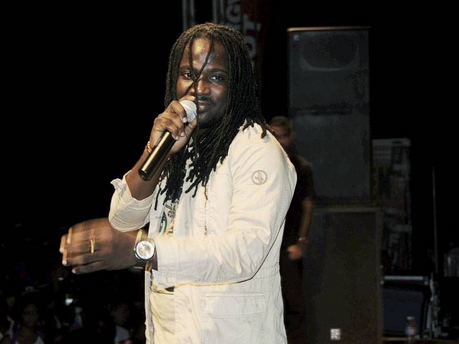
With three number one hits, Lose A Friend, My Life and Puff It, in 2010, accolades that include, Stone Love culture artist of the year, Jamaica Observer male singer of the year, Jamaica Star People's Choice Award male singjay of the year and Hitz 92FM Male Reggae Artist of the year and a contract with Digicel that affords him the distinction of being the company's Brand Ambassador, I-Octane has just begun his journey with no end in sight.
Poised to take his music worldwide, the singjay will embark on a two-month tour, titled "My Life", at the beginning of February and will include shows in the United States, Europe and Canada. In an effort to promote said tour, I-Octane will travel to New York to conduct radio, print and television interviews, appearances and a few performances in the Tri-state area. The promotions will kick-off on Wednesday, January 26, 2010 with a Press Conference and Meet and Greet.
Popular Caribbean eatery, Negril Village Restaurant, will host the Press Conference and Meet and Greet while popular skin care line, Carol's Daughter, will provide gift baskets for those in attendance. Pat McKay of Sirius Satellite Radio will serve as moderator for the press conference, which will be exclusive to members for the media fraternity and will begin at 6:30 pm. Then at 8pm, there will be a meet and greet - open to the public - where the artist will take pictures with fans and sign autographs. The singer will round out the night with a performance at "Wah A Gwaan" Wednesdays in Brooklyn, New York at Club Temptations.
The media promotions will continue on Thursday, January 27, 2011 through Sunday, January 30, 2011 with I-Octane appearing on radio stations such as Sirius Satellite Radio, WBLS 107.5FM, Irie Jam Radio 93.5FM, Linkup Radio 93.5FM, Hot 97 (NYC), 105.1FM, Hot 97 (Boston) and others. Additionally, the singer will host Upscale Crowd's weekly party at Rebel Nightclub in Manhattan on Saturday, January 29, 2011.
St Vincent opposition wants protesters to shut down capital
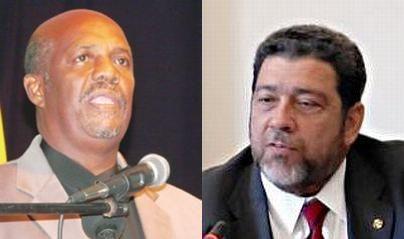
The Unity Labour Party (ULP) administration in St Vincent and the Grenadines is expected to face strong opposition inside and outside Parliament on Thursday, as it moves to amend two pieces of legislation.
The protest action outside Parliament and rigorous debate inside are the first in a serious of actions planned by the main opposition New Democratic Party (NDP), with the ultimate goal of shutting down capital city, Kingstown.
The NDP, which lost the December 13 elections by a single seat and was voted out of office in 2001, one year after protesting citizens shut down Kingstown, is calling on Vincentians to do it again, as the government moves to amend the Criminal Procedure Code, to prevent citizens from filing private criminal complaints without the permission of the Director of Public Prosecution (DPP).
Prime Minister Dr Ralph Gonsalves and his government also plans to repeal two sections of the Representation of the People’s Act (RPA), the election law.
Leader of the Opposition Arnhim Eustace said on Wednesday that Gonsalves was changing the laws out of fear that pending court decisions could cause his government to crumble.
Three candidates from the New Democratic Party (NDP) in the general elections filed a total of ten private criminal complaints against Gonsalves and three of his ministers last week.
The Chief Magistrate dismissed four of the charges while DPP Colin Williams took over and discontinued the other cases.
Eustace, speaking on the NDP’s New Times programme on Nice Radio, said the proposed changes to the Bills during Thursday’s meeting of the House of Assembly, are intended to take away from the NDP its right to continue with the private complaints, noting that the changes to the RPA will have retroactive effects.
Gonsalves, who has had several private criminal complaints brought against him and discontinued by the DPP -- a former Public Relations Officer and senator of the ULP -- during a press conference on Monday, hinted his intention to amend the private complaint law.
He called on citizens to support the reasoning that the law was “a historical anachronism”, “a residue from an earlier period [in] some distant part of England” that was being abused by the NDP.
“What I think should happen henceforth, you want to bring a private criminal prosecution, to prevent the abuse, you write to the DPP seeking authorization, to get the fiat,” Gonsalves said.
The NDP has appealed the court’s and the DPP’s decisions to throw out the cases and Eustace said on Wednesday that the complaints “meant that the opportunity would have arisen for the government to fall if those persons who put in those complaints were successful”.
He said the Gonsalves government “obviously, doesn’t want to take that risk. So they are coming to amend bills, take away people’s rights, to prevent themselves from in fact appearing before the court”.
“We don’t accept that,” he added, saying, “You can’t just change bills willy-nilly at the drop of a hat to suit your own purposes. They are rights of individuals that are being affected – of all individuals who may one day wish to bring such criminal prosecution and that is a very serious matter indeed.”
Eustace noted that during the Gonsalves years, a law guaranteeing prisoners certain rights was recalled and the government also passed retroactive legislations to make legal a levy for using ferry facilities in Kingstown.
“The more I look at this thing, the more convinced I am that what we have in St Vincent now has become a dictatorship where one man’s ego is to be satisfied, where one man’s political ambition is to be satisfied. We don’t accept it,” Eustace said.
He said opposition legislators would “take a very strong stand against those bills”, adding that the government would try to have the bills carried through all their stages and passed on Thursday.
“We have to fight the bill. Not only in Parliament but also outside of the parliament,” he said as he asked Vincentians to protest the proposed changes to the legislation.
“We are planning at a number of actions but what I ultimately would like to see is that we close Kingstown down. …The government has to understand that there is great public support for this matter. … If they force the bill through after a long debate, we will still be protesting until that bill is changed. I want to make that very clear….
“We are doing everything we can to try and prevent the passage of this legislation. And, even if they were to pass it, we will continue to protest until it is removed. We will like to close this place down so that Gonsalves understands what he is dealing with. That the people of St Vincent and the Grenadines are not in support of this kind of legislation,” Eustace said.
“This kind of dictatorial action is an affront to our democracy and to all of our people and we can only appeal for them,” he said, adding that opposition legislator will ensure that citizen’s rights to file private criminal complaints are preserved,” he further told his radio audience.
Antigua-Barbuda government misused statement, says opposition
The opposition Antigua Labour Party (ALP) has questioned a press release issued by the government, which claims that Sir Alister McIntyre has made a public statement supporting the administration’s intention to sell-off the State Insurance Corporation.
The ALP has drawn attention to the fact that the statement, purportedly made by McIntyre, is actually issued by the government, which says that he was responding to a question asked of him.
“Presumably, Sir Alister was responding to a hypothetical and general question put to him by a UPP public relations officer, and having secured a general answer, the UPP government is trying to associate Sir Alister’s name with their controversial plan to sell-off a national asset to selected people,” the ALP said.
“Careful reading of the words actually ascribed to Sir Alister in the government press release reveals that he addressed the general issue of whether governments should be a regulator of an industry in which it is also a competitor. Sir Alister could not possibly comment on the merit, or lack of it, of selling-off the State Insurance Company since he has no access to its books and records, nor of the potential it has as a contributor to the Antigua and Barbuda’s sustainable development,” the ALP continued.
“We deplore this attempt to involve a widely respected Caribbean figure in a domestic political matter by subterfuge. The UPP government should be ashamed of itself,” the statement said.
The ALP added, “Notwithstanding this clumsy attempt to deceive the people of Antigua and Barbuda, the fact remains that the UPP wants to sell State Insurance Company for a one-off capital gain which the IMF has told them must be used to pay down the huge borrowings with which they have indebted the country over the last six years and ten months.
“But, we maintain that the State Insurance Corporation is a national asset, which contributes sustainably to the well being of the people of Antigua and Barbuda and any sale of its shares should be no more than 40% and it should be done by public offering so that everyone could have an opportunity to own a part of the company in a transparent manner.
“Finally, we point out that there is no conflict between government being the owner of State Insurance Corporation and also a regulator of the insurance business. These two activities are carried out by two separate government agencies that are independently managed. What should happen is that the government should strengthen the Office of the Insurance Regulator including its capacity to act independently.”
The ALP statement concluded, “We point out that in the United States, the United Kingdom and elsewhere, government entities such as Fannie Mae and Freddie Mac compete in industries regulated by governments.”
Firearms, Finance Bills passed in Trinidad
THE Senate passed two key Bills in a marathon 11-hour sitting from Tuesday afternoon to 12.25 am yesterday on the heels of last week’s two marathon sittings in the Lower House.
Senate Opposition Leader Pennelope Beckles voiced her disapproval, amid general fears that such long and late sittings would fail to address concerns raised in debate. After a lengthy debate in committee stage, Senators passed the Firearms (Amendment) Bill to tighten up on gun ownership.
Some 29 Senators voted for the Bill (passing it with the required three-fifths special majority), with none voting against, but with Independent Senator Corrine Baptiste-Mc Knight abstaining. She had unsuccessfully asked for the Bill to withhold a firearms licence from any man who does not pay his child maintenance, arguing that such behaviour suggests he may be prone to acts of domestic violence.
The Senate then sat for four hours to unanimously pass a Bill to tie up loose ends in the 2008/2009 and 2009/2010 Budgets, the Finance (Supplementation and Variation of Appropriation) (Financial Year 2010) Bill, 2011. Starting with Finance Minister Winston Dookeran who pilotted the Bill, speakers made a conscious effort to be concise, with the first three speeches being delivered, in sum, in less than an hour. “This Bill was fully debate in the Lower House in an all night session and every aspect of finance was raised and unraised,” Dookeran assured.
He said the Bill supplements the 2009/2010 Budget by a new amount of $1.18 billion and varies the allocations in that Budget by $568 million. Notably Dookeran said the 2010/2011 Budget deficit would in fact only amount to $3.34 billion, not the $7 billion originally predicted.
He said the improved position was due to the country having more revenues from energy than at first predicted. The actual energy revenues are $15.4 billion, rather than the original estimate of $10.38 billion. He added that the Heritage and Stabilisation Fund now stood at a healthy US$3 billion.
Dookeran ended by lamenting that this was the sixth time in the past five months that Parliament has debated financial issues, starting with the Budget last September, a Finance Bill in November and now this Bill, each of the three Bills being debated by both Houses. He asked Senate President Timothy Hamel-Smith to mull this fact in considering a reform of the Senate’s workings.
Opposition Senator Dr Lester Henry and Independent Senator Subhas Ramkhelawan both advised Government not to be lulled by Standard and Poor’s recent “A” grade credit rating for this country. Henry said the same rating was earned under the past PNM government, saying, “So wasn’t astute management applicable under the previous regime? You don’t want to admit you met a strong economy?”
Henry warned that a difference between a foreign and local assessment of this country’s economy was not necessarily a good thing. “Standard and Poor’s put AAA ratings on all sorts of junk, that perpetrated the international financial crisis.
Subhas Ramkhelawan pointed to significant woes in the economy. He said while the oil-price is rising, the price of natural gas is not. Noting little borrowing being done by the private sector and consumers, he said the dependence is now on public sector spending to drive the economy.
Deputy Governor’s wife dies suddenly
An autopsy has been ordered on the body of the wife of Deputy Governor David Arkley after she was found dead last night.
Forty-two-year-old Melissa Arkley was fourd lifeless at ‘Clifton,’ the Deputy Governor’s official residence around 8.40pm. It is believed the Deputy Governor was off the Island, and only returned home yesterday.
Last night more than a dozen cars, including several police vehicles, parked outside the Devonshire home. A Police Spokesman said of the sudden death: “There do not appear to be any suspicious circumstances.”
Mr Arkley took up his post in October. Governor Richard Gozney who was at the scene called the incident “tragic”.
Carlos Simons cautions the British
 Former Chairman of the Consultative Forum, Queen’s Counsel Carlos Simons said that the British occupation of the TCI is creating uncertainty among residents and investors.
Making his contribution to the Consultative Forum on Tuesday, January 11, Simons said the period which the new proposed Constitution takes to be finalized and ratified by the UK Parliament was making life uncertain for international investors and locals alike.
He however, cautioned that while the process of the final document needs to be speeded up, in the final analysis it should be geared towards advancement of the country and not taking it backwards
Simons also noted that there was urgent need to revitalize the economy so that the private sector could provide the jobs needed to get the country up and running again, and also that Government could collect the required funds to make the public service more efficient and end the overhanging cloud of mass layoffs within that sector.
Turks and Caicos Islands Human Rights Commission
As part of its on-going commitment to the advancement of human rights in the Turks and Caicos Islands, the TCI Human Rights Commission will continue its participation in the project Building Human Rights Capacity in the UK Overseas Territories.
A workshop, originally scheduled for November last year but postponed due to the passage of hurricane Tomas, has now been rescheduled for January 17th through 21st with the UK trainers holding sessions in Grand Turk and Providenciales.
The project is being sponsored by DFID in partnership with the Commonwealth Foundation, the Commonwealth Legal Education Association (CLEA) and the Foreign and Commonwealth Office. The goals of the workshop are to:
- Increase the commitment by Overseas Territories Governments and partners to an improved human rights agenda
- Increase the awareness and capacity of governments and civil society to address human rights issues in the long term
- Strengthen human rights reporting and monitoring arrangements in accordance with relevant international treaties.
This is the second in a series of proposed workshops to be held. The aim is to provide all participants in the training sessions with the foundation/building blocks about human rights and to address the needs of particular government departments and civil society in order to enable them to apply rights in practice/in their work. The training will seek to address matters that arise in the various Government Departments and other institutions and agencies such as Immigration, Labour, SPICE, the Police, Education, Health, Social Services, Gender Affairs, NGOs, Media, Business/Corporate Community, Statutory Bodies, Youth Affairs, Courts and Civil Society Groups.
Participants will, among other things examine;
- the role of civil society in promoting and protecting human rights
- rights as regards to gender equality, access to justice, immigration and labour rights, and
- how best to encourage civil society to monitor human rights, advocate for greater human rights protection, lobby authorities and use the international machinery for human rights protection.
Millennium Highway to get much needed attention
The Millennium Highway in Providenciales is due for a major set of repairs as residents have cried out to government to address the much traversed roadway.
The highway which has become increasingly used since the development of several low cost homes in the area is perhaps one of the busiest roads in Provo but has had major officials since its inception in 2003.
Government officials have said that they are “aware” of the problems affecting – the main thoroughfare to densely populated Blue Hills and Wheeland – and has named it the “highest priority”.
Drivers forced to traverse the road on a regular basis are all too familiar with the vast craters which line one long stretch. Recent bad weather has made some sections almost impassable with vehicles swerving across the road to avoid the largest holes.
A spokesman for the Government told one local news agency t that an increase in traffic and heavy rains had resulted in a considerable amount of damage to the road’s surface. The official said quote: “This is exacerbated by the increase in development along the highway, much of which does not include adequate provision for drainage.”
Temporary repairs are however being conducted by members of the EMS team but these measures will not permanently fix the problem as extensive road work is hoped to be started by the middle of the year.