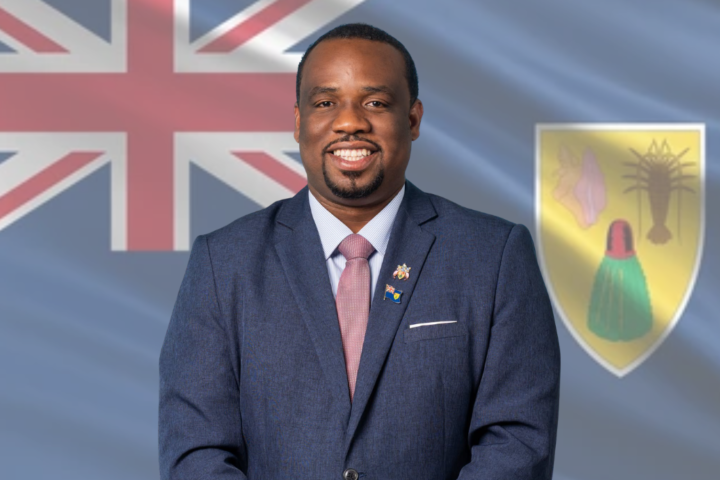
MINISTER of Tourism, Hon. Ralph Higgs says the Government is exploring all avenues to collect and protect its revenue.
Higgs made this comment during a brief exclusive interview with the Weekly News on Wednesday March 1.
Tax evasion and avoidance are problems which seem to have defied solution, and have bedeviled the Turks and Caicos tax system for many years; however, the new Tourism Minister says his administration is working assiduously to reverse this debilitating issue.
His sentiments come after owners of the Regent Grand recently voiced their concern about the long running tax evasion practice of some villas, condos and private homes in the Turks and Caicos Islands.
The call for greater regulatory practices is one which has been made for a number of years, most recently last week by the Chamber of Commerce and the Hotel and Tourism Association when they met for the first time with the new Government.
Premier Sharlene Cartwright- Robinson at a press conference on Thursday (March 2) disclosed that her government has already sent legislation aimed at regulating these businesses to the attorney general’s chambers for implementation over the next four years.
She said: “One bit of legislation that will be of interest to the people is the regulation of the RBOs.
” We want to do that from two standpoints and that is to make sure that we are not losing revenue and to make sure that the industry is regulated but also in the issue of national security because we want to know who is renting where and given the recent unsettling environment as it relates to crime we want to know where people are in this country and it is important to know where tourists are in these stand alone villas and heavily bushed, not well lit areas, we want to be able to protect our product and protect tourists who continue to rent under the RBOs.
“I don’t want to give the impression that all of them are illegal or unregulated but it is an industry that has to be managed and managed better.”
These establishments are accused of not paying their accommodation taxes to the Government and there is a call for them to be regularized as private rental properties.
A well-placed source at the Regent Grand resort in Grace Bay recently told this publication that there are American unit owners who have been engaged in the practice, and are undermining the hotel business in the country.
In a recent press statement, both the TCHTA and the Chamber, stated that an area identified was that of private home owners using platforms like Airbnb, Vacation Rentals By Owner (VRBO) and other online sites to secure bookings.
This, they said is an emerging business which needs regulating as it can be a revenue source for the administration in the collection of taxes.
Currently there are several hundred rental properties in the TCI listed on these websites most of which are rented at exorbitant prices, with many of them not paying any taxes.
This is not a problem that plagues the TCI only, as many other Caribbean tourism destinations are affected by rise in online vacation home rental platforms.
The Caribbean Hotel & Tourism Association has since published a resource guide supporting the TCI’s effort to level the playing field through the taxation and regulation of the sector and its engagement in public and private sector tourism development efforts.
According to industry news last year, the region’s leading umbrella tourism private sector organization is counseling the Caribbean’s 32 national hotel and tourism associations and governments to work together to address the challenges and opportunities presented by the rapid rise of the online vacation home rental industry and other sharing economy businesses being fueled by hosting platform companies like Airbnb and Uber.
“Airbnb, in particular, recorded more than 25,000 listings in the Caribbean as of February 2016 and is projecting significant growth this year. Destinations such as the Dominican Republic, Cuba, Puerto Rico, Guadeloupe, Jamaica, Cancún, Martinique and Barbados feature the most listings on Airbnb with continued growth projected throughout the entire region.”
CHTA president Karolin Troubetzkoy has noted that the sharing economy made possible by these hosting platforms is happening whether, whether it is embraced or not.
He pointed out: “This leaves us with two options: we can allow it to develop as an untaxed and under-regulated market and lose out on tremendous opportunities or we can bring all the players to the table to work out solutions to the benefit of all concerned parties.”
Only last month ,the Caribbean Tourism Organization (CTO), the region’s tourism development agency, and Airbnb, whose community marketplace provides access to millions of unique accommodations, signed a landmark agreement to develop a set of policy principles and recommendations on the sharing economy for Caribbean governments and other stakeholders.
Under the agreement, both organizations will share data and studies with policymakers about the positive impact of the sharing economy in the region; identify ways to make it more inclusive; and broaden the benefits of tourism to non-traditional actors, attract new stakeholders and focus on providing amazing and unique travel and cultural experiences to visitors.
This partnership agreement will also provide to the CTO an economic analysis of Airbnb’s positive impact on local economies.
By reviewing Airbnb’s aggregate data, key stakeholders will be briefed on the value of a peer-to-peer review mechanisms; at the same time Caribbean government officials and other stakeholders learn about the long term benefits of the sharing economy and home sharing in particular.
“The CTO is establishing a basis for mutual cooperation with Airbnb’s. It is important for us to examine all aspects of this important segment of the sharing economy.
We believe that by clearly understanding Airbnb’s massive influence in capturing consumers’ interest in unique accommodations we will be in a position to properly advise our members and to allow the Caribbean to achieve the goals of year-round profitability, visitor satisfaction and sustainable tourism development,” Mr. Riley said.
Currently, there are 41 thousand listings across the Caribbean and a typical host in the Caribbean earns approximately US$3,900 per year.
The agreement will also help to identify new ways to market the Caribbean as a region: One Sea, One Voice, One Caribbean and grow the tourism industry.
With this cooperation agreement, Airbnb will continue promoting tourism and highlighting Caribbean history and culture.
The strategy focuses on the diversification of the tourism industry and the expansion of the economic opportunities for the Caribbean people.