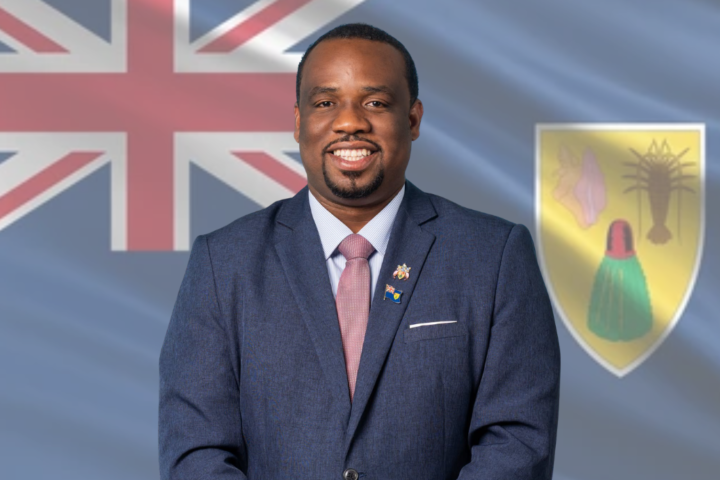
Today, the Permanent Secretary for Finance, Mr. Delton Jones & Caroline Gardiner from the Finance Ministry met with RTC news as they discussed the published the 2011/12 Budget Statement he would have delivered to the Consultative Forum. This summary statement has been prepared to help update the public on the changes set out in the Budget.
The UK Government-backed financial support package buys the time needed to tackle the dire financial situation the Interim Government inherited from the previous administration, which failed to protect taxpayers, invest in the future, or pay its creditors, damaging local businesses and the reputation of the islands. With the support of the UK, we are working hard to help TCI recover from this terrible legacy, to rebuild international confidence in the islands, to stimulate growth, and ensure that TCIG is able to meet its obligations once again.
The UK has also funded the costs of the SIPT and the civil recovery process, as well as police costs incurred to combat the spike in violent crime in the last financial year, providing an extra $10.5 million to TCIG for this purpose. The UK has now also provided a further one-off $3.2 million grant to support public service reform.
We know that this has been a difficult time for many in the Turks and Caicos Islands. The Territory has, like many countries, struggled as a result of the global economic downturn. So, the Government has worked to ensure that the impact of its proposed budget measures is spread as fairly as possible and forms the basis of a sustainable future for everyone, by:
protecting key services – such as police, criminal justice and immigration – so that people can live, visit and work in the Turks and Caicos Islands in safety. Our aim is to achieve a higher standard of public services for the future, through public sector reform and a focus on achieving better value for money for taxpayers.
continuing to support growth. Our new investment in an extended Providenciales International Airport has already attracted new flight operators and offers the prospect of increased competition for airspace and lower fares. We will also put in place measures to stimulate economic activity in under-developed sectors such asagriculture and fishing.
investing in achieving the milestones set out in last year’s Written Ministerial Statement so that a date for elections can be set.
But we cannot avoid the need to tackle the severe and structural fiscal problems we inherited from the previous administration. The UK support does not provide money to reverse previous spending cuts or fund significant new expenditure; instead it provides a one-off opportunity to take the fiscal measures needed to bring revenue and spending into line. We have no alternative other than to balance TCIG’s budget by raising revenues and cutting spending; like any household or business, the public sector cannot continue to live beyond its means. We know that this is a difficult message, but achieving this goal is not only essential to avoid the spectre of default; it will also have the benefit of providing a major boost to the economy by allowing payments to be made to local businesses and restoring confidence that the Turks and Caicos Islands are financially secure, and a good place for investment.
Raising revenue
The current revenue system does not work. We have consulted widely on new measures to modernise TCIG’s revenue system and close the budget gap. We have listened to public concerns, and we have ruled out introducing a property tax or an income tax. Instead, we will introduce Value Added Tax in 2013, such as has been successfully implemented by many of our Caribbean neighbours. A Turks and Caicos Islands VAT should deliver long-term improvements to the economy by removing current market distortions, increasing competitiveness, strengthening the investment climate, and increasing revenue.
In the meantime, we will raise revenue by:
Applying a 4% Customs Processing Fee (CPF) to all imported goods and importers with immediate effect.
Raising fees for business licenses by 35% from 1 April 2011. A new simplified structure will be introduced from 1 July 2011.
Raising fees for vehicle licenses and driver’s licenses by 50% from 1 May 2011.
Simplifying the work permit system and raising fees from 1 September 2011.
Applying a new sales tax of 10% on water for commercial customers and the largest residential customers from 1 September 2011; this will not affect most households.
In the case of electricity we will move to a carbon tax on electricity generators from 1 September 2011. This will encourage the generating companies to review their generating efficiency and mix of sources, including from renewable technologies, over time. This also has the advantage that it cannot be passed directly on to consumers.
A new bank tax of 10% will be levied on all non interest-bearing services provided by banks, and an insurance tax of 2.5% will be levied on premiums for general insurance, excluding life and health insurance. Both these will be introduced from 1 September 2011.
These new measures will broaden the tax base and will raise revenues to around $160 million in 2011/12, rising to $190 million by 2013/14. We will also need to modernise systems to collect all the money due to Government: it is not right that some people pay their fair share while others do not.
Controlling spending
The Interim Government needs to tackle the rapid growth in public expenditure of the last decade. Last year’s budget included a target to reduce the cost of the public service by 25% by 2013/14, and we need to continue to make progress towards that target if we are going to remove the spectre of default and keep the burden of taxation as low as practical. We aim to build a public service that is smaller and stronger, with high standards of public service and greater accountability to the people of TCI, with the right incentives for staff to do their jobs well and greater opportunities for fulfilling work
and career progression.
In the meantime we will apply employment rules properly so that all public servants are treated fairly, while generating savings to help reduce the need for cuts in the size of the public service. We recognize that some may have made plans based on past practice, so we will put in place transitional arrangements where possible so that public servants will have time to adjust. We are in discussion with the recently formed Civil Service
Association on a number of related issues as well as on the broader reform programme.
Key measures include:
Halting pensions overpayments. People wrongly receiving both government and NIB pensions in full will have the government pension reduced in line with current legislation. People who retire from the government will no longer be able to draw both a pension and a salary on being re-employed by government.
Subject to transitional protection for those nearing retirement age, who may have financial plans based on past practice, people employed by the government before 6 April 1992 will no longer be able to convert part of their government pension into a lump sum, and housing and other allowances will no longer be included in the calculation of government pensions, with some transitional arrangements.
In order to close the gap between the government retirement age and the age at which NIB pensions are payable, the government retirement age will increase from 55 to 60, with transitional protection for those who are already aged over 50.
The maximum allowed level of accumulated leave will be 30 days, with transitional arrangements for those affected. Contract workers will no longer be able to accumulate annual leave to be paid for upon completion of their contracts.
The 10% reduction in allowances other than housing, agreed last year, will be properly applied, and the arrangements for housing, transport and other allowances will be tightened to ensure greater consistency and transparency.
The government will not award salary increments in the new financial year.
A fundamental review of statutory bodies will be carried out and immediate measures put in place to monitor and manage their finances, cutting their costs by 25%.
Management of the scholarship program will be improved and erroneous payments to students will be stopped. We will replace the existing programme with a new scheme that will focus support on the brightest and best students who would otherwise be denied access to higher education.
There will be spending reviews of both utilities and communications, to ensure that we achieve best value for these services.
The Interim Government will undertake a wide-ranging review of procurement.
Over seven million dollars will be available for essential capital spending.
The actions of the previous administration mean that there is no alternative to these measures, which will be difficult to achieve. But they can be achieved, allowing us to look forward to a surplus in 2012/13, and a stronger, more sustainable future.