
2,000 new jobs projected from implementation of mining policy in Jamaica
The Ministry of Energy and Mining is projecting the creation of up to 2,000 jobs within the mining sector in Jamaica over the next 10 years.
The projection is based on the extent of associated activities resulting from the full implementation of the National Policy on Minerals Development 2010 – 2030.
Principal Director of the Ministry’s Policy Planning and Minerals Division, Oral Rainford, said that once the policy is put into operation, certain specialist skills will be required for the sector. These include: expertise in mining engineering, mineral economics, mine development, and transport fleet management.
“These will become more important and in demand, largely because we are speaking, now, about complex operations emerging… which are much larger, in many instances, than many of those which we currently have,” Rainford stated at the final in the series of public consultations on the policy held recently.
He noted that other activities such as, welding, surveying, the management of large vehicles, environmental and waste management, will also become important, so too a range of other specialists such as surveyors, innovators, people who are developing new products, chemists, geo-chemists, geo-physicists.
The national minerals policy aims to ensure that Jamaica’s mineral wealth supports and contributes to sustainable national development and prosperity and its implementation, over the next 10 years, is projected to cost approximately $1.2 billion. The money will be spent on, among other things, institutional strengthening, infrastructural development, research, community development and training.
Rainford said that some $6.2 million has been spent on developing the policy over the last six years and preparation of the final draft for submission to Cabinet by March, coupled with the series of island-wide consultations and other attendant activities are expected to push the figure up to about $8 million.
Rainford said all of the funds to be spent are expected to be recovered, overtime. He stated that with its anticipated growth and expansion, the mining sector is expected to become more profitable.
“We are of the view, and the estimates are clear, that increased tax earnings will provide the government with an avenue through which much of the funds will be recovered. Additionally, (there is) import substitution. We have got to move away from vast quantities of minerals, which are being imported. We can produce much of these locally, and we are going to move in that direction,” he contended.
Jamaica’s minerals sector comprises three major segments: the bauxite/alumina sector; industrial minerals comprising non-metallic and non-fuel elements such as limestone, gypsum, gravel, and sand; and the precious and base metals sector, incorporating activities such as the gold mine operations in Pennants, Clarendon.
While noting that the latter sector is currently “not very active,” Rainford contended that it “can be of particular value”.
He pointed out that bauxite and limestone comprise the majority of Jamaica’s mineral deposits and based on recently revised data, the country’s bauxite deposits currently stand at between two and 2.2 billion tonnes.
Additionally, he said, there is in excess of three billion tonnes of limestone, noting that a “good 120 tonnes are mineable… (and) in a number of instances (of) exceptionally good quality.”

Venus Williams with draws from ASB Classic in Auckland
Venus Williams' participation in the Australian Open has been put in doubt after she withdrew from January's ASB Classic in Auckland, New Zealand because of ongoing health issues.
The 31-year-old former world number one has been receiving treatment for Sjogren's syndrome.
The Australian Open, the first Grand Slam of the year, begins on 16 January.
ASB Classic tournament director Richard Palmer said: "We are disappointed to have lost a player of her calibre."
He added: "While withdrawals of this nature are part and parcel of sport, we sincerely feel for the fans who will also be disappointed by the news of Venus' withdrawal."
The seven-time Grand Slam winner, who is currently ranked 103 in the world, had been handed a wildcard entry to the tournament.
However, the competition's website announced Williams had told her agent, Carlos Fleming, that she was not fit to take part despite recent exhibition match appearances.
Williams withdrew from her second round match at the US Open in August, citing problems with Sjogren's syndrome, an autoimmune condition which can cause fatigue and joint pain.
Speaking in September, she said: "Sjogren's is something you live with your whole life.
"The good news is now I know what's happening after spending years not knowing. I feel like I can get better and move on."
Mills: Bolt could turn to 400m later
Glen Mills, coach of the world's fastest man, Usain Bolt, believes his star athlete has all the attributes to be a great quarter-miler and may in fact turn to the event when he's "not as fast" anymore.
Mills is not alone in his assessment of Bolt, as world-record holder for the event, Michael Johnson, and countless others believe the athlete could dominate it. In fact, his personal best of 45.28 in the event, in 2007, without much preparation would seem to suggest so, but there remains one obstacle, the sprinter simply does not like the event.
"He has all the attributes to be a quarter-miler but he hasn't taken a liking to the event. He works hard at the sprints but I guess the 400m isn't for him," Mills told the London Evening Standard.
"When he's not as fast maybe the quarter-mile will be the option for him. Everybody wants to be a winner and he's just that in his events. He may have a change of heart in the future," Mills added.
In a bid to better his Beijing Olympic Games medal haul (3 gold) at the London 2012 Games, where he hopes to put himself in rarefied company by capturing four gold medals, Bolt says he will consider taking part in the 4x400 relay. According to Mills, however, it may not be as simple as that.
The coach accepts that it's a desire of his athlete but that a lot would depend on the Jamaica Athletics Administrative Association's selection preferences going into the Olympics.
"It's a desire but there's a lot more to it than what he says. First, there's a trial where the quarter-milers are selected. It depends on what the national body of athletics decides. It's not for us to say. We can express a desire but Usain is not going to run the 400m at the trials so it would have to be a decision by the association on it," said Mills.
That aside, the coach believes his athlete could produce his best showing yet, even eclipsing his performance in Beijing, but that will depend a lot on conditions.
Bolt set 100m (9.69) and 200m (19.30) world records at the 2008 Beijing Olympic Games before bettering that performance a year later at the IAAF World Championships in Athletics in Berlin, lowering his own marks in both events with a 9.59 run in the 100m and a 19.19 run in his 200m pet event.
The powerful sprinter had less of an impact at the recent IAAF World Championships in Daegu, South Korea, false starting in the final of the 100m before recovering to successfully defend his 200m title with a 19.40 clocking.
"He can do better than Beijing and Berlin but I'm not certain of the weather in London," Mills was quoted as saying. "It's very tricky but if the weather is right and the climate is warm, he can do it."
Afflalo agree to five-year contract worth up to $43 million with Nuggets
The Denver Nuggets continued their post-Carmelo Anthony rebuilding effort Monday, signing restricted free agent guard Arron Afflalo to a five-year deal worth up to $43 million, a source confirmed to SI.com
It was the second time in six days that second-year Nuggets general manager Masai Ujiri retained a player who he sees as a pivotal part of his team's core, as veteran center Nene signed a five-year deal potentially worth up to $67 million on Wednesday. Afflalo was widely seen as one of the most attractive talents on the free agent market, but the fifth-year player, who came over from Detroit for a second-round pick in the summer of 2009, clearly wanted to stay in Denver. Afflalo averaged 12.9 points for the Nuggets last season, shooting 49.8 percent from the field and 42.3 percent from three-point range.
"He's an asset," Ujiri told SI.com on Monday night. "He's tough. And the way we're building our team, with good guys and strong guys and guys that are competitive, he has always lived up to it.
"At first they said he couldn't be a McDonald's All-American...and then he became a McDonald's All-American (while at Centennial High School in Compton, Calif.). Then he became very successful in college (at UCLA) with the Final Four he went to (in 2006), and then got traded from Detroit and came to us...and comes in and gets the starting spot and just continued to build a solid career. We're really happy to have him back."
The Nuggets did just fine without Anthony last year, finishing 50-32 in the regular season before falling to the Thunder in five games in the first round of the Western Conference playoffs. This season, Afflalo will become an even more significant part of the Nuggets' post-Anthony plans.
"It's good for us," Ujiri said. "Now you put (the Nuggets players) on the platform and see how we perform as a team. It's a bunch of young guys with some really good veterans, with Nene and Andre Miller and Al Harrington and Birdman (Chris Anderson); those are all guys who can play. They give us good veteran leadership. And then with the young guys, we have to see what they're made of now.
"We've put a little team together here and we hope it brings some upside and some momentum from last year after the trade."
ESPN.com first reported the deal.
Britain boycotts IMF eurozone rescue scheme
 European countries have agreed to provide 150bn euros (£125bn; $194bn) to the International Monetary Fund.
The money could be used to help countries in the eurozone struggling to pay their debts.
Eurozone countries including Germany, Italy and Spain as well as several outside the eurozone offered support.
But Britain's decision not to take part in a scheme to support the eurozone meant EU finance ministers failed to reach their target sum of 200bn euro.
The British government wants an increase in IMF resources to be part of a broader process involving all G20 nations.
"The UK has always been willing to consider further resources for the IMF, but for its global role and as part of a global agreement," the office of UK Chancellor of the Exchequer George Osborne said in a statement.
'Lack of solidarity'
BBC Europe correspondent Chris Morris says Britain is insisting that the IMF's role is to support countries not currencies.
But, he adds, some will see this as another example of a lack of solidarity from London, at a time when the eurozone is struggling to emerge from months of economic crisis.
The largest contributers to the fund were Germany and Spain.
Eurozone nations which have already had to accept international bailouts - such as Greece and Ireland - will not take part in the new scheme.
But contributions to the IMF fund have also been pledged by several countries outside the eurozone, including Denmark, Poland, Sweden and the Czech Republic.
News of the agreement came as the European Central Bank President Mario Draghi said he had no doubts that the euro would survive.
But the bank also warned that risks to the eurozone's stability had increased and that, in the worst-case scenario, there could be a return to a global recession.
In its twice-yearly Financial Stability Report it said that the risk of two large banks defaulting within the next year had risen to the highest level in four years.
The ECB also warned that some eurozone banks had become addicted to central-bank funds, and could face "significant challenges".
Solving debt crisis tops Denmark's EU presidency agenda: Minister
Solving Europe's debt crisis will take the center stage in Denmark's upcoming EU presidency, the country's Minister for Europe said here Monday.
"The crisis will heavily affect our agenda and we will do our best to secure what we can do to do bring Europe forward within the limits of the presidency role," Nicolai Wammen told international journalists at a news conference.
The comments came as he released the government's focus areas for Denmark's six-month EU presidency which starts Jan. 1, 2012.
The official priorities are a "responsible, dynamic, green and safe Europe," but beating the debt crisis will be paramount.
"The basic objective for the Danish presidency will be to contribute to get Europe out of the crisis... The economic crisis, and also the lack-of-trust crisis. We need to restore faith in the EU," he added.
For Denmark, this means encouraging greater economic responsibility among EU members, which in turn "implies (members') political willingness to comply with new rules on economic governance."
These rules, proposed by EU leaders at their Dec. 9 summit in Brussels, include preventing EU members running deficits of more than 0.5 percent, and automatic sanctions for those with deficits exceeding three percent.
The rules are scheduled to come into force in March 2012.
EURO OPT-OUT
Denmark is put in an awkward position while drafting a course for the eurozone out of the crisis, as it does not use the euro and has not yet agreed to sign on to the new fiscal agreement, which so far only binds the 17-member euro zone, and is still being drafted.
"We have a positive attitude towards the draft and the government will engage constructively in the negotiations with a clear political intention to the greatest extent possible participate in the agreement with full respect of our national opt-out on the euro," Wammen said.
He insisted that the euro opt-out would not prevent Denmark taking a leading role in economic negotiations with euro zone members under its presidency.
"I believe there is strong confidence in the Danish presidency from all member states... we have a strong economy, a strong commitment to Europe, we are seen as an honest broker, and that is the way we will deal with the presidency," Wammen said in response to questions from Xinhua.
"We will try to bring all 27 together to find solutions to the problems and challenges we are facing," he added.
Denmark will chair most meetings on the EU budget, and other vital meetings, during its presidency. This means it will have an important role to play as a mediator between the 17-member euro zone, and the 10 EU members outside the euro, including the UK, which is the only member to outright reject the new intergovernmental fiscal agreement.
GREEN GROWTH, ENLARGEMENT
Job creation, improvement of the single market, and improving competitiveness in the global market, are also high on the presidency agenda.
In this respect, Wammen said more funds would have to be channeled to "growth-enhancing areas like research, education and innovative technologies."
The green emphasis will promote sustainable growth, preserve the EU's lead on climate and energy policies and measures, and keep and create knowledge-intensive green jobs in the EU.
With regard to the EU enlargement, Wammen said Denmark was looking "forward to continuing negotiations with Turkey and Iceland, opening negotiations with Montenegro in June, and granting candidate status to Serbia in February."
Under its previous presidency in 2002, Denmark oversaw the expansion of the EU by 10 new member states.
Iran signs deal with Russia to develop oil field
Iran has signed a deal reportedly worth up to one billion U.S. dollars with Russia's Tatneft to develop an oil field, a rare example of new foreign investment in a country under tight economic sanctions.
For a country under tight economic sanctions this was a big deal. Iran has signed an agreement with Russia’s Tatneft to develop the Zagheh oil field on the gulf coast of Bushehr province. Iran’s oil ministry says it hopes to produce 7,000 barrels a day in the first phase of the project, increasing significantly once phase two begins. Rostam Qasemi is the country’s oil minister. He said: "The deal will mean at least 50,000 barrels of heavy oil can be extracted per day. Fortunately the preliminary well has already been dug, so production can start."
The President of the southern republic of Tartarstan, where Tafneft is based, was in Tehran for the signing. He said he hoped for further economic co-operation with Iran, despite international sanctions over its nuclear program. Russia has criticized the sanctions but despite this deal there are few signs that Russian investors are rushing in to replace western ones.
AT&T ends $39bn bid for T-Mobile USA
US telecoms giant AT&T has said it will not pursue its $39bn bid to buy T-Mobile USA after running into fierce government objections.
AT&T said the actions of the government to block the deal do not change the problems faced by the mobile phone industry.
It says it still requires more airwaves to expand.
If AT&T had bought T-Mobile USA from Deutsche Telekom, it would have become the US's largest cellphone company.
AT&T is currently the country's second-largest wireless carrier, while T-Mobile is the fourth-largest.
The US Justice Department moved to block the merger in August, saying it would reduce competition and lead to higher prices.
Last month, the companies cast doubt on whether they would go through with the plan when they withdrew their application to the Federal Communications Commission after its chairman also opposed the deal.
AT&T has said it would include a $4bn charge in its fourth-quarter accounts to cover any potential compensation due if the deal does not go ahead.
AT&T agreed to buy T-Mobile USA from Deutsche Telekom in March, aiming to create the largest US wireless network.
North Korea's Sudden Power Shift Raises Uncertainty
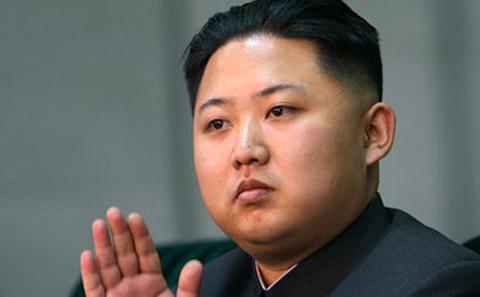 The death of longtime North Korean leader Kim Jong Il and promotion of his untested son Kim Jong Un as his successor is fueling uncertainty about the secretive and impoverished state. Our reporter looks at how North Korea's leadership transition may unfold and how that process may affect Pyongyang's domestic reforms and relations with regional powers.
Kim Jong Un may be North Korea's next leader, but his influence within the North Korean leadership is not clear.
His late father Kim Jong Il appointed him to several top posts, including four-star general, only last year.
North Korean analyst Benjamin Habib of Australia's LaTrobe University says Kim Jong Un did not have much time to earn the trust of power brokers in the military and the ruling Korean Workers' Party.
"Does he have enough support among key figures so that this succession will run smoothly? If we recall, Kim Jong Il had 20 years' apprenticeship to solidify his patronage networks prior to his assumption of the throne in 1994," said Habib. "So there is a big question mark over how smoothly his succession is going to run."
Two prominent figures whose support would boost Kim Jong Un are his father's sister Kim Kong-Hui and her powerful husband, Jang Song-Thaek.
Jang expanded his influence as a key adviser to Kim Jong Il after the elder Kim suffered an apparent stroke in 2008.
Some experts say the older relatives of Kim Jong Un may see him as too young and inexperienced to take the seat of power, at least initially.
"An alternative might be that Kim Jong Un becomes a figurehead leader for a military dictatorship, something like collective military leadership that you would see in Myanmar [Burma], or it could be that Kim Jong Un is discarded completely in favor of a military dictatorship," said Habib.
John Swensen-Wright is a Korean politics expert at Chatham House in London. He believes the North Korean military is unlikely to stage a coup against the younger Kim for the time being.
"I think we are going to see an attempt to consolidate power and to provide reassurance to the North Korean people and most importantly to introduce and legitimize Kim Jong Un in the minds and hearts of ordinary North Koreans. That will take time," said Swensen-Wright.
As North Korea's transition process unfolds, another uncertainty is the fate of tentative economic reforms in the isolated communist state.
In recent years, young North Korean policy makers of Kim Jong Un's generation have boosted foreign investment from China. They also have opened their country to limited mobile phone and Internet services.
Habib says a key question facing North Korea's next leadership is whether to further open up an economy that has struggled to feed its people since the 1990s.
"If yes, that means that the international community has an opportunity to deal with this new government," he said. "If no, and we know that the system is inherently unstable, then that opens the door to possible state failure and systemic collapse."
North Korea's neighbors have long feared that chaos in that nation could send millions of North Koreans flooding across their borders. Tens of thousands of North Koreans already have crossed into China in recent years in search of food.
LaTrobe University analyst Habib says the risk of North Korea becoming a failed state will make regional powers more determined to resume six-party talks with Pyongyang as a way of managing any crisis.
North Korea withdrew from the talks in 2009. They were aimed at persuading Pyongyang to dismantle its nuclear weapons program in return for diplomatic and economic incentives.
Some experts say North Korea's sudden power transition also raises the risk that Pyongyang may take military action against its neighbors in a bid to rally North Koreans around their new leaders.
North Korean forces shelled a South Korean border island last year, an action Pyongyang credited to Kim Jong Un.
But Swensen-Wright of Chatham House says he expects North Korea to pursue a more pragmatic approach to regional relations.
"It is not a country that I think is prone to intentionally provoke or intentionally seek to destabilize the region. It wants to pursue its national interests, whether that is enhancing its security, or improving access to economic resources, or strengthening its diplomatic ties with its neighbors," he said.
Regional politics could become even more complicated next year, when South Korea holds a presidential election and goes through its own leadership transition.
Clinton: North Korea Should Follow ‘Path of Peace’ Following Kim’s Death
U.S. Secretary of State Hillary Clinton is urging North Korea's new leadership to choose what she calls the “path of peace” following the death of North Korean leader Kim Jong Il.
Clinton said late Monday that she hoped North Korea would be committed to “improving relations with its neighbors and respecting the rights of its people.”
She also expressed concern about the well-being of the North Korean people, saying the U.S. was ready to help the isolated communist nation to “usher in a new era of peace, prosperity and lasting security” in the region.
Earlier, Clinton spoke with Japanese Foreign Minister Koichiro Gemba, where she said the U.S. and Japan share a common interest in a stable and peaceful transition of power in Pyongyang. She also said both governments have been in close touch with other participants in the six-nation talks on North Korea's nuclear programs, including China, Russia and South Korea.
Meanwhile, President Barack Obama told Japan's Prime Minister Yoshihiko Noda by telephone late Monday that Washington was committed to the defense of its allies and the stability of the Korean peninsula.
Mr. Obama spoke earlier Monday with South Korean President Lee Myung-bak. A White House statement said Mr. Obama, in his talks with Mr. Lee, had reaffirmed Washington's strong commitment to “the security of our close ally, the Republic of Korea.” The statement said the leaders agreed to continue close coordination between their respective national security teams.
In Seoul, President Lee canceled all of his scheduled events, convened a National Security Council meeting and placed the South Korean military on emergency alert. South Korean media say aerial surveillance near the North Korean border has been stepped up.
The two Koreas have remained technically at war since 1953 when their three-year conflict ended only with an armistice, not a peace treaty.
China – North Korea's closest ally – offered condolences to the North Korean public, while Japanese Prime Minister Noda convened a meeting of senior advisors to formulate a response to the North Korean leader's death.
In New York, U.N. General-Secretary Ban Ki-moon offered condolences to the North Korean people and reaffirmed his long-standing commitment to peace and security on the Korean peninsula. The official gesture came as the U.N. General Assembly condemned human rights abuses in North Korea – a vote taken annually by the world body.
In London, British Foreign Secretary William Hague said Mr. Kim's death could be a turning point for North Korea. He also said Pyongyang's engagement with the international community offers the North its best hope for improving the lives of ordinary North Koreans.
French Foreign Minister Alain Juppe said France is wary about the consequences of a power transfer in the secretive communist state. He voiced hope that North Korean citizens will gain expanded freedoms.