
Beyonce's Parents Finalize Divorce
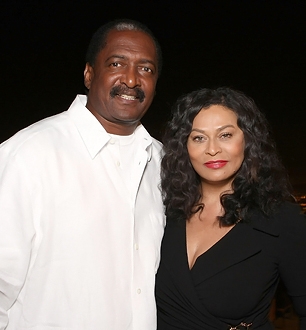 Beyoncé's parents, Tina and Mathew Knowles, have finalized their divorce. The couple, who married in 1980, filed for divorce back in 2009. According to TMZ, Tina stated that the marriage ended as a result of "discord or conflict of personalities" which prevented them from "reasonable expectation of reconciliation."
Both of the Knowles have been instrumental in the successes of their daughters, Beyoncé and Solange. Mathew Knowles managed his daughters' careers until earlier year, when Beyoncé moved on to new representation from Live Nation. Tina Knowles has worked a stylist for her daughters and co-created the House of Deréon clothing label with Beyoncé.

Vybz Kartel remanded again
Embattled dancehall entertainer Vybz Kartel was remanded in the Home Circuit Court today in relation to the Clive “lizard” Williams murder case.
Supreme Court judge Leighton Pusey ordered that Kartel and the others with whom he is charged return to court on January 13 next year.
Kartel, whose real name is Adidja Palmer, is charged jointly with fellow deejay Shawn Campbell more popularly known as Shawn Storm, fashion designer Calvin 'Moonie' Haye and Kiro Jones.
Two other men have been charged by the police in relation to Williams’ killing.
The Home Circuit Court was told that the case against the two is before the Corporate Area Resident Magistrate’ Court.
The case against Kartel, Shawn Storm, Haye and Jones was transferred from the RM court this morning to the circuit court.
Attorney-at-law Valerie Neita-Robertson today complained that the crown did not inform the defence of its plan to have the case moved to circuit court.
Neita-Robertson said the defence was upset by the decision, as it had plans to make a bail application noting that Kartel and his co-accused have been in custody since October.
Justice Pusey ordered the crown to provide the defence with copies of statements and video recordings allegedly linking the men to the killing before 2 o’ clock tomorrow afternoon.
The judge also ordered the crown to turn over all material in its possession to the defence before 4 o’clock on January 5 next year.
Jamaica Gleaner
Sherlock Holmes sequel leads US box office
Sherlock Holmes: A Game of Shadows has topped the US and Canada box office in a slow weekend of takings.
The adventure sequel, starring Robert Downey Jr and Jude Law, made $40m (£25.8m), down on the $62.3m (£40.2m) opening the first Holmes had in 2009.
Alvin and the Chipmunks: Chipwrecked came in at two with $23.5m (£15.2m) - about half of what its two predecessors made in their opening weekends.
It is hoped box office takings will improve as the Christmas period begins.
There was positive news for Tom Cruise's Mission: Impossible - Ghost Protocol, which opened at number three.
The film - playing exclusively at Imax screens and other large-format cinemas - took $13m (£8.4m) after opening at just 425 locations.
In contrast, Sherlock Holmes 2 and Alvin and the Chipmunks 3 played in more than 3,700 cinemas each.
Ghost Protocol, the fourth instalment in the Mission: Impossible series, goes on general release in North America on Wednesday.
Romantic ensemble comedy New Year's Eve fell to four in its second week of release with a weekend haul of $7.4m (£4.8m).
Jonah Hill comedy The Sitter was at five, having earned $4.4m (£2.8m) between Friday and Sunday.
Following the worst box office weekend in three years, overall business was down again - about 12% lower than the same weekend in 2010.
"The momentum we have lost over the past few weeks has taken its toll on the bottom line," said box office analyst Paul Dergarabedian.
Michael Jackson house auction raises $1m
The contents of the house where Michael Jackson lived before he died have sold at a Los Angeles auction for almost $1 million (£646,000).
Some 500 items were for sale from the mansion the singer rented, including furniture, ornaments and paintings.
Among the lots was an armoire upon which Jackson wrote a message to himself that fetched $25,750 (£16,600).
A pottery rooster holding a chalkboard bearing a note from Jackson's children also sold for $5,000 (£3,200).
Prior to the auction, organisers had estimated total sales to be between$200,000 (£129,000) and $400,000 (£258,000).
Also sold was a Victorian Revival-style bedroom suite, an 18th-Century French clock and a shower bench on which Jackson had drawn stick men.
Only a handful of auction items bore a personal connection to the singer and his family, as most were part of the rented surroundings.
The ornate headboard from the bed where Jackson's body was found had also been due to go under the hammer but was removed from the sale last month at the request of Jackson's family.
However, the rug that had been beneath the bed sold for $15,360 (£9,900).
Dr Conrad Murray was convicted of involuntary manslaughter over the pop star's death in 2009 last month and was sentenced to four years in prison.
Kojak actor Dan Frazer dies at 90
Veteran actor Dan Frazer, best known for his role as Captain Frank McNeil on 1970s TV crime series Kojak, has died aged 90.
His daughter, Susanna, said the actor died of cardiac arrest at his Manhattan home on Friday.
Frazer began his career in the 1950s playing character roles in various TV series including The Phil Silvers Show.
He played Captain McNeil during all five seasons of the Telly Savalas cop show, which ran from 1973 to 1978.
He also had roles in The Andy Griffith Show, The Untouchables, McHale's Navy and My Favourite Martian.
The actor made his big-screen debut in 1963 Sidney Poitier film Lilies of the Field and appeared in two early Woody Allen comedies, Take the Money and Run and Bananas.
After the initial run of Kojak, Frazer reprised his role as Captain McNeil in the 1983 TV film Kojak: The Belarus File.
In recent years he had guest roles on all three programmes in the Law and Order franchise.
He also appeared in independent film The Pack with Mad Men's Elisabeth Moss, which screened at a number of film festivals earlier this year.
Susanna Frazer described her father as a "very truthful, naturalistic actor".
McDyess set to retire after Spurs waive NBA vet
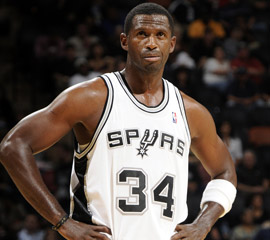 Antonio McDyess was waived by the San Antonio Spurs on Monday, clearing a path to retirement for the 17-year NBA veteran.
McDyess indicated at the end of last season that his playing days were over, but the Spurs didn’t rule out his return after the lockout ended. The move clears $2.6 million from the team payroll.
As a prep, McDyess was one of the top 30 players nationally, and made the Magic Johnson Roundball Classic. McDyess played college basketball at the University of Alabama. In 1995 he was drafted by the Los Angeles Clippers as the second pick in the NBA Draft and was traded to the Denver Nuggets before the season began for fellow power forward Rodney Rogers and a mid-first round pick that turned out to be Brent Barry. McDyess's explosive leaping and power dunking ability allowed him to average 17.8 points and 8.8 rebounds per game over his first six seasons.
The 37-year-old spent the last two seasons in San Antonio where he averaged 12 points and 7.5 rebounds in his career. He was an All-Star in 2001 and played on the 2000 Olympic team.

Bahamas minister defends government borrowing, debt
Minister of State for Finance Zhivargo Laing has defended The Bahamas government’s recent borrowing and current debt levels, and stressed that the Ingraham administration is under no threat of defaulting on its loans.
His comments came after the lead economic specialist for the Caribbean at the Inter-American Development Bank (IDB) told Guardian Business that there was concern that as the country’s public debt mounts, its debt-to-GDP ratio could reach precarious levels if preventative measures are not taken.
Laing added that if the IDB was genuinely worried about The Bahamas’ debt levels it would not continue to lend money to this country at the rate it has.
“I don’t want to take out of context what the IDB representative said, but I would think that the same IDB that’s lending us the money for the projects, if it thought that we were in trouble, as a financial institution would [not] be willing to lend us the money,” he told The Nassau Guardian.
“It doesn’t make sense for a financial institution to think that you are in danger in respect of your debt levels and continue to lend you monies, when you have to pay back that money to that institution. The fact of the matter is The Bahamas is in no danger of being unable to service its debt obligations, not now and not into the foreseeable future. We are mindful of our need to curb our debt growth and when circumstances permit we will continue to do the things necessary to ensure that doesn’t happen. But what we are now doing in respect to the borrowing is an investment into the future economic prospects of the country and we’re going to continue to do that within the bounds of fiscal prudence. But I do not want the Bahamian public to have any alarms about our ability to service our debt now or into the foreseeable future.”
Last week Prime Minister Hubert Ingraham announced that government will borrow an additional $50 million from the IDB to cover cost overruns in the New Providence Road Improvement Project. Government also signed two IDB loan agreements last week for an $81 million upgrade to the Water and Sewerage Corporation (WSC) and $50 million in improvements in the aviation sector.
On Sunday the Progressive Liberal Party’s Member of Parliament for Elizabeth Ryan Pinder said the decision to borrow more money to cover cost overruns in the NPRIP is evidence of the Ingraham administration’s “mismanagement” of the economy.
“That seems to be irresponsible management of the road project,” said Pinder.
He said with a small revenue stream government will be forced to cut funding from social programs in order to repay its mounting debts.
“Between the additional $50 million for the roads, the $50 million he announced for (aviation) air travel and the $81 million for the water pipes, that’s an additional $180 million on top of $120 million for the road works, on top of $80 million for the airport road project - that’s $380 million in the last year. It’s irresponsible borrowing by the government with not one utterance of plans of how we’re gong to repay those loans back.
“They are putting handcuffs on generations of Bahamians to come. Because there are no plans to diversify or expand the economy, we’re dealing with a narrow revenue stream for government and when you do all of this excessive borrowing, your obligation is to pay the interest on this loan back. That money has to come from other sources; it is going to come from education, social services. It’s the Bahamian people that are going to suffer.”
Courtesy of the Nassau Guardian
Online crime makes more money than drug cartels
Online crime groups make more money than drug cartels worldwide, and arresting these cybercriminals can be exceedingly difficult. This startling revelation was made by representatives of the Organization of American States (OAS) at a regional meeting on cyber security in Barbados earlier this month.
“The cyber threats being faced globally pay no heed to institutional boundaries, national borders or even traditional values. This reality is forcing governments, which have responsibility to protect the interest of citizens, to seek out new forms of collaboration and cooperation,” said Bevil Wooding, internet strategist with the US firm Packet Clearing House, a non-profit research institute that supports operations and analysis in the areas of Internet traffic exchange, routing economics, and global Internet development.
Wooding highlighted the requirement for public policy focus on accelerating the roll out of critical ICT infrastructure.
“This is necessary to ensure that developing countries, like those in the Caribbean, are adequately prepared to not only seize the opportunities of increasingly technology-driven global economy; but to defend against the real threats that come with it,” he said.
The benefits increased availability of broadband Internet access and the establishment of Internet Exchange Points across the Caribbean were also presented as essential to development. Wooding referred to World Bank analysis of some countries that estimates for every 10 percent increase in the penetration of broadband services, there is an increase in economic growth of 1.3 percent.
“The benefits of broadband Internet access accrue not just to individual consumers, but to other Internet users and society as a whole," Wooding said.
Pointing out that market forces alone will not generate the societally optimal level of ICT infrastructure roll-out he added, “Governments and policy makers have a clear responsibility to ensure that the technical infrastructure necessary to facilitate widespread access to high speed Internet is in place.”
“The World Bank study reflects the tremendous influence that Internet connectivity has on the socio-economic aspects of development not just here in the Caribbean, but around the world,” said Wooding, who is also chief knowledge officer of the development non-profit, Congress WBN.
The meeting of government ministers, senior members of judiciary and law enforcement agencies across the Caribbean was hosted by the Caribbean Telecommunications Union.
Natural gas talks ongoing between Barbados and Trinidad
Negotiations are presently under way between Barbados and Trinidad and Tobago to import natural gas into this country.
This was announced by chairman of the National Petroleum Corporation (NPC), Sir Harcourt Lewis, at the 30th anniversary luncheon and awards ceremony of the Corporation last Friday.
He said the gas would be pumped through a pipeline on the seabed and was designed to meet the future needs for this commodity in Barbados. He mentioned that this step was part of the medium-term development strategy of Barbados, and would play a vital part in the further development of this country.
He added: "It is projected that the volume of natural gas which we hope to be here by 2014 will influence the price of energy downwards whether it is a direct purchase from NPC or a feedstock to electrical generation through the Barbados Light and Power Company Limited."
Lewis added that the NPC currently purchases in excess of 1.2 million cubic feet of natural gas from the Barbados National Oil Company Limited (BNOC) to supply the needs of its customers.
He indicated that on average the usage by domestic customers for this product had decreased over the years from 23 m3 per month in 1978 to 11.1 m3 per month in 2011. However, he pointed out that for the same period commercial consumption had increased from 364 m3 to 921 m3 this year.
"Recently, the Division of Energy in the Office of the Prime Minister has launched several initiatives that promote the use of renewable energy. Natural gas is not a renewable fuel but it is considered to be a greening fuel. Natural gas (52kg/mmBTU) produces fewer emissions than No.2 (73kg/mmBTU) and No.6 (78.8 kg/mmBTU) diesel respectively and actually has a very significant role in the clean development mechanisms in many countries," he underlined.
Looking to the future, Lewis said great things were on the horizon for the NPC, and he expected to see fleets of buses powered by natural gas and more hotels using it to power their air conditioning units. Furthermore, he promised to continue to work with the Energy Division and the BNOC to reduce energy costs, ensure energy security and reduce green house gas emissions.
Caribbean News Now
Multi-million dollar drug haul in The Bahamas
Anti-narcotics officers yesterday seized some 1,035 pounds of marijuana during an operation in West Grand Bahama, State Minister Loretta Butler Turner has said.
The narcotics, worth an estimated US$1, 035,000 were discovered in the Holmes Rock area by Drug Enforcement Unit officers following a high speed chase with a vehicle.
The minister said officers had approached the parked vehicle when a few people jumped in and drove off.
Several shots were fired from the civilian vehicle during the ensuing chase before it escaped, she said.
Detectives later discovered two large bags containing several brown taped packages of suspected marijuana in the area where the car was parked.
An additional 18 bags were found in an unfinished building nearby.
While no arrests have yet been made, the minister said the officers should be “commended…for their continued effort in the fight against dangerous/illegal drugs on the streets of Grand Bahama.”
Caribbean 360 News