
Apple founding papers sold at auction for nearly $1.6m
Apple's founding papers have been sold at auction for $1,594,500 (£1.03m).
Sotheby's had estimated the three typed partnership agreements would sell for between $100,000 and$150,000.
The documents were signed by the firm's three co-founders, Steve Jobs, Steve Wozniak and Ronald Wayne on 1 April 1976. The papers include an amendment added 11 days later when Mr Wayne quit.
The buyer was Eduardo Cisneros, chief executive of Cisneros Corporation.
His Miami-based firm owns stakes in a range of businesses covering real estate, TV production and telecommunications.
Sotheby's said five other bidders took part in the sale.
The sale price includes a 12% buyer's premium paid to the auction house Sotheby's for holding the auction. That values the documents themselves at $1.35m.
The third man
The seller was Wade Saadi - founder and chief executive of the IT recruitment firm Pencom Systems.
He bought them from Mr Wayne in 1994 for "several thousand dollars".
The documents reveal that Mr Wayne was paid $800 when he decided to hand back his 10% stake in the firm. He later received a further $1,500.
Mr Wayne played a crucial role in the firm's creation, helping Mr Jobs convince his friend Mr Wozniak to leave Hewlett-Packard and set up the new company.
He was given a 10% stake in the company so he could act as a tie-breaker if the other two men had a disagreement.
However, Mr Wayne left the company after less than a fortnight because he was worried that if it failed his assets could be seized by Apple's creditors.
Instead he returned to the computer games maker, Atari, where he had first met Mr Jobs.
When interviewed by the Daily Telegraph last year, Mr Wayne said he was happy with his decision, despite the outcome.
"I felt the enterprise would be successful but at the same time there could be bumps along the way and I just couldn't risk it," he said.
"Would I like to be rich? Everybody would like to be rich but I couldn't keep up the pace. I would have been wealthy, but I would have been the richest man in the cemetery."
The auction is the latest evidence of the public's interest in Apple's history.
Earlier this week Amazon revealed that the biography of Steve Jobs was its best-selling title of 2011. The book was released in October following the death of the company's co-founder.

US official to visit Turkey over shield plan, terror
U.S. Defense Secretary Leon Panetta will visit Turkey to discuss a U.S. radar system to be installed in eastern Turkey as part of NATO's missile shield project, a report said here on Tuesday.
Turkish Daily News quoted diplomatic sources as saying that Leon Panetta will visit Turkey later this week for talks that are expected to focus on enhancing defense cooperation and the ongoing fight against terrorism.
The radar system has prompted Iranian reactions against Turkey. Vice Chairman of the Iranian Parliament's National Security and Foreign Policy Commission Hossein Ebrahimi warned that in case of any attack on Iran, it will definitely hit the defense system to be based in Turkey's Malatya province.
Panetta's visit comes just two weeks before the end of the year, by which time a U.S. radar system will be installed in eastern Turkey as part of NATO's missile shield project.
According to the report, "The fight against the PKK [outlawed Kurdistan Workers' Party] will be a priority on the agenda for talks with Panetta."
The report added that the meetings scheduled on Dec. 15-16 would also touch upon a 111 million U.S. dollar deal between Ankara and Washington for U.S. drones that would be transferred from Iraq to Turkey to provide surveillance support in the fight against the PKK, as well as three AH-1 Super Cobra helicopters that the Pentagon will sell to Turkey.
The U.S. deployed four MQ-1 Predator unmanned aerial vehicles ( UAV) at Turkey's southern airbase of Incirlik last month. The Cobra helicopters will be dispatched to Turkey in early January, the report said.
Turkey has been asking the United States for purchasing four MQ- 1 Predator surveillance drones and two armed versions of the UAV, the MQ-9 Reaper, but Washington has yet to respond because of its concerns that the sale would be vetoed in the U.S. Congress due to Ankara's policies regarding Israel.
Panetta is also expected to raise the issue of Turkey's strained relations with Israel. He recently called on Israel to find a way to normalize its relations with Turkey, Egypt and Jordan in order to break the isolation surrounding it and sit at the table with Palestinians.
US May Freeze $700 Billion in Aid to Pakistan
The U.S. Congress is expected later this week to pass a measure that would freeze up to $700 million in aid to Pakistan because of fears that Islamabad is not doing enough to combat the spread of homemade bombs.
U.S. lawmakers are concerned that militants in Afghanistan are using fertilizer produced in Pakistan to develop improvised explosive devices – one of the militants' most effective weapons against U.S.-led forces there.
State Department spokesperson Victoria Nuland said Tuesday that the proposed suspension would not automatically cut the funding, but will make it dependent on making progress with Pakistan on the issue of homemade bombs.
“We have not cut 700 million [U.S. dollars] in aid to Pakistan. What we have is something on the defense authorization bill, which is currently moving in the Congress, which would require the Department of Defense to continue providing a strategy on how we will use certain military systems and measure its progress, in particular, on progress that we are making on the IED issue.”
The aid suspension is part of a larger defense spending bill that U.S. lawmakers are expected to pass later this week.
Several Pakistani officials criticized the move on Tuesday, saying it would only lead to worse relations with Washington.
U.S.-Pakistani ties have suffered since a secret U.S. strike killed al-Qaida leader Osama bin Laden in Pakistan in early May.
Relations reached a new low following a NATO airstrike in November that killed 24 Pakistani troops along the border with Afghanistan.
In response to the airstrike, Islamabad ordered the United States to vacate a Pakistan airbase and has indefinitely closed the two main overland routes NATO uses to send supplies to Afghanistan.
But the top U.S. commander in Afghanistan, General John Allen, said Tuesday that he achieved progress during talks with Pakistan on rebuilding cross-border security cooperation after the incident.
“I do have a sense of progress, and, in fact, I have had a conversation with [Pakistani] General [Ashfaq Pervez] Kayani. The intent of the conversation, the outcome of the conversation, was that we stated our mutual commitment to address any shortfalls that might have caused this event, but also to ensure that we work closely together, because the border is always going to be there.”
Allen said he spoke on the phone Monday with Pakistan's army chief Ashfaq Pervez Kayani.
Many in the U.S. have become increasingly frustrated with what they see as Islamabad's lack of cooperation in fighting Pakistani-based militant groups who attack U.S. forces in Afghanistan.
Earlier this year, the U.S. suspended $800 million of the $2.7 billion in annual military aid it gives to Pakistan.
Roadside Bomb Kills 6 in Southern Afghanistan
A roadside bomb has killed at least six civilians, including women and children, in southern Afghanistan's Helmand province.
Local officials issued a statement Tuesday saying that the victims were killed when their vehicle hit a bomb along a road in Hidar Abad Monday. They were traveling in a minivan in the Greshk district of Helmand more than 500 kilometers south of Kabul.
Two other women were injured in the blast. There was no immediate claim of responsibility for the attack.
Roadside bombs are frequently planted by Taliban insurgents.
The United Nations has reported that 1,462 civilians were killed in Afghanistan in the first six months of this year, a 15 percent increase over the same time last year.
4 Killed, 123 Wounded in Attack in Belgium
Five people have been killed and more than 120 others wounded in an attack in the eastern Belgian city of Liege.
Belgian officials say the attacker lobbed hand grenades and fired a rifle at a bus stop in Saint Lambert Square, a busy shopping area in Liege.
The victims include two teenage boys, a seventy-five-year-old woman, and a child under two years old, who died while being treated in the hospital for injuries.
The gunman, who authorities have identified as Nordine Amrani, also died during the attack. Police have not determined how he was killed, but say it was not by police action. Witnesses said he committed suicide.
Authorities say Amrani had been convicted in the past of drug and illegal arms possession, among other crimes. They say he has never been linked to terrorist activity, and they have not explained his motive for the attack. However, officials said Amrani but say he had been summoned for police questioning the morning of the attack.
US House Passes Payroll Tax Cut, Links it to Pipeline Plan
The U.S. House of Representatives has passed legislation to extend a payroll tax cut that expires at the end of the year, but the extension is tied to a provision that restarts work on a much-disputed U.S.-Canada oil pipeline project.
Despite the threat of a presidential veto of the pipeline provision, lawmakers in the Republican-controlled House Tuesday approved the bill by a margin of 234 to 193. The bill now goes to the Democratic-controlled Senate, where it is expected to fail.
President Barack Obama has called on Congress not to go home for the holidays until legislators extend the payroll tax cut that saved a typical middle class family about $1,000 last year. He has warned of a “massive blow to the economy” if Congress fails to extend the cut, which expires December 31. The president says the wealthiest Americans should pay what he calls “their fair share,” while middle class Americans should not have to pay more taxes during these difficult economic times.
After Tuesday's vote, a White House statement said this Congress needs to do its job and stop the tax increase that is scheduled to affect 160 million Americans in 18 days. The statement said this is a time to help the middle class and all those trying to reach it by extending the tax cut.
Republicans oppose raising taxes for the wealthiest Americans, saying that would hurt economic growth.
The measure passed by the House would require the Obama administration to sign off on the controversial “Keystone XL” pipeline by early next year. President Obama wants to delay a decision on the Canada to Texas pipeline project until after the 2012 elections.
Approval of the project has been delayed to allow for more review of its environmental impact.
GOVERNOR UPBEAT ABOUT PROSPECTS FOR TCI IN 2012
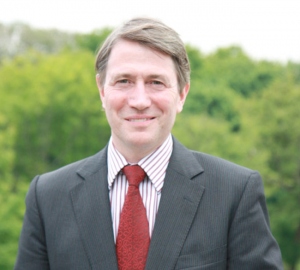 Governor Ric Todd has provided an upbeat assessment of the prospects for TCI in 2012 at the final Advisory Council meeting of the year on Grand Turk today, Wed, 14 Dec 2011.
The Governor noted that his comments followed the publication of the TCI Government's financial position for the second quarter of this financial year, from 01 Jun to 30 Sep 2011. He added that the information provided in this statement further demonstrates the Interim Administration's commitment to transparency.
Governor Todd said: "We all know that TCI has been through a tough time over the last few years, partly due to the global recession, partly to the problems caused by previous mismanagement. The people of the TCI are still paying the price. This has caused real difficulties. Many individuals and families have found, and indeed are finding, things very hard at this time. The Interim Administration is working hard to try to remedy these problems, to further develop the economy and to improve public services.
"Despite these present difficulties and challenges, there are grounds for growing optimism in 2012. The latest detailed account of the TCIG finances show that our reforms are, can and will have a positive effect. It is encouraging that as we look to control and re-prioritize public spending,
TCIG's income has risen; in the first half of this year it is up 34% on the same period last year. The financial statement sets out the facts that illustrate that our economy is showing signs of recovery.
"Our increasing revenues support what the hoteliers are already stating - that this looks like being a superb tourist season. Accommodation taxes were up 24% to $17.7m in the three months to September year on year, and that is before we take into account what appears to be developing into a bumper high season over the next few weeks and months. Furthermore, air passenger arrivals are up 15% on last year and we have the recent welcome news of an investment in a $15m second new private jet facility at the airport too.
"Through the milestones, we have a clear way forward set out by Ministers. The good news is that elections can be held before the end of next year if these are met. But as Minister Duncan said last week this remains a challenge. This is a challenge not just for the Governor's office, the Advisory Council and TCIG - it is something that we must all rise to meet.
But it is definitely achievable. "Returning to fiscal surplus in 2012/13 is perhaps our most challenging milestone. As has been widely covered, our estimates for this year have had to be significantly altered in view of unbudgeted bills from the past and a slower-than-expected rate of public sector reforms. Strong positive action is being taken to combat these factors.
"Furthermore, we recently had the first SIPT led civil recovery agreement for $1.25m. Meanwhile our main civil recovery programme has already won back for the people of TCI some 800 acres of Crown Land, worth $150million, which was misappropriated, and nearly a million dollars in cash. I am confident that more dishonestly acquired land and cash will be returned to its rightful owners, the people of TCI.
"Taking all this together, I think that there are good reasons to be positive about the prospects for TCI in 2012, and on this note, I would like to take this opportunity to wish everyone on these beautiful islands a Merry Christmas and a Happy New Year."
Chair of the Consultative Forum shares the 'national woes' of the Turks and Caicos Islands
Chair of the Consultative Forum of the Turks and Caicos Islands Mrs.Lillian Missick, made a huge impact when she opened the 27th and final sitting of the Forum for 2011.
She referred to what she regards as 'national woes' which have befallen the Turks and Caicos Islands, ranging from the recent arrest of former
government ministers on charges of corruption, to the imposition of 'onerous' taxes and fees, which she said have left us all feeling as
though we are paying fines for the crimes that those ministers allegedly committed.
However, she suggested as we approach a new year, that we as a country look forward and not dwell too much on the past.
Mrs. Missick spoke to the parental role that the British are playing by implementing structural reforms in order to help avoid the mistakes of the past, but she hastened to add that she used the term 'parental' advisedly.
Mrs. Missick lamented the fact that far too many of the British overseers,do not accept responsibility for creating this financial black hole.
The Consultative Forum Chair said this is especially important as it reinforces what she has been trying to impress upon the British for sometime now.
Mrs. Missick referred to her attendance at the recent Overseas Territories Consultative Council (OTCC) meeting in the UK with Overseas Territories
Minister Henry Bellingham, noting that he seemed committed to developing a relationship between the UK and the TCI, that is defined by mutual
respect, mutual trust and mutual appreciation. She also said she was heartened by the level of support from the sister overseas territories.
Inter Health Canada Christmas tree lighting
Inter Health Canada will be spreading some Christmas cheer this week by way of its annual Christmas tree lighting, which will take place at the Cheshire Hall Medical Centre this coming Thursday December 15 between 4.30pm and 5.30pm.
Events include carols, a visit by Santa and other suprises. The actual switch on will be done by eight-year-old Arianna Gardiner. Arianna is yet another Cheshire Hall Medical Centre success story.
After breaking her leg in a fall at school earlier this year, she underwent some intensive treatment, including surgery, and a programme of rehabilitation. She has made a fantastic recovery due to both the skills and facilities here at InterHealth Canada, and her own determination.
ICC Rejects Malawi’s Immunity Claim for Sudan’s Bashir
The International Criminal Court says Malawi failed to cooperate with the Court by not arresting Sudanese President Omar al-Bashir during his visit to the country, and said it is referring the matter to the U.N. Security Council.
The Hague-based Court said Monday it reminded Malawi of its obligations as an ICC member before Mr. Bashir arrived for a regional summit in October.
The Court has issued arrest warrants for Mr. Bashir on charges of war crimes, crimes against humanity and genocide in Sudan's Darfur region.
It said Monday that Malawi had confirmed the Sudanese leader's visit, but its foreign ministry argued it was not obligated to make an arrest because Mr. Bashir is a sitting head of state and has immunity under international law.
However, the ICC said that immunity for heads of state before international courts has been rejected time and time again, dating all the way beck to World War One.
Mr. Bashir has so far avoided arrest by traveling only to countries that will not hand him to the ICC.
Rebels in Darfur took up arms against the Bashir government in 2003, accusing the government of neglecting their region. The U.N. says more than 300,000 people have been killed in the conflict, and 2.7 million others displaced.