

DIGICEL LAUNCHES THREE NEW BLACKBERRY 7 SMARTPHONES ACROSS TCI & THE REGION
Digicel has launched three new BlackBerry smart phones based on the new BlackBerry 7 OS: the BlackBerry® Bold™ 9900, BlackBerry® Torch™ 9860 and BlackBerry® Torch™ 9810 smart phones will be available to customers from Digicel across the Caribbean this month.
The BlackBerry Bold 9900 is the thinnest BlackBerry smart phone yet at only 10.5mm, and the first to offer the perfect union of a high performance keyboard and touch display integrated within the iconic BlackBerry Bold design. The new BlackBerry Bold 9900 is also the first BlackBerry smart phone to include built-in support for NFC (Near Field Communications), a new technology that is enabling many new and exciting capabilities, including the ability to pair with NFC-enabled accessories or read Smart Poster tags with a simple tap of the smart phone. Distinguished by its beautiful design, amazingly effective keyboard and brilliant touch display, the BlackBerry Bold 9900 is crafted with premium materials including a brushed stainless steel frame that puts the finishing touch on a truly outstanding smart phone.
The Blackberry Torch 9860 features the new BlackBerry 7 operating system and a stylish new all-touch handset design. With a spectacular 3.7” display, the largest ever on a BlackBerry smart phone, the new all-touch BlackBerry Torch 9860 smart phone is optimized for displaying web pages, photos and videos, as well as delivering powerful gaming experiences. It also delivers the highly refined, real-time communications and collaboration experience loved by millions of BlackBerry smart phone users around the world.
The new BlackBerry Torch 9810 smart phone builds on the popularity of the BlackBerry Torch 9800 and combines a large touch display with a convenient slide-out keyboard. The new BlackBerry Torch 9810 is faster and more fluid with high performance hardware features and the new BlackBerry 7 OS delivering an enhanced multimedia experience. Featuring a large 3.2”, high resolution touch display and a distinctive BlackBerry keyboard that easily slides out to allow faster typing, the BlackBerry Torch 9810 truly delivers the best of both worlds.
Digicel Group Commercial Director, Brian Finn, said; “Digicel is always looking to bring the very latest and best smart phones to our customers across the Caribbean. We are very excited about the launch of these three new BlackBerry smart phones from Research In Motion which offer our customers better performance with a range of new features and apps in a variety of exciting designs to choose from.”
BlackBerry 7 introduces a next generation BlackBerry browser with a significantly faster, more fluid web browsing experience that is among the best in the industry. Combining the dramatically improved performance of the advanced WebKit browser engine together with the powerful hardware enhancements in the new BlackBerry Bold and BlackBerry Torch smart phones delivers browsing results that are up to 40% faster than BlackBerry® 6 based smart phones and up to 100% faster than BlackBerry® 5 based smart phones*.
Additional enhancements to this next generation BlackBerry browser have also optimized zooming and panning for smoother web navigation and optimized HTML5 performance for incredible gaming and video experiences.
The new BlackBerry 7 smart phones from Digicel also feature Liquid Graphics™ technology, combining a dedicated high-performance graphics processor with a blazingly fast CPU and stunning high resolution display to deliver a highly responsive touch interface with incredibly fast and smooth graphics.
* Requires BlackBerry 7 OS. Testing was performed by RIM in July 2011 and measured average page load speeds using pre-release BlackBerry 7 software.

Permanent Residence Certificates: update on backlog clearance
The Ministry of Border Control and Labour is continuing to work on clearing the backlog of Permanent Residence Certificate (PRC) applications that have accumulated over very many years.
The target is that all outstanding PRC applications should be cleared by the end of 2011.
This task remains extremely challenging, not least because in a number of cases the applicant has not provided all the necessary documentary evidence for the case to be decided, and there are no up to date contact details for the applicant.
The summary of the current criteria, fees and conditions for PRC under the Immigration Ordinance and Regulations, which are being applied to cases in the backlog will be posted in our Press Release section.
The statement continues, It would be helpful if all applicants whose cases remain pending, and who have evidence, in the form of a receipt, that their applications were made before 26 February 2010, would now check
that they meet one of the current headings under which PRC can be granted; that they have supplied evidence to confirm that they meet the criteria; that they are able and willing to pay the fee; and that they are content with the conditions which will be applied.
Having done this, all those who remain interested in having their applications processed are asked to contact the Ministry at the email address tciprc@gov.tc before 2pm on Friday November 18, 2011, to confirm that they wish their application to proceed, to arrange to provide
up to date documentary evidence where necessary, and to pay the required fee up front. Any applications which remain pending after November 18, 2011 without the necessary documentary evidence, without fees paid, and without up to date contact details, will be regarded as withdrawn and the files will be closed.
This will not apply to applications from former dependents, who had been endorsed on their parent’s PRC but have now reached 18 years, which continue to be accepted despite the moratorium.
Applicants for PRC are reminded that they should maintain their legal status via work or residence permits, or the Government stamp, while a PRC application is pending.
Fourth road fatality for 2011.
 On Tuesday the 25th of October 2011, the Turks and Caicos Islands recorded its fourth road fatality of the year.
This fatality occurred on Long Bay road Providenciales, when a vehicle left the road, struck a cement structure and overturned. The deceased and lone occupant of the vehicle has been identified as a Labian Etienne a 20 year old male. The body was pronounced dead at the scene.
Excessive speed is believed to be a contributing factor
An autopsy is to be performed later this week. The Traffic Division of the Royal Turks and Caicos Islands Police is continuing their investigation into this tragic event.
Police arrested two for fighting at a wedding reception
The Royal Turks & Caicos Islands Police in Grand Turk charged two males for Fighting in a Public Place. Also, as a result of this incident one of the males has also been charged for wounding.
This altercation occurred on Saturday night 22nd October 2011, at the Yellowman Auditorium on the Old Airport Road in Grand Turk. During the fight a male received a number of stab wounds and was treated at The Cockburn Town Medical Centre Grand Turk for non-life threatening injuries.
The two males will appear in The Grand Turk Magistrate’s Court on Wednesday 26th October 2011 to answer to charges.
TCI Police ivestigates a shooting at a local resort
The Royal Turks & Caicos Islands Police, Criminal Investigation Department, in Providenciales, are investigating a shooting which occurred at approximately 10:00pm on Monday 24th October 2011 at local resort in Providenciales.
An employee received a gunshot wound to his left leg and was taken to The Cheshire Hall Medical Centre where he is being treated for his non-life-threatening injury.
Two males are in custody and are being questioned by the Police. The investigation is continuing.
Obama Tapes ‘Tonight Show’; Continues West Coast Swing
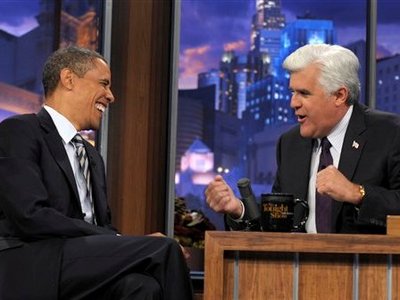 President Barack Obama made room for a “Tonight Show” appearance yesterday that was aired Tuesday night. As previously reported, it’s his second visit to the show as sitting president and fourth appearance overall.
From Los Angeles, Air Force One headed north to San Francisco for a fundraiser featuring a performance by folk rock singer-songwriter Jack Johnson. Obama also had fundraisers scheduled in Denver, all part of a three-day, three-state swing through the west to raise money for his re-election bid.
Tuesday’s fundraisers follow star-studded campaign events in Los Angeles on Monday, notes the Associated Press. Obama joined actor Will Smith and basketball legend Earvin “Magic” Johnson at a dinner at the home of producer James Lassiter. Then he mingled with Melanie Griffith and Antonio Banderas over canapés at the movie star couple’s home just a few blocks away.
Obama was in California for money events last month. The state ranks as Obama’s top donor state, and he raised about $1 million in the Los Angeles area alone during the last two fundraising quarters, according to an Associated Press review of contributions above $200.
Obama has been promoting his $447 billion jobs bill, which has been broken up into its component parts in hopes Congress can pass some of them.
Addressing about 240 donors at the Bellagio hotel and casino in Las Vegas Monday, Obama said the pieces that Republicans reject would likely linger as campaign issues in 2012.
“This is the fight that we’re going to have right now, and I suspect this is the fight that we’re going to have to have over the next year,” Obama said. “The Republicans in Congress and the Republican candidates for president have made their agenda very clear.”
Addressing donors in Los Angeles, Obama ticked off his administration’s accomplishments, eager to reinvigorate supporters whose enthusiasm has flagged since his 2008 election.
“Sometimes I think people forget how much has gotten done,” the president said, as Smith and Johnson looked on. He urged his backers to rally once again, at the same time joking, as he often does, that he is older and grayer now. “This election won’t be as sexy as the first one.”
At Banderas’ and Griffith’s house, its entrance path lined with rose petals and votive candles, Obama told about 120 mostly Latino contributors that he has kept a list of his campaign promises and that, by his count, he has accomplished about 60 percent of them.
“I’m pretty confident we can get the other 40 percent done in the next five years,” he said to loud applause.
The Griffith-Banderas event was Obama’s first Latino fundraiser, with donors giving at least $5,000 per person to attend. It featured guests such as actress Eva Longoria, comedian George Lopez, Labor Secretary Hilda Solis and mayors Antonio Villaraigosa of Los Angeles and Julian Castro of San Antonio.
Obama drew the loudest applause when he vowed to tackle an overhaul of immigration laws, a promise from 2008 that has gone unfulfilled in the face of Republican opposition.
The Las Vegas fundraiser attracted about 240 people who paid from $1,000 to $35,800 toward Obama’s re-election campaign and to the Democratic National Committee. The bigger donors met the president personally. Guests at Lassiter’s home contributed $35,800.
Upon arriving in Los Angeles, Obama headed to a diverse neighborhood minutes from Lassiter’s home south of Hollywood and stopped at Roscoe’s, a popular Los Angeles chicken restaurant chain. Obama roved through the dining booths greeting customers, leaving at least one awestruck young boy holding his hand aloft after shaking the president’s hand. One man gave him a hug and a Hispanic man told his daughter that if she studied hard “you’ll be like him.”
NBA’s Matt Barnes Announces Split with Gloria Govan
Los Angeles Lakers forward and reality show star Matt Barnes announced in an emailed statement Monday that he and his fiancée, reality television star Gloria Govan, have split up.
“I’d like to address the rumors surrounding mine and Gloria’s relationship,” Barnes’ statement read, according to the Los Angeles Times’ Lakers blog. “We have reached the difficult decision of ending our relationship and will be going our separate ways at this time. We will work together to raise our sons and wish each other only the best.”
The breakup comes in the wake of postponed wedding plans, a dropped domestic-violence charge and scrutiny surrounding their involvement in the VH1 reality shows “Basketball Wives” and “Basketball Wives: LA.”
Because the two were never married, the custody arrangement regarding their 3-year-old twins Carter Kelly and Isiah Michael is unclear, as is the division of assets, including their Palos Verdes home. It also remains unclear if they’d continue working together with Athletes vs. Cancer, a foundation Barnes founded in 2008 that Govan has said raised $225,000 for local cancer-screening programs.
The Lakers Blog writer reported:
The two appeared amicable during red-carpet appearances and when I spent a few hours at their house filming Barnes getting a mohawk prior to the 2011 NBA playoffs. But there have been plenty of publicized incidents questioning the strength of their relationship. Barnes and Govan held off definitive wedding plans. Barnes was arrested last summer on suspicion of domestic violence in Sacramento, a charge the two publicly disputed and one the city’s district attorney’s office ultimately dropped. Govan’s role with VH1′s “Basketball Wives” created further attention and Internet reports about the nature of their relationship.
Perhaps the most telling sign regarding Barnes’ feelings about Govan came last week during a Twitter exchange with a fan. That person suggested Barnes should marry her or else someone else will. Responded Barnes: “He can have her!!!!!!!!!!!!!!!!” Meanwhile, Govan retweeted the following message on Saturday: “If someone is dumb enough to walk away, be smart enough to let them go. Your destiny is never tied to anyone who leaves you.”
Lindsay Lohan's father arrested on suspicion of domestic violence
Actress Lindsay Lohan's father was arrested on suspicion of domestic violence, police in Tampa, Florida, said Tuesday.
Monday evening, police responded to a domestic violence call at Michael Lohan's home, authorities said in a statement. "Upon arrival, Mr. Lohan was arrested for battery on his live-in girlfriend," the statement said.
When taken into custody, Lohan complained of chest pains and was taken to a hospital to be checked, police said. "A short time later, Mr. Lohan checked himself out and was placed under arrest."
Police said more details would be provided later Tuesday.
Lohan, 51, was also arrested in Los Angeles in connection with alleged domestic violence in March and was charged with one misdemeanor count of corporal injury to a cohabitant.
The relationship between Lohan and his daughter has been publicly strained for years, although the two did undergo family counseling together during her treatment at the Betty Ford Center.
Source-CNN
Selena Gomez, Justin Bieber adopt a dog
Selena Gomez and Justin Bieber squeezed in some very public displays of affection at a hockey game in Canada on Saturday night, but just one day earlier, they made a decidedly more private outing to a local animal shelter -- and quietly adopted a dog.
Winnipeg animal rescue D'Arcy's A.R.C. got a surprise visit from the young lovebirds, who stopped by for some canine therapy.
"They spent a lot of time with the puppies," the rescue's chief executive officer, D'Arcy Johnston, tells PEOPLE. "I was told that [Gomez] was missing the dogs that she has at home."
Gomez, who is currently on tour and performed in Winnipeg over the weekend, owns five rescue dogs and has advocated publicly on behalf of animal rescue. During the hour she and Bieber spent at the shelter, they zeroed in on a 10-week-old husky mix and fell in love -- puppy love, that is.
"I wasn't expecting her to adopt a dog while she was on tour and has a busy schedule," Johnston says. Gomez went through the standard screening process and was able to leave with the puppy, which she named Baylor, that day.
"Baylor probably would have had a bad life or a very short life," Johnston says. "But he got rescued and brought to our shelter and is now going to live a very good life."
Source-(PEOPLE.com)
Nicki Minaj Nabs Nail Polish Line with OPI
Move over Serena Williams. Nicki Minaj has also scored her own nail polish line with cosmetics company OPI.
The limited-edition collection of six colors are inspired by the star’s songs on her debut album “Pink Friday.”
The line includes Pink Friday (a creamy bubblegum hue), Metallic 4 Life (a charcoal sparkle), Super Bass Shatter (a purple, graffiti art-inspired topcoat effect), Save Me (a silver-rainbow glitter), Fly (an electric aqua) and Did It On ‘Em (a fluorescent lime).
“OPI is so excited to work with Nicki in releasing these six new nail lacquers,” Suzi Weiss-Fischmann, OPI Executive VP and Artistic Director, said in a statement. “Nicki has taken the hip-hop world by storm, but her music is only part of the equation. She’s also become a fashion inspiration, noted for her daring costumes and hair color both on and off the stage.”
The polishes will be released in January 2012 at JC Penny, Ulta and other select retailers for $8.50 each.
OPI is the second beauty partnership for Minaj: the 28-year-old joined forces with makeup giant MAC Cosmetics in 2010 on a limited-edition Barbie-pink lipstick that ran in conjunction with the release of “Pink Friday.”