Jamaica welcomes ninth prime minister
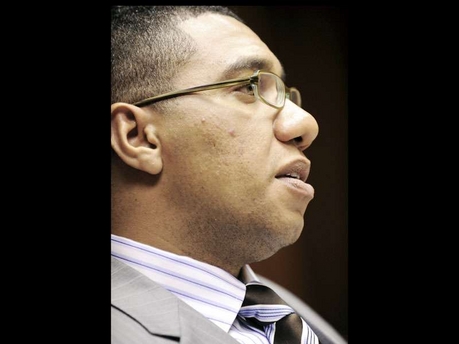 The transition of leadership of the government of Jamaica will be completed on Sunday, when Bruce Golding will formally tender his resignation as prime minister to the governor-general, and education minister, Andrew Holness, will be sworn in as the country’s ninth leader.
Golding, who presided over his final Cabinet meeting on Tuesday, used the occasion to thank his ministers for their support and hard work under his leadership.
On assuming the most powerful executive position in the country’s political directorate, Holness will also create history by being the youngest person to do so, at age 39.
Holness was endorsed as the JLP’s candidate to contest the West Central St Andrew constituency in the 1997 General Elections, which he won, to become the area’s Member of Parliament.
In so doing, Holness became the youngest MP that year, at age 25. Between 1999 and 2007, Holness served as opposition spokesperson on land and development; housing; and education. Interspersed with these duties, was his successful defence of the West Central St Andrew seat, during the 2002 national elections. He was appointed education minister, a position he has held since, and also has the distinction of being the youngest person appointed a Cabinet minister by Golding.
Source-Caribbean News Now

Forecasters eying two tropical systems
According to the national Hurricane Center in Miami, an area of low pressure over the western Caribbean Sea is centered about 170 miles east of the coast of Nicaragua. The associated shower activity has become better organized and there is a likelihood that a tropical depression will form during the weekend.
Little motion is anticipated in the short term but a slow northward drift should begin on Sunday. This system has a high chance — 60 percent — of becoming a tropical cyclone during the next 48 hours.
Another broad area of low pressure has formed about 350 miles east-southeast of Trinidad in the southern Windward Islands. Cloudiness and showers associated with this low have become a little better organized and the potential for development has increased. This system has a low chance — 20 percent — of becoming a tropical cyclone during the next 48 hours.
Regardless of development, cloudiness and heavy rains will likely spread over northern Venezuela and the southern Windward Islands during the next few days.
Cops arrest 172 lawbreakers within 24 hours
POLICE arrested 172 people between Friday night and early yesterday, 56 of them for breach of curfew including 11 women, and 36 on charges of drunk driving.
Twenty-two suspects, ranging between ages 24 and 41, were held by Southern Division officers while liming outside Charlie's Bar along Pointe-a-Pierre Road, San Fernando.
Police said they were conducting a series of exercises within the division when they spotted the limers outside the bar. They were taken to the San Fernando Police Station and charged with the offence.
That exercise was spearheaded by ACP Fitzroy Fredericks and Snr Supt Deodath Dulalchan of the Southern Division.
Gasparillo police, under Insp Gosine, also arrested six men for breach of curfew while two other men were held by Marabella police for the same offence.
Also in Vistabella, officers of the Southern Division Task Force headed by Sgt Norbie, detained a 28-year-old man from Cocoyea Village, allegedly with a home made shotgun in his trouser pocket.
The man was held by police while walking along Jarvis Street in Vistabella. He was taken to the San Fernando Police Station where he was charged with the offence by WPC Crawford of the Task Force.
Three men were also arrested by officers of the Marabella-based Crime and Suppression Unit (CSU) on charges of being in possession of marijuana and cocaine.
The men were held during several exercises conducted in St Margaret's and Marabella between 3 p.m. and 11.30 p.m. on Friday by CSU officers led by Cpl Prescott.
In an unrelated exercise in the North Eastern Division late on Friday, 20 suspects, among them five women, who were on their way to various curfew parties, were arrested and charged by police with breach of curfew.
The suspects were rounded up in San Juan, Barataria and Morvant between 11.30 p.m. and 1.30 a.m. by officers of the North Eastern Division Task Force who were on mobile patrol.
Two other men were held by officers earlier in the day on Friday with close to half kilogramme of compressed marijuana along Adjoda Street, in El Socorro. The exercise was spareheaded by Supt John Daniel and led by Sgt Cornelius Samuel and Cpl Darryl La Pierre and involved Cpls Titre, Daniel, Williams and PCs Duncan, Sandy, Ali and Voisin of the Task Force.
In Woodbrook, police arrested 11 persons, three for breach of curfew; six for drunk driving; one for obscene language and another suspect for possession of marijuana.
Deputy Commissioner of Police in charge of Anti-Crime Operations, Mervyn Richardson, said the police intend to get tough on curfew violators, many of whom have been making a mockery of the law.
He said officers have recognised a trend where persons wait for the last minute to make their way to and from parties which often resulted in them being on the roadway after curfew restrictions take effect. This type of lawlessness, he said, will not be tolerated by police.
Richardson said, "It is not the intention of the police just to lock up people who we see out on the roadway during curfew hours, but, we have a duty to enforce the law and that is exactly what we have been doing and will continue to do.
"We want people to understand the seriousness of being outdoors during curfew hours and the implications they could have. Too often we have been observing incidents where people were taking risks to head off to curfew parties and this must be stopped.
He added, "If you wish to attend a party somewhere then you need to be there on time and we also observe that people would leave clubs and bars which are in curfew restricted areas, mere minutes before the curfew takes effect and we again say that this practice must stop," Richardson said.
"We will be adopting a very strong approach against persons who seek to violate the curfew laws because an example must be set that it is not to be taken for granted or as a joke," Richardson said. He also expressed serious concern regarding motorists who are driving under the influence of alcohol.
Meanwhile, Eastern Division officers, during an exercise in Sangre Grande between Friday night and early yesterday, arrested 11 people on charges of drunk driving.
Among those detained are a prisons officer, a fire officer, an Airports Authority officer and a security guard employed with Amalgamated Security Services.
Police said the suspects were arrested by police shortly after leaving several bars and nightclubs. Officers said they all tested over the legal driving limit of alcohol.
The exercise, which was coordinated by Snr Supt Hetliff George, Supt Hendron Moses and ASP Neville Sanker, is aimed at reducing the carnage on the roadways.
Officers said they have adopted a zero tolerance approach to errant motorists, particularly those driving under the influence of alcohol, given the increase in road traffic accidents and fatalities on the roadways.
Also involved in the exercise were Sgt Harridath Sookdeo and PCs Liston Billy, David Ottley, Damien Miranda, Harridath Seebaran and Vishwanath Sanker of the Eastern Division.
Marco Rubio admits wrong dates in Cuban parents 'exile'
A Florida Republican often touted as a possible 2012 vice-presidential candidate has admitted his Cuban parents did not come to the US as exiles from Fidel Castro's rule.
Senator Marco Rubio acknowledges "getting a few dates wrong" about when they left the Caribbean island.
But the 40-year-old says any suggestion he had spun his background story for political advantage was "outrageous".
He maintains communism in Cuba was a defining event in his parents' lives.
The Washington Post reported on Friday, after examining official records and naturalisation documents, that Mr Rubio's parents had obtained US residence more than two years before Castro took power in 1959.
An entry on his official Senate website saying he is the son of "Cuban born parents who came to America following Fidel Castro's takeover" has now been amended.
The Tea Party favourite has also said in the past that his parents left Cuba before its revolution.
The first-term senator conceded on Friday that his parents had not come to the US after Castro took power.
Miami-born Mr Rubio wrote in a column for Politico.com: "If The Washington Post wants to criticize me for getting a few dates wrong, I accept that."
But he added that the report had made "outrageous allegations".
"To call into question the central and defining event of my parents' young lives - the fact that a brutal communist dictator took control of their homeland and they were never able to return - is something I will not tolerate," he wrote.
In his article, Mr Rubio said the discrepancy in dates would not tarnish his appeal with voters.
"They voted for me because, as the son of immigrants, I know how special America really is."
Bahamas Security Minister Hails Success of Electronic Monitoring Syst
Seventeen persons have been remanded to Her Majesty’s Prisons, Fox Hill, for breach of the terms of the Electronic Monitoring System, Minister of National Security the Hon. O.A.T. “Tommy” Turnquest said. The programme is currently being implemented in Grand Bahama, Abaco and Exuma. Mr. Turnquest said the statistics speak to the success of the programme.
“In fact, the programme is so effective that officials from Trinidad and Tobago have visited us and have now implemented the electronic monitoring programme with the same international partners and providers (that The Bahamas uses),” Mr. Turnquest added. The Electronic Monitoring System was implemented in December, 2010 to assist officials with “reducing the sentenced inmate population of Her Majesty’s Prisons and to better monitor persons who are placed on bail.” It is able to police the whereabouts of an individual “and has been very effective in assisting the police in solving crimes.”
“Indeed, that has been the experience of our Police Force,” Mr. Turnquest said. Mr, Turnquest said 162 offenders assigned to the Electronic Monitoring Programme as of Monday, October 17, 2011, were being “actively monitored” by the Electronic Monitoring Centre at a cost of $15 per day – a savings of $23 per day as opposed to inmates who are incarcerated at Her Majesty’s Prisons. “We are completely satisfied with the Electronic Monitoring Programme and are assured that the programme helps with the prevention of crime, and can help control the number of recurring offences by those on bail,” Mr. Turnquest said.
The National Security Minister said despite the successes of the programme, the “yeoman’s job” the members of the Royal Bahamas Police Force have been doing in removing alleged criminals from the streets, and the work of officials in bringing cases to court in a timely manner, “the truth of the matter” is that there are still too many persons on bail committing criminal offences. “Section 19 (3) of our Constitution provides that a person be brought before the courts and tried within a reasonable time or be released either unconditionally or upon reasonable conditions. We need to try these cases in a reasonable time,” Mr. Turnquest said.
“These persons are creating havoc on our streets and in our neighbourhoods. I echo the frustration of the Police who work hard in taking alleged criminals off the streets only to have them return to commit more crimes.” Mr. Turnquest said the compendium of anti-crime bills debated in the House of Assembly recently should help to resolve the majority of these issues – particularly those aspects that relate to the granting of bail and amendments to the criminal justice system and the Dangerous Drugs and Firearms Acts. “This government, over time, has implemented considered and practical strategies and programmes to address crime in The Bahamas,” Mr. Turnquest said. “The sustained results of our efforts will not necessarily be seen overnight as addressing the root causes of crime involves investment in a range of socio-economic initiatives before we see the transformation of our society.”
EU leaders urge action from Italy to reduce debts
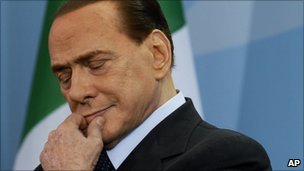 European leaders have demanded that Italy make a major effort to reduce its 1.9tn euro (£1.6tn) debt burden.
German Chancellor Angela Merkel said Prime Minister Silvio Berlusconi must make "credible" cuts in an effort to save the eurozone.
EU president Herman Van Rompuy added: "We are asking for a major effort on the part of the Italian authorities."
Both leaders met Mr Berlusconi before the the start of an emergency summit on the eurozone debt crisis.
Mr Van Rompuy said after the meeting with the Italian leader: "We asked to be reassured that the courageous measures taken by Italy will be implemented in time regarding the budget and reform."
The summit, in Brussels, was held amid fears that the crisis that has engulfed debt-ridden Greece may spread to Italy and Spain.
With another EU summit scheduled for Wednesday, Mr Van Rompuy said leaders would work "hand in hand" with Mr Berlusconi in the coming days to make sure Rome "implements what it promised".
In a news conference, held alongside French president Nicolas Sarkozy, Mrs Merkel said that it was important for Italy's public debt "to be reduced in a credible manner in the coming years".
Mr Sarkozy said that the summit had reached a "broad agreement" to ramp up the firepower of the eurozone rescue fund, the European Financial Stability Facility.
Nervous financial markets have been rising in recent days on hopes that a package of measures to tackle the eurozone crisis could be announced on Wednesday.
BP wins approval to resume drilling in Gulf of Mexico
BP has won approval to resume drilling in the Gulf of Mexico, 18 months after a well blowout killed 11 workers and caused an environmental disaster.
Regulators approved plans for drilling to depths of up to 6,000ft about 200 miles off the coast of New Orleans.
US officials said in a statement: "Our review of BP's plan included verification of BP's compliance with the heightened standards."
The Gulf's Kaskida oilfield could contain up to 3bn barrels of crude.
The US Bureau of Ocean Energy Management said BP's exploration plan meets the stringent standards issued by the government after last year's Deepwater Horizon disaster, as well as the additional self-imposed standards that BP has taken.
In the months following the Deepwater affair, many analysts questioned whether BP had a future in the US.
Last week, there were reports in the US that BP would not be barred from participating in an upcoming offshore oil and gas lease sale.
Private Banks May Have to Forgive Half of Greek Debt
International lenders say private banks lending money to Greece may have to forgive the debt-ridden country more than a half of what it owes them.
The latest review by European Union and International Monetary Fund experts shows that a Greek bond writedown of 50 to 60 percent would still leave the country's debt burden bigger than its yearly economic output by 2020.
European Union finance ministers Friday approved another $11 billion segment of Greece's 2010 international bailout to keep it from going bankrupt. That leaves only the International Monetary Fund to sign off on the payment, which is a part of the $159 billion bailout.
European leaders are meeting Sunday and again next Wednesday to discuss how to stabilize banks faced with massive losses form the Greek debt and how to boost the eurozone's bailout fund.
German Chancellor Angela Merkel and French President Nicolas Sarkozy have been unable to reach accord on a common plan. They are set to meet Saturday in Brussels to try to reach an agreement ahead of the EU summit Sunday.
France is seeking to turn the continent's bailout fund into a bank that would have access to vast sums of credit from the European Central Bank. But Germany contends it would diminish the bank's impartiality. Berlin is advocating that private European banks assume bigger losses on their Greek debt. France and the continent's central bank say that would weaken these banks and lead to further turmoil on the world's financial markets.
One of Europe's leading bankers, Commerzbank chief Martin Blessing in Germany, said Greece should declare itself bankrupt and restructure its debt. He said European banks won't voluntarily accept bigger losses on their Greek debt unless the country acknowledges it is insolvent.
Obama Signs Korea, Colombia, Panama Trade Deals
U.S. President Barack Obama has signed into law trade agreements with South Korea, Colombia and Panama.
Supporters say the deals will boost U.S. exports by billions of dollars and preserve or create hundreds of thousand of jobs in the United States. Opponents say the agreements will hurt rather than help American workers.
After the signing Friday, Mr. Obama called Colombian President Juan Manuel Santos and Panama's President Ricardo Martinelli to congratulate them. The White House said President Obama also stressed to his counterparts the importance of properly implementing the deals.
The agreements are a step toward Mr. Obama's stated goal of boosting American jobs by doubling U.S. exports by 2015.
The deals got final congressional approval recently, four years after they were first negotiated during the administration of President George Bush. Republicans, who often get support from business interest, generally favored the free trade agreements. Many members of Mr. Obama's Democratic party, which usually counts on union support, opposed the deals.
Mr. Obama re-negotiated parts of the deal with South Korea to help the U.S. auto industry, which helped him gain political support from some U.S. unions.
But the largest U.S. union organization says the deals will destroy rather than create U.S. jobs. The president of the AFL-CIO, Richard Trumka, also says the agreement with Colombia did not prevent the assassination of 51 union officials in Colombia over the past year.
The U.S. textile industry is expected to be hurt by the agreements, while U.S. exporters of meat, poultry, chemicals, plastics, and financial services are supposed to make gains.
The agreement with South Korea is the largest, but it must still be ratified by the South Korean National Assembly.
Libya's new rulers declare country liberated
Libya's transitional government has declared national liberation before a jubilant crowd in Benghazi, where the revolt against Muammar Gaddafi began.
Tens of thousands of people packed into Freedom Square to hear National Transitional Council (NTC) leader Mustafa Abdul Jalil speak.
Gaddafi's capture and death on Thursday came as Nato-backed NTC forces pursued loyalists in his stronghold, Sirte.
The NTC has come under pressure to investigate how he died.
A post-mortem carried out on the former leader's body on Sunday showed he had received a bullet wound to the head, medical sources said.
The body itself, along with that of Gaddafi's son Mutassim, has been put on public display in a cold storage facility in Misrata.
Thousands of people were killed or injured after the violent repression of protests against Gaddafi's rule in February developed into a full-scale civil war.
His government was driven out of the capital, Tripoli, in August.
However he refused to surrender or leave the country, urging his followers to resist the country's new leaders.
'United brothers'
NTC deputy head Abdel Hafiz Ghoga announced from the stage that Libya had been freed, declaring: "Declaration of Liberation. Raise your head high. You are a free Libyan."
Thousands of voices echoed him chanting, "You are a free Libyan."
Mr Abdul Jalil bowed down to thank God for victory before making his speech.
He thanked all those who had taken part in the revolution - from rebel fighters to businessmen and journalists - and said the new Libya would take Islamic law as its foundation.
"Today we are one flesh, one national flesh. We have become united brothers as we have not been in the past," he said.
"I call on everyone for forgiveness, tolerance and reconciliation," he said. "We must get rid of hatred and envy from our souls. This is a necessary matter for the success of the revolution and the success of the future Libya."
The NTC leader also wished anti-government protesters in Syria and Yemen "victory".
Nato chief Anders Fogh Rasmussen welcomed the declaration of liberation, urging a "new inclusive Libya, based on reconciliation, and full respect for human rights and the rule of law".
Nato, he added, would retain its "capacity to respond to threats to civilians, if needed".
UK Foreign Secretary William Hague greeted Libya's "historic victory", and also urged the country to avoid "retribution and reprisals".
Elections are due to be held by June of next year, Libya's acting Prime Minister, Mahmoud Jibril, said earlier.
The new elected body, he added, would draft a constitution to be put to a referendum and form an interim government pending a presidential election.
Death questions
There are conflicting reports as to the whereabouts of Saif al-Islam, and Gaddafi's security chief - who are both at large.
The US, UN, major human rights groups and others have called for a transparent investigation into how Gaddafi died.
Video footage showed him being captured alive. Officials said he had been killed subsequently in a crossfire.
A post-mortem carried out on the former leader's body on Sunday showed he had received a bullet wound to the head, medical sources said.
The commander of the forces that captured Gaddafi has given details of the Libyan ex-leader's last moments to the BBC.
Omran al-Oweib said he had been dragged from a drainage pipe and had taken 10 steps before he collapsed amid gunfire between NTC forces and Gaddafi supporters.
"I didn't see who killed, which weapon killed Gaddafi," Mr Oweib said.
NTC spokesman Mustapha Goubrani said Gaddafi's body would be handed over to people from his tribe for burial.
Mr Jibril told the BBC's Hardtalk programme he would have preferred to have Gaddafi alive, to face prosecution for his crimes, and added that he would welcome a full inquiry into his death.
One of Gaddafi's best-known sons, Saif al-Islam, as well as his security chief both remain at large.