
Palestinian Authority faces budget crisis
The Palestinian Authority has had to cut salaries paid to its civil servants by half as it faces a major budget shortfall.
Prime Minister Salam Fayyad called on "donors and our Arab brothers" to come to their aid, saying that international donors - notably Arab countries - had failed to deliver promised funding.
Donors had provided only $330m of a total $970 commitment for the year.
The authority has been relying on bank loans to tide it over until now.
However, in a recent report the World Bank noted that Palestinian borrowing was "unsustainable" - it was nearing its borrowing limit.
"Today is a day of crisis," said the prime minister in Ramallah on Sunday.
Foreign donations account for just over a quarter of the total Palestinian budget of $3.7bn.

China manufacturing slows as Beijing reins in growth
China's manufacturing sector expanded at its slowest pace in 28 months following government policies to prevent the economy from overheating, according to an official survey.
China's purchasing manager's index (PMI) fell to 50.9 in June from 52 in the previous month.
The PMI is a key an indicator of conditions in the sector, which is a big contributor to China's growth.
China is the world's second-largest economy.
Even though the figure remained above the threshold level of 50, indicating expansion in the sector, the drop from the previous month indicates that growth is slowing.
Beijing has been trying to slow down its credit-fuelled growth in an attempt to prevent asset prices from overheating.
Analysts said the government's policies are starting to hurt the manufacturing sector.
"It think the primary reason is monetary tightening and a reduction of credit," said Sitao Xu of the Economist Intelligence Unit in Beijing.
"Both central bank and the government are taking a hawkish stance to prohibit high credit growth."
While internal policies are curbing growth in the sector, analysts said that external factors are also playing a key role.
"The other reason is the synchronised slowdown in developed countries," Mr Sitao said.
The recovery in the US has not been as fast as expected, hence demand from the world's biggest economy has been sluggish, he said.
He added that the debt crisis in European countries had also affected demand for Chinese goods from the region.
However, the overall health of the Chinese economy remained robust, despite the slowdown in manufacturing, he said.
"I don't think it's the end of the world, we are not seeing a hard landing or a recession," he said.
"What the government is trying to do is prevent the economy from overheating."
Apple and Microsoft group buys Nortel patents
Bankrupt telecoms firm Nortel has sold its remaining patent portfolio for $4.5bn (£2.8bn) to a consortium of six firms including Apple and Microsoft.
The other consortium members are Sony, Research In Motion, Ericsson, and EMC.
The auction of Nortel's assets had been hotly contested, with Google and Intel losing out.
The sale included more than 6,000 patents and patent applications including areas such as data networking and semiconductors.
"The size and dollar value for this transaction is unprecedented, as was the significant interest in the portfolio among major companies around the world," said George Riedel, chief strategy officer at Nortel.
Google had opened the bidding in April at $900m.
Patent wars
Canada's Nortel filed for bankruptcy protection in January 2009 and has been selling assets since then, raising about $3.2bn in the process.
Earlier on Thursday, Nortel had obtained a court order to extend its bankruptcy protection to 14 December "to provide stability to the Nortel companies to continue with their divestiture and other restructuring efforts".
The patents mark the last major assets to be sold by the company.
Patents are becoming highly prized pieces of intellectual property.
The final sale price was much higher than earlier estimates of $1bn to $2bn and illustrates how fierce the patent wars have become as companies become embroiled in lawsuits.
"The Nortel patent portfolio reflects the heritage of more than 100 years of its R&D activities and includes some essential patents in telecommunications and other industries," said Kasim Alfalahi, chief intellectual property officer at Ericsson, part of the winning group.
"We believe the consortium is in the best position to utilise the patents in a manner that will be favourable to the industry [in the] long term."
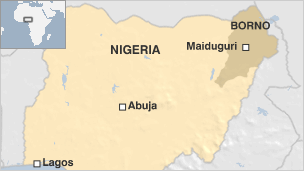
Nigeria bar bombing leaves five dead in Maiduguri
At least five people have been killed in an attack on a bar in the north-eastern Nigerian city of Maiduguri, officials say.
The bar was thought to be frequented by soldiers and policemen sent to Maiduguri to reinforce security.
This is the second such attack, with at least 25 people killed last Sunday.
Officials have blamed these killings on the Boko Haram group, which wants to establish an Islamic state in northern Nigeria.
"Five people have been confirmed dead while 10 others sustained various degrees of injuries," said Major General Jack Nwaogbo, commander of a joint police and military taskforce in Maiduguri.
He said the attack was carried out around 1730 (1630 GMT).
Boko Haram has carried out a number of bombings in north-eastern Nigeria, as well as an attack on police headquarters in the capital Abuja earlier this month.
The group's trademark has been the use of gunmen on motorbikes.
Two years ago Nigerian security forces brutally suppressed an uprising by Boko Haram, destroying their compound and then killing their leader in custody, says the BBC's Jonah Fisher in Lagos.
Instead of disappearing, the group has regrouped and now appear to have the funding and expertise to launch attacks on an almost daily basis, our correspondent adds.
Thailand: Yingluck Shinawatra wins key election
The party allied to ousted and exiled ex-leader Thaksin Shinawatra has won a major victory in Thailand's general election, provisional results show.
With most votes counted, outgoing Prime Minister Abhisit Vejjajiva has conceded victory to his rival, opposition leader Yingluck Shinawatra.
Ms Yingluck, who will become Thailand's first female prime minister, said there was "a lot of hard work ahead".
She is the younger sister of Thaksin Shinawatra, ousted in a coup in 2006.
With 92% of votes counted, Ms Yingluck's Pheu Thai party had won 260 seats, giving it a majority in the 500-seat parliament.
"It is now clear from the election results so far that the Pheu Thai party has won the election, and the Democrat Party concedes defeat," Mr Abhisit said on national TV.
"I will give the chance to Yingluck, the first woman to form a government," he added. "I want to see unity and reconciliation. The Democrats are ready to be in opposition."
After Mr Abhisit admitted defeat, Miss Yingluck was cautious in her response. She thanked Mr Abhisit and said she would wait for the official results to be declared.
"I don't want to say it is victory for me and the Pheu Thai party but people are giving me a chance and I will work to my best ability for the people," she said at her party headquarters.
"I would like to reiterate that we are ready to deliver on all of the policies that we have announced. There is a lot of hard work ahead."
She said her party officials had been in talks with the smaller Chart Thai Pattana party with a view to forming a coalition.
"In the future there are more parties expected to come and work with Pheu Thai," she said.
All parties will have to respect the voters' decision, he said.
Mr Thaksin, whose government was toppled in a military coup in 2006, said the military should also "be listening to what the people think".
Asked whether he would now be returning to Thailand, the former prime minister said he was in "no hurry".
"I want to see reconciliation really happen," he said. "I want to be part of the solution, not part of the problem."
The past few years have seen street protests, airport closures and clashes between the supporters of the two main groups, which our correspondent says have tarnished the country's economy and reputation for being a bastion of democracy in south-east Asia.
Last year, protesters shut down parts of Bangkok for two months in a bid to force the government to resign. When the army stepped in to clear the capital's streets it degenerated into violence, leaving 91 people dead.
Mladic to boycott Hague tribunal hearing, says lawyer
Ex-Bosnian Serb army head Ratko Mladic will boycott a hearing at The Hague war crimes tribunal where he is due to enter pleas, his lawyer said.
Milos Saljic said Gen Mladic would not take part in Monday's proceedings as his defence team has not been approved.
Gen Mladic appeared before the court on 3 June and declined to plead then on what he called 11 "obnoxious" charges.
He is charged with crimes including genocide in connection with the 1992-95 Bosnian war.
"Mladic has told the prison authorities that he does not want to appear in the courtroom (on Monday) and will not enter a plea," Mr Saljic told AFP news agency.
"He decided not to reappear as his defence team has not yet been approved."
The tribunal has asked for more time to vet the lawyers Gen Mladic, 69, has submitted. Mr Saljic said that his client wants him and a Russian lawyer.
Court-appointed lawyer Aleksandar Aleksic - who represented Gen Mladic at his first hearing - is due to represent him on Monday.
Mr Saljic said that if Gen Mladic "is forced" to attend Monday's hearing against his will "he will certainly not enter his pleas".
According to court rules, if defendants refuse to enter pleas they are automatically registered as entering not guilty pleas by the judges.
It is believed to be unlikely that the court will force Gen Mladic to attend the hearing.
Court spokeswoman Nerma Jelacic said the tribunal was not aware of any planned boycott "so preparations for tomorrow are ongoing as planned".
At his previous hearing, Gen Mladic said he had been "defending my people and my country". He also said he was "gravely ill".
Gen Mladic was extradited to the Netherlands from Serbia on 31 May after being captured following 15 years as a fugitive.
He is charged in connection with the massacre of about 7,500 people in Srebrenica - Europe's worst atrocity since World War II.
Gen Mladic is also charged over the 44-month siege of the Bosnian capital Sarajevo from May 1992 in which 10,000 people died.
Syria: Tanks and troops 'deployed in restive Hama'
Syrian tanks and troops are being deployed in the restive city of Hama after the sacking of its governor, reports say.
Troops are said to be taking up positions at key entrances to Hama, and in the city centre.
There are reports of gunfire and mass arrests taking place.
On Friday the city saw some of the biggest demonstrations yet against the rule of President Bashar al-Assad.
A day later, Mr Assad sacked the governor of Hama, Ahmad Khaled Abdel Aziz.
Activists say more than 1,350 civilians and 350 security personnel have been killed across Syria since protests began in mid-March.
'Military solution'
Rami Abdel-Rahman, president of the Syrian Observatory for Human Rights, said troops took up positions at Hama late on Saturday and "heavy gunfire" was heard in the city overnight.
He told Reuters news agency there had been a number of arrests on the outskirts of the city.
"The authorities seem to have opted for a military solution to subdue the city," he said.
Tens of thousands of people were said to have taken part in protests in Hama on Friday.
The BBC's Owen Bennett-Jones, in the Lebanese capital Beirut, says there were reports that the army had eased its presence in the city earlier in the week, but the authorities now seem to be using overwhelming force.
Hama was the scene of a Muslim Brotherhood uprising against Mr Assad's father, Hafez, in 1982, which the army crushed, killing at least 10,000 people.
The Syrian government has not commented on its latest military movements.
Mr Assad has previously accused a "small faction" of "saboteurs" of exploiting popular grievances.
Reports cannot be independently verified as the Syrian authorities have banned most foreign media from the country.
Ethiopia drought: UK pledges £38m in food aid
The UK has pledged £38m ($61m) in food aid to drought-hit Ethiopia - enough to feed 1.3m people for three months.
International Development Secretary Andrew Mitchell said the World Food Programme cash would also treat 329,000 malnourished children and mothers.
The African country faces its worst drought for a decade with an estimated 3.2m people in need of emergency aid.
The UN has called for international aid across the Horn of Africa where 10 million people are affected.
Some areas have suffered the worst drought in 60 years and the UN now classifies large areas of Somalia, Ethiopia, Djibouti and Kenya as in a crisis or an emergency.
Mr Mitchell warned that other countries across the world must give money if a full-scale disaster was to be avoided.
"Through no fault of its own, the Horn of Africa is experiencing a severe drought caused by the failed rains," he said.
"Britain is acting quickly and decisively in Ethiopia to stop this crisis becoming a catastrophe. We will provide vital food to help 1.3 million people through the next three months.
"This situation needs an international response and Britain is calling on the international community to provide fast, effective relief."
Oxfam welcomed the announcement and said the money could not come soon enough.
Humanitarian director Jane Cocking said: "There are already critical and life-threatening food shortages in Ethiopia and across the Horn of Africa region.
"Two successive poor rains have left millions of people struggling to get food as hundreds of thousands of livestock have died and crops have failed.
"Other donors now need to follow suit and increase funding before it is too late."
Save The Children's emergency adviser, Matt Wingate, said: "Money pledged by the UK government will mean that aid agencies can get life-saving help to hundreds of thousands more children and their families.
Computer glitch dashes hopes of Caribbean nationals
A computer glitch is being blamed for dashing the hopes of Caribbean and other foreign nationals worldwide who thought that they had won the chance to become permanent residents of the United States.
The US Department of State says it has been forced to cancel the visa lottery results informing more than 22,000 foreigners that a 'computer programming problem'; was the reason.
"The results were not valid because they did not represent a fair, random selection of entrants, as required by law," the Department said in a statement, adding that a new lottery drawing will be made on July 15.
"The entire pool of applicants would have been unfairly disadvantaged," said Rosemary Macray, a spokeswoman for the department's Bureau of Consular Affairs.
"The error was found and corrected, and we are going forward with a new drawing that will be in full compliance with the law," she added.
But the aspiring immigrants have filed a class action lawsuit in federal district court here, seeking to force the State Department to return to the first lottery results and restore their chance at the visas. "
State Department officials hoped the terse message they posted about the computer glitch would bring a quiet end to the botched lottery selection.
But in the age of social media, the foreigners who were spurned found one another on the Internet and banded together.
They have been placing Skype calls to lawmakers in the US Congress and flooding American news media Web sites with pleas for help.
Under a separate link, more than 18,000 of them have joined a registry with their contact information. They even overwhelmed the comments on the State Department's Faceboog page.
"We welcome people's views, but you are all basically taking over the site. We have other issues we are trying to promote, like the safety and welfare of American citizens."
Following a letter of complaint from their lawyer, Kenneth White , the State Department's inspector general said he would examine the failed lottery.
The State Department runs an annual Diversity Visa Lottery to offer permanent resident visas, known as green cards, to foreigners from countries that have sent few immigrants to the United States.
Because the American immigration system is based on family ties, people from countries with more immigrants already here have a better chance at gaining green cards, for which there is an annual numerical limit.
The lottery randomly selects a pool of 100,000 applicants to proceed to the next step in the process, with 55,000 visas granted each year.
State Department officials said that about 19 million people from across the globe submitted electronic applications during the official 30-day period last year.
Venezuela says Chavez recuperating well
Venezuelan officials said Friday the stability of the country was not in question following President Hugo Chavez's admission that he was undergoing cancer treatment in Cuba.
The government, which had repeatedly said that Chavez had simply undergone a simple procedure and was recuperating as expected, on Friday amended its message to an upbeat assessment of the president's health.
In an interview on state-run television, the country's top general, Henry Rangel Silva, said he visited Chavez in Cuba and that the president was active and his normal self.
"Let's raise our spirits. This is hard news, but it is also a reality that the recovery has been effective," he said.
The general added that the military will maintain peace and continue to take orders from Chavez as commander-in-chief, despite him leading from another country.
"The members of the armed forces have the democratic conviction that has led us to maintain our role as the protectors of the national Constitution," he said.
Doctors in Cuba detected and removed a cancerous tumor from Chavez's body, Chavez announced Thursday night on national television.
Chavez said he was continuing treatment, but did not specify what that treatment entailed, where the tumor was located or when he would return to Venezuela.
The "abscessed tumor with cancerous cells" was discovered after doctors had already operated and treated a pelvic abscess, he said. Doctors operated again without any complications and removed the tumor, he said.
Chavez said he was "receiving complementary treatments to combat the different types of cells found," and that his condition continued "evolving satisfactorily."
"I wanted to speak to you with the sun of the dawn ... I think we have achieved it, thank God," he said.
Chavez appeared steady but subdued as he spoke, flanked by a large portrait of South American independence hero Simon Bolivar on one side and the Venezuelan flag on the other. He frequently glanced down at his prepared text during the 15-minute speech .The performance showed none of the combative energy that normally characterizes his addresses, where he'll speak extemporaneously for hours on end, skewering his opponents with gusto and sketching out the vision for his "21st-century socialism."
"Throughout my life, I've been making the fundamental error of neglecting my health and being reluctant to get checkups," he said, explaining how health concerns began to pop up earlier this month while he was in Cuba on a state visit.
Chavez closed his speech by saying, "Now and always, we will live and we will overcome. Thank you very much. Until my return."
He gave no indication of any plans to delegate power during his treatment in Cuba.
Venezuelan Vice President Elias Jaua appeared on state television shortly after Chavez's speech.
"There is no time for sadness, but time for reflection, for courage and for work," he said, standing beside a group of government ministers. "Unity is what is required at this time."
Thursday's speech was Chavez's first on the state-run network since doctors in Cuba performed emergency surgery on the Venezuelan leader nearly three weeks ago.
The Venezuelan president's typically frequent live television appearances have been absent from the country's airwaves since doctors in Cuba first performed surgery to treat a pelvic abscess June 10.
His lengthy stay in Cuba and notable low profile have fueled rampant speculation about his health.
Concerns about the seriousness of his condition intensified Wednesday after Venezuelan officials announced the postponement of a high-profile summit of Latin American leaders originally scheduled to take place in Venezuela next month. The government cited Chavez's "strict process of recovery and medical treatment" as the reason behind the decision, but provided few details about his health.
Over the weekend, several allies of Chavez denied that he had cancer.
On Tuesday and Wednesday, VTV broadcast video of Chavez walking and talking with former Cuban leader Fidel Castro in Havana.
The video showed Chavez, wearing his trademark track suit, talking with Castro and looking at Tuesday's edition of the state-run Granma newspaper. But while the video showed the pair acting chummy as they talked, neither leader addressed the Venezuelan president's medical condition.
The images reaffirmed what Venezuelan officials have been saying, Jaua told state-run VTV Wednesday. Chavez deserves to have the time he needs to recover from surgery, he said.