Central bankers advise investors to expect less
Investors should prepare themselves for smaller profit margins as banks stash away more capital to avoid another global financial crisis, the world’s major central bankers cautioned Sunday. They also advised central banks around the world that interest rates might need to rise soon to bring inflation under control. The Bank for International Settlements said new rules for banks to gradually increase their capital cushions would likely result in more predictable and smaller returns. But the bank, an umbrella organisation for the world’s major central banks, also said in its annual report that bank managers and shareholders haven't adjusted expectations accordingly.
It said rates might have to be raised because “tighter global monetary policy is needed in order to contain inflation pressures and ward off financial stability risks.” Jaime Caruana, the bank’s general manager, said the global financial crisis of 2008-2009 still casts long shadows, but already there are signs of a return to excessive risk-taking. He warned of threats posed by unsustainable public debt, soaring energy and commodity prices and inflation that is already hitting many countries and threatening others. “While encouraging investors to take some risk was part of crisis management, there are signs that, in some areas, investors may be going too far again,” he said. Caruana said that while fiscal problems are most visible in heavily indebted eurozone nations like Greece, Ireland and Portugal, other major economies also must be careful and quickly improve their standing to avoid triggering another big global crisis. Interest rates, he suggested, might need to rise.
“There is a need to normalise monetary policy,” Caruana told reporters in Basel. “Globally, real short-term interest rates, already negative, fell further over the past year. Normalising rates would reduce the incentives to take excessive risk and would support necessary structural and balance-sheet adjustments.” The so-called Basel III rules for requiring larger cash buffers are intended to prevent another shock to the global financial system like the one in 2008 when Lehman Brothers collapsed.
Holding more capital would cut into the money that banks can lend and invest but improve their ability to withstand the blow if loans or investments go sour.
The bank also said in its annual report that nations should speed up complying with the rules if banks are profitable and credit flows won't be restricted. On Saturday, one of the Basel-based institution’s committees proposed rules requiring the world's biggest banks to hold an extra 1 per cent to 2.5 per cent of capital on their balance sheets, depending on their size. The aim is to discourage banks from becoming so big that their failure would destabilise global financial systems. The cash buffers that giant global banks would have to hold would be in addition to an existing requirement that all banks hold seven per cent of their assets in reserve. (AP)

Sprinter Tyson Gay to miss Usain Bolt clash at Worlds
Tyson Gay will miss out on a clash with Usain Bolt at this year's World Championships after pulling out of the US National trials with a hip injury.
Gay, 28, withdrew before his 100m semi-final and missed Saturday's 200m, meaning he would not be eligible for the sprints in Daegu, South Korea.
He could still run in the 4x100m relay at the event which begins on 27 August.
Former Olympic 100m champion Justin Gatlin is set to return for the US after a four-year drug ban.
Gay, who has run the fastest 100m in the world this year of 9.79 seconds, had been expected to be one of the main challengers to Jamaican world record-holder Bolt in the 100m in South Korea.
 His US record of 9.69sec makes him the second-fastest man in history behind Bolt, who holds the world record of 9.58sec, and he beat the injury-affected Olympic champion in Stockholm last year.
Gay had qualified from his heat in a wind-assisted 10.01 seconds, second behind Ivory Williams and third fastest overall, but withdrew before the semi-final citing a recurrence of a problem in his right hip and adductor.
"I've been bandaging it up, couldn't really take anymore," Gay said. "I decided to stay healthy. It's pretty painful running in pain."
The race was again won by Williams, who was then disqualified from the final as Walter Dix won in 9.94sec.
Gatlin, the disgraced 2004 Olympic champion, finished just one hundredth of a second behind in second with Michael Rodgers third to complete the US trio for the World Championships.
Gay could still be part of the 4x100m relay team if he recovered in time, USA Track and Field (USATF) officials said.
"But he has to be able to show fitness and be able to run," said USATF President Stephanie Hightower.
"It is a big blow," said Dix of Gay's potential loss to the relay squad. "Tyson at his best is one of the top runners in the world. We're going to have to step up."
Gay has been plagued by injuries since winning the 100m and 200m world titles in Osaka in 2007.
In 2008, he was injured during the 200m at the US Olympic trials and later that year failed to make the 100m final at the Beijing Games.
The following year, he pulled out of the 200m after taking 100m silver behind Bolt when he set his world record at the World Championships in Berlin.
Former world record holder Asafa Powell edged out Bolt's training partner Yohan Blake to win the Jamaican 100m trials for the World Championships.
Powell clocked a winning time of 10.08 seconds into a headwind and was joined by Blake (10.09) and Steve Mullings (10.10) in claiming berths for Daegu.
World record holder Bolt did not compete in the trials because he has a wildcard bye as the defending champion in both the 100m and 200m.
David Haye's speed can hurt Wladimir Klitschko - Lewis
Lennox Lewis has said David Haye's speed and movement could be the deciding factors in his heavyweight clash with Wladimir Klitschko.
Lewis told Sportsweek on BBC Radio 5 live that Klitschko will start the 2 July bout with several advantages.
But the former world champion added that Haye could triumph if he repeats the tactics he used in beating giant Russian Nikolay Valuev in 2009.
"He fought a perfect fight, he kept moving, he stayed elusive," said Lewis.
"He has the speed and the weight in his arms and any shot he hits Klitschko with will be a shocking blow.
"Klitschko has the bigger advantages but if David is able to stay with his game plan and move and throw combinations he should do very well."
Lewis added that it is crucial for Haye to prevent Klitschko, 35, from using his weight advantage in the bout at Hamburg's Imtech Arena.
"His [Klitschko's] strength is his size, his reach and his weight," stated Lewis. "He has all those advantages and on paper he is the one they will pick to win because he is a natural heavyweight.
"Haye is light but he can use it to his advantage if he can stay away from him.
"But if they get into a clinch and Klitschko puts his weight on David it may sap some of David's energy."
Haye enjoyed success as a cruiserweight in the earlier part of his career and is still relatively light for a top-ranked heavyweight.
In his last fight, against Audley Harrison in November 2010, Haye weighed in at 15st 0.5lbs, 3st lighter than his opponent, though the weight disadvantage did not stop him from recording a third-round stoppage.
Haye also gave away more than 7st in weight against Valuev, but won a majority decision after 12 rounds.
Klitschko weighed in at 17st 9lbs before knocking out Nigeria's Samuel Peter in 10 rounds in September 2010. At 6ft 6.5in, he is also 3.5in taller than Haye.
Haye has admitted that the unification bout with Klitschko, who has 49 knockouts and 3 losses in his 58 fights, will be his "career-defining" contest.
The Londoner, who has lost only once in 26 contests, holds the WBA title, while his Ukrainian opponent holds the IBF and WBO belts.
WICB, JCA meet on Gayle, other issues
The West Indies Cricket Board (WICB) and the Jamaica Cricket Association met in Kingston Jamaica yesterday to discuss a number of issues. The meeting was the first of its kind between the WICB and JCA and was requested by the newly elected executive of the JCA. The agenda included cricket development, player management and industrial relations, funding for regional tournaments and international matches, governance structure and operations, communications and the Chris Gayle issue. “The WICB views it as most important to conduct these dialogues with our constituent bodies so that we have commonality of understanding throughout the region on the critical issues,” said WICB President Dr Julian Hunte who chaired the meeting.
“We welcome opportunities such as these to meet with the territorial boards to listen to their views and share information as we chart the way forward in West Indies cricket,” Dr Hunte. added. “It was a most productive initiative and one which we must consider doing in a more structured manner with all territorial boards,” Dr Hunte opined. Newly elected JCA President Lyndel Wright shared similar sentiments: “The JCA asked for this meeting with the WICB so as to ensure that our full Board has a clear understanding—directly from the board of the WICB—what some of the critical issues in West Indies cricket are and what the approaches are in tackling these issues.”
“While we thought this meeting was important for the JCA we are convinced that it would be useful for the WICB to conduct such meetings with all the other territorial boards so that they too can benefit from direct contact and information sharing with the WICB,” Wright added. The WICB was represented by Dr Hunte, Vice President Dave Cameron, Directors Conde Riley, Gregory Shillingford, Baldath Mahabir, Dr Allen Sammy, Corporate Secretary Stephen Camacho, WICB CEO Dr Ernest Hilaire and Director of Cricket Tony Howard. The JCA was represented by Wright, Vice President Milton Henry, Secretary Fritz Harris, directors Wavell Hinds, Junior Stewart and Deltonio Williams, Assistant Secretary Ian Brown and Assistant Treasurer Maurice Clarke. (CMC)
T&T women’s 4x100 qualify for World Championships
T&T women’s 4x100m relay team qualified for the World Athletic Championships after the quartet of Semoy Hackett, Kai Selvon, Aleesha Barber and Kelly Ann Baptiste clocked 43.40 seconds to win the event at the Bahamas Junior and Senior Athletic Championships in Freeport Bahamas on Saturday. The local girls dipped under the required standard of 44.00 seconds to book their spot for the August 27-September 4 meeting. T&T defeated hosts Bahamas which included the 2001 World 200m champion and the 2008 World Junior champion. The win is the first over Bahamas since the Bahamians took silver at the 2009 World Championships in Berlin, Germany with T&T in seventh.
Ayanna Alexander scored another T&T victory taking the women’s triple jump with a leap of 13.25m. The 2010 Commonwealth Games silver medallist won by one metre over Pascale Delaunay of Haiti (12.25m). Barber and T&T’s men’s 4x400m team picked up silver. Barber, the 2010 Central American and Caribbean Games champion clocked 13.63 to finish behind Bahamian Ivanique Kemp (13.44) and ahead of another Bahamian, Petra McDonald (13.91). The national record holder at 12.85 was short of the World Championships qualifying standard (A-12.96/B-13.15).
T&T’s men’s 4x400m team of Renny Quow, Jarrin Solom, Ade Alleyne Forte and Deon Lendore clocked 3:04:31 to take second behind Bahamas (3:02:56) and missed out on the World Championship qualifying time by 0.31 seconds. At the Jamaican Championships Emmanuel Callendar was third in heat 4 of the men’s 200m preliminaries. The 2008 CAC Champion clocked 20.88 seconds, the 11th quickest of the round. Jamaica-based Ayanna Hutchinson was fourth in the second heat in the women’s 100m first round. Hutchinson clocked 11.59.
Caricom St Kitts summit: Health and rights in focus
 FACING up to challenging regional health problems and the need to make the Caricom Charter of Civil Society a legally binding accord are among matters expected to be addressed at the forthcoming 32nd Heads of Government Conference in St Kitts and Nevis.
Ahead of the four-day summit, scheduled to begin on July 1, the Caricom Secretariat conducted a 'media clinic' in Basseterre to facilitate, as it said, "informed coverage" of this annual event in the life of the 38-year-old regional economic integration movement.
Representatives of the region's print and electronic media were advised about the focus of the pre-summit clinic on regional health developments to coincide with the 10th anniversary of the Nassau Declaration of 2001 by Caricom governments with its memorable theme: 'The Health of the Region is the Wealth of the Region.'
Consistent with this recognition and a commitment to attain major health objectives, the Heads of Government had established in July 2005 a blue-ribbon Caribbean Commission on Health and Development under the chairmanship of former director of the Pan-American Health Organisation (PAHO) of Barbados, Sir George Alleyne, current chancellor of the University of the West Indies, and included a number of eminent West Indians across the region.
In addition to the heavy concentration on battling the HIV/AIDS epidemic that has had serious effects on the region's human capital, the commission was to prioritise precisely those aspects of health to be effectively addressed to move "beyond mere rhetoric".
Coincidentally, the head of government who was assigned lead responsibility for health within Caricom's quasi-cabinet system, Dr Denzil Douglas, prime minister of St Kitts and Nevis, will be host for the coming summit and assume the chairmanship for the next six months. In addition to the report expected from Prime Minister Douglas, it would be quite appropriate to also have an assessment of progress and shortcomings in the region's implementation of key recommendations from the Commission on Health.
It is known that chronic non-communicable diseases (NCDs) have had a serious toll on citizens across the region that included deaths from heart disease, stroke and obesity (both in children and adults). The commission was particularly alarmed over the problem of overweight and obesity in children and urged that it be treated with the utmost priority and involve all stakeholders.
An old problem
For the coming summit, new regional challenges to be addressed would include what to do about an old problem, namely a poor record in implementation of decisions due to a perceived irrelevant governance system at the Georgetown-based Caricom Secretariat.
The heads are expected to have for guidance, at least the summary of an organisational review on how to secure comprehensive restructuring of the Secretariat. The summary is based on a still incomplete study being done by Landell Mills, a UK consulting firm, comprising non-nationals of Caricom, except for one. The precise text of the terms of reference for this latest of studies on the functioning of the Secretariat could not be obtained.
However, governments and regional institutions would have on their shelves of Caricom documents a good set of reports and working papers on what should be done to ensure that there is an enlightened governance system to respond to the problems and challenges in implementing already approved policies and programmes.
These would include the final report of what is known as The Patrick Gomes/Leonard Archer Review Committee; the more recent work done by Dr Vaughn Lewis, as well as that of Dr Norman Girvan in relation to the sequential implementation to obtain the objectives of a single economy with 'a single development vision'.
In their consideration of matters that have long been ignored--even as they kept the rhetoric flowing--the Heads of Government should at least remind themselves of the implementation deficit that affects, for example, governance issues such as the Caricom Charter of Civil Society.
A check list on lack of effective responses by heads who have been allocated "lead portfolio responsibilities" in the community's quasi-cabinet system would reveal a distressing litany of failures that include making the Charter of a legally binding instrument.
At the 2003 Caricom Summit when then outgoing prime minister of Jamaica PJ Patterson shared his hopes for 'Caricom Beyond Thirty', in the "charting of new directions", he had specifically urged that steps be taken to "make the charter a living document in the lives of the people" by converting it into a "binding treaty arrangement" and by having an annual report prepared on its observance by member states.
It was the general feeling at the time, as expressed by Patterson, that the proposed annual report could be used as the basis for "peer review" and that citizens should also have recourse to the Caribbean Court of Justice (CCJ) under its original jurisdiction to redress breaches of the charter.
Alas, with the short-lived Caricom Assembly of Parliamentarians now reduced to a mere footnote in the history of the regional economic integration movement, and core recommendations of the seminal report of the West Indian Commission gathering dust on shelves of decision-makers of the community, there seems little cause for optimism to advance the rights of citizens of our community as eloquently outlined in the Charter of Civil Society.
As of last week, the Community Secretariat and host Prime Minister Douglas were expecting a 'full house' of representative delegations from all 15 member countries of the community -- among them the new president of Haiti (Michelle Martelly) and the Suriname president (Desi Bouterse).
Presented by: Rickey Singh
Source:jamaicaobserver
France, Germany open Women's World Cup with victories
On a great day for women's soccer, it was a good day for Europe's teams.
The World Cup started Sunday with two stadiums overflowing with goodwill, color and the cheer of nearly 100,000 fans. There were also four goals, including one stunner.
Germany, the two-time defending champion, survived opening-game jitters to beat Canada 2-1 in Berlin and showed that the hosts will be the team to beat.
"It is fantastic," said Germany's No. 1 fan in the stands, Chancellor Angela Merkel.
France won the opener against Nigeria 1-0 in Sinsheim to leave the continental neighbors in charge of Group A. The United States begins play in the 16-team tournament Tuesday, facing North Korea in Group C in Dresden
Beyond the games themselves, the upbeat spirit of the women's game stood out Sunday. Riding the spirit of the crowds, the atmosphere approached that of the men's 2006 World Cup - also in Germany - even if the action rarely did.
One clear exception came at Berlin's Olympic Stadium. Canada's Christine Sinclair, playing with a broken nose for most of the second half, highlighted the day with a stunning, perfectly curled free kick late in the game. That briefly gave Canada hope, but Germany survived on grit.
"The doctors told me her nose was broken, but she asked me to let her play," Canada coach Carolina Morace said. "I asked if it would be dangerous, but Christine is a smart player - she knows what she can do and what she can't do."
It was the first goal Germany had conceded in the World Cup since 2003.
At the site of the men's final five years ago, hundreds of German flags came out as Kerstin Garefrekes scored Germany's first goal in the 10th minute and the home team support continued the rest of the evening.
"The fans were great," Neid said. "People had the feeling it could be getting close and they really got behind us. I thought it was a brilliant reaction."
In the opening ceremony, a globe was revealed to have mirrors that reflected some of those in the sellout crowd of 73,680. Before the game started, waves rippled across the stadium.
From Berlin's daunting stadium, the contrast could hardly be greater nearly 400 miles south of the capital - the bucolic setting of the Rhein-Neckar-Arena, surrounded by wheatfields and an old hilltop castle.
There was hardly an empty seat as Nigeria and France ushered in the tournament before 25,475 fans under an azure sky dotted with puffy clouds.
Used to performing before hundreds instead of thousands, players loved it as much as the fans. With the crowds behind both nations and a Nigerian brass band adding relentless rhythm, this was a stage most players had never enjoyed.
"It is really nice to have them cheering for both sides," Nigeria's Perpetua Nkwocka said.
France striker Marie-Laure Delie scored the first goal of the tournament in a scrappy goalmouth scramble, controlling a low cross and stabbing the ball home.
"We have three points in our pocket and no one can take them away from us," coach Bruno Bini said.
Sinclair might have scored the best goal of the day, but France had the performer of the day in Louisa Necib, a smooth playmaker who makes difficult passing look dead easy, much like Zinedine Zidane did in Germany half a decade ago.
What happened BET?
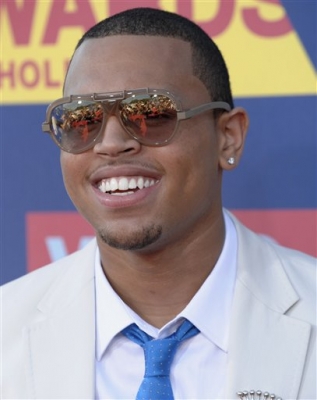 When you let a fan announce the winner of an award, you always have to make sure the person knows exactly what they are doing - otherwise, you end up with a situation like this.
Both Rihanna and Chris Brown were up for the BET Viewers Choice Award when presenters Rosci and Terrance, hosts of BET’s 106 & Park, brought up a Tiffany Green, a fan, to announce the winner of the Viewers Choice Award. But, when she announced the winner it seemed a key error was made and Tiffany had said the wrong name – Chris Brown.
It seemed the real winner was Rihanna for her Drake collaboration What’s My Name.
After making the correction, Drake went on stage to accept the award on Rihanna's behalf (she wasn’t there) and gave the fan the strangest  look and said: “This is an awkward situation.”
Had this had been two different competing artists involved, it might have been less of an issue. However, Rihanna and Brown used to be an item before Brown assaulted Rihanna prior to the Grammy Awards two years ago.
In a twist, BET Awards show host Kevin Hart later came on stage to say that the winner was actually Chris Brown and Tiffany, the fan, read the result right the first time.
In a further twist, Tiffany went on Twitter and said BET set her up and changed the script.
Read Tiffany’s tweets below:
Flawless_ EhEhF1: Bawling backstage. They totally [messed] me up.
Flawless_ EhEhF1: The tablet [said] Chris Brown . . . the teleprompter said Rihanna . . . . Goin home.
Flawless_ EhEhF1: So BET did that on purpose. Oh. I feel better.
Flawless_ EhEhF1: Look . . . I’m not slow. lol They did [it] on purpose. [Messed] up right? *shrug* smh
Source:NationNews
Flight scare
OVER 150 passengers were thrown into panic when the plane on which they were travelling to Barbados from Jamaica experienced cabin pressure failure yesterday afternoon.
A traumatized woman told the DAILY NATION by telephone of total despair among the travellers when the “[oxygen] masks dropped down, followed by a loud bang”.
“People were screaming and ears were popping. It was extremely traumatic; and at one time the plane took a sharp left turn [while losing altitude].
“I don’t want to go over it right now,” said the caller about her experience on Caribbean Airlines Flight BW455.
Beyonce's debut brings curtain down on Glastonbury
U S singer Beyonce made her debut at Glastonbury, bringing the three-day festival to a close.
She headlined the main Pyramid Stage, making her one of a handful of women to do so over the past 40 years.
Beyonce played all her biggest hits and a medley of Destiny's Child songs and got a great reception from the crowd.
The 29-year-old opened her set with Crazy In Love and afterwards told the audience: "I want you all to know right now you're witnessing my dream."
"I always wanted to be a rock star and tonight we are all rock stars," she added.
But there was no appearance on stage from her husband Jay-Z, who headlined Glastonbury in 2008.
The couple were spotted watching Coldplay perform on Saturday and there were rumours Jay-Z may join her on stage.
It is believed Beyonce has spent the last three weeks in the UK, at a rehearsal studio in London. She is supported on stage by backing singers The Mamas.
Beyonce arrived on stage to a burst of fireworks and her first words to the crowd were: "Glastonbury, are you ready?"
Her 90-minute set included all her signature songs, including Single Ladies, Independent Woman, Halo and If I Was A Boy.
But she also paid homage to several other artists, with her own versions of Alanis Morissette's You Oughta Know, the Eurythmics' Sweet Dreams and Kings of Leon's Sex On Fire.
She was joined on stage by Bristolian artist Tricky for Baby Boy.
Many fans gave rave reviews of Beyonce's performance.
"The best performance she has ever done in her life, she is my idol," said Lucy Horton, of Bath.
Pete Andrew, from Devon, watched the last 20 minutes of the gig having watched US rock band Queens of the Stone Age on another stage.
"If it didn't clash with anything then we would have turned up to see it earlier," he said.
Beyonce was something of a controversial headline choice for some fans who think its further indication that Glastonbury is becoming more mainstream.
But Mr Andrew countered: "If it's what people want to hear, then that's what should be on."
Jay Z's announcement as a headliner at a predominantly rock music festival two years ago, sparked a debate over rap music's place at Glastonbury - spearheaded by Oasis guitarist Noel Gallagher.
Suzanne Vega, who was the first woman to headline at Glastonbury in 1989, headlined on the acoustic stage at the same time as Beyonce.