
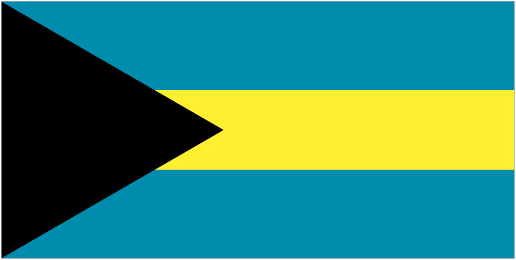
Bahamas backs gay rights
The Bahamas supports the United Nations Human Rights Council resolution passed last week that affirms equal rights for gay, lesbian, bisexual and transgender (GLBT) people, said Deputy Prime Minister and Minister of Foreign Affairs Brent Symonette.
The resolution, which narrowly passed in the council in Geneva, Switzerland, expressed “grave concern” about discrimination against gays throughout the world and affirmed that freedom to choose sexuality is a human right.
The Bahamas does not have a seat on the council, but is in favour of the resolution in principle, Symonette said.
He noted that he had not seen the resolution, but said the government supports the expansion of rights for “people of any persuasion.”
“Our record is clear, we continue to support freedom of expression and the right for people to express their opinions,” Symonette said.
“We actually voted in expansion of the rights [of GLBT people in a UN General Assembly vote earlier this year].”
The resolution passed in the human rights council also asked the Office of the UN High Commissioner for Human Rights to conduct a study by the end of the year that would point out “discriminatory laws and practices and acts of violence against individuals based on their sexual orientation and gender identity in all regions of the world.”
Twenty-three countries on the human rights council supported the resolution, 19 voted against it and three countries abstained.
The resolution was the first of its kind passed by the council. It was fiercely opposed by Russia, China, Saudi Arabia and Nigeria, among other countries.
The United States supported the resolution, which also asked that the study be conducted before the end of the year to look at how international laws can “be used to end violence and related human rights violations based on sexual orientation and gender identity.”
The resolution also said that the council will form a panel once the study is completed to discuss “constructive, informed and transparent dialogue on the issue of discriminatory laws and practices and acts of violence against individuals based on their sexual orientation and gender identity.”
One month ago, UN High Commissioner for Human Rights Navi Pillay equated homophobia and transphobia to misogyny and racism. She also claimed that hate crimes against GLBT people were on the rise.
“States have an obligation to decriminalize homosexuality and to protect individuals from discrimination on the basis of their sexual orientation,” she said.

Ryan Dunn, star of Jackass, dies in car crash
Ryan Dunn, a star of MTV's Jackass show, has died from injuries sustained in a car crash in suburban Philadelphia, police have said.
Authorities said that Dunn, 34, and a passenger in his 2007 Porsche died early on Monday after the car came off the road and burst into flames.
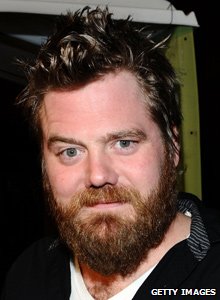 The crash occurred near the suburb of West Chester.
Dunn appeared in Jackass, the hit MTV show that ran from 2000 to 2002, and its three film spin-offs.
In the show he performed a variety of stunts and pranks and rose to fame alongside the likes of Johnny Knoxville, Bam Margera, and Steve-O.
The comedy series was noted for the risque nature of the tricks and sketches performed.
Jackass star Ryan Dunn sits behind a jet engine in one of his trademark stunts
Police said the passenger in Dunn's car had not yet been identified.
Authorities added that speed may have been a reason for the crash
Greece: Government to face vote of confidence
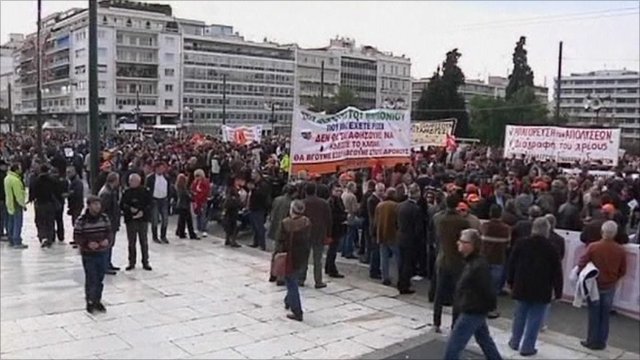 The Greek government is due to face a vote of confidence, a crucial first step towards gaining a vital 12bn euro ($17bn; £10bn) loan.
If the government survives the vote, Greece's parliament will be asked to back the latest spending cuts - worth 28bn euro - on 28 June.
These austerity measures and other reforms have to be introduced before the European Union and International Monetary Fund release the funds.
Greece needs the loan to pay its debts.
Mass demonstrations
Tuesday's vote of confidence is on the new Greek cabinet, which Prime Minister George Papandreou put in place last Friday.
Mr Papandreou hopes the new cabinet, and specifically the new Finance Minister, Evangelos Venizelos, will help secure parliament's backing for further austerity measures that are already proving deeply unpopular with the Greek people.
At the weekend eurozone finance ministers decided to postpone their decision on whether to grant Greece the 12bn-euro loan until the country introduces the additional spending cuts and privatisation programmes.
Greece needs this aid - the latest tranche of the EU and IMF's 110bn euro aid package - by July to be able to keep up with payments to the creditors of its huge debts.
If the Greek parliament does back the austerity measures, the eurozone finance ministers will meet again on 3 July, with the funds expected to be released by the middle of next month.
However, lawmakers are having to ponder their decision in the face of mass demonstrations, strikes, and even riots.
The latest protest against the cutbacks involves workers at Greece's state-owned electricity company, who are on a 48-hour walkout.
BBC Europe editor Gavin Hewitt, who is in Athens, says ministers have argued that without further austerity measures in exchange for a new bail-out Greece is heading for bankruptcy, but many Greeks appear to prefer that option to further austerity.
Mr Venizelos said the decision of the eurozone finance ministers to delay the loan showed that urgent action was now needed. "We have plenty to do," he said.
Olli Rehn, the European Union's Monetary Affairs Commissioner, urged Greece to continue with its austerity measures.
"The greatest weight of responsibility lies on the shoulders of the new Greek government," he said.
Mr Rehn added that the situation in Greece was the worst crisis Europe had faced "since the Second World War".
New aid
A new aid package for Greece about the same size as the first, which was passed in May last year, was also agreed in principle by EU finance ministers on Sunday.
The new package, to be outlined by July, will include loans from other eurozone countries.
It is also expected to feature a voluntary contribution from private investors, who will be invited to buy up new Greek bonds as old ones mature.
Officials said this money had to be freely given, or it would be seen as technical default on Greece's debt repayments.
If Greece were to default - or seen to be in default - it would mean massive losses for European banks that hold Greek debt, including the European Central Bank.
Officials said the new plan was expected to fund Greece into late 2014 and total about 120bn euros.
Inspectors for the EU and IMF will make another visit to Athens on Tuesday in what the European Commission said would be a "technical mission".
The visit, which comes after teams from both bodies have spent months poring through the country's accounts, is unscheduled and the Commission did not say what its objective would be.
Tunisia's Ben Ali sentenced to jail in absentia
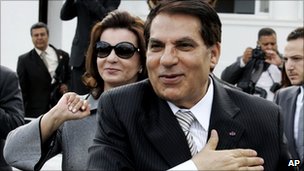 A Tunisian court has sentenced former President Zine al-Abidine Ben Ali and his wife Leila to 35 years in jail for embezzlement and misusing public funds.
The couple, who fled to Saudi Arabia in January after a popular uprising, were also fined $66m (£41m).
The one-day trial in absentia focused on $27m of cash and jewels reportedly found inside one of their palaces.
A second case concerning Ben Ali only, which relates to the possession of drugs and weapons, was postponed.
Ben Ali's lawyer said the verdict was politically motivated and "a joke".
The BBC's Jon Leyne in Tunis says it is unlikely that Saudi Arabia will allow the couple to be extradited.
Ongoing investigations
Five months after they were forced to leave the country, Ben Ali and Leila Trabelsi were put on trial in absentia at the Tunis criminal court.
Prosecutors said the cash and jewels, some of which had "historic value", were found in their palace in Sidi Bou Said, a town outside the capital.
After only six hours, the judge said it had been established that they had misused public money and sentenced to them prison. The sentences will take immediate effect, despite their absence.
The judge also ordered Ben Ali to pay $36m and his wife $30m.
A second case against the ex-president, involving weapons and drugs allegedly found in a presidential residence in Carthage, was postponed until to 30 June to allow his lawyers more time to prepare.
Ben Ali is also being investigated on suspicion of murder, abuse of power, trafficking of archaeological artefacts and money laundering.
Speaking from Beirut, Ben Ali's lawyer Akram Azouri told the BBC the sentence was "a joke".
"Don't forget that the drug and the money were found three months after the president left his palace.
"And don't forget that I am the lawyer for President Ben Ali, and I requested the Tunisian authority to allow me to defend him, and the authorisation was not given to me."
Mr Azouri said the trial was a "continuation of the political judgement that has already been issued and executed".
Speaking through his lawyers on Sunday, Ben Ali mounted a defence of his 23 years as president, which many Tunisians say was marked by autocratic rule, corruption and human rights abuses.
"He would like everyone to know this criminal prosecution is only a false and shameful image of victor's justice," a statement said.
"Is the purpose behind that [trial] to divert the attention of Tunisians from the turmoil that nobody can accuse him of or hold him responsible for?
"He knows that every new political authority wants to blame its predecessor and hold it responsible for difficulties it fails to resolve."
On Monday, Ben Ali issued another statement saying he had taken his family to Saudi Arabia on 14 January for safety.
He said he had intended to return to Tunisia immediately, but the plane left without him, "disobeying my instructions".
Capital One to buy ING online bank
 Capital One says it plans to buy the US internet banking arm of ING in a move that will make it the seventh largest US bank by assets.
Capital One, best known for its credit cards, will pay $9bn (£5.5bn) in cash and shares - $6.2bn of that in cash.
The deal will also leave the Dutch banking and insurance giant with a 9.9% stake in Capital.
The move is the latest step in Capital One's plan to branch out from its credit card lending roots.
It will raise $2bn in new capital and $3.7bn in new debt in order to finance the transaction.
ING received a 10bn euro (£8.8bn, $14.3bn) bailout from the Dutch government in 2008.
That was followed by a restructuring plan in 2009 agreed between the European Commission and ING.
One condition of that was that it sell the US internet banking division.
ING Direct launched in the United States in 2000 and is now the largest online bank in the country with 7.7 million customers.
The sale will not affect ING's internet banking businesses in any of the other countries where it operates.
Capital One said it expects to realize "modest" cost-savings of $90m from the deal, and funding savings of $200 million annually.
Fashion firm Prada earns $2.1bn in Hong Kong share sale
Fashion house Prada has raised $2.1bn (£1.3bn) via its initial public offering on the Hong Kong stock exchange, the BBC has learned.
But the shares were priced at the lower end of a target range, raising less than the maximum $2.6bn wanted.
Prada will be the first Italian firm to list in Hong Kong as it seeks to tap China's appetite for luxury goods.
Recent share sales have struggled as global stock markets have been under pressure.
Luggage firm Samsonite fell as much as 11% on its trading debut in Hong Kong on Thursday.
Prada had planned to sell 423.3 million shares in a range of HK$36.50 to HK$48.
The company was founded in 1913 and also owns Miu Miu and Church's Shoes brands.
Its shares are set to begin trading on 24 June.
Greece debt crisis sends financial markets falling
Financial markets have fallen on investors' concerns about the impact of Greece's economic crisis.
London, Paris and Frankfurt's key share indexes were initially down more than 1%, although they recovered somewhat later in the day.
The sell-off followed falls in Asian markets, with investors worried that the Greek economy has reached a tipping point and that contagion will spread.
Greece's prime minister is forming a new cabinet to pass austerity measures.
London's FTSE 100 index closed down 0.8%, the Dax in Frankfurt fell 0.1% and the Cac 40 in Paris ended the day 0.4% lower.
The euro hit a three-week low at $1.4090.
Greek two year bond yields rose 1.6 percentage points to 28.6%.
"The clock is counting down. The financial markets are worried about a disorderly Greek debt default," said VTB Capital economist Neil MacKinnon.
"The risk of a 'Lehman Moment' for the eurozone is increasing," he added, referring to the collapse of the Wall Street bank in 2008, which caused panic and a global credit crunch.
To avoid the government defaulting on its debts, George Papandreou must pass new spending cuts and sell-offs of state property to receive new bail-out funds from the European Union and International Monetary Fund.
But rioters have again taken to the streets, and on Thursday, George Floridis, Greece's former deputy finance minister, resigned in protest at the slow pace of economic reforms.
There have been reports that Mr Papandreou may seek to replace his finance minister, George Papaconstantinou, the main architect of hugely unpopular budget cuts.
Default fears
The crisis comes amid a backdrop of soaring unemployment, with new figures on Thursday showing that the jobless rate rose to 15.9% in the last three months, up from 14.2% for the same quarter last year.
French and European Central Bank officials have warned that a restructuring of Greece's 350bn-euro debt as proposed by Germany could cause a default that would shake the whole eurozone.
French President Nicolas Sarkozy on Thursday urged other European leaders to find a compromise on Greece's debt crisis to stabilize the euro.
Without stability, there would be no economic growth in the eurozone, he said.
France's three biggest banks are at risk of a credit downgrade because of exposure to Greek debt.
Shares in Credit Agricole, Societe Generale and BNP Paribas lost more than 4% after Moody's said it may downgrade them due to their exposure to Greece.
Shares in Franco-Belgian lender Dexia fell as much as 10%. Shares of Portugal's BCP have lost 8% in the last two days.
US current account deficit widens as oil imports rise
The US current account deficit rose 6.3% to $119.3bn (£74bn) in the first three months of the year, the Commerce Department has said.
Strong exports of cars, computers and machinery were offset by imports, particularly of more expensive oil.
The deficit for the quarter represented 3.2% of US gross domestic product, up from 3% in the fourth quarter of 2010.
Separately, the number of new homes built in April rose 3.5%, but house building remained subdued.
Earthquake impact
The current account deficit measures the flow of goods, services and investments in and out of the US.
For the January-March period, the deficit in goods widened by $23.2bn to $182.5bn, with much of that jump due to rising oil imports.
The surplus in services increased by $1.2bn to $41.7bn in the first quarter.
Continue reading the main story
“Start Quote
The high premium is expected to continue to sway potential buyers to existing homes”
End Quote Christos Shiamptanis TD Economics
The current account balance in the current April-to-June quarter is likely to be affected by the 11 March earthquake in Japan, which caused a fall in shipments of vehicles and parts from Japan.
Housing market flat
Meanwhile, there was little sign of a sustained pickup in the US housing market.
Construction of new homes rose to an annual rate of 560,000 in April, well below the level analysts say is necessary to sustain the market.
New homes in the US tend to cost more than existing housing stock.
"The high premium is expected to continue to sway potential buyers to existing homes and away from new ones," said Christos Shiamptanis an economist at TD Economics.
Job market
There was some better news for the US economy.
Fewer Americans applied for unemployment benefits last week, the second drop in three weeks, the US Labor Department said.
The number of people applying for unemployment benefits fell 16,000 to 414,000.
However, applications have been above 400,000 for 10 straight weeks, evidence that the job market is weak compared to earlier this year.
Applications had fallen in February to 375,000. But applications jumped in April to 478,000 - an eight-month high - and they have declined slowly since then.
Blackberry firm misses its lowered forecasts
Research in Motion (RIM), which makes Blackberry phones, has missed even its lowered profit forecasts and lowered its predictions for the full year.
RIM made a net profit of $695m (£430m) in the three months to 28 May, down from $769m in the same period last year.
It warned in April that its profits would be low because of lower shipments of its Blackberry phones.
RIM has announced a cost-cutting programme, which will include job cuts.
"Fiscal 2012 has gotten off to a challenging start," said Jim Balsillie, joint chief executive of RIM.
"The slowdown we saw in the first quarter is continuing into Q2, and delays in new product introductions into the very late part of August is leading to a lower than expected outlook in the second quarter."
The company's shares fell sharply in after-hours trading and had to be suspended briefly.
"The guidance was just awful. The devices are receiving less shelf space and less support from carriers," said Peter Misek at Jefferies and Co in New York.
"People are not waiting. They're going to other platforms."
U.S. Vows to Find Al-Qaida’s Zawahri and Kill Him
The United States is vowing to capture and kill new al-Qaida leader Ayman al-Zawahri, just as it did his predecessor, Osama bin Laden.
The chairman of the Joint Chiefs of Staff, Admiral Mike Mullen, made the pledge Thursday, saying the Egyptian surgeon turned terrorist leader should expect the same treatment as bin Laden. U.S. c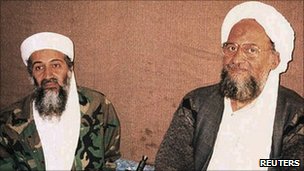 ommandos killed him in a raid on his Pakistani hideout in early May.
U.S. Defense Secretary Robert Gates noted that al-Qaida remains committed to carrying out terrorist attacks against the U.S. and other Western interests, as well as Israel. But he said Zawahri lacked the “peculiar charisma” that bin Laden possessed. Gates said bin Laden was “much more operationally engaged” than Zawahri.
An unnamed senior U.S. official said Zawahri has not had any combat experience and lacks “strong leadership or organizational skills.”
Earlier Thursday, al-Qaida announced that Zawahri would take over the global terror network.
Zawahri turns 60 on Sunday and had been bin Laden's long-time deputy. Terrorism experts often consider him to be al-Qaida's main strategist. He is believed to be operating from somewhere in the mountainous region near the Pakistan-Afghanistan border.
Zawahri comes from an upper middle class family of doctors and scholars, but became involved in radical Islam as a teenager. While earning a medical degree, he helped form the Egyptian Islamic Jihad militant group.
After bin Laden was killed, Zawahri lauded the mastermind of the 2001 terrorist attacks on the U.S. Zawahri said that bin Laden “went to his God as a martyr.”
Zawahri also criticized Arab states al-Qaida considers to be godless and too closely allied with the U.S. He pledged allegiance to the leader of the Afghan Taliban, Mullah Omar, and described him as the “Emir of Believers.”