
Aretha Franklin Breaks Toe After Tripping Over Shoe
Aretha Franklin’s toe has been done in by a Jimmy Choo.
WENN is reporting that the Queen of Soul, 69, broke a toe on her left foot after stumbling over a Jimmy Choo spiked heel in a hotel room.
She initially opted not to receive medical attention, saying through her spokesperson: “It hurt like heck for a minute, but seemed to subside.
But two days later, she decided to get an x-ray at Community North Hospital in Indianapolis and discovered the toe was actually fractured.
“I’m so grateful it wasn’t my right piano peddle foot, I have a gig on July 27 at the Jones Beach Theatre in New York!” she stated.
While Aretha knows the injury could have been worse, she is now left with another problem after her foot was heavily strapped up.
She joked: “How am I supposed to match my new Marc Jacobs gown with this wooden blue hospital shoe?”

James Rosemond Arrested after Month-Long Manhunt
Fugitive hip-hop mogul James “Jimmy Henchman” Rosemond, recently linked by an inmate to the 1994 shooting of Tupac Shakur outside a Manhattan recording studio, has been arrested on cocaine-dealing charges following a month-long manhunt.
Federal authorities said Tuesday that Drug Enforcement Administration agents had arrested Rosemond, owner of Czar Entertainment, in New York City outside the W Hotel in Union Square, where he was hiding in plain sight.
According to the New York Daily News, Rosemond tried to flee the hotel this morning, but was tackled by marshals and chipped a tooth when he fell. At press time, he was due in Brooklyn Federal Court.
In addition to the drug charges, Rosemond is accused of witness tampering and obstruction of justice, authorities said.
Last week, convicted killer Dexter Isaac claimed Rosemond ignited the East Coast-West Coast rap wars that left rappers Shakur and Christopher “Notorious B.I.G.” Wallace shot to death.
According to Isaac, Rosemond paid him $2,500 to shoot and rob Shakur at a Times Square recording studio in November 1994. The fallout led to Shakur’s slaying in Las Vegas, and Wallace’s murder in Los Angeles.
Rosemond has denied the allegation, and charged that Isaac – currently serving a life sentence – was a federal informant. Rosemond’s lawyer has denied his client had any involvement in the shooting.
Shakur was gunned down two years later in Las Vegas in a slaying that remains unsolved.
Picasso painting sold for almost £13.5m at Christie's
A rarely seen painting by Pablo Picasso has been sold for almost £13.5m at Christie's auction house in London, exceeding expectations.
Jeune Fille Endormie (1935), a portrait of the Spanish artist's lover, had been estimated to sell for £9m-12m.
The artwork was donated to the University of Sydney, provided the establishment used money from the sale for scientific research.
Giovanna Bertazzoni from Christie's said the piece was an "absolute jewel".
Marie-Therese Walter was the subject of many of Picasso's celebrated works.
The couple met in 1927 when he was 45 and she was 17. The couple spent time together at Picasso's country home, the Chateau de Boisgeloup, where he created a string of masterpieces.
Nude, Green Leaves And Bust, another portrait of Walter sold last year for a record $106.5m (£65.5m).
Dr Michael Spence from the university said it was a "very generous and far-sighted gift" that was donated to them by an anonymous person.
"We are grateful for their extraordinary generosity and delighted with the outcome of the auction."
He said the money would go towards research into obesity, diabetes and cardiovascular disease.
Greek government survives confidence vote
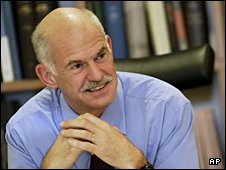 The Greek government has won a critical vote of confidence as it struggles to win support for extra austerity measures and avoid a debt default.
Prime Minister George Papandreou's new cabinet was approved in parliament by 155 votes to 143, with two abstentions.
MPs will now be asked to approve 28bn euros (£25bn) of cuts, tax rises, fiscal reforms and privatisation plans.
Eurozone ministers say the legislation must be passed to receive a 12bn-euro loan Greece needs to pay its debts.
Earlier, thousands of people gathered outside the parliament building in Athens to protest against both the austerity measures and politicians in general. Many chanted: "Thieves! Thieves!"
"There is great indignation that you see around you," one protester told the BBC.
"There is a lot of desperation that is registered on the faces of the people around us. It means there is no future."
"I believe we should go bankrupt and get it over with. These measures are slowly killing us," Efi Koloverou, a 22-year-old student, told the Reuters news agency. "We want competent people to take over."
Mr Papandreou reshuffled his cabinet and replaced his finance minister last week after weeks of demonstrations against his handling of the crisis.
'Moment of truth'
The confidence vote took place early on Wednesday after a heated debate on Tuesday that saw sections of the opposition briefly walk out.
Despite the threat of a revolt within the governing Panhellenic Socialist Movement (Pasok), MPs voted strictly along party lines.
The prime minister earlier acknowledged the austerity measures were tough but said the last thing Greece needed now was an election.
"At this time of pain I want to send a message to all Greeks," he said. "Yes, the course is difficult but there is light at the end of the tunnel.
"We all have to agree that we will put an end to deficits. We want to make a leaner, healthier state, because otherwise our country cannot take the burden."
The assertions were dismissed by some opposition MPs during the debate.
"This is not a programme to salvage the economy, it's a programme for pillage before bankruptcy," Alexis Tsipras of the Left Coalition said.
Mr Papandreou must now persuade parliament to approve a five-year package of 28bn euros of tax increases and spending cuts by 28 June.
It will then have to push through laws implementing the reforms in time for an extraordinary meeting of eurozone finance ministers on 3 July.
On Sunday, the eurozone ministers said they would withhold the payment of the latest tranche of the European Union and International Monetary Fund's 110-bn euro bail-out package until the laws were in place.
Greece needs the loan to be able to keep up with payments to creditors of its 340bn euros of debts, which amounts to 30,000 euros per person.
European Commission President Manuel Barroso warned that Greece faced a "moment of truth" and needed to show it was "genuinely committed to the ambitious package of further fiscal measures and privatisations" needed to avoid a sovereign default.
The eurozone ministers also agreed on Sunday to put together a second bailout package worth 120bn euros to fund Greece into late 2014.
The new aid package, to be outlined by early July, will include loans from other eurozone countries. It will also feature a voluntary contribution from private investors, who will be invited to buy up new Greek bonds as old ones mature. Officials said this money had to be freely given, or it would be seen as technical default on Greece's debt repayments.
The objective of Mr Papandreou, the EU and IMF is to reduce the Greek government's borrowing needs and make its debt sustainable.
BBC Europe editor Gavin Hewitt says the package is opposed by the opposition and some members of Mr Papandreou's own party disagree with some of the spending cuts.
And there could be fierce resistance on the streets, with protesters determined to turn the day of the vote into a major day of action.
Many in the financial markets expect that Greece will at some stage fail to repay its debts in full and on time, even if Mr Papandreou manages to maintain the repayments for the immediate future, he adds.
If Greece were to default on its debt - worth 150% of its annual GDP output - it would have to leave the 17-member eurozone and trigger massive losses for European banks that hold Greek debt, including the European Central Bank.
Europe says Russia will lift ban on vegetable imports
Russia will lift its ban on vegetable imports imposed after last month's E. coli outbreak, the European Commission has announced.
But Russia pointed out that trade would only resume once it had seen certificates proving the food was safe.
The EU health commissioner John Dalli, is on a visit to Russia to try to persuade it to end the ban.
The European Commission said exports would begin this week - but Russia suggested it might not be that soon.
The commission's health spokesman, Frederic Vincent, said: "We are heading towards an immediate resumption of European vegetables, based on EU certificates that will explain to the Russian authorities that in each EU state there are labs and a surveillance and verification system."
It had hoped the produce would begin flowing into Russia as early as Thursday.
Official bodies
The EU has said each member state exporting fresh vegetables to Russia would have to certify the origin of the produce and the absence of the strain of E.coli responsible for the outbreak.
But the head of Russia's state consumer protection watchdog, Gennady Onishchenko, told the Reuters news agency that the country would only resume imports of vegetables from the EU once Brussels had provided Moscow with a list of official bodies and laboratories authorised to issue food safety certificates.
He said: "Everything depends on them. It [the deal] does not mean that everything will immediately return to the Russian market."
The EU says it is in the process of providing Russia's health authority with the names of the national authorities and laboratories accredited to monitor vegetables.
Cucumbers
Russia is an important market for EU vegetable producers.
The EU estimates the value of fresh vegetable exports to Russia at 600m euros (£536m) a year, a quarter of the total exported.
Spain, France, Germany and Poland are the biggest exporting producers.
The E. coli outbreak has so far been linked to the deaths of 35 people and has made 3,000 people ill.
The source of infection, which initially focused on cucumbers from Spain, has been identified as bean sprouts from an organic farm in northern Germany.
The European Commission has offered 210m euros (£186m; $303m) to European farmers who have seen a dramatic loss of income since the outbreak started in early May.
IMF says Spain's economy still facing major risks
The Spanish economy still faces "considerable" risks, the International Monetary Fund has warned.
In an annual report, the IMF said the Spanish government had to continue work to reduce public spending, and increase efforts to liberalise its jobs market.
Since last year Madrid has been carrying out austerity measures to reduce the country's public deficit.
Unlike other highly indebted eurozone nations such as Greece and Portugal, it has not needed an outside bail-out.
While the IMF did not comment on whether this remained a possibility for Spain, it warned that financial conditions could deteriorate further in the eurozone, which "could put additional pressure on sovereign and bank funding costs for Spain".
As a result, the fund said there could be "no let up in the reform momentum" to both help boost Spain economy and ease the concerns of the financial markets.
It added that Spain's 21% unemployment rate - the highest in Europe - was "unacceptably high".
To help reduce unemployment, the Spanish government is continuing to change the country's labour laws.
Madrid hopes the changes will make firms more willing to take on new staff, because historically it has been difficult for Spanish companies to make staff redundant.
As part of Spain's continuing austerity measures - which have sparked a number of large protests across the country - the government is also reducing the pensions of public sector workers.
Desite the IMF's warnings, it said Spain was still on track to reduce the country's public deficit from 9.2% of its annual economic output in 2010, to 6% this year.
Obama to Announce First Phase of Troop Withdrawal in Afghanistan
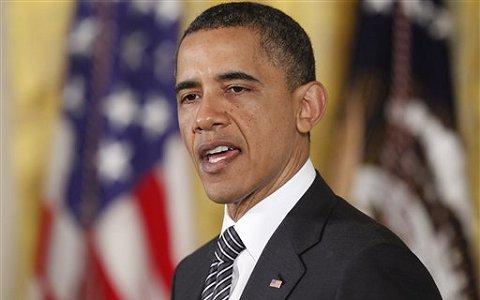 President Barack Obama is set to announce on Wednesday the first phase of a withdrawal from Afghanistan that could see up to 10,000 U.S. soldiers leave the country by the end of the year.
Defense officials have been quoted as saying that President Obama will call for an initial withdrawal of 5,000 troops, followed by an additional 5,000 by the end of 2011.
But White House Spokesman Jay Carney warned against media speculation on Tuesday, saying the president will explain how he will implement the strategy he outlined in December 2009 on drawing down American troops.
Obama announced the July start for the withdrawal in December 2009, when he presented his overall strategy for Afghanistan at the U.S. military academy at West Point, New York.
In his Wednesday night speech at the White House, President Obama is also expected to reaffirm the U.S. and NATO commitment to completely transfer security responsibilities to Afghan forces by 2014. The United States currently has about 100,000 troops in Afghanistan.
U.S. Defense Secretary Robert Gates said Tuesday the president has to take into account sustainability at home, both in Congress and among the American public, as well as conditions on the ground in Afghanistan.
Gates acknowledged concerns in the United States about Afghanistan, saying the American people are "tired of a decade of war." He noted there are "a lot of reservations" in Congress about the war and the level of U.S. commitment.
Gates spoke Tuesday at the State Department, before heading to the White House with Secretary of State Hillary Clinton for consultations with the president about Afghanistan.
White House spokesman Carney said the president has remained focused on achieving his objectives in Afghanistan. He noted, however, that Obama's objectives there do not require defeating the Taliban, but rather "reversing the momentum," which he says the military has been achieving.
Burmese Opposition Leader to Speak to US Lawmakers Via Video
Members of a U.S. congressional committee will watch videotaped remarks Wednesday from Burmese democracy leader Aung San Suu Kyi, who will discuss her country's recent national elections.
The remarks by the Nobel Peace laureate is part of a hearing on last November's elections being held by a U.S. House subcommittee on Asia and Pacific affairs, the country's first elections in 20 years. International critics of Burma say the elections mere solidified military rule, since a party backed by the military won the most parliamentary seats.
The panel's chairman, Republican Don Manzullo of Illinois, says the hearings will highlight the “sham” elections. Manzullo says Aung San Suu Kyi's speech will also reveal Burma's “dire” human rights situation.
Aung San Suu Kyi's National League for Democracy won the last elections held in 1990, but the military junta refused to recognize the results. The party did not participate in the election after refusing to purge her from its membership rolls, which it was required to do under new election laws. Aung San Suu Kyi, who spent more than a decade under some form of detention, was released shortly after the November elections.
European Stocks Mixed in Midday Trading
European stock prices are mixed in midday trading Wednesday.
London's Financial Times index is down nearly one-half of one percent. The CAC-40 in Paris is down one-quarter of one percent, while the DAX index in Frankfurt is up nearly one-tenth of one percent.
In New York, the S&P futures contract is down four points, indicating a lower opening.
in Asia, Tokyo's Nikkei index gained 1.8 percent to finish at 9,629.
Hong Kong's Hang Seng index gained less than one-tenth of one percent to finish the day's trading at 21,860.
Gold is trading at $1,543.10 an ounce.
The dollar is basically unchanged in trading against other major currencies.
Syria Says EU Sanctions Amount to War Against It
Syria says European Union sanctions against it amount to war and is warning that it will not tolerate any foreign interference in its internal affairs.
Foreign Minister Walid al-Muallim said in a speech in Damascus Wednesday that EU sanctions against military-linked companies in Syria and individuals show that the bloc wants to “plant strife and chaos” in the Arab nation.
He dismissed the EU sanctions, saying that Syria “will forget Europe is on the map.” He also denied that Iran and Hezbollah are helping Syrian President Bashar al-Assad put down the unrest. He suggested that because of the killing of some Syrian security personnel, al-Qaida might be behind some of the violence.
Earlier this week, Mr. Assad offered a national dialogue to consider political reforms in his restive country, where a three month crackdown on anti-government protesters has left 1,400 people dead.
Turkey, which has set up tent camps to house 10,000 Syrians who have fled to escape the violence, said Mr. Assad's proposals were “not enough.” Muallim asked Turkey to reconsider its assessment, saying that Syria wants “best relations” with its neighbor to the north.
Muallim's wide-ranging assessment came a day after activists said supporters and opponents of the Syrian government clashed in several cities, leaving at least seven people dead.
Witnesses and human rights activists say Syrian security forces fired on anti-government crowds Tuesday, causing casualties in the central cities of Homs and Hama and the Mayadin district of Deir al-Zour. Demonstrations also erupted in the capital, Damascus.
Anti-government protesters went into the streets after pro-government rallies in which thousands gathered to show support for Mr. Assad.
State television showed tens of thousands of pro-Assad demonstrators in Damascus and other cities, holding flags and pictures of the president. Earlier in the week, he blamed the recent unrest on “saboteurs” and laid out his plans for political reforms.
Also Tuesday, the state news service said Mr. Assad has granted a general amnesty for crimes committed before June 20, but did not provide further details.
In the president's 70-minute speech Monday, he offered a national dialogue that would begin to review new laws on parliamentary elections, the media and possible reforms to Syria's constitution.
Activists immediately dismissed his promises, saying they failed to meet the demands of protesters who for three months have rallied for democratic changes and defied a fierce military crackdown.