CSA talks PPC disconnection
The CIVIL SERVICE ASSOCIATION today sent a release to RTC News on the Provo Power Company disconnection which reads:
The recent disconnection of power by Provo Power Company (PPC) Ltd, to Government offices which took place from June 13, 2011 is an unfortunate occurrence. The disruption in power supply has affected several government departments including Primary schools, the Education Department, The Treasury and Engineering and Maintenance Services, all of whom provide critical services to the community. Several students attending government Primary schools on Providenciales were sent home this morning and a number of high school students who were in the process of sitting external examinations may have been affected by power cut to the Education Department. The continued power outage could have far reaching effect on the functioning of government departments and this in turn could result in significant losses in revenue amounting to millions of dollars.
The CSA wishes to state that this action taken by PPC merely reflects an ongoing debacle between PPC and the Interim Administration. The over the past year the Administration has made several policy changes to its financial management system which has resulted in the centralization of government finances. The changes in this system have resulted in the transfer of authority for final bill approval for bills over $5000, from Heads of Department and Permanent Secretaries to the Chief Financial Officer. This without a doubt has created much bureaucracy and inefficiency in the timely payment of bills to vendors like PPC.
The management council of the CSA wishes to state that all responsibility for settlement of major accounts (amounts in excess of $5000) rests with the office of the Chief Financial Officer and not with Heads of Departments and Permanent Secretaries of departments within the civil service. The CSA urges the administration to address the current situation to enable immediate restoration of vital services to the community.
Recommendations have previously been made by the CSA, towards improvement of operations of the Civil service, these recommendations, if followed and implemented would undoubtedly contribute to economic sustainability and more efficient and effective governance.
The CSA is calling on the Administration to address this problem of outstanding bills to PPC immediately and to put in place effective measures to prevent such embarrassment and suspension of critical and essential government services in the future.
CSA Management Council

House gutted in Provo kills 2 year old
The Royal Turks & Caicos Islands Police in Providenciales are investigating a fire of unknown origin which destroyed a wooden structure apartment in Five Cays Providenciales in the early morning hours of Tuesday 14th June 2011.
A 2 year old boy perished in that fire which was extinguished by members of The Turks & Caicos Fire and Rescue Department. A Post Mortem will be conducted to ascertain the cause of death of the infant.
The Criminal Investigation Division of the Turks and Caicos Islands Police are continuing the investigation of this tragic event.
Qantas cuts growth forecast as more flights hit by ash
Qantas airlines has cut its forecast for domestic growth as it faces various problems including the continuing disruption due to volcanic ash.
Australia's national carrier said it expected domestic capacity to grow by just 5.5% this year compared with the previous estimate of 8% growth.
Qantas cancelled all flights in and out of Perth as ash from the Puyehue-Cordon Caulle volcano in Chile spread further.
It has already suspended flights to and from Tasmania and New Zealand.
Flooding and cyclones earlier this year hit travel demand in Australia and the situation has been worsened by the current travel disruption.
'Capacity to demand'
Qantas said it was reducing its capital expenditure by 400m Australian dollars ($426m; £260m) as growth had been slower than expected.
The company said it was also cancelling or deferring orders of 12 narrow-body aircraft.
"The Qantas Group has always taken decisive action to match capacity to demand," said Qantas chief executive Alan Joyce.
"With Qantas continuing to lead the premium market and Jetstar offering consistently low fares in the leisure market, we are well-placed to retain our profit-maximising 65% domestic market share," he added.
China inflation at 34-month high on rising food prices
Inflation in China hit its highest level in 34 months despite the government's efforts to rein in rising prices.
Consumer prices in China rose by 5.5% in May, compared with the same month last year, according to the National Bureau of Statistics.
Food prices continued to be the biggest factor as they surged by 11.7%
The rising cost of food and commodities have pushed up the cost of living and become a hot political issue in China.
Analysts warned that prices are likely to rise even further.
"For now, it seems certain that China's CPI will hit 6% in June," said Xu Biao of China Merchants Bank.
Rate rise
Chinese authorities have said that fighting rising prices is a top priority for them.
It has set a target of keeping the inflation rate at 4% for the year.
The country's central bank has raised interest rates four times since October last year, in an effort to curb lending and rein in rising prices.
Analysts said that the latest data is likely to force the bank to raise the cost of borrowing once again.
"CPI reached a new record, increasing concerns of another interest rate rise," said Xian Fang Ren of IHS Global Insight
"We expect the central bank to raise interest rates next week," Mr Ren added.
Inflation is a particular concern in fast-growing economies across Asia. region.
In India, the wholesale price index of inflation rose faster than expected in May to 9.05%, caused partly by an increase in the cost of manufactured goods.
Honda warns of profit slump due to earthquake
Honda has become the second major Japanese carmaker in a week to warn of dramatically lower profits due to reduced production resulting from March's massive earthquake.
It forecast net profits of 195bn yen ($2.4bn; £1.5bn) for the year to the end of March 2012, down 64% on the 534bn yen the company made last year.
Revenue would be 8.3 trillion yen, down from 8.9tn yen, Honda said.
Last week, rival Toyota said profits would fall by a third this year.
Toyota said it expected to make 280bn yen on revenues of 8.2tn yen.
'Pretty bad'
Honda said the disruption caused by the earthquake would cut production, reduce sales and result in higher costs due to reconstruction.
It also said that higher raw material costs would eat into profits.
The carmaker said it expected to sell 3.3 million cars this financial year, down from 3.5 million last year.
"These figures are pretty bad," said Koichi Ogawa at Daiwa SB Investments in Tokyo.
"They are very, very conservative and come in well below what analysts had expected. Honda had some research and development centres damaged by the quake and I have the impression that its recovery hasn't been as speedy as its peers."
Analysts noted that Honda's policy of keeping a relatively small stock of cars meant it could not use a large inventory to cushion the impact of a fall in production.
Libya unrest: Rebels edge west at Misrata
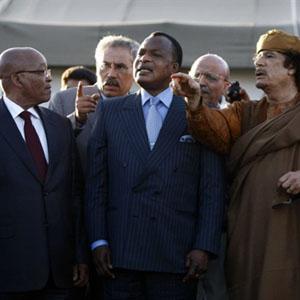 Libyan rebels fighting to topple Col Muammar Gaddafi have been edging west from the city of Misrata as they try to advance towards the capital, Tripoli.
Nato dropped leaflets on Zlitan, just west of Misrata, urging government troops to abandon their posts.
In Tripoli, fresh explosions took place as raids by the alliance resumed overnight.
Meanwhile, Canada has become the latest country to recognise Libya's National Transitional Council (NTC).
Correspondents say there has been a resurgence in fighting in Libya, following weeks of military stalemate.
Tripoli blasts
At Zlitan, just west of the rebel-held city of Misrata and about 135km (85 miles) from Tripoli, Nato forces dropped leaflets bearing the Nato symbol, along with an image of an Apache attack helicopter and burning tanks.
An Arabic script reads: "There's no place to hide. If you continue to threaten civilians, you will face destruction."
Rebels say they have been told by Nato to hold the line between Misrata and Zlitan in advance of expected bombing runs.
Earlier, rockets damaged generators at an oil refinery near Misrata's port, disrupting fuel supply lines, Reuters reported.
In Tripoli, two loud explosions sent plumes of smoke rising above the city late on Tuesday.
Earlier, smoke was seen rising near Col Gaddafi's Bab al-Aziziya compound, though it was not clear exactly what had been targeted. Nato has frequently pounded the area in and around the sprawling compound.
The military alliance said it had struck targets such as a rocket launcher and an armoured vehicle mounted with anti-aircraft guns east of the capital.
There were reports of clashes in other parts of the country as well.
Omar Hussein, a spokesman for rebels in the western Nafousa mountains, said Col Gaddafi's forces were bombarding roads leading to the border crossing of Dahiba.
Rebels seized a number of towns in the area earlier this month, and Dahiba is a key supply route for them.
Witnesses told Reuters news agency that pro-Gaddafi forces had fired Grad rockets over the border into Tunisia.
On the eastern front, a rebel commander told AFP news agency that 21 rebel fighters had been killed in clashes on Monday.
UN resolution 'abused'
The latest strikes came amid concerns about the length of Nato's mission in Libya.
Gen Stephane Abrial, a senior Nato official, said coalition resources would become "critical" if the operation in Libya continued.
Nato took over the Libyan mission on 31 March.
South African President Jacob Zuma said the UN resolution that authorised the use of force to protect civilians in March was being abused for "regime change, political assassinations and foreign military occupation".
On Tuesday Kirsan Ilyumzhinov, the Russian head of the World Chess Federation, said Col Gaddafi had told him that he was ready to hold talks if Nato stopped its air strikes, but dismissed international efforts to get him to stand down.
The two played a game of chess in Tripoli on Sunday.
Mr Ilyumzhinov quoted the Libyan leader as saying: "I will not go anywhere. My relatives died here and I will also die in that land."
Libya condemned a visit by German Foreign Minister Guido Westerwelle to Benghazi, calling it a "blatant violation of national sovereignty and... international laws".
Canada and Germany are the latest countries to recognised the NTC, which is based in the eastern city, as the legitimate representative of the Libyan people.
UK presses Sri Lanka over Channel 4's 'war crimes' film
The UK Foreign Office has pressed Sri Lanka to investigate alleged atrocities during its civil war after "horrific" footage aired in a TV programme.
Britain's Channel 4 showed what it said was previously unseen footage of what purported to be extrajudicial killings of Tamils by the military.
Sri Lanka's defence ministry dismissed the videos as fabricated, saying they were intended to discredit the army.
The army defeated the Tamil Tigers in 2009, ending 25 years of war.
Both the Sri Lankan army and Tamil Tiger rebels have been accused of human rights abuses during the conflict, which killed an estimated 100,000 people.
'Tied up'
The one-hour film, entitled Sri Lanka's Killing Fields, shows what appears to be executions of Tamil men, and video showing the corpses of naked women who appeared to have been sexually assaulted.
The programme - the result of two years' collection of video and eyewitness accounts - said the reports amounted to evidence of war crimes committed during the final months of fighting.
One video - which was said to have been taken by the military - shows graphic images of at least three bound prisoners, including one woman, being shot at close range.
In it, a soldier gives instructions to the others about how to kill the men.
"Is there no one with the balls to kill a terrorist?" he is heard saying, before telling his colleagues to aim at the prisoners' heads.
Channel 4, which also showed alleged abuses carried out by Tamil Tigers, said experts had found the video to have no signs of manipulation.
The film also cited witnesses describing the aftermath of the alleged shelling of hospitals in so-called designated safe zones.
British Foreign Office minister Alistair Burt said he was "shocked by the horrific scenes" in the documentary, which he said contained "convincing evidence of violations of international humanitarian and human rights law".
Mr Burt said the UK was ready to join the rest of the international community in pursuing "all options available" to pressure the Sri Lankan government to act.
The announcement comes as the UK Home Office prepares to deport some 40 Tamils, including five who claim that their safety has been compromised after their case papers were passed to officials in Colombo.
'Fake'
Sri Lanka, which has maintained that no civilians were killed by its army during the fighting, rejected the claims.
In a statement on its website, the country's Defence Ministry cites an expert who says the video had been deliberately manipulated.
The government has repeatedly argued that it has been unfairly criticised for ending a conflict that claimed tens of thousands of lives amid regular suicide bombings of government targets.
Last month, the UN special investigator into extrajudicial killings in Sri Lanka, Christof Heyns, said that video footage showing soldiers apparently executing civilians is evidence of serious rights abuses.
Presenting the footage to the UN Human Rights Council, he said that after careful analysis, he had concluded that it was authentic.
Syria Widens Crackdown in North and East
Syrian security forces have expanded their deployment to strategic regions in the north and east of the country in an attempt to crush the popular uprising against authoritarian President Bashar al-Assad.
Activists and residents said Tuesday that tanks and armored vehicles had deployed to the eastern cities of Deir al-Zour and al-Boukamal, a region near the Iraqi border dominated by tribal clans.
Almost daily protests have taken place in Deir al-Zour, and clashes have broken out in al-Boukamal. The area borders Iraq's Sunni heartland and the two sides are linked by numerous family ties and trade routes.
In the north, thousands of civilians fled the town of Maaret al-Numan Tuesday as elite troops loyal to Mr. Assad advanced on the city.
Over the past few days, security forces have arrested hundreds of people following sweeps through nearby Jisr al-Shughour and surrounding villages, after the government accused “armed groups” of killing 120 security personnel.
But residents and soldiers who have deserted said those killed were civilians and security forces who had mutinied, refusing to shoot protesters and joining anti-government demonstrators.
Turkish officials say the number of Syrian refugees who have crossed into the country has topped 8,500. Deputy Prime Minister Cemil Cicek Tuesday said nearly half of the refugees are children.
Turkish news reports say Prime Minister Recep Tayyip Erdogan phoned Syrian President Bashar al-Assad on Tuesday and again urged him to avoid violence and enact reforms.
The latest military moves are being carried out by the government's most trusted forces, many of them members of the Assad family's minority Alawite sect.
An offshoot of Shi'ite Islam, the Alawites represent about 11 percent of Syria's population, which is overwhelmingly Sunni.
On Monday, refugees reaching Turkey said elite Syrian forces were combing villages back home and arresting men between the ages of 18 and 40. Others told of a scorched-earth campaign with men in black uniforms pouring gasoline on farmlands.
The wave of arrests followed the assault on Jisr al-Shughour by troops backed by tanks and helicopter gunships. Residents say loyalist units led by President Assad's brother, Maher al-Assad, led Sunday's crackdown, which they say was sparked by a mutiny last week when some soldiers refused to shoot protesters and joined the anti-government side.
U.S. State Department spokesman Mark Toner said Tuesday it was clear that “Syria has taken a page out of Iran's playbook” by employing brutal tactics that Iran used after the disputed 2009 re-election of President Mahmoud Ahmadinejad.
He said the U.S. believes there is clear evidence that Iran is actively helping Syria as it clamps down on protesters.
Syria has banned most foreign journalists, making it difficult to verify accounts of events.
Rights groups say more than 1,300 people have been killed since President Assad launched a crackdown on anti-government dissent in March.
US President Calls on Sudan To Stop ‘Campaign of Intimidation’
U.S. President Barack Obama is calling on Sudan's government to stop its “campaign of intimidation” in the country's southern border area or face international isolation.
In an audio statement, Mr. Obama said Sudan's government must immediately cease its military actions in southern Sudan including aerial bombardments and the forced displacement of civilians.
Mr. Obama took the unusual step of recording an audio message Tuesday directed at Sudan's leaders, immediately after returning from a visit to the U.S. territory of Puerto Rico.
He said the leaders of both north and south Sudan must live up to their responsibilities and agree to end the violence.
Mr. Obama said if Sudanese leaders fulfill their obligations and choose peace, the United States will take the steps it has promised to normalize the relations between the countries. However, he said if they flout their obligations, they will face pressure and isolation and will be held accountable for their actions.
The U.S. president said the United States is deeply concerned by the crisis that is unfolding in southern Sudan, including the fighting in Southern Kordofan state and the assaults on innocent civilians.
Northern Sudanese troops have been fighting southern-aligned militia for more than a week in Southern Kordofan state. The United Nations says northern jet fighters dropped 11 bombs on the area Tuesday.
The north's army also last week seized control of the neighboring Abyei region, which also lies on the north-south border.
Both north and south Sudan claim ownership of Abyei. The dispute has raised fears of renewed war in Sudan as the south prepares to declare independence on July 9.
North and south Sudan fought a 21-year civil war that ended with a 2005 peace deal. The south voted overwhelmingly to split from the north in a January referendum.
Abyei was scheduled to hold a separate referendum on whether to join the north or south, but the poll failed to happen because the sides could not agree on who was eligible to vote.
UN Rejects Allegations of Interference With Cambodian Court
The United Nations has rejected media reports that it instructed judges at Cambodia's war crimes court to dismiss one of its cases linked to Khmer Rouge atrocities of three decades ago.
A spokesman for the U.N. secretary-general said Tuesday the court is an independent body and that the United Nations supports the independence of the judiciary in Cambodia and elsewhere.
Earlier this week, media reports said at least five U.N. employees in the court's investigations office left their posts in April after disagreements over the decision to close the tribunal's third case, which involves two former senior members of the Khmer Rouge military, suspected of a role in the deaths of thousands of people. The Cambodian government has opposed having the case go to trial.
International observers of the private Open Society Justice Initiative called on the U.N. Tuesday to investigate the conduct of two investigative judges, one German and one Cambodian, who decided to close the case.
The U.N. statement did not refer directly to the Initiative's request, but said the judges of the special war crime court in Cambodia must be allowed to function free from any external interference, whether they come from the U.N., Cambodia's royal government, donor countries or civil society.
The U.N. says as many as two million people died during Cambodia's communist regime between 1975 and 1979. The court has convicted one senior Khmer Rouge member so far, the head of a notorious prison camp where some 14,000 people died.
Critics have said that the court works too slowly and that some of the most senior Khmer Rouge leaders have died in the past 30 years.
Under an agreement signed between the U.N. and Cambodia, the war crimes tribunal was set up as an independent court, employing both Cambodian and foreign judges and other personnel.
The Open Society Initiative is funded by U.S. billionaire George Soros that has monitored the Khmer Rouge tribunal since 2003, three years before the court formally opened its doors.