
Rare Bird Found In TCI
 A bird spotted at Mangrove Cay located within the Princess Alexandra Nature Reserve has stirred discussions among professional members of the Society for the Conservation and Study Caribbean Birds (SCSCB).
Recently, some officers of the Department of Environment and Coastal Resources (DECR), along with the President of the Society for the Conservation and Study of Caribbean Birds (SCSCB), Dr. Lisa Sorenson of Boston University and Ms. Michele Kading, the Head of Interpretation of the Oak Hammock Marsh Interpretive Centre in Manitoba, Canada, and a participant of the Wetlands Education Workshop spotted the dark bird with white feathers on its wings and tail at Mangrove Cay in Princess Alexandra Nature Reserve.
Dr. Sorenson conducted some research on the unique bird and concluded that it was an intermediate morph of the Reddish Egret. She noted that the new Stokes Bird Field Guide says: "An Intermediate morph is like a dark morph but with some white feathers, often on its wings". However, the book did not include a photo. She also searched the web but could not find any photos similar to the bird. Dr. Sorenson claimed that she has never seen this intermediate morph before.
Dr. Sorenson and Ms. Kading were in TCI on late April to early May this year to serve as resource persons for the Wetlands Education Workshop. Seventy (70) wetlands and birds enthusiasts composing teachers, government officers, environmentalists, and some students participated in the workshop.
The two day workshops (one-day lecture and one-day field activities) were held in Providenciales and Grand Turk. This workshop was technically and financially supported by the SCSCB.
The DECR and TC National Trust coordinated the workshop, which drew local support from the First Caribbean International Bank, Royal Bank of Canada, Executive Tours, Big Blue Unlimited, the rectory and staff of St. Mary’s Anglican Church (St. Thomas Parish), Oasis Dives, Chukka Caribbean Tours, Cool Beans and Turks and Caicos National Museum.
Anyone with any additional information on this rare bird is requested to contact SCSCB and the DECR

Suriname finance minister resigns
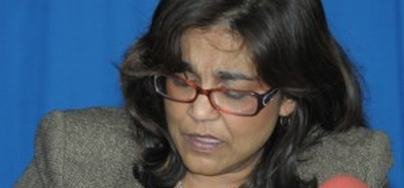 Citing “personal circumstances”, Suriname’s minister of finance, Wonnie Boedhoe, resigned late Friday afternoon. In a press release, the Office of the President subsequently announced that President Desi Bouterse had accepted her resignation, bringing the number of cabinet ministers who have stepped down since he came into office in August 2010, to two.
In December 2010, forestry minister Martinus Sastroredjo, was sacked by the government leader after his spouse submitted proposals to acquire state-owned land.
According to the president’s office, in consultation with Boedhoe, how she could serve the government and the country in another position will be examined.
Boedhoe, a former banker, was Bouterse’s personal choice for the position of minister of finance, when his National Democratic Party came into power after the May 25 general elections last year.
Meanwhile Minister of Foreign Affairs, Winston Lackin, will be in charge as acting minister of finance until a new official has been appointed.
Meanwhile Boedhoe has refuted claims that she was forced to resign.
“I, myself have requested to be relieved of my duties. It is purely personal and I am grateful that he (the president) has accepted my resignation. We had a very pleasant relation the president and I, and together we worked long hours,” she told de Ware Tijd newspaper.
Although the government presented its budget to parliament in October 2010, the legislature is still to debate this bill.
Buju asks for shorter jail sentence
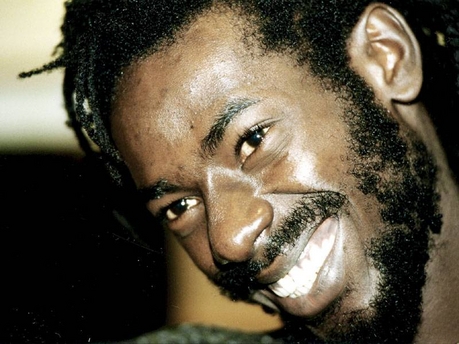 The Grammy winner was convicted in February of conspiring to set up a cocaine deal in Florida in 2009. He faces a mandatory minimum of 15 years in prison at his sentencing hearing on June 23 in Tampa federal court.
In court documents filed Thursday, Banton's attorney, David Markus, says a 15-year sentence is "way more than necessary" in Banton's case.
He contends that Banton's limited participation in the drug buy, his charitable work in Jamaica, and his otherwise clean record, entitle the singer to a reduced sentence.
The documents include letters of support for Banton from actor Danny Glover, reggae singer Stephen Marley and Atlanta Hawks basketball player Etan Thomas.
Banton also seeks an acquittal and a new trial.
CARICOM, FAO to tackle high food prices at regional consultation
The Caribbean Community (CARICOM) and the Food and Agriculture Organisation (FAO) of the United Nations will next week tackle the recent upsurge in food prices that has reached unprecedented levels in the region.
Against the backdrop of the FAO Global Food Price Index, in January 2011, indicating that it had surpassed the high level reached in 2007- 2008, the FAO Sub-regional Office for the Caribbean, in collaboration with the CARICOM Secretariat and the Caribbean Development Bank (CDB), has organised a regional consultation on policy and programmatic actions to address high food prices in the Caribbean, 13-14 June.
Trinidad and Tobago will host the consultation, which is aimed at assisting the Caribbean Forum of African, Caribbean and Pacific States (CARIFORUM) to identify various options in the immediate, medium and long-term, in response to the crisis.
Recent efforts to address food security in CARICOM included a full assessment of food prices by the Council for Trade and Economic Development (COTED), at its thirty-second meeting in Georgetown, Guyana, 19-20 May 2011.
Against this backdrop, part of the agenda of the consultation in Trinidad and Tobago focuses on existing policy measures to address the food crisis at regional and national levels.
The meeting will examine the CARICOM regional food and nutrition security policy (RFNSP), which is set in the context of a mix of linked national and regional policies including the Community Agricultural Policy (CAP), the Common Fisheries Policy (CFP), the Caribbean Cooperation in Health (CCH) and the Community Agribusiness Strategy (CAS). These strategies and policies are in support of inter-connected services at all stages and levels of the agri-food supply chain; and increasing the availability and access to adequate quantities of safe, quality assured food products to vulnerable groups.
The RFNSP was endorsed by COTED in October 2010, in Grenada at its special meeting on agriculture and has been viewed as a “milestone” in efforts to ensure food security in CARICOM/CARIFORUM states. It involved an innovative policy design process including a Technical Working Group (TWG) comprising officials of member states, University of the West Indies (UWI), Caribbean Food and Nutrition Institute (CFNI), the CARICOM Secretariat, the Inter-American Institute for Cooperation on Agriculture (IICA), and FAO.
Given this existing policy framework for food security, stakeholders at the consultation will attempt to confront the fundamental challenges related to the food import bill and high food prices. They will also examine the policy and programme thrust that will work best to address the situation of volatile food prices. In addition, there will be comparative analysis of this latest situation with that of 2007-2008 and a review of policy lessons learn from that wave of the crisis.
It is anticipated that 16 Caribbean countries in FAO Caribbean sub-region (CARICOM member states, Cuba and the Dominican Republic) will participate in the consultation, as well as regional inter-governmental organisations, development partners, bilateral donors, research institutions, the private sector and civil society organisations.
Mavericks top Heat 105-95 for NBA title
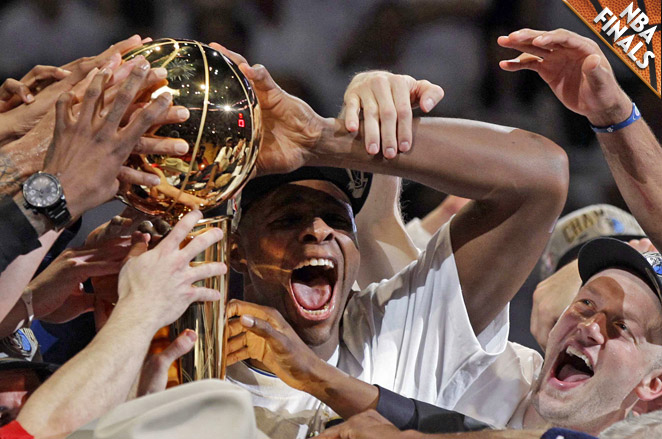 For Dirk Nowitzki, the resume is complete. He's an NBA champion.
For LeBron James, the agonizing wait continues for at least one more year.
Avenging what happened five years ago in perfect turnabout style, the Dallas Mavericks won their first NBA title by winning Game 6 of these finals in Miami 105-95 on Sunday night - celebrating on the Heat's home floor, just as Dwyane Wade and his team did to them in the 2006 title series. The Mavericks won four of the series' last five games, a turnabout that could not have been sweeter.
"I really still can't believe it," said Nowitzki, who had 21 points and took home finals MVP honors.
"Tonight," Jason Terry said after leading Dallas with 27 points, "we got vindication."
James did not. Not even close, and a year unlike any other ended they way they all have so far - with him still waiting for an NBA title.
He scored 21 points for Miami, shook a few hands afterward, and departed before most of the Mavs tugged on their championship hats and T-shirts. Chris Bosh had 19, Mario Chalmers 18 and Dwyane Wade 17 for the Heat.
"We worked so hard and so long for it," Nowitzki said. "The team has had an unbelievable ride."
So did the Heat. Unlike Dallas, theirs wasn't a joyride.
"It goes without saying," Heat coach Erik Spoelstra said. "You're never really prepared for a moment like this. ... Neither team deserved this championship more than the other, but Dallas earned it."
Make no mistake: Miami lost the finals, but the blame will be directed at James. Even he knew that after the way he left Cleveland with "The Decision" and all the animus that generated not just in Ohio but around the entire league, the only way he could silence some critics was with a title.
"It doesn't weigh on me," James said. "At all."
Still, he got even more criticism - and a thinly veiled jab from his former owner with the Cavaliers, Dan Gilbert, who reveled in the moment on Twitter.
"Mavs NEVER stopped & now entire franchise gets rings," Gilbert wrote. "Old Lesson for all: There are NO SHORTCUTS. NONE."
Mavs coach Rick Carlisle joined a highly elite group, those with NBA titles as both a player and a head coach. Only 10 other men are on that list, including the presumably retired-for-good Phil Jackson, one of Carlisle's mentors in K.C. Jones, and Heat President Pat Riley - who led Miami past Dallas in 2006, and was the mastermind of what the Heat did last summer by getting James, Wade and Bosh on the same team with an eye on becoming a dynasty.
It might still happen, of course.
But even after 72 wins this season, including playoffs, the Heat lost the last game. And that means this year was a disappointment - except to just about everyone else in the NBA, or so it would seem.
"This is a true team," Carlisle said. "This is an old bunch. We don't run fast or jump high. These guys had each other's backs. We played the right way. We trusted the pass. This is a phenomenal thing for the city of Dallas."
Hating the Heat became the NBA's craze this season, and the team knew it had no shortage of critics, everyone from Cleveland (where "Cavs for Mavs" shirts were popular during these finals) to Chicago (the city James and Wade both flirted with last summer) and just about every place in between lining up to take shots at Miami.
"We could feel it," Carlisle said, noting he was repeatedly told during the finals that "billions" of people wanted to see Dallas topple Miami.
Given their newfound popularity, meet the new America's Team.
Sorry, Cowboys - your long-held moniker might have to be ceded to your city's NBA club. When it was over, Mavs owner Mark Cuban ran onto the court to hug Carlisle, then punched the air and whooped.
"I'm so happy for him. I'm so happy for Dirk," Carlisle said.
Carlisle said Riley came down to congratulate the Mavericks after the game, showing "unbelievable class."
"Their time will come," Carlisle said. "But now, it's our time."
When the Mavericks took a 2-0 lead in Dallas during the '06 finals, plans for their victory parade were announced. The Mavs didn't win another game in that series.
Now, that parade will finally happen. And when it's over, then the league's uncertainty will truly begin. Labor strife likely awaits, and although more talks geared toward movement on a new deal are scheduled for this week, both owners and players are bracing for a lockout to begin once the current collective bargaining agreement expires June 30.
Late Sunday night, the CBA was the last thing on the mind of the new champions of the NBA, whom Carlisle called "the most special team I've ever been around."
Jason Kidd, at 38 years old, got his first championship. Nowitzki got his at 32, Terry at 33. They were featured on the video screen in their building in Dallas during this series on what seemed like a constant loop, each posing with the NBA trophy and looking longingly at it, standing mere inches from it, as if to say "so close, yet so far away."
No more.
It's theirs. And for the second time, James went to the finals, only to see the other team celebrate. San Antonio won in Cleveland in 2007, and four years later, he saw the Mavs party on his new floor.
"It was a failure in '07 when we lost to the Spurs when I was in Cleveland," James said. "It's a failure now."
Nowitzki sealed it with 2:27 left, hitting a jumper near the Miami bench to put Dallas up 99-89, and some fans actually began leaving. Nowitzki walked to the Mavs' side slowly, right fist clenched and aloft.
He knew it. Everyone did.
"We feel it," Wade said. "We'll feel it even more tomorrow."
Spoelstra implored his team to foul in the final minute, and even then, they couldn't catch the Mavericks.
"All I remember is telling those guys that they deserved it," Bosh said. "Hands down, they were the better team in this series. ... All we can do is just admit it and move forward."
What happens with the next deal may affect the Heat more than anyone. Some owners will insist on a hard cap, rolled-back salaries and, potentially, trying to bust some current deals - which could break up the Big 3 before get another chance to win a title together.
A gloomy end to the season may bring an even gloomier offseason for Miami.
"Every situation has felt like it was an our-back-against-the-wall situation," James said Sunday morning, hours before Game 6 began. "We've been able to figure it out and find our way through and scratch our way through. This is the last test. This is the last pop quiz for us that we need to pass in order to make it all worth it."
They didn't pass.
So therefore, it wasn't all worth it.
"We give credit to the Dallas Mavericks ," Wade said. "They're a helluva team. ... We ran into a team that at this time is obviously better than us."
Miami had chances to take command and wasted them all. The Heat missed 13 of their 33 free throws, let the Mavericks score 27 points off turnovers and simply could not get a rebound in the final minutes.
Nowitzki finished 9 for 27, and the Mavs still won. He was 1 for 12 in the first half, and they were still ahead, 53-51, thanks largely to Terry's 19 points on 8-of-10 shooting.
"Was he unbelievable tonight or what?" marveled Nowitzki.
Down the stretch, Terry made another contribution. He grabbed Nowitzki during a time-out, telling him, "Remember '06." The final minutes belonged to Dirk and the Mavs, and a few German flags waved in Miami's arena during the postgame celebration.
"This feeling, to be on the best team in the world, it's just undescribable," Nowitzki said.
After James got off to such a fast start, he had two points in the final 19-plus minutes of the half.
James didn't score in the second half until a layup with 1:49 remained in the third - his first field-goal attempt since 1:05 remained in the half. Kidd made a 3-pointer late in the period, pushing the Dallas lead to 79-71, and it seemed like the only people standing in the arena were the players, referees, Cuban and a few guys around the Dallas bench.
Dallas took control in the second half after some wild back-and-forths in the opening two quarters. Miami took its last lead of the game - the season - just 64 seconds into the second half, lost it 16 seconds later and chased the Mavericks the rest of the way.
They never caught them.
"I can't believe the journey," said Kidd, who lost two previous finals trips with the New Jersey Nets . "The journey, the character of my teammates telling me they wanted to get me a championship. Tonight they came out and played well. I came here twice, this being my third time so third time was the lucky charm."
It was 81-72 entering the fourth, after Ian Mahinmi made a foul-line jumper as time expired in the third, just his third basket of the entire series.
None were bigger. The Mavs could taste a title.
"We had no champions on this team," Mavs center Tyson Chandler said. "And we walked away with a team full of champions."
Of the principal characters from the 2006 series, only Cuban, Nowitzki and Terry remain from the Mavericks' side, and for them, the beginning of this championship celebration seemed sweeter than even they could have imagined. Terry won't have to get his tattoo - the one of the NBA championship trophy - removed, which he vowed to have done if Miami won this series. Nowitzki will never be in the conversation of 'Best player without a title' again.
James is clearly the one with that most-unwanted label now.
"It hurts," James said. "Of course. I'm not going to hang my head low. I know how much work as a team we put into it."
Lester throws two-hit ball, Ortiz homer for Boston
David Ortiz and the Boston Red Sox are steamrolling that 0-6 start into irrelevance.
Ortiz and Kevin Youkilis each homered and drove in four runs and the Red Sox teed off on the Toronto Blue Jays for the second straight day Sunday, 14-1 for their ninth straight win.
"That's why everybody was going crazy when we were losing all those games at the beginning of the season," Ortiz said. "Because you go position by position, this team can match against anybody."
Adrian Gonzalez and Dustin Pedroia also homered for Boston in support of Jon Lester , who pitched two-hit ball over eight innings. Gonzalez drove in two runs and Pedroia three for the Red Sox, who never trailed in the series against their division rivals.
Lester (9-2) kept the Blue Jays off balance all afternoon while winning his league-best ninth game. The ace left-hander walked just one batter and struck out eight while earning his second win in three starts against the Blue Jays this season.
"Guys came out and swung the bats well and kind of it seemed took the life out of them a little bit and we were able to take advantage of that," Lester said. "I don't think I've ever really seen a stretch like these past nine games that we've been playing as far as scoring runs and the way our pitchers have been throwing the ball."
Boston's league leading offense had 17 hits a day after amassing 18. After scoring seven runs in the fifth inning Saturday, Boston scored six more in the fifth in the series finale.
Toronto's Jose Bautista ended a 13-game homerless drought with his 21st of the season in the fourth.
The first seven Red Sox in the inning all reached base, the first five against Blue Jays rookie starter Kyle Drabek .
"I'm very frustrated right now," Drabek said. "I couldn't tell you the last real quality game that I've had. It's frustrating walking people, giving up hits, not giving your team a chance to win."
Jacoby Ellsbury singled to start it off before Dustin Pedroia homered to extend Boston's lead to 5-1. Gonzalez doubled and Youkilis walked ahead of Ortiz. Big Papi then hit his 17th home run of the season and fourth in six games.
"I'm not thinking about anything right now, trying to keep my mind clean, as clean as day and play," he said. "I don't want to think about anything and get it stuck in my head and then next thing you know you work out of your rhythm."
Ortiz's current run is causing many of his teammates to marvel at the 35-year-old.
"Every ball he hits is on the barrel the other way and when he's turning on balls, he's a force, man," said Pedroia. "He's not just a home run hitter, he's a hitter and I think he knows that makes our team go."
With Ortiz's homer, Drabek was done after four-plus innings. Drabek (4-5) gave up eight runs, seven hits and four walks.
The 23-year-old son of former NL Cy Young winner Doug Drabek threw just 45 of his 91 pitches for strikes as his ERA jumped 4.98 to 5.70.
Little changed after reliever Luis Perez took over for the Blue Jays. The left-hander who had not allowed a run in 12 2-3 innings gave up an RBI single to Marco Scutaro .
Youkilis, Ortiz and Jarrod Saltalamacchia each added RBI doubles off Perez in the sixth that pushed Boston's lead to 12-1.
Gonzalez connected in the first for his 13th home run. The American League RBI leader has driven in at least one run in nine consecutive games, extending his new career-high and setting a new season-best mark for the AL.
Gonzalez also had an RBI groundout.
Youkilis capped the scoring with his ninth home run of the season, off Blue Jays closer Jon Rauch .
Lester retired the first 11 batters he faced before Bautista trimmed Boston's lead to 3-1 with his 21st home run of the season.
"I'm seriously not making this season out to me hitting home runs," said Bautista, last year's major league leader with 54 home runs. "I'm trying to win games and we didn't get it done today. The fact that I got a home run, it could have been a single, it would have been the same difference. We only scored one run today and it wasn't enough."
Tyson, Stallone, Chavez inducted into Int'l Boxing Hall of Fame
The once-proclaimed "baddest man on the planet" fumbled for words that wouldn't come. Sylvester Stallone knew exactly what Mike Tyson was feeling.
Both were inducted in the International Boxing Hall of Fame on Sunday, Tyson for his reign as heavyweight champion of the world, Stallone for his "Rocky" movie series, and the fans turned out in droves on a rainy, overcast afternoon.
Thousands packed every corner of the induction grounds, and Tyson was no match for the emotion of the moment.
"I've got to be goofy about this or I'll get emotional up here," Tyson warned before trying to honor the late trainer Cus D'Amato, who became his legal guardian after Tyson's mother died and taught him the finer points of the sweet science in a gym in Catskill, N.Y., just a 2 ½-hour drive from the Hall of Fame.
D'Amato died in 1985, the year before the hard-punching Tyson knocked out WBC champion Trevor Berbick in the second round to become the youngest heavyweight champ in history at age 20.
"All this stuff started when I met Cus, and Bobby Stewart (a social worker and boxing fan who introduced Tyson to D'Amato)," Tyson said. "I was in reform school because I was always robbing people.
"All my life I watched these guys. I look at them different," Tyson said as he looked around at a dais that included hometown heroes Carmen Basilio and Billy Backus, Jake LaMotta, Leon Spinks, George Chuvalo, and Marvin Hagler, among others. "Why would I want to be like these guys I always say. I don't know.
Tyson paused briefly -- the crowd erupted in "Come on Mike!" -- and then he tried in vain to continue.
"Oh, man," Tyson said. "I have to take my time with this because there's other guys up here, you know. When I met Cus, we talked a little bit about money, but we wanted to be great fighters.
"Hey guys, I can't even finish this stuff. Thank you. Thank you," Tyson said, then sat down.
If anyone could understand the 44-year-old Tyson's mind-set, it was Stallone, who penned the script about an underdog boxer from Philadelphia named Rocky Balboa and then played the part in the movies. "Rocky" was released in 1976 and was nominated for 10 Academy Awards, winning best picture, best director and best film editing.
"Rocky" made Stallone what he is today and captured boxing's heart from the outset. Every induction weekend is punctuated by the theme song from "Rocky," and on this day it seemed a little bit louder than usual as it blared over the loudspeakers when the honorees made their way onstage.
"I've never pretended to be a boxer. I don't possess those skills," said Stallone, who skipped the annual pre-induction parade because of security concerns. "What I do think I have is an understanding of what goes on outside the ring. Outside the ring is sometimes maybe an even bigger struggle than what goes on inside the ring, and I was able to capture that. Then I believe that you can identify more with the fighter."
Stallone paused as the crowd erupted again.
"More than that, you also realize that our life is a constant battle," Stallone said. "Sometimes I write things that may seem a little sentimental, but I truly believe it's not how hard you can hit - it's how hard you can get hit and keep moving forward because that's really what makes the difference in your life."
Stallone also wrote five other movies based on the Rocky Balboa character and in 2006 was awarded the Boxing Writers Association of America award for "Lifetime Cinematic Achievement in Boxing."
"There is special reverence for me," Stallone said. "They are the greatest athletes in the world. They are our connection to the past and our way to the future. They are the guys that go in there and take the blows and show that if you really put it out there on the line, you are a champion. You may not be the champion of the world, but you'll be the champion of your life.
"And Yo Adrian, I did it!" Stallone shouted in closing, repeating one of the more famous lines from the movie.
Mexican champ Julio Cesar Chavez, Russian-born junior welterweight Kostya Tszyu, Mexican trainer Ignacio "Nacho" Beristain, and referee Joe Cortez also were inducted.
Chavez, who grew up in an abandoned railroad car with his five sisters and four brothers, became a three-division champion, registering 88 knockouts before retiring with a professional record of 107-6-2.
"My induction into the Hall of Fame is not for me, it's for all of you and all of Mexico," Chavez said through an interpreter in a brief speech.
Posthumous honorees enshrined included: bantamweight Memphis Pal Moore, light heavyweight champion Jack Root, and middleweight Dave Shade in the old-timer category; British heavyweight John Gully in the pioneer category; promoter A.F. Bettinson; and former BBC broadcaster Harry Carpenter.
Jenson Button wins stunning Canadian Grand Prix
Jenson Button took a stunning victory in a dramatic, rain-affected Canadian Grand Prix by passing Sebastian Vettel on the last lap of an absorbing race.
Vettel's Red Bull ran wide under pressure to gift the win to Button, who recovered after a collision with McLaren team-mate Lewis Hamilton.
Red Bull's Mark Webber was third to deprive Mercedes driver Michael Schumacher of a podium place.
Vettel now leads the championship by 60 points from Button.
An incident-packed race saw the safety car used five times and included a two-hour stoppage for heavy rain. Button himself made five pit stops on his way to victory as well as an enforced visit to the pits for a drive-through penalty for speeding under the safety car.
An emotional Button described the win as possibly the best of his career.
He said: "I really don't know what to say, it's been a very emotional race. The incident with Lewis - I couldn't see anything and I've apologised to him.
"It was really a fight from then on, but I kept on pushing and I managed to get past Seb at the end. Another great win for me and possibly my best."
McLaren team principal Martin Whitmarsh said: "What a race. He is driving fantastically and we know he deserves it and hope everyone else does too.
"He just attacked and attacked and delivered a fantastic race. We knew he had to put pressure on Sebastian, and Sebastian made a mistake. From Jenson, that's the stuff of champions, that's the stuff of dreams."
Vettel conceded ruefully: "If you have it in your hands and give it away it is not the sweetest feeling."
BBC F1 commentator Martin Brundle said: "At one point we were wondering if Button would catch the Hispanias before the race restarted under the safety car and now he's won the race! That is one of the races of his life and the best grand prix of a spectacular career."
Co-commentator David Coulthard added: "What a fantastic drive from Jenson Button - it looked like it was all lost and he's well aware you count the winners at the chequered flag."
While Button celebrated, Hamilton left the track after an ignominious race that saw him drop from second to fourth in the championship.
Persistent rain through the morning left the track drenched and the race was started under the safety car.
The drama in one of the most sensational races for years began almost as soon as the drivers were released on lap five, and Hamilton was at the centre of it.
First he collided with Webber, who gave him room at the first corner only for the McLaren to slip off the kerb and into the Australian.
Webber spun, and Hamilton had to go around the outside of the Red Bull, rejoining behind Button.
Determined to make up ground, Hamilton pressed his team-mate hard. Button made a mistake at the final chicane at the end of lap eight and Hamilton saw his chance.
He dodged out from behind Button to his team-mate's left, but Button continued on the racing line, edging towards the pit wall, apparently looking in his mirror.
Hamilton kept coming and became pincered between Button and the pit wall. The two cars collided, spraying debris over the track.
"What is he doing?" screamed Button on his radio. After the race he said he had not seen Hamilton, but that they had spoken in the two-hour stoppage and agreed it was "just one of those things".
Hamilton said: "While I fell back behind Jenson he made a mistake into the last corner, so I got the run on him.
"I was on the outside, it felt like I was half way up alongside him - although I haven't seen the video - and whether he saw me or not he kept moving across, and I was in the wall. It was only the tyre that was busted. I put the 'diff lock' on and the team told me to retire."
Hamilton initially believed the car was undamaged, but it turned out the driveshaft had been damaged and the team had been correct to tell him to stop.
The decision to start the race under the safety car was made as the drivers had virtually no experience of the Pirelli wet tyres.
When they were released on lap six, Vettel fended off a brief challenge from Alonso and then streaked away into the distance.
Button was the first leading driver to change to intermediate tyres, after he came into the pits following his collision with Hamilton on lap eight, which brought out the safety car while the debris from the McLarens was cleared from the track.
The race was restarted on lap 13, and the Englishman was soon lapping quicker than anyone else, prompting other drivers to follow his lead in changing tyres.
About half the field came in, including Alonso on lap 17. But within two laps the rain returned, heavier than ever. The safety car came out again on lap 20 before the race was suspended on lap 25.
After a stoppage of two hours and five minutes, they resumed, again under the safety car, before being set loose on lap 34.
Almost immediately the drivers started to stream into the pits for intermediate tyres, so much had the track dried while they were following the safety car.
But four laps after the re-start, the safety car was deployed yet again when Button and Ferrari's Fernando Alonso collided on lap 37, leading to the Spaniard's retirement.
Button was last when the race was restarted on lap 40 but he fought his way through the field thanks to choosing the right time to change to intermediate tyres and then dry-weather slick tyres.
By the time a collision between Nick Heidfeld's Renault and Kamui Kobayashi's Sauber brought out the safety car again with 12 laps to go, Button had climbed to fourth place behind Vettel, Schumacher and Webber.
The race restarted two laps later and Vettel immediately built a lead while the three men behind him battled for position.
Webber, who had brought himself back into contention by becoming the first leading driver to stop for slick tyres, slipped back to fourth when he misjudged the final chicane on lap 64.
Button passed Schumacher on the next lap and set about closing the three-second lead to Vettel with five laps remaining.
They entered the last lap less than a second apart and Vettel made his first serious mistake in a race this season, putting a wheel off line on to the wet part of the track at Turn Six and half-spinning, handing the lead to Button.
Vettel said: "Of course I'm disappointed. It was a very difficult race from start to finish. We led every single lap apart from the last one.
"I was probably a bit conservative and when I saw Jenson coming through I was pushing.
"I think it would have been enough but I made a mistake. I ended up in the wet and it was quite easy for him to pass."
Bahamas court reinstates Austin as acting Concacaf boss
The power struggle within Concacaf has deepened even further with Barbadian Lisle Austin claiming he was back at the head of the embattled confederation after gaining a court injunction in the Bahamas on Friday. According to a statement from Austin, the High Court in Bahamas granted a provisional injunction which prevents Concacaf’s executive committee from inferring with his role as acting president. Concacaf’s Statutes establish the Bahamian capital of Nassau as the headquarters of the Confederation and classifies the organisation as “a Bahamian not-for-profit corporation.” A week ago, Austin was suspended from acting as president following a decision by the majority of the executive committee who accused him of violating the organisation’s statues.
Football’s world governing body, Fifa, on Thursday extended the ban to international football activities. “I am gratified but not surprised by yesterday’s order,” Austin said of the injunction. “I have stood firm in my belief that I rightfully succeeded to the Acting Presidency of Concacaf and (the) order affirms my belief.” Austin, a Concacaf senior vice-president, was appointed to lead the confederation after sitting president Jack Warner was suspended by Fifa’s ethics committee pending an investigation into bribery allegations. The start of Austin’s tenure was signalled by the attempted sacking of general secretary Chuck Blazer and the announcement of a forensic audit of Concacaf’s finances over the last five years.
Last Saturday, a statement issued from Concacaf’s New York-based offices announced that Austin had been “provisionally banned from all football activities within Concacaf” following a meeting by executive committee members Honduran Alfredo Hawit, Mexican Justino Compean, Ariel Alvarado of Panama and American Sunil Gulati. Austin contended then, and again on Friday, that the meeting had been illegal as only the president was authorised to call and chair executive committee meetings. He said he would now refocus his energies to putting Concacaf on a sound footing. “My efforts to lead the Confederation into a new era continue again today (Friday),” Austin stressed. “The rogue faction attacking Concacaf from within cannot interfere with our love of this sport and our pursuit of reform and transparency.”
It was Blazer’s report to Fifa detailing charges of bribery coming out of a meeting in Trinidad and Tobago last month that sparked the Fifa investigation and led to the suspension of Warner and Asian football chief Mohamed Bin Hammam. Bin Hammam and Warner have been accused of offering cash bribes to Caribbean Football Union federations in exchange of voting for Bin Hammam in the Fifa presidential elections earlier this month. The incumbent Sepp Blatter was returned unopposed after Hammam pulled out of the race
IMF: Lagarde wins support, as Fischer joins race
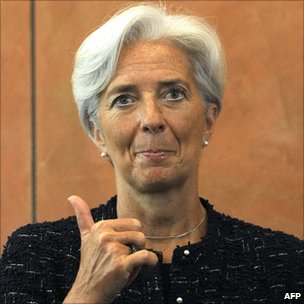 Christine Lagarde has won support from Egypt, Indonesia, and the United Arab Emirates in the race to become head of the International Monetary Fund.
Ministers in the respective government said on Sunday that she would be the best choice.
This development followed news that Bank of Israel Governor Stanley Fischer had joined the IMF presidential race.
Mexico's central bank governor Agustin Carstens is the other candidate campaigning for the job.
Ms Lagarde has been on a whistle-stop tour of Asia and the Middle East amid suggestions that emerging-market countries would prefer a non-European to hold the IMF post.
Egypt's Foreign Minister Nabil al-Arabi told reporters, after talks with Ms Lagarde in Cairo: "The Egyptian government supports the candidacy of French Finance Minister Christine Lagarde for the post of managing director of the IMF," Arabi told
Egypt is on the 24-member executive board which is due to reach a decision on naming a new IMF chief at the end of this month.
Indonesian Finance Minister Agus Martowardojo also backed his French counterpart.
"Personally I support France," he said on the sidelines of a World Economic Forum meeting. "She's a professional person, very skilful in interacting between organisations, has high integrity and expertise."
Meanwhile, the UAE's minster for financial affairs, Obeid Humaid al-Tayer, told the state news agency: "The UAE supports the candidacy of the French finance minister, Christine Lagarde."
He hailed her role at G20 meetings under the rotating presidency of France that "tackled important issues, including those related to economic development".
'Unique opportunity'
Mr Carstens has been campaigning on a platform that developing nations should have a louder voice at the IMF. He said on Friday that India shared his belief.
But Ms Lagarde found herself with another rival at the weekend when Mr Fischer, 67, launched a surprise bid for the job.
"A unique, unplanned and possibly once-in-a-lifetime opportunity has arisen to run for the head of the International Monetary Fund, which after consideration, I decided I wanted to pursue," he said.
BBC correspondents say Mr Fischer may present a serious challenge to Ms Lagarde despite being two years older than the current age limit for IMF leaders to take up the post.
In the event of a deadlock between the front-runners, Mr Fischer might be seen as a compromise candidate, correspondents say.
Ms Lagarde, in Saudi Arabia for a meeting with ministers, declined to comment specifically on Mr Fischer's bid, saying only: "He has past experience as the number two at the IMF... Everybody is free to file a candidacy."
'Lack of unity'
News of his entry into the race came hours after Kazakhstan's central bank chief Grigory Marchenko withdrew from the running.
Mr Marchenko said it was "obvious" that French Finance Minister Christine Lagarde would get the job.
Mr Marchenko - whose candidacy was put forward by Russia and several other former Soviet republics - told CNN television on Friday that he dropped out for two reasons.
"One, it's more or less obvious that Christine Lagarde is going to be elected.
"Second, the developing countries are not able to unite around a single candidate. So, I think it's better to withdraw and not to put some of the countries into embarrassing positions," he said.
The IMF post became vacant when Dominique Strauss-Kahn quit last month.