
Dow, S&P inch up as growth questioned
Stocks that outperform in a weak economy helped the Dow and S&P 500 eke out gains yesterday as concerns about faltering growth and inflation prompted investors to seek out less volatile names. The Dow industrials’ top percentage gainers were Coca-Cola Co, up 1.5 per cent, Kraft Foods Inc, up 1.7 per cent and Merck & Co, up 1.2 per cent. Energy shares also rallied as US crude oil futures gained more than one per cent to trade above US$108 a barrel.
The S&P 500 fell almost one per cent early but found support near 1,300, a level that attracted buying interest in early March. Failing to hold that level could trigger a test of the benchmark’s 2011 low near 1,257. Stocks have sagged lately as economists have lowered forecasts for US growth. A Reuters poll of economists showed 2011 gross domestic product forecasts fell to 2.9 per cent from 3.1 per cent.
“GDP forecasts are continuing to fall, so (bets on defensives) are a safety trade,” said Peter Boockvar, equity strategist at Miller Tabak & Co in New York.
Adding to the bearish sentiment, Google Inc shares fell five per cent to below US$550 in extended trading after the company’s first-quarter profit fell short of Wall Street’s target as operating expenses surged. The Dow Jones industrial average rose 14.16 points, or 0.12 per cent, to end at 12,285.15. The Standard & Poor’s 500 gained 0.11 of a point, or 0.01 per cent, to 1,314.52. The Nasdaq Composite dropped 1.30 points, or 0.05 per cent, to 2,760.22. A Senate investigation of Goldman Sachs hurt the Wall Street giant and some of its peers, while an unexpected rise in jobless claims added to bearish sentiment that kept gains in check.
Goldman shares fell 2.7 per cent to US$155.79 and were a drag on the S&P financial sector index, which was down 0.9 per cent. Further weighing on financials, major housing lenders agreed late on Wednesday to costly fixes of their foreclosure practices as part of a settlement with US bank regulators that jumped ahead of a states’ probe. The KBW Banks Index dropped 1.1 per cent. Adding to the boost from the energy sector as oil prices rose, natural gas producer and pipeline company El Paso Corp said it will develop a shale oil field without a partner. El Paso shares jumped 5.5 per cent to US$18.26 to lead gains in the S&P energy sector index, which rose 0.6 per cent.
“Oil closed above US$108 so all the energy stocks rallied this afternoon,” Boockvar said. Supervalu Inc forecast fiscal-year earnings above Wall Street’s expectations after its quarterly profit fell less than feared. The supermarket operator’s shares shot up 16.9 per cent to US$10.61.
(Reuters)

Business community complains about US currency shortage
Former president of the San Fernando Business Association (SFBA) Daphne Bartlett is calling on the Central Bank Governor Ewart Williams to say whether there is a shortage of US currency in the local market.
She said a lack of foreign exchange is causing serious concerns for the business community. Bartlett’s comments comes one day after the president of the Downtown Merchant Association (DOMA) Gregory Aboud said Port-of-Spain merchants were experiencing difficulty in accessing US currency to pay their suppliers.
Aboud said this was creating a serious impact on the business community as the good credit facilities they enjoyed with their suppliers were in danger of being changed. Yesterday, Bartlett confirmed that in spite of assurances in the past by the Central Bank that there was no shortage, “one can no longer walk into the bank and ask for US$10,000.” She said: “This situation has been existing for years. The local banks tell you they have to call head office for head office to release funds even though you produce documents from customs where you would have paid duty and customs to clear your goods. “Someone needs to explain why the business community is going through this torture,” she said.
Firm fined $20,000 for VAT fraud in Trinidad
 An engineering company which attempted to defraud the Board of Inland Revenue (BIR) of more $.6 million in taxes has been fined a total of $20,000. R2K Engineering Co Ltd was given six weeks to pay the fine imposed by Magistrate Marcia Murray in the Port-of-Spain First Court, on Tuesday. One of the company’s directors pleaded guilty to the charges, on behalf of R2K, when she appeared before Murray on Tuesday. R2K was charged with four counts of “under-reporting” Value Added Tax (VAT) returns to the BIR, totalling $680,716.18.
The offences were alleged to have occurred on four different occasions between the period October 26, 2004, and June 27, 2005.
Another of the R2K’s directors Shultz Isahac was also charged, but the charges were dropped after the company repaid the back taxes under-stated. The parties had entered into a plea agreement on those charges. Attorney Evans Welch prosecuted for the BIR, while Ravi Rajcoomar appeared for the defence.
Isahac, of Seecharan Street, Cane Farm, Tacarigua, and R2K were charged with the offences on July 5, 2007.
Criminal tax investigator Denis Basso and the BIR charged the accused as part of their ongoing quest to crack down on tax evasion. Interviewed yesterday, Welch said the fines imposed by the court served as a reminder of the State’s intention to get rid of tax evasion.
“The institution of the prosecution and the judgment of the court demonstrates the seriousness of the drive to collect taxes from delinquent businesses and individuals,” the prosecutor said. R2K was charged contrary to Section 56 (b) of the VAT Act, No 37 of 1989, as amended. It faced a maximum fine of $15,000 and one year imprisonment on each charge. The Criminal Tax Investigation Unit was established on January 1, 2003, after a Cabinet meeting. Its duties include investigation and prosecution of tax violations under the Income Tax Act and VAT Act.
Jamaica achieves significant economic and social gains
Jamaica has been able to make significant economic and social gains, despite the continued effects of a fledgling global economy, said Governor General Sir Patrick Allen.
Some notable achievements have been the government’s ability to reduce interest rates to an all time low, returning to single-digit inflation and sustained stability in the foreign exchange market, he said.
The governor-general was delivering the Throne Speech, at the State Opening of Parliament on Thursday, marking the start of the new financial year, which began on April 1.
He pointed out that despite some setbacks, the government has succeeded over the past year in stabilising the economy and has been able to meet the targets outlined under the standby agreement with the International Monetary Fund (IMF).
He said that the country is already seeing some of the benefits of this effort.
“Interest rates have declined to the lowest level in almost 40 years. We have returned to single-digit inflation. There is sustained stability in the foreign exchange market with the Net International Reserves at a record level of US$2.6 billion,” he pointed out.
In addition to a stabilised economy, the country is also able to reap notable gains through agriculture and tourism, the governor general said.
The agricultural sector, despite the effects of the drought in the first part of last year and severe flood rains in the latter part, again recorded growth, demonstrating the resilience of the Jamaican farmer, he noted. Tourism also continued to excel with a record number of stopover arrivals and record foreign exchange earnings last year.
The governor general pointed to the opening of the new Falmouth port in Trelawny, which welcomed the world’s largest cruise ship, as well as the Montego Bay Convention Centre in St James, as major developments that will further solidify Jamaica’s position as a preferred destination.
He noted that the bauxite/alumina sector, which was severely hampered by the recession, also showed strong signs of recovery last year, with the re-opening of the Ewarton refinery in St Catherine.
The governor-general said these achievements are not sufficient to pull the economy out of the recession. He said although it is expected that the country’s economy will emerge from the recession this year, this is dependent “as much on our own efforts as it does on the external factors to which we are exposed.”
He also noted that the successes achieved last year did not come easily, but were made through tremendous sacrifices on the part of each citizen, as well as the government.
The theme of the Throne Speech was ‘From Stabilisation to Growth’.
Small aircraft crashes at St Lucia airport, flights cancelled
 The George Charles Airport on the outskirts of Castries in St Lucia was closed on Wednesday night and Thursday morning after a small aircraft crashed while attempting to land.
The St Lucia Air and Sea Port Authority said the pilot was the sole occupant of the twin-engine Cessna aircraft. He was unhurt as the plane crashed into a fence.
Several flights were cancelled because of the mishap.
War of words continues in Anguilla
The Anguilla government has accused British Governor Alistair Harrison of using "residual powers", which he claims to have under the Constitution, in banning Home Affairs Minister Walcott Richardson from issuing visa waivers for persons wanting to visit the British Overseas Territory.
CMC reported that Richardson has hinted at the possibility of taking legal action against the governor over the remarks he made when he addressed the visa waiver issue.
In a statement, the territory's Chief Minister, Hubert Hughes, said the governor was selective in his criticism of the minister on the waiver issue. Earlier this week, Harrison told Richardson that he should stop issuing visa waivers, after indicating that known criminals had benefitted from the initiative.
Harrison has been at loggerheads with the Hughes administration for the past few months over several issues, including the budget prepared by the Chief Minister.
Earlier this month, Hughes signalled his intention to seek independence for the territory.
Cuba faces its worst drought for 50 years
Cuba is facing its worst drought in half a century, with tens of thousands of families almost entirely reliant on water trucks for essential supplies.
The drought started two years ago, and reservoirs are now down to a fifth of their normal levels.
The government is providing road deliveries of water to more than 100,000 people in the worst affected areas of the capital, Havana.
The situation in Havana is compounded by a pipe network in poor condition.
The state-run newspaper Granma says up to 70% of water pipes supplying the capital are leaking and in urgent need of repair, the BBC's Michael Voss in Havana says.
Residents are having to use buckets and bottles to fill up with water from the road deliveries.
"It's completely out of control," one resident, Ana Gomez, said. "Just imagine that you can't wash when you want to, you have to wash when you are able to."
Another, Enrique Olivera Gonzalez, said: "As there is no water, you can't wash your clothes, cook, or clean your house."
Cubans are hoping the rainy season in May and June will bring some respite.
But even a normal rainfall will not be enough to fill up the reservoirs, our correspondent says.
Colombia mudslide engulfs bus after heavy rain
A mudslide caused by heavy rain has engulfed a bus in Colombia, killing at least 14 people, officials. say.
The bus was leaving the central city of the city of Manizales when it was hit by a collapsing hillside and swept into a ravine.
Rescuers have been searching for six others missing after the accident.
Over the past year Colombia has suffered widespread floods that have killed more than 300 people and forced 2 million from their homes.
Emergency workers have been recovering bodies from the bus, which was completely buried by mud and rock.
Some parts of Manizales have been evacuated because of the risk of further landslides.
The 2010-11 rainy season in Colombia has been been the worst in Colombia's recent history, flooding huge areas and causing damage that will cost billions of dollars to repair.
Brazil's airports 'will not ready for World Cup 2014'
Most of Brazil's airports being improved for the World Cup in 2014 will not be ready in time, a report warns.
Of 13 terminals being upgraded, 10 are unlikely to be completed by June 2014, the government-backed Institute for Applied Economic Research (Ipea) said.
It warned that even if extra investment meant that the airports were ready in time, 14 of the country's 20 airports would be operating over capacity.
Brazil expects between 800,000 and one million visitors during the tournament.
Brazil's government promised to complete major infrastructure work as part of its bid to host the World Cup. It will also host the Olympics in 2016.
In addition to 13 airports being upgraded, there is also supposed to be a new airport being built in Natal, where some of the World Cup games are due to be played.
Ipea puts much of the blame on Infraero, the state-owned airport authority, which it says, "has a low level of efficiency in the execution of investment programmes".
Brazilian President Dilma Rousseff has said that her government will make "a strong intervention" to ensure that the airports are ready, including opening them up to private investment.
Allies Vow to Push Libya Campaign Until Gadhafi Goes
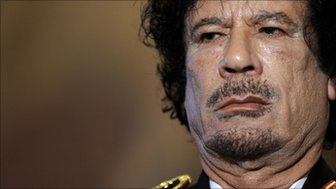 The leaders of Britain, France and the United States say the NATO coalition will continue its military campaign in Libya until Moammar Gadhafi leaves power, while rebels said loyalist attacks killed 23 people in the besieged city of Misrata.
British Prime Minister David Cameron, French President Nicolas Sarkozy and U.S. President Barack Obama said Friday that leaving Mr. Gadhafi in power would be an "unconscionable betrayal" of the Libyan people.
In a joint article published in several international newspapers, The Times of London, France's Le Figaro and The Washington Post , the leaders wrote it is "unthinkable that someone who has tried to massacre his own people can play a part in their future government."
Mr. Gadhafi, meanwhile, gave no sign he is willing to relent. His forces pounded Misrata with dozens of rockets for several hours Thursday. Anti-government rebels said at least 23 people were killed and many more wounded in what they called a "massacre" in Libya's third-largest city.
The main target of the assault was Misrata's port, the only lifeline for rebels to the outside world. Residential neighborhoods near the port were also shelled.
Meanwhile, Libyan state television reported that NATO warplanes had launched air strikes Thursday on targets in Tripoli. Witnesses in the capital said a series of explosions rocked the area shortly after NATO warplanes flew overhead.
Despite the bombing, Mr. Gadhafi was shown on state television Thursday, defiantly cruising through the streets of Tripoli, pumping his fists and waving from an open-top vehicle.
In Washington, State Department acting spokesman Mark Toner said the U.S. remains confident in NATO's ability to oversee air operations in Libya. He commented after France asked for the United States to resume air raids.
France made the request on Thursday at a NATO meeting in Berlin. NATO chief Anders Fogh Rasmussen, however, told alliance members that their forces have maintained a "high operational tempo" against legitimate targets in Libya. He said NATO needs more high-precision attack aircraft for the mission.
Another conference about Libya took place in Cairo. United Nations Secretary-General Ban Ki-moon said the African and Arab and European delegates attending that meeting had agreed on a unified approach to finding a "lasting solution" to Libya's turmoil.
The talks in Berlin and Cairo occurred a day after an international contact group of U.S., European and Arab partners pledged more monetary and political support for the Libyan opposition at a meeting in Doha. In its final statement, the group called on Mr. Gadhafi to leave power, saying he and his government had "lost all legitimacy."
In Brussels, the European Union announced Thursday that it has removed former Libyan Foreign Minister Moussa Koussa from a sanctions list, in an apparent bid to entice other Libyan officials to break ranks with the government. Koussa is the most senior official to flee Libya.