
Gunman kills 11 students in Brazil school
Eleven students were killed and 22 others injured when a gunman opened fire in a school classroom in this Brazilian city Thursday, Xinhua reported.
The gunman opened fire on some 40 students in an eighth grade classroom, witnesses said. One of the boys injured in the attack alerted a police patrol nearby.
Police shot the gunman in his leg and forced him to surrender when he was climbing from the second to the third floor. But he shot himself dead.
The 23-year-old shooter had graduated from the school, police said. He used two revolvers and reloaded the weapons several times during the rampage.
Police said they found a letter from the gunman at the spot that suggests he was determined to commit suicide. The injured were taken to nearby hospitals.

Barbados company urges enquiry to list accusations
A Barbadian company and its chairman who have been named as parties to the commission want to know the allegations they are facing before tendering any documentary evidence.
Jonathan Walker, the attorney for Proman's Holdings (Barbados) Ltd and its chairman, Joseph Cassidy, yesterday called on the Commission of Enquiry into the collapse of CL Financial and the Hindu Credit Union to state what are the accusations being levelled against his clients before documentation is provided.
"Our clients, Proman and Mr Cassidy, stand in a much different position to every other party that is before you in this enquiry, with the obvious exception of the policyholders, who are direct stakeholders in this. All of the other parties owe arguably either a direct or indirect duty to the policyholders. They are either officers of the company, auditors of the com- pany, the company itself or regulators. We fall within none of those categories," Walker said.
Walker said the only connection Proman's Holdings had with the enquiry is that it was joint shareholders with former CL Financial chairman Lawrence Duprey in a company.
"It is simply just unfair that we must be compelled to put all of our cards down on the table face up while the commission sits back with its cards held closely to its chest. That simply cannot be a fair way of proceeding in the context of not only your opening statements, but in the context of constitutional guarantees afforded for due process," Walker said.
Colman again called for HCU policyholders to come forward and make their voices heard in the commission of enquiry.
"The CLICO policyholders happily, as they were last time, are ably and effectively represented before this enquiry but sadly, the HCU policyholders do not seem to have any representation at all as things stand before the enquiry. This is of considerable concern to me as the commissioner, and it seems to me that it is highly unsatisfactory that hundreds, if not thousands, of people involved in the HCU collapse should have no voice at all other than through counsel to the enquiry in the investigative process which it is my duty to carry out," Colman said.
The first evidence hearing for the commission of enquiry is scheduled to last from June 27 to July 8, and those directly affected, including policyhoders and depositors of the two failed institutions, are among the first to testify. The second phase of hearings are scheduled for September 19 to September 27 and the third is scheduled for November 7 to November 18.
Lawyers want grim Jackson autopsy photos excluded from trial
Gruesome photos of Michael Jackson's autopsy should not be shown to the jury in the involuntary manslaughter trial of the pop singer's doctor, defense attorneys argued in court papers released on Thursday.
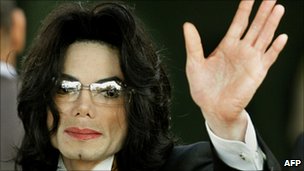 Showing the pictures of the "Thriller" singer's autopsy risk jeopardizing the trial in May of Dr. Conrad Murray, they said. Murray is charged with inadvertently causing Jackson's June 2009 death by giving him the powerful anesthetic propofol as a sleep aid, as well as other sedatives.
"These photographs are graphic, gruesome and highly prejudicial," Murray's attorneys wrote in the court papers.
They argued that "admission of these photographs to the jurors will jeopardize Dr. Murray's right to a fair trial because of the significant risk that the jury will base their decision not on the evidence presented, but on emotional grounds which play no part in a criminal action."
Murray has pleaded not guilty to involuntary manslaughter. Opening arguments in the trial are scheduled for May 9. Los Angeles Superior Court Judge Michael Pastor is expected to rule later this month on the defense request.
Jackson, 50, chose Murray as his personal physician as he rehearsed for a series of comeback concerts in London.
Murray's lawyers also want references to Murray's trips to strip clubs, where he met at least one woman with whom he had an affair, to be excluded from evidence at the trial.
Murray's attorneys, Ed Chernoff and Nareg Gourjian, argued that, "there is absolutely no relevance whatsoever to all of this sexually scandalous information."
Jury selection for the trial has been underway for more than two weeks.
A 29-page questionnaire, publicly released on Thursday, asks potential jurors if they are fans of Jackson or his family. It also asks whether they know anyone with addiction to prescription medication; if they think celebrities are treated differently in the court system; and if they are familiar with the anesthetic propofol and other medications.
Murray's attorneys have suggested in previous court hearings that Jackson had grown dependent on propofol, and plan to argue at trial that the singer administered the fatal dose of the anesthetic to himself.
Murray faces up to four years in prison if convicted.
Webbie Arrested for Drug Possession in Tennessee
Rapper Webbie has been arrested in Tennessee on drug possession and tampering with evidence charges after he was pulled over by Highway Patrol following a performance in Kentucky.
Webbie, whose real name is Webster Gradney Jr., was riding in a rental car that was stopped Monday south of Nashville. Authorities say the 25-year-old rapper from Baton Rouge, La., was found with $13,000 and 2 ounces of marijuana, according to the AP.
Troopers also say he threw marijuana out the car window.
The rental car’s driver was charged with driving with a suspended license and another passenger faces a gun charge.
Webbie’s album “Savage Life 2″ made the rap charts in 2008.
Fergie joins "X Factor" contenders as producers squabble
Black Eyed Peas singer Fergie is in the running for a judge's spot on the upcoming U.S. version of "The X Factor," but creator Simon Cowell said on Thursday that producers were still juggling dozens of names for the TV talent show.
Latin singer Gloria Estefan may also have put herself in the running by turning up unexpectedly at open auditions in Miami and spending hours mentoring some of the thousands of hopefuls looking for a spot on the show, Cowell said.
So far only the acid-tongued Briton, and record executive Antonio "L.A." Reid have been announced as judges on "The X Factor", which debuts on Fox in the fall with a $5 million prize for the winner and a record contract.
Big names ranging from singers Jessica Simpson and Mariah Carey to Cowell's old "American Idol" sparring partner Paula Abdul have been mentioned in recent months.
But not final choice has been made for the one or two remaining judging spots, nor for the two hosts.
"We are still having nightly arguments with everyone, trying to get everyone to agree. If you asked everyone involved on this show who they would like on the panel, you would have 25 different opinions," Cowell told reporters.
"It does show publicly our complete and utter indecisiveness," he said.
Cowell confirmed media reports that Fergie, who has a solo career as well as being part of the Black Eyed Peas, is a possible contender.
"Her name was put forward. But like with a lot of other people we have spoken to, we have to check out everyone's availability. There is lot of time you have to put into this show. It is not a 2 or 3 day a week job," he said.
The "X Factor" judges will play a major role in mentoring and preparing contestants on the singing show.
Cowell said that Estefan may have been auditioning for a role on the panel when she turned up out of the blue in Miami on Thursday "and apparently did a fantastic job" helping contestants.
More than 20,000 people lined up for initial auditions in front of producers in Los Angeles last month. Cowell said that those unable to make it to major U.S. cities would be able to make video recordings in high-tech audition booths in cities including Honolulu, Anchorage and Kansas City.
Paris Hilton won't return borrowed jewels: lawsuit
Paris Hilton is holding $60,000 of jewelry that does not belong to her and should give it back, a new lawsuit contends.
A German insurer, Allianz SE, has sued the celebrity socialite and heiress to the Hilton Hotels fortune, saying she has ignored several attempts to recover the borrowed jewels.
According to an April 6 complaint filed in a New York state court, Hilton borrowed the jewelry in 2007 from the Manhattan jeweler Damiani, promising to store it in a safe or vault when she was not using it.
But Allianz said the gems sat unguarded on a closet shelf in Hilton's unlocked Los Angeles mansion when they and some $2.7 million worth of other jewelry were stolen in a December 19, 2008, burglary while Hilton attended a Hollywood party.
Allianz said Los Angeles police found and returned the jewelry to Hilton after it had already paid Damiani's claim under an insurance policy.
It said it began asking Hilton and two eponymously named companies she controls to return the jewelry, but that phone calls and email messages have been ignored.
Allianz's lawsuit accuses Hilton of negligence and breach of contract.
A Hilton spokeswoman said the lawsuit was "not based on fact," and that none of Hilton's representatives ever told Allianz that the stolen Damiani jewelry had been returned. "Only costume jewelry was recovered," she said.
The dispute is the latest involving a celebrity and jewelry. Actress Lindsay Lohan is expected to make a court appearance later this month on a charge that she stole a gold necklace from a Los Angeles store in January.
The Hilton case is Allianz Global Corporate & Specialty AG et al vs. Hilton et al, New York State Supreme Court, New York County, No. 104169/2011.
Katy Perry, Rihanna lead U.S. singles chart
Katy Perry's "E.T.," featuring Kanye West, spent a second week at No. 1 on the Billboard Hot 100 singles chart on Thursday, bolstered by the premiere of its effects-heavy video a week ago.
Rihanna's "S&M" was also unchanged, at No. 2, while the Black Eyed Peas' "Just Can't Get Enough" rose two to No. 3. Cee Lo Green's "F**k You (Forget You)" at No. 4 and Lady Gaga's "Born This Way" at No. 5 each slipped one place.
Chris Brown's "Look at Me Now," featuring Lil Wayne and Busta Rhymes, rose one to No. 6; Jeremih's "Down on Me," featuring 50 Cent, jumped two to No. 7; Jennifer Lopez's "On the Floor," featuring Pitbull, was also up two, to No. 8; and Pink's "F**kin' Perfect" dropped one to No. 9.
British singer/songwriter Adele claimed her first top-10 hit in the United States as "Rolling in the Deep" soared seven places. The track comes from her hit album "21," which recently ruled the Billboard 200 chart for three weeks, and is expected to reclaim its crown when data are released next Wednesday.
Gold retreats from record high after Japan quake
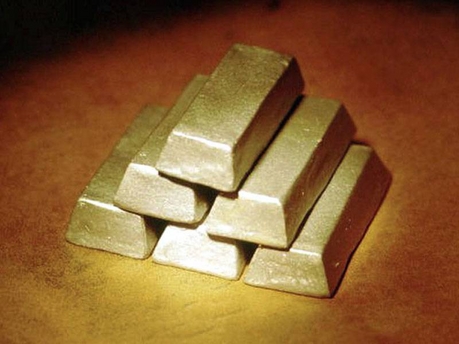 Gold was little changed on Thursday afternoon, retreating from a record high after another strong earthquake hit Japan.
In early trading, gold rose to a record for a third straight session on inflation worries and expectations that the European Central Bank's first rate hike since 2008 would weaken the dollar.
Crude oil and global equities also retreated after a strong earthquake shook Japan, pressuring gold. The dollar strengthened against the euro instead of weakening as many had expected, which put further pressure on gold.
Even though the European Central Bank raised rates, investors were not convinced that more rate hikes were on the way.
"You're back to a dollar story for the first time in a long time." said Frank McGhee, head precious metals trader of Integrated Brokerage Services. "Gold prices and the dollar both benefit from that rate hike because it increases the differentials between euro zone and the U.S. interest rates."
Rising interest rates generally are negative for gold, but investors bought bullion immediately after the ECB rate hike because they expected the dollar to weaken in the future.
Spot gold hit a record $1,464.80 an ounce and was later down 0.1 percent to $1,456.14 at 1:14 p.m. EDT. U.S. gold futures for June delivery eased 0.1 percent to $1,357.50 an ounce.
The ECB raised rates by 25 basis points to 1.25 percent to counter inflation pressure. Gold has risen more than 2 percent this week, benefiting from rallies in crude oil and corn and as Portugal requested a European Union rescue package.
"Of course the ECB will be vigilant in monitoring inflation developments very closely. But it is more inflation expectations that made the ECB concerned, and less the actual increase (in inflation)," said Peter Fertig, a consultant at Quantitative Commodity Research.
ECB President Jean-Claude Trichet said the rate hike was not necessarily the start of a series, disappointing some who had expected a more hawkish tone.
The traditional inverse correlation between gold and the dollar appeared to be strengthening this week to a negative 0.8, as gold hit successive records, but the link could be erratic in the near term. A correlation of minus 1 indicates a perfect inverse link, while a correlation of plus 1 indicates that both are moving in perfect tandem.
SILVER EDGES UP, BUT OFF 31-YEAR HIGH
Among other precious metals, silver gained 0.2 percent at $39.50 an ounce, just off the previous session's 31-year high at $39.75.
Silver has not shaken its image of an unpredictable metal with high volatility and chronic oversupply, but investors seem set on driving prices beyond the recent 31-year high.
On fundamentals, industrial demand for silver is expected to rise less than 10 percent this year, after prices more than doubled to 31-year highs since late 2010, the head of metals research and consultant GFMS said on Thursday.
Platinum was down 0.4 percent to $1,781 an ounce, while palladium shed 0.2 percent to $776.50.
(Additional reporting by Jan Harvey in London)
Oil rises to 2-1/2 high on Mideast turmoil
Oil prices ended at 2-1/2-year highs on Thursday as supply worries tied to fighting in Libya and Middle East turmoil overshadowed demand concerns spurred by a boost in euro zone interest rates and as a major aftershock struck Japan.
Brent crude for May delivery rose for a sixth day, settling 37 cents higher at $122.67 a barrel, the highest since August 4, 2008.
U.S. May crude futures closed up $1.47 at $110.30 a barrel, the best since September 22, 2008, gaining for the fifth day in six sessions.
Brent's premium against U.S. crude, also known as West Texas Intermediate (WTI), narrowed to $12.37 at the close, after ending at $13.47 on Wednesday.
Trading volumes remained lean. In London, Brent crude volume was 396,378 lots, 17 percent below the 30-day average at 3:10 p.m. EDT. In New York, U.S. crude volume hit 585,932, 9 percent below the 30-day average, with two hours left for trading.
U.S. crude rose after U.S. data showed claims for unemployment benefits fell, adding to signs of a strengthening labor market.
A major aftershock struck northeast Japan on Thursday. The latest quake added to concerns that oil demand would dip in Japan, the world's third largest economy that is already reeling from devastation caused by last month's quake and tsunami.
Analysts agreed that despite earlier divergence in Brent and U.S. crude prices, the market's upward momentum was intact as uncertainties in Libya and the Middle East continued to add to geopolitical risks.
Also of concern, OPEC member Nigeria postponed elections again in some areas, though polls will go ahead in most of the country on Saturday.
DEMAND WORRIES
As expected, the European Central Bank (ECB) lifted interest rates for the first time since the 2008 financial crisis and signaled readiness to tighten further if needed.
Dealers said markets may wobble as other central banks remove easy-money policies.
"At current crude oil prices, the risk is turning more and more to the amount of potential demand destruction,' Petromatrix analyst Olivier Jakob said.
Investors also cited worries over high euro zone debt levels and inflation as Portugal asked for an European Union bailout. A rise in euro zone rates would push up the cost of debt for countries already highly indebted.
"Products futures are high enough that too much more and it could trigger some demand destruction, especially for gasoline, with supplies pretty ample in the U.S. But the Middle East and Libya keep the uncertainty in the market," said Gene McGillian, an analyst at Tradition Energy in Stamford, Connecticut.
IMF says worth exploring borrowing from markets
The International Monetary Fund said on Thursday it was worth exploring ways that the global institution could borrow from financial markets at short notice to raise additional funding for its lending programs.
In a paper that looks at progress by the Group of 20 major economies in reforming the global monetary system, the Fund said building confidence in the IMF's ability to respond to crises may warrant looking at alternative ways of fund-raising, including turning to markets.
The G20 meets in Washington next week before semi-annual meetings of the IMF and World Bank where changes to the global monetary system will be discussed by finance ministers.
"A more secure and flexible global safety net might require mobilization of additional resources," the IMF said.
"This could have the added advantage of offering a relative safe haven asset during times of global market stress," it added.
The IMF boosted its resources in 2009-10 by turning to member countries for loans or by raising members' subscriptions through so-called quota increases. But the IMF paper noted that the process took time and may not always be politically feasible.
The IMF's largest contributors are facing rising public debts and slashing budgets at home to try to balance their budgets, making it politically difficult to make the argument to voters to lend to international financial institutions.
The IMF was called on recently to provide rescue loans alongside the European Union to Ireland and Greece as they faced market pressures to fix problems in their economies.
On Wednesday, Portugal indicated it was next to ask for financial help after its borrowing costs rose to unsustainable levels.
NEW ROLE FOR SDR
Among issues being explored to update the global monetary system is whether or not to include the Chinese renminbi in a basket of currencies that make up the IMF's special drawing rights -- an international reserve asset of the IMF.
The basket is currently made up of the dollar, euro, pound sterling and the yen. Created in 1969, it does not reflect the rising importance of China.
One of the biggest obstacles to the SDR playing a bigger role in the global financial system was technical challenges and a "great deal of consensus-building and policy coordination," the IMF report said.
The report said most of the ideas being considered to remake the global monetary system would require more collaboration among countries. In addition, some proposals would take time to implement, the report said, suggesting it could be a while before a new monetary system is rolled out.